10 More Quotes From “Answering Jihad”

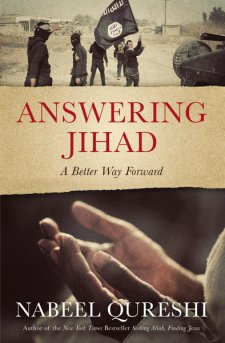
Answering JihadNabeel Qureshi has given us a very timely book in Answering Jihad. He cuts through the confusion and misinformation to give us an informed, clear look at the teachings of Islam in regard to jihad.

I already shared one set of quotes from this book (which you can read here). Here is the next set of quotes I found eye-opening.

“At the risk of over-generalizing, this common understanding of Islam boils down to this: True obedience to Allah will result in Muslim dominance.”

“I have heard many people, frustrated by the increasing frequency and scale of Islamist terrorism, suggest that Islam needs a reformation. What they may not realize is that radical Islam is the Islamic reformation. This might sound shocking, but consider: Just as the Protestant Reformation was an attempt to raze centuries of Catholic tradition and return to the canonical texts, so radical Islam is an attempt to raze centuries of traditions of various schools of Islamic thought and return to the canonical texts of the Quran and Muhammad’s life.”

“Violent expressions of Islam adhere more consistently and more literally to the foundational texts of the Islamic faith, the Quran and the hadith. Peaceful versions of Islam must reinvent traditions from Muhammad’s life in order to be internally consistent, or they must ignore them outright.”

“Instead of fearing Muslim immigrants, we should embrace them and be the element of change we wish to see. … I suggest friendship rather than fear has a better way forward.”

“Christians believe Jesus is God, but the Quran is so opposed to this belief that it condemns Jesus worshipers to hell (5:72).”

“According to Jesus, God is our Father, yet the Quran very specifically denies that God is a father (112:1-4).”

“Islam roundly condemns worship of the Trinity (5:73), establishing in contrast its own core principle of Tawhid, the absolute oneness of God. Tawhid emphatically denies the Trinity, so much so that it is safe to say the doctrine of God in Islam is antithetical to the doctrine of God and Christianity. … The Trinity teaches that God is not a person, but three Persons: Father, Son, and Spirit. To assert that the God of Islam is the same person as the God of Christianity becomes almost nonsensical at this point, as the Christian God is tripersonal, two persons of Islam specifically denies in the Quran.”

“One can both love Muslims and insist that the God they worship is not the same as the Christian God.”

“In the Christian worldview, the exemplar for followers of God is no mere man but God Himself. Since God cares for those who are His enemies, even blessing them with rain, Christians ought to love their enemies and pray for those who persecute them, so that they can follow God’s example. This contrasts with the teaching of the Quran, where Allah tells Muslims, ‘O you who believe! Do not take my enemies or your enemies as allies, offering them your friendship when they do not believe’ (60:1). Of course, that is not to condemn the Quran, as it is counterintuitive to love one’s enemy. The Christian command may make little earthly sense, but it is the explicit teaching of Jesus.” 

“Even though Muslims are often raised with the teaching that ‘Islam is the religion of peace,’ when they study the texts for themselves, they are faced with the reality that Muhammad in the Quran calls for jihad. They will stand at the crossroads for only so long before they choose what path they will take—apostasy, apathy, or radicalization. As Muslims make that choice, it would benefit the whole world if they did not make it alone, or worse, with radical recruiters. We need to show compassion for Muslims and befriend them.”

Be sure to check out my review of Answering Jihad, and then pick up a copy for yourself.

11 Quotes From “Answering Jihad”

Answering JihadAnswering Jihad by Nabeel Qureshi is an excellent resource to get clarity on all of the terms floating around about Islam, Muslims, and the use of jihad. You can read my full book review by clicking here.

Below are the first set of quotes from this book that I’d like to share with you. Unless otherwise noted, all the quotes are from Nabeel Qureshi.

“There is a great deal of violence in Islam, even in the very foundations of the faith, and it is not all defensive. Quite to the contrary, if the traditions about the prophet of Islam are in any way reliable, then Islam glorifies violent jihad arguably more than any other action a Muslim can take.”

“As Islam is practiced in a way that calls Muslims to return to its foundations, violence will follow.”

“Islam is not Muslims, and Muslims are not Islam. Though Muslims are adherents of Islam, and Islam is the worldview of Muslims, the two are not the same, as many uncritically believe. … Islam is not Muslims, and one can criticize Islam while affirming and loving Muslims.” 

“Islam was first called ‘the religion of peace’ as late as 1930, and the title of a book published In India. … The phrase was slow to take off, but by the 1970s it was appearing more and more frequently in the writings of Muslims for western audiences.” —Mark Durie, a research scholar of linguistics and Islam at Melbourne School of Theology, in an article for the Independent Journal

“The Quran never says, ‘Islam is the religion of peace,’ nor do the traditions of Muhammad.”

“To contend that the word Islam signifies peace in the absence of violence is incorrect. Islam signifies a peace after violence, or under the threat of it. According to Islamic tradition, that is how Muhammad himself used the word. His warning to neighboring tribes is famous: Aslim taslam, ‘If you surrender, you will have peace.’ It was a play on words, as aslim also connotes becoming Muslim: ‘If you convert, you will have safety through surrender.’”

“The vast majority of Muslims inherit their understanding of Islam and have not investigated the foundations of Islam for themselves. If they were raised in the West and taught that Islam is the religion of peace, as I was, then their first foray into the foundations might be somewhat of a shock, and they will probably soon find themselves either in a defensive position or grappling with significant cognitive dissonance.”

“Since there are thousands of verses in the Quran and hundreds of thousands of hadith, it is expected that only trained Muslim jurists can engage in determining what sharia teachers. The jurist must give primacy to the Quran, then consider the actions (sunnah) and sayings (hadith) of Muhammad, followed by reviewing the consensus of Islamic scholars, or ijma, before using his own reasoning (qiyas). By following these four steps, a Muslim jurist can make a decision, or fatwa, about what sharia teaches on a given matter. The ultimate goal is to apply the teachings of sharia to Muslim life, and that is called fiqh.”

“As is probably clear by now, at no point was the average Muslim expected to read the Quran to decide upon correct Islamic practices by himself or herself. Not only is Islam not a faith that upholds the sufficiency of scripture alone, the complexity of its foundations virtually necessitates a reliance on jurists and scholars for proper practice.”

“Islam was not in fact ‘spread by the sword’—conversion was not forced on the occupants of conquered territories—but the conquests created the necessary preconditions for the spread of Islam. With only a few exceptions… Islam has become the majority faith only in territories that were conquered by force. Thus, the conquests and the doctrine that motivated these conquests—jihad—were crucial to the development of Islam.” —David Cook

“I ask your pardon, but I really do feel that the Christian teaching of loving one’s enemies, even in the face of death, might perhaps be the most powerful answer to jihad at our disposal today. Not only does it allow us to counter jihad, it also enables us to treat Muslims with the utmost dignity: as image bearers of God.” 

Stay tuned for more quotes from Answering Jihad

Answering Jihad (book review)

Answering JihadMilitant Islam … Jihad … Religion of peace … ISIS … Islamic terrorism. These phrases dominate the news stories and the water-cooler conversations, but do we really know what they mean? Nabeel Qureshi does. He was born to devout Muslim parents, trained in the Quran, and ready to follow in his parents’ footsteps. But along the way, Nabeel became a Christian. Knowing both the Muslim and Christian angles of these topics, Dr. Qureshi can capably help us Westerners in Answering Jihad.

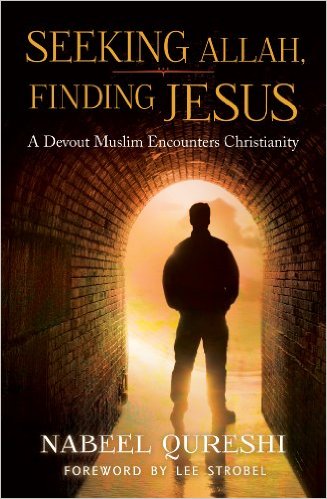
(By the way, if you haven’t read Nabeel’s account of how he became a Christian, you really should read Seeking Allah, Finding Jesus.)

Answering Jihad is presented to us in the form of answers to 18 of the most-asked questions about how jihad is really perceived in the Muslim community. As he did in his biography, Nabeel presents this information in a way Western minds can grasp. He introduces key points of history that surround Muhammed, explains Islamic terms, and quotes relevant passages from the Quran and other Muslim scholars. I think you will find, as I did, so much more clarity than the sound bytes thrown around on news sources and on social media.

Nabeel concludes his book by telling us that there is a better way forward than the “either-or” extremes that are usually proposed. He explains it this way—

“If we avoid the truth about jihad, we leave the door open for innocent people to be killed in attacks like Paris and San Bernardino. If we lack compassion, we close the door to innocent people who need refuge from places like Syria and Somalia. … Even though Muslims are often raised with the teaching that ‘Islam is the religion of peace,’ when they study the texts for themselves, they are faced with the reality that Mohammed and the Quran call for jihad. They will stand at the crossroads for only so long before they choose what path they will take—apostasy, apathy, or radicalization. As Muslims make that choice, it would benefit the whole world if they did not make it alone, or worse, with radical recruiters. We need to show compassion for Muslims and befriend them.”

Well said! And with the information in Answering Jihad, you can be ready to befriend your Muslim neighbors on their journey.

I am a Zondervan book reviewer.

Book Reviews From 2015

Links & Quotes

link quote

“O Lord, keep me strong in the sense of Thy call.” —Thomas Boston, Scottish Presbyterian pastor

“You have remained true to God under the great tests, now be alert over the least things.” —Oswald Chambers

“Mighty events turn on a straw.” —Thomas Carlyle

“God is love, but God is also just, as severely just as if He had no love, and yet as intensely loving as if He had no justice. To gain a just view of the character of God you must perceive all His attributes as infinitely developed; justice must have its infinity acknowledged as much as mercy.” —Charles Spurgeon

“Pleasures demean, disappoint, and destroy us when they are merely fleeting, fleshly, and foolish. The pleasure we ultimately seek, and for which we were created, can only be found in one place, in fellowship and communion with the Lord of heaven and earth.” —T.M. Moore

John Piper has some very insightful words in the wake of the tragedy in Paris—France: A Fabric Torn.

Jim Cymbala reminds us, “There are no trendy shortcuts, no hocus-pocus mantras that can defeat satan.” Read more in No Hocus-Pocus.

Parents, teachers, and anyone who works with youth will appreciate this counsel from Tim Elmore: 5 ways to cure the “cool kid” curse.

[VIDEO] What does the Quran teach about Jesus?—

[VIDEO] Pastor Dave Barringer is in Israel, and this real-time observation is quite eye-opening—

Links & Quotes

link quote

“So great is God’s love, and so powerful is His transforming glory, that He actually fills us beyond ourselves into a greater measure of Himself, as we partake of His Word and Spirit and meet Him in the increasing experience of His glory and love.” —T.M. Moore

“Almost all men are infected with the disease of desiring to obtain useless knowledge.” —John Calvin

“Prayer is God’s way of bringing our priorities into line with His.” —John Piper

“Christians are Christ’s body, the organism through which He works. Every addition to that body enables Him to do more. If you want to help those outside you must add your own little cell to the body of Christ who alone can help them.” —C.S. Lewis

“As Christians, we are often called to attempt something small. We are called to simply buckle down and work hard at the mundane tasks God has set before us. The world calls us to be famous; Jesus calls us to be faithful.” —Murray Vassar

GREAT NEWS—Planned Parenthood announced “our Federation has decided … that any Planned Parenthood health center that is involved in donating tissue after an abortion for medical research” will accept “no reimbursements for its reasonable expenses.” This is a good start, but John Stonestreet says we still need to keep the heat on them, and I agree!

Live Action notes a common misconception that the pro-life movement is a religious movement. Here are 4 non-religious reasons to be pro-life.

MORE GREAT NEWSHyatt Hotels are also removing pornography pay-per-view!

[VIDEO] Alan Shlemon gives us insight on how to talk to Muslims about the crucifixion of Jesus.

Links & Quotes

link quote

“True servants of God demand to see for all church ordinances and doctrines the express authority of the church’s only Teacher and Lord. They remember that the Lord Jesus bade the apostles to teach believers to observe all things whatsoever He had commanded them. The Holy Spirit revealed much of precious truth and holy precept by the apostles, and to His teaching we would give earnest heed; but when men cite the authority of fathers, and councils, and bishops, we give place for subjection, no, not for an hour. They may quote Irenaeus or Cyprian, Augustine or Chrysostom; they may remind us of the dogmas of Luther or Calvin; they may find authority in Simeon, or Wesley, or Gill. We will listen to the opinions of these great men with the respect they deserve as men, but having so done, we deny that we have anything to do with these men as authorities in the church of God, for there nothing has authority, but ‘Thus saith the Lord of hosts.’” —Charles Spurgeon

“Beyond simply confronting cultural abuse and misuse, Christians must make a conscientious effort to restore culture so that it serves as a means and end to the glory of God by demonstrating the love He intends all people to know. … Principally, as we’ve seen, God intends to bring His glory to light through those He has redeemed and come to indwell by His Spirit. Thus, in every aspect of our lives, and in all our cultural activities, we must be diligent to allow the glory of God to show through in us, so that the love God has for humankind and the world can be plainly seen by all.” —T.M. Moore

Fight The New Drug lists 3 types of pornography viewers, and how pornography affects them. If you are affected by pornography, here is some help.

[VIDEO] J. Warner Wallace talks about the best explanation for moral laws—

“It is true that we must be personally bold and afraid of no man but courageous as we contend for the truth. If we are simply nice, concerned, genuinely curious, attentive, supportive, and affirming, we may win a hearing with suffering people, but we will never lead them to life. Grace means courage and clarity. But it is just as true that our boldness must be brokenhearted boldness, that our courage must be a contrite and lowly courage, and that we must be tender contenders for the truth. If we are brash and harsh and cocky and clever, we may win a hearing with angry and pugnacious people, but we will drive away those who suffer. Paul makes it so clear that we are laid low and given comfort ‘so that we will be able to comfort those who are in any affliction with the comfort with which we ourselves are comforted by God’ (2 Corinthians 1:4). Those we counsel must feel that we are utterly dependent in our lives on the merciful comfort of God to make it through our days.” —John Piper

[VIDEO] The danger of radical Islamism—

13 Quotes From “Seeking Allah, Finding Jesus”

Seeking Allah Finding JesusIf you want to know about Islam from an insider’s perspective, Seeking Allah, Finding Jesus by Nabeel Qureshi is simply a phenomenal book! Check out my book review by clicking here. Below are just a few of the quotes I found quite educational.

“There is much division in Islam. The best determination of whether a man is Muslim is if he exclusively declares that Allah is God and Mohammad is Allah’s messenger. Beyond this point, there is great diversity in Islam.”

“There is no book of sharia. We must derive the law from a hierarchy of sources using a process of jurisprudence called fiqh. The first and greatest source is the Quran. Nothing can supersede the Quran because it is the word of Allah. But the Koran is not comprehensive. As Muslims, there is much we must do and believe that is not found in the Quran. For this, we go to the second source, hadith. The hadith elaborate and clarify what is found in the Quran, but they never contradict. There is no contradiction in Islam. If a hadith is found in any way to contradict the Quran, then it is inauthentic and must be disregarded. If no hadith can be found to clarify an issue, then we must turn to the third source of sharia: the ulema, Muslim scholars who are wise and experienced in Islam.”

“Muftis from different schools of thought have different precedents and therefore provide different fatwas. Each denomination differs on what hadith they consider accurate. Since the hadith are the second rung of sharia, these differences of opinion have real consequences. Many of the differences between the ways Sunnis and Shias practice Islam are over this very matter. Their books of hadith are disparate. This difference, combined with the Shia position regarding the authority of imams, results in a significantly different view of sharia. … Most Muslims do not know these things. They know Islam to the extent that they practice it, and these are matters for the learned.”

“Christians believe Jesus is God incarnate, and this is a necessary belief for orthodox Christianity. Muslims believe that Jesus is no more than a prophet, and to consider Him God incarnate would be blasphemy and would cause one to be condemned to hell eternally, according to the Quran.”

“Regarding Jesus, there are two issues on which Muslims particularly disagree with Christians: that Jesus died on the Cross and that Jesus claimed to be God. The Quran specifically denies both of these beliefs.” 

“Sahih Bukhari…is the most trustworthy book of hadith, compiled by Imam Bukhari. The hadith were not collected into the books until a long time after Mohammad’s death. Many false hadith had been fabricated, and it was difficult to determine which ones were accurate. Imam Bukhari sifted through five hundred thousand hadith and pick out the five thousand most accurate.”

“The earliest historical records show that Mohammad launched offensive military campaigns and used violence at times to accomplish his purposes. He used the term jihad in both spiritual and physical contexts, but the physical jihad is the one Mohammad strongly emphasizes. The peaceful practice of Islam hinges on later, often Western, interpretations of Mohammad’s teachings, whereas the more violent variations of Islam are deeply rooted in orthodoxy and history.”

“The Bible and the Quran were nothing alike. Not in the slightest. … Mohammad dictated the contents of the Quran to his scribes over a period of twenty-three years. Only after his death was the Quran collected into a book. Verses that had been dictated years or decades apart are frequently found side-by-side in the Quran, often with no obvious connection. The result is that Muslims placed relatively little weight on surrounding passages when trying to interpret sections of the Quran.”

“Almost everything Muslims know about Mohammad comes to them orally, rarely from primary sources. Unlike Christians learning about Jesus from the Bible, the Quran has very little to say about Mohammad.”

“Mohammad’s first biography, Sirat Rasul Allah by Ibn Ishaq, comes down to our date only through the transmission of a later biographer, Ibn Hisham. In his introduction, Ibn Hisham explains that he altered the story of Mohammad’s life. ‘Things which it is disgraceful to discuss, matters which would distressed certain people, and such reports as [my teacher] (sic) told me he could not accept as trustworthy—all these things I have omitted.’”

“According to the hadith, Mohammad named four men as the best teachers of the Quran. The first one was Abdullah ibn Mas’ud, whome Mohammad distinguished as the foremost expert of the Quran. The last one was Ubay ibn Ka’b, whom Sahih Bukhari identifies as the best reciter of the Quran. These were the men that Mohammad hand selected as the best teachers of the Quran, but as I studied the early sources, I found that they did not agree with the final Quran, which has been passed down as today’s version. They did not even agree with each other. … Ubay is known to have had 116 chapters in his Quran, two more than Zaid’s edition. Ibn Mas’ud had only 111 chapters in his Quran, insisting that the additional chapters in Zaid’s Quran and Ubay’s Quran were just prayers, not Quranic recitation.”

“In Islam, there is only one unforgivable sin, shirk, the belief that someone other than Allah is God. Shirk is specifically discussed in the context of Jesus in 5:72. He who believes Jesus is God, ‘Allah has forbidden Heaven for him, and his abode will be the Hellfire.’”

“All suffering is worth it to follow Jesus. He is amazing.”

Seeking Allah, Finding Jesus (book review)

Seeking Allah Finding JesusI have a family member who works in predominately Muslim areas of the world. I recently asked him how I could learn more about Muslims and the Islamic belief system, and he highly recommended Seeking Allah, Finding Jesus by Nabeel Quereshi. I am so glad he did!

This book is told in the narrative style of an autobiography, as Nabeel walks us through his devout Muslim upbringing, and the conversations and confrontations that got him thinking about his religion in contrast to Christianity. The book has a “documentary” feel to it, as Nabeel takes us inside his home, school and mosque to let us see his life portrayed almost in real-time. Many of the conversations include Arabic phrases, which Nabeel footnotes at the beginning of the book, and then continues to use without the footnoted translation later, allowing the reader to become more immersed in his world.

Nabeel states his three main purposes for his book:

  1. To tear down walls by giving non-Muslim readers an insider’s perspective into a Muslim’s heart and mind. The mystical beauty of Islam that enchants billions cannot be grasped by merely sharing facts. But it is my prayer that by entering my world, you will come to understand your Muslim neighbor, so you can love him as yourself.
  2. To equip you with facts and knowledge, showing the strength of the case for the gospel in contrast with the case for Islam.
  3. To portray the immense inner struggle of Muslims grappling with the gospel, including sacrifices and doubts.

In my mind, he accomplished all three of these purposes beautifully. In addition, I discovered a whole new way to pray for my Muslim friends, as well as feeling like I may now carry on a more intelligent conversation with them about their cherished beliefs.

I too highly recommend this book to anyone who wants to learn more about what Muslims believe.

Links & Quotes

link quote

“We can gather that their state [ISIS] rejects peace as a matter of principle; that it hungers for genocide; that its religious views make it constitutionally incapable of certain types of change, even if that change might ensure its survival; and that it considers itself a harbinger of—and headline player in—the imminent end of the world.” Read more of this fascinating piece in The Atlantic: What ISIS Really Wants.

Frank Viola wrote, “Mark it down: As you go on with the Lord, your faith will be sorely tested. You will be tempted to ‘shrink back’ into unbelief. But you—dear child of God do not belong to those who shrink back.” Read more from his post The Crisis Of Faith.

Rob Bell is fast becoming irrelevant himself, by choosing which parts of the Bible he wants to follow, when he states “the Church will continue to be even more irrelevant when it quotes letters from 2,000 years ago as their best defense” for traditional marriage.

[VIDEO] Epigenomes in the human body are like a symphony. How amazing is our Creator! Check out this artistic depiction of how this works—