Success From Failure

People are rarely successful the first time they try something. In fact, Thomas Edison once quipped, “I’ve had a lot of success with failure.” 

And you’ve probably heard the tried-and-true cliché—If at first you don’t succeed, try and try again. 

Here are five attitude-adjusting thoughts and one key question about failure and success from John Maxwell: 

  1. Failure is an attitude, not just an outcome.
  2. Success comes by going from failure to failure without losing enthusiasm.
  3. Failure isn’t failure unless you learn nothing from it.
  4. Failure is an opportunity to begin again, but more intelligently.
  5. Failure never leaves us the same: I’m either leaving the failure and giving excuses, or I’m learning from the failure and I’m growing. 

John then asks: “The key question on your bad day is: Are you going to give up or get up?” 

What are you going to do with failure?

If you want to read more, check out John Maxwell’s book Sometimes You Win, Sometimes You Learn, or some other Maxwell quotes here.

The Integrity Of A Godly Leader

I will instruct you and teach you in the way you should go; I will guide you with My eye. (Psalm 32:8)

“God does not expect leaders to be perfect, but to be whole. To have integrity means to be whole, as in a whole number (an ‘integer’). Despite their human frailties, leaders can effectively guide those who follow.

“This Scripture reminds us that leaders must closely observe the flock for its needs and problems. God expects spiritual leaders to serve as guides. A guide takes a person or group safely to a planned destination. The Hebrew words for ‘guide’ gives us several clues as to what God expects from those He uses as leaders:

  • A guide is a spiritual head who unites and directs people in their walk with God.
  • A guide takes people on the straight path that leads to fellowship with God.
  • A guide gives accurate and godly counsel to those who need it.
  • A guide leads with gentleness and trustworthiness, making others feel safe.
  • A guide bases his or her direction on the Spirit and the Word of God.” —John Maxwell, in The Maxwell Leadership Bible

Lost Intimacy


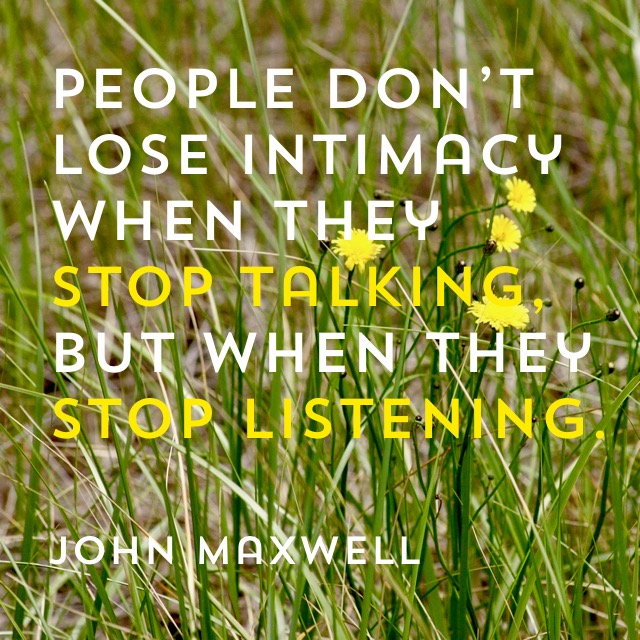
“People don’t lose intimacy when they stop talking, but when they stop listening. Leaders seldom realize how much their listening empowers the other person. Because they are leaders, the sheer act of listening speaks volumes that even a great speech can’t communicate.” —John Maxwell

Everyone’s A Critic

These are wise words from John Maxwell in The Maxwell Leadership Bible

Then Miriam and Aaron spoke against Moses because of the Ethiopian woman whom he had married; for he had married an Ethiopian woman. (Numbers 12:1)

Leaders can bank on two truths. First, they will be criticized. Second, criticism always changes the leader. Unhappy people tend to attack the point person.

Moses’ only family criticized him. Notice what God and Moses teach us on how to handle criticism (Numbers 12):

  1. Maintain your humility. (v. 3)
  2. Face the criticism squarely. (v. 4)
  3. Be specific about the issue. (vv. 5-8)
  4. Lay out consequences. (vv. 9, 10)
  5. Pray for the criticizers. (vv. 12, 13)
  6. Restore them when appropriate. (v. 14)

Beyond that, consider the ways leaders should handle criticism:

  1. Understand the difference between constructive and destructive criticism.
  2. Look beyond the criticism to see the critic.
  3. Guard your own attitude toward the critic.
  4. Keep yourself spiritually in shape. Associate with people of faith.
  5. Wait for time to prove the critic wrong.
  6. Concentrate on your mission; change your mistakes.

You might also want to check out—

Book Reviews From 2017

I love reading, and I love sharing my love of good books with others! Here is a list of the books I read and reviewed in 2017. Click on a title to be taken to that review.

#Truth

10 Commitments For Dads

50 Core American Documents

A New Kind Of Apologist

Absolute Surrender

As Kingfishers Catch Fire

Born After Midnight

Brady vs. Manning

Cherish

Everything You Always Wanted To Know About God

Evidence That Demands A Verdict

How Great Is Our God

If

Interpretation Of The Scriptures

Islam Booklets

Joy To Your World

Know Who You Are

Leadership Promises For Every Day

Live Dead Journey

Live Dead Life

Longing For A Changed World

Man—The Dwelling Place Of God

Marching Off The Map

No Limits

On Calvary’s Hill

Ordering Your Private World

Paths To Power

Peace In The Face Of Cancer

Prevailing Prayer

Run Today’s Race

Seeing Jesus

Shade Of His Hand

Take Your Life Back

The Broken Way

The Christian Book Of Mystical Verse

The Christian In Complete Armour

The Christmas Candle

The Dawn Of Christianity

The Servant As His Lord

The World’s Last Night

Transforming Grace

When A Nation Forgets God

Your Next 24 Hours

Here are my book reviews for 2011.

Here are my book reviews for 2012.

Here are my book reviews for 2013.

Here are my book reviews for 2014.

Here are my book reviews for 2015.

Here are my book reviews for 2016.

A Leader’s Integrity

…for I have not concealed the words of the Holy One (Job 6:10).

Job is making a case for his integrity. One of the evidences he produces is this: He responds to God’s voice. He doesn’t ignore Him, or pretend he didn’t hear Him, or offer justifications for why he’s not obeying God. “I have not concealed anything God has said to me!”

Not only that, but he invites God to continue to speak to him—

Teach me, and I will hold my tongue; cause me to understand wherein I have erred. How forceful are right words! (v. 24)

What is man, that You should exalt him, that You should set your heart on him, that You should visit him every morning, and test him every moment? (7:17-18)

It’s amazing to think that God cares enough about me that He would speak to me, test me, and correct me if I err or go astray!

A mark of a godly leader is one who lives in complete integrity in God’s sight.

Or as John Maxwell says, “Being God’s kind of leader means refusing even the smallest compromise in what you believe.”

My desire is this … May I, like Job, be able to say that I have not concealed nor ignored any of Your words, O God, but that I respond quickly and obediently to all Your loving words to me.

This is Part 15 in my series on godly leadership. You can check out all of my posts on this topic by clicking here.

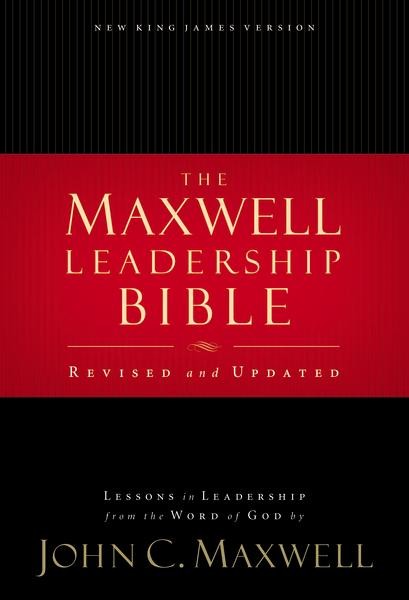
The Maxwell Leadership Bible (book review)

Hands-down the best book for any aspiring, developing, or seasoned leader is the Bible! John Maxwell is a mentor of leaders that I have come to greatly appreciate over the years of my leadership development. So having John Maxwell’s commentary accompany my daily Bible reading time has been a  huge blessing! You can find this complete leadership development package in The Maxwell Leadership Bible.

The Bible is filled with leadership principles given by God Himself. John Maxwell is helping me compile various principles throughout the entirety of the Bible into cohesive units of study.

The Bible also presents us with various people who followed or violated God’s leadership principles. We are able to see the struggles that come to those who either ignore God’s directives or don’t consistently follow through on them. And we’re able to see the legacy of success that follows those who make it a priority to consistently walk in God’s precepts. Once again, Maxwell is brilliant at identifying these leadership lessons.

Normally I post reviews after I have read an entire book, but given the fact that my Bible reading time is in-depth and time-consuming, I wanted to post a review now to encourage Christian leaders to take advantage of this wonderful resource. If you want to use the Bible to grow your leadership capacities, the commentaries and insights provided by John Maxwell will be a huge blessing to you.

P.S. I am reading The Maxwell Leadership Bible on the Kindle version. I find it very convenient to tap on the footnotes, character studies, and leadership lessons that John Maxwell has prepared, and then quickly tap back to the biblical passage right where I left off.

13 Quotes From “No Limits”

John Maxwell has a unique and gifted way of challenging his readers to move forward by giving them both the motivation and the practical steps to do so. No Limits is no exception. You can check out my full review of his book by clicking here. Below are the first set of quotes from this book that I would like to share with you.

“What stops people from reaching their capacity often isn’t lack of desire. It’s usually lack of awareness.”

“Sad is the day for any man when he is absolutely satisfied with the life that he is living, thoughts that he is thinking, deeds that he is doing, until there ceases to be forever knocking on the door of his soul, a desire to do something greater for God and his fellow-man.”

“Dysfunctional people want others to function on their level. Average people want others to be average. High achievers want others to achieve.”

“Emotionally strong people honor their relationships while at the same time guarding against letting others control them, especially in difficult relationships.”

“What’s the fastest way to make a relationship better? Make yourself better so that you have more to give. That requires an abundance mind-set.”

“How can we make things better? If you’re already successful, this is a fantastic question to ask yourself and your team. Anytime we’re successful, there is a temptation to be lulled into a feeling a false security, to believe that we have arrived. But the greatest detriment to continual success is relying on past success.”

“No one has ever had to work at limiting their capacity. That happens naturally. The world tries to talk us out of working hard. We convince ourselves that we can’t get ahead. We feel down, and we watch our lives go downhill. There are even people who will tell you that others have put you there, that the system is rigged, that successful people have pushed you down and have gotten to the top by stepping on you. Well, I have good news for you … Your production capacity is within your own control.” 

“No one has ever stayed the same, while at the same time rising to a higher level. Being willing to change is one of the prices we pay to grow.”

“Repeated choices to take responsibility give you mental and emotional momentum, which only makes you feel stronger and better about yourself.”

“Everyone sees people’s success without realizing that 90 percent of what leads to it is unseen, yet that 90 percent is what makes it possible.”

“The bottom line is that you cannot manage your life if you do not manage yourself. You cannot maximize your capacity if you cannot increase your discipline.”

“Resilient people don’t focus on the negative experience. They focus on what they can learn from the experience.”

“Winning is overrated. Growing is underrated.”

I will be sharing another batch of quotes from No Limits soon, so stay tuned. To check out other quotes I share daily, please follow me on Twitter and Tumblr.

No Limits (book review)

I always get excited when I get to read a John Maxwell book because I know right upfront that I’m going to be getting life-changing insights. As usual, No Limits lived up to my expectations!

The premise of this book is simple: Most of our limitations are self-imposed, but if we could see a way to blow the cap off those limitations there is no limit to the level of success we can achieve.

The book is built around John Maxwell’s capacity challenge, which says, “If you grow in your awareness, develop your abilities, and make the right choices, you can reach your capacity. In other words: Awareness + Ability + Choices = Capacity.”

No Limits is built around the three components in this capacity equation. First, you will learn how to become aware of what may be limiting you; then, you will learn how you have the ability to develop the capacities that you already have; and finally, you will learn how to make the daily choices that will maximize your capacity.

The book contains a link to a “Capacity Quiz,” which is a great help to identify the areas in which you especially need growth. It’s a good idea to take this quiz before diving into the material in the book so that you can pay special attention to the weakest areas as you are reading.

John Maxwell continues to stretch and mentor me in leadership growth like few other people have. I believe he will do the same thing for you, too, if you are willing to roll up your sleeves and go to work on blowing the cap off all your limits!

I am a Center Street book reviewer.

What If We Had Higher Expectations?

Humans are hardwired by God to be in relationship with Him and with others.

  1. God is a Triune God so each part of the Godhead is in relationship with the other parts—John tells us in his epistle that God is love, meaning there is both a Lover and a Beloved.
  2. We are created in God’s image—we are made to love and be loved.
  3. God affirmed our need for relationships with others—see Genesis 2:18.
  4. Relationships with others give us a return on investment, help in trouble, encouragement in dark times, and protection from attack—see Ecclesiastes 4:9-12.
  5. Christians being in healthy relationships with others is a testimony to just how powerful God’s love is.

Sadly, Brennan Manning pointed out that Christians “have come a long sad journey from the first century, when pagans exclaimed with awe and wonder, ‘See how these Christians love one another!’”

When I read this, I don’t want to throw in the towel, but I want to reclaim this awe and wonder! 

One of the things that will quickly kill relationships is having low expectations for the other person or for the relationship itself. This can be counteracted by having higher expectations for other people and for our relationships with them.

John Maxwell noted, “People rise or fall to meet our level of expectations for them. If you express skepticism and doubt in others, they’ll return your lack of confidence with mediocrity. But if you believe in them and expect them to do well, they’ll wear themselves out trying to do their best.”

Consider the high expectations that God had for a relationship with us. If He had low expectations, one of the best-known verses in the Bible would be, “God thought a few people in the world had something worth saving, so He sent a handful of angels to tell us His story.”

Instead, the verse tells us: God so loved the entire world that He sent the very best that He had—He sent His One and Only Son!

  • Jesus died for us when we were unworthy of His love
  • Jesus gave us all His authority to represent Him in the world
  • Jesus empowered us with His Holy Spirit to be His witnesses
  • Jesus told us that our love for others would be a blazing sign to that we were His

Since God has this high expectation for us … what would happen if we had the same high expectations for everyone with whom we came into contact? What would happen if we believed the best for everybody, and then gave all that we could to bring the best out of them? I think that once again people would exclaim with awe and wonder,

“See how these Christians love one another!”

We will be talking more about Relationship Builders & Killers this Sunday and I would love if you could join me!