Our Prayer Coach

I love football! 

The plays that the quarterback calls in the huddle are very creative. It may sound something like this: “soultrain alert 13 trap on 1.” Then after the team breaks the huddle with the play that they just know will be successful, the quarterback may look over the other team’s defense and callout something like, “check” or “sally” or “Omaha.” This is called an “audible” and it’s communicating to the team how they are now going to modify the play that they just called. The quarterback calls this audible because it appears to him that the defense may know what sort of play they were planning to run. 

The teams that can adjust better on-the-fly—or call audibles—usually win the game. 

None of this happens without lots of practice! Practice builds good habits. Practice helps teams learn from their mistakes and develop even better habits. All of this practicing also requires a good coach overseeing the process, and individual team members who are willing to submit to the coach’s direction and correction. 

Have you noticed that there are some Christians who “audible” well? Unexpected things pop up that seem to throw many people off their game plan, but these Christians seem to adapt so easily. Why is that? It’s definitely not because they are wired that way, or have a higher spiritual IQ, or they can think faster. It’s because they’ve practiced good habits, they’ve learned from past experiences which have developed better “audibling” habits, all under the guidance of a perfect Coach. 

Jesus told us about the amazing prayers that we would be able to pray, and how the Holy Spirit can be our perfect Coach in this process (John 14:12-17, 26; 16:13-15). 

There are some incredible things that happen when we pray consistently, when we pray boldly, and when we pray in the character of Jesus. 

John Piper asks, “Why do God’s children so often fail to have consistent habits of happy, fruitful prayer?” He answers his own question like this: “Unless I’m badly mistaken, one of the reasons is not so much that we don’t want to, but that we don’t plan to.” 

Successful football teams don’t simply show up on game day and compete successfully. They plan to be successful. They practice and study the coach’s game plan so that they can be ready to audible when necessary. So too for Christians—we can’t just show up for spiritual battle and expect to be successful. We must also practice, and study the game plan laid out in the Bible, and listen to the Holy Spirit as He coaches us. That’s the only way we can successfully handle all that life and even the devil throws at us. 

Over the next couple of weeks, I’m going to be sharing some hindrances that I see that can derail our practice of prayer. In the meantime, I want to challenge you—as I’ve challenged myself personally—to think on three questions:

  1. Do I really want to pray effectively? 
  2. Am I willing to put in the energy necessary to pray this way?
  3. Am I willing to let the Holy Spirit coach and discipline me in my prayer practice? 

If you can, please join me at Calvary Assembly of God on Sunday as we continue our series called Prayer Plan. 

Year-End Review (2019 edition)

Ten years ago God called me to pastor at Calvary Assembly of God, and we have so thoroughly enjoyed our time in Cedar Springs! One of the really cool things I get to do is teach an amazing group of people every Sunday. Here’s a recap of the series and messages from 2019.

Boldly Praying—As a general rule, God would like us to pray much more boldly than we typically do. Jesus told us that we could pray mountain-moving prayers, but C.S. Lewis rightly observed, “If we consider the unblushing promises of reward and the staggering nature of the rewards promised in the Gospels, it would seem that our Lord finds our desires, not too strong, but too weak.” 

Christ’s Passionate Journey—In action movies, the crucial moment usually is filmed in slow motion. The Gospels do the same as Jesus approaches the Cross. For example, Mark doesn’t mention anything about the birth of Jesus and only gives us one verse to tell about satan’s temptation of Jesus in the wilderness. But he uses nearly 40% of his writing to describe the last week of Christ’s life. 

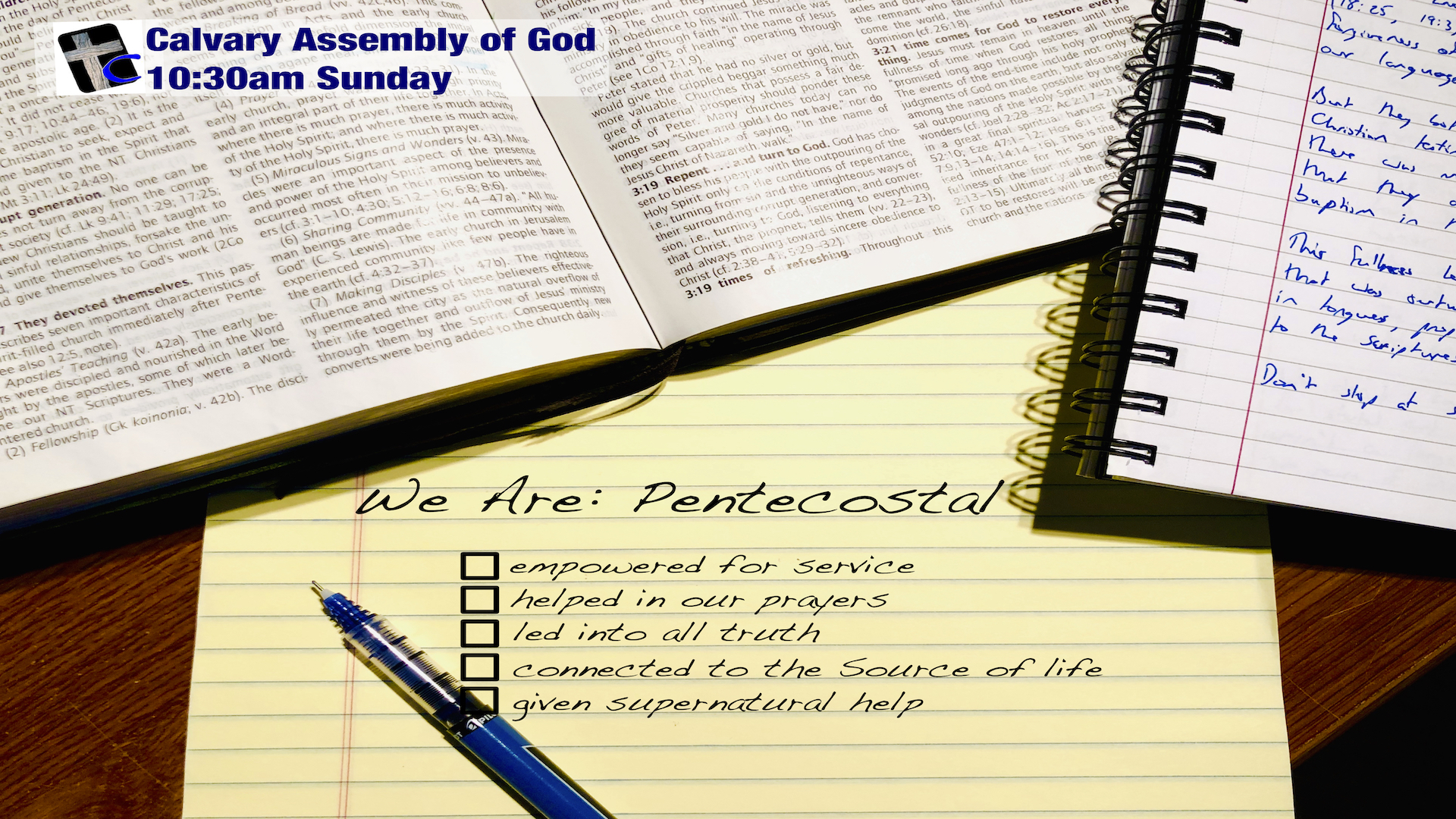
We Are: Pentecostal—Pentecost for over 1000 years was a celebration in Jerusalem that brought in Jews from all over the world. But on the Day of Pentecost that came just ten days after Jesus ascended back into heaven, the meaning of Pentecost was forever changed! 

Is That In The Bible?—Sometimes things that sound “biblical” aren’t actually in the Bible at all, and sometimes they are there but are misquoted. 

Selah—When you see this word in the Bible it can mean either a pause from the noise to reflect on something, a preparation for an exciting accent, or a reflective time of consideration. We are working our way through the Selahs in the Psalms.

Major Lessons From Minor Prophets—The five major prophets consist of 182 chapters, whereas the 12 minor prophets only have 67 chapters. The volume of these prophets writing may be minor, but their content carries major messages of meteoric power!  

Fading Gratitude—Looking back at the history of God’s people in the Bible, there is a distinct up-and-down cycle. I believe their slipping away from God can be directly linked to their forgetfulness. If there is a peril in our forgetfulness, there is also a power in our thankfulness!

The Carols Of Christmas—How many “old familiar carols” have you heard Christmas after Christmas until the words have almost lost their meaning? If we’re not careful, any song repeated too often can lose the richness of its original intent. 

We will be returning to a couple of these series in 2020, and we’ll be launching some brand new ones as well. In either case, if you don’t have a home church in the northern Kent County area, I would love to have you join us! 

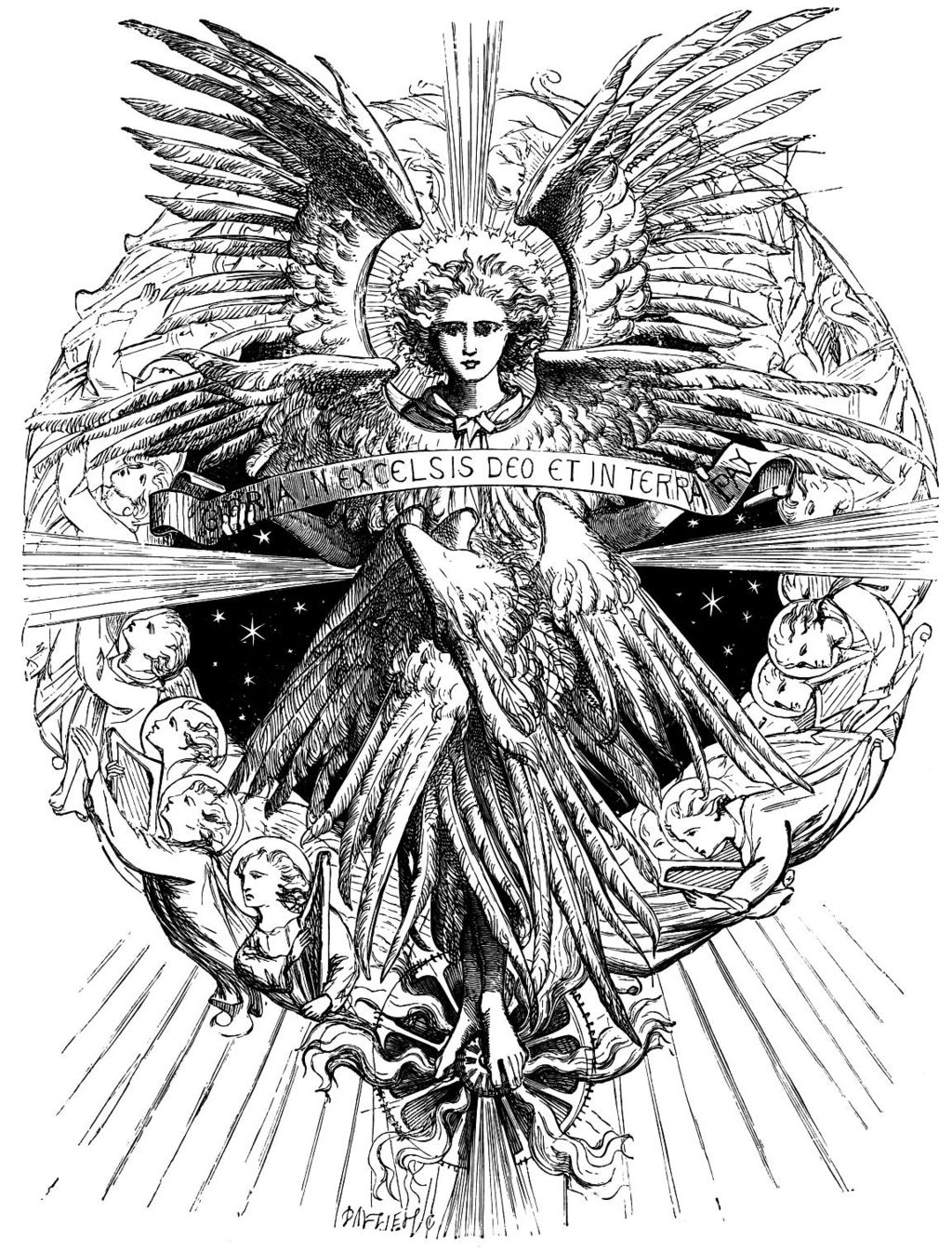
Poetry Saturday—Angel Hymn

Glory to You who have shown us the light.
Glory to God in the highest and on earth peace, goodwill to all people.
We praise You, we bless You, we worship You, we glorify You, we give thanks to You for Your great glory.
Lord, King, heavenly God, Father, Almighty; Lord, the only-begotten Son, Jesus Christ, and Holy Spirit.
Lord God, Lamb of God, Son of the Father who takes away the sin of the world, have mercy on us, You who take away the sins of the world. —Angel Hymn / Doxology (~300 AD)

Glory to God in the highest
and peace to His people on earth.
Lord God, heavenly King,
Almighty God and Father,
we worship You, we give You thanks,
we praise You for Your glory.
Lord Jesus Christ, only Son of the Father,
Lord God, Lamb of God,
You take away the sin of the world:
have mercy on us;
You are seated at the right hand of the Father:
receive our prayer.
For You alone are the Holy One,
You alone are the Lord,
You alone are the Most High,
Jesus Christ,
with the Holy Spirit,
in the glory of God the Father. Amen. —updated in the Book of Common Prayer (~1975)

Book Reviews From 2019

Thursdays With Spurgeon—The Depths Of God’s Love For Us

This is a weekly series with things I’m reading and pondering from Charles Spurgeon. You can read the original seed thought here, or type “Thursdays With Spurgeon” in the search box to read more entries.

The Depths Of God’s Love For Us

I have made You known to them, and will continue to make You known in order that the love You have for Me may be in them and that I Myself may be in them. (John 17:26) 

     Is He not Himself very God of very God? … He declared the righteous Father in His life, for in His life He incarnated truth and grace. Jesus Christ on earth was without sin in thought, in word, and in deed. Point me to a sin He ever committed, inculcated, or excused. Righteousness was about Him as the atmosphere that He breathed. Well did the psalmist say of Him, “You love righteousness and hate wickedness” (Psalm 45:7). And yet what love there was in Him and pity for the wandering sheep! He mingled with sinners and yet was separate from sinners. He touched their diseases and healed them and yet was not defiled by their impurities. He took their infirmities upon Himself and yet in Him, personally, there was no trace of sin. Our Lord was so righteous that you perceived at once that He was not of this world—and yet He was so lovingly human that He was altogether a Man among men. … 

     He was man’s Brother and his physician, his Friend and his Savior! When you want to know the Father’s righteousness and love, read the history of Jesus Christ—no, know the Lord Jesus Himself and you know the Father! … 

     Beloved, when Jesus Christ died, there was a greater display of the righteousness and the fatherhood of God than could have been possible by any other means! Then the mystery was made plain and the depth opened up to its very bottom! O Lord our God, what an abyss of adorable goodness have You thus laid bare before us! … 

     And now, today, it is the business of our Lord to continue to reveal the righteous fatherhood of God, and He does so by the work of His Holy Spirit [John 14:26]. … That Spirit of God working on behalf of Christ is still declaring this among the nations! As the years roll on, He is opening the eyes of the blind and bringing His own chosen, one by one, to behold the glory of God in the face of Jesus Christ! And then they can say, “O righteous Father, I know You and rejoice in You.”

To each one of us who is saved, Jesus is declaring this righteous Father more and more.… I trust that every day we see a little more of the righteous fatherhood of God and will continue to do so, world without end!

From The Righteous Father Known And Loved

May we never, ever come to the end of learning about these depths of love that Jesus revealed in His life, death, and resurrection, and which the Holy Spirit is continuing to impart to us. 

May we add our Amen to the apostle Paul’s prayer: I keep asking that the God of our Lord Jesus Christ, the glorious Father, may give you the Spirit of wisdom and revelation, so that you may know Him better. … I pray that out of His glorious riches He may strengthen you with power through His Spirit in your inner being, so that Christ may dwell in your hearts through faith. And I pray that you, being rooted and established in love, may have power, together with all the Lord’s holy people, to grasp how wide and long and high and deep is the love of Christ, and to know this love that surpasses knowledge—that you may be filled to the measure of all the fullness of God. (Ephesians 1:17; 3:16-19)

What We Can Know

… we know … (1 John 3:16, 19, 24; 4:2, 6, 13; 5:2, 13, 19, 20).

God clearly reveals Himself to us so that it is not a mystery of how to abide with Him. 

The word John uses for “know” in the Greek is ginosko. This is a knowledge through personal, firsthand experience; not knowledge someone told us about secondhand. 

God reveals Himself in Creation, in His law, in the rituals of worship, in our conscience, and in the voice of the prophets. Ultimately—and most unmistakably of all—God reveals Himself in Jesus (John 14:9). 

So here are 8 things we can now know…

  1. We know true love because of the sacrifice of Jesus (3:16; 4:7-10).
  2. We know we have God’s love in us by the way we treat others (3:17-19; 4:11; 4:20-21).
  3. We know our hearts our confident by the inward witness of the Holy Spirit Who assures us that we abide in God and He in us (3:20-24).
  4. We know how to discern deceptive spirits (4:1-6).
  5. We know what it means to be confident on Judgment Day (4:12-19).
  6. We know that loving others fulfills God’s commands (5:1-13).
  7. We know God hears our prayers (5:14-17).
  8. We know that we can be victorious over sin (5:18-21).

WE KNOW!

No doubts, no ambiguity. It’s crystal clear, pure knowledge through Him Who loves us!  

Thursdays With Spurgeon—Righteous Father

This is a weekly series with things I’m reading and pondering from Charles Spurgeon. You can read the original seed thought here, or type “Thursdays With Spurgeon” in the search box to read more entries.

Righteous Father

O righteous Father! The world has not known You, but I have known You; and these have known that You sent Me. And I have declared to them Your name, and will declare it, that the love with which You loved Me may be in them, and I in them. (John 17:25-26)

     In the sublime transactions of Calvary, God manifests all the love of a tender Father’s heart and all the justice of an impartial Ruler’s sword! … 

     When we see in a man unconditional submission to the justice of God and yet a trustful hopefulness in His boundless love, we may be sure that he is a renewed man. He cries, “You are righteous, O my God, and if You destroy me, I can say nothing. But, Father, You will not destroy me, for I perceive that You are love. Though I see You grasp your sword of fire, yet do I trust You, for I still believe You to be gracious and loving.” … 

     They would not have come to know the righteous Father unless there had been a change in their character worked by the Spirit of God, and that once done they know Him as of necessity. … To know the only true God, and Jesus Christ whom He has sent, is the climax, the essence, the sum total of wisdom! … 

     In Christ Jesus, God is just and yet our Justifier! We are so safe that we begin to challenge opposition and cry, “Who shall bring a charge against God’s elect?” (Romans 8:33). We take up a triumphant note and sing with exceeding joy, “If God is for us, who can be against us?” (Romans 8:31). If God is righteous and yet my Father, then I am saved and saved in such a way that the attributes of God are glorified by my salvation, and therefore I am most securely and certainly saved!

From The Righteous Father Known And Loved

Jesus prayed that we might know the Father as He knew Him—both just and the Justifier. 

When we know God this way, we also know ourselves and our position in Him more clearly. We are both guilty and worthy of God’s full wrath AND justified and an object of God’s favor. We can never earn this on our own, but we stand in this precious and secure place only because we stand in the righteousness of Jesus. 

Jesus wants us to know His Father this way. Do you? 


Thursdays With Spurgeon—Instructor And Indweller

This is a weekly series with things I’m reading and pondering from Charles Spurgeon. You can read the original seed thought here, or type “Thursdays With Spurgeon” in the search box to read more entries.

Instructor And Indweller

O righteous Father! The world has not known You, but I have known You; and these have known that You sent Me. And I have declared to them Your name, and will declare it, that the love with which You loved Me may be in them, and I in them. (John 17:25-26) 

     John’s Gospel is always easy for the child to read, but it is always hard for the man to understand. And these two verses, which are almost entirely made up of words of one syllable, contain mysteries that baffle the most enlightened understanding. …  

     The twenty-sixth verse speaks of the wonderful discoveries of a love of infinite excellence: “That the love with which You loved Me may be in them, and I in them.” And you notice that in order to bring that love home to us, there is a divine Indweller who goes with it, and without whom it could not be! As a teacher is required to bring us the choice knowledge, so an indweller is necessary to infuse into us the infinite love: “And I in them.” Jesus must teach us or we will not know the Father. He must dwell in us or we will not rejoice in His love.

     Thus our first subject is divine knowledge and the divine Instructor. Our second subject is indwelling love and the indwelling Lord. The two are one! The blessed Person of our Lord Jesus is so connected with both and so unites both that the subject is one! To know God in Christ Jesus is to love Him, and to be loved of Him is the cause of our being made to know Him! When Jesus declares the Father’s name, we both know and love. And when we see the Father in the Son, we are filled with both instruction and affection. …  

     “Righteous Father”—I know of no other place in Scripture where God is called by that name. … He is righteous, having the attributes of a judge and ruler. He is just, impartial, by no means sparing the guilty. He is Father, near of kin, loving, tender, forgiving. In His character and in His dealings with His people, He blends the two as they were never combined before! How can the Judge and the Father be found in one? When guilty men are concerned, how can both characters be carried out to the fullest? How is it possible? There is but one answer, and that is found in the sacrifice of Jesus that has joined the two in one! In the atonement of our Lord Jesus, “mercy and truth have met together; righteousness and peace have kissed” (Psalm 85:10). 

From The Righteous Father Known And Loved

Jesus showed us the full extent of His love at Calvary. When He was ready to ascend to heaven, He promised to send the Holy Spirit to remind us of all that we had learned about this love and salvation of Jesus, and so much more! 

This should suggest to each of us a searching question: Do I know the Lord? 

If not, you can know Him today!


8 Quotes From “The Gospel Of The Kingdom”

T.M. Moore has written a book that I think is a must-read for those who want to “earnestly contend for the faith” (Jude 3)—the orthodox Christianity that is presented in the Scriptures. You can check out my full book review of The Gospel Of The Kingdom by clicking here. 

“We can only discern these wayward ‘winds of doctrine’ when we have a clear understanding of the Gospel of the Kingdom. The better we understand and the more wholeheartedly we embrace this Good News as Jesus and the Apostles taught it, the better able we will be to counsel and lead our fellow believers who may be ensnared in the thrall of a ‘different gospel’ and therefore in danger of having believed in vain.” 

“In the divine economy now established within the Kingdom of God, the Spirit of God works with the Word of God to build the church and further the reign of Christ. An ethic of love and hope prevails within that realm which serves as a platform for embodying and proclaiming the truth of God and Christ. Salvation comes to those who believe, bringing them into the community of the saints and dramatically affecting every aspect of their lives in relationships of mutual service and love.” 

“The Gospel of the Kingdom is not, in the first instance, about you and me going to heaven when we die. It is about the Kingdom of God, first and foremost—about a new reality that has broken into human experience with irresistible, transforming power, making all things new and bringing the knowledge of the glory of God to light in the sight of all men and nations.” 

“Apart from the saving mercy of Christ and liberation into His Kingdom, men can look forward only to lives of uncertainty, doubt, disappointment, false hopes, fear, and death.” 

“The Gospel of the Kingdom is the power of God for transformation, a transformation so complete and thorough that it finally makes all things new. Those who know this power are changed by the glory of God so that, increasingly, their lives actually begin to reflect the living reality of the risen Christ, their King. The fruits and virtues that flow from their lives, like rivers of living water, are precisely those most to be desired and least in supply in a fallen world.” 

“The Kingdom is Good News because it brings power exceeding and abundant to be and do more than we could ever ask or think [Ephesians 3:20]. Here is a power we can never exhaust and that springs up day by day in ever fresher, ever more abounding ways to make all things new in our lives.” 

“Joy, it appears, is not determined by what we can see in our immediate environment. Instead, Joy is a condition that attaches to knowing the Lord and being able to see past what is seen in order to engage what is not seen. …The ability to know joy—in spite of any untoward circumstances or conditions—is dependent on the extent to which one actually knows the Lord and is intimately engaged in a relationship with Him. … Your salvation is an experience of living in the Kingdom of God, where we know the hope of glory, experienced and expressed, as a daily reality, then our joy will be more constant and full because our relationship with the Lord will be as much for the ‘here and now’ as for the ‘then and there.’” 

“God is always ready to meet us with joy, and He has provided ample means whereby we may engage Him for the joy that is to be known in His presence. Only our slothfulness, distractiveness, or neglect of His salvation—or the idolatry of seeking our joy in places other than the presence of God—can keep us from living in joy now, and in anticipation of the fullness of joy yet to come.” 

The Christian Leadership Cycle

…an apostle of Jesus Christ by the will of God… (2 Timothy 1:1). 

Paul tells his protegé Timothy that he didn’t choose apostleship, but that God chose him for it. The same should be true for all Christian leaders. To use a personal example: I didn’t choose to be a pastor, but God chose me for the pastorate. 

A mark of a godly leader is one who knows that God chose him to be a leader.

Knowing that, there are now choices that all leaders can—and should—make to steward their calling in a way that glorifies God. 

Paul tells Timothy that a pure conscience and a genuine faith allowed him to maximally use the gift of apostleship that God gave him. With these, Paul could use God’s gift without fear, but lovingly and with a sound mind (see vv. 3-7). 

This clear direction allows all Christian leaders to never be ashamed of their calling or of the fruits that come as a result of their leadership. This clear direction and sincere belief that I am doing what God has called me to do keeps me committed to an utter reliance on God’s supply all the way until the end (vv. 8-12). 

Finally, my commitment to effectively stewarding my God-ordained leadership is reinforced by holding fast to sound doctrine and remaining sensitive to the promptings of the Holy Spirit (vv. 13, 14). 

It looks something like this—

This is part 41 in my series on godly leadership. You can check out all of my posts in this series by clicking here.