Thursdays With Spurgeon—Forgiven And Forgiving

This is a weekly series with things I’m reading and pondering from Charles Spurgeon. You can read the original seed thought here, or type “Thursdays With Spurgeon” in the search box to read more entries.

Listen to the podcast of this post by clicking on the player below, and you can also subscribe on iTunes or Spotify.

Forgiven And Forgiving  

Forgiving one another, even as God for Christ’s sake has forgiven you. (Ephesians 4:32) 

     Now observe how the apostle puts it. Does he say, ‘forgiving another’? No, that is not the text. If you look at it, it is ‘forgiving one another.’ One another! Ah, then that means that if you have to forgive today, it is very likely that you will, yourself, need to be forgiven tomorrow, for it is ‘forgiving one another.’ … Let us begin our Christian career with the full assurance that we will have a great deal to forgive in other people, but that there will be a great deal more to be forgiven in ourselves! … 

     Note again: When we forgive, it is a poor and humble business compared with God’s forgiving us, because we are only forgiving one another—that is, forgiving fellow servants. But when God forgives us, the Judge of all the earth is forgiving, not His fellows, but His rebel subjects, guilty of treason against His majesty! For God to forgive is something great—for us to forgive, though some think it great—should be regarded as a very small matter. … What we owe to God is infinite, but what our fellow creature owes to us is a very small sum. …  

     If anyone here who is a Christian finds a difficulty in forgiveness, I am going to give him three words that will help him wonderfully… Here they are again: ‘For Christ’s sake.’ … 

     I do not know how to put this next word I am going to say. It is a paradox. You must forgive or you cannot be saved. But at the same time, you must not do it from compulsion, you must do it freely. … Remember, it is of no use for you to put your money into that offering box as you go out unless you remember, first, to forgive your brother. God will not accept the gifts, prayers, or praises of an unrelenting heart. … The very prayer that teaches you to ask for mercy bids you say, ‘And forgive us our debts, as we forgive our debtors’ (Matthew 6:12). Unless you have forgiven others, you read your own death warrant when you repeat the Lord’s Prayer!

From Forgiveness Made Easy 

We honor the forgiveness that God has extended to us by liberally forgiving others. And our forgiveness of others shows them just how loving and forgiving our God is too! 

Make no mistake, it’s hard work to forgive. As C.S. Lewis said, “We need to forgive our brother seventy times seven not only for 490 offenses but for one offense.” But that hard work develops our maturity as Christians. In fact, a mark of a maturing saint is one who is closing the gap between being injured and forgiving the offender. 

I add my prayer to Charles Spurgeon’s that you would grasp the truth that we can forgive one another for Christ’s sake because God has forgiven us for Christ’s sake. Let’s all grow in this Christian maturity!

►► Would you please prayerfully consider supporting this ministry? ◀︎◀︎


Unburdened

Listen to the podcast of this post by clicking on the player below, and you can also subscribe on AppleSpotify, or Audible.

Let’s get on the same page with a few facts: 

  • Nearly 1-of-5 adults in the United States age 18 and older battle some form of anxiety disorder. 
  • Being anxious is not a sin but we can grieve God’s heart if we don’t train ourselves to turn to Him as our First Source. Notice that David said, “When [not “if”] I am afraid, I put my trust in You” (Psalm 56:3). 

We’ve been looking at both the dictionary definitions and biblical definitions of anxiety. One definition is being disquieted, but we saw that coming close to Jesus Xs out the “dis-” and takes us to a place of quiet. A second definition is being insecure because we are so full of cares. Clinging to Jesus Xs out the “in-” and makes us secure when His strong arms are around us. 

A third definition of anxiety is found here: “Cast your cares on the Lord and He will sustain you; He will never let the righteous be shaken” (Psalm 55:22). This word for cares or anxieties is the only time this Hebrew word is used in the Bible. The idea is a heavy burden, which the Amplified Bible captures like this: “Cast your burden on the Lord—releasing the weight of it—and He will sustain you….”

We can be burdened because we pick up and carry things on our own. But the word for cares or burdens in Psalm 55:22 can mean not only things we pick up, but things given to us by God or allowed by God. You might ask, “Why would God give me a burden?” 

  • Sometimes it’s allowed—God allowed satan to afflict Job within limits, and He allowed Joseph’s brothers to ambush him (Job 1:8-12; 2:3-7; Genesis 50:20).  
  • Sometimes it’s given—God gave Jesus a bitter cup to drink, and He gave Paul a “thorn in the flesh” (Matthew 26:39-42; 2 Corinthians 12:7). 
  • In every instance, the limits are perfectly measured to accomplish what God wants to do. The way we respond glorifies Him and keeps us dependent on Him (Job 1:20; 2:10; Genesis 50:20; 2 Corinthians 12:8-10; Hebrews 10:10). 

(Check out all of the above biblical passages by clicking here.)

Still in the middle of this, the burdens can seem overwhelming and anxiety-inducing. That’s why God tells us what to do with these burdens: Cast them off! 

In Psalm 55:22, David gives us the word “cast” in the imperative mood, which means it’s a command. Literally, the word means to throw away or shed the burden. 

How often do we do this? David said he prayed “evening, morning, and noon” for God’s help (Psalm 55:16-17). 

What does God do when we cast off these burdens? He sustains and supports us—“He will sustain you; He will never let the righteous be shaken.” 

The apostle Peter quotes the opening words of this verse when he writes, “Cast all your anxiety on Him,” and then he tells us why we can do this: “Because He cares for you” (1 Peter 5:7). Just like David said he prayed for his burdens to be released “evening, morning, and noon,” the verb tense Peter uses implies the same thing. We don’t just release our burdens once, but we continue to do it again and again and again! 

The word Peter uses for “cast” is only used twice in all the New Testament. The word means not just to drop our burdens at our feet—where we may trip over them or be tempted to pick them up again—but to throw our burdens on someone else. The only other place this word is used is when on the day Jesus rode into Jerusalem the disciples “threw their cloaks on the colt and put Jesus on it” (Luke 19:35). 

Peter tells us that this casting off of our burdens requires us to humble ourselves before God. Pride makes us think we can handle it on our own, and that same pride robs God of the glory He would receive when He provides relief from our heavy load. We cast these burdens onto Jesus so that we can be alert to the enemy’s sneaky tactics, and help others who are also being attacked. And just as David said God supported and sustained him, Peter said the same thing (1 Peter 5:6-10). I especially like the wording from the King James Version—

But the God of all grace, Who hath called us unto His eternal glory by Christ Jesus, after that ye have suffered a while, make you perfect, stablish, strengthen, settle you. (1 Peter 5:10 KJV) 

Jesus can X-out the instability that comes with carrying heavy burdens and make us stablished, strengthened, and settled in Him. 

Don’t try to carry these anxiety-inducing burdens on your own, but cast them on Jesus every evening, morning, and noon. Let Him carry those burdens so you can live in a way that glorifies Him every single day. 

If you’ve missed any of the messages in our series X-ing Out Anxiety, you can find all of the messages by clicking here. 

►► Would you please prayerfully consider supporting this ministry? ◀︎◀︎

Clinging To Jesus

Listen to the podcast of this post by clicking on the player below, and you can also subscribe on AppleSpotify, or Audible. 

Previously I shared with you that according to the Anxiety & Depression Association of America, nearly 1-of-5 adults in the United States age 18 and older battle some form of anxiety disorder. That means there’s a good chance that either you or someone close to you will be in this battle sometime during their life. 

We also learned from David that being anxious or afraid is not a sin. He said, “When [not ‘if’] I am afraid, I put my trust in You” (Psalm 56:3). But we can grieve God’s heart if we don’t train ourselves to turn to Him as our trustworthy First Source of help. 

We also saw in Mark 4:35-39 how the disciples of Jesus were caught in a raging storm, trying everything in their own power to rescue themselves, and yet Jesus was right there with them. He arose and said, “Quiet. Be still,” and “THEN the wind died down and it was completely calm.” From this we learned that only His peace can X-out the noise of the storm and bring us to a place of quiet rest. 

We see another aspect of anxiety here: “Anxiety weighs down the heart” (Proverbs 12:25). That word for “anxiety” means carefulness, but not in the idea of being cautious. It literally means someone who is full of cares. This state leads to a heaviness of heart, as the KJV of that same verse says, “Heaviness in the heart of a man maketh it stoop.”  

I don’t think anyone wakes up one day and says, “I’m going to take all of the cares of the world on my shoulders today.” Instead, we pick up just one thing. “This is just a small thing,” we tell ourselves. Then we wake up the next morning with just that one little thing, and we pick up one more little thing. And then we do it again the next day, and the next day, and the next day. Until before we know it we are bowed down because we are full of cares. This heaviness makes us stoop, makes us unsteady on our feet, and magnifies even the smallest of concerns into a huge crisis. 

We are clinging to our load of cares—our care-fullness—but our loving Heavenly Father desires us to cling to something else. He wants us to cling to Him!

  • Moses told the Israelites: Serve only the Lord your God and fear Him alone. Obey His commands, listen to His voice, and cling to Him. (Deuteronomy 13:4 NLT) 
  • David declared: I cling to You; Your right hand upholds me. (Psalm 63:8) 

We see a beautiful example of Paul clinging to the promises of God during his multiple trials in and around Jerusalem and then during his journey to Rome to stand trial yet again. While he was still in prison in Jerusalem, Jesus appeared to him and said, “Take courage! As you have testified about Me in Jerusalem, so you must also testify in Rome” (Acts 23:11). 

Paul knew he was going to arrive in Rome. But during the horrendous storm at sea on his way there, Paul received an added assurance. He told his shipmates—

“But now I urge you to keep up your courage, because not one of you will be lost; only the ship will be destroyed. Last night an angel of the God to whom I belong and whom I serve stood beside me and said, ‘Do not be afraid, Paul. You must stand trial before Caesar; and God has graciously given you the lives of all who sail with you.’ So keep up your courage, men, for I have faith in God that it will happen just as He told me.” (Acts 27:22-25) 

Jesus tells all of us to cling to Him and His secure promises (Matthew 11:28-30). When we cling to Him, we no longer cling to the cares of this world. We move from from full-of-cares to care-less. We go from insecurity over our future to the security that only Jesus can give us! 

Paul clung to those promises of Jesus: I will rescue you … You must testify about Me in Rome … I have given you all who sail with you. Likewise, we need to arm ourselves with the promises of God and tenaciously cling to them. I’ve shared just a few promises in the comments below, but feel free to reach out to me if I can help you find a promise in the Bible that you can cling to through your stormy times. 

If you’ve missed any message in our series about X-ing our anxieties, please click here to find the full list. 

►► Would you please prayerfully consider supporting this ministry? ◀︎◀︎

Quieting The Storms

Listen to the podcast of this post by clicking on the player below, and you can also subscribe on AppleSpotify, or Audible. 

“Anxiety disorders are the most common mental illness in the U.S., affecting 40 million adults in the United States age 18 and older, or 18.1% of the population every year.” —Anxiety & Depression Association of America 

A multitude of factors go into someone’s anxiety: genetics, temperament, brain chemistry, life experiences. In addition to those factors, we have to keep in mind that humans are a three-part being—with a body, mind, and spirit—and a disease in one area does affect the other two areas. 

All of this means that there is no one-size-fits-all solution for anxiety. But there is one Healer: 

  • He may supernaturally heal your body, mind, or spirit 
  • He may direct you to a medical doctor, a mental health professional, or a spiritual counselor 
  • But always, He will walk through the challenges with you, strengthening you, and preparing you to minister to others going through a similar struggle (Psalm 23:1-6; 2 Corinthians 1:3-4) 

David wrote, “When I am afraid, I put my trust in You” (Psalm 56:3). Notice that he said “when” not “if.” David knows what you probably know too: we can be easily consumed by our anxiety, doubts, and fears. But David also knows (and I hope you do too) that at those moments, we can go to God as our trustworthy First Source. 

One of the dictionary definitions of anxiety is a feeling of disquiet. All of the conflicting thoughts make it hard to concentrate, the abundance of noise makes it difficult to talk to yourself, let alone talk to God. 

I’d like you to consider another psalmist’s words. Look at the first half of Psalm 94:19—

  • When anxiety was great within me… (NIV) 
  • In the multitude of my anxious thoughts… (AMP)
  • When doubts filled my mind… (NLT) 

The setting of this psalm is one of lots of disquieting voices: a desire to see the wrongdoers punished, listening to arrogant words, getting fed up with boasting words, seeing good people being trampled, hearing foolish words uttered about God (vv. 1-8). 

Experiencing anxiety is not sinful, but I do think that we grieve God’s heart when we immediately run to other sources for relief instead of going to our loving Heavenly Father first. After dealing with the disquiet in the opening verses of Psalm 94, the psalmist says, “My anxiety level was sky high!” But then notice how that verse concludes—

  • Your consolation brought me joy (NIV) 
  • Your comforts cheer and and delight my soul (AMP)
  • Your comfort gave me renewed hope and cheer (NLT)

Jesus told us about our Comforter who would always be with us (John 14:1, 16-17). A little further on in these same remarks Jesus also said, “These things I have spoken to you, that in Me you may have peace. In the world you will have tribulation; but be of good cheer, I have overcome the world” (John 16:33 NKJV). 

I like that phrase, “Be of good cheer.” That phrase is just one word in Greek, and sometimes it’s translated “be of good courage.” In every single instance, it’s only used by Jesus and it’s only used when He comes close to anxious people (Matthew 9:2, 9:22, 14:27; Mark 6:50, 10:49; Luke 8:48; John 16:33; Acts 23:11). 

A furious squall battered the boat, almost swamping it. The disciples were—to say the least—disquieted! In their anxious state they notice Jesus peacefully sleeping. They wake Him up with, “Don’t You care that we’re drowning?!” Jesus stands up and says to the storm, “Quiet. Be still.” 

Recall that one of the descriptions of anxiety was being disquieted. That prefix dis- means to be separated: our anxiety would seek to distance us from God’s presence, to make us feel like His help is too far away. But when we go to Jesus, He alone can say, “Quiet” to our disquieting thoughts. He can remove the “dis-” and bring us close to Him. Only His peace can X-out the noise of the storm and bring you to a place of quiet rest. 

After Jesus said, “Quiet. Be still,” notice this: “THEN the wind died down and it was completely calm” (Mark 4:39). And the great thing is this: Even if another storm begins disquieting us just a few minutes after the calm, we can go to Him again. There is no limit: We can continually go to the Eternal Source of peace, to the only One who can speak, “Quiet” to our anxious thoughts. 

Please follow along with us as we learn more about X-ing out our anxieties. 

►► Would you please prayerfully consider supporting this ministry? ◀︎◀︎

Our Blessed Hope

Listen to the podcast of this post by clicking on the player below, and you can also subscribe on AppleSpotify, or Audible. 

As we wrap up our series looking at our foundational belief statements, I want to combine the last four statements together, not only because they all cover the same theme of end-times events, but also because these statements should give every Christian hope! 

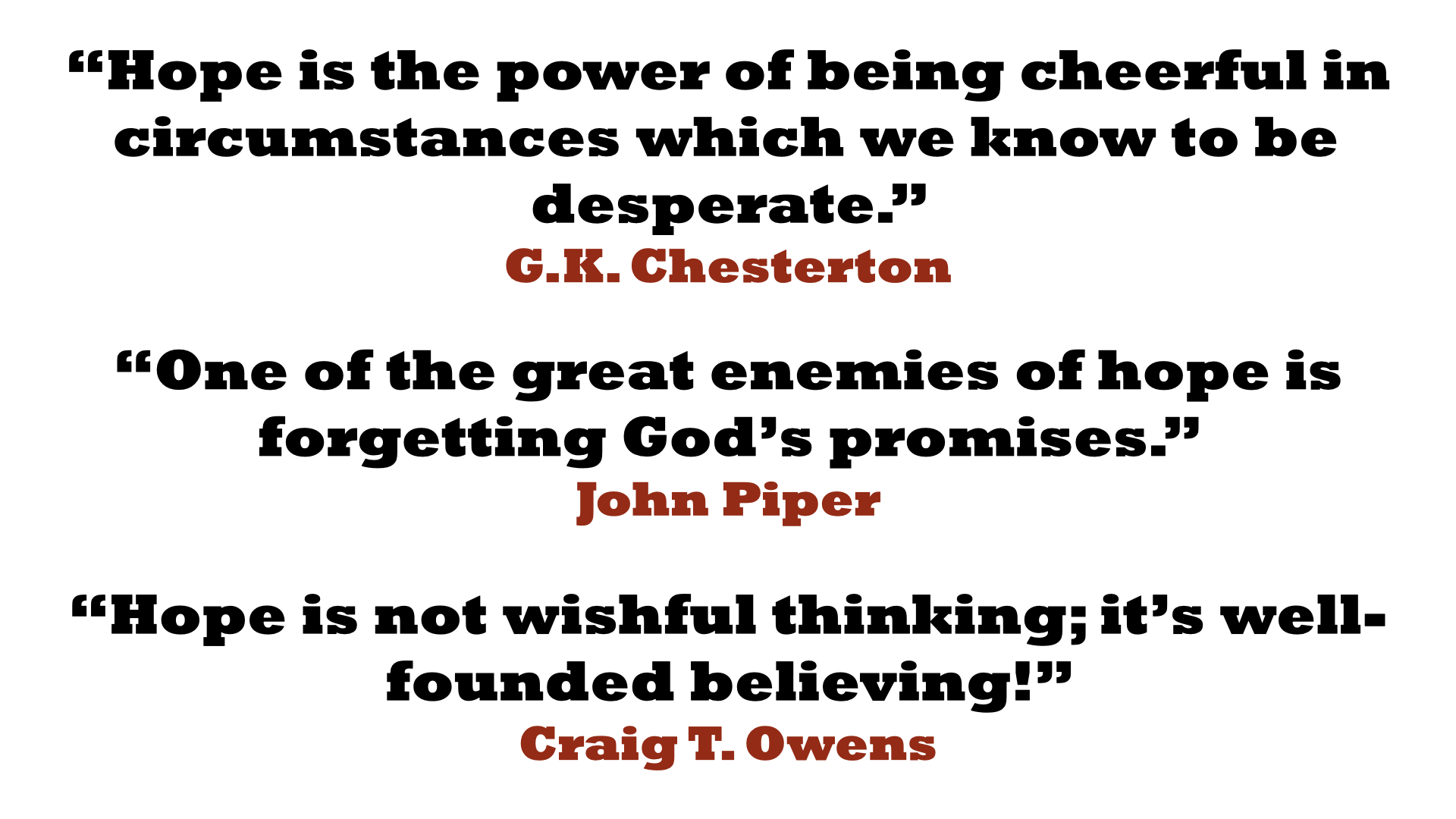
  • “Hope is the power of being cheerful in circumstances which we know to be desperate.” —G.K. Chesterton 
  • “One of the great enemies of hope is forgetting God’s promises.” —John Piper 
  • “Hope is not wishful thinking; it’s well-founded believing!” —Craig T. Owens 

Christians have a fantastic, unshakable, blessed hope on which we can stand not only secure but joyful! 

Foundational truth #13: “The resurrection of those who have fallen asleep in Christ and their translation together with those who are alive and remain unto the coming of the Lord is the imminent and blessed hope of the church.” 

This blessed hope in the future helps us live with joy today! Knowing that death has been defeated and Jesus will come back to take us home with Him should fuel us to say “no” to the temporary pleasures of sin, and live such godly lives that it turns others’ eyes to Jesus (Titus 2:11-14; 1 Corinthians 15:51-52; 1 Thessalonians 4:16-17). 

Foundational truth #14: “The second coming of Christ includes the rapture of the saints, which is our blessed hope, followed by the visible return of Christ with His saints to reign on earth for one thousand years.” 

Sometimes you will hear Christians talk about the “rapture” of the Church. Although this word itself isn’t in the Bible, the Greek word harpazo in 1 Thessalonians 4:17 means “catching up.” It also means “to eagerly claim for one’s self,” which reminds me that Jesus is thrilled to bring His Bride home to be with Him forever! After the Church has been caught up to Heaven, a period of tribulation will plague the earth, followed by Christ’s Second Coming and His millennial reign (Zechariah 14:4-5; Revelation 19:11-15; 20:1-10). 

Foundational truth #15: “There will be a final judgment in which the wicked dead will be raised and judged according to their works. Whosoever is not found written in the Book of Life, together with the devil and his angels, the beast and the false prophet, will be consigned to the everlasting punishment in the lake which burns with fire and brimstone, which is the second death.” 

Christians have no fear of the second (or final) death because our names are written in the Book of Life (Luke 12:4-6; Revelation 20:11-15). Not only is there judgment for the wicked, but there will be rewards for the righteous. 

Foundational truth #16: “In keeping with His promise we are looking forward to a new heaven and a new earth, where righteousness dwells” (2 Peter 3:13). Revelation 21-22 give us a small glimpse of our eternal home. 

In light of these truths, how should Christians live while still on earth? I think there are three ways we should live: 

  1. Live circumspectly
  2. Live on-mission
  3. Live unafraid

(see Ephesians 5:15; Matthew 28:18-20; Proverbs 24:11-12; Jude 1:20-25) 

With this blessed hope of the Second Coming of Jesus and our security in knowing we will remain with Him forever, let’s tell everyone we can how they too can know what it is to live with this hope in their heart. 

If you’ve missed any of the messages in our series exploring our foundational beliefs, you can access the full list by clicking here. 

►► Would you please prayerfully consider supporting this ministry? ◀︎◀︎

True Friends

Listen to the podcast of this post by clicking on the player below, and you can also subscribe on AppleSpotify, or Audible. 

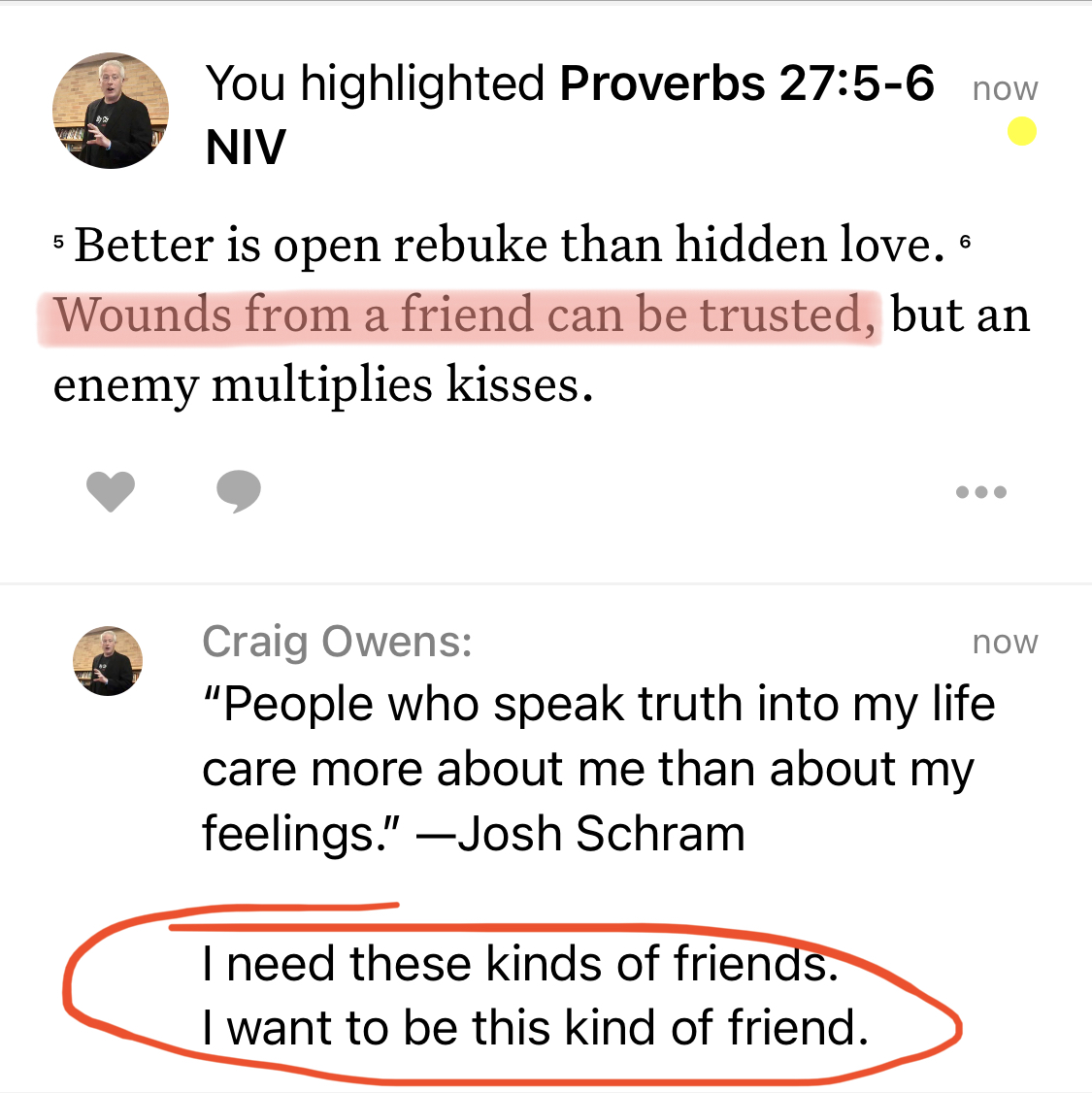
Wounds from a sincere friend are better than many kisses from an enemy (Proverbs 27:6 NLT). 

Proverbs 27 may have more wisdom about our friends than any other chapter in this book. But sprinkled throughout the entire book of Proverbs is outstanding wisdom about our closest relationships. Allow me to share just a few observations with you.

(Click here to see all of the verses I reference below.)

In a previous post where I noted the conjunctions “but” and “and,” I see this—The righteous choose their friends carefully, BUT the way of the wicked leads them astray (12:26). Righteous friends keep me on the right path. 

Friends love me through my worst moments (17:17) because they have committed to stick closer than a brother to me (18:24).

I must be careful not to make friends with a hot-tempered person (22:24), and to be cautious of people who want to be friends with me only for what I can give them (19:4). 

My true friends will wound me in love to help me become the best that God intended me to be (27:5-6, 9, 17), so I must never forsake these friends (27:10). 

False friends will gossip to me and about me, but my true friends will guard my secrets and guard my reputation (16:28; 17:9). 

In order to have true friends, I first have to be a true friend.

In my book Shepherd Leadership: The Metrics That Really Matter, I noted how true friends will help us go farther and avoid the stumbles that could cut short our leadership influence. 

David was the gold standard for every king of Israel who followed him. Numerous times throughout the history of Israel, we will see a note that a certain king either followed God like David, or turned from God unlike David. Yet there exists a wart on David’s portrait: an adulterous affair with the wife of a man in his inner circle, and then subsequent lies and a murder to cover up the affair. “The thing David had done displeased the Lord” (see 2 Samuel 11). 

But I’d like to turn your attention to when this affair occurred: “In the spring, at the time when kings go off to war…David remained in Jerusalem” (2 Samuel 11:1). He was without his usual comrades. The men who knew David best, who could probably sense if something was amiss, weren’t around to warn him. When David tried to find out the identity of the bathing beauty on the roof next door to his palace, an unnamed attendant tried to remind him, “Isn’t that Bathsheba, the wife of Uriah?” but David dismissed him. 

Elijah was arguably the most forceful and fearless prophet in Israel’s history. Not only did he stand up to the evil kings of Israel, but he spoke out against the kings of surrounding nations, too. In answer to Elijah’s prayer, God brought a drought on the land, and again in answer to Elijah’s prayer, God sent rain. Elijah challenged the 450 prophets of the god Baal and the 400 prophets of the goddess Asherah to a duel to the death, which ended up in a decisive victory for Yahweh. Yet, shortly after this massive victory, Elijah was depressed to the point that he wanted to die. 

What led to Elijah’s depression? Something very similar to David’s slide into adultery: He was alone. Elijah ran away from Queen Jezebel’s death threat, left his servant behind, and proceeded all by himself into the desert. It was when he was without a comrade that he prayed to God, “I’ve had enough. Take my life” (see 2 Kings 17–19). 

And what about Peter? He boldly claimed his loyalty to Jesus, even to the point of wielding a sword at the guards who came to arrest his Master. But when Peter was alone, after the other disciples fled, he denied three times that he knew Jesus (Matthew 26:33, 51, 69–75). 

God designed us to be in relationship with others. His statement to Adam in some of the earliest words of the Bible—“It is not good for you to be alone”—are words for us still today. —from the chapter “Going Farther” 

We need true, God-fearing friends close to us. Ask God to bring those friends around you, and ask the Holy Spirit to make you into that kind of friend for those He does bring around you. 

►► Would you please prayerfully consider supporting this ministry? ◀︎◀︎
The History Of Zechariah

Zechariah and Haggai are both very specific in the dating of their prophetic activity. We can also cross-reference their dates with the historical books of Ezra and Nehemiah, and with numerous other extra-biblical sources. 

There is an important reminder for us in this: The historicity of the biblical accounts. 

In the chart I share there are references to other timelines:

  • the timeline for Haggai is here
  • the timeline for Ezra is here
  • and the story of Zechariah’s murder is found here

Always remember that God is sovereignly in control of world events—all of history is His Story! 

To check out other resources from the historical and prophetic minor prophets, check out the list I have posted here.

Confident, Bold, and Joyful

Listen to the podcast of this post by clicking on the player below, and you can also subscribe on AppleSpotify, or Audible.

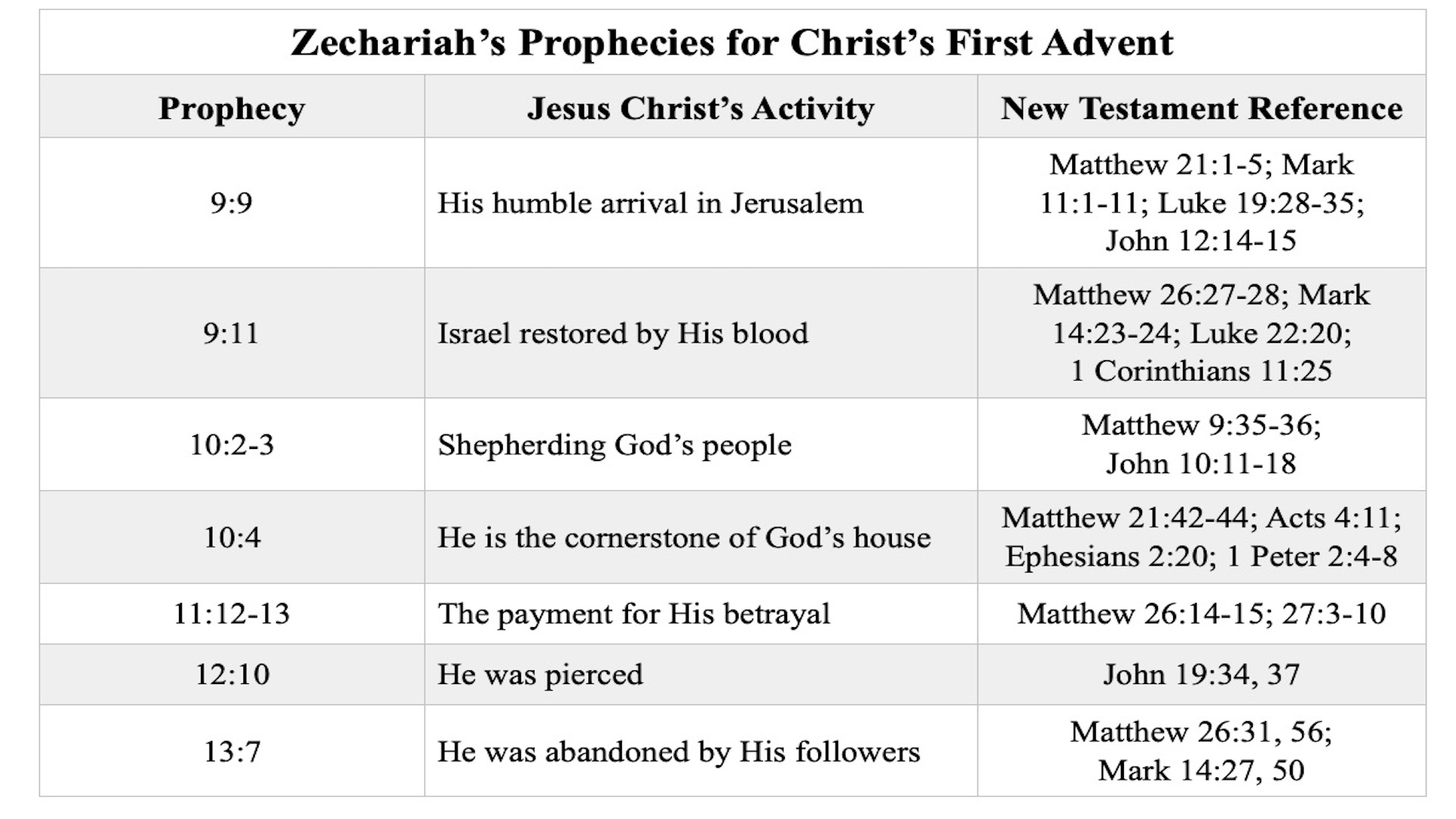
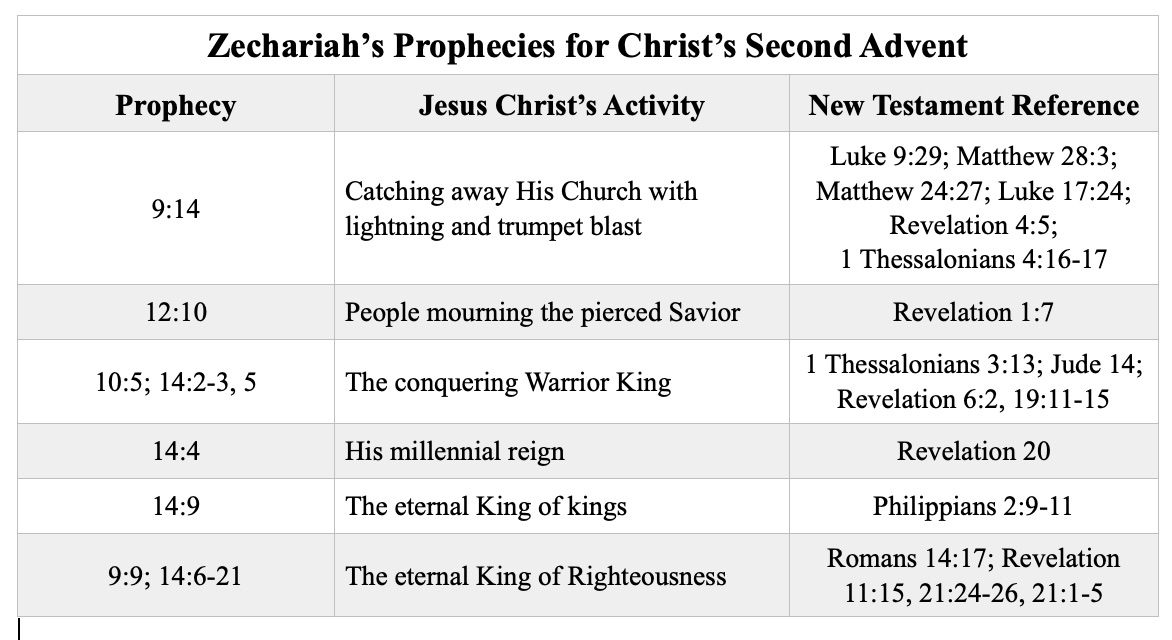
Zechariah pronounces more messianic prophecies than any other biblical writer, with the exception of Isaiah (and he wrote 66 chapters!). These prophecies are fulfilled in Christ’s First Advent, and promised for His Second Advent. Check these out for yourself…

(All of the biblical references for the above chart can be viewed by clicking here.) 

(All of the biblical references for the above chart can be viewed by clicking here.)

Why is it so vital that Jesus fulfilled these prophecies? 

(1) The historicity of these fulfilled prophecies gives us a confidence for the future. 

These fulfilled prophecies assure us that God is sovereign over all history. There are no accidents, and God needs no help from anyone else in fulfilling what He has promised. As a result, no world event—no matter how big it may seem—should be able to rattle us! 

(2) The authenticity of what God has done gives us boldness for today. 

When God does the miraculous, He authenticates His Word. This authenticity has always made God’s people stand out (see Genesis 41:39). It’s also why people recognized Jesus as the divine Son of God (John 3:2; 9:30-33). So we can live with the boldness to know that what God says He will do, He will do! 

(3) The exclusivity of God’s promises and fulfillment of those promises gives us joy for our testimony. 

Only Jesus could have done all of this (Luke 24:26-27, 44), so only Jesus can fulfill what is still remaining to be fulfilled! We can have supreme joy in knowing that only Jesus is our hope of salvation (John 14:6; Acts 4:12). 

It’s vital that we know this is true so that we can live confident, bold, and joyful! Our confident boldness and our bold joy both glorify God and attract seekers to Him. 

If you’ve missed any of the other messages in our series looking at the major lessons from the minor prophets, you can access all of those messages by clicking here. 

You may download a PDF version of the above charts by clicking here → Zechariah prophecies for the First Advent or here → Zechariah prophecies for the Second Advent

►► Would you please prayerfully consider supporting this ministry? ◀︎◀︎
God’s Signet Ring

Listen to the podcast of this post by clicking on the player below, and you can also subscribe on AppleSpotify, or Audible. 

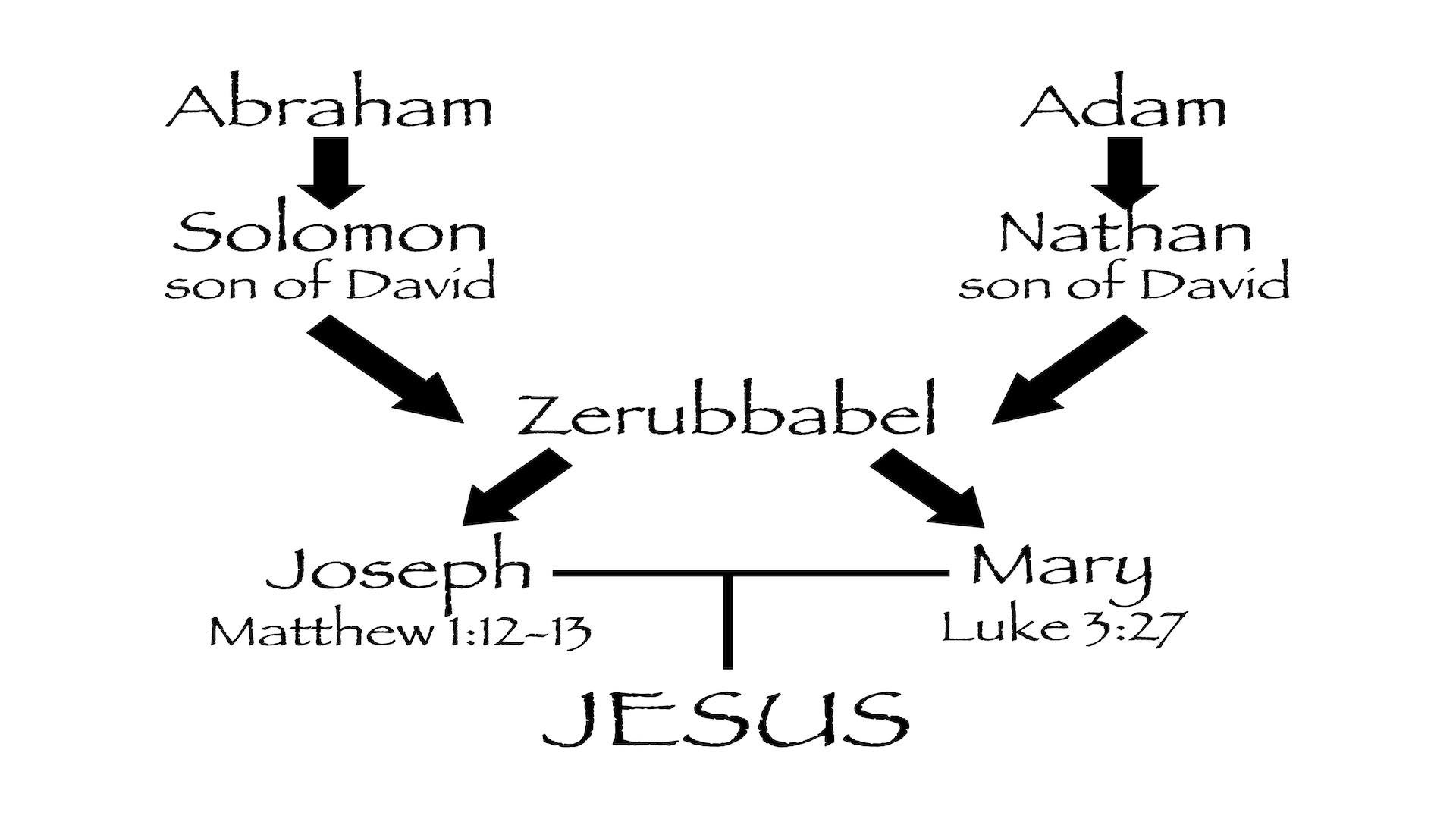
God foretells that He will make governor Zerubbabel “like My signet ring.” This means that Zerubbabel would have God’s supreme authority—he could speak for God. 

How could this happen? Zerubbabel couldn’t do it himself, but God sovereignly placed him in the family lines of both Joseph and Mary. This family lineage of Jesus Christ carried BOTH the covenant-fulfilling, kingly authority that traced back to Abraham AND the satan-crushing promise given to Adam’s human line. 

Jesus joined these two promises through Zerubbabel the signet ring. Jesus became God’s Ultimate Signet Ring so that now every promise is “Yes” in Him. This mens every time we pray and claim promises in God’s Word, Jesus adds His stamp of authority—His “Amen!”—to our prayers (see 2 Corionthians 1:20). 

►► Would you please prayerfully consider supporting this ministry? ◀︎◀︎

You’re No Match For Sexual Sin

Listen to the podcast of this post by clicking on the player below, and you can also subscribe on AppleSpotify, or Audible. 

At the window of my house I looked out through the lattice. I saw among the simple, I noticed among the young men, a youth who lacked judgment. He was going down the street near her corner, walking along in the direction of her house at twilight, as the day was fading, as the dark of night set in. Then out came a woman to meet him, dressed like a prostitute and with crafty intent. … 

With persuasive words she led him astray; she seduced him with her smooth talk. All at once he followed her like an ox going to the slaughter…. Many are the victims she has brought down; her slain are a mighty throng. Her house is a highway to the grave, leading down to the chambers of death. (Proverbs 7) 

Solomon tells us that we know the place—her corner, her street, her house. 

Solomon tells us that we know her goal—she came out to meet him with crafty intent. 

Solomon tells us that we know her strategy—speaking lies with a brazen face, speaking words that are seductive, persuasive, smooth, and with an outfit to match the vocabulary. 

Solomon tells us we know the outcome—her victim is brought down into the chambers of death. 

The Bible never counsels us to fight sexual sin, but it says we should flee sexual sin. Stronger people than me have been sucked into the quicksand of sexual temptation. 

It sounds innocent enough (“it’s just a little flirting”). It sounds harmless enough (“there’s no harm in looking”). It sounds tame enough (“who will ever know?”). But her slain are a mighty throng! 

Solomon also tells us the way to avoid sexual sin—keep God’s words close by, store up His commands in your heart, keep wise and God-fearing friends around you, and stay away from her corner, her street, her house. 

This is not a trivial thing. I’m no match for the silky seduction of sexual temptation! Flee! Run away! Don’t even get close to it! Jesus said that drastic steps may be needed—get rid of your computer, stop watching TV alone, get a new job. 

Don’t fight it—flee it! Your best strategy is to stay as far, far away as possible. Let me say it again: You are no match for the crushing power of sexual temptation, so FLEE! 

►► Would you please prayerfully consider supporting this ministry? ◀︎◀︎