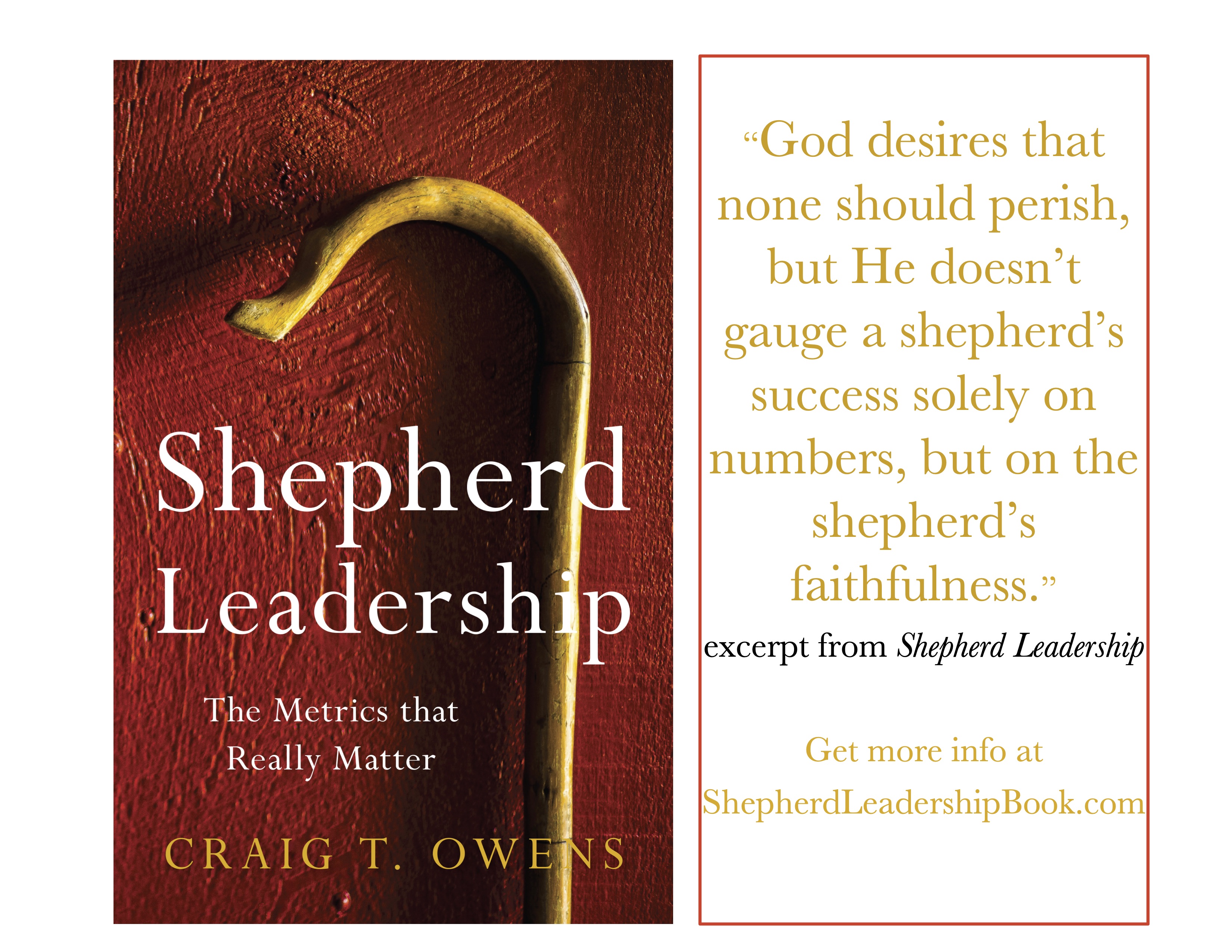
I wrote Shepherd Leadership: The Metrics That Really Matter to encourage pastors who are tired and struggling with feelings of failure. One of the most powerful sources of encouragement is more leaders surrounding a tired pastor.
I have a chapter dedicated to this called “Going Farther.” Here’s a short excerpt—
You will not only extend your leadership by having other servant-hearted shepherds around you, but you will also have a guard against the aloneness that led to such ugly warts on the biography of otherwise powerful leaders such as David, Elijah, and Peter.
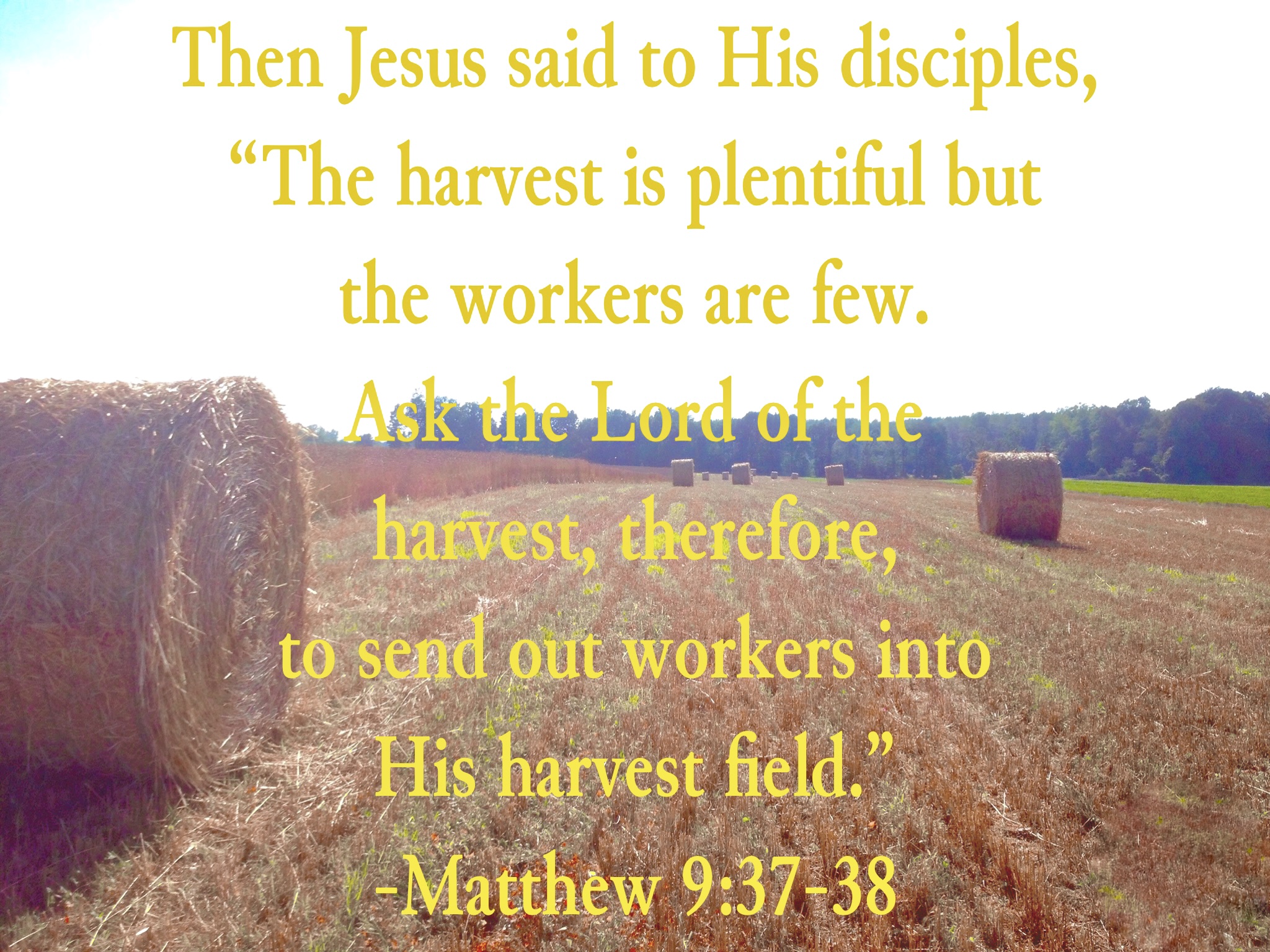
Jesus told us to pray to the Lord of the Harvest to send out more workers into the field (Luke 10:2). In a similar attitude, I believe we can pray to the Chief Shepherd to send out more under-shepherds into the pastures; specifically, we can pray for those under-shepherds to be sent into the pasture where we labor. The early church showed us the example of prayer being the priority when new shepherds were needed (Acts 1:21-26, 6:3-6, 13:1-3; 2 Timothy 1:3-6). We would do well to make it a priority to pray for God to send us godly leaders that can serve alongside us.
If you are a pastor, please pick up a copy of this book, as I truly believe it will encourage you. If you love your pastor, please give him or her a copy as a gift. I promise you that this book will bring such a fresh perspective to their ministry.
And whether you are a pastor or a lay leader in your church, please continue to pray for God to send more laborers into your harvest field.
Listen to the podcast of this post by clicking on the player below, and you can also subscribe on Apple, Spotify, or Audible.
Last week here in wintry Michigan we had a couple of snow days (for those of you in non-snow states, that means the roads were too dangerous even for us Michiganders, so the schools were closed). Students and teachers too “work” very hard for snow days. By that I mean they try a bunch of tactics that are supposed to increase the likelihood of school being called off—like flushing ice cubes down the toilet, wearing their PJs inside-out, or even sleeping with a spoon under their pillow.
But I’ve also noticed it’s not just praying for snow days where people employ some tactics they think will help things go their way. Like saying, “Pretty please with sugar on top” when trying to get special favor, or athletes not saying anything at all to a teammate who’s on the brink of something historic, or business people saying, “Wish me luck” before going into the big meeting. And even Christians who end their prayer with, “In Jesus’ name, Amen” to help make their prayer answerable.
In case you haven’t noticed, just saying that phrase is not some magical, abracadabra formula for success (for some very notable examples of this check out Matthew 7:21-23 and Acts 19:13-16).
But still, Jesus does specifically say, “And I will do whatever you ask in My name, so that the Father may be glorified in the Son. You may ask Me for anything in My name, and I will do it” (John 14:13-14).
This is where context is king. In John 13-16, Jesus is giving His final instructions to His disciples before His arrest and crucifixion. They are clearly anxious about His departure because chapter 14 opens with the words, “Do not let your hearts be troubled.”
In this passage of John 14, Jesus is giving the disciples the basis for their confident hope in Him. He tells them that He is THE way to the Father (they don’t have to look for another path), and He is THE revelation of the Father (He will make the Father’s will crystal clear to them).
Jesus tells them that He has been doing His Father’s work, which is verified by the evidence of the miracles—or we could say the answers to His prayers (v. 10-11). Jesus wants His followers to pray this same way, live this same way, and see even greater things done in His name (v. 12).
So we can infer from this that praying in the name of Jesus essentially means two things:
We pray in harmony with the character of Jesus. That means that we pray prayers that Jesus Himself would pray. If you cannot imagine Jesus asking for what you’re asking for, then it’s not in alignment with His character.
We pray in faith in the supreme authority of Jesus to do what we ask. Jesus is Supreme over everything else. To pray in His name means we look for answers from no other source.
I think the key to understanding this is found in the small preposition Jesus uses 12 times in this passage: IN.
Jesus is IN the Father, the Father is IN Jesus, and the Holy Spirit is IN us. This means that we are also IN the Father with Jesus!
Which means we don’t have to try to be like Jesus or to merely imitate Him, but we let the Holy Spirit sanctify us into the character of Jesus.
When I talk to my Dad I don’t have to remind myself that I am his son—I just am his son. I don’t have to carefully calculate how I’m going to make requests of him. I know his heart, and I know my inseparable relationship with him, so I just talk to him.
Have you ever noticed in the Gospels that when Jesus does a miracle, He doesn’t pray the way that we typically pray? When the man with leprosy came to Jesus, He merely said, “Be clean.” I think we might have bowed our heads, closed our eyes, placed our hands on him and said something like, “Dear heavenly Father, if it’s Your will bring Your healing touch to our dear brother. In Jesus’ name we pray, Amen.” But Jesus knew the Father’s heart was to heal this suffering man, so Jesus simply spoke the words. His statement was a prayer that resonated with the heart of His Father, and that prayer was immediately answered.
The Holy Spirit is sanctifying you to pray this same way:
He wants to mold your heart to be passionate for the things of the Father—John 5:17
He wants to transform your mind to think the Father’s thoughts—John 16:13-14
He wants to soften your will to be yielded to the will of the Father—Matthew 26:36-44
He wants to settle your emotions to be at peace in the Father—John 14:1
He wants to even change your vocabulary to the very words Jesus would use—John 12:49
When your heart, mind, will, and emotions are being sanctified, the supremacy of Jesus will naturally be at the forefront of everything you feel, think, do, and say. Then you will be naturally praying in the name and character of Jesus for God’s glory to be seen.
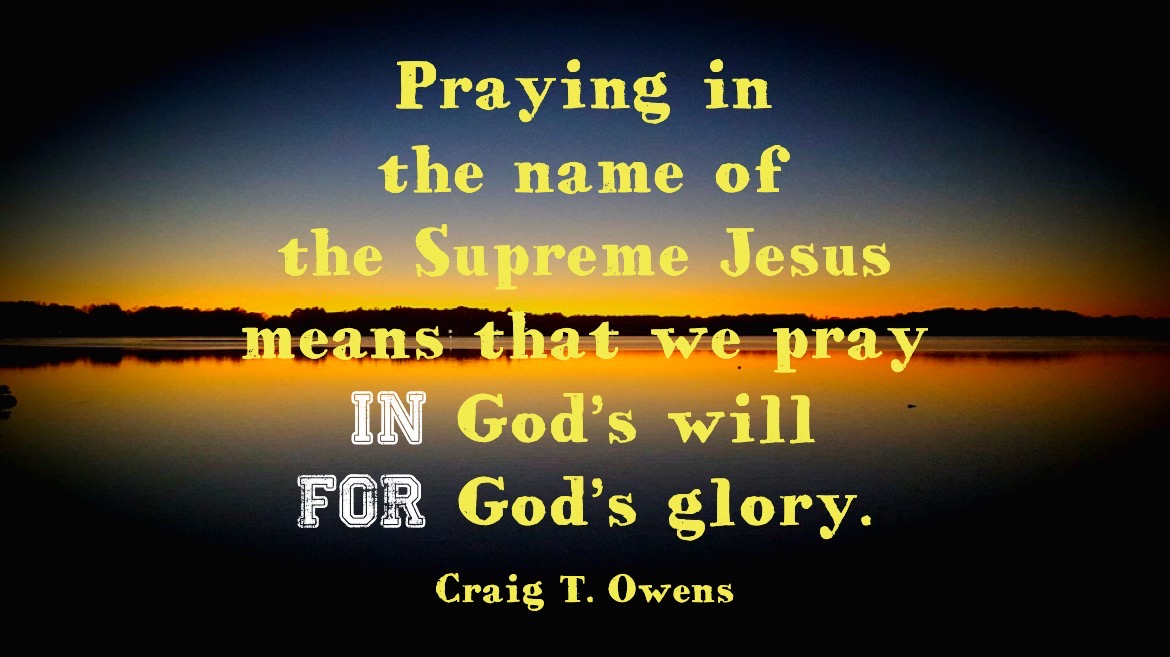
Praying in the name of the Supreme Jesus means that we pray IN God’s will FOR God’s glory.
To see all of the messages in our series called Awesome: Learning to pray in the awesome name of Jesus, please click here.
Listen to the podcast of this post by clicking on the player below, and you can also subscribe on Apple, Spotify, or Audible.
What people were saying about Jesus from His birth—before He preached a sermon, performed a miracle, or stepped on the toes of religious or political leaders—was revealing the truth. I’ve already discussed the words of the Magi and King Herod the Great, but all of these men also interact with another group (Matthew 2:1-6). Matthew calls them “all the people’s chief priests and teachers of the law.”
This group was commonly called the Sanhedrin. It was an influential body of 70 + 1 leaders (Numbers 11:16), whose influence was felt in the temple in Jerusalem, in the synagogues in small villages, in King Herod’s throne room, and in the palace of the Roman governors.
Notice that Matthew says “chief priests” in the plural. At the time of the birth of Jesus, Caiaphas was high priest and Annas his father-in-law was the former high priest. In the time of the early church, Annas is again called the high priest (Luke 3:2; John 18:13; Acts 4:6)
Even under the Roman government the Sanhedrin held tremendous power…
they were experts in the Mosaic law and its application (Matthew 22:35)
Jesus said, “the teachers of religious law and the Pharisees are the official interpreters of the law of Moses” (Matthew 23:2 NLT)
Jesus also said they had storehouses of helpful knowledge (Matthew 13:52)
they decided who would get to use their authority (Mark 11:27-28; 1:22)
they were keepers of the traditions and became “indignant” when those traditions weren’t followed (Mark 7:5; Matthew 21:15)
they were exorcists (Mark 9:14-17; Acts 19:13-14)
Jesus said these leaders would be instrumental in His death (Matthew 16:21)
they had their own armed guards and prisons (Mark 14:43; Acts 4:1; 5:18)
yet they were afraid of the opinions of the people (Luke 22:1-2; Mark 11:31-32)
Jesus said they were “the official interpreters of the law,” yet they oftentimes interpreted the law to benefit themselves.
When Herod asks them where the Messiah is to be born, they quote Micah 5:2 as saying, “a Ruler who will be the Shepherd of My people Israel.” But the word they use for “Ruler” means a leader with authority, or a governor (the same word is used for Joseph in Acts 7:10). Remember Herod’s violent temper and his insane suspicion? The word these religious leaders used gave them an “out.” They were almost saying to Herod, “When the Messiah does come, He will be a governor, which means there’s a good chance that He would report to you.” This “tame” interpretation was an attempt to keep them in the good graces of King Herod the Great
But Micah himself uses the word for “Ruler” that means one with absolute dominion. Jesus will be THE Sovereign King.
After hearing that this long awaited Messiah had finally been born in fulfillment of the prophecies, take a look at their response—
they said .
they did . (even though Bethlehem was only 6 miles away!)
How sad!
But I think this is because they believed themselves to be “in” with Jehovah because they so carefully kept the rules. They didn’t need a Messiah to save them because—in their minds—they believed they were already saved from God’s punishment.
Keeping religious rules doesn’t save anyone.
Honoring age-old traditions doesn’t save anyone.
Only coming to Jesus saves anyone!
A key prophecy about Jesus in Isaiah 9:2 says that the Messiah will save us from darkness and shadows. What exactly are these?
The writer of Hebrews tells us that the law and rules are merely shadows of the True Substance. God said through Isaiah that relying on the rules keeps us trapped in meaningless religious traditions. But Jesus came as the Light and as the Substance that set us free. His death and resurrection made it possible for our sins to be forgiven (see Hebrews 10:1-7; Isaiah 1:11-14, 18).
Rules don’t take us into God’s presence, but Jesus does. Not just talking about Jesus, but coming to Jesus as our Savior and Lord.
People will talk about Jesus—even you may talk about Him. That doesn’t do anything. But when we do more than talk—when we come to Him to follow Him as our Ruler and Shepherd—then we find forgiveness and freedom.
Let’s not just talk about Jesus, but let’s be actively obedient!
Listen to the podcast of this post by clicking on the player below, and you can also subscribe on Apple, Spotify, or Audible.
“Come to Me, all you who are weary and burdened, and I will give you rest. Take My yoke upon you and learn from Me, for I am gentle and humble in heart, and you will find rest for your souls. For My yoke is easy and My burden is light.” —Jesus Christ (in Matthew 11:28-30)
Walking alongside my Mom through her battle against cancer has been bittersweet—bitter in the struggle, but sweet in the lessons. Although I wish that my Mom didn’t have to suffer with this accursed disease, during this journey not only have we had wonderful conversations, but I’ve learned more about the closeness of Jesus in all our suffering.
In a very small way, I’ve gotten to do for my Mom what my Savior does for me every day: Lift heavy burdens. The strong, loving hold that Jesus has on each of His children brings a security and a sweetness that is beyond compare!
The question is: Will I keep my arms wrapped tightly around my Savior and trust Him to hold me securely, or will I let go of Him and attempt to carry my own burdens?
When the burdens of life seek to overwhelm us, Oh, that we might cling all the more tightly to the only One who can hold us securely!
Listen to the podcast of this post by clicking on the player below, and you can also subscribe on Apple, Spotify, or Audible.
What people were saying about Jesus right from His birth—before He preached a sermon, performed a miracle, or stepped on the toes of religious or political leaders—was revealing the truth.
Daniel served under multiple kings, even as the regimes changed from Babylonian, to Median, to Persian. He never waiver in his adherence to the Truth that God had spoken. He fearlessly told these world leaders, “The Most High is sovereign over all kingdoms on earth and gives them to anyone He wishes” (Daniel 4:25).
Most leaders forget this the moment they obtain power. Such is the case of the man the Magi met: King Herod the Great. Listen to how William Barclay describes this monarch:
“Herod the Great was always despised by the pure-blooded Jews because he was half an Edomite; and we can see the importance that even Herod attached to these genealogies from the fact that he had the official registers destroyed, so that no one could prove a purer pedigree than his own. …
“He had made himself useful to the Romans in the wars and civil wars of Palestine, and they trusted him. He had been appointed governor in 47 B.C.; in 40 B.C. he had received the title of king. …
“But Herod had one terrible flaw in his character. He was almost insanely suspicious. He had always been suspicious, and the older he became the more suspicious he grew, until, in his old age, he was, as someone said, ‘a murderous old man.’ … He murdered his wife Mariamne and her mother Alexandra. His eldest son, Antipater, and two other sons, Alexander and Aristobulus, were all assassinated by him. Augustus, the Roman Emperor, had said, bitterly, that it was safer to be Herod’s pig than Herod’s son. …
“When he was seventy he knew that he must die. … He gave orders that a collection of the most distinguished citizens of Jerusalem should be arrested on trumped-up charges and imprisoned. And he ordered that the moment he died, they should all be killed. He said grimly that he was well aware that no one would mourn for his death, and that he was determined that some tears should be shed when he died.”
Lord Acton famously said, “Power tends to corrupt and absolute power corrupts absolutely. …Despotic power is always accompanied by corruption of morality.” This is so obvious in Herod! So we can understand why the city of Jerusalem was disturbed when the Magi arrived! Whether Herod knew the prophecy of the coming Messiah or not, it’s inescapably true that his days and his legacy were numbered (see Isaiah 9:2-7).
When King Herod heard the announcement from the Magi, his reaction was violent. Perhaps Herod lashed out so ferociously because these words of Truth from the Magi reminded him his end was near, his power was not absolute, he had to answer to The Most High who is sovereign over all.
We are no better. Oswald Chambers defines sin as “my claim to my right to myself.” We want absolute sovereignty over ourselves, but Jesus will allow no rival to His throne! He is either King over all or else He is not King at all.
Beware of your own reaction when the Holy Spirit convicts you of a rival to Christ’s throne in your heart. If you lash out like Herod, dismiss it, or try to justify it, that is proof that you needed to hear that word of Truth. Don’t delay: Repent and allow Christ to have His rightful throne.
Jesus came as a Baby and a Savior at his First Advent. He opened the way for us to enter the presence of The Most High God, but it will cost us something to enter. Oswald Chambers tells us:
“Redemption is easy to experience because it cost God everything, and if I am going to be regenerated it is going to cost me something. I have to give up my right to myself. I have deliberately to accept into myself something that will fight for all it is worth, something that will war against the desires of the flesh, and that will ask me to go into identification with the death of Jesus Christ, and these things produce a struggle in me.”
Christ’s Second Advent will be as the conquering King and righteous Judge of all humanity. We have precious little time to tell others the good news. People may react violently like Herod did, but that is simply proof that they needed to hear that Truth.
But let’s look at this from another angle: Before there was an Old Testament and a New Testament, what did those who lived in the days of Jesus call what we now refer to as “the Old Testament”? They called it Scripture.
Here’s a clip from a recent sermon where I discuss more in-depth why our New Testament is really the best commentary we have on the Old Testament:
I invite you to check out a couple of other resources:
Listen to the podcast of this post by clicking on the player below, and you can also subscribe on Apple, Spotify, or Audible.
Many in-the-public-spotlight people will hire a publicist to make them look good. Although this publicist can try to direct the public’s opinion, they cannot control the actual word on the street about their client. What people are talking about in their private conversations is closer to the truth than the publicist’s spin.
Some skeptics of the claims of Christianity have tried to claim that the New Testament is really a publicity stunt: That the New Testament authors wrote their documents to try to control the narrative of the story of Jesus. But I find it fascinating what people were saying about Jesus from His birth—before He ever preached a sermon or performed a miracle.
Skeptics may want to claim that what Jesus said or did is a myth. But we need to ask, “Where do myths originate?” Myths come from legends, and legends come from historical facts. J.R.R. Tolkien says in the opening of the Fellowship Of The Ring, “And some things that should not have been forgotten were lost. History became legend. Legend became myth. And for two and half thousand years, the ring passed out of all knowledge.”
There are those that steadfastly cling to Fact long after others have gotten tired of the Legends, and now only see a Myth. Throughout history those that cling to something others think are out-dated have often been able to bring clarity to confusing things that the modern science of the day couldn’t do. Sometimes these Fact-clingers have been called seers or sorcerers or magicians.
Some of these magicians show up shortly after the birth of Jesus:
After Jesus was born in Bethlehem in Judea, during the time of King Herod, Magifrom the east came to Jerusalem and asked, “Where is the One who has been born King of the Jews? We saw His star when it rose and have come to worship Him.” (Matthew 2:1-11)
Some English translations of the Bible translate Magi as “wise men.” This is pretty accurate, but magi can also mean teachers, priests, physicians, astrologers, interpreters of dreams, or magicians. These Babylonian Persians had seen some sort of astronomical occurrence that led them to make a nearly 900-mile journey to Jerusalem.
For over 500 years these magicians had been clinging to a Fact taught to them by the chiefmagician of Babylon. Not a fellow Babylonian, but a Hebrew given the name Belteshazzar. He was one who could…
…tell someone what they had dreamed about and then interpret it
…solve the deepest riddles
…read and translate an unknown language
…call on supernatural powers to shut the mouths of lions
…foretell future world events
Belteshazzar the Magician also saw a vision of the pre-incarnate Jesus before Time even began, One whom he called “the Ancient of Days.” And he even saw all the way to the end of Time when this King of kings would judge the entire world.
These Persian magicians didn’t make an arduous 900-mile journey for a Myth. They didn’t bring gifts fit for a king to honor a Legend. They did all of this because of a Fact: Jesus is Fact.
We meet another magician on Barnabas and Paul’s first missionary journey. He was a man named Elymas. The English version of the Bible calls him a sorcerer, but in Greek the word is magos, the singular of the word magi.
He’s called a sorcerer because he tried to make Jesus a Myth. He worked for the Roman proconsul, a man called Sergius Paulus, whom Luke describes as “an intelligent man.” Elymas in essence said, “Sergius, use your intellect. There may have been someone called Jesus (in fact, my own father had that same name), but the stories about His miracles, death, and resurrection have to be mythical!” Sergius Paulus was convinced that the accounts of Jesus were myth until he heard the words of fact spoken by Barnabas and Paul.
C.S. Lewis wrote in Mere Christianity,
“A man who was merely a man and said the sort of things Jesus said would not be a great man or a moral teacher. He would either be a lunatic—on the level with the man who says he is a poached egg—or else he would be the devil of hell. You must take your choice. Either this was, and is, the Son of God; or else a madman or something worse. You can shut Him up for a fool… or you can fall at His feet and call Him Lord and God. But let us not come with any patronizing nonsense about His being a great human teacher. He has not left that open to us.”
So who do you say Jesus is? Is He a Myth? A Legend? A liar? A lunatic? Or is He the Ancient of Days, the Light of the world, the Lord of all Creation?
Christians, we must have this Fact clear in our own minds, and then—just as the Persian Magi did and as Barnabas and Paul did—let’s clearly tell about this Fact to the world’s skeptics, especially as the world’s modern telling of Christmas seems to be becoming more and more mythical.
Don’t rail on the Myths and Legends, but use them to show others the Fact of Jesus Christ—the Ancient of Days, Savior, and King!
(Watch the full message More Than A Legend by clicking on the link below.)
To catch up on all of the messages in our Advent series People Will Talk, please click here.
This is a weekly series with things I’m reading and pondering from Charles Spurgeon. You can read the original seed thought here, or type “Thursdays With Spurgeon” in the search box to read more entries.
Listen to the podcast of this post by clicking on the player below, and you can also subscribe on iTunes or Spotify.
Forgiven And Forgiving
Forgiving one another, even as God for Christ’s sake has forgiven you. (Ephesians 4:32)
Now observe how the apostle puts it. Does he say, ‘forgiving another’? No, that is not the text. If you look at it, it is ‘forgiving one another.’ One another! Ah, then that means that if you have to forgive today, it is very likely that you will, yourself, need to be forgiven tomorrow, for it is ‘forgiving one another.’ … Let us begin our Christian career with the full assurance that we will have a great deal to forgive in other people, but that there will be a great deal more to be forgiven in ourselves! …
Note again: When we forgive, it is a poor and humble business compared with God’s forgiving us, because we are only forgiving one another—that is, forgiving fellow servants. But when God forgives us, the Judge of all the earth is forgiving, not His fellows, but His rebel subjects, guilty of treason against His majesty! For God to forgive is something great—for us to forgive, though some think it great—should be regarded as a very small matter. … What we owe to God is infinite, but what our fellow creature owes to us is a very small sum. …
If anyone here who is a Christian finds a difficulty in forgiveness, I am going to give him three words that will help him wonderfully… Here they are again: ‘For Christ’s sake.’ …
I do not know how to put this next word I am going to say. It is a paradox. You must forgive or you cannot be saved. But at the same time, you must not do it from compulsion, you must do it freely. … Remember, it is of no use for you to put your money into that offering box as you go out unless you remember, first, to forgive your brother. God will not accept the gifts, prayers, or praises of an unrelenting heart. … The very prayer that teaches you to ask for mercy bids you say, ‘And forgive us our debts, as we forgive our debtors’ (Matthew 6:12). Unless you have forgiven others, you read your own death warrant when you repeat the Lord’s Prayer!
From Forgiveness Made Easy
We honor the forgiveness that God has extended to us by liberally forgiving others. And our forgiveness of others shows them just how loving and forgiving our God is too!
I add my prayer to Charles Spurgeon’s that you would grasp the truth that we can forgive one another for Christ’s sake because God has forgiven us for Christ’s sake. Let’s all grow in this Christian maturity!
Listen to the podcast of this post by clicking on the player below, and you can also subscribe on Apple, Spotify, or Audible.
Let’s get on the same page with a few facts:
Nearly 1-of-5 adults in the United States age 18 and older battle some form of anxiety disorder.
Being anxious is not a sin but we can grieve God’s heart if we don’t train ourselves to turn to Him as our First Source. Notice that David said, “When[not “if”] I am afraid, I put my trust in You” (Psalm 56:3).
A third definition of anxiety is found here: “Cast your cares on the Lord and He will sustain you; He will never let the righteous be shaken” (Psalm 55:22). This word for cares or anxieties is the only time this Hebrew word is used in the Bible. The idea is a heavy burden, which the Amplified Bible captures like this: “Cast your burden on the Lord—releasing the weight of it—and He will sustain you….”
We can be burdened because we pick up and carry things on our own. But the word for cares or burdens in Psalm 55:22 can mean not only things we pick up, but things given to us by God or allowed by God. You might ask, “Why would God give me a burden?”
Sometimes it’s allowed—God allowed satan to afflict Job within limits, and He allowed Joseph’s brothers to ambush him (Job 1:8-12; 2:3-7; Genesis 50:20).
Sometimes it’s given—God gave Jesus a bitter cup to drink, and He gave Paul a “thorn in the flesh” (Matthew 26:39-42; 2 Corinthians 12:7).
In every instance, the limits are perfectly measured to accomplish what God wants to do. The way we respond glorifies Him and keeps us dependent on Him (Job 1:20; 2:10; Genesis 50:20; 2 Corinthians 12:8-10; Hebrews 10:10).
Still in the middle of this, the burdens can seem overwhelming and anxiety-inducing. That’s why God tells us what to do with these burdens: Cast them off!
In Psalm 55:22, David gives us the word “cast” in the imperative mood, which means it’s a command. Literally, the word means to throw away or shed the burden.
How often do we do this? David said he prayed “evening, morning, and noon” for God’s help (Psalm 55:16-17).
What does God do when we cast off these burdens? He sustains and supports us—“He will sustain you; He will never let the righteous be shaken.”
The apostle Peter quotes the opening words of this verse when he writes, “Cast all your anxiety on Him,” and then he tells us why we can do this: “Because He cares for you” (1 Peter 5:7). Just like David said he prayed for his burdens to be released “evening, morning, and noon,” the verb tense Peter uses implies the same thing. We don’t just release our burdens once, but we continue to do it again and again and again!
The word Peter uses for “cast” is only used twice in all the New Testament. The word means not just to drop our burdens at our feet—where we may trip over them or be tempted to pick them up again—but to throw our burdens on someone else. The only other place this word is used is when on the day Jesus rode into Jerusalem the disciples “threw their cloaks on the colt and put Jesus on it” (Luke 19:35).
Peter tells us that this casting off of our burdens requires us to humble ourselves before God. Pride makes us think we can handle it on our own, and that same pride robs God of the glory He would receive when He provides relief from our heavy load. We cast these burdens onto Jesus so that we can be alert to the enemy’s sneaky tactics, and help others who are also being attacked. And just as David said God supported and sustained him, Peter said the same thing (1 Peter 5:6-10). I especially like the wording from the King James Version—
But the God of all grace, Who hath called us unto His eternal glory by Christ Jesus, after that ye have suffered a while, make you perfect, stablish, strengthen, settle you. (1 Peter 5:10 KJV)
Jesus can X-out the instability that comes with carrying heavy burdens and make us stablished, strengthened, and settled in Him.
Don’t try to carry these anxiety-inducing burdens on your own, but cast them on Jesus every evening, morning, and noon. Let Him carry those burdens so you can live in a way that glorifies Him every single day.
Listen to the podcast of this post by clicking on the player below, and you can also subscribe on Apple, Spotify, or Audible.
Previously I shared with you that according to the Anxiety & Depression Association of America, nearly 1-of-5 adults in the United States age 18 and older battle some form of anxiety disorder. That means there’s a good chance that either you or someone close to you will be in this battle sometime during their life.
We also learned from David that being anxious or afraid is not a sin. He said, “When[not ‘if’] I am afraid, I put my trust in You” (Psalm 56:3). But we can grieve God’s heart if we don’t train ourselves to turn to Him as our trustworthy First Source of help.
We also saw in Mark 4:35-39 how the disciples of Jesus were caught in a raging storm, trying everything in their own power to rescue themselves, and yet Jesus was right there with them. He arose and said, “Quiet. Be still,” and “THEN the wind died down and it was completely calm.” From this we learned that only His peace can X-out the noise of the storm and bring us to a place of quiet rest.
We see another aspect of anxiety here: “Anxiety weighs down the heart” (Proverbs 12:25). That word for “anxiety” means carefulness, but not in the idea of being cautious. It literally means someone who is full of cares. This state leads to a heaviness of heart, as the KJV of that same verse says, “Heaviness in the heart of a man maketh it stoop.”
I don’t think anyone wakes up one day and says, “I’m going to take all of the cares of the world on my shoulders today.” Instead, we pick up just one thing. “This is just a small thing,” we tell ourselves. Then we wake up the next morning with just that one little thing, and we pick up one more little thing. And then we do it again the next day, and the next day, and the next day. Until before we know it we are bowed down because we are full of cares. This heaviness makes us stoop, makes us unsteady on our feet, and magnifies even the smallest of concerns into a huge crisis.
We are clinging to our load of cares—our care-fullness—but our loving Heavenly Father desires us to cling to something else. He wants us to cling to Him!
Moses told the Israelites: Serve only the Lord your God and fear Him alone. Obey His commands, listen to His voice, and cling to Him. (Deuteronomy 13:4 NLT)
David declared: I cling to You; Your right hand upholds me. (Psalm 63:8)
We see a beautiful example of Paul clinging to the promises of God during his multiple trials in and around Jerusalem and then during his journey to Rome to stand trial yet again. While he was still in prison in Jerusalem, Jesus appeared to him and said, “Take courage! As you have testified about Me in Jerusalem, so you must also testify in Rome” (Acts 23:11).
Paul knew he was going to arrive in Rome. But during the horrendous storm at sea on his way there, Paul received an added assurance. He told his shipmates—
“But now I urge you to keep up your courage, because not one of you will be lost; only the ship will be destroyed. Last night an angel of the God to whom I belong and whom I serve stood beside me and said, ‘Do not be afraid, Paul. You must stand trial before Caesar; and God has graciously given you the lives of all who sail with you.’ So keep up your courage, men, for I have faith in God that it will happen just as He told me.” (Acts 27:22-25)
Jesus tells all of us to cling to Him and His secure promises (Matthew 11:28-30). When we cling to Him, we no longer cling to the cares of this world. We move from from full-of-cares to care-less. We go from insecurity over our future to the security that only Jesus can give us!
Paul clung to those promises of Jesus: I will rescue you … You must testify about Me in Rome … I have given you all who sail with you. Likewise, we need to arm ourselves with the promises of God and tenaciously cling to them. I’ve shared just a few promises in the comments below, but feel free to reach out to me if I can help you find a promise in the Bible that you can cling to through your stormy times.
The Best Commentary On The Old Testament
December 8, 2021 — Craig T. OwensListen to the podcast of this post by clicking on the player below, and you can also subscribe on Apple, Spotify, or Audible.
But let’s look at this from another angle: Before there was an Old Testament and a New Testament, what did those who lived in the days of Jesus call what we now refer to as “the Old Testament”? They called it Scripture.
Here’s a clip from a recent sermon where I discuss more in-depth why our New Testament is really the best commentary we have on the Old Testament:
I invite you to check out a couple of other resources:
►► Would you please prayerfully consider supporting this ministry? ◀︎◀︎
Share this: