Our Prayer Coach

I love football! 

The plays that the quarterback calls in the huddle are very creative. It may sound something like this: “soultrain alert 13 trap on 1.” Then after the team breaks the huddle with the play that they just know will be successful, the quarterback may look over the other team’s defense and callout something like, “check” or “sally” or “Omaha.” This is called an “audible” and it’s communicating to the team how they are now going to modify the play that they just called. The quarterback calls this audible because it appears to him that the defense may know what sort of play they were planning to run. 

The teams that can adjust better on-the-fly—or call audibles—usually win the game. 

None of this happens without lots of practice! Practice builds good habits. Practice helps teams learn from their mistakes and develop even better habits. All of this practicing also requires a good coach overseeing the process, and individual team members who are willing to submit to the coach’s direction and correction. 

Have you noticed that there are some Christians who “audible” well? Unexpected things pop up that seem to throw many people off their game plan, but these Christians seem to adapt so easily. Why is that? It’s definitely not because they are wired that way, or have a higher spiritual IQ, or they can think faster. It’s because they’ve practiced good habits, they’ve learned from past experiences which have developed better “audibling” habits, all under the guidance of a perfect Coach. 

Jesus told us about the amazing prayers that we would be able to pray, and how the Holy Spirit can be our perfect Coach in this process (John 14:12-17, 26; 16:13-15). 

There are some incredible things that happen when we pray consistently, when we pray boldly, and when we pray in the character of Jesus. 

John Piper asks, “Why do God’s children so often fail to have consistent habits of happy, fruitful prayer?” He answers his own question like this: “Unless I’m badly mistaken, one of the reasons is not so much that we don’t want to, but that we don’t plan to.” 

Successful football teams don’t simply show up on game day and compete successfully. They plan to be successful. They practice and study the coach’s game plan so that they can be ready to audible when necessary. So too for Christians—we can’t just show up for spiritual battle and expect to be successful. We must also practice, and study the game plan laid out in the Bible, and listen to the Holy Spirit as He coaches us. That’s the only way we can successfully handle all that life and even the devil throws at us. 

Over the next couple of weeks, I’m going to be sharing some hindrances that I see that can derail our practice of prayer. In the meantime, I want to challenge you—as I’ve challenged myself personally—to think on three questions:

  1. Do I really want to pray effectively? 
  2. Am I willing to put in the energy necessary to pray this way?
  3. Am I willing to let the Holy Spirit coach and discipline me in my prayer practice? 

If you can, please join me at Calvary Assembly of God on Sunday as we continue our series called Prayer Plan. 

Prayer Plan

“Why do God’s children so often fail to have consistent habits of happy, fruitful prayer? Unless I’m badly mistaken, one of the reasons is not so much that we don’t want to, but that we don’t plan to.” —John Piper  

The word strategy carries in its definition the idea of the preparation that takes place before the actual engagement begins. A coach’s strategy is worked out on the practice field. A general’s strategy is worked out in the training of his soldiers. A CEO’s strategy is worked out in the board room. 

And a Christian’s strategy is worked out in the prayer closet. 

Sadly, many Christians fall short in the time of battle simply because they hadn’t trained ahead of time—they didn’t make a plan to pray. 

Join me this Sunday as we begin a new series called Prayer Plan where I hope everyone will end up being able to say an enthusiastic “yes” to the question: Are you ready to pray? 

If you cannot join us in person at 10:30am on Sunday mornings, please check out our Facebook Live broadcast. 

If you have missed any of the messages in this city, be sure to check them out here:

Year-End Review (2019 edition)

Ten years ago God called me to pastor at Calvary Assembly of God, and we have so thoroughly enjoyed our time in Cedar Springs! One of the really cool things I get to do is teach an amazing group of people every Sunday. Here’s a recap of the series and messages from 2019.

Boldly Praying—As a general rule, God would like us to pray much more boldly than we typically do. Jesus told us that we could pray mountain-moving prayers, but C.S. Lewis rightly observed, “If we consider the unblushing promises of reward and the staggering nature of the rewards promised in the Gospels, it would seem that our Lord finds our desires, not too strong, but too weak.” 

Christ’s Passionate Journey—In action movies, the crucial moment usually is filmed in slow motion. The Gospels do the same as Jesus approaches the Cross. For example, Mark doesn’t mention anything about the birth of Jesus and only gives us one verse to tell about satan’s temptation of Jesus in the wilderness. But he uses nearly 40% of his writing to describe the last week of Christ’s life. 

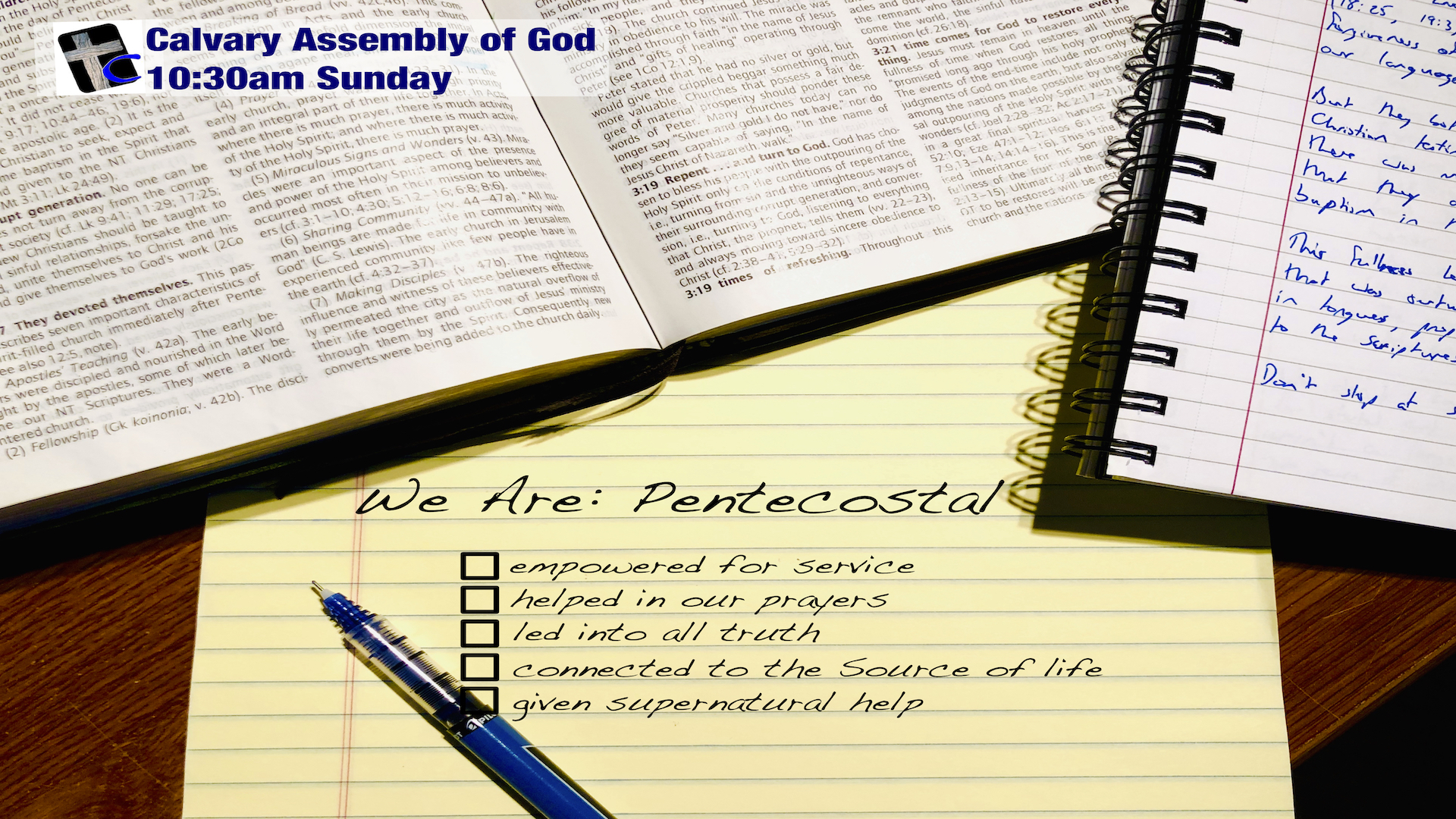
We Are: Pentecostal—Pentecost for over 1000 years was a celebration in Jerusalem that brought in Jews from all over the world. But on the Day of Pentecost that came just ten days after Jesus ascended back into heaven, the meaning of Pentecost was forever changed! 

Is That In The Bible?—Sometimes things that sound “biblical” aren’t actually in the Bible at all, and sometimes they are there but are misquoted. 

Selah—When you see this word in the Bible it can mean either a pause from the noise to reflect on something, a preparation for an exciting accent, or a reflective time of consideration. We are working our way through the Selahs in the Psalms.

Major Lessons From Minor Prophets—The five major prophets consist of 182 chapters, whereas the 12 minor prophets only have 67 chapters. The volume of these prophets writing may be minor, but their content carries major messages of meteoric power!  

Fading Gratitude—Looking back at the history of God’s people in the Bible, there is a distinct up-and-down cycle. I believe their slipping away from God can be directly linked to their forgetfulness. If there is a peril in our forgetfulness, there is also a power in our thankfulness!

The Carols Of Christmas—How many “old familiar carols” have you heard Christmas after Christmas until the words have almost lost their meaning? If we’re not careful, any song repeated too often can lose the richness of its original intent. 

We will be returning to a couple of these series in 2020, and we’ll be launching some brand new ones as well. In either case, if you don’t have a home church in the northern Kent County area, I would love to have you join us! 

What Does “Gloria In Excelsis Deo” Mean Today?

Listen to the podcast of this post by clicking on the player below, and you can also subscribe on AppleSpotify, or Audible.

A “mondegreen” is a misunderstood word or phrase usually because it’s in a song lyric that is misunderstood. In Christmas carols, many mondegreens come from the fact that the Old English lyrics are sometimes up to 200 years old and simply aren’t the way Americans talk today. One of my favorite mondegreens comes from I Heard The Bells On Christmas Day where people say “the bell freeze up all Christians dumb” instead of “the belfries of all Christendom”! 

If this happens to 200-year-old songs written in English, can you imagine what happens to a song that is 1700 years old and was originally written in Latin?! I’m talking about the chorus from Angels We Have Heard On High which simply says, “Gloria in excelsis Deo.” 

That Latin phrase means Glory to God in the highest! The idea is that our praise of God is both excellent and increasing in its level of adoration. The Latin phrase is shorthand for a doxology that is traced back to 300 AD.

The angels aren’t the subject of this carol, but the focal point is to Whom their song is being raised—“Come to Bethlehem and see Him Whose birth the angels sing; come adore on bended knee Christ the Lord, the newborn King.

The idea of gloria in excelsis is to keep making our praise bigger and more magnificent. We are to MAGNIFY what God has done for us through the advent of Jesus.  

In Hebrew, the word gadal is usually translated as “magnify” or “glorify” in English, and it means something that is growing and becoming more powerful. David uses gadal as he not only praises God from deep within his soul but encourages others to join in his song (Psalm 34:1-3). 

In Greek, the word megalynō is also translated “magnify,” and means to make something great, make it obvious, declare it to be great, celebrate it. Mary’s song called The Magnificat begins with this word (Luke 1:46).

I cannot make God great because He is already THE GREATEST! 
I cannot make God powerful because He is already OMNIPOTENT!
But I can make His greatness and His power more obvious by celebrating Him!

Just like a magnifying glass doesn’t make an object bigger, it just helps us see it better. So, too, our praise and adoration don’t make God bigger, it just helps others see Him better.  

So I have a question to ask you—which I’ve already been asking myself:

How will you give gloria in excelsis Deo this Christmas season and beyond?

►► Would you please prayerfully consider supporting this ministry? ◀︎◀︎

If you’ve missed any of the message in this series, you can check them out by clicking here.

Prophecy Fulfilled

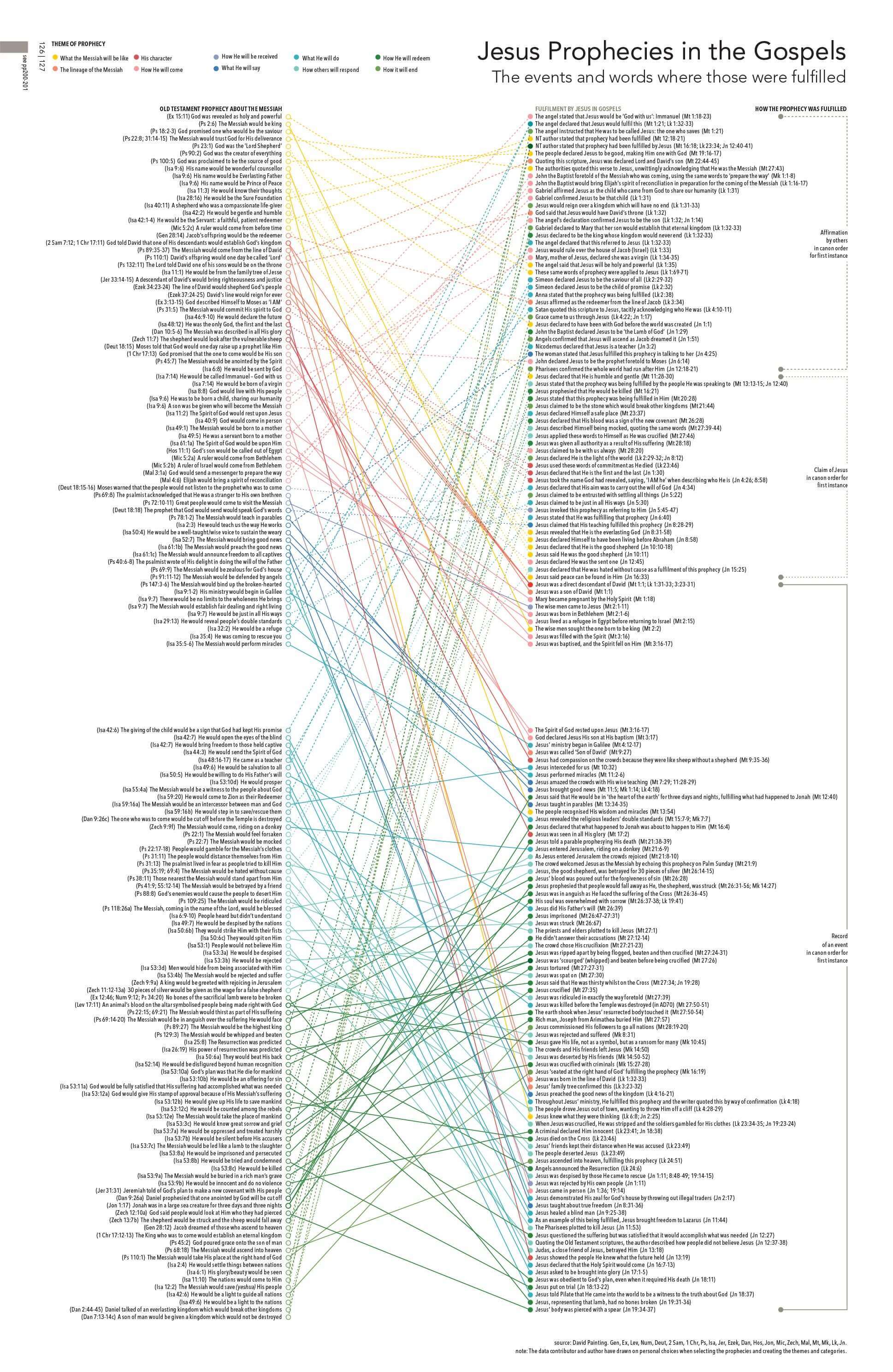
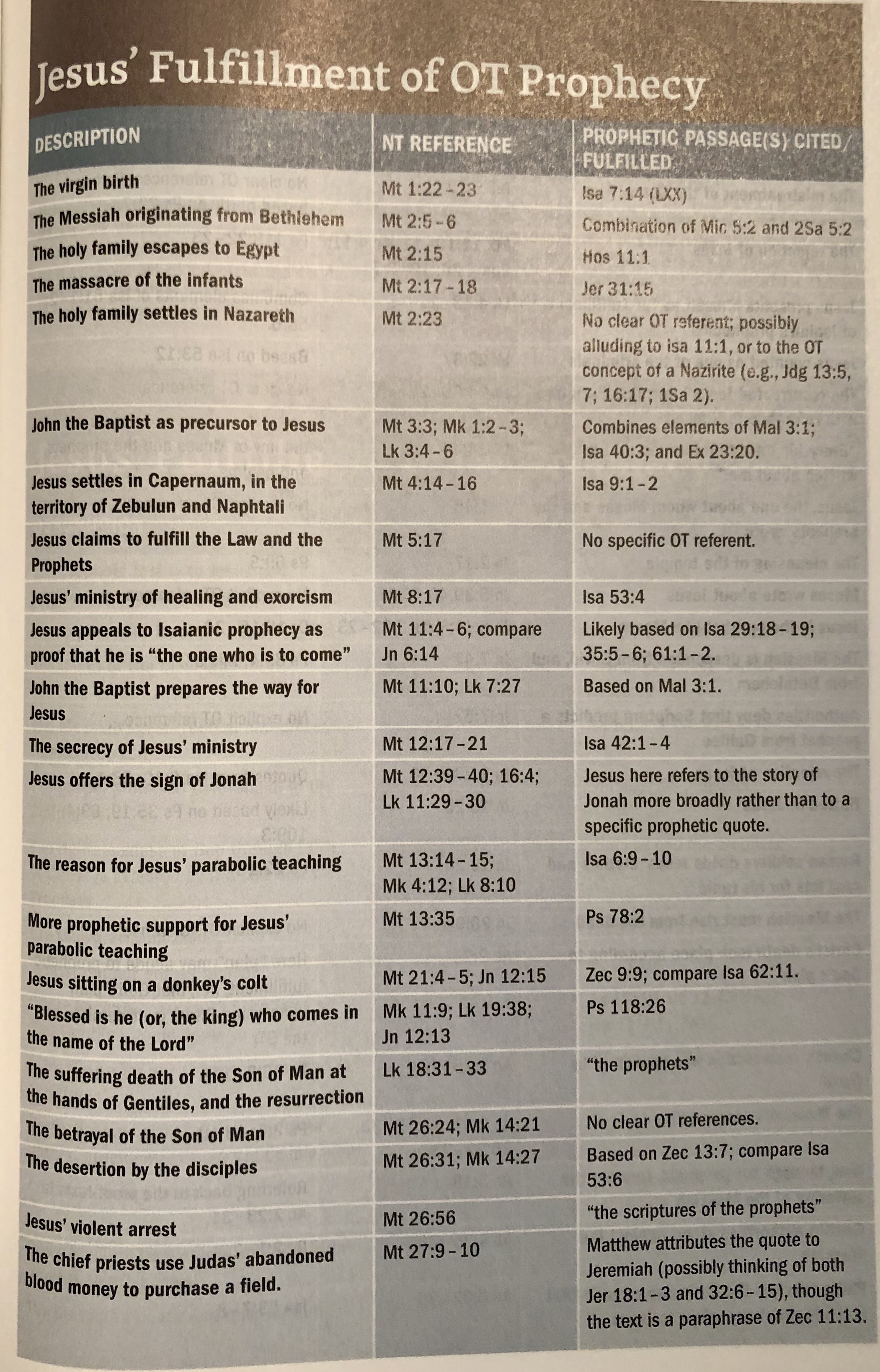
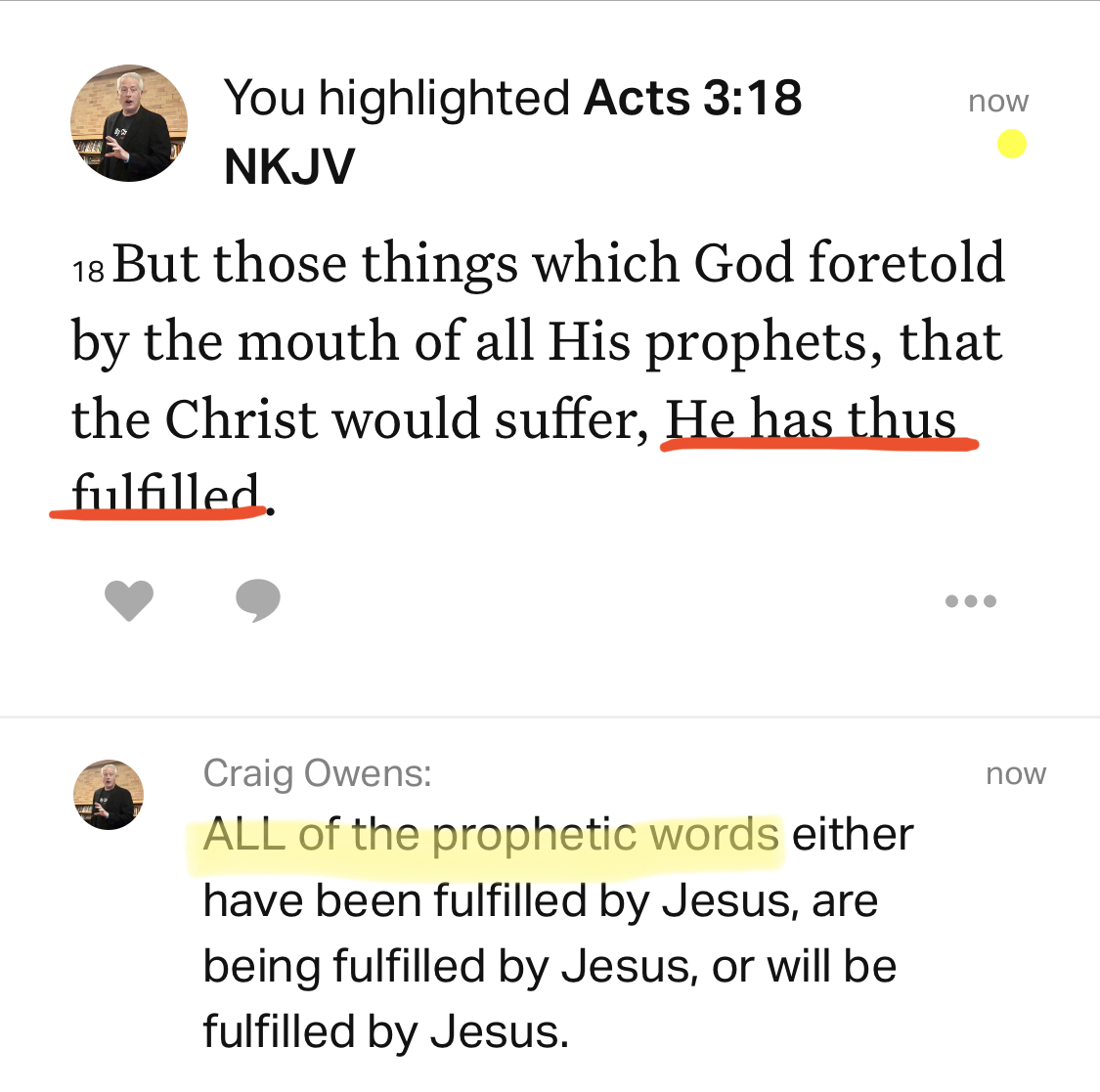
Jesus doesn’t just appear in the pages of the New Testament. All of the Old Testament Scriptures are pointing to Jesus, with some of them being quite specific concerning the time that Jesus would be living on Earth. 

Whether or not the New Testament writers explicitly point to how Jesus fulfilled those prophecies, they are all there for us to discover. It’s absolutely astounding! 

Here are two graphics from The Infographic Bible and the Faithlife Illustrated Study Bible that will help you see some of these fulfilled prophecies in Christ’s First Advent. And there are still more prophecies that Jesus will fulfill in His any-day-now Second Advent! 

Book Reviews From 2019

Why Should Christians Sing?

Some things are fascinating by what isn’t said. For instance, in the Christmas carol It Came Upon A Midnight Clear there is something conspicuously missing. 

One thing that isn’t missing is singing. Every one of the stanzas ends with a phrase about the angels singing. But can you spot what IS missing? I didn’t see it at first until I read this quote from respected music professor Dr. C. Michael Hawn: “This may be the only commonly sung Christmas carol in our hymnals that does not mention the birth of Christ! 

This carol just sort of assumes that we know why the angels are singing. But do we know? 

The Bible tells us that the angels were singing at Creation and that they are still singing in Heaven for all of eternity (Job 38:4-7; Revelation 5:9-13; 7:9-12; 15:2-4). Then we have this glimpse of the angels singing when Jesus was incarnated as a human baby in Bethlehem (Luke 2:14). Where did they get their song and their inspiration to sing it?

Their song comes from the Choir Leader who is the King of kings. Jesus is singing in Heaven, before the throne of His Father, about the salvation that He brought to mankind through His incarnation, sinless life, death on Calvary, and resurrection from the grave (see Hebrews 2:9-12). 

The song that Jesus sings tells the story of how He came to earth just like us—made a little lower than the angels—so that He might taste sin and death and conquer them for us. Now as our victorious Savior, He is not ashamed to call those who put their faith in Him His brothers and sisters.

Now perhaps you see why angels are also singing all the time! 

Even today there is a lot of singing around the Christmas season, but there is something missing in most of the songs: a focus on what Christmas really means. The world’s songs are about trees, and gifts, and Santa, and falling in love, but it’s a song that is out of tune with the angelic song. 

As Christians, we have a choice we can look around at this out-of-tune singing and lament what’s happening in our world, we can join in these meaningless songs, or we can look up at our Savior and sing the song He is singing. 

Christian, will you join with the angelic choir to let the world hear the unmistakable love song that Jesus is still singing today? 

If you’ve missed any of the message in this series, you can check them out by clicking here.

Humbug?!

In Longfellow’s classic I Heard The Bells On Christmas Day every stanza ends with the phrase “peace on earth, goodwill to men.” Unless you’ve been living someplace that doesn’t get the daily news, you might be saying, “Peace on earth? Really? I just don’t see it….” Or as Ebenezer Scrooge might say, “Peace on earth? Bah! Humbug!” 

A humbug is an imposter, or something empty of meaning. 

The third stanza of I Heard The Bells seems almost to slide into that Christmas humbug note: “And in despair I bowed my head: ‘There is no peace on earth,’ I said. ‘For hate is strong and mocks the song of peace on earth, goodwill to men.’” 

Indeed, even for those who call themselves a Christian, Christmas could become a humbug if…

  • … it’s all about busyness or just trying to “survive the holidays” 
  • … we get more excited about Santa Claus coming down the chimney to fill stockings than we do about Jesus coming down to Earth to be born in a manger 
  • … our main focus is on gifts—both what you’re giving and what you’re getting—and then we regret putting ourselves into debt 

Between Malachi (the last book of the Old Testament) and Matthew (the first book of the New Testament) is a time span of about 400 years that is called “the dark period.” God had promised through Jeremiah that He would restore the Israelites and rebuild Jerusalem. There were promises of the Messiah coming to set things right, but after 400 years of darkness, the mindset of most Israelites was probably, “Messiah? Peace? Bah! Humbug!!” 

What God really promised through Jeremiah was a peace that came about as a result of two things: (1) forgiveness of sins and (2) restoration of a perfect relationship with God. The Hebrew word for “peace” is shalom, which means one’s personal sense of wholeness and well-being, free from anxiety and fear, knowing that all is well between my soul and God. 

This is what God promises—I will cleanse them from ALL the sin they have committed against Me and will forgive ALL their sins of rebellion against Me (Jeremiah 33:8). 

This shalom is what comes through the First Advent of Jesus! As Longfellow observed, “Then pealed the bells more loud and deep: God is not dead nor doth He sleep; the wrong shall fail, the right prevail, with peace on earth, goodwill to men.” 

And this is what Jesus brought—

  • She will give birth to a Son, and you are to give Him the name Jesus, because He will save His people from their sins (Matthew 1:21 NIV). 
  • Now you have been united with Christ Jesus. Once you were far away from God, but now you have been brought near to Him through the blood of Christ. For Christ Himself has brought peace to us… (Ephesians 2:13-14 NLT) 
  • Therefore, since we are justified (acquitted, declared righteous, and given a right standing with God) through faith, let us grasp the fact that we have…peace with God through our Lord Jesus Christ (the Messiah, the Anointed One) (Romans 5:1 AMP). 

The bells and carols and remembrances of Christ’s First Advent should send our hearts soaring in anticipation of Christ’s Second Advent—when Christ shall return to take all of His own to be with Him forever, where He will wipe away every tear and where we live forever with Him in the New Jerusalem (see Jeremiah 33:9; John 14:3; Revelation 21:1-4). 

Let us guard against Christmas ever becoming a humbug—an imposter, something empty of meaning—but let’s make sure the rich meaning of Christ’s peace dwells richly in us! 

If you’ve missed any of the message in this series, you can check them out by clicking here.  

A Radical Change In Perspective

My friend Josh Schram shared a great message yesterday, wrapping up our series called Fading Gratitude. 

Josh was transparent about some of the struggles he overcame during his younger years, explaining how his decision to be grateful even for those roadblocks completely changed his perspective.

When we’re not intentional, our gratitude naturally begins to fade. It’s not that we’re intentionally ungrateful, but we just merely forget to be thankful. 

Our fading gratitude creates a domino effect. When gratitude fades we live with… 

Anxiety can keep us from even trying to pursue what God has planned for our lives. 

When a large group of people needed to be fed, a couple of Jesus’ disciples forgot about the miracles Jesus had already done in the past, and as a result, they became anxious about what to do next. 

Philip replied, “Even if we worked for months, we wouldn’t have enough money to feed them!” Then Andrew, Simon Peter’s brother, spoke up. “There’s a young boy here with five barley loaves and two fish. But what good is that with this huge crowd?” (John 6:7-9)

Yet Jesus multiplied more than enough for everyone to eat AND there were more leftovers than there was food that they originally started with! “So they picked up the pieces and filled twelve baskets with scraps left by the people who had eaten from the five barley loaves” (John 6:13).

That’s why Jesus tells us, So don’t worry about tomorrow, for tomorrow will bring its own worries. Today’s trouble is enough for today” (Matthew 6:34). When we’re grateful for what God provided yesterday, and we’re thankful for what He’s providing today, it will cut short any feelings of anxiety about what God will do again tomorrow!

“No amount of regret changes the past, no amount of anxiety changed the future, but any amount of gratitude changes the present.” —Ann Voskamp 

Gratitude can radically change our perspective! 

If I’m not choosing gratitude, then gratitude is fading. I can be grateful for things I originally thought were holding me back. I can give those things to Jesus—He is not only more than enough but He also gives back to me more than I gave to Him. 


The Gospel Of The Kingdom (book review)

In the 1940s, C.S. Lewis presented a series of radio talks which became the book Mere Christianity. It was in this book that Lewis went beyond any denominationalism to the basic tenants of Christianity as outlined in the Bible. T.M. Moore persuasively warns us today of the trend away from “mere” Christianity to what he terms “near Christianity.” The Gospel of the Kingdom is an important book for those who desire to “contend for the faith that was once for all entrusted to God’s holy people” (Jude 3). 

An increasing number of people who call themselves Christians—and even more alarmingly, those who are in positions of church leadership—aren’t living or preaching the full Gospel as presented in the Scriptures. Moore sounds the clarion call: “We are in danger, I believe, of having embraced, not the Gospel Jesus and the Apostles proclaimed, and for which our forbearers in the faith lived and died, but another gospel, a shallow, self-centered, merely sentimental gospel, which ‘assures’ us of heaven but does not equip us for the kingdom of God.” 

The followers of near Christianity tout how they have been saved from hell, but their profession and lifestyle don’t go beyond that. In other words, there is very little—if any—evidence that Jesus has become the Sovereign of their lives, and that they are living as citizens of God’s Kingdom. “Near Christianity, therefore, produces little in the way of kingdom evidence in the lives and churches of those who embrace it,” says Moore. 

In The Gospel of the Kingdom, Moore fully defines the imposter known as near Christianity, and then systematically details the characteristics of the Kingdom of God that should be evidenced in the lives of those who call themselves Christians. This isn’t just Moore’s opinion, but this short book is thoroughly cross-referenced with over 100 biblical passages.

All Christians—and especially those in the pastorate or other leadership roles—would do well to digest this book. If we aren’t vigilant, near Christianity may dominate the landscape of our churches, which really isn’t Christianity at all. 

I am a Wax Tablet Publications book reviewer.