Enjoying The Meal

I am so active every day that I need to eat about 2700 calories just to maintain my weight. Eating that often, if I’m not careful, I can just simply put food in my mouth and really not taste it. 

I think most people realize that there is a difference between eating and enjoying their food. Not only is gulping not very pleasurable, but doctors have even found some negative impacts on habitual food-gulpers. Things like: 

  1. Indigestion 
  2. Weight gain 
  3. Disconnection from hunger/full signals 
  4. Increasingly likelihood of unhealthy food choices 

In the same way, there’s a difference between praying and enjoying our time with God (see Mark 6:30-31 and Revelation 3:20).

Just as there are many physical benefits to enjoying healthy food, there are also many spiritual benefits to enjoying our time in God’s Word and God’s presence. This spiritual eating and digestion process is called meditation. 

Allow me to put a couple of thoughts together to show you the value of this spiritual discipline: 

  • The apostle Paul told us, “Pray continually” (1 Thessalonians 5:17). 
  • God told Joshua, “Keep this Book of the Law always on your lips; meditate on it day and night, so that you may be careful to do everything written in it. Then you will be prosperous and successful” (Joshua 1:8).

So the way we pray continually is to have something healthy to digest. We can feast on God’s Word and then allow the Holy Spirit to extract all of the healthy spiritual nutrients that will allow us to grow and mature. 

David said, “Taste and see that the Lord is good” (Psalm 34:8). Don’t gulp down your meal of the Scripture—taste it. Don’t rush through your prayer time—enjoy it. Keep mulling over what you have read. Keep chewing on it to help the digestion of the good stuff you need to be healthy.

We meditate on the Word of God to learn how to continually commune with the God of the Word. 

Meditating on God’s Word with the Holy Spirit’s help means you will never lack material for praying continually.

George Mueller On Meditation

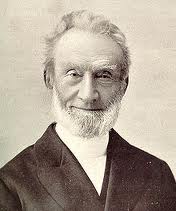
“I saw more clearly than ever, that the first great and primary business to which I ought to attend every day was, to have my soul happy in the Lord. The first thing to be concerned about was not, how much I might serve the Lord, how I might glorify the Lord; but how I might get my soul into a happy state, and how my inner man may be nourished…. I saw that the most important thing I had to do was to give myself to the reading of the Word of God and to meditation on it. The first thing I did, after having asked in a few words for the Lord’s blessing upon His precious Word, was to begin to meditate on the Word of God, searching, as it were, into every verse to get blessing out of it; not for the sake of the public ministry of the Word, not for the sake of preaching on what I had meditated on, but for the sake of obtaining food for my own soul. … So that, though I did not, as it were, give myself to prayer, but to meditation, yet it turned almost immediately more or less into prayer.” —George Mueller, in his Autobiography (emphasis mine)

Whose Fight Is It?

In great fear and distress Jacob divided the people who were with him into two groups… (Genesis 32:7). 

Jacob’s brother Esau is approaching with 400 men! 

Esau is the man who sold his birthright to Jacob, and then had his father’s blessing swindled away from him by Jacob. And now he is rapidly approaching Jacob and his entourage. 

Jacob’s natural response is, well, natural: great fear and distress grip his heart (v. 7). In his agitated state of mind “he thought” of a strategy to try to appease his brother and save as many of his family members and possessions as he could. 

And then another strategy popped into Jacob’s agitated mind: Then he prayed (v. 9). He concocted his own plans first and then he prayed. Prayer should have been his first response, but at least he finally did get around to praying!

In his prayer, Jacob twice reminds God, “You said” (vv. 9, 12), and in-between those reminders he confesses to Him, “I am afraid” (v. 11). 

As he speaks to God, reminds God of His promises, and confesses his own heart-quaking, knee-knocking fear, God says:  [crickets chirping in the warm evening]. 

God is silent. 

So Jacob returns to his own strategizing—once again we read “for he thought” (v.20)—until he is utterly out of options. All he can do now is wrestle with God (vv. 22-30). All out of his own options, Jacob now tenaciously clings to God and will not let Him go! 

In the Hebrew language, the name Jacob means a man who struggles, thinks, and strategizes using his own abilities*. 

After finally submitting to God, Jacob’s name is changed to Israel**. Now Israel lets God do the strategizing and the fighting. Jacob tried to figure things out on his own; Israel lets God’s plan prevail. When Israel bought his first plot of ground after his name had been changed, he built an altar there and named it El Elohe Israel—The Almighty God is my God (33:20). 

Israel now says, “I’m done striving with men on my own. I’m done fighting people and trying to figure out how to make things happen for me. From now on I will only wrestle with God, and I’ll let Him fight the battles for me!” 

How often do I strategize on my own first, and only after I have run out of options do I run to God in prayer? This is a Jacob spirit in me! I don’t want to live this way. I want to be like Israel—clinging to God as my first and only Source of help. 

How about you?

* In the Faithlife Illustrated Study Bible, there is an interesting note on Jacob’s name. For instance, when Esau says, “Isn’t he rightly named Jacob?” (Genesis 27:36), the FSB editors offer this commentary: “Esau uses the Hebrew word ‘aqab here, which is a wordplay on Jacob’s name in Hebrew, ya-aqov. … Esau suggests that Jacob’s name actually has to do with him being a person who supplants or cheats other people.” 

** Your name will no longer be Jacob, but Israel (Genesis 32:28). The FSB commentary points out, “Jacob’s name must be changed due to its association with his misdeeds. Here, the reasoning for the name Israel (yisra’el in Hebrew) is the verbal phrase ‘you have striven with (or struggled with) God.’ This suggests the name derives from the Hebrew verb sarah, meaning ‘to struggle,’ ‘to strive’ or ‘to fight.’ The name yisra’el itself could mean ‘God will struggle,’ ‘May God struggle’ or ‘God fights’….” 

The Need For Confession

Jesus taught us to pray to OUR Father. This speaks of community and accountability. Ken Blanchard noted: “Accountability means: We owe each other for something we’ve agreed upon.” What have the saints of God agreed upon? That God is our Father, that Jesus is His Son and our Brother, and that the Holy Spirit is our Helper. We’ve agreed that if we are brothers and sisters in God’s family, we are mutually accountable to one another. 

The part of accountability that some people don’t like is the realization that I make mistakes: I let people down; I sin. In a community of saints, my shortfall not only affects me but the rest of the community too. But there is a remedy—The remedy for my sin starts with my confession of my sin. 

If people like David, Isaiah, Daniel, Nehemiah, and Paul confessed their sin and called themselves sinners, what makes me think that I’m exempt from that diagnosis or that cure?! 

Confession is an owning of my sin. It’s saying to God, “I have sinned. I need forgiveness. I will repent of this. I need Your mercy.” And it’s saying to my fellow saints, “I need your help so I don’t have to repeat this sin.” 

Unconfessed sin is life-draining (Psalm 32:1-5). The word confess in the Old Testament Hebrew means to “throw out your hand.” Expose it all! In the New Testament Greek confess means to acknowledge that my life does not measure up to God’s standard. 

Confession may start in my personal prayer closet, but it needs to move to the public domain of the community of saints. Jesus made it plural, “Forgive US OUR debts, as WE have forgiven OUR debtors.” 

Sometimes I cannot see my own debts that need to be forgiven (Psalm 19:12), so I need the conviction of the Holy Spirit and the loving confrontation of someone who loves me (Psalm 139:23-24; Proverbs 27:6, 2 Samuel 12:1-13). 

The apostle James helps us see how a loving community brings healing, deliverance, and restoration. The key components that James lists are prayer and confession (James 5:13-16). 

Dietrich Bonhoeffer echoed James when he wrote, “A man who confesses his sins in the presence of a brother knows that he is no longer alone with himself; he experiences the presence of God in the reality of the other person. As long as I am by myself in the confession of my sins everything remains in the dark, but in the presence of a brother the sin has to be brought into the light.”  

Confession may be the most under-used resource for Christians to gain power in prayer and victory over falling into temptation!

Let’s continually make use of this wonderfully freeing discipline. 

What’s In A Name?

Leah became pregnant and gave birth to a son… (Genesis 29:32). 

Jesus said that ALL the Scripture pointed to Him (John 5:39). That means even the various names of people in the Scripture give us some insight into the nature of Jesus. 

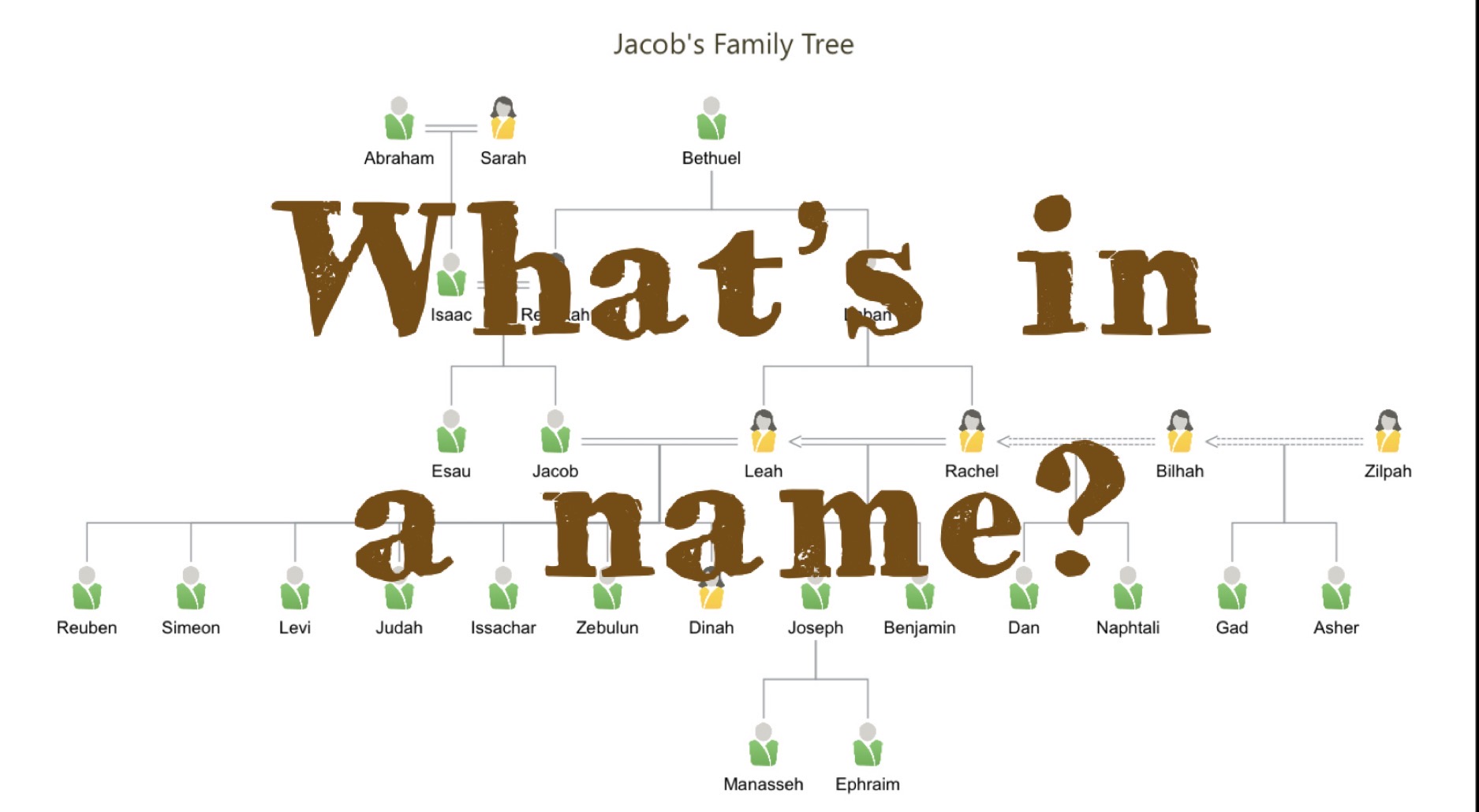
Consider Jacob and his sons, who become the fathers of the tribes of the nation of Israel. Jacob the deceiver is transformed into Israel the guileless, and the names of his sons point to what Jesus does to transform all of us into His righteous brothers and sisters. 

[Check out the links posted below to read all the Scripture references.]

Reuben—God sees my misery and sends His Son (Genesis 29:32; John 3:16). 

Simeon—God sent His Son when I was unlovable (Genesis 29:33; Romans 5:6-8). 

Levi—after I am saved from my sins, I am joined to God (Genesis 29:34; Ephesians 2:1-5).

Judah—my salvation brings praise to God (Genesis 29:35; John 15:8).

Dan—God has vindicated me in Jesus (Genesis 30:6; John 8:11).

Naphtali—Christ’s righteousness has given me victory over my struggles (Genesis 30:8; Romans 8:1; 1 Corinthians 15:54-56). 

Gad—God’s favor now advances toward me like an unstoppable troop (Genesis 30:11; Romans 8:31-39). 

Asher—I am now able to enjoy God’s happiness (Genesis 30:13; Matthew 25:21, 34). 

Issachar—God IS my reward (Genesis 30:18; Revelation 3:20-21).

Zebulun—my Husband (Jesus) honors me (Genesis 30:20; Ephesians 5:22-23; Hebrews 2:11).

Joseph—God has taken away my disgrace and added His blessing (Genesis 30:24; Romans 8:1, 32).

Manasseh—God has made me forget my past (Genesis 41:51; Psalm 103:12).

Ephraim—God has made me abundantly fruitful (Genesis 41:52; 1 Peter 2:9-10).

Benjamin—I am God’s son (Genesis 35:18; Ephesians 2:6)! 

God has done ALL this—and more!—through Jesus! 

When you read the Bible, don’t rush through it. Slow down. Meditate on it. Soak in it. And then see how the Holy Spirit will illuminate truth to you. 

[Please check out the Bible references I’ve listed above for yourself. All of the Genesis references are here, and all of the other references are here.]

Remain

Prayer Expectations

Many of our prayers could be much bolder and much more specific than they are. Why is that? Because how we view God is going to determine what we pray and what we expect after we pray.

When we pray, we approach an All-Loving Father, and we approach an All-Powerful God. I have found that typically people get warmed by the idea of Father and get scared by the idea of God. They say things like: “What if my prayers don’t hallow God’s name? What if He’s mad at me? What if I pray an improper prayer?” 

God wants us to come to Him in prayer, so He makes Himself very accessible! The Father is both Father and God; the Son is both Friend and King; the Spirit is both Comforter and Convictor. We get ALL of this in One God. 

Charles Spurgeon had this word of encouragement: “If You are my Father, then You love me. If I am Your child, then You will regard me, and poor though my language is, You will not despise it.” Jesus came to earth fully God and fully man, making Him our perfect intermediary (see Job 9:32-35; 1 Timothy 2:5; Hebrews 7:25). And the Holy Spirit helps interpret our groaning prayers (Romans 8:26-27). 

Have you ever noticed that neither the prophets of the Old Testament, nor Jesus in the Gospels, nor the apostles in the New Testament ever prayed, “God, if this is Your will please do such-and-such”? They simply prayed. Or more accurately, they prayed so boldly and specifically it almost sounded like a command: “Stand up” or “Be clean” or “Go, your prayer has been answered.” 

When you and I are praying to an All-Loving and All-Powerful Father, with Jesus interceding for us, and the Spirit helping us, we too can pray these bold and highly specific prayers. 

After all, if you don’t pray specifically and expectantly, how will you know when your prayer is answered? 

I find John Piper’s acrostic very helpful in praying these bold and expectant prayers. He calls it APTAT: 

  • A—Admit I can’t do anything without Christ. This hallows His Name. 
  • P—Pray for help to do it. 
  • T—Trust a specific promise of God to help me (two general promises are found in Isaiah 41:10 and Romans 8:32). 
  • A—Act. Do the things I need to do: apply for the job, ask forgiveness, schedule a meeting. 
  • T—Thank Him when I’m done. 

Two final thoughts—

  1. Make prayer more of a listening relationship than a talking relationship. 
  2. Give yourself some grace as you are maturing; don’t expect immediate perfection. Start praying and then let the Father, the Son, and the Spirit help you mature in your prayer life. 

I hope you can join me this Sunday as we continue to work on our plans to pray.

Hallowed Be Your Name

Jesus was once asked, “What is the greatest commandment?” He responded by saying, “The Lord our God, the Lord is One,” and then saying we should love God with all our heart, soul, mind, and strength (which fulfills the first four of the Ten Commandments), and then love our neighbor as ourselves (which fulfills the next six of the Commandments).

To live this way, we need to pray this way too! That’s why Jesus taught us a model prayer—which we typically call “The Lord’s Prayer”—in which the first three petitions are for God’s glory (hallowed be Your name; Your kingdom come; Your will be done), and the next three petitions are for man’s help (daily bread, forgiveness, victory over temptation). 

Jesus says we can pray to our Heavenly Father, but we still need to remember that He is also the God of the Hallowed Name. The Greek word for hallowed is made up of two other Greek words: 

  • hagnos is something totally immaculate, blindingly pure, and unapproachable. The apostle Paul said this about God: Our Master, Jesus Christ, is on His way. He’ll show up right on time, His arrival guaranteed by the Blessed and Undisputed Ruler, High King, High God. He’s the only one death can’t touch, His light so bright no one can get close. He’s never been seen by human eyes—human eyes can’t take Him in! Honor to Him, and eternal rule! (1 Timothy 6:15-16) 
  • thalpo means cherished. The same apostle Paul also said that God has given us the right to approach Him as “Abba, Father” or “Daddy, God” (Romans 8:15). 

He is both unapproachable and approachable. He is both awful and lovable. He is both Supreme power and Supreme love. He is both Hallowed and Father. He is unique. Since He is unique, we must approach Him uniquely in holy prayer. But we must always approach first and foremost to reverence His holy Name. As Matthew Henry said, “Let Him have the praise of His perfections, and then let us have the benefit of them.” 

Think of His glory in every request you make of Him. Father, may Your holy, righteous name be hallowed and exalted and made famous as You…

  • … provide my daily bread
  • … forgive me and help me forgive others
  • … give me victory over temptations

Let’s not pray prayers that rob God of His glory. Prayers like:

  • Selfish prayers that are all about me, me, me
  • Doubtful prayers that aren’t really sure God can help
  • Little prayers that insult God’s power and His love
  • Unexpectant prayers that ask God to do something, but we don’t really expect that He will

Let’s be known as people who pray confidently humble prayers. Let’s come to a Father Who is All-Love and to a God Who is All-Powerful—a God Whose power is perfectly balanced by His love, and Whose love is perfectly balanced by His power. May our prayers HALLOW His name! 

Join me this Sunday as we continue to learn more about prayer. 

Praying The Word

The more consistently we pray on the ordinary days, the more prepared we will be to pray on the extraordinary days. But some people say, “I don’t know how to pray” or “I don’t know what to ask for.” That ignorance hinders a lot of people—even someone like Peter who not only spent huge amounts of time with Jesus but was with Him when He was in one of His most glorious states (Luke 9:28-33). As Jesus is transfigured before his very eyes, both Mark and Luke say this about the statement Peter blurted out: He did not know what he was saying. 

While Peter was still speaking from his ignorance, God the Father gave him (and us) some invaluable advice: This is My Son, whom I have chosen; listen to Him. 

So when the disciples ask Jesus to teach them to pray, Jesus didn’t reprimand them for asking. In fact, He told us how much He wants us to pray and how much His Father wants to answer our prayers (Luke 11:1-13; 12:32).  

There is a consistent theme about the “name” of God that permeates all that Jesus teaches about prayer. We see Him instructing us to address our prayer to our “Heavenly Father” and to pray “in My name” (Luke 11:2; John 14:13-14; 15:7; 16:23-24). This doesn’t mean that simply saying, “Dear Heavenly Father” at the beginning of a prayer or “in the name of Jesus, amen” at the end of a prayer makes our prayer magical. 

It’s about praying in the character of Jesus, directing our prayer to the only One who can help us, all with the guidance of the Holy Spirit. 

To help us do this, we have an invaluable prayer resource preserved for us in the pages of the Bible. The Scriptures are inspired by the Holy Spirit—the same Holy Spirit that lives in a Christian and helps the Christian pray according to God’s will. The same Spirit who inspired the Word can illuminate the Word to us, so we need to get into the Word and let the Holy Spirit get the Word into us! 

No matter what you’re going through, you can apply God’s Word to your situation. Look through the prayers of the Psalms, read the prayers of other great saints throughout the Scriptures, check out the prayers the apostles prayed in the New Testament, and even read the prayers of Jesus Himself. Then make those prayers your prayers!

If you let the Holy Spirit show you how the Bible applies to your situation, you will NEVER again be at a loss of how to pray to your Heavenly Father in the name of Jesus!

Join me this Sunday as we continue to learn how to to be ready to pray by making our plan to pray. 

Run To Wait

My wife is a fan of the TV show (and movie) Downton Abbey, which means I have come to appreciate it as well. I think Mr. Carson, the head butler, gives us some great insight into a Christian’s prayer relationship with God. 

Mr. Carson has a lot to oversee with the house, the staff, and the needs of the family members and their guests. Everything needs to be tidy and ready at all times for both important guests and the Grantham family. That means Mr. Carson has to have a schedule and routine for everything. 

He doesn’t get up in the morning and sit around waiting for someone to tell him what to do—he gets up and gets to work. He’s a busy man with a lot of responsibilities. But can you imagine if Lord or Lady Grantham came to him with a request and he responded, “Not now, I’m too busy with my To Do list”? No way! He’s their servant, so he quickly responds, “Yes, my lord.” 

Christians can so busy and hurried with our own “To Do list” that we miss out on what’s really important. As Rick Warren then noted, “Hurry is the death of prayer!” 

The dictionary defines hurry as acting in haste, usually in a state of urgency, or feeling rushed. Notice the word “urgency” in the definition. Far too often we confuse urgent things and important things. It’s not that what we’re busy with are bad things, but perhaps we are busy with things that are keeping us blind to the important things. 

Long before Mr. Carson, there was another notable servant named Abraham (Genesis 18:1-8). God showed up and Abraham wanted to be in His presence. So notice that Abraham had to run to wait to God’s presence—the narrative uses words like hurried, “quick” and ran.  

Abraham was quick to get into God’s presence SO THAT he could linger in God’s presencehe stood near Them under a tree: that’s the posture of a servant-in-waiting. 

In the NIV translation, the text says Abraham hurried, but almost every other translation says he ran to meet Them—this is an important distinction. Hurry speaks to things that are urgent, but run speaks to things that are important. 

Stephen Covey has a great diagram that helps us identify four important quadrants in our life:

As you place items from your life on this grid, our Prayer Coach—the Holy Spirit—can help us identify the time-wasters. The key is to find time to wait in prayer. The best place to make time for Quadrant II prayer comes from Quadrant IV. As you eliminate those time-wasters, you will be able to spend health-enhancing time in prayer, worship, planning, and self-care in Quadrant II. This will also better equip you to handle the Quadrant I crises as they appear.

Ultimately, like Mr. Carson, we need to be both proactive with our schedule and responsive to the requests of our Lord. A good daily posture for all of us is “If the Lord wills” (James 4:13-17). But we have to not be so distracted with unimportant things that we can hear what God is speaking to our hearts.

Please join me next week as we continue to uncover things that could derail our regular prayer times, and then strategize a plan for dealing with them.