3 Hindrances To Prayer

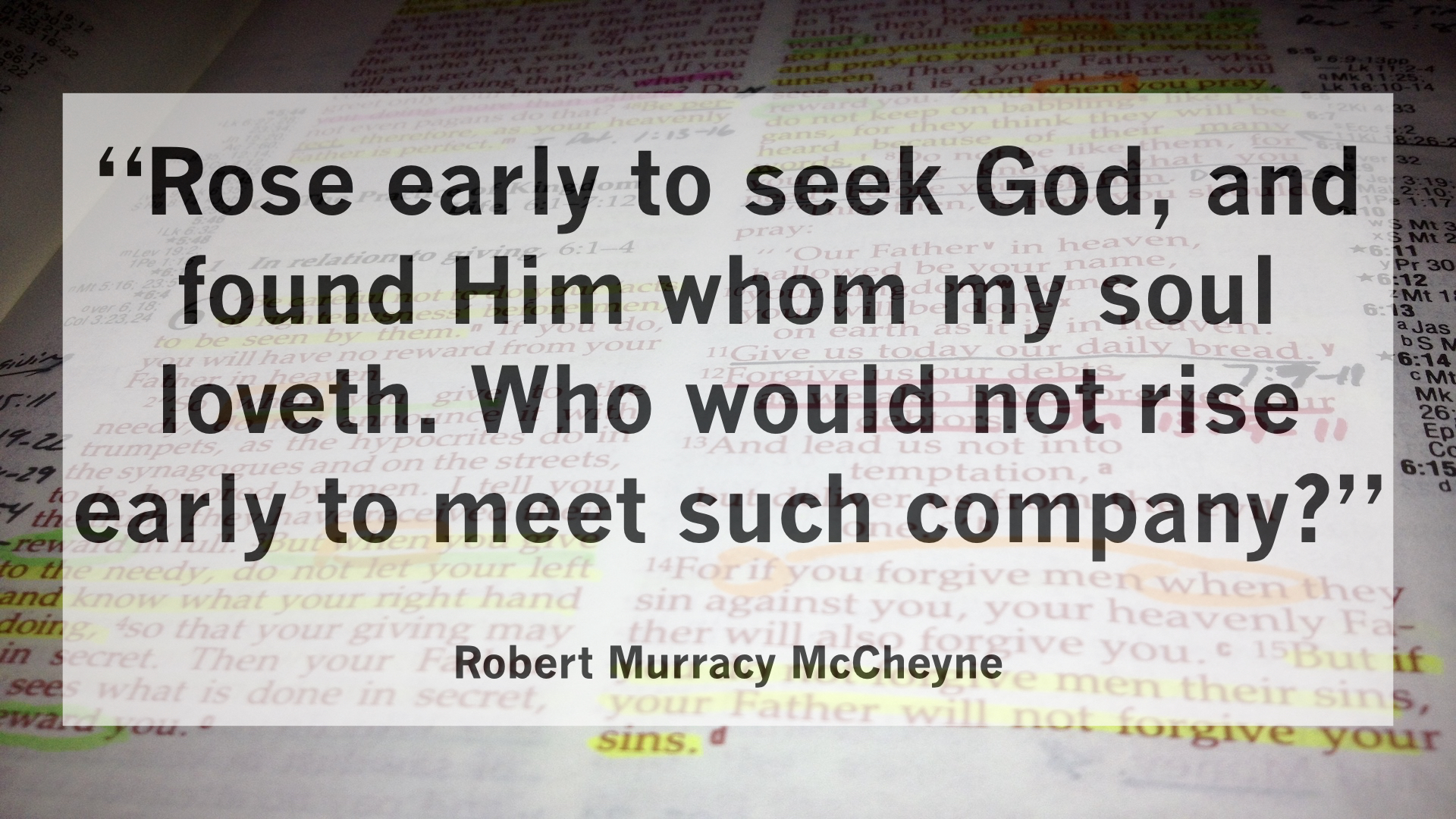
Listen to the podcast of this post by clicking on the player below, and you can also subscribe on AppleSpotify, or Audible.  I am sometimes amazed at how much Jesus accomplished in just a little over three years of public ministry. What I would have expected to see is a Man burning the candle at both ends—up early, working hard without any breaks each day, very little (if any) leisure time, and then burning the midnight oil.  But instead we see Jesus never seeming to be rushed or exhausted. He takes time for meals with friends, time away from the crowds, and still in just a short period of time He fulfilled hundreds of ancient prophecies and trained His followers to take the Gospel around the globe!  One of the keys is His priority. Notice that I said priority and not prioritieS. Jesus was singularly focused on His Father’s glory and He showed total dependence on Him. I think one of the most telling verses is Mark 1:35: “Very early in the morning, while it was still dark, Jesus got up, left the house and went off to a solitary place, where He prayed.”  If Jesus needed prayer to start His day, how much more do we need this!  Scottish pastor Robert Murray McCheyne wrote in his journal, “Rose early to seek God, and found Him whom my soul loveth. Who would not rise early to meet such company?” 

(Check out all of the Scriptures in this post by clicking here.) 

So why don’t we treat prayer like this? I think there are three main hindrances to keep us from making prayer a priority.  (1) Self-reliance. A common phrase we use is, “I need to get to work.” But this puts the emphasis on me—my plans, my abilities, my work ethic. I believe I can do more than pray, but I also believe that I shouldn’t do anything until I have prayed.  Prayer, therefore, is a reminder of my utter God-reliance.  God has a better plan than we do. God has more wisdom than we do. God has more strength than we do. So wouldn’t it be better to ask Him what we should be doing, how we should be doing it, and then ask Him for the strength to do it?  When we have this focus, our prayer time will keep us aligned with His plans and empowered with His wisdom and strength. Look at a couple of examples.
  • Sarah knew how to believe God because He showed how He kept His promise in His perfect timing (Genesis 21:1-2). 
  • Mary knew how to pray and behave in alignment with God’s word (Luke 1:31-38). Her prayer shortly after this is sautéed in Scripture, showing how she relied on God to keep His Word (vv. 46-55). 
  • Saul of Tarsus (who became Paul the apostle) had assurances of God’s direction for his life at almost every turn (Acts 9:15-16, 20:22-24, 21:10-14, 23:11, 27:21-25). Then he writes to his friends at Philippi how God received the glory throughout this whole process (Philippians 1:12-14, 25-26). 
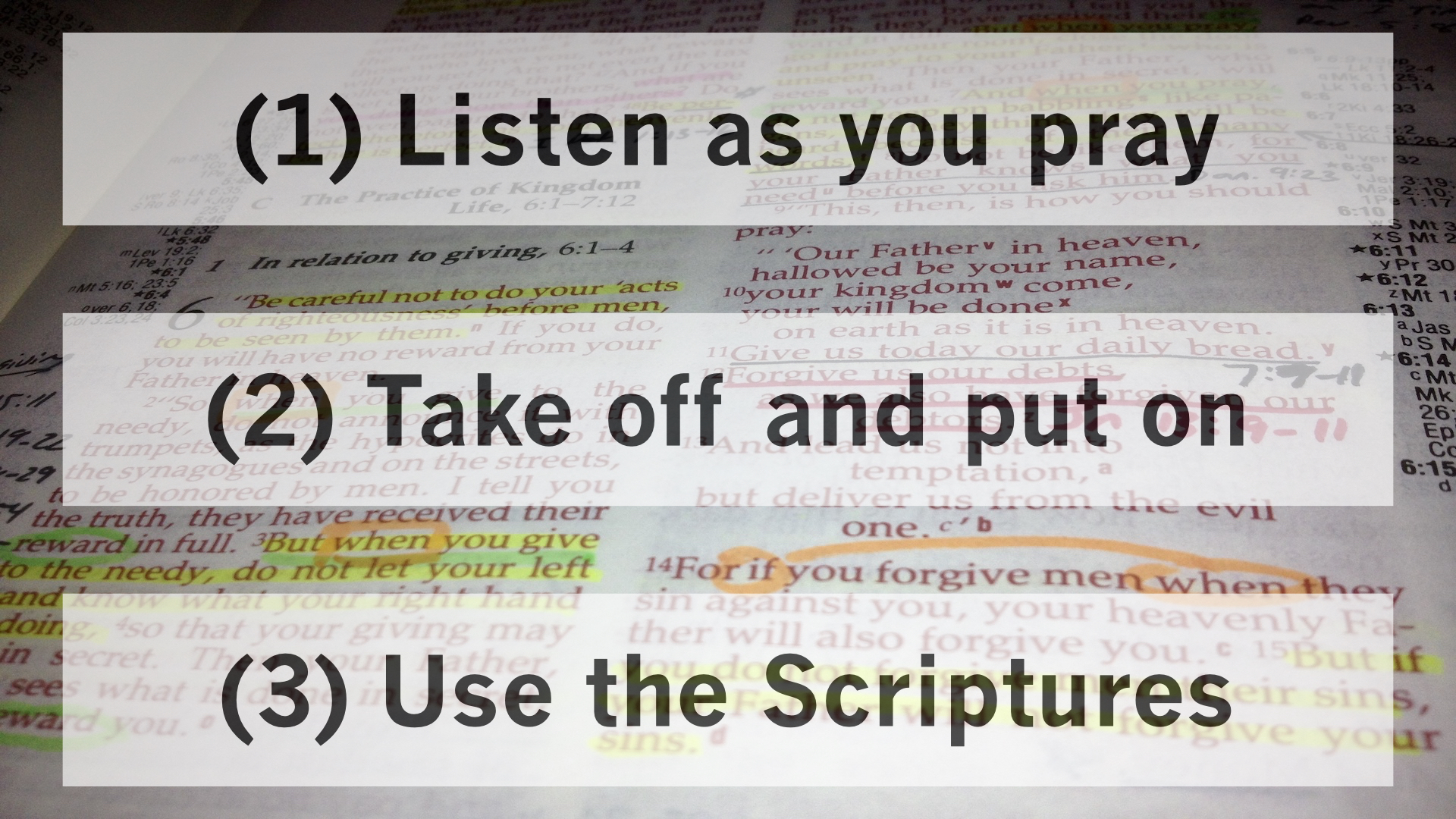
We can live and pray with the same assurance that God is completely in control (Isaiah 55:8-11; Romans 8:26-28).   (2) Distractions. When Martin Luther was asked about his plans for the next day he said, “I have so much to do that I shall spend the first three hours in prayer.” That sounds unrealistic to most of us, but that is because we call too many things “priorities.” We need a singular priority: The knowledge of God’s will and the help that only God can give.  Stephen Covey has a very helpful tool that I use regularly: the urgent/important grid. Bible reading and prayer time is most decidedly a Quadrant II activity. We make time for these important activities by removing unimportant activities from Quadrant IV. The Bible frequently couples a “take off” with a “put on” (see 1 Corinthians 13:11; 2 Timothy 2:4; Ephesians 6:11-18), which should prompt us to ask, “What’s one thing I can take off of my Quadrant IV and put on that time for prayer in Quadrant II?”  (3) Uncertainty. Sometimes we may wonder if our prayers are doing anything. Maybe we think we are not praying the “right way” or perhaps we wonder if we are praying for something in alignment with God’s will or only our own selfishness.  The only two things Jesus said were the “wrong ways” to pray were praying to show off, and babbling like pagans (Matthew 6:5-8). As we read in Romans 8, the Holy Spirit will help us pray, if we will let Him.  One way we pray in alignment with God’s will is to pray using the Scripture. The Bible is our Prayer Book. Pastor Timothy Keller wrote, “Your prayer must be firmly connected to and grounded in your reading of the Word. This wedding of Bible and prayer anchors your life down in the real God. … Without immersion in God’s words, our prayers may not be merely limited and shallow but also untethered from reality.”  So here are three steps we need to implement to counteract those three hindrances to a consistent, meaningful prayer life: 
  1. Listen to yourself pray—replace the “I have to” with “God, I trust You to direct me and help me.” 
  2. Track your time in each quadrant and identify just one Quadrant IV activity you can replace with prayer. 
  3. Start turning Scripture into prayers. 
I will be elaborating more on the idea of using the words of the Bible to form on our prayers as we continue our series Our Prayer Book.  ►► Would you please prayerfully consider supporting this ministry? My Patreon supporters get behind-the-scenes access to exclusive materials. ◀︎◀︎
Gratitude That Reverberates Through The Ages

Listen to the podcast of this post by clicking on the player below, and you can also subscribe on AppleSpotify, or Audible. 

Last week we learned how our gratitude helps strengthen other saints. I mentioned that one of the saints that may be helped is yourself. Like when King David took care of Mephibosheth “for the sake of your father Jonathan” (2 Samuel 9:7). 

(Check out all of the Scriptures in this post by clicking here.) 

But this isn’t quid quo pro—we aren’t grateful people just so we can get something back for ourselves. We should be grateful people because…

(1) …God is good all the time and so we should be thankful to Him continually—1 Thessalonians 5:18

(2) …Jesus was grateful—1 Peter 2:23; Hebrews 12:2 

(3) …God blesses thankful people—1 Peter 3:9; Luke 6:33 

(4) …your thankfulness can benefit people you haven’t even met!  

Near the end of his life, David wrote a hymn of thanksgiving, which he taught to Asaph (his worship leader) who then taught it to all the citizens (1 Chronicles 16:7-35). Throughout this song, notice how many times David sang about not only giving thanks but sharing our thankfulness with those around us. 

In difficult times, people search for what delivered others in the past. A good example is Psalm 106, where the psalmist warns his readers about the dangers of forgetting to be thankful for God’s blessings. This psalm begins and ends with words taken right from David’s hymn of thanksgiving as an added reminder of what our gratitude should sound like (see vv. 1, 47-48).

One hundred years after David wrote this song, King Asa needed to look back to it. His father Abijah had been evil throughout his reign as king, so had his grandfather Rehoboam. His great-grandfather Solomon started off well, but turned away from God near the end of his life. So Asa looked all the way back to the thankful heart of his great-great grandfather David (1 Kings 15:11). 

Jehoshaphat needed this same song 100 years after Asa (200 years after David wrote it) in 2 Chronicles 20. Enemies had surrounded Judah and Jehoshaphat called the people to prayer. Jahaziel, a direct descendant of David’s worship leader Asaph, calls the people to trust God to fight the battle for them. As the army marches out the next morning, they put the worship team at the front who sang David’s 200-year-old song of thanksgiving and God used that to ambush their enemies! 

Your lifestyle of gratitude today—your songs of thanksgiving—could be a blessing to future generations that haven’t even been born yet! 

We would do well to learn the lessons of the past and make sure we are always quickly turning our grumbling into a song of thankfulness. 

As you do, you are… 

  • Emulating the lifestyle of Jesus 
  • Banking up blessings from God 
  • Ambushing the enemy 
  • Bringing a testimony to non-believers 
  • Establishing a standard for future generations 

We bless God and bless others by employing two words: BE THANKFUL! 

If you’ve missed any of the messages in our Be Thankful series, you can find them all here. 

►► Would you please prayerfully consider supporting this ministry? My Patreon supporters get behind-the-scenes access to exclusive materials. ◀︎◀︎
Getting Uncomfortable With Staying Comfortable

Listen to the podcast of this post by clicking on the player below, and you can also subscribe on AppleSpotify, or Audible. 

We as a Church are underperforming. How do I know this? Look at the way the world treats Christians; specifically, look at what’s NOT happening. 

  • By this all will know that you are My disciples, if you have love for one another” (John 13:35). Jesus said this right after He served His disciples by washing their feet. Is this happening today: Do people know you are a Christian by the way you put your love into servant-hearted action, or do they just know what you are against? 
  • “Be prepared to give an answer to everyone who asks you to give the reason for the hope that you have” (1 Peter 3:15). When was the last time someone saw your hope-filled life in such contrast to everyone else’s response that they said, “How can I have what you have?” 

(Find all of the Scriptures I’ve used in this post by clicking here.)

Peter said our adversary prowls like a lion. He is perfectly willing to bide his time, picking the strategy that works best. One of his favorite strategies is lies—sometimes half-truths or out-of-context truths. 

…Woe to the earth and the sea, because the devil has gone down to you! He is filled with fury, because he knows that his time is short. … The dragon was enraged with the woman and went off to make war against the rest of her offspring—those who obey God’s commandments and hold to the testimony of Jesus (Revelation 12:12, 17). 

Lies are his native tongue. He lied to Adam and Eve right in the beginning (Genesis 3:1, 4-5), and he still lies now (Revelation 12:10). Jesus contrasted this with the truth that He came to proclaim (John 8:42-45). 

The devil has learned that with many people, outright attacks drive them TO God. We see this in the oldest book of the Bible (Job 1:6f, 20-22), and in modern times (churches were filled after the 9-11 terrorist attacks). 

What the devil would rather do is lie to you to keep you comfortable. In The Screwtape Letters, Screwtape implores Wormwood to keep his patient indifferent and comfortable. Indeed, we all have a comfort zone and we love to stay in it. 

King Saul went from 3000 men to 600 men, from a full armory to only two swords, from defeating the Ammonites to being hemmed in by the Philistines. King Saul was enjoying life as the king, hanging out with his friends, sitting under a pomegranate tree, far away from his enemies. Life was good for Saul, life was familiar and comfortable. Saul was living in his comfort zone. But the comfort zone is a lousy place to live. 

In the comfort zone you only tell stories, but never live an adventure. In the comfort zone, you only hear about what God has done for others, but you never experience Him move in miraculous ways for yourself. 

God has given us all gifts so that we can live as overcomers and bring Him glory, but we settle for living only in our comfort zone. Our comfort zones are always way smaller than our gift zones, and the devil is perfectly happy to see us stay there.

Moses was comfortable in the desert, but God sent him in His power (Exodus 3:11, 14). 

David was comfortable in the pasture, but God equipped him to lead a whole nation (2 Samuel 7:18; Psalm 78:70-71). 

Jeremiah was comfortable being an anonymous priest, but God gave him words to prophesy to a wayward nation (Jeremiah 1:4-8). 

Saul was comfortable as a Pharisee, but God sent him to tell the world the Jesus is the Messiah (Acts 8:3; 1 Timothy 1:16). 

What lies have kept you in your comfort zone? 

  • Maybe a parent said, “You’ll never amount to anything.” 
  • Maybe a teacher said, “You’re slow.” 
  • Maybe a classmate said, “You’re weird.” 
  • Maybe the devil said, “You cannot make a difference in the world.” 

You need to silence those lies with God’s truth: 

  • God created me on purpose and for a purpose—Psalm 139:13-17 
  • He has given me all the gifts I need to soar—2 Peter 1:3-4 
  • He wants to help me, if I will trust Him—Isaiah 41:10, 13-14 

Charles Spurgeon said, “The extent of power God can infuse into a person is immeasurable; when divine strength is granted, human weakness ceases to be a hindrance.” 

So, friends, it’s time to get uncomfortable with staying comfortable. It’s time to stretch and soar out of your comfort zone and into more of your gift zone! 

How do you discover your gifts? That’s what we are going to unpack in this series over the next few weeks, I hope you will continue to follow along. And you can catch up on anything you may have missed in our series called Living in Your Gift Zone by clicking here. 

►► Would you please prayerfully consider supporting this ministry? My Patreon supporters get behind-the-scenes access to exclusive materials. ◀︎◀︎
Links & Quotes

This is the intro to an exclusive video for my Patreon supporters. Your support would be so helpful and you will get some cool stuff too!

I have lots of new content every week, which you can check out on my YouTube channel.

I’m proud to be a part of the Assembly of God fellowship that has its roots in missions. Alice Luce is a great example of a missions pioneer whose work in the 1920s is still bearing fruit today. 

“Our nation’s founding document declared independence from Britain, but, with equal fervor, declared dependence upon God. Expressing ‘firm reliance on the Protection of divine Providence,’ the signers committed the American experiment to their Maker. The Spirit of 1776 was reverence and trust. So, as we mark this solemn occasion, let us seek a rebirth of true liberty, which is possible only when governed by divine law. For, without God, we can never have ‘liberty and justice for all.’” —Chuck Colson

“It is impossible to describe the abundance of peace and heavenly joy that often flows into my soul by means of the fresh answers which I have obtained from God, after waiting upon him for help and blessing; and the longer I have had to wait upon him, or the greater my need, the greater the enjoyment when at last the answer comes, which has often been in a very remarkable way, in order to make the hand of God the more manifest.” —George Mueller 

The Institute for Creation Research reports on a study: “Physicists at Roskilde University in Denmark have shown that a single equation correctly describes the frequency of wing and fin strokes for a wide array of flying and swimming creatures, including birds, insects, bats, and whales.” Wow, it’s almost as if an all-wise Creator knew what He was doing!

T.M. Moore uses the understanding of wireless internet access to help Christians with a picture of prayer. “When we bend our increasingly Christ-filled minds, hearts, and consciences to the spiritual code-writing of prayer, we craft messages which shape the spiritual air as they course their way toward the Source of all living-water spiritual power, Who is filling all things with Himself. The more we pray with Christ-overflowing souls, the more we flood the spiritual airspace with the Lord, crowding out and sidelining those forces of wickedness which seek to jam those airwaves or fill them with spiritual disinformation. And the less spiritual ‘airspace’ the devil can command, the better for all of us.” —T.M. Moore 

Links & Quotes

Guys, you don’t have to “live down” to the poor male role models that Hollywood portrays, but you can create a beautiful culture in your marriage, your home, and your workplace. Check out the full sermon this clip came from.

I have lots of new content every week, which you can check out on my YouTube channel.

“Challenge yourself; it’s the only path which leads to growth.” —Morgan Freeman

Michael R. Emlet writes, “There are no easy answers here. In thinking about the juxtaposition of mental-health issues and church discipline, we want to be wary of two extremes. First, we don’t want to avoid corrective pastoral care out of fear that we will ‘add insult to injury’ for those struggling with mental affliction. Second, we don’t want to care for someone with mental illness exactly as we would care for someone without such a struggle. We want biblical truth and love to guide us.” This is a thoughtful post about how pastors should think about mental illness in church disciple. I shared a year-long series of messages on a Christian’s mental health, which you can find here.

Why does Paul call satan “the prince of the power of the air” (Ephesians 2:2)? Pastor John Piper gives us some excellent thoughts on Bible study in general and this verse in particular. 

Thwarting Infighting

Listen to the podcast of this post by clicking on the player below, and you can also subscribe on AppleSpotify, or Audible. 

Something from J.R.R. Tolkien and something from the Bible collided on the exact same day.

Check out this episode of The Podcast.

Here are some helpful resources from this episode:

The Scriptures I referenced are 1 Samuel 30:1-19 and John 10:10.

David learned how to find his encouragement in God from his friend Jonathan. Check out The Jonathan Experience.

I have a lengthy series of posts on the attributes of godly leaders which you can find here.

My new book When Sheep Bite is available for pre-order!

Here are a bunch of ways to get in touch with me and follow along with other projects on which I am involved

►► Would you please prayerfully consider supporting this ministry? My Patreon supporters get behind-the-scenes access to exclusive materials. ◀︎◀︎

Links & Quotes

Jesus asks us to proclaim the message about Him, not argue about Him. The best witness is one who truthfully shares his or her personal life-changing experience with Jesus. There is never a reason to quarrel about this! Check out this whole message here. I have lots of new content every week, which you can check out on my YouTube channel.

“In 1977, 40 years after arriving in Guatemala, the Franklins retired from full-time ministry, returning to the United States. They made numerous short-term trips back to Guatemala to rejoice with the people who had become their family. From the five small groups of believers they found in 1937, God had blessed them with 600 established churches, 700 licensed ministers, and 55,000 Assemblies of God believers.” What an amazing testimony of faithful, Christ-honoring ministry!

“Enduring peace cannot be bought at the cost of other people’s freedom.” —Franklin D. Roosevelt

“When we are out of the way of duty, we are in the way of temptation.” —Matthew Henry

“Work of the enemy! Such deeds he loves: friend at war with friend, loyalty divided, and confusion of hearts.” —Gandalf, in J.R.R. Tolkien’s Return of the King 

I absolutely love the leadership insights I discover during my daily Bible reading. I have turned many of these insights into an ongoing series called Godly Leadership.

“Before one can correctly understand the work of the Holy Spirit, he must first of all know the Spirit Himself. A frequent source of error and fanaticism about the work of the Holy Spirit is the attempt to study and understand His work without first of all coming to know Him as a Person. … If we think of the Holy Spirit as so many do as merely a power or influence, our constant thought will be, ‘How can I get more of the Holy Spirit,’ but if we think of Him in the Biblical way as a Divine Person, our thought will rather be, ‘How can the Holy Spirit have more of me?’” —R.A. Torrey, The Person and Work of the Holy Spirit 

Links & Quotes

The devil wants us to remember what we’ve done or what we still need to do, but Jesus wants us to remember what He has already done. There is a huge difference! Check out this whole message here. I have lots of new content every week, which you can check out on my YouTube channel.

“The most likely man to go to hell is the man who has nothing to do on earth. Idle people tempt the devil to tempt them.” —Charles Spurgeon

“What were we made for? To know God. What aim should we have in life? To know God. What is the eternal life that Jesus gives? To know God. What is the best thing in life? To know God. What in humans gives God most pleasure? Knowledge of Himself.” —J.I. Packer

The Bible Archeology Report shares the Top 10 archeological discoveries related to the resurrection of Jesus.

We can learn childlike faith by simply watching and listening to how young children interact with their loving parents. This video is a clip from one of the message in our series called Kingdom Praying.

Technological advancements abound all around us. How are Christians supposed to interact with technology: embrace it? ignore it? This is a thoughtful message to give us a biblical paradigm for our daily use of technology. 

“We must quit bending the Word to suit our situation. It is we who must be bent to that Word, our necks that must bow under the yoke.” —Elizabeth Elliot

“The things you pray about are the things you trust God to handle. The things you neglect to pray about are the things you trust you can handle on your own.” —H.B. Charles 

“Learning to pray doesn’t offer us a less busy life; it offers us a less busy heart.” —Paul Miller

Links & Quotes

Romans 8:28 tells us that God uses ALL things to accomplish His purpose for our lives. Too many times I tried to rush through things without getting anything out of it. I have lots of new content every week, which you can check out on my YouTube channel.

He is 98 years old and he’s still busy serving other people! I pray we can all be as selfless and vibrant in ministering to others until the day God calls us home.

“When with an eye of faith we behold Christ crucified we ought to weep, not for Him, but for ourselves. We must not be affected with the death of Christ as with the death of a common person whose calamity we pity, or of a common friend whom we are likely to part with. The death of Christ was a thing peculiar; it was His victory and triumph over His enemies; it was our deliverance, and the purchase of eternal life for us. And therefore let us weep, not for Him, but for our own sins, and the sins of our children, that were the cause of His death; and weep for fear (such were the tears here prescribed) of the miseries we shall bring upon ourselves, if we slight His love, and reject His grace, as the Jewish nation did, which brought upon them the ruin here foretold.” —Matthew Henry, on Jesus’ word, “Do not weep for Me” in Luke 23:28

J. Warner Wallace shares three responses Christians can give to those who make the claim that Jesus didn’t think He was God. In this video, Detective Wallace talks about a section of his website that gives further evidence. You can find that section here.

The Institute for Creation Research is a group of scientists explaining how science points to a Creator. What does Creation have to do with Easter? “Any view of Christianity that incorporates long ages of death and suffering before Adam makes a sham of the Cross. This Easter season, as we remember our salvation made possible by the death of our Lord Jesus Christ on the Cross and His triumphant resurrection from the grave, let us understand it within the ‘big picture’ of a ‘very good’ creation that was ruined by our rebellion but restored by the willing sacrifice of our great Creator-Savior.”

“One measure of the greatness of a man is not only that he practices what he preaches, but also that he doesn’t consider himself above the ordinary means of grace that all Christians need.” —John Piper

“Beware of idleness—satan sows most of his seed in fallow ground.” —Thomas Watson

He prayeth best who loveth best
All things both great and small;
For the dear God who loveth us,
Hath made and loveth all. —Samuel T. Coleridge

Prepared To Pass The Test

Listen to the podcast of this post by clicking on the player below, and you can also subscribe on AppleSpotify, or Audible. 

The prayer that Jesus taught His follower is a prayer for citizens of the Kingdom of Heaven. These are not just some magical words to pray whenever we don’t know what to pray. 

We come to a part of the prayer that has confused some people. Jesus instructed us to pray, “And lead us not into temptation, but deliver us from the evil one” (Matthew 6:13). 

So some people have asked, “Does God tempt us?” 

No, He doesn’t! The temptations flare up when the ungodly desires within us are given an opportunity to seize what we think will make us happy (see James 1:13-15). 

All three of the synoptic Gospels tell us that Jesus was led by the Holy Spirit to the place where the devil would tempt Him (Matthew 4:1; Mark 1:12-13; Luke 4:1-2). 

Jesus went through all of this so that He would be assured that He was fully equipped for the intense scrutiny He was going to undergo for the next 3+ years. At the end of that time neither the Sanhedrin, Pontius Pilate, nor Herod Antipas could find any semblance of sin in His life. 

The word Jesus uses for temptation in Matthew 6:13 comes from the root word peirazo, which means to assay. We don’t use that word too often today, but it means a testing, an experiment, or a trial, to prove something’s fidelity, integrity, or virtue. 

Just like an assayer would test a rock for the quality and quantity of a precious metal found in it, so we are tested to determine our fitness for what God has in store for us. Remember that the beginning of this prayer is a desire for God’s name to be hallowed and His Kingdom to be made visible through our lives. 

Jesus endured His intense time of testing for you and me. The writer of Hebrews tells us that Jesus underwent every temptation we would ever face, without once giving in and sinning. He did all of this so He could be the perfect High Priest that knows how to intercede for us in our time of testing (Hebrews 2:14; 4:15; 2:10, 18; 5:7-9, 4:16). 

Hebrews 5:9 says that Jesus was perfected (the Greek word is telios), which is exactly what Jesus wants for us—Be prefect [telios] even as your Heavenly Father is perfect [telios] (Matthew 5:48).

In order to know this perfecting process, we have to be tested and assayed (James 1:12, 2-4). 

Temptations reveal hidden sins in our lived, and temptations keep us humbly reliant on God (Psalm 19:12; 1 Corinthians 10:12-13; James 4:1-7). 

Like all of the other phrases in this prayer, this one is both an acknowledgment (I will face temptations) and a petition (I need Your help to overcome the temptation). This is not necessarily a prayer to keep us from temptation, but to keep us through the temptation. We want to be empowered to pass the test. 

A loving teacher prepares us for the test, gives us the test, and then gives us the results so that we know we are prepared for the next level. So remember that this prayer is addressed to our loving Heavenly Father. He prepares us for the test so that we can pass the test. We never walk an unknown path—we never are given a test unless He has fully prepared us for it. 

So let me give you four thoughts to consider:

  1. Don’t rush ahead because that’s pride. Jesus went when the Holy Spirit led Him.
  2. Don’t lag behind because that’s fear. Think of the Israelites who fearful of the “giants” in the land and wouldn’t move forward. 
  3. Don’t be discouraged by a temporary failure. The phrase immediately before this says, “Forgive us our debts.” If you fall short, ask for forgiveness and move forward again. 
  4. Do give in to the righteousness Jesus has made available for you. This is what will help you stand firm in your time of testing (1 Peter 1:6-7).

Just like Jesus, our Father wants to perfect you and lead you up to higher levels. 

If you’ve missed any of the previous messages in this series looking at the model prayer Jesus taught us, you can find them all here. 

►► Would you please prayerfully consider supporting this ministry? My Patreon supporters get behind-the-scenes access to exclusive materials. ◀︎◀︎