Resourced Like Jesus

Listen to the podcast of this post by clicking on the player below, and you can also subscribe on AppleSpotify, or Audible. 

If Jesus needed to be empowered by the Holy Spirit in order to do His Father’s business, how much more do we need this anointing today? 

You can check out the full sermon from which I took this clip: The Father’s Business.

The Scriptures I reference in this clip—Luke 3:22; Matthew 17:5; Luke 4:1, 18-19; Acts 10:38; John 5:36. 

Like Jesus, when we are full of and led by the Holy Spirit everywhere we walk is holy ground; every moment is a sacred moment; every work is worship to God because we are occupied about the Father’s business.

Check out the full series of messages about the empowerment of the Holy Spirit in the series We Are: Pentecostal. 

►► Would you please prayerfully consider supporting this ministry? My Patreon supporters get behind-the-scenes access to exclusive materials. ◀︎◀︎
Inspiration, Illumination, And Boldness

Listen to the podcast of this post by clicking on the player below, and you can also subscribe on AppleSpotify, or Audible. 

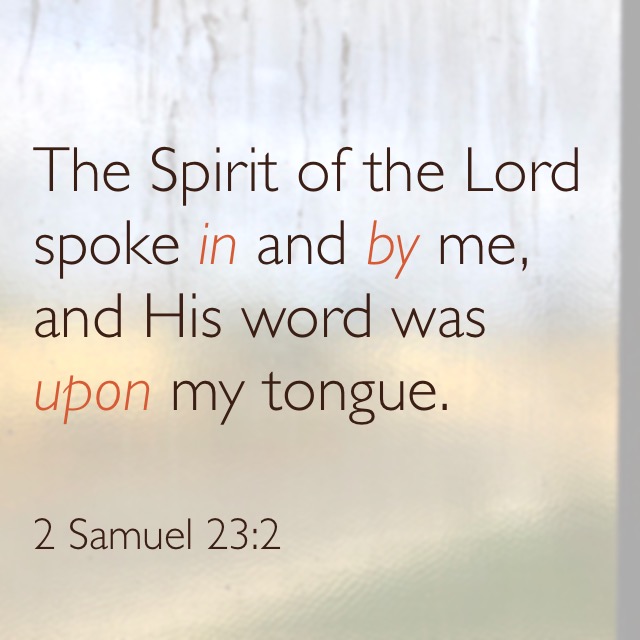
David declared that the Holy Spirit inspired the words he penned. “The Spirit of the Lord spoke in and by me, and His word was upon my tongue” (2 Samuel 23:2). 

Both Jesus and Peter affirm this in the New Testament as well when they make mention that David’s words were given to him by the Holy Spirit (Matthew 22:43; Mark 12:36; Acts 1:16, 4:25). 

It’s not just the words of David, but all Scripture is God-breathed (2 Timothy 3:16; 2 Peter 1:21)! This is why we would be wise to pray before reading our Bibles to ask the One Who inspired the Scripture to illuminate our minds to understand it and guide us into its daily application (John 14:26, 16:13). 

Jesus desired that we go even farther than this. His directive to His followers was for them to be baptized in the Holy Spirit. This initial baptism took place on the first Pentecost celebration after Jesus had ascended to Heaven. Luke records it this way—

And they were all filled (diffused throughout their souls) with the Holy Spirit and began to speak in other (different, foreign) languages (tongues), as the Spirit kept giving them clear and loud expression in each tongue in appropriate words. (Acts 2:4 AMPC) 

And in the subsequent verses Luke makes it clear that these were intelligible languages and intelligent words that served as a testimony to the worldwide visitors that were in Jerusalem—

And when this sound was heard, the multitude came together and they were astonished and bewildered, because each one heard them—the apostles—speaking in his own particular dialect. And they were beside themselves with amazement, saying, “Are not all these who are talking Galileans? Then how is it that we hear, each of us, in our own (particular) dialect to which we were born? Parthians and Medes and Elamites and inhabitants of Mesopotamia, Judea and Cappadocia, Pontus and the province of Asia, Phrygia and Pamphylia, Egypt and the parts of Libya about Cyrene, and the transient residents from Rome, both Jews and the proselytes to Judaism from other religions, Cretans and Arabians too—we all hear them speaking in our own native tongues and telling of the mighty works of God!” (vv. 6-11 AMPC) 

In his sermon that followed this event, Peter states that the baptism in the Holy Spirit—with the physical evidence of speaking in tongues—is an evidence of Christ’s resurrection. “Being therefore lifted high by and to the right hand of God, and having received from the Father the promised blessing which is the Holy Spirit, He has made this outpouring which you yourselves both see and hear” (v. 33). 

Later on, when the Christians were facing the threat of persecution from the Jewish leadership, they prayed. In their prayer, they noted again the Spirit-inspired words that David penned and the desire of Jesus for them to be His missionaries (see Acts 4:24-30). 

God answers their prayer powerfully! “And when they had prayed, the place in which they were assembled was shaken; and they were all filled with the Holy Spirit, and they continued to speak the word of God with freedom and boldness and courage” (v. 31). 

The Holy Spirit gave us the Scripture, and He illuminates the Scripture to us. 

The Holy Spirit assures us of our salvation, and He empowers us to share this Good News with others. 

The Holy Spirit gives us words to speak, and He gives us the boldness and courage to speak them. 

He speaks, He illuminates, He empowers, He emboldens! If your theology limits the work of the Holy Spirit to some obscure corner of your world, you are robbing yourself of the power to live a God-glorifying, Jesus-promoting life. 

You may be interested in some additional posts and sermons where I discuss more about the initial physical evidence of speaking in tongues as the Holy Spirit empowers Christians—

You may also be interested in an extensive series of messages I have shared called We Are: Pentecostal. 

►► Would you please prayerfully consider supporting this ministry? My Patreon supporters get behind-the-scenes access to exclusive materials. ◀︎◀︎
The Father’s Business

Listen to the podcast of this post by clicking on the player below, and you can also subscribe on AppleSpotify, or Audible. 

The Holy Spirit’s involvement in our lives isn’t reserved for just the “big” things, but He wants us to be aware of and tuned in to His voice and His thoughts all the time. There shouldn’t be a secular-sacred divide in our activities, but we should make every place holy ground and every moment a divine opportunity for God to be glorified. Or said another way, we shouldn’t have times of work and times of worship, but our worship should be seen in every single thing we do. 

I think everyone of us has experienced at one time or another a poor employer or manager. Maybe it’s an employer that demands results but doesn’t give you the training or the tools to do the job. Or maybe you have the training and tools but you don’t know exactly how much you are able to use these things without crossing a line. 

Maybe you have known a boss that is barely present, but when they do stop by the worksite, they aren’t happy with the work that has been done. On the opposite side, maybe it’s a boss who does everything and then gets mad that you aren’t keeping up or working as hard as them. It’s drudgery working for someone like this! 

But, somewhat surprisingly, Jesus used more work examples to talk about the Kingdom of God than He did worship examples. He talked about farmers, bakers, builders, employers, managers, and employees way more than about worshiping, singing, or preaching. 

One of the few glimpses we have of the early life of Jesus shows Him talking about His mission while on earth. Consider the story of Jesus in the temple in Jerusalem when He was 12 years old (Luke 2:41-49). The phrase in the NIV where Jesus says that He must be “in My Father’s house” can be translated…

  • about My Father’s business (NKJV) 
  • dealing with the things of My Father (MSG) 
  • occupied about My Father’s business (AMPC) 

(Check out all of the Scriptures in this post by clicking here.)

Jesus was consistent about this idea of working while He was on earth (John 5:17, 36; 9:4; 17:4). For Jesus, His work was a delight because it was directed by the Holy Spirit (Luke 3:21-22; 4:1, 18-19; Acts 10:38). 

Remember that I mentioned the unreasonable employer that gives us no training, no tools, no goals for which to aim, but expects us to work for his benefit alone. This was not the case with Jesus! He trained us, provided us with the Holy Spirit to guide us, told us the goal for which we were to aim, and said that both His Father would be glorified and we would be rewarded by our Kingdom work done on earth. 

Jesus wants us to work as He did, and He promised that the Holy Spirit would help us in this (John 14:10-12, 24:49; Mark 16:19-20). 

We saw that Luke 2:49 in the AMPC has Jesus saying, “occupied about My Father’s business.” In Luke 19:13 Jesus tells us to “occupy till I come” (KJV). This word is also translated into phrases like: 

  • put this money to work (NIV) 
  • do business (NKJV) 
  • invest this (NLT) 

Jesus is talking about the “talents” given to His stewards (Luke 19:11-13, 16-23). Every servant received the same thing: one mina. We all have been given one life to live; we all have been given 24 hours in a day; we all have been given opportunities to be occupied about our Father’s business. 

The Holy Spirit as our Counselor is there at every moment, every conversation, every decision to help us hear His voice, think His thoughts, and sanctify every experience. Jesus says that He will reward our occupying until He returns. Just doing things like feeding the hungry, giving water to the thirsty, taking care of those in need. This sounds a lot like the work of Jesus in Luke 4:18-19 and Acts 10:38. This Spirit-empowered work earns the commendation from our Master, “Well done, good and faithful servant! Enter into your Master’s happiness!” 

Be baptized in the Holy Spirit and let Him help you be about your Father’s business until Jesus returns. 

If you’ve missed any of the messages in our We Are: Pentecostal series, you can check them all out here. 

►► Would you please prayerfully consider supporting this ministry? My Patreon supporters get behind-the-scenes access to exclusive materials. ◀︎◀︎
Sanctified Experiences

Listen to the podcast of this post by clicking on the player below, and you can also subscribe on AppleSpotify, or Audible. 

Even with the Voice of the Holy Spirit in our ear and the Mind of God giving us insight, we still “miss it” sometimes. Maybe it’s fear or impatience or immaturity, but we try something on our own and the results are painful. 

I like the maxim, “Sometimes you win, sometimes you learn.” It’s true, but in order to learn I need a proper lens or a wise tutor to help discover those lessons from my experiences. This is what the Holy Spirit does for us: He helps us make senses of our “misses.” Otherwise, if I don’t learn from these painful experiences I will become either arrogant and God opposes this kind of pride (Proverbs 14:7; James 4:6a), or I remain ignorant (Proverbs 15:32; James 4:6b). 

(Check out all of the biblical references in this post by clicking here.) 

Peter heard from Jesus that the baptism of the Holy Spirit was intended to empower the Christians to take the Good News of Jesus to all people—including Gentiles. Peter struggled with this part, as would all good Jews. In their minds, Gentiles weren’t eligible for the blessings of God, especially not the gift of eternal life which would allow them to be in God’s presence forever! 

Before we look at Peter, we need to remember what was happening with Saul/Paul at the same time. Saul met Jesus (Acts 9:3-15), and he then went to Jerusalem (vv. 26-28; Galatians 1:13-19). 

Now let’s go back to Peter. He had just seen a vision from God and heard the Voice of the Spirit (Acts 10:9-16, 19-20). In obedience to this Voice, he went to Cornelius’ house and was given the Mind of God to preach to them. These Gentiles not only accepted Jesus as their Savior but were baptized in the Holy Spirit (vv. 44-48). 

Now let’s switch back to Paul for a moment. Antioch became the home base for Paul and Barnabas (where the believers were first called Christians), and apparently there was a large Gentile population there. At one point, Peter came to visit and struggled with whether or not the Gentile Christians must then convert to Judaism. Peter was struggling with obedience to the vision that God had shown him, his disobedience was beginning to affect others (including Barnabas), and Paul called Peter out on this (Galatians 2:1, 7-14). 

Back in Jerusalem, the Jewish Christians were insisting that the Gentile Christians become Jews. It was this controversy that prompted the Jerusalem Council. At this Council, Peter responded like one who had throughly learned a lesson from his previous “miss” (Acts 15:5-11). 

I like this verse in the Amplified Bible, particularly one phrase: I will praise and give thanks to You with uprightness of heart when I learn by sanctified experiences Your righteous judgments (Psalm 119:7 AMPC). 

Sanctified experiences. A “miss” that the Holy Spirit uses to teach us. The “miss” has been sanctified to become a learning experience. This is what Jesus said the Spirit of Truth would do for us (John 16:13). 

There are things we simply experience, and then there are “sanctified experiences” where the Holy Spirit teaches us an invaluable lesson. These sanctified experiences are what the Holy Spirit uses to bring our thought and conduct into alignment with the perfect standard of God’s Word. 

The Holy Spirit never condemns us for our missteps (Romans 8:1), but uses them for God’s glory (v. 28). 

Just as Paul had to help Peter learn to pay attention to the Voice of the Spirit, the Holy Spirit wants to make us learner-teachers as well. In Psalm 119:7 the Hebrew word for “learn” is lamad which is also the word for “teach.” In other words, I’ve learned it well enough to teach it to another person. Even David with his sinful behavior—a really big “miss”—learned from the lesson from the Spirit of God so well that he could teach others (Psalm 51:10-13). 

Spirit-baptized Christians can lean into the Spirit of Truth to help them learn sanctified experiences from even the difficult things that have happened to them. 

If you’ve missed any of the other lessons in this series, you can find them all here. 

►► Would you please prayerfully consider supporting this ministry? My Patreon supporters get behind-the-scenes access to exclusive materials. ◀︎◀︎
The Mind Of God

Listen to the podcast of this post by clicking on the player below, and you can also subscribe on AppleSpotify, or Audible. 

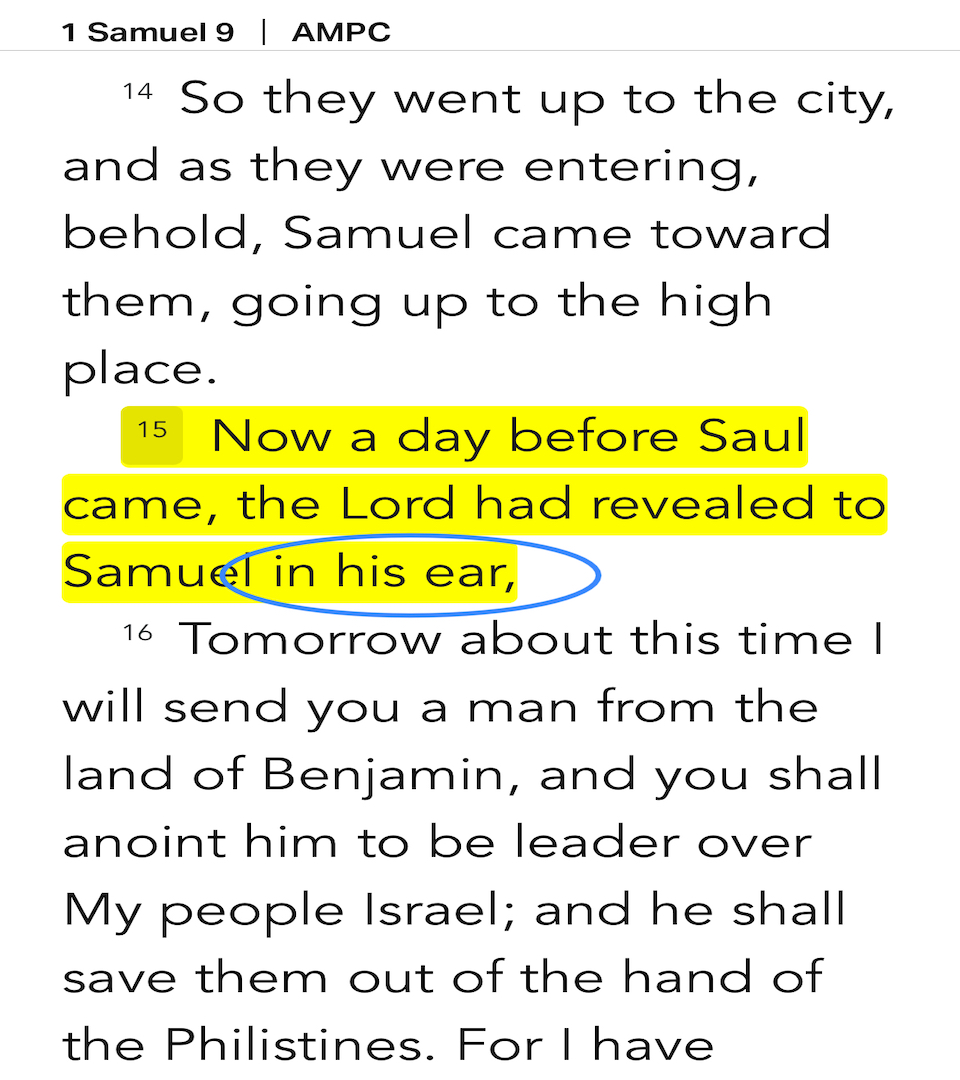
Last week we talked about the Voice of the Holy Spirit. I love the phrase from 1 Samuel 9:15 where God “told Samuel in his ear” about Saul’s arrival and what he should say to Saul. Then the Holy Spirit’s Voice for all of us is foretold in Isaiah 30:21. 

It’s great hearing the Spirit’s Voice, but He also empowers us to know the Mind of God. 

This is not something that automatically comes to every Christian at the moment they invite Jesus to be their Lord and Savior, as we see mention of immature Christians throughout the New Testament. 

Even after Jesus is resurrected from the dead, we see His followers as unsure, troubled men. We meet their…

  • lack of faith—Luke 24:11; Mark 16:14 
  • wonderment—Luke 24:12 
  • troubled minds—Luke 24:37; John 20:19 
  • lack of understanding of Scripture—Luke 24:44 

(Check out all of the Scriptures in this post by clicking here.)

This is all post-resurrection but pre-conversion, but look at what happens next. After Jesus breathes on them (John 20:22), they are peaceful (vv. 19, 21, 26) and they can now understand the Scriptures (Luke 24:45-48). 

As we’ve said, we shouldn’t stop at salvation. Certainly, Jesus wanted more for His followers than merely salvation. He wants His disciples empowered for witnessing and disciple-making (Luke 24:48; Acts 1:4-5, 8). 

Check out these examples of the Holy Spirit sharing with us the mind of God:

  • Joseph—Genesis 41:16, 38-40 
  • Daniel—Daniel 2:19-23, 27-28, 47 
  • Peter—Acts 2:14f; 3:17-26; 4:8-12 
  • Stephen—Acts 7 
  • Philip—Acts 8:30-35 

And just in case you think this is just for “super spiritual” people, look how the Holy Spirit helps the whole Church share the Gospel—

After they prayed, the place where they were meeting was shaken. And they were all filled with the Holy Spirit and spoke the Word of God boldly. … Those who had been scattered preached the word wherever they went. (Acts 4:31, 8:4).

This was always God’s plan! Paul harkens back to prophecies like Isaiah 55:8-9, Isaiah 40:13, and Jeremiah 31:33 when he writes about Christians having “the mind of God” in 1 Corinthians 2:6-16. 

He says, “These are the things revealed to us by His Spirit” (v. 10). 

What things? “Things God has prepared for those who love Him”—things which human eyes haven’t seen, human ears haven’t heard, human minds haven’t conceived (v. 9). These are the the very thoughts of God Himself! 

Just as my spirit is the only one that knows what’s really in my mind, the Holy Spirit is the only One Who knows the mind of the Father and Son (v. 11). We have been given the Holy Spirit “so that we may understand what God has freely given us” (v. 12). Contrast this with the dull, unfruitful minds of both unbelievers (2 Corinthians 4:4) and carnal Christians (Philippians 3:18-19). 

This mind of God is given to us for our edification so that we can be empowered witnesses and disciple-makers. So don’t stop at salvation, but be baptized in the Holy Spirit, and then keep on being filled with the Spirit. 

If you’ve missed any of the messages in this series, you can check them all out here. 

►► Would you please prayerfully consider supporting this ministry? My Patreon supporters get behind-the-scenes access to exclusive materials. ◀︎◀︎
The Voice In Your Ear

Listen to the podcast of this post by clicking on the player below, and you can also subscribe on AppleSpotify, or Audible. 

I would like you to think about a wise, loving friend. One who has years of godly wisdom, empathy, loads of patience, and loving boldness. When you talk with them, you know that you will always get good counsel—even if you may not like exactly what they have shared with you, deep down you know it is still sound wisdom. This is what the Holy Spirit—as our Counselor—does for us. 

The Holy Spirit is not merely a force, but He is a Person. Jesus Himself give the Spirit the pronouns “He / Him / His.” 

Then take a look at just the beginning of the Book of Acts. The Holy Spirit does things a person does

  • He speaks God’s Word (1:16; 4:25) 
  • He empowers (2:4) 
  • He can be lied to (5:3, 9) 
  • He can witness events (5:32) 
  • He can be resisted (7:51) 
  • He can encourage (9:31) 
  • He gives wisdom (6:10) 
  • He gives direction (8:29, 10:19) 

I especially want to key in on those last two attributes where the Holy Spirit is speaking to us. 

Samuel grew up during the time of the judges, where everyone did whatever they thought best. This is a time that is described like this, “In those days the word of the Lord was rare; there were not many visions” (1 Samuel 3:1). Visions in the Hebrew language is two words: open communication. In other words, people just weren’t listening for God’s voice. 

Samuel had to learn to hear God’s voice as well (see this passage and all of the other biblical references in this post by clicking here). 

God doesn’t reveal His heart to those who are unwilling to obey. His persistent call is for obedience to His Word and reliance on His provision. So the word of the Lord had to be revealed to Samuel (v. 7). When Samuel said he was listening (v. 10), that was a posture of readiness to obey. 

God wants to reveal His heart to His obedient people. I love how God does this later for Samuel, “Now the Lord had told Samuel in his ear the day before Saul came…” (1 Samuel 9:15). 

This is how Jesus described the Holy Spirit in John 7:37-39, as streams that flow continuously out of our being. And Jesus also calls Him Counselor (John 14:16). 

Isaiah described our Counselor like this, “Whether you turn to the right or to the left, your ears will hear a Voice behind you, saying, ‘This is the way; walk in it’” (Isaiah 30:21). 

Let’s call this GPS = God’s Personal Spirit in us! 

Those who are baptized in the Holy Spirit—utterly yielded to His wisdom—will experience:

  1. More insight into God’s Word—Psalm 119:18 
  2. More timely application of God’s Word—2 Timothy 3:16-17 
  3. More boldness in prayer—2 Samuel 7:27 (same word for in his ear as Samuel experienced) 

All Christians have a deposit of the Holy Spirit in their lives at the moment of salvation. The baptism in the Holy Spirit is a completed yielding to the Counselor’s influence. So don’t stop at salvation, but ask Jesus to send you what the Father has promised (Luke 24:49; Acts 2:33). 

Check out all of the messages in our series leading up to Pentecost Sunday by clicking here. 

►► Would you please prayerfully consider supporting this ministry? My Patreon supporters get behind-the-scenes access to exclusive materials. ◀︎◀︎
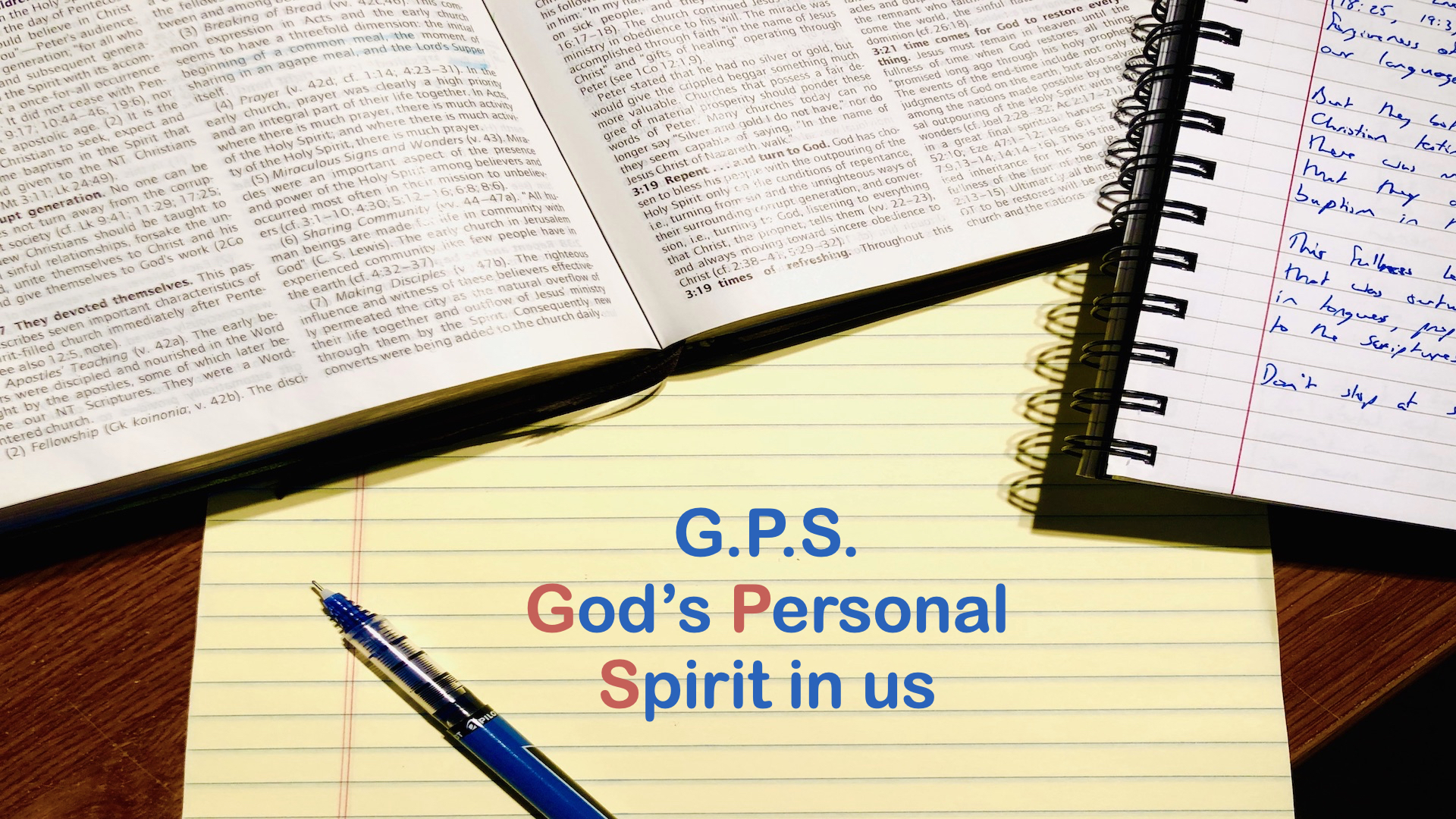
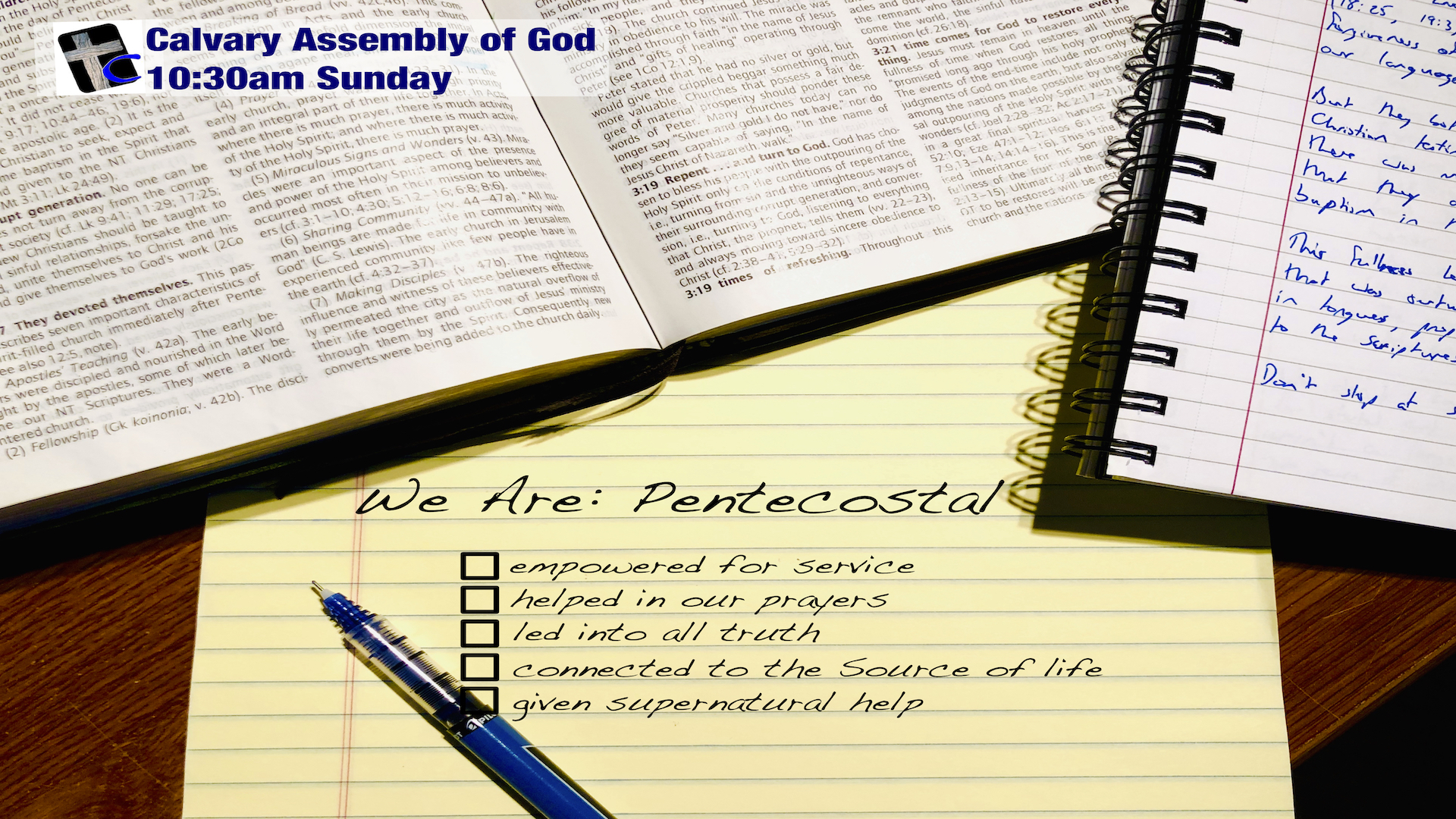
We Are: Pentecostal

Pentecost for over 1500 years was a celebration in Jerusalem that brought in Jews from all over the world. But on the Day of Pentecost which came just ten days after Jesus ascended back into heaven, the meaning of Pentecost was forever changed! 

Followers of Jesus—now empowered by an infilling of the Holy Spirit—began to take the good news of Jesus all over the world. These Spirit-filled Christians preached the Gospel and won converts to Christ even among hostile crowds, performed miracles and wonders, stood up to pagan priests and persecuting governmental leaders, and established a whole new way of living as Christ-followers. 

We, too, can be Pentecostal followers of Jesus Christ today. We can experience an anointing and an empowering in our lives that turns ordinary Christianity into extraordinary Christianity! 

Please join me this Sunday at Calvary Assembly of God as we rejoin this series. You can check out what I taught in this series in 2023 by clicking here.

The topics we have covered this time are:

Links & Quotes

William Gurnall was right when he noted that joy is the highest testimony of a Christian’s peace. Check out the full sermon from which this clip came.

I have a lot of new video content on my YouTube channel every week. Please check it out and subscribe so you don’t miss anything.

“Your failures are your accomplishments because it makes you prepared for whatever it is that you are going to do next.” —Lee Daniels 

One of my favorite Christmas movies is Miracle on 34th Street, where a well-timed letter to Santa Claus arrives at the courthouse to tip the scales of justice for Kris Kringle. The US Postal Service reports that they still get thousands of letters addressed to Santa each year. Have you ever wondered what happens to them. The Smithsonian has the heart-warming story

“The more we learn from God’s Word about how creation praises and reveals Him, the better able we will be to explain His revelation to others. But we’re not content for people merely so experience some revelation of God from the things He has made. We want them to know Jesus. For that, we’ll have to lead them to the Scriptures. The better we know the Scriptures and are daily immersed in them, the more we will see Jesus there and be made like Him. The more we are made like Him, the more we will see Him in all His works, and the more our hope will grow and be visible to others, some of whom may ask a reason for the hope that is within us.” —T.M. Moore 

“No priest, no theologian stood at the manger of Bethlehem. And yet all Christian theology has its origin in the wonder of all wonders: that God became human. Holy theology arises from knees bent before the mystery of the divine Child in the stable. Without the holy night, there is no theology.” —Dietrich Bonhoeffer

“Early Pentecostals generally viewed the observance of the ‘church calendar’ as remnants of liturgical traditions. Apart from Easter and Christmas, there were few days that Pentecostal churches set aside for special services. One exception was New Year’s Eve, when a ‘Watchnight Service’ would be held, typically starting around 7 p.m. and lasting until after midnight.” Check out the notable history of people “praying in the New Year.”

Scott Hubbard writes, “Spiritual health yesterday does not guarantee spiritual health today. So, at the end of a new year, on the edge of another, let’s stop to take some spiritual vitals. How healthy is your soul?” He then gives us six biblically-based questions to help us assess the healthiness of our soul. 

An amulet discovered under the chin of a man buried in a tomb dating to AD 230–270 shows the spread of Christianity into Germany by the middle of the third century.

Year-End Review (2023 Edition)

Listen to the podcast of this post by clicking on the player below, and you can also subscribe on AppleSpotify, or Audible.

The apostle Peter said he wrote two letters to the church “as reminders to stimulate you to wholesome thinking” (2 Peter 3:1). And Paul reminded his young friend Timothy to “keep reminding [your congregation] of these things” (2 Timothy 2:14). 

In the spirit of those great apostles, I have made it a practice to take time at the end of each year to look back on all that we have learned in the previous year, and then to look forward to where God may be leading Calvary Assembly of God in this upcoming year.

Clicking on each series title will take you to a list of all of the sermons in that series. 

Intimate Conversation—The dictionary defines the word “intimate” with these phrases: associated in close personal relations, characterized by warm friendship, and closely personal. These words perfectly describe the relationship God wants to have with His children through prayer. Pete Briscoe said, “Prayer is an intimate conversation with the One who passionately loves you and lives in you.” The One who loves you so passionately desires to walk with you and share intimate knowledge with you. Prayer is not something formal, cold, or mechanical, but it is vibrant, warm, engaging, and life-changing.

A Christian’s Mental Health—I don’t think there is any arguing that Jesus was the healthiest individual who ever walked planet Earth. Some may want to push back with, “Of course He was because He didn’t have any problems to deal with!” But the writer of Hebrews tells us that Jesus experienced everything you and I will ever experience (Hebrews 2:17), so His deity didn’t exclude Him from the stressors that His humanity would have to face. And yet, He handled all of these things successfully. Luke the physician observed the growth of Jesus and tells us that it all began with Jesus having a robust mental health. From that foundation, everything else—physical, spiritual, relational—all could develop properly. We must learn from this example and pay careful attention to our own mental health.

Bold Claims—“That’s a pretty bold claim. Are you prepared to back that up?” I’ll bet you have heard something like that said to you, and maybe you have even said that yourself to someone else who made a big, audacious statement. After Jesus is arrested by the religious leaders—an arrest that will ultimately lead to Jesus being crucified on the Cross—there are some incredibly bold claims spoken by key people in this part of the Story. For the most part, these are claims that we don’t read earlier in any of the Gospels, but as this story is heading toward its most crucial moment, we have these audacious statements pronounced. But here’s the most important part: These bold claims weren’t just made, but they were backed up with proof as well.

We Are: Pentecostal—Pentecost for over 1500 years was a celebration in Jerusalem that brought in Jews from all over the world. But on the Day of Pentecost that came just ten days after Jesus ascended back into heaven, the meaning of Pentecost was forever changed! Followers of Jesus—now empowered by an infilling of the Holy Spirit—began to take the good news of Jesus all over the world. These Spirit-filled Christians preached the Gospel and won converts to Christ even among hostile crowds, performed miracles and wonders, stood up to pagan priests and persecuting governmental leaders, and established a whole new way of living as Christ-followers. We, too, can be Pentecostal followers of Jesus Christ today. 

Ascending—Every year, Jews from around the world made four pilgrimages up to Jerusalem for various feasts and sacrifices. These journeys reminded them of God’s goodness as they went to the Temple to worship, and they helped refocus on God’s ways as they returned to their regular routines. Jerusalem is over 2500 feet above sea level, so the pilgrimage there was a physical workout as well as a spiritual workout. These workouts were beneficial for God’s people, preparing them to minister in their cities in the following months. The Book of Psalms contains 15 songs that these pilgrims would sing to and with each other as they traveled up to Jerusalem. These Psalms of Ascent are still instructive for Christians today.

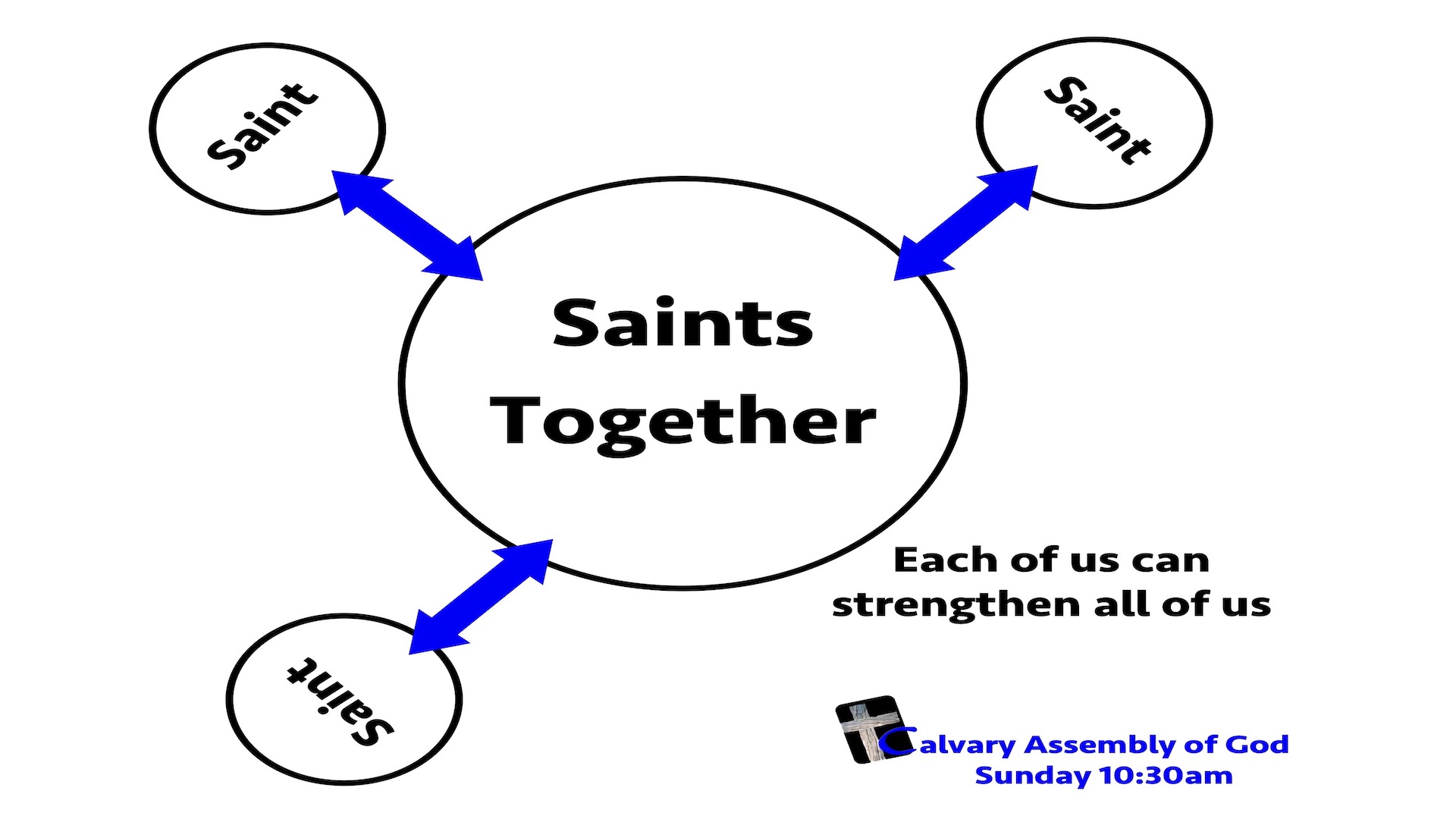
Saints Together—Throughout the New Testament the word “saints” is always in the plural form. This is a clear indication that none of us can develop into the full-fledged Christians we were meant to be on our own. We all need each other. More specifically, we all need the most mature version of each other. A key component of an individual saint’s development is the time spent alone being forged by the discipline of the Holy Spirit. Maturing saints then come together with each other to continue to strengthen and sharpen everyone in the church. Strong individual saints make a strong church, and a strong church makes strong individual saints! Let’s learn about six important spiritual disciplines that each individual saint must put into practice so that they can use their newly developed strengths to help other saints in their own development. 

The Great Attitude Of Gratitude—There’s something about gratitude that distinguishes people. Think about it: would you rather hang around with grumblers or grateful people? The gratitude of Paul and Silas certainly made them stand out from the crowd when they were in Philippi. Wrongly accused, beaten, and thrown in prison, but instead of bellyaching, they were praising God. Later on, when Paul wrote his letter to the Christians in Philippi, the theme of gratefulness permeates his letter. The distinguishing mark is actually in the title: The GReat ATTITUDE spells out GRATITUDE!

Long Live The King Of Kings—Throughout human history, whenever a king died, the people would say something like, “The king is dead. Long live the king!” They would say this because the next king ascended to the throne immediately after his predecessor died. Except when a nation had been defeated, the cry, “The king is dead” was unanswered by, “Long live the king!” Israel must have felt like this. After being defeated by Nebuchadnezzar and spending 70 years in exile, it appeared to many that the line of kings was broken. Even after retuning to their homeland, Israel continued to live under the thumb of other powerful nations. And yet, some still clung to the glimmer of the promise God had made about an eternal King sitting on Jerusalem’s throne. The First Advent of Jesus revealed to us in the Gospels reassures us that the promise of an eternal King is true. Jesus came to earth to reveal His majesty to us. The First Advent is so important because it bolsters our faith for the imminent Second Advent when Jesus will return as the King of kings! Christmas is a great time to be reminded that even now we can confidently declare, “Long live the eternal King of kings!”

2024 promises to be an exciting year! If you don’t have a home church in the northern Kent County area, I would love to have you join us! 

►► Would you please prayerfully consider supporting this ministry? My Patreon supporters get behind-the-scenes access to exclusive materials. ◀︎◀︎
Links & Quotes

This is just one example of the power of a leader’s storytelling. Check the full conversation Greg and I had on The Craig And Greg Show. I have lots of new content every week, which you can check out on my YouTube channel.

“We are all born ignorant, but one must work hard to remain stupid.” —Benjamin Franklin

George Jeffreys was born with a limiting speech impediment, but with the empowering of the Holy Spirit, George and his brother Stephen led incredible Pentecostal revivals in England and Wales. They were said to be the greatest evangelists since George Whitefield and John Wesley. Someone asked Jeffreys how long a revival should last, and he responded, “Thank God, a revival started in my heart 30 years ago, and it has never stopped; it will never end.” He continued by saying, “As long as Jesus is kept in the front, and made the center of fellowship and blessing and unity, the revival will never end.” Check out this mini biography about his life.

John Stonestreet uses the example of C.S. Lewis’ Aslan to talk about how God can speak to us through our pain. John writes, “Pain is never the point of God’s plans, any more than it is the purpose of physical exercise. Never pushing ourselves to the point that it hurts means never improving our health. On the other hand, seeking pain is more likely to do harm than to aid our wellbeing. In and of itself, pain is not good, but it is meaningful. Pain indicates that something is wrong and needs to be addressed.”

“The best way to make a dream come true is to wake up.” —Dame Anna Wintour

Because of the extensive prayer, research, and work I put into my book Shepherd Leadership, I am frequently drawn to passages of Scripture that reinforce the idea of pastors as shepherds. I was meditating on Hebrews 5:2 the other day, and I shared some of my thoughts with some of my pastor friends.