Your King Is The Perfect Judge

Listen to the podcast of this post by clicking on the player below, and you can also subscribe on AppleSpotify, or Audible. Check out the video content in this post by clicking here. 
There’s a scene in The Princess Bride that rings true for us. As the grandfather is reading the story to his sick grandson, he has just revealed that the hero in the story has died. The grandson stops his grandfather, “Wait, grandpa, you’re reading that wrong.” This young man wants what all of us want: For the good guys to be vindicated and for the bad guys to get what’s coming to them. 

The next Royal Psalm assures us that our Judge will perfectly balance His scales of justice. King David (sort of) gives us a picture of this. 

King David’s son Absalom had usurped the throne, and David is fleeing the city with his trusted inner circle. Along the way he is confronted by a man named Shimei, who was from the same family as King Saul (2 Samuel 16:5-12). David gives us a good foretaste of King Jesus in the way he initially responds to this attack (19:18b-23). Sadly, David apparently hung on to these slights and asked his son Solomon to keep an eye on Shimei (1 Kings 2:8-9). So I’m going to guess that our Royal Psalm was written between these two incidents. 

(Check out all of the biblical passages in this post by clicking here.)

Psalm 98 is a call to sing our praise to our King and Judge. First, we are to sing to Him and about Him because of what He has already done: 

  • He has done marvelous things (v. 1) 
  • He has provided salvation (v. 1) 
  • He has made His salvation known (v. 2) 
  • He has revealed His righteousness (v. 2) 
  • He has remembered His love for us (v. 3) 
  • He has remembered His faithfulness toward us (v. 3) 
  • the earth has seen His salvation (v. 3) 

Then we are called to keep on singing in anticipation of what He is going to do: we shout for joy and burst into jubilant song (v. 4), make music (vv. 5-6a), shout for joy (v. 6b), and see creation praising all around us (vv. 7-9a). 

All of this singing because He comes to judge? Does that sound right? 

It sounds right when judgment is in the hand of the Perfect Judge. The Bible describes judges who are looking for bribes, or who are swayed by personal feelings (like King David), or Jesus even identified a judge who didn’t fear God or care about people.  

But God on His throne isn’t any of these things! Isaiah prophesies Christ’s first Advent as one of peace (Isaiah 42:1-4). Even when Jesus was maligned and mistreated even more hatefully—and without having done anything wrong—than David, He still didn’t retaliate (1 Peter 2:21-23). 

Jesus entrusted Himself to Him Who judges justly, which is what Psalm 98 calls us to do. 

  • He comes to judge [vindicate] the earth [creation], which has been groaning for this (Romans 8:21-22). 
  • He will judge [acquit or declare guilty] the world and its peoples (Matthew 25:31-32; Revelation 20:12). 

His judgement will be with righteousness and equity

  • righteousness = the perfect standard 
  • equity = the perfect consequence (see also Isaiah 42:10-13) 

In light of the perfect judgment from the perfect King that is coming, how should we live today? 

  • He will handle retribution then—so don’t retaliate today (Isaiah 11:1-5). 
  • He will handle vindication then—so forgive today (1 Peter 2:23; Luke 23:34). 
  • He will call you to give an account then—so change your words and actions today (Matthew 12:36). 
  • He will forgive blood-washed saints then—so forgive today (Matthew 6:14-15). 
  • He will judge perfectly then—so don’t be judgmental today (James 5:9; Romans 2:1-3). 
  • He will reward perfectly then—so don’t look for applause from the world today (2 Timothy 4:7-8; Matthew 25:34). 

Our King has won our salvation, and He is going to balance the scales perfectly when He returns, so we should be singing His praise every day until His return! 

If you’ve missed and of the other messages on these Royal Psalms, you can find them all here. 

►► Would you please prayerfully consider supporting this ministry? My Patreon supporters get behind-the-scenes access to exclusive materials. ◀︎◀︎

The Security In Our King

Listen to the podcast of this post by clicking on the player below, and you can also subscribe on AppleSpotify, or Audible. Check out the video content in this post by clicking here. 

There is a confidence and joy in knowing how things will turn out, in having “the inside scoop” that others don’t have. 

In my book Shepherd Leadership, I tell the story of the time when I was working as the executive director of a camp and conference center. I was breaking down boxes at the recycle dumpster when a guest approached me, not knowing I was the director. I was able to help her because I knew who to talk to, where the supplies were, and how things worked around the facilities. I knew what I knew, but our guest was a little surprised that I knew what I knew. 

We see this in the life of David as he became king of Israel and as his leadership expanded. 

David was first anointed king over merely the tribe of Judah, but his influence began to expand (2 Samuel 3:1). It wasn’t just fear of his military power, but people genuinely liked him and saw that he had the best in mind for them (3:36), until eventually all of the tribes of Israel saw David as their king (5:1-3). His reign as king saw him continuing to grow in his strength, wisdom, and influence (14:18-20). 

(Check out all of the Scriptures I mention in this post by clicking here.) 

David was unquestionably established as the king—the leader God had chosen. Seeing David reigning as king brings us to the next Royal Psalm (Psalm 97). 

The statement that “the LORD reigns” (v. 1) is widely accepted. For instance, the foundational document of the United States of America opens with the words, “The unanimous Declaration of the thirteen united States of America … We hold these truths to be self-evident, that all men are created equal, that they are endowed by their Creator with certain unalienable Rights.” 

The fact that we exist presupposes a starting point. It would appear that the starting point is something or someone with unimaginable power. Even atheists call the beginning of our universe “a singularity” with unimaginable power to bring all of this into being. The fact that our universe is so well ordered makes the case for an Intelligence behind the unimaginable power. This intelligent, awesome power is described in Psalm 97:2-6. 

Jesus is the One the biblical writers identify as this intelligent, awesome power (John 1:1-4; Colossians 1:15-17). Jesus even identifies Himself as being this One (Revelation 1:8, 18). Because Jesus holds the keys, He has the final word on our eternal existence. His desire is that all would come to know Him as their King and Savior (John 3:16-17). 

When our sins are forgiven, we have no fear of God’s punishment (Psalm 97:7-12). 

Those who oppose this worldview can be quite intimidating at times. Peter tells us, “Do not fear their threats; do not be frightened” (1 Peter 3:14). 

For now, in America, we don’t face bodily threats of violence (although that day may come). The threats Christians face today are being mocked for outdated or out-of-touch beliefs, being canceled because our stance is bigoted and hateful, or simply being pressured to compromise just a little bit on what we believe. 

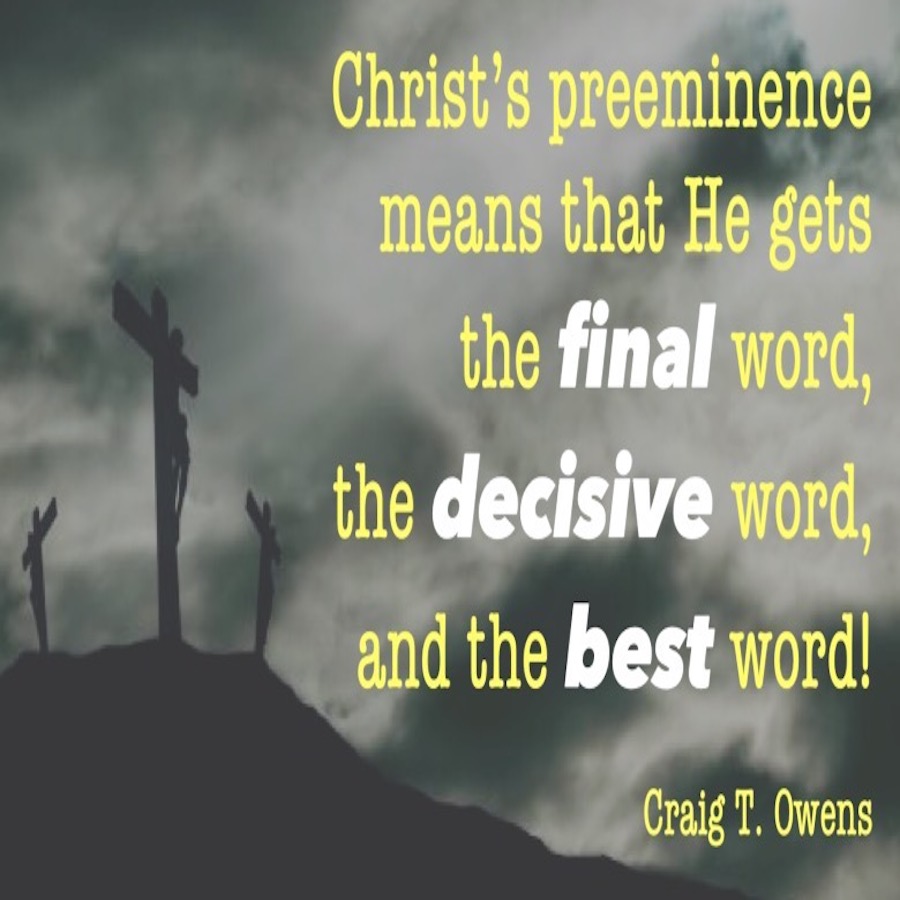
To emphasize his point, Peter quotes words from King David in Psalm 34. David’s words in this psalm sound a lot like the tone of Psalm 97. Notice especially Psalm 34:1-2, 15-22 where David assures us that King Jesus gets the final word, the decisive word, and the best word! 

Someday every knee will bow to Him and every tongue will confess that He is God (Revelation 20:11-15). Knowing this should give Christians an incredible sense of security, especially in the presence of those who doubt, deny, or mock. 

So when atheists, agnostics, and skeptics want to attack your belief in an all-loving, all-powerful God Who says the only way to avoid His final judgment is to place our faith in the work Jesus did on the Cross, let’s be careful in our response. We don’t have to fight them—we should instead respond with love. Peter went on to say that our response to their attacks would be our testimony (1 Peter 3:14-17). 

Like David, let us extol the LORD at all times (even when under attack). Like the Royal Psalm, let us rejoice in the LORD and praise His holy name. Let us never forget Who gets the final word, the decisive word, and the best word! 

If you’ve missed any of the other messages about the Royal Psalms, check out our series All Hail King Jesus by clicking here. 

►► Would you please prayerfully consider supporting this ministry? My Patreon supporters get behind-the-scenes access to exclusive materials. ◀︎◀︎

Inviting Others To Our King

Listen to the podcast of this post by clicking on the player below, and you can also subscribe on AppleSpotify, or Audible. Check out the video content in this post by clicking here. 

Although no one can truly verify the accuracy of this story, it seems to fit the character of what we do know about Alexander the Great. This powerful leader was walk-in among the camp during the night and came upon a soldier who was supposed to be on guard duty. Except Alexander found him dozing off. 

“Soldier, what is your name?” he demanded, bringing the sleeping soldier quickly awake.
“Alexander,” he stammered weakly.
Alexander stepped closer to the young man and repeated, “What is your name?”
“My name is Alexander, sir,” the soldier said a little more clearly this time.
Now, almost nose to nose, Alexander asked again, “What is your name?”
This time the soldier quietly said, “My name, sir, is Alexander.”
Alexander the Great then looked intently at the young soldier, “Either change your name or change your conduct.” 

That story may or may not be true, but Brennan Manning’s words are most assuredly true: “The greatest single cause of atheism in the world today is Christians: who acknowledge Jesus with their lips, walk out the door, and deny Him by their lifestyle. That is what an unbelieving world simply finds unbelievable.” We must take an honest assessment of our lifestyle and then either change our name or change our conduct. 

Our next Royal Psalm is Psalm 96. This psalm begins by echoing the words of praise the King David sang on the day the ark of the covenant of the Lord was brought to Jerusalem (see 1 Chronicles 16:23-29). This day may have been the pinnacle of this great king’s reign. Immediately after celebrating the return of the ark of the covenant of the Lord, God makes the promise to King David that his family will continue to reign until the coming of King Jesus (1 Chronicles 17). 

(See all of the Scriptures I reference in this post by clicking here.)

Although this is a celebratory day for Israel—God’s chosen people—David’s psalm of thanks reverberates into all the world. It is David’s desire that not just the Jewish people, but all people know King Jesus as their Lord. 

In our last Royal Psalm, we saw an invitation give to us three times to come into the presence of the King of kings (Psalm 95:1, 2, 6). But we are not to stay in the tabernacle with Him—Luke 9:28-33; 10:1. David uses words like: all the earth, the nations, all peoples, families of nations, the world (vv. 1, 2, 7, 9, 10, 13). 

In the middle of Psalm 96 is our proclamation to the world. We have the word ascribe (vv. 7-8) three times and an invitation in the word come. Ascribe means, “Come! Come on! Come see His glory and strength!” Then just as we have seen His glory and strength for ourselves, we invite the world to bring an offering and come into His courts. 

T.M. Moore wrote, “People in the unbelieving world have witnessed a good bit of hypocrisy, shallowness, disingenuousness, dishonesty, and corruption among the members of the Church. Many of them have installed a spam filter on their brains which automatically blocks anyone calling himself a Christian as having anything meaningful or significant to say.” 

So these action words in Psalm 96 are our words backed up or supported by our lifestyle. 

Sing (3x) in vv. 1-2. Songs naturally come from our lips because of what is in our minds and hearts. Make sure you are singing to the LORD a new song of His moment by moment goodness to you. 

Praise His name (v. 2) is better translated as bless (see NKJV, AMPC, Strong’s). Bless means to not only celebrate our King, but then to bless other people in the name of the Lord. In the New Testament Greek, bless means to say good words—say good words to people about your good King. 

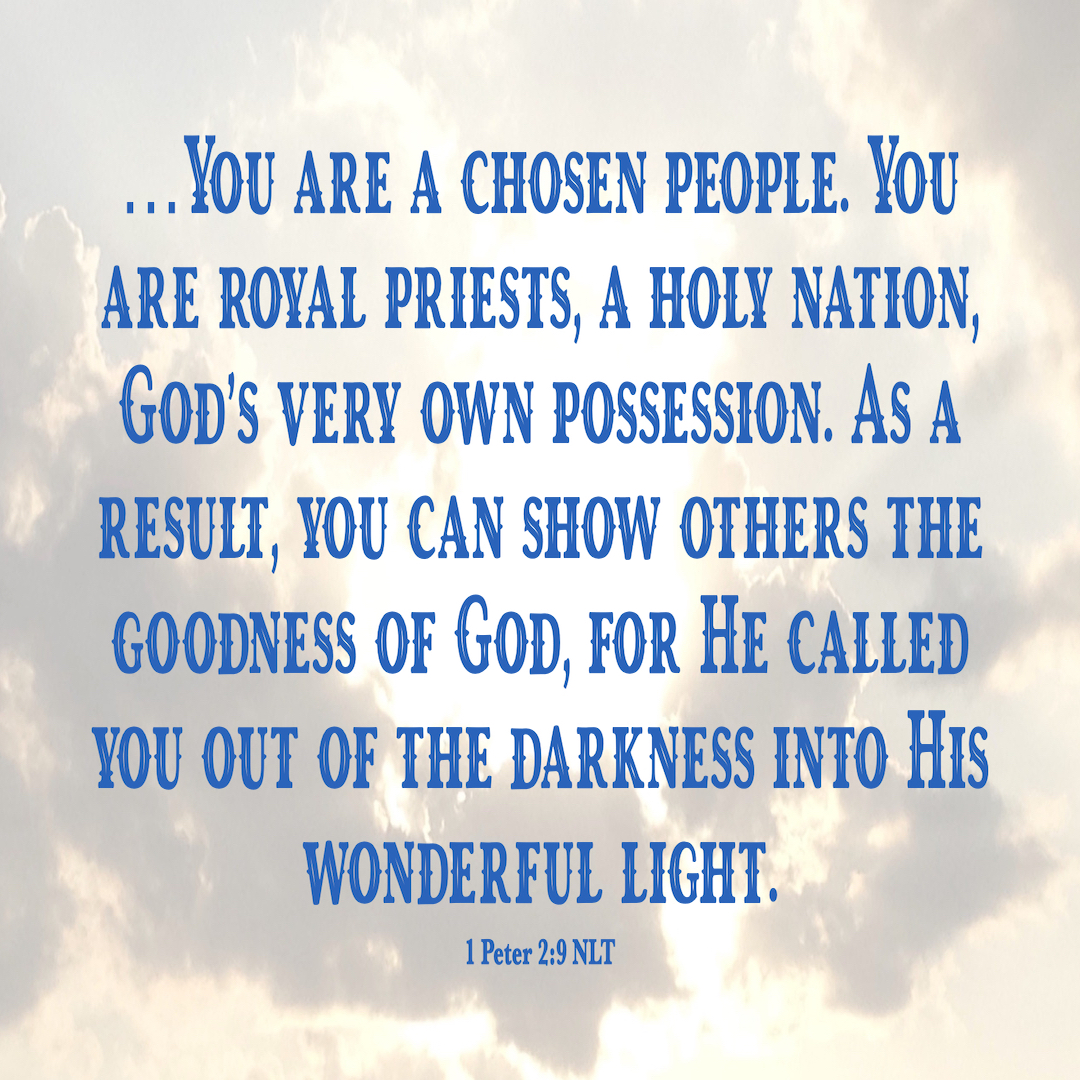
Proclaim His salvation (v. 2). …You are a chosen people. You are royal priests, a holy nation, God’s very own possession. As a result, you can show others the goodness of God, for He called you out of the darkness into His wonderful light. (1 Peter 2:9 NLT) 

Declare His glory…His marvelous deeds (vv. 3-6). Recount God’s miracles to you again and again. 

Worship the LORD (v. 9). The Old English spelling was worth-ship—find ways to tell people how invaluable our King’s blessings are. 

Say… “The LORD reigns” (v. 10). Do your words and attitude express that God is on His throne? 

C.S. Lewis wrote, “Fine feelings, new insights, greater interest in ‘religion’ mean nothing unless they make our actual behavior better; just as in an illness ‘feeling better’ is not much good if the thermometer shows that your temperature is still going up. In that sense the outer world is quite right to judge Christianity by its results. Christ told us to judge by results. A tree is known by its fruit; or, as we say, the proof of the pudding is in the eating. When we Christians behave badly, or fail to behave well, we are making Christianity unbelievable to the outside world. … Our careless lives set the outer world talking; and we give them grounds for talking in a way that throws doubt on the truth of Christianity itself.” 

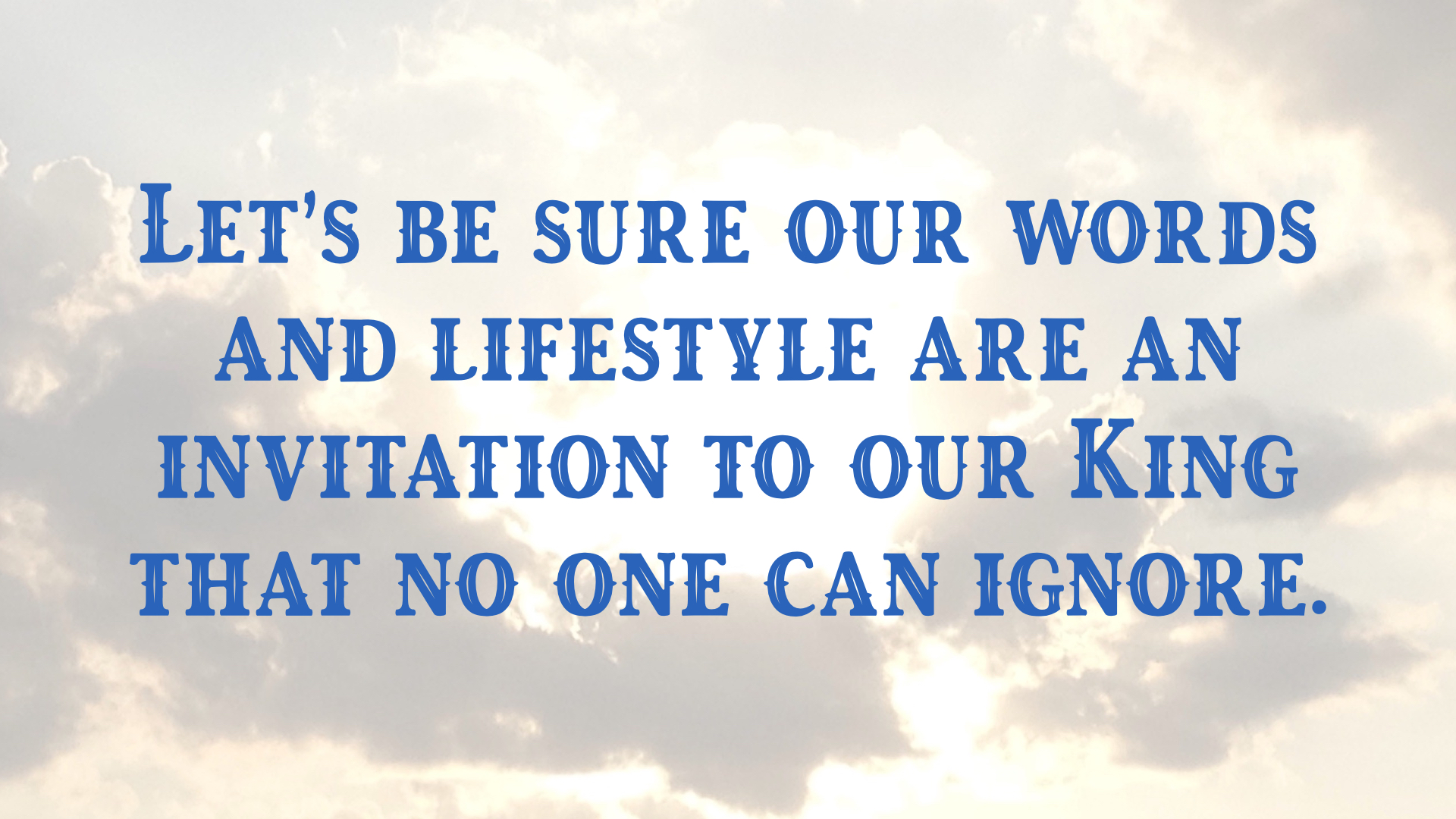
Jesus called us to this (Matthew 5:16). Let’s be sure our words and lifestyle are an invitation to our King that no one can ignore. 

If you’ve missed any of the other messages on the Royal Psalms, you can find them all here. 

►► Would you please prayerfully consider supporting this ministry? My Patreon supporters get behind-the-scenes access to exclusive materials. ◀︎◀︎
Resting In Our King

Listen to the podcast of this post by clicking on the player below, and you can also subscribe on AppleSpotify, or Audible. Check out the video content in this post by clicking here. 

Throughout history, no one is ever seen approaching a king like it’s no big deal. Even those who are confident in themselves, still are seen reassuring themselves before they venture into the king’s throne room. 

Last week we talked about the King’s royal robes that allow us to enter into His presence. We see that in civic government too (Esther 4:1-2). Mordecai urges Queen Esther to approach King Xerxes to intercede for the Jewish people. She is clothed appropriately (2:12, 15-17) but even she knows that’s not enough (4:11). 

(Check out all of the Scriptures in this post by clicking here.) 

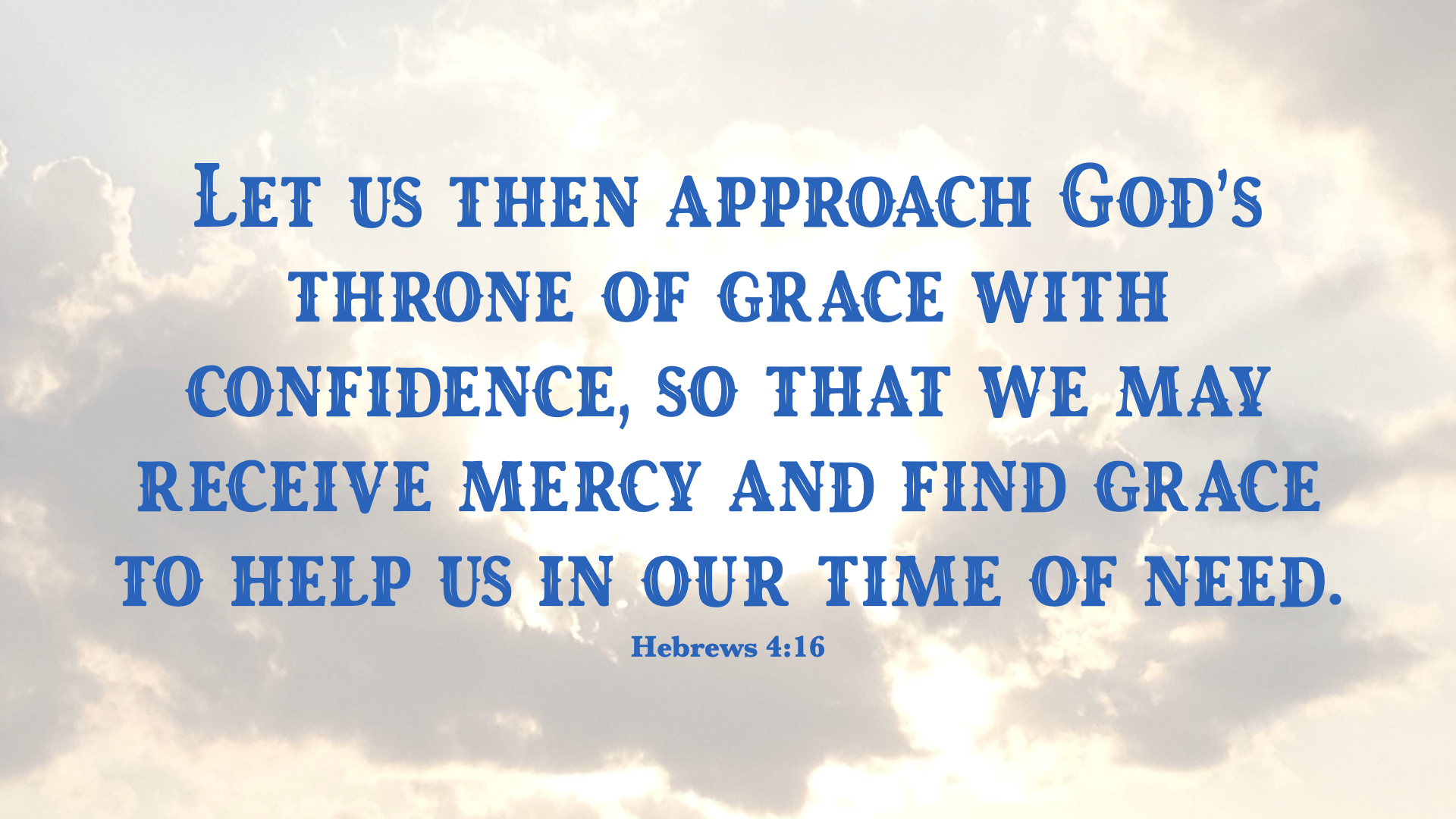
We who are clothed in the royal robes of Jesus can approach God’s throne confidently—Let us then approach God’s throne of grace with confidence, so that we may receive mercy and find grace to help us in our time of need (Hebrews 4:16). 

Our next Royal Psalm is Psalm 95. This psalm is both an invitation and a warning. 

Invitation: Come (3x)…

  • …with joyful shouts because He is “the Rock of our salvation” (v. 1; c.f. Hebrews 10:22). 
  • …with thanksgiving because of His greatness (vv. 2-5; c.f. Hebrews 12:28) 
  • …with worship because He is our God (vv. 6-7a; Matthew 2:2, 11) 

Remember this psalm is both an invitation and a warning. The warning is the danger of refusing to approach the King. We see a hint of this warning in Hebrews 12:28-29. 

Have you noticed that I have been referencing the Book of Hebrews quite frequently? That’s because the writer of Hebrews links back to this Royal Psalm in a way no other biblical author does. Check out how this psalm ends (Psalm 95:7-11).  

The writer of Hebrews quotes this royal psalm (Hebrews 3:7-11), and then shares a Spirit-inspired commentary or application in verses 12-19. 

Note the words unbelieving and unbelief (vv. 12, 19). These are the same Greek word which means faithlessness. This faithless attitude blocks miracles (Matthew 13:58), which can result in a hardening of our heart (Mark 16:14). Finally, this hardness of heart can keep us from resting in our King (vv. 12, 19); the word disobeyed in v. 18 means refusing to let yourself be persuaded. 

Now notice the Therefore…be careful in Hebrews 4:1-7.  The unbelief now moves to disobedience (vv. 6, 11), which is really better defined as obstinacy. In verses 8-11, the word Sabbath-rest is unique in all of Scripture. It’s the place of perfect contentment, undiluted and uninterrupted for all of eternity! But in order to enter this Sabbath-rest, we have to cease from our own way of doing things (see Matthew 11:28-30). 

Look at how Hebrews 4 concludes: Let us then approach the throne of grace with confidence, so that we may receive mercy and find grace to help us in our time of need (v. 16). 

Verses 1-8 quote the Scripture of God’s promised rest, culminating in the Sabbath-rest in v. 9. 

Verses 10-11 tell us to learn from the Scriptures the “example of disobedience” so that we don’t repeat it. Verse 12 tells us God’s Word exposes all our faithlessness, disobedience, and obstinacy that may even be hidden from our sight, but know that everything is uncovered and laid bear before our King of kings (v. 13). 

Notice the therefore (v. 14) and the then (v. 16). My flesh would have me run and hide when my sin is revealed, but here we see that the conviction of the Spirit through the exposing Word should prompt us to run to the throne of grace with confidence (vv. 14-16). 

Confident of what? Receiving mercy and finding grace. 

Where is the source of this confidence? Our great High Priest Jesus—our conquering King—has opened the way for us to come to a throne of grace instead of a throne of wrath! 

We come joyfully, thankfully, and worshipfully. We come not because of our deeds, but yoked to our King. 

In Esther 5:1-2 we see Esther adorned to enter the king’s presence, unsure if she would be accepted. But we don’t have to adorn ourselves. Instead, we are clothed in the righteous, royal robe of Jesus which makes God pleased so that He extends His scepter of Sabbath-rest (Hebrews 4:16)! 

May we all desire to enter into this place of Sabbath-rest! 

If you’ve missed any of the other royal psalms which we have already explored, you can find them all by clicking here. 

►► Would you please prayerfully consider supporting this ministry? My Patreon supporters get behind-the-scenes access to exclusive materials. ◀︎◀︎
Royal Robes

Listen to the podcast of this post by clicking on the player below, and you can also subscribe on AppleSpotify, or Audible. Check out the video content in this post by clicking here. 

I know we’re not supposed to judge by appearances, but the fact is that we do make quite a few mental assessments by what we see. 

I heard about a recently-hired flight attendant who hadn’t received her uniform from the airline before she worked her first flight. Can you imagine what passengers were thinking when someone dressed just like them was giving pre-flight instructions, passing out snacks and beverages, or asking passengers to buckle up? I’m sure they made an assessment about her because of what she wasn’t wearing. 

The first mention an article of clothing is when God clothes Adam and Eve to cover the shame of their sin (Genesis 3:21). 

(Check out all of the Scriptures I reference in this post by clicking here.) 

There is no mention of the garments and accessories that would be worn by kings, but we see how these things had become recognized outward symbols (1 Samuel 18:1-4). And then there were the kingly crowns (2 Samuel 12:29-30). As we saw last week, David knew God had chosen him to lead Israel, and whether it was symbolic or literal, David saw his kingly crown as coming from God (Psalm 21:1-3, 5). 

Swords and crowns were mostly symbols of authority, but there are also garments that show intimacy. We first see this with the priests who were to serve before God in the Holy of Holies. They were given special garments to distinguish them from everyone else (Exodus 28:1-3). These robes would also be saturated with the aroma of the unique incense that the priests offered in God’s presence. So both the appearance and aroma spoke of close intimacy with God. 

For a period of time, the ark of the covenant of the Lord was housed in a temporary location, but David wanted to bring it to Jerusalem. As he undertook this, notice his clothing choice (1 Chronicles 15:27). David then offered praise to God extolling His glory (16:8-10), His strength (vv. 11-12), and His majesty (vv. 24-29). 

Psalm 93 is a royal psalm—taking what people knew about King David and pointing past him to the King of kings. Notice the same themes in this psalm of this eternal King’s glory, strength, and majesty as David mentions in 1 Chronicles 16. God is referred to exclusively as YHWH (5 times) in this psalm. 

David recognized his kingly majesty came from his intimacy with the majesty of God. 

God’s clothing of Adam and Eve—the covering of the ravages of sin—was a foreshadowing of what Jesus would do for us. Check out this prophecy in Isaiah 61:1-3, 10. Jesus quoted this in His very first recorded sermon.  

Jesus has a royal crown and robe that shows both His royalty and His intimacy with His Father’s majesty (Revelation 6:2, 19:13). And Jesus gives this same crown to His saints (2:10, 3:11). 

Remember we said earlier that we naturally make an assessment of people by their robes? What do people assess about you? In the middle of the Isaiah 61 prophecy about what Jesus would do for us is this testimony—

Their descendants will be known among the nations and their offspring among the peoples. All who see them will acknowledge that they are a people the Lord has blessed (v. 9). 

Our soiled robes have been exchanged for the King of king’s robe of pure righteousness (Ephesians 5:25-27). Because He is also our High Priest, our robe of righteousness is saturated with His aroma (2 Corinthians 2:14 NKJV; 1 Peter 2:9). 

Revelation 22:14 should be our desire—Blessed are those who wash their robes, that they may have the right to the tree of life and may go through the gates into the city. 

But we should also desire what Jesus desires: That no one misses out on this—

For God so loved the world that He gave His one and only Son, that whoever believes in Him shall not perish but have eternal life. For God did not send His Son into the world to condemn the world, but to save the world through Him. (John 3:16-17). 

So let’s make sure our robes are clean and bright, and that the aroma of our life is a pleasing aroma that points others to our King! 

If you would like to check out the other Royal Psalms that we’ve already looked at, you can find those here. 

►► Would you please prayerfully consider supporting this ministry? My Patreon supporters get behind-the-scenes access to exclusive materials. ◀︎◀︎
Our Confidently Humble King

Listen to the podcast of this post by clicking on the player below, and you can also subscribe on AppleSpotify, or Audible. Check out the video content in this post by clicking here. 

The psalmists of the Bible foresaw the coming of the King of kings, especially in the example they had in their King David. The Royal Psalms are the ones that look at the up-close example of David as a means of better seeing King Jesus. 

I think our idea about our leaders can be summed up in this observation from Queen Victoria who said of William Gladstone, “When I am with him I feel I am with one of the most important leaders in the world.” On the other hand, of Benjamin Disraeli she said, he “makes me feel as if I am one of the most important people in the world.” We want strong, confident leaders that can lead us, but we also want humble leaders that care for us. We want leader who are for us. 

This was the leadership of King David—

[God] chose David His servant and took him from the sheep pens, from tending the sheep He brought him to be the shepherd of His people Jacob, of Israel His inheritance. And David shepherded them with integrity of heart; with skillful hands he led them. (Psalm 78:70-72) 

Do you see the confident humility in this description? David remained a shepherd with a heart of integrity (humility) and skillful hands (confidence). 

There is a power in these three words: God chose me. The “God chose” part gives me the confidence to lead because of God’s empowerment, but the fact that He “chose me” reminds me to be humbly grateful that He would use me! 

David shows this humility and this confidence in Psalm 86, which is labeled as, “A prayer of David.” 

(Check out all of the Scriptures I reference in this post by clicking here.)

Notice David’s humble reliance on God in prayer—answer me for I am poor and needy … Your servant who trusts in You … have mercy … I lift up my soul … hear my prayer … I will call to You … there is none like You (vv. 1-8). 

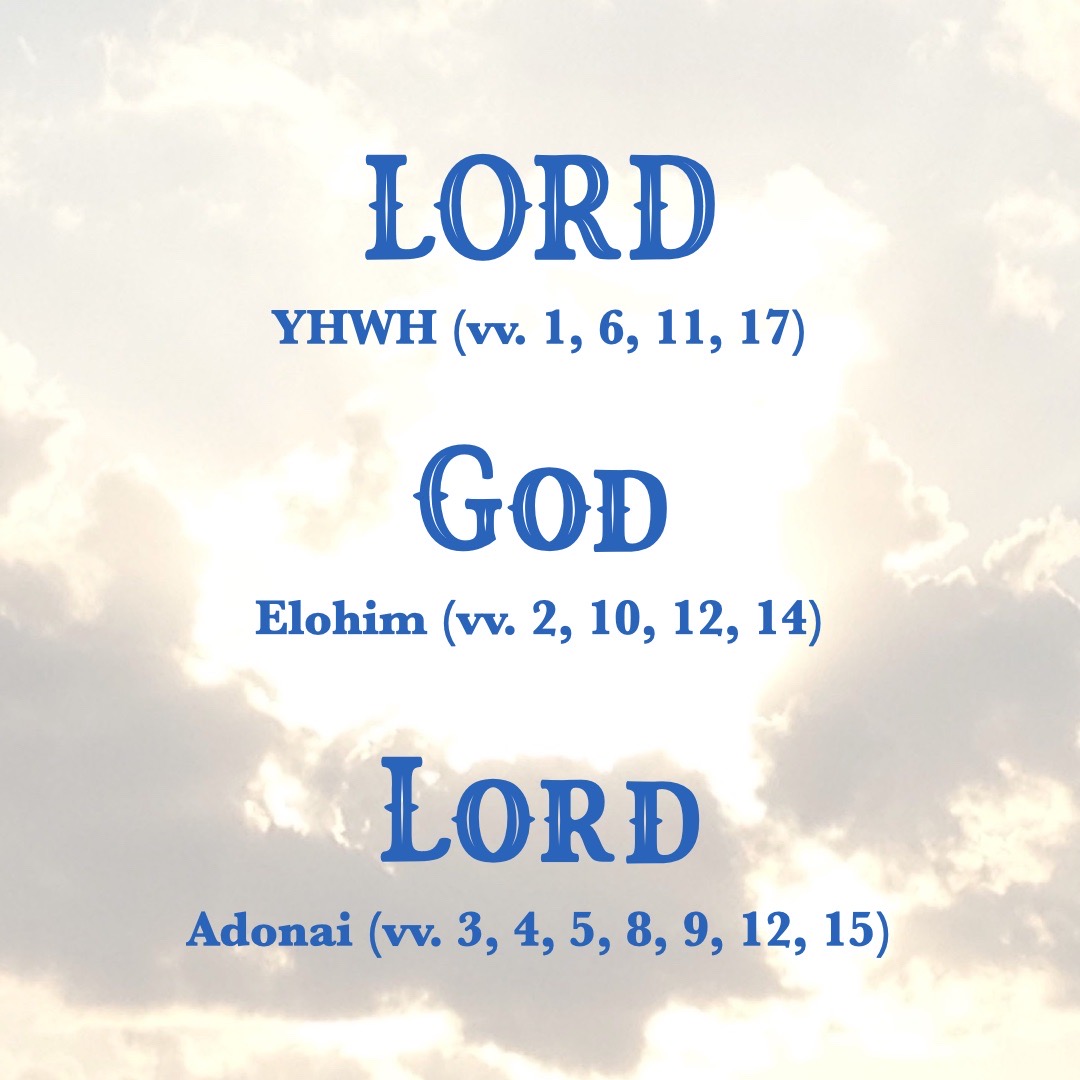
I want you to also see how God-saturated this prayer is. All but three of the verses in this 17-verse psalm mention God by name: 

  • “LORD” in all caps is YHWH or Jehovah—vv. 1, 6, 11, 17 
  • “God” is Elohim = the Triune God—vv. 2, 10, 12, 14 
  • “Lord” is Adonai = the publicly-used name for YHWH—vv. 3, 4, 5, 8, 9, 12, 15 

What exactly is David praying for? It’s not for wisdom. It’s not for success in battle. It’s not for healing. I believe David’s desire is for all the kingdoms of earth to know the King of kings. 

Look at the middle verse: All the nations You have made will come and worship before You, Lord; they will bring glory to Your name. For You are great and do marvelous deeds; You alone are God (v. 9). 

Because of David’s humble prayer in vv. 1-8, we now see a confidence in his lifestyle—I will walk in Your truth … I may fear Your name … I will praise You … I will glorify Your name … grant strength to Your servant … for You, O LORD, have helped me and comforted me (vv. 10-17). 

David is confident of his sins being forgiven (v. 5), of others coming to know this merciful King (v. 15), so that all nations will glorify God together (v. 9). 

Remember that these royal psalms are to point us through David to Jesus. 

The Old Testament prophecies tell us about Jesus: There was nothing beautiful or majestic about His appearance, nothing to attract us to Him (Isaiah 53:2 NLT). Indeed, Jesus came to earth in confident humility—

Who, being in very nature God, did not consider equality with God something to be used to His own advantage, rather, He made Himself nothing by taking the very nature of a servant, being made in human likeness. (Philippians 2:6-7) 

David’s prayer begins this way in the NLT: Bend down, O LORD, and hear my prayer. 

Jesus bent down to serve those He loved—He got up from the meal, took off His outer clothing, and wrapped a towel around His waist. After that, He poured water into a basin and began to wash His disciples’ feet, drying them with the towel that was wrapped around Him (John 13:4-5). 

He also stooped to the most undignified form of execution (Matthew 26:39; Philippians 2:8). 

The well-known Christmas carol The First Noel says, “Then let us all with one accord sing praises to our heavenly Lord, Who hath made heaven and earth of naught, and with His blood mankind hath bought.” 

Jesus said it this way: For even the Son of Man did not come to be served, but to serve, and to give His life as a ransom for many (Mark 10:45). 

As a result Jesus is exalted (Philippians 2:9-11) and all nations can serve Him (Revelation 5:9, 7:9), just as David prayed and believed (Psalm 86:9). 

We need to live with the same confident humility that God chose me—In your relationships with one another, have the same mindset as Christ Jesus (Philippians 2:5). Like David, we make prayer to our King unceasingly for all people to see the glory of Jesus, and for our confidently humbled lives to help point the way for them—

Do everything without grumbling or arguing so that you may become blameless and pure, “children of God without fault in a warped and crooked generation.” Then you will shine among them like stars in the sky. (Philippians 2:14-15) 

Let us use the pattern of this Royal Psalm to help us pray and live in a way that helps others see the King of kings for themselves! 

If you would like to check out the other Royal Psalms we have already unpacked, please click here. 

►► Would you please prayerfully consider supporting this ministry? My Patreon supporters get behind-the-scenes access to exclusive materials. ◀︎◀︎
All Hail King Jesus

The Bible closes with a vivid picture of Jesus as the undisputed King of kings, and we look forward to that time when all creation bows before Him. Even more so, we cannot wait to be with our King for ever and ever!

The psalmists of Israel also foresaw the coming of this King, especially in the example they had in their King David. Many of the poetic words they penned esteemed Jesus as the King for Whom they longed. David himself not only saw the future coming of the Eternal King, but he also looked back in time to see Jesus reigning as King before time began.

It is these royal psalms that we will be studying as we celebrate the first arrival on Earth of our King and as we anticipate the second coming of our Royal Majesty. The more clear our vision is of this King, the more we will worship Him, follow Him, and invite others to know Him as their own Lord and Master.

Please join us at Calvary Assembly of God as we rejoin this summer series exploring the beautiful, reverent, and awe-inspiring description of our King of kings in the Book of Psalms. If you would like to check out the Royal Psalms we have already studied, please click here.

This summer we learned about:

Year-End Review (2025 Edition)

Listen to the podcast of this post by clicking on the player below, and you can also subscribe on AppleSpotify, or Audible. 

I like to take some time at the end of each calendar year to both look back and look forward. Throughout biblical history, whenever God was ready to take His people into a new chapter, He always took time for them to review the ground they had already covered. So as we get ready to go into 2026, here is a look back at the things God taught us in 2025 through these sermon series I shared with the wonderful folks at Calvary Assembly of God.

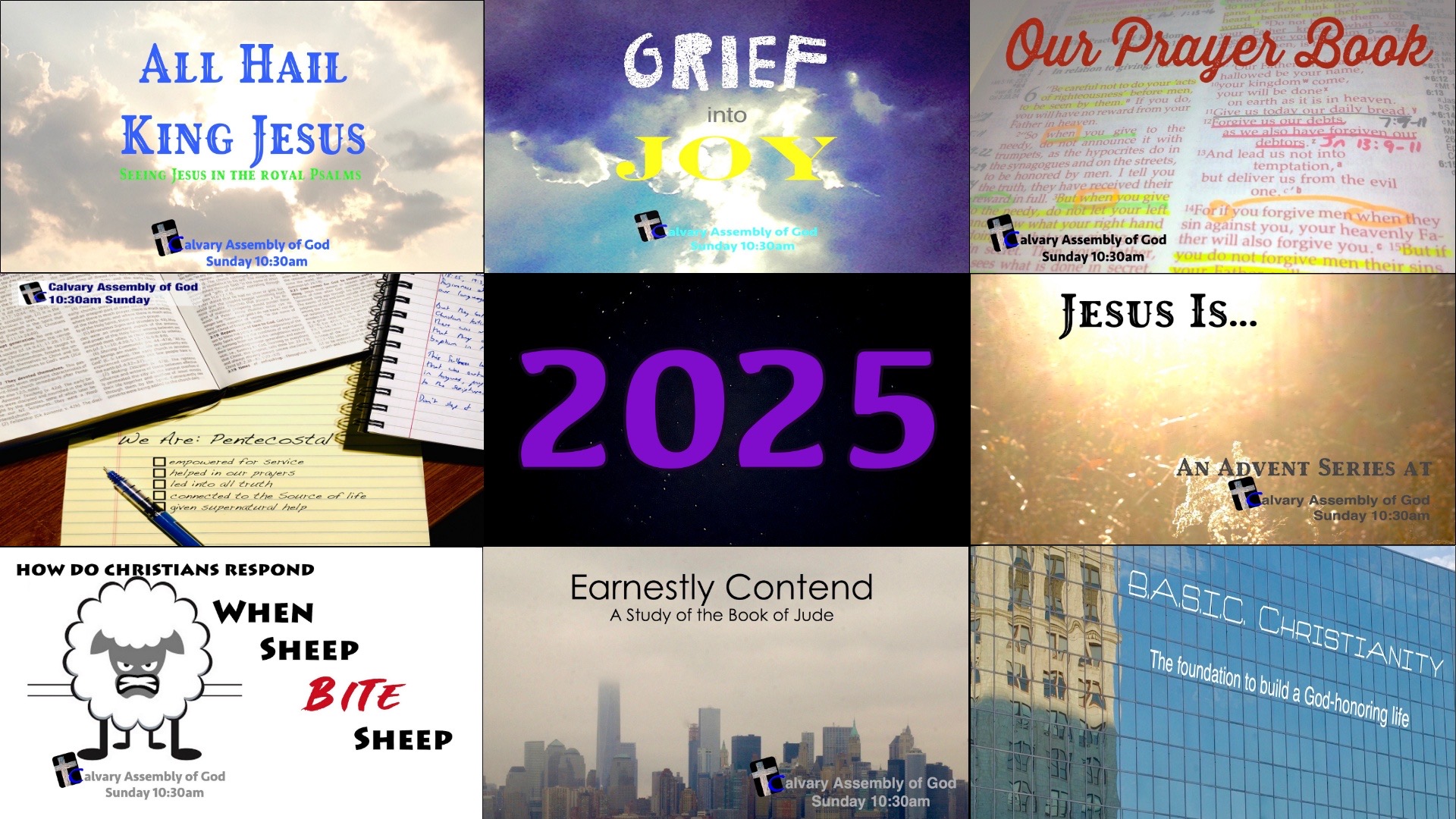
Our Prayer BookGod has given us an amazing Book! The Bible addresses the human condition—all our desires, frustrations, hopes, and the only path on which we can find eternal and unfading joy. The Bible not only tells us how to live, but it also tells us how to pray. And it’s as we pray that the principles in the Scripture come alive with fresh applications for our daily life. We don’t have to fumble around, attempting to find the right words to pray and then wondering if those prayers were heard on high. We can learn to pray in agreement with God’s perfect will. God has spoken to us through His Word, and He invites us to use His words to form our prayers back to Him. I love beginning each new year with a reminder of the power of prayer.

When Sheep Bite SheepNo one likes to be mistreated—especially when the one that hurts us is one we would have thought of as an ally or even a friend. These slights become even more painful when they take place inside the Christian community. When sheep bite sheep, our natural response is to lash out to try to even the scales of justice. But the Bible consistently and clearly calls Christians to pursue a supernatural response. This is a highly practical series of messages on how you can respond in a Christ-honoring way when you are bitten by another sheep in God’s pasture.

Grief Into JoyAt the end of your rope … down for the count … nothing but gray skies all around … unable to see any light at the end of the long, dark tunnel. Ever been there? The reality is, we all have been there. But the good news is that we don’t have to stay there! God is always at work to turn our apparent no-win, dark, hopeless situations into something bright and glorious! He is working in ways that no human mind could have dreamed up, and working on our behalf in a way no human power could ever hope to rival. God specializes in turning grief into joy! We are approaching the time of year where we remember the death of Jesus. Without a doubt that was the darkest, most grief-stricken day in all of history. Yet that time of mourning was completely forgotten in the overwhelming joy that exploded from an empty tomb on Resurrection Sunday!

We Are: PentecostalPentecost for over 1500 years was a celebration in Jerusalem that brought in Jews from all over the world. But on the Day of Pentecost which came just ten days after Jesus ascended back into heaven, the meaning of Pentecost was forever changed! Followers of Jesus—now empowered by an infilling of the Holy Spirit—began to take the good news of Jesus all over the world. These Spirit-filled Christians preached the Gospel and won converts to Christ even among hostile crowds, performed miracles and wonders, stood up to pagan priests and persecuting governmental leaders, and established a whole new way of living as Christ-followers. We, too, can be Pentecostal followers of Jesus Christ today. We can experience an anointing and an empowering in our lives that turns ordinary Christianity into extraordinary Christianity!

All Hail King JesusThe Bible closes with a vivid picture of Jesus as the undisputed King of kings, and we look forward to that time when all creation bows before Him. Even more so, we cannot wait to be with our King for ever and ever! The psalmists of Israel also foresaw the coming of this King, especially in the example they had in their King David. Many of the poetic words they penned esteemed Jesus as the King for Whom they longed. David himself not only saw the future coming of the Eternal King, but he also looked back in time to see Jesus reigning as King before time began. It is these royal psalms that we will be studying as we celebrate the first arrival on Earth of our King and as we anticipate the second coming of our Royal Majesty. The more clear our vision is of this King, the more we will worship Him, follow Him, and invite others to know Him as their own Lord and Master.

B.A.S.I.C. ChristianityWhen someone invites Jesus into their heart, they are immediately justified in God’s sight and have the assurance of Heaven as their eternal home. But then the question comes, “Now what?” Our justification is immediate but our sanctification is an ongoing, lifelong process. Sanctification is what brings fruitfulness to a Christian’s life and what allows that fruitful life to be a testimony to others. The Bible gives us the B.A.S.I.C.s of this Christian life, and that’s what we will be exploring over the next few weeks.

Earnestly ContendJude, the half-brother of Jesus, wrote a letter to the church. He said he was hoping to write about salvation, but looking at the conditions in the culture around him, he felt urged by the Holy Spirit to challenge Christians to “contend for the faith that was once for all entrusted to the saints.” What does this word “contend” mean for us today? Are Christians supposed to be combative about sharing their faith? Are they supposed to argue with anyone and everyone who disagrees with them on any point? Jude gives us Holy Spirit-inspired wisdom to understand how to deal with those who have departed from the purity of biblical truth.

What To Do In A CrisisLook back through the pages of history and you will see a common theme. Whether it’s world history or your own personal history, you have so much for which you can give thanks. In tough times, we tend to become forgetful because we are so focused on the intensity of the moment. But if we will simply look back in time, we will see just how faithful God has been to us. We bring our focus back to Him in our trying times when we remember and rehearse “the wonderful things He has done” (Psalm 107). The season of Thanksgiving is a good time for us to be reminded of the powerful resource we have when we are giving thanks for our blessings. Thankful people are confident people because they choose hope in God’s faithful provision over grumbling about their current circumstances.

Jesus Is…Over 700 years before He was born in Bethlehem, God spoke through the prophet Isaiah to describe the Messiah that was coming. Peter said that until the advent of Jesus, the prophets continued to scour the evidence of who this Messiah was going to be. When Jesus finally came to earth as a Man, young and old alike were thrilled to proclaim that the One they had been longing for had made His long-expected appearing! As Jesus lived on earth, died on Calvary, and was resurrected back to life, He continued to fulfill all that had been prophesied about Him. Isaiah said of Jesus: “He will be called Wonderful Counselor, Mighty God, Everlasting Father, Prince of Peace.” This Advent season we will take some time to unpack what each of these majestic titles mean. We will explore how Jesus demonstrates that He is truly worthy of each of these titles, and we will see how that knowledge should thrill our hearts as we celebrate His first Advent and eagerly long for His Second Advent.

If you live in northern Kent County and don’t have a home church, I would be thrilled for you to visit me at Calvary Assembly of God this year.

►► Would you please prayerfully consider supporting this ministry? My Patreon supporters get behind-the-scenes access to exclusive materials. ◀︎◀︎
Eyes On The Eternal

Listen to the podcast of this post by clicking on the player below, and you can also subscribe on AppleSpotify, or Audible. 

Most of our Royal Psalms have taken us from King David to King Jesus. Psalm 72 is a bit different because King David is speaking some of his last words as a blessing and a reminder to King Solomon. Jesus, Peter, and those in a church prayer meeting all affirmed that David’s words were inspired by the Holy Spirit (Matthew 22:43; Acts 1:16, 4:25), so these words in Psalm 72 are just as inspired. 

(Check out all of the Scriptures in this post by clicking here.)

The introduction to this psalm in the NIV says “Of Solomon.” But because the Hebrew word for “of” can also be “for” and since v. 20 says these are the final words of David, I think we can say that this psalm is of David and for Solomon. 

David has received God’s promise of an heir always on the throne of his kingdom. Here is the first transfer of power, and David is foreseeing the blessing that Solomon will be to the Israelite nation because of the endowment of God’s righteousness. Those blessings for his subjects include: 

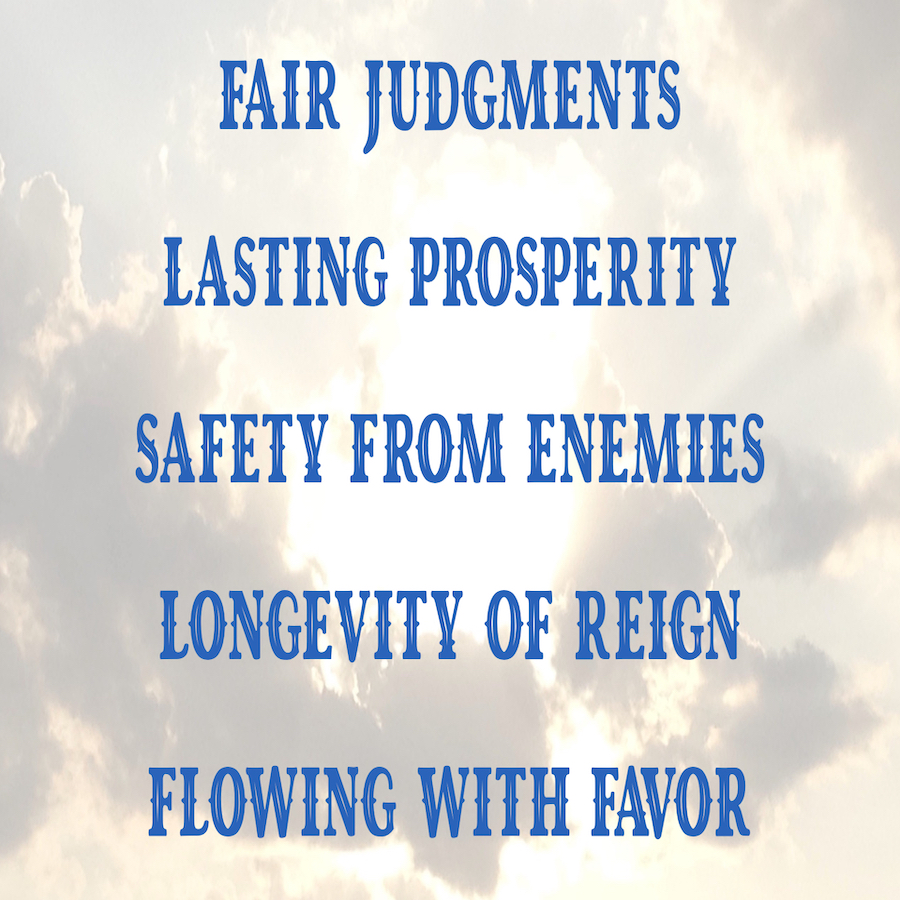
  • fair judgments (v. 2; 1 Kings 10:1-3) 
  • prosperity (v. 3; 1 Kings 10:7, 27) 
  • safety from enemies (v. 4; 1 Kings 10:26) 
  • longevity (v. 5; 1 Kings 10:8) 
  • favor (vv. 6-7; 1 Kings 10:9) 

Historically, we know of the fulfillment of these things. We can especially see it in the visit of Queen Sheba in 1 Kings 10. 

In this next paragraph, as we have seen with other royal psalms, there is a modulation back-and-forth between King Solomon and King of kings Jesus (vv. 8-11). Verse 8 is the ends of the earth rule of Jesus; vv. 9-10 are the local rule under Solomon; v. 11 then speaks of all kings…all nations bowing to Jesus as the King of kings. 

This modulation reminds us that no earthly king can ever stand-in for the Eternal King. After the static of switching back-and-forth, from our perspective at this point in history a flashback event becomes crystal clear. 

  • David gives instructions and a warning to Solomon (1 Kings 2:1-4) 
  • Solomon wields his power in Israel (2 Chronicles 1:1) 
  • Solomon falters under his power by becoming intoxicated by it (1 Kings 3:3; 11:1-4)
  • Solomon’s kingdom is diminished (1 Kings 11:10-13) 

This is not the case for our King of kings! His kingdom has no end because His rule has no end (Isaiah 9:6-7; Luke 1:32-33). 

The devil tried to limit Jesus by offering Him a shortcut, but Jesus stood firm. So the remainder of this Royal Psalm can only be fulfilled by Jesus:

  • vv. 12-14 foreshadow the prophecy of Jesus Isaiah 61:1-2 and its fulfillment in Luke 4:21 
  • vv. 15-17 foretell all nations being blessed forever under the lordship of King Jesus 

Don’t get caught up in looking at what’s before your eyes right now. Don’t get discouraged by the voice that’s in your ears right now. Don’t get mesmerized by the glittery things of earth. Keep your focus on the Eternal King. David’s conclusion to this Royal Psalm is that we worship our King above all else (Psalm 72:18-19). 

And David’s final words should echo from our lips as well: Amen and Amen! 

If you’ve missed any of the other messages on these Royal Psalms, you can find them all here. 

►► Would you please prayerfully consider supporting this ministry? My Patreon supporters get behind-the-scenes access to exclusive materials. ◀︎◀︎

The Freedom In Fear

Listen to the podcast of this post by clicking on the player below, and you can also subscribe on AppleSpotify, or Audible. 

Our Royal Psalms take us from King David to King Jesus. David went from the anointed king on the run from King Saul, to being king over Judah (2 Samuel 2:4), to being king over “all the tribes” (2 Samuel 5:1-3; 8:15). 

(Check out all of the Scriptures in this post by clicking here.) 

David’s kingdom stretched far and wide (1 Chronicles 22:14-16; 29:10-13). This absolute control King David now wields over every nation surrounding Israel puts fear into the hearts of Israel’s enemies. Fear of David brings freedom for the people of his kingdom.

As the Sons of Korah think about this fear that brings them freedom, they look beyond their earthly king to the King of Heaven and compose this Royal Psalm recorded in Psalm 47. This psalm has majestic terminology for God in almost every verse; including, Lord Most High, great King over all the earth (vv. 2, 7, 9), God reigns over the nations; and God is seated on His holy throne. 

I’m especially intrigued by the word awesome in verse 2. The KJV says “the Lord Most High is terrible” because it does take two Hebrew words to give us the full definition of awesome. First, “Most High” is best thought of with the suffix -est: greatest, highest, noblest. In other words, there is nothing above Him. Then “terrible” is to be held in awe, to be honored, to be reverenced. 

Just as the Israelites had no fear of enemies because David was on the throne, God says the same thing to us: Because the Most High is on the throne, His people have no fear of their enemies. 

When we fear God we need not fear anything else. 

When we fear God: 

…we hate our own sin (Psalm 36:1-3) 

…we love His mercy that forgives our sin (Psalm 103:2-3, 10-12) 

…we hate sin in the world (2 Timothy 2:26) 

…we love sinners (2 Timothy 2:24-26; Acts 10:38; Jude 20-23) 

…we hate the darkness that traps people (2 Corinthians 4:4) 

…we love shining the light of King Jesus (Philippians 2:15-16) 

…we hate this life (John 12:25) 

…we love eternal life (Romans 3:23-24, 8:18)

When the people of Israel reverenced David as their king, they would be able to know his blessings. When we fear our awesome God, we will also receive His blessings. Take a look at the amazing blessings Jesus Himself—the King of kings—lists for those who reverence His awesome Kingship (Revelation 2:7, 11, 17, 26-28; 3:5, 11-12, 21)! 

God is awesome and asks us to reverence Him and then enjoy life in His freedom. 

If you have missed any of the other royal psalms we have covered, you can find the full list by clicking here. 

►► Would you please prayerfully consider supporting this ministry? My Patreon supporters get behind-the-scenes access to exclusive materials. ◀︎◀︎