Poetry Saturday—I Can Do Something

I may not do much with all my care,

But I surely may bless a few;
The loving Jesus will give to me
Some work of love to do;
I may wipe the tears from some weeping eyes,
I may bring the smile again
To a face that is weary and worn with care,
To a heart that is full of pain.

I may speak His name to the sorrowful,
As I journey by their side;
To the sinful and despairing ones
I may preach of the Crucified.
I may drop some little gentle word
In the midst of some scene of strife;
I may comfort the sick and the dying
With a thought of eternal life. —Marianne Farningham

Thursdays With Spurgeon—An Exhortation To Preachers

This is a weekly series with things I’m reading and pondering from Charles Spurgeon. You can read the original seed thought here, or type “Thursdays With Spurgeon” in the search box to read more entries.

An Exhortation To Preachers 

He will glorify Me, for He will take of what is Mine and declare it to you. All things that the Father has are Mine. Therefore I said that He will take of Mine and declare it to you. (John 16:14-15) 

     Ah, brothers, the Holy Spirit never comes to glorify us, or to glorify a denomination, or, I think, even to glorify a systematic arrangement of doctrines! He comes to glorify Christ! If we want to be in accord with Him, we must preach in order to glorify Christ. May we never have this thought: ‘I will put that bit in. It will sound well….’  No, no! 

     I would say, ‘Brother, though it is a very delightful piece, strike that out, because if you have had a thought of that kind about it, you had better not put yourself in the way of temptation by using it.’ … 

     Well then, it may be very admirable, and further, it might be a very right thing to give them that precious piece; but if you have that thought about it, strike it out! Strike it out ruthlessly! Say, ‘No, no, no! If it is not distinctly my aim to glorify Christ, I am not in accord with the aim of the Holy Spirit and I cannot expect His help!’ … 

     How then does the Holy Spirit glorify Christ? It is very beautiful to think that He glorifies Christ by showing Christ’s things. If you wanted to do a honor to a man, you would, perhaps, take him a present to decorate his house. But here, if you want to glorify Christ, you must go and take the things out of Christ’s house ‘the things of Christ.’ … 

     Again, I think that the blessed Spirit glorifies Christ by showing us the things of Christ as Christ’s. Oh, to be pardoned! Yes, it is a great thing, but to find that pardon in His wounds, that is a greater thing! Oh, to get peace! Yes, but to find that peace in the blood of His Cross! … That it came from Christ is the best thing about the best thing that ever came from Christ! …  

     He will glorify Me, for He will take of what is Mine and declare it to you.’ Yes, it does glorify Christ for the Holy Spirit to show Christ to us. … Since it is for the honor of Christ for His things to be shown to men, He will show them to us, that we may go and show them to other people.

From Honey In My Mouth

My fellow pastor, I cannot add anything to these wise words except this simple exhortation: Read these words again and ask the Holy Spirit to show you how you can more accurately live this out in your sermon preparation and preaching. 

God bless you, my friend!

“Do Not Be Afraid”

There are more angels sent by God concerning one event than anywhere else in the Bible—the Advent of Jesus. Clearly, this is a big deal: The coming to earth of God Himself! 

You would think this would be an occasion for great joy. But all four of the angelic appearances around the birth of Jesus have the same message: Do not be afraid. 

Why are people so afraid? It’s because fear invites us to make a decision to trust God completely. People remain crippled by fear when they try to deal with fear by themselves. But when they learn to fear God instead, there is an almost inexpressible joy and freedom that explodes in our hearts! 

Join us for this Advent series where we will explore why this “Do not fear” message is still relevant for us today. Please join us either in-person or on Facebook. 

If you have missed any of the messages in this series, check them out here:

Learning Empathy

I’m an up-and-at-em, carpe diem kinda guy. Nothing gets me down for very long—I’m resilient and self-motivated. So I used to have a hard time relating to people who weren’t wired the same way. That is until I went through a time in my life where getting up-and-at-em was one of the hardest things I had to do each day.  

In the midst of this dark night, I would ask God, “Why is this happening to me? What did I do wrong?” But I heard the Holy Spirit gently but unmistakably remind me, “This isn’t about you!” 

The dictionary says that empathy is nearly a transliterated word from the Greek word empatheia. It means to be in suffering, but the emphasis is more on imaginative empathy. Something like, “If I was them and I was in that situation, I bet it might feel like this.” 

In the New Testament, a different Greek word is translated sympathy, which is also a transliterated word from the Greek sympatheō. This word means to enter into another’s suffering, but the emphasis is on experiential empathy. In other words, I don’t have to imagine how you might feel, but I know how you feel because I’ve gone through the same thing myself. 

Just as the Holy Spirit taught me this lesson, let me say the same thing to you: the dark night you are going through isn’t about you. It’s about learning empathy SO THAT you can help others persevere all the way to the end! 

Think about the dark night Jesus went through just before His crucifixion. He might have asked His Father, “Why is this happening to Me? What did I do wrong?” But He knew why He was going through this night: it was to prepare Him to be the perfect empathetic High Priest for all of us (check out these verses in Hebrews).  

When we invite Jesus to be our Lord and Savior, we become a part of His Body (1 Corinthians 12:13, 26). 

Dr. Paul Brand was a renowned hand surgeon and missionary who worked with leprosy patients in India for years. He learned that leprosy doesn’t mangle a person’s foot or hand, but their lack of ability to feel pain does. He wrote, “A body only possesses unity to the degree that it possess pain…. We must develop a lower threshold of pain by listening, truly listening, to those who suffer. … The body protects poorly what it does not feel.” 

Sometimes we have to go through the painful, dark nights so that we can learn to feel others’ pain so that we can learn empathy. 

Through those nights we can learn to hear what others aren’t saying, and feel what others aren’t expressing. We don’t have to ask, “Can I help?” but rather, “I’m here to help because I know what you’re going through.” 

You cannot truly empathize until you go through your own dark night. I can be thankful IN the night because God is growing my empathy so that I can help others! 

If you’ve missed any of the other messages in this series, you can check out the full list by clicking here. 

Thursdays With Spurgeon—The Unity Of Scripture

This is a weekly series with things I’m reading and pondering from Charles Spurgeon. You can read the original seed thought here, or type “Thursdays With Spurgeon” in the search box to read more entries.

The Unity Of Scripture

He will glorify Me, for He will take of what is Mine and declare it to you. All things that the Father has are Mine. Therefore I said that He will take of Mine and declare it to you. (John 16:14-15) 

     Let us never allow anybody to divide between the word of the apostles and the word of Christ! Our Savior has joined them together. ‘I do not pray for these alone, but also for those who will believe in Me through their word’ (John 17:20). And if any begin rejecting the apostolic word, it will be outside the number for whom Christ prays. …  

     Such a doctrine that we are sometimes taunted about as being not revealed by Christ but by His apostles were all revealed by Christ, every one of them! They can all be found in His teaching, but they are very much in parabolic form. It is after He has gone up into glory and has prepared a people, by His Spirit, to understand the truths of God more fully that He sends His apostles and says, ‘Go forth, and open up to those whom I have chosen out of the world the meaning of all I said.’ The meaning is all there, just as all the New Testament is in the Old! … [Jesus Christ] is the Old Testament to which the Epistles come in as a kind of New Testament, but they are all one and indivisible. They cannot be separated. …  

     Remember that the quickest way into a text is praying in the Holy Spirit. Pray the chapter over! I do not hesitate to say that if a chapter is read upon one’s knees, looking up at every word to Him who gave it, the meaning will come to you with infinitely more weight than by any other method of studying it. ‘He will glorify Me, for He will take of what is Mine and declare it to you.’ He will redeliver the Master’s message to you in the fullness of its meaning!

From Honey In My Mouth

Augustine wrote, “Scripture is the unus sermo Dei—the one sermon of God.” 

There is one consistent message in the Bible from Genesis 1:1 through Revelation 22:21, and the Holy Spirit wants to reveal that message to us. He is our Helper that will illuminate to our lives what has already been inspired in the Scripture. 

Jesus is Jehovah God from beginning to end. He is the “one sermon of God” that we can read and understand. Think about this: the same Spirit who inspired the pens of the biblical writers is the same Spirit in you who can help you understand and apply those words to your life. More than that, the Holy Spirit wants to make the Word of God clear to you. 

God is glorified and you are edified when Scripture comes alive in your heart and mind. 

Peter wrote this about Paul, “His letters contain some things that are hard to understand….” But if we don’t take the time to wrestle with that passage, Peter says this is what happens next: “…which ignorant and unstable people distort, as they do the other Scriptures, to their own destruction” (2 Peter 3:16). So, as Spurgeon suggests, begin your Bible reading time in prayer. Then if you come to a difficult text, don’t rush past it and don’t turn too quickly to what another human has written in a commentary, but ask the Holy Spirit to help. (I shared a 5-step process I use for these challenging passages here.) 

Pray, read, pray, apply, pray. The Holy Spirit WILL help you! “Remember that the quickest way into a text is praying in the Holy Spirit.”


Thursdays With Spurgeon—Not Carried Away

This is a weekly series with things I’m reading and pondering from Charles Spurgeon. You can read the original seed thought here, or type “Thursdays With Spurgeon” in the search box to read more entries.

Not Carried Away

He will glorify Me, for He will take of what is Mine and declare it to you. All things that the Father has are Mine. Therefore I said that He will take of Mine and declare it to you. (John 16:14-15) 

     [The Holy Spirit] does not aim at any originality. … The Spirit takes of the things of Christ and of nothing else. Do not let us strain at anything new. The Holy Spirit could deal with anything in heaven above or in the earth beneath—the story of the ages past, the story of the ages to come, the inward secrets of the earth, the evolution of all things, if there is an evolution. He could do it all! Like the Master, He could handle any topic He chose, but He confines Himself to the things of Christ and therein finds unutterable liberty and boundless freedom. …  

     When, therefore, anybody whispers in my ear that there has been revealed to him this or that, which I do not find in the teaching of Christ and His apostles, I tell him that we must be taught by the Holy Spirit. … If we do not remember this, we may be carried away by quirks, as many have been.

From Honey In My Mouth

How many arguments have devastated people, how many friendships have been lost, how many churches have split because of a clinging to doctrines which aren’t found in the Bible?! How this must break our Father’s heart! 

Quite simply put: we argue and take sides over things on which the Word of God makes no distinction. Oh, foolish pride! 

The Holy Spirit never reveals a unique or private or exclusive word to anyone. He only makes clear what has already been revealed in the Word of God. Does that mean we cannot have an opinion on something? Of course not!

But love for Christ and for His Bride means that my opinions must never become my doctrines. 

Holy Spirit, help me to listen to Your voice alone as You illuminate what has already been inspired. Jesus, may Your love for the Church be my love for the Church. Root out this accursed pride in my heart that makes me fight for my opinions. Father, may You be glorified in Your Church as we are unified around Your revealed truth.

Thursdays With Spurgeon—Honey In My Mouth

This is a weekly series with things I’m reading and pondering from Charles Spurgeon. You can read the original seed thought here, or type “Thursdays With Spurgeon” in the search box to read more entries.

Honey In My Mouth

He will glorify Me, for He will take of what is Mine and declare it to you. All things that the Father has are Mine. Therefore I said that He will take of Mine and declare it to you. (John 16:14-15) 

     So we actually receive, through Jesus Christ, by the Spirit, what is in the Father!  

     Ralph Erskine, in the preface to a sermon upon the fifteenth verse, has a notable piece. He speaks of grace as honey for the cheering of the saints, for the sweetening of their mouths and hearts. But he says that in the Father, ‘The honey is in the flower….’ In the Son, ‘the honey is in the comb…. But then we have honey in the mouth. That is the Spirit taking all things and making application of them, by showing them to us and making us to eat and drink with Christ and share of these things….

From Honey In My Mouth

My grandfather had honeybees on his farm and I was fascinated by them. So much so that in my ecology class in college, I wrote my final research paper on the fascinating inner workings of the honeybee hive. My grandfather would often plant various crops so that the nectar from those flowers would give a distinct flavor to the honey. 

The nectar of a flower has everything in it to make honey except for one thing: a honeybee’s care. The nectar has to be transported back to the hive where it then undergoes the process of being transformed into honey—precise temperatures, storage, and evaporation processes are perfectly overseen by the bees until edible honey emerges. 

Ralph Erskine’s analogy of this nectar-to-honey process is very apropos to the things of God. Our Heavenly Father said that His thoughts are higher than our thoughts: they are inaccessible by our finite human minds (Isaiah 55:8-9). Jesus came as the revelation of all of the things of the Father, declaring to us all that God has for us. Jesus added, “I still have many things to say to you, but you cannot bear them now” (John 16:12), which is why the Holy Spirit illuminates the inspired Word of God.

Do you see the whole Trinity active in this process? The Father creates, the Son reveals, and the Spirit makes accessible (or, if you will, the Spirit makes edible). 

The Holy Spirit not only makes the things of God edible to us, but He gives us new tastebuds. No longer will the things of the world satisfy our tastes, no longer will we find any satisfaction in them, no longer will those earthly things nourish us. What the Father has created, and the Son has revealed, the Spirit will make real—and delicious!—to us.


Thursdays With Spurgeon—Poetic Groans

This is a weekly series with things I’m reading and pondering from Charles Spurgeon. You can read the original seed thought here, or type “Thursdays With Spurgeon” in the search box to read more entries.

Our Prayer Helper 

Likewise the Spirit also helps in our weaknesses. For we do not know what we should pray for as we ought, but the Spirit Himself makes intercession for us with groanings which cannot be uttered. (Romans 8:26) 

     A man’s heart is moved when he groans. A groan is a matter about which there is no hypocrisy. A groan comes not from the lips, but from the heart. A groan, then, is a part of prayer that we owe to the Holy Spirit, and the same is true of all the prayer that wells up from the deep fountains of our inner life. [see also Jeremiah 4:19; Isaiah 38:14; Psalm 77:4, 38:8-9] … 

     That which is thrown up from the depths of the soul, when it is stirred with a terrible tempest, is more precious than pearl or coral, for it is the intercession of the Holy Spirit! … 

     Beloved, what a different view of prayer God has from that which men think to be the correct one! You may have seen very beautiful prayers in print and you may have heard very charming compositions from the pulpit, but I trust you have not fallen in love with them. Judge these things rightly. I pray you never think well of fine prayers, for before the thrice-holy God it ill becomes a sinful supplicant to play the orator! … The tail feathers of pride should be pulled out of our prayers, for they need only the wing feathers of faith. The peacock feathers of poetical expression are out of place before the throne of God. … God looks at the heart. To Him fine language is as sounding brass or a tinkling cymbal, while a groan has music in it! 

From The Holy Spirit’s Intercession

God is not looking for well-polished prayers; He’s looking for real prayers. Let’s be honest: Not even the most educated person in the world has a vocabulary sufficient enough to accurately communicate with The Almighty God! 

Our Heavenly Father wants us to come to Him in simple, childlike anticipation. Notice I didn’t say childish anticipation—there is a huge difference. What Paul is telling us in Romans 8 is that the Holy Spirit can make the most eloquent, childlike, sincere prayer out of our deepest longings in our hearts. 

Jesus reminded us, “Your Father knows the things you have need of before you ask Him” (Matthew 6:8). Our Father wants to answer our prayers, and He has given us His Holy Spirit to help us pray in a way that He can answer. 

Don’t try to spruce up your vocabulary before you come to God in prayer. Just come to God in prayer, trusting that the Holy Spirit will make a beautiful prayer even out of your childlike groanings! The Holy Spirit turns our groans into prayerful poetry in our Heavenly Father’s ears!

Our Joyful Burden

I shared last week that the judgment of God should be a cause for both fear and rejoicingboth regret and comfort—for those who have a relationship with God through Jesus Christ. But for those who have no relationship with God, the judgment of God is a cause for only fear and regret. 

How did Nahum respond to this word of judgment God spoke through him? His opening words say, “The burden against Nineveh. The book of the vision of Nahum the Elkoshite” (NKJV). The Hebrew word for “burden” is almost always associated with a word God has spoken. It’s a realization of God’s weighty glory; it’s never, ever something we should trivialize! 

Prophets don’t just prophesy future events, they also announce in the present tense where people have departed from a lifestyle that robs God of His glory and how they can be forgiven of sins. 

“The prophets foretell (speak to what will happen in the future) and forth-tell (speak to what we should be doing in the present), both in the light of God’s heart for His own glory among all peoples of the world.” —Dick Brogden 

God never makes idle threats nor empty promises. Truly His Word is His bond. Through Nahum, God foretold that Assyria would be utterly destroyed, twice saying, “I am against you” (Nahum 2:13-3:7). 

The world may rejoice at God’s justice on evil (3:19), but how does God feel about carrying out His judgment? Ezekiel records God saying, “Do I take any pleasure in the death of the wicked,” declares the Sovereign Lord. “Rather, am I not pleased when they turn from their ways and live?” (Ezekiel 18:23) 

And Jesus declared, “For God so loved the world that He gave His one and only Son, that whoever believes in Him shall not perish but have eternal life. For God did not send His Son into the world to condemn the world, but to save the world through Him.” (John 3:16-17)

The Bible shows that when I sin, God’s first response is not anger toward me but broken-hearted grief. This is the message that must be both foretold and forth-told by Christians. 

“But what can I do,” you might ask. “I’m just one person. I’m not a big-time evangelist.” That sounds a lot like Nahum. He was just a guy from Elkosh—no special family lineage, no large city to claim as his home. 

God is looking for just one that will speak out His words (Ezekiel 3:17-21). Just one who will be humble enough to search their own heart first and then both boldly and lovingly deliver a message of both judgment and escape (Matthew 7:1-5; James 5:20). 

Foretelling God’s judgment is a burden. Forth-telling God’s forgiveness is a joy. All Christians have been given the joyful burden of this both-and ministry! 

If you’ve missed any of the other messages in our series called Major Lessons From Minor Prophets, you can find the full list by clicking here

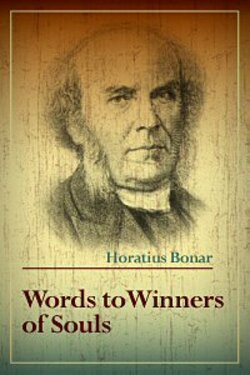
8 Quotes From “Words To Winners Of Souls”

I don’t say this very often, but Words To Winners Of Souls by Horatius Bonar is a must-read for those in pastoral ministry. You can check out my full book review by clicking here. 

“The question, therefore, which each of us has to answer to his own conscience is, ‘Has it been the end of my ministry, has it been the desire of my heart to save the lost and guide the saved? Is this my aim in every sermon I preach, in every visit I pay? Is it under the influence of this feeling that I continually live and walk and speak? Is it for this I pray and toil and fast and weep? Is it for this I spend and am spent, counting it, next to the salvation of my own soul, my chiefest joy to be the instrument of saving others? Is it for this that I exist?’” 

“It is not opinions that man needs: it is truth. It is not theology: it is God. It is not religion: it is Christ. It is not literature and science; but the knowledge of the free love of God in the gift of His only-begotten Son.” 

“Our power in drawing men to Christ springs chiefly from the fullness of our personal joy in Him, and the nearness of our personal communion with Him.” 

“Why so many meetings with our fellow men, yet so few meetings with God?” 

“Our life has not been a lying-in-wait for the voice of God. ‘Speak, Lord; for Thy servant heareth,’ has not been the attitude of our souls, the guiding principle of our lives. Nearness to God, fellowship with God, waiting upon God, resting in God, have been too little the characteristic either of our private or our ministerial walk. Hence our example has been so powerless, our labors so unsuccessful, our sermons so meager, our whole ministry so fruitless and feeble.” 

“It is easier to speak or write about revival than to set about it. There is so much rubbish to be swept out, so many self-raised hindrances to be dealt with, so many old habits to be overcome, so much sloth and easy-mindedness to be contended with, so much of ministerial routine to be broken through, and so much crucifixion, both of self and of the world, to be undergone. As Christ said of the unclean spirit which the disciples could not cast out, so we may say of these: ‘This kind goeth not out but by prayer and fasting.’” 

“These must be days of strenuous, ceaseless, persevering, and, if God bless us, successful toil. We shall labor till we are worn out and laid to rest.” 

“It is unbelief that makes ministers handle eternal realities with such irreverence. It is unbelief that makes them ascend with so light a step ‘that awful place the pulpit,’ to deal with immortal beings about heaven and hell.”