No Looking Back

…He steadfastly set His face… (Luke 9:51). 

Jesus wasn’t about to be deterred, delayed, or detoured from fulfilling His Father’s mission. 

Some of the other Bible translations fill in this meaning:

  • resolutely (NLT) 
  • steadfastly and determinedly (AMP) 
  • gathered up His courage and steeled Himself (MSG)
  • “to turn in a certain direction, confirm it, and resolutely follow it” (Strong’s Concordance)

Jesus could do this for at least three reasons—

  1. He knew “the time had come” (see v. 51 and John 13:1, 3) 
  2. He knew the joy at the end of the journey (Hebrews 12:2)
  3. He knew His Father loved Him (John 3:35, 5:20, 10:17)

A mark of a godly leader is one who resolutely follows God. No matter what!

Jesus calls His followers to the same path He walked—“No one who puts a hand to the plow and looks back is fit for service in the kingdom of God” (Luke 9:62)

It’s hard because people reject a resolute man. 

It’s hard because the accommodations along the way are uncertain. 

It’s hard because I have to give up my right to myself. 

But the reward is incomparable—Heaven forever with Jesus!

This is part 33 in my series on godly leadership. You can check out all of my posts in this series by clicking here.

Continually Learning To Pray

Lord, teach us to pray… (Luke 11:1). 

This is a request I can continue to make. Jesus is in heaven interceding for me (Hebrews 7:25), and He has given me His Holy Spirit to help me pray (Romans 8:26). 

Jesus is the Perfect Pray-er, so He is the one to Whom I should continually say, “Lord, teach me to pray.”

The key thought Jesus presents is persistence (see Luke 11:8-10). Why? Because the One to Whom I persistently appeal has told me to! God is my Heavenly Father—He wants to give the best to His children. He even gives us “how much more”! 

I learn to pray by praying.

I have to begin to do it and then let the Holy Spirit instruct me. In the meantime, even my childlike prayers are clarified and amplified by the Spirit, they are used by Jesus to intercede on my behalf, and they are carried into the throne room of Almighty God as an incense before Him. He loves to hear from me, or else He would not have told me to keep on asking, keep on seeking, and keep on knocking.

To paraphrase a father who was in desperate need of Christ’s help, “Lord, I am praying; help me to keep on praying!” (see Mark 9:24) 

Living Between The Advents

We live in an amazing time—the First Advent of Jesus has already happened in Bethlehem, and yet we are eagerly anticipating Christ’s Second Advent at any moment! 

The fourth stanza of Charles Wesley’s classic Christmas carol Hark! The Herald Angels Sing is a wonderful between-the-Advents look at what happened at the First Advent, and what we have to look forward to in the Second Advent. The key thing to note in this stanza is the verbs: come, fix, rise, bruise, efface, stamp, and reinstate. 

COME, Desire of nations—What is the “desire of nations”? It’s the restoration of God’s glory on earth, so it’s not really a what but a Who. The prophet Haggai informs us that our Desire is realized in the Advent of Jesus (2:1-9).  

FIX in us Thy humble home—At His First Advent, Jesus came and humbly made His home among us, even dying to pay the penalty for our sins (Hebrews 2:14, 17; Philippians 2:7-8). 

RISE, the woman’s conquering seed—Although Jesus was obedient to death—even death on a Cross, He didn’t stay dead but was resurrected (Philippians 2:8-9; Revelation 1:18)! 

BRUISE in us the serpent’s head—With His death and resurrection, Jesus took away the sting of death from satan, fulfilling one of God’s first prophesies (Genesis 3:15; 1 Corinthians 15:19-26, 54-57).  

Adam’s likeness now EFFACE—That means to wipe out, do away with, expunge. That’s exactly what God does with our forgiven sins (Psalm 103:1-4, 10-12)! 

STAMP Thine image in its place—Although our sin has been effaced, God doesn’t leave us as blank slates, but instead He allows the image of His Son Jesus to be stamped onto our lives (2 Corinthians 1:21-22; 2 Corinthians 3:18). 

REINSTATE us in Thy love—The relationship we longed for is now reborn in us (1 Corinthians 15:49)! 

The Desire of Nations HAS come, and yet He WILL come again! We’re living between the Advents now, so a good question for Christians to ask is: “How are we to live?” I think there are three key things—

  1. In celebration that Jesus came at His First Advent to be our Savior
  2. In anticipation of the Second Advent
  3. In obedience to God’s Word (Revelation 22:7)

To take a look at the other stanzas of this Christmas carol, please click here.

The Everlasting Hope In Our Everlasting Lord

It was for our benefit that God came to Earth in His First Advent, not in thunder, and lightning, and all the brilliance of His heavenly glory, but as a Baby. Otherwise, He would have been unapproachable by sinful man. 

But make no mistake about it—although born as a human baby, Jesus was still “Christ by highest heaven adored; Christ the everlasting Lord”! 

The thought of God being everlasting permeates the Scriptures:

  • He is everlasting Lord
  • He fulfills an everlasting covenant
  • so He is worthy of everlasting praise
  • His everlasting arms support us
  • and give us His everlasting love and everlasting kindness
  • His everlasting salvation gives us everlasting life, or rejecting it leads to our everlasting punishment
  • and in His presence is everlasting joy  

Charles Wesley captures this fully-God-fully-Man essence in his song Hark! The Herald Angels Sing by calling Jesus the everlasting Lord and then listing His humanness at His First Advent with phrases like offspring of a virgin’s womb, veiled in flesh, incarnate Deity, pleased as Man with men to appear, and Immanuel. 

Jesus came to earth as Man not because He was forced to, but because it fulfilled the everlasting covenant that God had planned. The writer of Hebrews explains beautifully how He became like us in all of our humanness so that He could be a merciful help to us (see Hebrews 2:10-18). 

When Matthew tells the birth story of Jesus, he includes a line pregnant with meaning: “All this took place to fulfill…” (Matthew 1:22). 

What “all this”? Just take a look at Christ’s genealogy in the opening verses of Matthew 1. You see Abraham who tried to “help” God fulfill the covenant by fathering a child with another woman; Jacob who swindled his birthright from Esau; Judah who fathered Perez through his widowed daughter-in-law, whom he thought was a prostitute; Rahab was a prostitute; Ruth was a non-Jewish foreigner; David committed adultery with Bathsheba and then had her husband killed, and from their relationship came Solomon; Solomon’s son split the kingdom in two; from Abijah to Jeconiah the kings became progressively more and more evil; from Jeconiah forward the kings were without a kingdom; and then Joseph was a prince without a throne or even the glimmer of a hope of a throne. 

Yet ALL THIS took place to fulfill God’s plan. All of history is His story! Every deed and misdeed was used by God to fulfill His everlasting plan of redemption. Jesus had a very human family tree so that none of us could be outside His merciful reach.

What’s your genealogy like? More good than bad? What about your own history? More mess ups than positives? Nothing in your genealogy—past or present—can ever stop our everlasting Lord from fulfilling His everlasting covenant with YOU (Romans 8:28)! 

Christ’s genealogy is proof that your genealogy is no hindrance to His everlasting plan! 

It may appear He is late in time, but behold Him come at just the right time. Accept Him as your everlasting Lord, lean on His everlasting arms, and bask in His everlasting joy. 

Jesus—our Immanuel here—came so you could have all of God’s everlastingness! 

To take a look at the other stanzas of this Christmas carol, please click here.

A Leader’s Intercession

As for me, far be it from me that I should sin against the Lord by failing to pray for you (1 Samuel 12:23).

Leaders teach, and encourage, and train, and correct, and sometimes even warn. But despite all of this effort sometimes people still do wrong—and even sinful—things. And sometimes there are consequences for these poor choices that even a leader cannot deflect away from them. 

  • Position-conscious leaders say, “It’s not my fault, and I hope this doesn’t reflect poorly on me!” 
  • Selfish leaders say, “I’m glad I’m not in trouble!” 
  • Vindictive leaders say, “It serves you right!” 

Godly leaders say, “How can I serve you?” 

The Israelites grumbled against God, and God was angry. It would have been understandable if Moses would have said, “You complained so you’re going to have to bear the consequences.” But instead, Moses interceded before God on their behalf (Numbers 11:1-2). 

The people rejected God as their King and chose instead a man named Saul to lead them. Samuel could have said, “You’re in big trouble now!” But instead, he said, “Far be it from me that I should sin against the Lord by failing to pray for you” (1 Samuel 12:23). 

What about you? Have you ever grumbled against God or chosen a path that wasn’t best for you? Jesus could say, “Well, you should have known better!” But instead, we read that He intercedes before God’s throne on our behalf (Job 9:33-34; Hebrews 4:15-16; 7:25). 

The mark of a godly leader is one who intercedes for his people.

If you are a Christ-follower and you are a leader of people, then follow Christ’s example. Yes, continue to teach, encourage, train, correct, and warn. But if people mess up, don’t write them off; instead, intercede before God on their behalf! 

This is part 32 in my series on godly leadership. You can check out all of my posts in this series by clicking here.

Overcoming Unbelief Before It’s Too Late

Unbelief can shut down the “Shalom Cycle” that God intends for our lives. Even worse, unbelief can put us on a slippery slope that could be disastrous for our future! So it is vital that we understand what unbelief is, how we can recognize it in our own lives, and the steps we can take to recover from unbelief. 

First of all, let me remind you of what the Shalom Cycle looks like—

Quite simply, when we are grateful for what God has already done for us it fuels our trust in God’s future grace to meet our needs. 

But when we forget to be grateful and gratitude turns to grumbling, unbelief displaces trust.

A good way to remember how unbelief works is thinking of it as an un-complete faith. An un-complete faith is lacking power to trust God because of one of two reasons:

  • Either we don’t know there is a promise available to us,
  • Or we know of a promise but don’t think it applies to our circumstance. 

J.C. Ryle pointed out that, “Unbelief has a power to rob man of highest blessings.” 

Hebrews 3 shows us that left unchecked and uncorrected, unbelief can turn into disbelief. You can remember this word by defining it as a complete disintegration of faith. Notice in Hebrews 3 how quickly the word unbelieving becomes turns away from God, and how closely associated are the words unbelief and disobeyed (Hebrews 3:12, 19-20). 

We need to correct and reverse unbelief as quickly as possible. We do this through capturing our thoughts—or thinking about what we’re thinking about—and identifying three warning signs: 

  1. Worrying all the time—God wants you to enter His rest, not wallow in worry (Hebrews 3:11) 
  2. Making contingency plans—the Israelites forgot to be grateful and they grumbled instead. The next step (since they didn’t trust that God’s future grace would take them into the Promised Land) was to disobey by concocting a Plan B: “Let’s go back to Egypt.” 
  3. An inward focus on self-preservation—we no longer encourage others but think only of ourselves (Hebrews 3:13). 

If you detect any of these warning signs, quickly repent (Revelation 3:2-3) and then run to Jesus for help. One of the most honest prayers you can pray—and one of the prayers Jesus answers the quickest—is “Lord, I believe; help me overcome my unbelief!” (Mark 9:22-24). 

“Lord, I believe; help me overcome my unbelief!” 

Take control of grumbling by gratitude
Take control of unbelief by repentance and running to Jesus for help
Then help others take control of their unbelief by encouraging one another daily

Join me next Sunday for the final message in our 4-part series on God’s Shalom. 

7 More Prayers From “Praying The Promises”

In his book Praying The Promises, Max Lucado shows us how simply we can turn passages of Scripture into intimate and powerful prayers. Here are a few more prayers (the references in brackets are passages that formed the prayer).

Lord, in the midst of my storms, I may doubt Your presence. I may wonder if You are there and if You care. Don’t let me lose hope or lose heart. Deepen my belief in You, even during the storms. Don’t allow doubt to take over. Help me release control of my circumstances and surrender them to You. Jesus is interceding on my behalf, and I am so comforted by this truth. [Luke 22:32; Hebrews 7:25; Matthew 14:23-24]

God, teach me how to live free from condemnation. Teach me how to trust and believe in this promise: in Christ, I am no longer a slave to sin. Free me from guilt and shame. [Romans 3:23-25; Romans 6:6-7; Romans 8:1] 

Lord, thank You for the promise of a temporary tomb. Your power has no limits. You have conquered death. You have promised to make all things new. You are the God of restoration and redemption and regeneration. You are the God of resurrection. In my day-to-day life it can be difficult for me to maintain an eternal perspective. Sometimes I may get bogged down in the worries of today and forget that the best is yet to come. Restore in me the joy of my salvation, God. Renew my mind and my heart so that I will have an eternal perspective of all the worries of my day. They are nothing compared to spending eternity with You. And because of Your promise of resurrection, I do not have to fear death. I will live in faith, knowing that in Jesus, death has been swallowed up in victory. Amen. [Matthew 28:5-6; 2 Corinthians 4:16-18] 

Guide me today, Holy Spirit. Show me where You want me to go, whom You want me to talk to, what decision You want me to make. Help me discern Your voice over my own and others’. Walk closely with me and whisper truth to me. Forgive me when I listen to my own desires and ignore what You are telling me. [John 16:13-15; Galatians 5:25] 

You know all of my needs before I can even ask for them. Sometimes it’s tempting for me to believe I can rely on myself for what I need. Instead of trusting You to provide, I think I can look out for myself. I fear not having enough. And when I do have enough, it never feels like it. But You have promised to meet my needs out of Your glorious riches. Remind me of Your kind and generous provision. Thank You for taking care of me and meeting all of my needs. [Psalm 34:10; Matthew 6:8; Matthew 10:29-31]

Help me to keep eternity in mind, making the most of my days and showing others Your renewing love. [2 Corinthians 4:16-18; 2 Peter 3:13] 

Dear God, You are my unshakable hope. Your promises are unbreakable. You never waiver. You are faithful to the end. My hope cannot be anchored to anything less than Your promises. … Forgive me for those times when I don’t put my hope in You. May I rest in Your promises once again. May any fear, anxiety, or confusion I feel subside in light of You as my anchor. [Isaiah 40:31; Romans 15:13] 

You can check out my review of Praying The Promises by clicking here. I also shared some other prayers here and some quotes from this book here. 

Unlearning Limiting Fears

Did you know that you were only born with two fears: the fear of falling and the fear of loud noises? Yet the DSM-5 has a whole section to help mental health professionals diagnosis the specific phobia that may be limiting someone’s life. That might be because some places list upwards of 500 recognized phobias that constrict people’s lives! 

Since only two of our fears are innate fears, that means the rest of the fears that trouble us are learned fears. Since God repeatedly says “Fear not!” throughout Scripture, that must mean He also tells us how to overcome our fears. 

Christians—as aliens and strangers on this Earth—should have an alien response to earthly fears. So if we are going to unlearn some of the fears that have cramped our lives we will need to learn and relearn what God says to us.

Peter asks what might seem like a rhetorical question, “Who is going to harm you if are eager to do good?” Think about it: who wants to punish someone for doing the right thing? Apparently some people do because Peter goes on to add, “But even if you should suffer for what is right, you are blessed. Do not fear what they fear; do not be frightened” (1 Peter 3:13-14). 

So even if people insult Christians for doing things God’s right way, God’s blessing is on them. Sadly, people without God’s blessing on their lives often give in to the FOMO (fear of missing out) and they end up lashing out at those being blessed. That lashing out is directly rooted in their fears. 

Abraham Maslow proposed a hierarchy of needs that humans have, and obviously, there would be fears associated with any of those needs not being met. At least, that would be the Earthling response. Christians need to unlearn those fears by learning and relearning why God tells them to “Fear not!” 

  1. Fear of not having physiological needs met—Jesus tells us why we shouldn’t worry (Matthew 6:25-34). 
  2. Fear of not being kept safe—the psalmist tells us that God is our shield (Psalm 84:11).
  3. Fear of not fitting in with a certain social group—Jesus proudly call His followers His brothers and sisters (Hebrews 2:11-12).
  4. Fear of not being rewarded or recognized—Jesus says there are blessings for those that hang in with Him through persecution, including being called a co-heir alongside Him (Matthew 5:10-12; Romans 8:17).
  5. Fear of our life not having purpose—the apostle Paul reminds us that God chose us on purpose to be His example to the world (1 Corinthians 1:25-27). 

Since Jesus overcame all the things that could cause us fear, Peter counsels us to arm yourselves with this same attitude (1 Peter 4:1). The Greek word for arm yourselves only appears here, and it means for us to repeatedly remind ourselves of God’s truth. The Greek word for attitude is only here and in Hebrews 4:12, where we are reminded that the Word of God helps our minds unlearn, learn, and relearn God’s truth. 

Have the borders of your life been squeezed by your fears? Do you feel like you’re missing out on the “abundant life” that Jesus said you could have? The Word of God can help you unlearn those fears, and fellow Christians would love to come alongside you to help you continue to relearn that truth over and over again until your fears are banished from your life! 

Don’t let fear keep you from being all that God has planned for you to be! 

Please join me on Sunday as we continue our study of how Christians are to live as aliens and strangers while on Earth. If you’ve missed any messages in this series, you may find the complete list by clicking here. 

Fight Like Jesus

God announces to the world that Jesus is His Son, but as soon as the devil has an opportunity to tempt Jesus he begins with, “IF You are the Son of God….

“This is the bedrock of EVERY temptation. If satan can cause us to reject, doubt, or forget our original identity as beloved sons and daughters of the King, he can get us to fall for any number of tricks and non-satisfying pleasures.” —Honoring Christ In Human Rights (a YouVersion reading plan)

The devil has always been a slanderer and a prosecutor—always leveling charges against God’s children, trying to get them to feel unworthy of God’s love. He still does this today. 

Don’t let him. It’s time to fight back!

How?

We read in Revelation: “For the accuser of our brothers and sisters, who accuses them before our God day and night, has been hurled down. They triumphed over him by the blood of the Lamb and by the word of their testimony” (Revelation 12:10-11).

Jesus—the Lamb of God—shed His blood for you. You have been purchased with an amount that is incalculable. You have so much worth to your Heavenly Father! You did nothing to earn this payment of blood, you just receive it by faith. 

But we also need “the Word.” Notice that every time the devil attacked Jesus, He responded by saying, “It is written,” and then He quoted the Word (see Luke 4:1-12). We must do the same. 

When the devil says you’re unworthy of God’s love, you say, “It is written, ‘There is no condemnation for me because I am covered by the blood of Jesus’” (Romans 8:1).

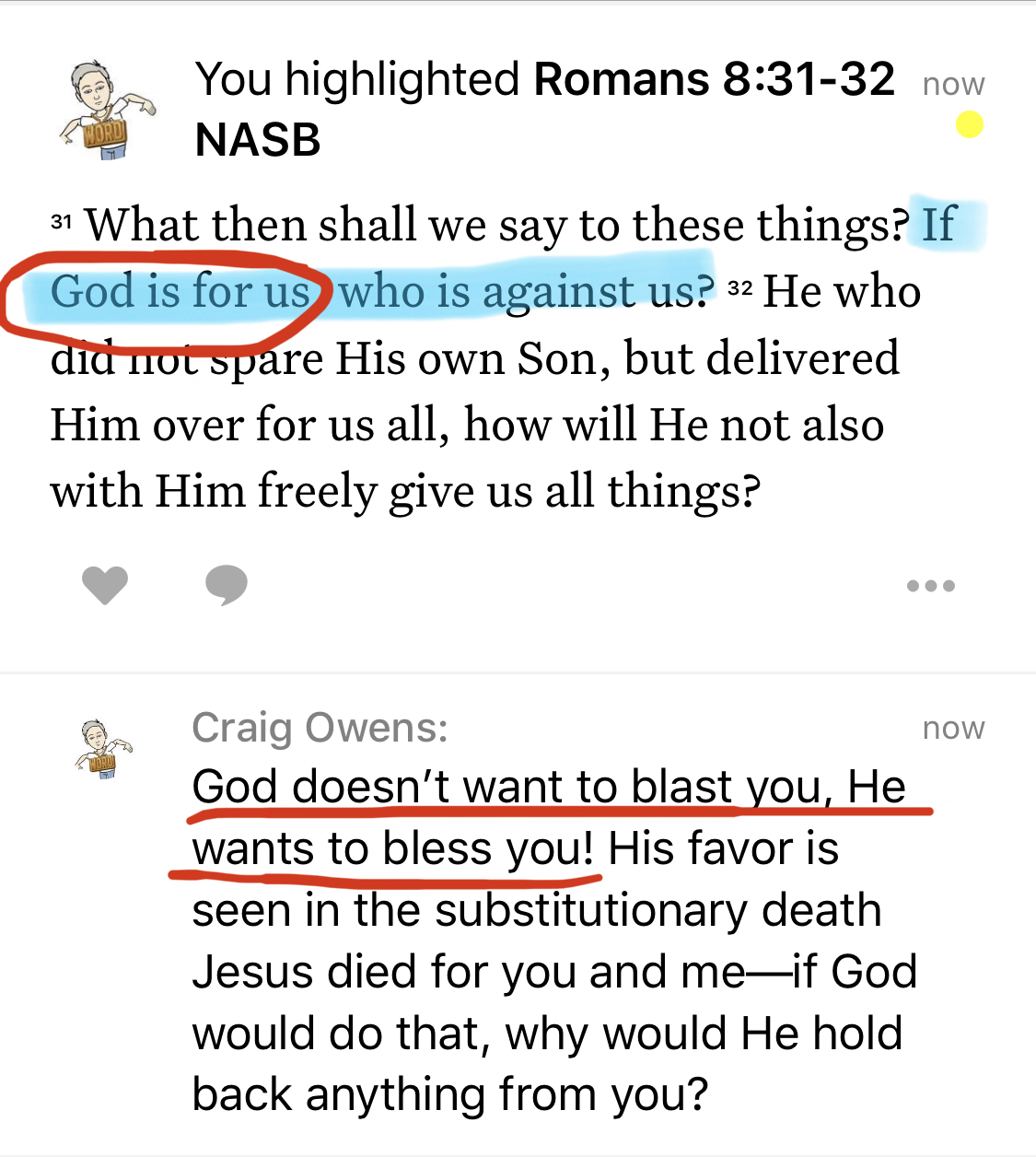
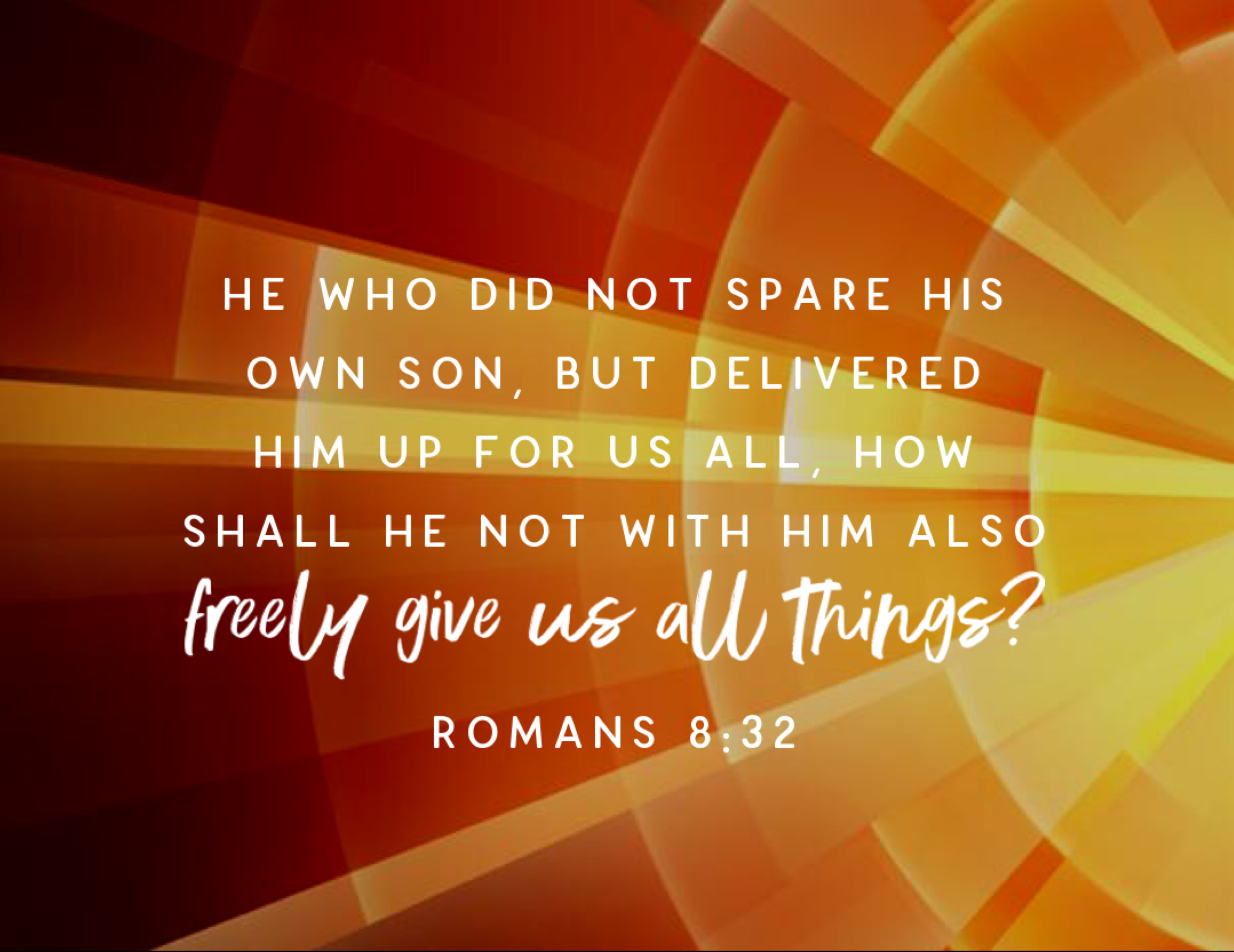
When the devil says God can’t or won’t help you, you say, “It is written, ‘If God did not spare His own Son, but gave Him up for me—how will He not also graciously give me everything I need?’” (Romans 8:32). 

When the devil says you can’t resist his temptations for very much longer, you say, “It is written, ‘Greater is He that is in me than anything you’ve got. I have submitted myself to God and I will not give in to you, so you must flee from me!’” (1 John 4:4; James 4:7).

When the devil says you’re all alone in this world, you say, “It is written, ‘God said He would never leave me, and His Spirit is inside me right now and forever’” (Hebrews 13:5; John 14:16-18).

Dear friend, the blood of the Lamb covers you. Now use His Word to refute every single charge the devil tries to use to slander you. 

9 Prayers From “Praying The Promises”

In Praying The Promises, Max Lucado gives us valuable instruction on how to turn Scriptural promises into powerful prayers. Here are a few of those prayers (the biblical reference in brackets is the passage that helped form the prayer). 

Thank you for being a God who wants me to know You.… Your wisdom surpasses all wisdom on this earth. Your ways are so much higher than mine. I could study You and Your Word for the rest of my life and still only scratched the surface of the depths of who You are. You are at once knowable and unknowable.… Deepen my knowledge of You, God. [Psalm 19:1-2; Isaiah 55:8-9; Romans 1:19-20]

Help me rely on Your promise of grace because I have been found righteous through Jesus. When trouble comes, use those troubles to increase my faith and draw me nearer to You. [Hebrews 7:25]

Father, sometimes I convince myself that I need to earn Your salvation. I feel like I should do more, be more, and achieve more. But You simply want my faith. Help me let go of my striving and this need to perform for You and for others. [Romans 4:5; Philippians 3:4-7] 

Guide me during the difficult times. Give me hope as I pray and wait. Remind me of Your power and authority so that I will trust Your ways, even when I can’t see where the path before me is going. [Genesis 50:20-21; Ephesians 1:11-12; Romans 5:3] 

Forgive me when I look for guidance outside of Your Word. When I ask friends what to do before I open my Bible. When I am resistant to reading Your Word because I want to guide myself rather than be guided by You. Renew my desire and passion for reading the Bible. … May I learn something new about You and Your character each time I read it. [Psalm 32:8; 2 Timothy 3:16-17] 

When a worry arises, remind me of Your presence so I will turn to You and not fear. [Psalm 23:1, 4]

Gracious Father, nobody is beyond Your redemption. Because of Your love and mercy, You provided a Redeemer for us in Christ, who graciously stopped us while we were on the path of sin, gave us refuge, and pointed us toward the road of redemption. [Galatians 4:4-5]

Forgive me when I try to fight my own battles. … If I try to fight for myself, I end up feeling exhausted and defeated by my own efforts. You have said You are fighting for me. Help me believe that truth even when I am so tempted to fight for myself. Go before me this week as I face temptation. Go before me as I face anxiety, fear, and uncertainty. Protect me in every spiritual battle. Fight for me and help me surrender each battle to You. [Exodus 14:14; Deuteronomy 1:30; Psalm 20:7-8]

As concerns and questions come up, remind me to turn each of them over to You in prayer. I lift up my family to You. I lift up my work to You. I lift up my to-do list to You. Cover each worry with Your peace. Prioritize my day so that it aligns with Your will and not mine. [1 John 5:14]

You can check out my review of Praying The Promises by clicking here, and you can read some other quotes from this book by clicking here.