I wrote to the church, but Diotrephes who loves to be first, will have nothing to do with us. (3 John 9)
The King James Versions says that Diotrephes loveth to have the preeminence. He loved his title, his position of authority, and having everything in the church flow through him.
He wanted not only to approve who spoke in the church, but even with whom church people could socialize outside of church. He wielded his positional authority like a sword and cut off people from the fellowship of the church if they didn’t join lockstep with him.
He used fear and intimidation to demand people follow him, and wouldn’t receive a loving letter from the Apostle John. To counteract any who would question him, Diotrephes engaged in gossip and character assassination of any he perceived to be a threat to his position as pastor.
My fellow pastor, having the title of pastor doesn’t mean I’m the smartest person in the room, or that I have all the answers. I am one member of the Body of Christ. Each member of the Body needs all the other members of the Body. I should humbly serve, never demanding allegiance to me or blind obedience to my wishes. I should never try to hide behind my title, but be the most transparent, the most willing to admit my mistakes, and the first to forgive and to ask forgiveness.
Lord, guard my heart against the spirit of Diotrephes!!
UPDATE: This is one of the seed thoughts that went into my book Shepherd Leadership.
Listen to the podcast of this post by clicking on the player below, and you can also subscribe on Apple, Spotify, or Audible.
John opens the book of Revelation with this greeting: Grace and peace to you from Him who is, and who was, AND WHO IS TO COME… (Revelation 1:4). This is so significant because of the other descriptive phrases John uses for Jesus:
Jesus was pre-existent before creation (John 1:1).
John was witness to everything Jesus did during His public ministry, including all of the claims Jesus made about Himself (1 John 1:1).
And now John says not only has Jesus existed before time existed, not only is He alive now, but He is coming back again!
This is what makes the resurrection of Jesus so important. Jesus Himself told us exactly what was going to happen with His death by crucifixion and His resurrection three days later. The fact that these statements all turned out to be true gives us greater assurance that His promise that He is coming back is also true.
In His very first sermon, Jesus quoted from Isaiah about how He would conduct His earthly ministry (see Isaiah 61:1-2 and Luke 4:18-19). But when He quotes the passage from Isaiah, He leaves off a phrase “and a day of vengeance of our God.” God’s wrath against sin is being held back for now, but the day of judgment is coming.
John says Jesus is the One Who is to come, and records later on how Jesus will come—
I saw Heaven standing open and there before me was a white horse, whose rider is called Faithful and True. With justice He judges and wages war. His eyes are like blazing fire, and on His head are many crowns. He has a name written on Him that no one knows but He Himself. He is dressed in a robe dipped in blood, and His name is the Word of God. The armies of Heaven were following Him, riding on white horses and dressed in fine linen, white and clean. Coming out of His mouth is a sharp sword with which to strike down the nations. “He will rule them with an iron scepter.”He treads the winepress of the fury of the wrath of God Almighty. (Revelation 19:11-15)
God made Jesus to be sin for us. He suffered and died to pay the penalty for our sins, and those who are still found in their sins—unforgiven, without placing their faith in Jesus Christ’s sacrificial death and resurrection—must face the wrath of God.
Jesus is not only our Risen Savior, but He is the soon-returning King and Judge.
Three times the last book of the Bible records Jesus Himself saying, “I am coming soon!” This isn’t a scare tactic, it’s real. As certainly as Jesus rose from the grave, He is returning soon.
Are you ready for His return? Are you telling others that Jesus is our soon-returning King? I hope you know what it means to have Jesus as your Lord and Savior, and I hope you are telling as many other people as you can about our soon coming King!
On Friday I had the privilege of sharing the message at our combined Good Friday service, where all the churches in Cedar Springs came together. I talked about the contrast Jesus presents to us from John 16:33. Quite simple it goes like this:
In the world = trouble
In Jesus = peace
This morning our Easter breakfast drama confronted (sometimes comically) the various conspiracy theories about the death and resurrection of Jesus. Then I shared how the biblical account of Jesus’ resurrection is not only the most plausible, reasonable and logical of accounts, but it is also the only option which gives us lasting hope.
It’s amazing to think that my “job” allows me to speak the words of life, the hope of freedom, the promise of eternal life, the beauty of a relationship with Christ. I am truly blessed and humbled to do what God has called me to do.
I suggested last week that John Piper’s book Love To The Uttermost is an excellent resource to help guide you through the Holy Week with some fresh insights (you can read my review of this book by clicking here). Here are a few of the fresh insights that stood out to me.
“Luke 12:32 is a verse about the nature of God. It’s a verse about what kind of heart God has. It’s a verse about what makes God glad—not merely about what God will do or what He has to do, but what He delights to do, what He loves to do, and what He takes pleasure in doing. ‘Fear not, little flock, for it is your Father’s good pleasure to give you the kingdom.’ … This is what the word means: God’s joy, His desire, His want and wish and hope and pleasure and gladness and delight, is to give the kingdom to His flock.”
“Jesus was not accidentally entangled in a web of injustice. The saving benefits of His death for sinners were not an afterthought. God planned it all out of infinite love to sinners like us, and He appointed a time. Jesus, who was the very embodiment of His Father’s love for sinners, saw that the time had come and set His face to fulfill His mission: to die in Jerusalem for our sake. ‘No one takes my life from Me,’ Jesus said, ‘I lay it down of my own accord’ (John 10:18).”
“First, we know the depth of someone’s love for us by what it costs him. Second, we know the depth of someone’s love for us by how little we deserve it. Third, we know the depth of someone’s love for us by the greatness of the benefits we receive in being loved. Fourth, we know the depth of someone’s love for us by the freedom with which they love us.”
“[God] does not need us. If we stay away He is not impoverished. He does not need us in order to be happy in the fellowship of the Trinity. But He magnifies His mercy by giving us free access through His Son, in spite of our sin, to the one Reality that can satisfy us completely and forever, namely, Himself.”
“The resurrection of Jesus is given to us as the confirmation or evidence that He was indeed free in laying down His life. And so the resurrection is Christ’s testimony to the freedom of His love. … Of all the great things that Easter means, it also means this: it is a mighty ‘I meant it!’ behind Christ’s death. I meant it! I was free. You see how free I am? You see how much power and authority I have? I was able to avoid it. I have power to take up My life out of the grave. And could I not, then, have devastated My enemies and escaped the Cross? My resurrection is a shout over My love for My sheep: It was free! It was free! I chose it. I embraced it. I was not caught. I was not cornered. Nothing can constrain Me to do what I do not choose to do. I had power to take My life from death. And I have taken My life from death. How much more, then, could I have kept My life from death! I am alive to show you that I really loved you. I freely loved you. Nobody forced Me to it. And I am now alive to spend eternity loving you with omnipotent resurrection love forever and ever. Come to Me, all you sinners who need a Savior. And I will forgive you and accept you and love you with all My heart forevermore.”
Listen to the podcast of this post by clicking on the player below, and you can also subscribe on Apple, Spotify, or Audible.
One of the misconceptions about Jesus is that He first appears on the scene in a manger in Bethlehem. Nothing could be further from the truth! Jesus appears in the opening words of the Bible—In the beginning God created—and in the last words of the Bible—Yes, I am coming soon. And He appears in every word in between!
B.B. Warfield has a great picture of the Old Testament being a mansion with richly-decorated, beautifully-ornate rooms, but which are dimly lit. So with just the Old Testament by itself, it is hard to appreciate the magnificent beauty that’s there. In Jesus, the light is turned on, and we can now appreciate the glory and majesty that was always there!
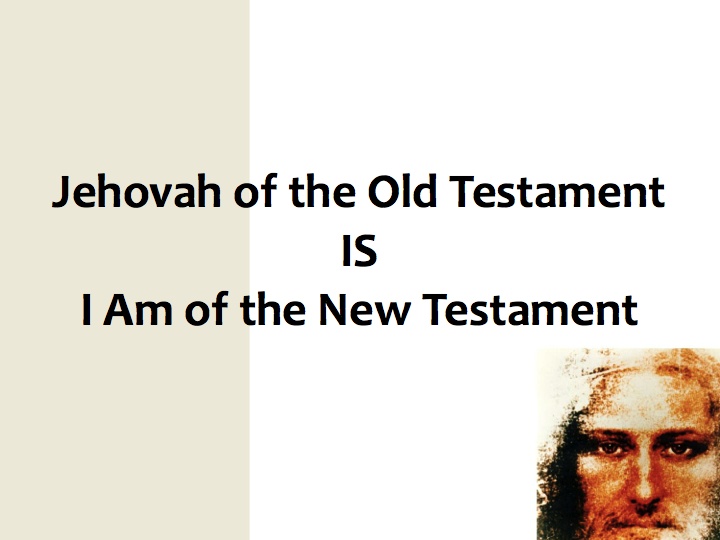
So notice how the “I Am” statements shine a bright light on the titles of “Jehovah”—
Jehovah Jireh (I Am Your Provider) → I am the Bread of Life (John 6:35)
Jehovah Rapha (I Am Your Healing) → I am the Resurrection and the Life (John 11:25-26)
Jehovah Nissi (I Am Your Source) → I am the Vine (John 15:5)
Jehovah Shalom (I Am Your Peace) → I am the Light of the world (John 8:12)
Jehovah Raah (I Am Your Shepherd) → I am the Good Shepherd (John 10:11)
Jehovah Sabaoth (I Am Your Wall Of Protection) → I am the Gate (John 10:9)
Jehovah Tsid-kenu (I Am Your Righteousness) → I am the Way, Truth, and Life (John 14:6)
Jehovah Shammah (I Am Here) → I am the Alpha and Omega (Revelation 1:8; 22:13).
In essence Jesus is saying “I Am Jehovah in all His fullness.” So what are we to make of that? What are we to make of Jesus Christ? Here’s how C.S. Lewis addressed that very question:
“This is a question which has, in a sense, a frantically comic side. For the real question is not what are we to make of Christ, but what is He to make of us? The picture of a fly sitting deciding what it is going to make of an elephant has comic elements about it. But perhaps the questioner meant what are we to make of Him in the sense of ‘How are we to solve the historical problem set us by the recorded sayings of this Man?’
“The problem is to reconcile two things. On the one hand you have got the almost generally admitted depth of sanity of His moral teaching, which is not very seriously questioned, even by those who are opposed to Christianity. In fact, I find when I am arguing with very anti-God people that they rather make a point of saying, ‘I am entirely in favor of the moral teaching of Christianity….’
“On the one side clear, definite moral teaching. On the other, claims which, if not true, are those of a megalomaniac, compared with whom Hitler was the most sane and humble of men. There is no halfway house and there is no parallel in other religions. If you had gone to Buddha and asked him, ‘Are you the son of Bramah?’ he would have said, ‘My son, you are still in the vale of illusion.’ If you had gone to Socrates and asked, ‘Are you Zeus?’ he would have laughed at you. If you had gone to Mohammed and asked, ‘Are you Allah?’ he would first have rent his clothes and then cut your head off. If you had asked Confucius, ‘Are you Heaven?’ I think he would have probably replied, ‘Remarks which are not in accordance with Nature are in bad taste.’
“The idea of a great moral teacher saying what Christ said is out of the question. In my opinion, the only person who can say that sort of thing is either God or a complete lunatic suffering from that form of delusion which undermines the whole mind of man.” (emphasis mine)
In this quote, C.S. Lewis gives us three choices about Jesus. We can either say (1) He is a liar, (2) He is a lunatic, or (3) He is who He says He is.
In 1880, Edwin A. Abbott wrote Flatland, a book that would later become a favorite of Albert Einstein. Abbott was a college-trained mathematician and a theologian; in fact he was actually better known for his theological writings than for Flatland. Later on Einstein would say that “things should be made as simple as possible, not simpler.” In other words, don’t dumb-down the concept, but state it on a level where more people can grasp it. That’s why, I believe, Einstein loved Flatland.
Flatland is told through the eyes of Square, a two-dimensional shape that lives in Flatland. Square has length and width, but no height. So the inhabitants of Flatland can move back-and-forth, and side-to-side, but not up-and-down. To get an idea of this, put your eye right on the level of a tabletop, and look at an item on the table. Imagine you can only see what is touching the tabletop (but nothing that rises any higher or lower than that), and you will get an idea of Square’s two-dimensional world.
One day Sphere visits Flatland. Sphere is three-dimensional, so he can move up-and-down. This means that Square can only see the part of Sphere that happens to be in his line of sight at that immediate moment. So he sees just a “slice” or “layer” of Sphere as Sphere moves through Flatland. Sometimes Sphere is nothing more than a disembodied voice when he is hovering above Flatland.
This gives us a little bit of an idea of how we perceive God. He exists in dimensions that we cannot fully comprehend, so we only see “slices” of Him as He passes though our line of sight. Sometimes He is just a disembodied Voice—or as the Bible calls Him, the Word of God.
But the Word of God compressed Himself into our dimension (John 1:14). All of the fullness—all of the other-dimension-ness—of His omnipotence, omnipresence, omniscience came to our “level” in the Person of Jesus Christ (Philippians 2:6-7). The Word was the complete and total fullness of God (John 1:1-3; Colossians 2:9). But unlike Square who couldn’t fully know Sphere, God is fully knowable in The Word—in Jesus Christ!
The question is: What are you going to do with The Word? The Word of God (the Bible) allows us to fully know The Word of God (Jesus). But we need to be willing to let the Holy Spirit strip away our puny, smaller-dimensioned, finite thinking of God.
Alvin Toffler wrote, “The illiterate of the future are not those who cannot read or write, but those who cannot learn, unlearn, and relearn.”
I would modify this to say, “Those illiterate of The Word (Jesus) are not those who cannot read The Word (the Bible), but those who won’t let the Holy Spirit help them learn, unlearn, and relearn who God is.”
There is so much more to learn about The Word (Jesus), so let the Holy Spirit guide you in your reading of The Word (the Bible). I pray as Paul did that you will begin to experience more of the multi-dimensional-ness of God as revealed in The Word—
I pray that out of God’s glorious riches He may strengthen you with power through His Spirit in your inner being, so that Christ may dwell in your hearts through faith. And I pray that you, being rooted and established in love, may have power, together with all the Lord’s holy people, to grasp how wide and long and high and deep is the love of Christ, and to know this love that surpasses knowledge—that you may be filled to the measure of all the fullness of God. (Ephesians 3:16-19)
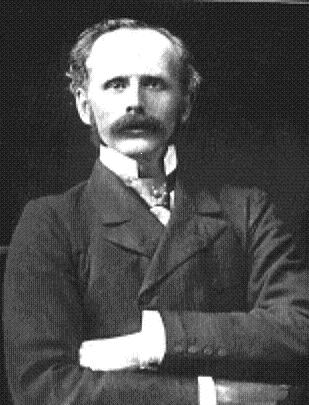
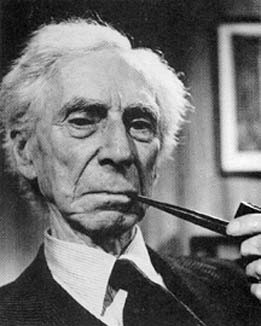
It’s extremely rare that a 19th-century pastor, Jesus Christ, and a noted atheist would all agree on something. But as we wrapped up our series on love today, I had to share these quotes (the added emphasis in the quotes is mine)—
“Never offer men a thimbleful of gospel. Do not offer them merely joy, or merely peace, or merely rest, or merely safety; tell them how Christ came to give men a more abundant life than they have, a life abundant in love, and therefore abundant in salvation for themselves, and large in enterprise for the alleviation and redemption of the world. … Only this fuller love can compete with the love of the world.” —Henry Drummond
“If you love only those who love you, why should you get credit for that? Even sinners love those who love them! And if you do good only to those who do good to you, why should you get credit? Even sinners do that much! … By this all men will know that you are My disciples, if you truly love one another.” —Jesus (Luke 6:32-33; John 13:35)
“Nothing can penetrate the loneliness of the human heart except the highest intensity of the sort of love the religious teachers have preached.” —Bertrand Russell
Listen to the podcast of this post by clicking on the player below, and you can also subscribe on Apple, Spotify, or Audible.
Love is not always flowery and sweet, where everyone gets along, and no one is ever mean or even unkind. Actually that’s not love; that’s selfishness. You’re saying, “I will love you because it makes me feel good. I get something special out of this when I am kind and loving to you.”
The ancient Greeks had different words for love. Whereas we use love for food (“I love my pasta”), and the same word for special people (“I love my wife”). But we all know that I’m not really saying my wife and a plate of spaghetti are on the same level.
So the Greeks had a word for love for the inanimate (like food and music), and a word for this-makes-me-feel-so-good (like sex and alcohol), and a word for treating someone humanely or kindly (sometimes called brotherly love). These are well-known loves, but they are very fragile. The law of diminishing returns says that each time I experience one of these loves, its ability to please me the next time is slightly reduced, until at one point this thing/person no longer satisfy me at all. In fact, they may even cause my stomach to churn in nausea.
But there was one more word the Greeks used for love, that the biblical writers used almost exclusively. This word (agape) is not tuxedos and dancing gowns and chandeliers. This love shows up in work clothes, with callouses on its hands and knees, because it’s determined to serve someone else no matter what!
This is the kind of love God exhibited toward us—God shows and clearly proves His own love for us by the fact that while we were still sinners, Christ died for us (Romans 5:8).
And this is the kind of love Jesus commanded us to exhibit toward others… even toward those we think are unloveable—By this all men will know that you are My disciples, if you love one another. … If you love those who love you, what credit is that to you? Even “sinners” love those who love them. And if you do good to those who are good to you, what credit is that to you? Even “sinners” do that (John 13:35; Luke 6:32-33).
This is the kind of full love that those apart from Jesus Christ do not know, but they can see it and be drawn to it if Christians will demonstrate it. Henry Drummond said this—
“Never offer men a thimbleful of gospel. Do not offer them merely joy, or merely peace, or merely rest, or merely safety; tell them how Christ came to give men a more abundant life than they have, a life abundant in love. … Then only can the gospel take hold of the whole of a man, body, soul and spirit. … Only a fuller love can compete with the love of the world.”
Let’s show the world a fuller love, and in so doing we will show them Jesus!
This is a weekly series with things I’m reading and pondering from Oswald Chambers. You can read the original seed thought here, or type “Thursdays With Oswald” in the search box to read more entries.
Don’t Let Others Stumble Because Of Me
There is a difference between “offense” and “stumbling.” And they were offended in Him. But Jesus said unto them, “A prophet is not without honor, save in his own country…” (Matthew 13:57). But Jesus knowing in Himself that His disciples murmured at this, said unto them, “Does this cause you to stumble?” (John 6:61; see also Matthew 5:29; 11:6; 13:41; 16:23; 17:27; 18:6-7). Offense means going contrary to someone’s private opinion, and it is sometimes our moral duty to give offense.
…Stumbling is different from offense. For example, someone who does not know God as well as you do, loves you and continually does what you do because he loves you, and as you watch him you begin to discern that he is degenerating spiritually, and to your amazement you find he is doing what you are doing. No offense is being given, but he is stumbling, distinctly stumbling.
In 1 Corinthians 8 and 9 Paul talks about not causing someone else to stumble because of what we do. It’s a fine line sometimes between offense and stumbling, but it’s a distinct line that the Holy Spirit can help us discern.
Jesus often offended people because their mindset was so rigid, and He didn’t act in a way that fit their rigid religious stereotypes. But Jesus was very cautious about making sure He never caused someone to stumble. As Matthew points out, Jesus fulfilled the prophesy of Isaiah: He will not quarrel or cry out…. A bruised reed He will not break, and a smoldering wick He will not snuff out… (Matthew 12:19-20; Isaiah 42:1-4).
My prayer: Lord Jesus, please don’t let others stumble because of me! Let me have the discernment of the Holy Spirit to know when to offend, but to never cross the line to cause others to stumble. May I have Your same gentle spirit to not quarrel, and to treat the “bruised reeds” with utmost care.
My son Harrison plays high school baseball. Let’s just imagine that I’m his hitting coach. In order for this relationship to benefit him, a couple of things have to occur:
He has to want to improve, and
He has to want to receive instruction from me.
If he thinks he knows it all already, or if he wants to just hang out with the other guys on the team to try to pick up some tips by being around them, then my role of a coach isn’t going to benefit him much.
Let’s say that Harrison knows he needs to improve, and he’s willing to listen to my instruction. We head out for some batting practice, and he lets pitch after pitch sail by him without ever swinging at the ball. If he never swings the bat, there’s only one piece of advice I can give him: Swing the bat!
The same things hold true for us if we want to improve as pray-ers. We have to want to improve, and we have have to be willing to receive instruction from the Coach (in this case, the Holy Spirit). But we also have to give Him something to work with. If we let opportunity after opportunity sail by without praying about it, there’s only one piece of advice the Spirit can give us: Pray!
Jesus said the Holy Spirit would help lead us into oneness with Him—
The Counselor, the Holy Spirit, whom the Father will send in My name, will teach you all things and will remind you of everything I have said to you. (John 14:26)
If we want to become better pray-ers, here’s how the Holy Spirit can help:
You have to admit that you need help in your prayer life.
You need to read your Bible (the everything that God says to you), and use God’s Word to help form your prayers.
Then, pray… swing the bat of prayer!
As you pray, listen to the voice of the the Counselor, the Holy Spirit, helping you to refine your prayers.
Your prayer time can become more meaningful, if you will tune into the Holy Spirit, and give Him something to work with.
To check out the others messages in this series on prayer called Praying Circles, please click here.



 I wrote to the church, but Diotrephes who loves to be first, will have nothing to do with us. (3 John 9)









 Craig T. Owens