What Child Is This Anyway?!

christ-the-kingA couple of years ago as we were setting up for our Living Nativity, I was wrapping a towel around the doll we were going to use for the infant Jesus. A young boy from the community was carefully watching me and he asked, “Is that baby Santa?”

“No, it’s not Santa,” I said. “See this manger? We’re getting things setup to tell the story about the very first Christmas, long before St. Nick came on the scene. Maybe you’ve heard about Mary and Joseph?”

The young lad’s eyes lit up as he seem to get the answer. “Oh! Is that baby Moses?!”

Clearly, people don’t know all the facts surrounding the first Advent of Jesus. Sometimes things in culture and church get jumbled—what belongs to which? Is Christmas a pagan holiday? Where do Christmas trees come in? Was the birth of Jesus actually on December 25? What does it all matter anyway?

Instead of running from these questions, Christians should use them to point people in the right direction. 

Have you heard the tune called Greensleeves? It’s been around longer than anyone knows. William Shakespeare referenced it in two of his plays and didn’t feel the need to explain it to his audience. The tune has been set to some pretty bawdy words about New Year’s Eve parties, and even as a mocking song to some folks about to go to the gallows. And then in the mid-1800s William Chatterton Dix used this tune to write words about Christ’s birth in What Child Is This?

What an excellent question! Who exactly is this Child? Is Jesus merely a line on the pages of history? Or is His birth something more? Oswald Chambers noted, “The tremendous revelation of Christianity is not the Fatherhood of God, but the Babyhood of God—God became the weakest thing in His own creation, and in flesh and blood He levered it back to where it was intended to be. No one helped Him; it was done absolutely by God manifest in human flesh.”

The first-century historian Luke simply records that Mary is pregnant with “a child.” That is, until Jesus is taken to the temple in Jerusalem eight days later, and we see that a man named Simeon didn’t just see this Child as any baby, but as a fulfillment of prophecy (see Luke 2:25-32; Isaiah 7:14 and 9:6).

This Child is much more than just a historic person. He not only split history into BC and AD, but He has changed my life, and countless others’ lives as well! That’s why the chorus of this Christmas carol joyfully announces, “This, THIS is Christ the King!”

People may be confused about what tradition belongs to culture or Christendom. You may even be confused about what belongs to which. But none of that should stop us from knowing the Child we celebrate this Christmas. None of that should stop us from helping seekers to find Jesus as their own Savior. None of that should stop us from enthroning Jesus Christ as King and giving Him the highest praise He deserves!

Jesus used common, everyday things—farmers, fish, trees, weather, children’s songs—to tell people about a Heaven that was prepared for them. Paul used the cultural idols and poets to point his community to Jesus. Philip used the Scripture a governmental official was reading to point him to Jesus.

So we, too, can use whatever is around us to point people to Jesus this Christmas! What Child is this? This, THIS is Christ MY King! Merry Christmas!!

If you’ve missed any of the messages in our series The Carols Of Christmas, you can find the full list here.
Is The Bible Outdated?

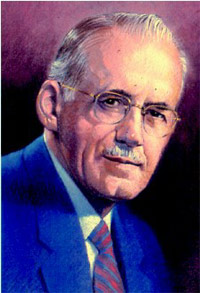
A.W. Tozer“Today’s world was entirely unimaginable to the people of those times [those living in Christ’s day]. Have these changes forced God to modify His plans for His church and for mankind? Here is where we have fallen by the wayside. Here is where we need a reformation, a purgation, a removal of the faults, and the restoration again of the faith of Christians to believe in the truth. … ‘Do you think God has been forced to change His mind?’ I do not think anybody would quite have the courage to say yes. Nevertheless, they do say it little by little until they have brainwashed their people. In effect, they say that the Bible must be interpreted in the light of new developments. A Book that was written in the day when people rode donkeys must be reinterpreted to mesh with contemporary society. They say that the prophets and apostles mistook what God intended to do. The Bible is outdated and largely irrelevant. … I challenge the idea that we are any further advanced than they were in the days of Jesus. If we are so advanced, then I want to ask some questions. Why do we kill thousands of human beings each year with automobiles? Because we ride automobiles instead of donkeys, we are advanced? If we are so advanced in our day, why are the penitentiaries packed full and the mental hospitals crowded? If we are so advanced, why is the whole world a powder keg? If we are so advanced, how is it that we have weapons that can annihilate the world? If we are so advanced, why is it that people cannot walk alone in the parks anymore? Why is it that workers who get out at midnight never walk home alone anymore? Why is it in this advanced age that drugs, violence, abortion, and divorce are soaring?

“We have been brainwashed to believe that we cannot read the Bible as we used to. We must now read it through glasses colored by change. We have been hypnotized by the serpent, the devil, into believing that we no longer have a trustworthy Bible.

“Has God changed? Are we going to accept it? Is there a change in the purpose of God? Have the changes in human society startled or shocked God? … We believe that God Almighty has not changed and that Jesus Christ is the same. He is victorious, and we do not have to apologize for Him. We do not have to modify, adjust, edit, or ame

nd. He stands as the glorious Lord, and nobody needs to apologize for Him.” —A.W. Tozer

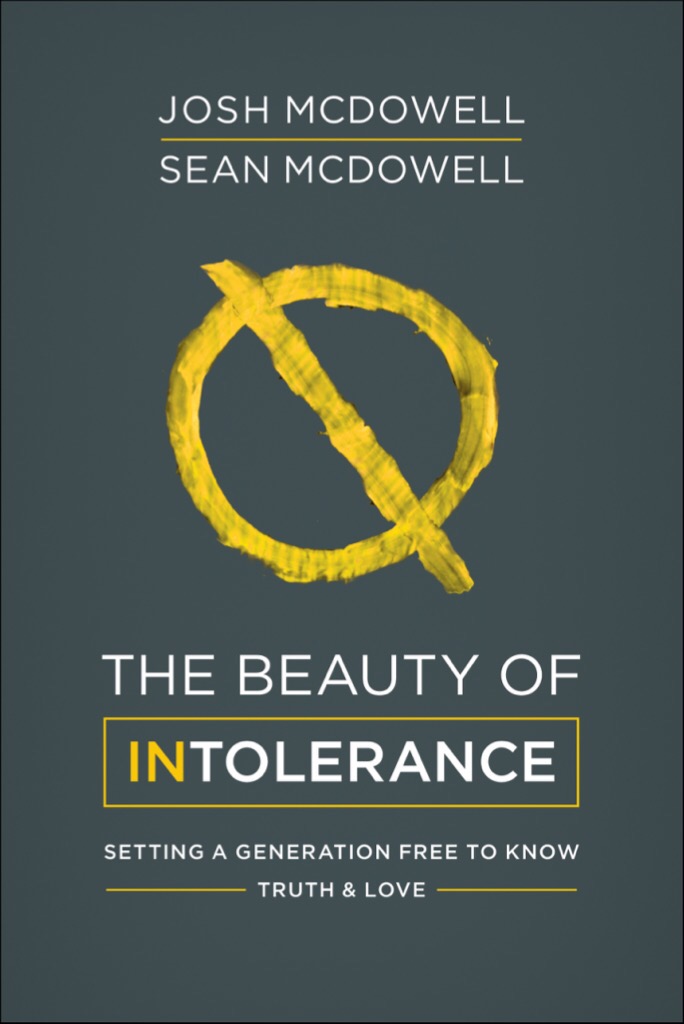
5 Quotes On Love, Sex & Marriage From “The Beauty Of Intolerance”

Beauty Of IntoleranceIn any modern-day discussion on the topic of “tolerance” the conversation is sure to come around to sexual dos and don’ts. Josh McDowell and Sean McDowell speak to this subject so well in their book The Beauty Of Intolerance.

“The reason we think there are such concepts as ‘fair’ and ‘unfair’ is because our Maker is a just God and we have been made in His image (Genesis 1:27). The reason love is a virtue and hatred a vice is because the God of relationships who formed us is a God of love. The reason honesty is right and deceit is wrong is because God is true. The reason fidelity in marriage is honorable and infidelity is not is because God is faithful. The reason chastity is moral and promiscuity is immoral is because God is pure. … All truth claims cannot be equal because Jesus didn’t claim to be ‘a’ truth—one among viable others. His claim was exclusive.”

“True love commits wholeheartedly. … When two lovers marry, they are making a public vow committing to provide for and protect each other through thick or thin. That kind of committed love compels a couple to wait to engage in sex until after marriage—which is the context in which love makes it right.”

“Purity is God’s boundary that provides for a maximum sex life and protects us from the negative consequences of sexual immorality.”

“What your children hear about the ‘gay versus Christian’ morality debate is often centered on how Christians allegedly discriminate against same-sex marriages and wrongfully label the gay community as sinful. We need to help them refocus the argument. It needs to shift away from who is accusing whom of judging or whether it’s right to legislate morality. We must focus our young peoples’ discussion on who has the right to define morality in the first place. … Be a student of God’s Word. Know why you believe sexual immorality is wrong—know the positive provision and protection that comes by following God’s instructions on morality. And then seek to speak the truth in love. Capture God’s heart, knowing that He wants only what is best for us. Share how your own obedience to God’s Word has brought you protection and provision.”

First, marriage is two human beings becoming one in every way possible. . . In marriage, two become one, united in mind and body and purpose. 

“Second, marriage is oriented toward procreation. The act of two becoming one flesh makes God’s intent, that humans should ‘fill’ and ‘form’ His world, possible. … Scripture sees marriage as being closely tied to procreation. . . . 

“Third, marriage comes with an expectation of permanence. The Genesis account implies marriage is a permanent relationship, [but] Jesus’ words are explicit: ‘What therefore God has joined together, let not man separate’ (Matthew 19:6). . . . 

“Therefore we shouldn’t think of marriage as a political institution that belongs to the state. It is a pre-political institution. The state doesn’t create marriage; it can only recognize it. The state, despite all its efforts, will never be able to redefine marriage. Marriage will always be what marriage was created to be, no matter what activist judges, runaway legislatures or majority of voters decide.” —John Stonestreet & Sean McDowell 

If you haven’t read my review of The Beauty Of Intolerance, you can read it here. I have also shared some other quotes from this book here and here.

11 More Quotes From “Culture”

cultureA.W. Tozer wrote almost 50 years ago, but his words to the church still ring true today. Check out my review of Culture, and then enjoy some additional quotes from this book.

“To preserve life the physician and the druggist use words of fixed meaning common to both. How much more should the pulpit and the pew have a clear understanding about the words of eternal life. The modern effort to popularize the Christian faith has been extremely damaging to that faith. The purpose has been to simplify truth for the masses by using the language of the masses instead of the language of the church. It has not succeeded, but has added to rather than diminished religious confusion.”

“The hope of the church yet lies in the purity of her theology, that is, her beliefs about God and man and the relation to each other. These beliefs have been revealed to her by the inspiration of the Holy Spirit in the sacred Scriptures. Everything there is clear-cut and accurate. We dare not be less than accurate in our treatment of anything so precious.”

“I think we make two mistakes in our attitude toward our Christian leaders, one is not being sufficiently grateful to them and the other in following them too slavishly.”

“Today we evangelicals are showing signs that we are becoming too rich and too prominent for our own good. With a curious disregard for the lessons of history we are busy fighting for recognition by the world and acceptance by society.”

“That terrible zone of confusion so evident in the whole life of the Christian community could be cleared up in one day if the followers of Christ would begin to follow Christ instead of each other.”

“The difficulty we modern Christians face is not misunderstanding the Bible, but persuading our untamed hearts to accept its plain instructions.”

“Our churches these days are filled (or one-quarter filled) with a soft breed of Christian that must be fed on a diet of harmless fun to keep them interested. About theology they know little. Scarcely any of them have read even one of the great Christian classics, but most of them are familiar with religious fiction and spine-tingling films. No wonder their moral and spiritual constitution is so frail.”

“To accept the call of Christ changes the returning sinner indeed, but it does not change the world. The wind still blows toward hell, and the man who is walking in the opposite direction will have the wind in his face. And we had better take this into account when we ponder on spiritual things.”

“Christianity’s scramble for popularity today is an unconscious acknowledgment of spiritual decline.”

“The desire to stand well with our fellow man is a natural one, and quite harmless up to a point, but when that desire becomes so all-consuming that we cannot be happy apart from the praises of man, it is no longer harmless, it is sinful in itself and injurious in its effects.”

“A Christian’s standing before God does not depend upon his standing before men. A high reputation does not make a man dearer to God, nor does the tongue of the slanderer influence God’s attitude toward His people in anyway.”

To read some additional quotes I shared from Culture, click here. You may also follow me on Twitter and Tumblr to read quotes which I share daily from Tozer and other notable thinkers.

Thursdays With Oswald—Stay True To The Word

Oswald ChambersThis is a weekly series with things I’m reading and pondering from Oswald Chambers. You can read the original seed thought here, or type “Thursdays With Oswald” in the search box to read more entries.

Stay True To The Word

     We must disabuse our minds of the idea that God sits like a Judge on a throne and batters humanity into shape. …

     We have to remember that an enthusiasm for humanity which ignores the Bible is sure to end in disaster. … 

     It is quite possible for the human mind to blot God out of its thinking entirely, and to work along the line of the elements which are the same in every man, and to band the whole of the human race into a solid atheistic community. … 

     When men depart from the Bible they call humanity “God” in differing terms; the use of the term “God” means nothing to them, God is simply the name given to the general tendencies which further men’s interests. This spirit is honeycombing everything, we find it coming into the way we talk of Christian experience; there is creeping in the idea that God and Jesus Christ and the Holy Ghost are simply meant to bless us, to further our interests. … 

     Watch the tendency abroad today; people want to get rid of Jesus Christ, they cannot prove that He did not live, or that He was not a remarkable Man; but they set to work to dissolve Him by analysis, to say He was not really God Incarnate. Jesus Christ always upsets the calculations of humanity; that is what made Voltaire say “Crucify the wretch, stamp Him and His crazy tale out,” because He was the stumbling block to all the reasonings of men. You cannot work Jesus Christ into any system of thinking. If you could keep Him out, everything could be explained. The world could be explained by evolution, but you cannot fit Jesus Christ into the theory of evolution. Jesus Christ is an annoyance to satan, a thorn in the side of the world at large, an absolute distress to sin in the individual.

From The Philosophy Of Sin

Oswald Chambers always penned wise words, but what makes his words so wise is that they are solidly rooted in Scripture.

In the above passages, Chambers warns us what happens when we forget the word of God as given to us in the Bible:

  • We see God as harsh and unloving
  • We make short-sighted decisions
  • We build a community in our image
  • We all have a different idea of who God is
  • We make “God” fit into our own molds
  • We water down who Jesus is
  • We create new worldviews not consistent with God’s design

Bottom line: Stay in the Word. Make Bible reading a regular part of your life, so that you don’t get caught up in the churning waves of “popular” culture.

8 Quotes From “Culture”

cultureIn Culture, you will find a collection of chapters from various A.W. Tozer books all addressing the theme of how a Christian should behave in worldly culture. If you are concerned about influencing the culture for Christ (instead of being influenced by it), I urge you to read my review of this book, and then pick up a copy for yourself. Below are a few quotes from Culture that caught my attention.

“The sacred-secular antithesis has no foundation in the New Testament. … The Lord Jesus Christ Himself is our perfect example, and He knew no divided life. In the presence of His Father He lived on earth without strain from babyhood to His death on the Cross. God accepted the offering of His total life, and made no distinction between act and act. ‘I do always those things that please Him,’ was His brief summary of His own life as it related to the Father (John 8:29). As He moved among men, He was poised and restful.”

“A Christian is now living according to the will of God as he understands it from the written Word. Of such a one it may be said that every act of his life is or can be as truly sacred as prayer or baptism or the Lord’s Supper. To say this is not to bring all acts down to one dead level; it is rather to lift every act up into a living kingdom and turn the whole life into a sacrament.”

“Keep reminding God in our times of private prayer that we mean every act for His glory; then supplement those times by a thousand thought-prayers as we go about the job of living. Let us practice the fine art of making every work a priestly ministration. Let us believe that God is in all our simple deeds and learn to find Him there.”

“You cannot get miracles as you would get a chemical reaction. You cannot get a miracle as you get a wonderful act on stage by a magician. God does not sell Himself into the hands of religious magicians. I do not believe in that kind of miracles. I believe in the kind of miracles that God gives to His people who live so close to Him that answers to prayer are common and these miracles are not uncommon.”

“Our trouble is not that we refuse to believe right doctrine, but we refuse to practice it. We have the peculiar contradiction of believing the right thing and living the wrong way.”

“It seems that the average person spends more time and intellectual labor each year filling out income tax forms then he or she spends in a lifetime trying to learn from the Scriptures and from the light of the Spirit what the church is and what he or she ought to do about it.”

“I would also have in our body the power of the Spirit of Christ. I have said that the average gospel church could get along without the Holy Spirit—and many do. We are praying for revival. What is revival? It is when the Holy Spirit takes over the work that is His, instead of being pushed aside into the benediction. He now becomes the Chief Executive of the church, running it. ‘But ye shall receive power, after that the Holy Ghost is come upon you’ (Acts 1:8). That means that the Spirit of Heaven should come to a company on earth with His all-prevailing gifts, power, and grace, with His life, His illumination, and His discernment. This is not fanaticism; this is not any weird religion. This is just what the Bible teaches.”

“Did you read the Bible or watch TV more this week? Think of the time you have spent. How many half-hour periods did you spend with your Bible, and how many did you spend with amusements? We do not take our faith seriously enough.”

I will be sharing other quotes from Culture soon. If you will enter your email address in the “Subscribe” box to on the right side of the page, you will be notified as soon as new quotes are posted. You can also read Tozer’s quotes from this book, as well as other empowering quotes that I share daily in Twitter and Tumblr.

Culture (book review)

cultureThe dictionary defines culture as “a particular stage of civilization.” In other words, culture is constantly being molded by those who are exercising influence on it at a particular moment. What about Christians? How are they supposed to influence culture? That is a subject that can be so perfectly addressed by A.W. Tozer in a collection of insights in the book with the apropos title Culture.

A.W. Tozer was a man ahead of his time. Although born in 1897, he had a God-given knack for reading the current culture, ascertaining how the church was influencing or being influenced by civilization, and making accurate predictions of what was coming next. This amazing foresight was on display throughout his long and extensive preaching and writing ministry.

Culture is a collection of chapters from more than a dozen of his books. Time and time again you will read how accurately he read the trends in civilization and warned the church how she should respond. Today we have the advantage of looking around us to see how many of his unheeded warnings have come to make up our current culture.

I love the sub-title for this book: Living as Citizens of Heaven on Earth. Although Tozer is no longer with us, his wise words still are. And it’s still not too late for the church to heed his words and make the changes he outlined. Anyone who believes that Christians can still make a difference in our culture will enjoy reading Culture.

I am a Moody Press book reviewer.

7 Quotes From “The Beauty Of Intolerance”

Beauty Of IntoleranceTolerance and intolerance are definitely the buzzwords of today’s culture. But depending upon whom you’re asking, the definition of these words may be dramatically different. This is where Josh McDowell and Sean McDowell’s book The Beauty Of Intolerance can help. Please be sure to check out my book review here, and then check out some of the quotes from this very important book below.

“It’s natural—and if done properly, even healthy—for the people of each new generation to establish a unique identity apart from their parents. Yet what we are experiencing today is far from the typical generation gap. We are seeing a cultural shift that is separating Christian parents from their children perhaps unlike anything seen before.”

“Your narrative about truth is probably based on your understanding of the Bible. Whether they realize it or not, our young people today largely derive their narrative about truth from a culture that says moral truth is found within the individual. These two narratives can be expressed in terms of the biblical narrative about truth and the cultural narrative about truth. When our young people accept the cultural narrative, it becomes the lens by which they interpret relationships and much of the world around them.”

“If each person is a valid, independent source of applied truth, then there can be no basis for external disapproval. There is no overarching standard by which to apply judgment. That means tolerance as the culture defines it is the only appropriate response to each individual’s moral choices. That kind of tolerance—what we will call cultural tolerance—propagates the notion that all moral truth is equal. From that perspective it only seems right to respect, accept, and approve of diverse views and the behavior of others, since doing otherwise would be intolerant and judgmental. … But what many of today’s young people don’t understand is that they have unwittingly bought into cultural tolerance, which is a faulty narrative about moral truth that fundamentally changes the traditional meaning of words like tolerance, acceptance, respect, and the like. They tend to think that they have the right to determine what is right and wrong for themselves.”

“God is not only the standard of what is true—He is truth—but He is also the perfect standard for tolerance. That is, He is the standard for tolerance in the original and traditional meaning of the word—a tolerance that loves us without approving of our sinful condition. Both truth and traditional tolerance reside in the character of God, and they are inseparable.”

“While the Incarnation is the personification of love and acceptance, God’s disdain for sin reflects His holy intolerance. What sin did to humans broke His heart. Separated from God, the human race wallowed in greed, lust, jealousy, hatred, and conflict. Human sin has rippled down from one generation to another with the same tragic results: pain and suffering, heartache and ruin, destruction and death. God’s hatred of evil and injustice—of everything that hurts us—prompted Him to be radically intolerant of sin and its devastating effects on His creation. His amazing love for us prompted Him to do something to save us from it. That something cost Him the death of His only Son, but He considered you and me worth it. God’s intolerance is an amazing and beautiful thing.”

“Moral truth isn’t simply an abstract concept; it originates in a Person who is the original and standard for morality. Jesus said, ‘I am the way, the truth, and the life’ (John 14:6). Moral truth ultimately finds its source in a ‘Who,’ not merely in a ‘what.’ In other words, moral claims are true if they correspond to the character of God—Who is the objective source for morality. God is the source of all moral truth.”

“The reason we think there are such concepts as ‘fair’ and ‘unfair’ is because our Maker is a just God and we have been made in His image (Genesis 1:27). The reason love is a virtue and hatred a vice is because the God of relationships who formed us is a God of love. The reason honesty is right and deceit is wrong is because God is true. The reason fidelity in marriage is honorable and infidelity is not is because God is faithful. The reason chastity is moral and promiscuity is immoral is because God is pure. … All truth claims cannot be equal because Jesus didn’t claim to be ‘a’ truth—one among viable others. His claim was exclusive.”

I will be posting more quotes from The Beauty Of Intolerance in the near future. If you would like to be notified when these quotes appear, please enter your email address in the form on the right to subscribe.

Also check out quotes from this and other books that I share daily on Twitter and Tumblr.

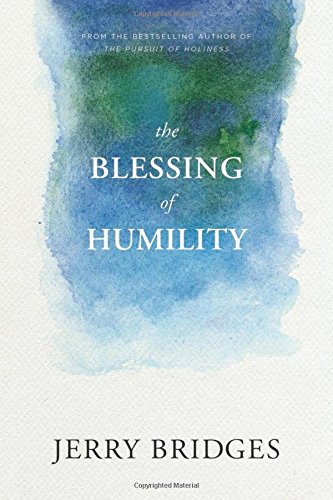
4 Quotes On Persecution From “The Blessing Of Humility”

The Blessing Of HumilityAs I stated in my review of Jerry Bridges’ book The Blessing Of Humility, reading through these thoughts slowly—Beatitude by Beatitude—would bring about the most life-changing impact. In that spirit, I will be sharing some noteworthy quotes one Beatitude at a time. Here are some quotes on blessed are those who are persecuted because of righteousness (Matthew 5:10-12)

“There is no doubt that the culture is becoming more and more antagonistic toward biblical values. For some years I have thought our American culture to be ungodly; that is, to believe and act as if God is irrelevant. Now I believe we have become not just ungodly but actually anti-God. An increasing number of those who most influence our culture—such as academia, the media, and the entertainment industry—are openly hostile to the whole idea of God or of biblical values.”

“I suspect that our own court system will eventually fail us, as more and more judges are appointed who have been trained in law schools that at best are indifferent to biblical righteousness and at worst are openly hostile to it. Even our Supreme Court seems to be rendering decisions based on the mores of popular culture rather than on a principled application of the Constitution.”

“There is a sense in which this eighth Beatitude is the climax of several preceding ones dealing with our response to the way others treat us. … In this eighth Beatitude Jesus has in mind persecution rooted in the hostility of the anti-God culture we live in.”

“Keep in mind these words from Jesus [Luke 6:27-28] are precepts—authoritative commands of God. Furthermore, they address more than our attitude toward those who persecute us. They are action steps: we are to love our enemies, do good to them, bless them, and pray for them.”

 I have previously shared quotes on:

6 Quotes From “Light & Truth—The Lesser Epistles”

Light & Truth The Lesser EpistlesHoratius Bonar’s insights on the Scriptures are amazing! So far I’ve read and reviewed three of the four commentaries he has prepared on the New Testament (you can read those reviews here, here and here). These are a few quotes from the third book on the epistles Galatians through Jude. Any reference in brackets is the passage from the Bible on which Bonar is commenting.

“It is a busy, lighthearted, laughing, pleasure-seeking world. But sin is here, and pain is here, and broken hearts are here, and weeping is here, and death is here, and the grave is here. Oh! in spite of all its laughter and vanity, it is an evil world. And the great proof of its evil is, that it cost the death of the Son of God to deliver you from it. … Give yourselves to Him Who came to deliver you from it, and Who stretches out His hands to you all day long, asking you to allow Him to deliver you. He yearns over you; and with sincere earnestness proffers to you His love, His friendship, His great salvation. Consent, O man, consent! His desire is to bless, and not to curse; to save, and not to destroy.” [Galatians 1:4]

“There never have been two gospels. There is not an Old Testament gospel and a New Testament Gospel. There is not one gospel for the Jew, and another for the Gentile, one gospel for the first century, and another for the nineteenth. It is but one gospel, as there is but one Cross and one Savior. Many ages, but one gospel; many sinners, but one gospel; many prophets and apostles, but one gospel. As our earth has had but one sun, so it has had but one gospel. Nor does it need more; that one is sufficient.” [Galatians 1:6-9]

“As the earth without rain or sunshine turns to barrenness, so is it with the Church or soul without the Spirit. … The age thinks it can do without the Spirit. Let the Church watch against this blasphemy. Let her keep hold of the Lord’s promise, the promise of the Father. Let her prize the gift; long for more of it. Let every saint seek more of it. Let our cry be continually: More of the Holy Spirit; more of His fullness; more of His gifts and graces!”

“Strength for the race is needed, hourly strength, superhuman strength; for it is no earthly race, but something lofty, supernatural, divine. Forgetting the supernatural source of strength, we betake ourselves to the internal or the simply external. And so we weary. For only God can supply the power which keeps us running. By Him only shall we run, and not be weary.” [Galatians 5:7]

“‘To Him who is able’—He is the Mighty One, the mighty God, the Lord God Almighty. Hear how this word ‘able’ is used. ‘He is able to subdue all things unto Himself’ (Philippians 3:21). ‘He is able to help them that are tempted’ (Hebrews 2:18). ‘He is able to save to the uttermost’ (Hebrews 7: 25). ‘He is able to keep us from falling’ (Jude 24). It is with the mighty God that we have to do; mightier than ourselves or our foes; mightier than earth or hell; omnipotent.” [Ephesians 3:20]

“Are you expecting the Lord? Are you living in this expectation? Is it a deep-seated, abiding, cherished hope? Is it a hope that tells upon your character, your life, your daily actings in public or private, your opinions, your whole man? Does it quicken you? Does it purify you? Does it keep you separate from the world? Does it keep you calm in the midst of earth’s most exciting events, or most untoward changes? Does it give you a new view of history as well as prophecy? … Let your expectation of the Lord’s coming be a calm and healthy one; not one that excites, but one that tranquilizes; not one that unfits for duty, but one that nerves you more firmly for it; not one that paralyzes exertion, but one that invigorates you for it; not one that makes you indifferent to present duty, but one that makes you doubly in earnest about everything that your hand findeth to do; not one that stops liberality, and prayer, and work, but one that increases all these a hundred fold; not one that dwells exclusively on the future’s dark side—the judgments that are at hand—but one that realizes the glory and the joy of Messiah’s approaching victory and triumphant reign.” [Philippians 3:20]