11 More Quotes From “The Broken Way”

Ann Voskamp’s book The Broken Way wrecked me … in a good way! Ann shows us how Jesus steps into our brokenness, and how He then prepared us to take His love into other people’s brokenness. It’s a fantastic book, so you really should check out my book review by clicking here.

“I am not the mistakes I have made; I am the righteousness He has made. I am not the plans I have failed; I am the perfectness He has finished. I am not the wrongs I have done; I am the faultlessness He has been. I am not the sins I have chosen; I am chosen by the Beloved, regardless of my sins. In Christ, I am chosen, accepted, justified, anointed, sealed, forgiven, redeemed, complete, free, Christ’s friend, God’s child, Spirit’s home.”

“You’ve got to give your gifts or they may become your idols.”

“The thread of your life becomes a tapestry of abundant colors only if it ties itself to other lives. The only way to strengthen the fabric of society is to let the threads of your life break away to let Christ, who is in us, weave around other threads. … The strong must disadvantage themselves for the weak, the majority for the minority, or the community frays and the fabric breaks.”

“We will be known for our actual fruits, not the intentions of our imaginations.”

“Don’t we all have to unlearn fear before we can truly learn to love?”

“Jesus comes to give you freely through His passion what every other god forces you to try to get through performance.”

“Compassion says there will only be abundance for me when there is abundance for you.”

“Instead of flexing His muscle, Jesus surrendered His muscle to the nail. Instead of leveraging His position, He leveraged Himself out on a Cross. He made sacrifice His default position. Instead of stonewalling people with His authoritative power, He laid down His authority, lay down in a tomb, lay in a suffering death till the stone was rolled away.”

“The focus of God’s people is not to create explanations for suffering, but to create communities around suffering, co-suffering communities to absorb suffering and see it transform into cruciform grace.”

“Suffering is not a problem that needs a solution as much as it’s an experience that needs compassion.”

“Faith is confidence in the kindness of God, no matter the confusion of circumstances.”

You can read other quotes I’ve shared from The Broken Way here and here.

Handling Tough Texts

How do you handle a hard passage in the Bible? Peter wrote this about Paul, “His letters contain some things that are hard to understand….” But if we don’t take the time to wrestle with that passage, Peter says this is what happens next: “…which ignorant and unstable people distort, as they do the other Scriptures, to their own destruction” (2 Peter 3:16).

So here’s a 5-step plan I use when I am working through a challenging passage of Scripture.

  1. Ask the Holy Spirit to help you

All Scripture is inspired by the Holy Spirit (2 Timothy 3:16), and the same Holy Spirit lives in a Christian (1 John 2:20). Think about that: the same Holy Spirit that inspired an author to write the words of Scripture is the same Spirit that will illuminate them to you!

  1. Read the difficult passage in context

We will make our task much easier when we “zoom out” from the difficult text and read the whole passage surrounding the difficult verse/phrase. Perhaps we need to “zoom out” even farther to understand why the whole chapter or book was written.

  1. Identify the parts that are clear

Start off by identifying the parts that you do understand, and then see what light that shines on the tricky text.

  1. Cross reference with other Scriptures

Never, ever, ever draw a conclusion from just one passage of Scripture. Paul reminded his audience that he used the “whole counsel of God’s Word” (Acts 20:27) in forming his sermons. If the challenging passage contains an Old Testament passage, look it up; if it references an historical event, read that history. I also like to use biblegateway.com’s excellent search feature to find cross references.

  1. Draw conclusions on what appears to be the main point

Only after you have done step #1-4 should you attempt to draw some conclusions. You will set yourself up for error if you draw a conclusion first, and then try to find other texts in the Bible that agree with you.

The Apostle Peter writes something rather challenging in his first letter. In fact, Martin Luther said this about 1 Peter 3:18-22: “A wonderful text is this, and a more obscure passage perhaps than any other in the New Testament, so that I do not know for a certainty just what Peter means.” If you would like to see how I walk through the 5-step plan on this “obscure passage,” please check out the video below.

If you’ve missed any messages in this series, you may find the complete list by clicking here.

Welcomed Into God’s Presence

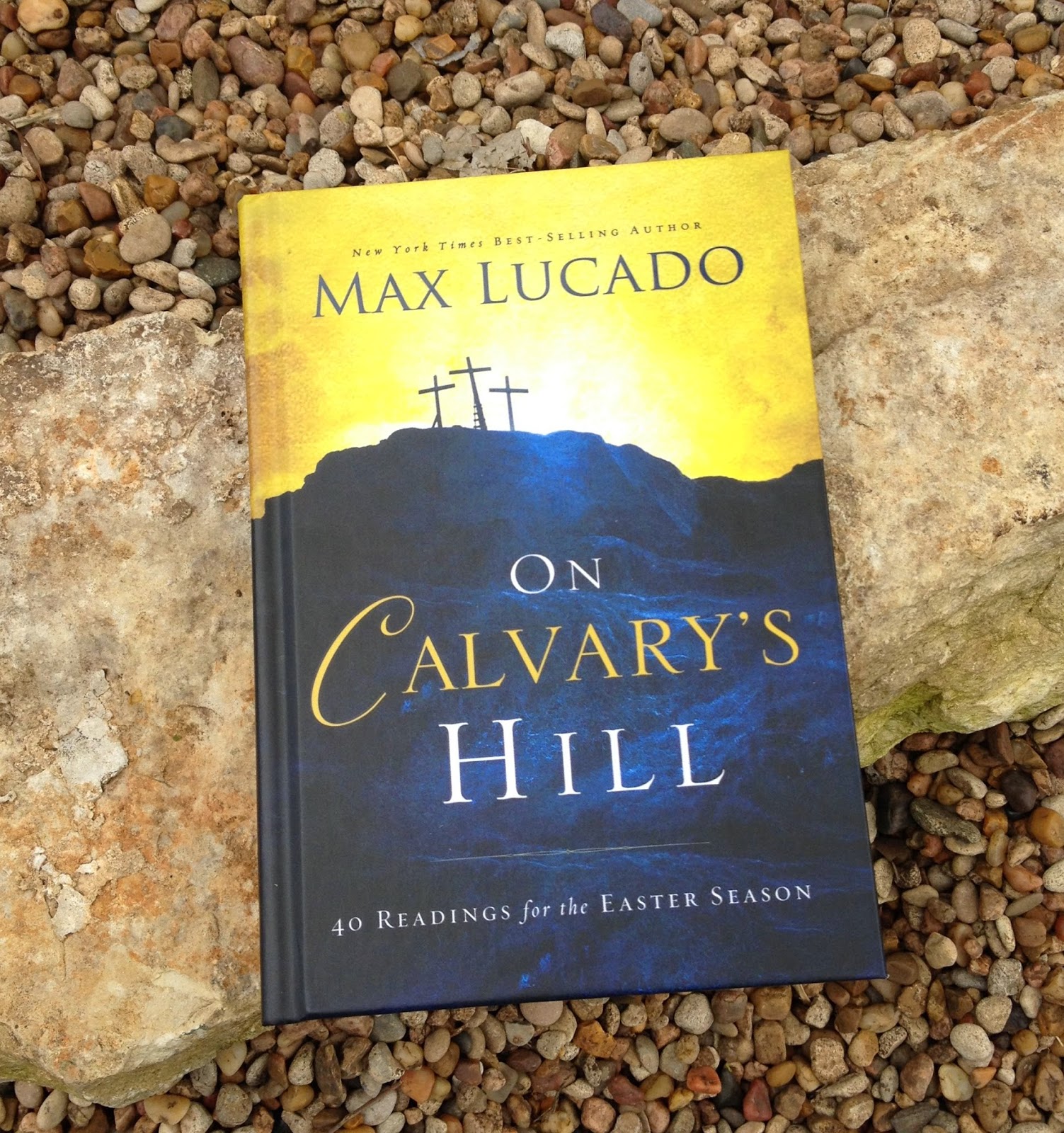
“Jesus hasn’t left us with an unapproachable God. ‘There is one God and one mediator between God and men, the Man Christ Jesus” (1 Timothy 2:5). When Jesus’ flesh was torn on the Cross, the curtain was torn in two. It was as if the hands of heaven had been gripping the veil, waiting for this moment. One instant it was whole; the next it was ripped in two from top to bottom. No delay. No hesitation. We are welcome to enter into God’s presence—any day, any time. God has removed the barrier that separates us from Him. The barrier of sin? Down. No more curtain. But we have a tendency to put the barrier back up with the curtain of our heart. Sometimes, no, oftentimes, we allow our mistakes and guilty conscience to keep us from God. Don’t allow a veil of guilt to keep you from your Father. Trust the Cross. The curtain is down, the door is open, and you are welcome in God’s presence.” —Max Lucado, On Calvary’s Hill (emphasis mine)

8 Quotes From “The World’s Last Night”

In seven essays expressly shared to get the reader to think in terms of eternity, C.S. Lewis masterfully practices his craft. Check out my full book review of The World’s Last Night by clicking here. Below is just a small sampling of a few of the outstanding quotes in this book.

“Simply to say prayers is not to pray; otherwise a team of properly trained parrots would serve as well as men.”

“Prayer is not a machine. It is not magic. It is not advice offered to God. Our act, when we pray, must not, any more than all our other acts, be separated from the continuous act of God Himself, in which alone all finite causes operate.”

“Scientists are mainly concerned not with believing things but with finding things out. And no one, to the best of my knowledge, uses the word believe about things he has found out. The doctor says he ‘believes’ a man was poisoned before he has examined the body; after the examination, he says the man was poisoned. No one says that he believes the multiplication table. No one who catches a thief red-handed says he believes that man was stealing. The scientist, when at work, that is, when he is a scientist, is labouring to escape from belief and unbelief into knowledge. Of course he uses hypotheses or supposals. I do not think these are beliefs.”

“Since most men, as Aristotle observed, do not like to be merely equal with all other men, we find all sorts of people building themselves into groups within which they can feel superior to the mass.”

“‘Good works’ in the plural is an expression much more familiar to modern Christendom than ‘good work.’ Good works are chiefly alms-giving or ‘helping’ in the parish. They are quite separate from one’s ‘work.’ And good works need not be good work, as anyone can see by inspecting some of the objects made to be sold at bazaars for charitable purposes. This is not according to our example. When our Lord provided a poor wedding party with an extra glass of wine all round, He was doing good works. But also good work; it was a wine really worth drinking.”

“Christ died for men precisely because men are not worth dying for; to make them worth it.”

“It would be difficult, and, to me, repellent, to suppose that Jesus never asked a genuine question, that is, a question to which He did not know the answer. That would make of His humanity something so unlike ours as scarcely to deserve the name. I find it easier to believe that when He said ‘Who touched Me?’ (Luke 7:45) He really wanted to know.”

“For what comes [after Christ’s Second Coming] is Judgment: happy are those whom it finds labouring in their vocations, whether they were merely going out to feed the pigs or laying good plans to deliver humanity a hundred years hence from some great evil. The curtain has indeed now fallen. Those pigs will never in fact be fed, the great campaign against White Slavery or Governmental Tyranny will never in fact proceed to victory. No matter; you were at your post when the Inspection came.”

Poetry Saturday—Thine Forever

What Thou, my Lord, hast suffered 
Was all for sinners’ gain;
Mine, mine was the transgression,
But Thine the deadly pain … 

Oh, make me Thine forever;
And should I fainting be,
Lord, let me never, never
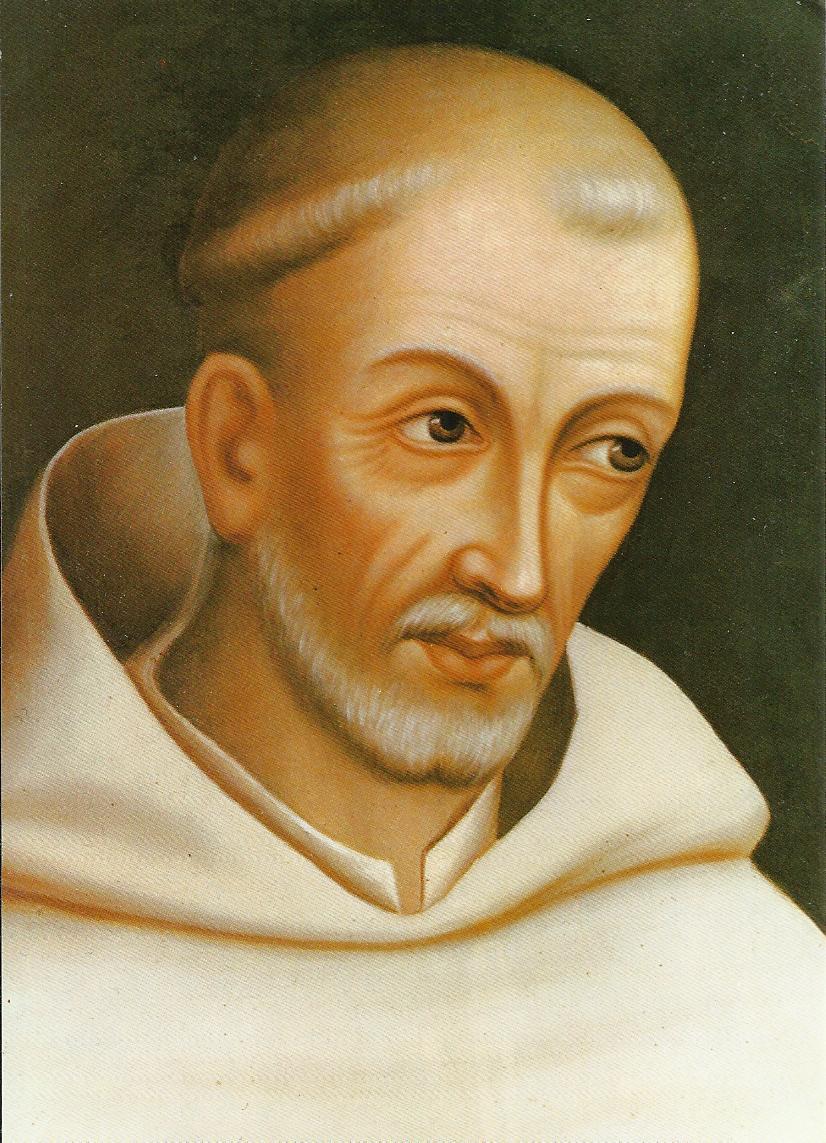
Outlive my love to Thee! —Bernard of Clairvaux

6 Quotes From “The Dawn Of Christianity”

Robert J. Hutchinson makes the history around the birth, life, death, and resurrection of Jesus, as well as the history of Christ’s followers after His resurrection, come to life in The Dawn Of Christianity. Check out my full review by clicking here.

“Skeptics make much of the fact that historians have no independent corroboration from outside sources of most of the events described in the Gospels, but this is common with ancient history and hardly unique to Christianity. For example, virtually everything historians know about the Three Hundred, the Spartan warriors who held off a Persian invasion at the mountain pass of Thermopylae in 480 BC, comes from the writings of a single Greek author, Herodotus. What’s more, the earliest copy historians have of Herodotus’s chronicle of this event, The Histories, dates to the tenth century AD—or more than 1,350 years after it was written! In comparison, historians have a cornucopia of historical sources and archaeological evidence about Jesus of Nazareth and the early Christian community. For example, more than fifty papyrus manuscripts of New Testament texts exist that date before AD 300. The earliest of these manuscripts, a papyrus fragment from the Gospel of John known as P52, dates to around AD 125 or just thirty years after the original was likely written.”

“Around 20 BC, the half-Jewish King Herod the Great set himself the task of renovating and expanding the temple and surrounding area. There had been a small natural plateau there before, fixed atop the ridge in the northeastern corner of Jerusalem; but Herod wanted something far more spectacular. He therefore enclosed this natural plateau on all sides with four immense retaining walls, some more than one hundred feet high, made up of massive rectangular ashlars, or cut stones, that weighed as much as 415 tons each. These stones are so large that even modern cranes and bulldozers would have some difficulty moving them. Herod then filled in this entire quadrangle with stones and dirt, creating an artificial hilltop plaza—roughly 1,500 feet long by 1,000 feet wide—of more than thirty-five acres. In modern terms, Herod’s Temple Mount is so large that about twenty-six American football fields could fit in the space available. This massive engineering marvel has endured for two thousand years and still stands today, almost wholly intact.”

“Simon the Rock continued to loudly protest that he was willing to die, if need be, but would never deny Jesus. The other disciples said the same. This is one of those incidents that even many skeptics believe must be historical under the ‘criterion of embarrassment,’ which means that the Christian community was unlikely to invent a story that cast such a bad light on its leaders; therefore, it must have actually happened.” 

“Recent archaeological discoveries are showing that the New Testament in general, and the Gospels in particular, are far more reliable historical sources than previous generations of New Testament experts realized.”

“All four Gospels report that this board, what the Romans called the titulus, held the inscription ‘The King of the Jews.’ John’s Gospel alone reports that Jesus’ name was also on the titulus, ‘Jesus of Nazareth, the King of the Jews,’ and that it was written in Hebrew, Latin, and Greek (19:19-20). In Latin the charge read Iesus Nazarenus Rex Iudaeorum, which is why, to this day, the letters INRI appear at the top of crucifixes.”

“In 1968, archaeologists uncovered a first-century tomb at Giv’at ha-Mivtar, northeast of Jerusalem. Inside the tomb they found in ossuary containing the skeleton of a crucified man—the first and only relic of a crucified man found in Israel. Inscribed on the ossuary was his name in Hebrew: Yehochanan. On top of the bone of his right heel was a wooden board, and through the board, and his heel, was a 4.5-inch iron nail.”

10 Quotes From “#Truth”

Josh McDowell has a book that is perfect for this generation of youth. #Truth is a 365-day devotional that brings biblical truth to bear on the issues today’s students face every day. You can check out my full book review of #Truth by clicking here. Below are a handful of quotes that caught my attention.

“All healthy relationships require a willingness to be known and have things pointed out so that all offenses can be addressed.”

“If a person is unwilling to forgive others, it’s a clear sign he or she hasn’t really experienced God’s mercy and grace. When people refuse to forgive those who wronged them, God knows that any confession of their own sins is less than genuine and sincere. How could anyone who truly experiences God’s amazing grace of forgiveness not also give mercy and grace to others?”

“Jesus died and rose again so that you could be set free from sin and death and enjoy the benefits of spiritual freedom. That freedom is not a license to live however you want to live, but to live as God meant you to live.” 

“Don’t believe the lie that you are alone and no one cares. Since Christ sees you as a member of His body, accept this as your new reality and realize that you are always wanted and very much needed.”

“Jesus too had a totally different view of this world than those around Him. … Because you have accepted Jesus as the Truth and follow Him, you too see the world differently. You see the world through a spiritual lens that makes you sort of like an alien.”

“Jesus’ Kingdom message is a whole new way to see God, yourself, life, and relationships. It is a view of the world defined by Jesus and His Word. … Loving God and making Him the first priority in your life develops a Kingdom mindset that brings everything into perspective—love God and those around you as you love yourself [Matthew 22:37-39].”

“This life is short in comparison to eternity, and God wants your thoughts to include Him and make His Kingdom a priority in your life. … Letting heaven fill your thoughts is about keeping Jesus first in your life.”

“Only those who have been made alive to God and have His Spirit can listen and understand the spiritual insights of Scripture.”

“When you read from the Bible you are reading God’s words as if He were writing them for you. … Scripture is a supernatural book that has come from God Himself.”

“Jesus felt misunderstood. He spent years telling His followers who He was and why He came to earth. ‘But they didn’t understand any of this…and they failed to grasp what He was talking about’ (Luke 18:34). Because Jesus faced misunderstanding He is able to identify with your hurt and give you the help you need when you need it.”

Just Christians

“I’m thinking we aren’t so unlike these soldiers [see John 19:23-24]. (I’m sorry to say.) We, too, play games at the foot of the Cross.

“We compete for members. We scramble for status. We deal out our judgments and condemnations. Competition. Selfishness. Personal gain. It’s all there. So close to the Cross, yet so far from the blood. We are so close to the world’s most uncommon event, but we act like common crapshooters huddled in bickering groups and fighting over silly opinions.

“We major in the trivial, constantly finding fault with others. We split into little huddles and then, God forbid, we split again. Another name. Another doctrine. Another ‘error.’ Another denomination. Another poker game.

“So close to the Cross but so far from the Christ. ‘May they all be one,’ Jesus prayed. One. Not one in groups of two thousand. But one in One. One church. One faith. One Lord. Not Baptist, not Methodist, not Adventist. Just Christians. No denominations. No hierarchies. No traditions. Just Christ.” —Max Lucado, On Calvary’s Hill

Thursdays With Oswald—No Fear Of Death

Oswald ChambersThis is a weekly series with things I’m reading and pondering from Oswald Chambers. You can read the original seed thought here, or type “Thursdays With Oswald” in the search box to read more entries.

No Fear Of Death

     Death means extinction of life as we understand it; our dead are gone and have left an aching void behind them. They do not talk to us, we do not feel their touch, and when the bereaved heart cries out, nothing comes back but the hollow echo of its own cry. The heart is raw, no pious chatter, no scientific cant can touch it. It is the physical calamity of death plus the thing behind which no man can grasp, that makes death so terrible. …

     Every attempt to comfort a bereaved soul apart from the revelation of Jesus Christ brings a vain speculation. We know nothing about the mystery of death apart from what Jesus Christ tells us; but blessed be the Name of God, what He tells us makes us more than conquerors, so that we can shout the victory through the darkest valley of the shadow that ever a human being can go through. … 

     Jesus Christ can deliver from the dread of death—“that through death He might bring to naught him that had the power of death, that is the devil” [Hebrews 2:14]. Death has no terror for the man who is rightly related to God through Jesus Christ. … 

     It is not within the power of human tongue or archangel’s tongue to state what an awful fact death is, and what a still more awful fact life is. But thank God, there is the greatest deliverance conceivable from all that life may bring and from all that death may bring. Jesus Christ has destroyed the dominion of death, and He can make us fit to face every problem of life, more than conqueror all along the line.

From The Fighting Chance 

Through His death on the Cross and bodily resurrection from the grave, Jesus Christ has defeated Death for all who place their faith in this victory He won for us (see 1 Corinthians 15:55-57).

The Apostle Paul tells us that Christians grieve when a loved one dies, but we don’t grieve as those who have no hope (1 Thessalonians 4:13). When one who knows Jesus as their Savior dies, we have a rock-solid, unshakable hope that they are fully alive with Christ in Heaven, and that we who also know Jesus as Lord and Savior will one day be reunited with them.

So for the Christian, death brings absolutely no fear! 

10 Quotes From “Everything You Always Wanted To Know About God”

This book from Eric Metaxas is a great way to stimulate a conversation about spiritual questions, or a wonderful resource for you to read together with a friend who is on a spiritual journey of discovery. Check out my review of this book by clicking here, and then enjoy a few of the quotes I especially appreciated.

“We aren’t responsible for having answers to every question about God or the Bible posed to us, but we are responsible for how we answer, even if we don’t have a full answer.”

“Our culture is so obsessed with the physical and the material that we have lost the ability to think logically about anything outside that realm.”

“The bottom line is that those who follow God have to have genuine love and compassion for others, and if we recognize how profoundly messed up we ourselves are, we will have compassion for other people. So if people don’t have serious humility about their own state of affairs, they should probably keep their mouth shut. God doesn’t want His followers to add to the pain of the people He loves. He wants His children to treat others as people He desperately loves.”

“The idea of a moral structure that cuts God out of the picture is very attractive to humans because that puts us in control. But God wants us to understand that without a relationship with Him, moral behavior isn’t worth anything. Mere moral rectitude doesn’t fool God.”

“Religion in the negative sense of simply being a bunch of rules and rituals is pretty much the same as superstition. Without a relationship with God at its core, all religion devolves to superstition.”

“One of the most harmful things in human history is when people have confused fear-based superstition with faith in God.”

“Either Jesus was God and died on the Cross and then rose bodily from the dead, thereby destroying sin and death and making it possible for us to be with Him in paradise forever, or having faith in him is bogus. Period. Without the central events of Jesus’ crucifixion and resurrection, you simply don’t have Christianity. You can call it Christianity, but it’s not. All religions are not alike, so ultimately you have to choose.” 

“That’s always the case with sin. It never presents itself as sin. It’s always presented as a doorway to a higher consciousness, as a path to enlightenment meant, as the path to divinity—to becoming a god, or like God.”

“To try to earn God’s love is to miss the point entirely. He loves us already. We can’t be more loved by Him. So to try is like adding numbers to infinity. You can’t get higher than infinity, and His love for us is infinite.”

“Faith does not necessarily make us perfect, but perhaps it does have a way of making us more aware of our feelings.”