Links & Quotes

On the latest episode of The Craig And Greg Show, Greg and I talked about Christmas traditions. I have lots of new content every week, which you can check out on my YouTube channel.

“Always be sure of your ground and be sure that you are honoring God. If there is anything about the situation that will make you special, it will bring you sorrow. Your whole ministry has to be along the lines of His grace and blessing.” —Smith Wigglesworth 

“Leaders have the responsibility to keep evil out. Government is incapable of making men and women moral and, in fact, it is not given that assignment, for it does not have that power. God grants government the right to make laws to hold back the power of evil, for only the church through the gospel can help men and women be good. Conversely, leadership and government can do much harm if they, through injudicious application or partial enforcement of law, let evil in. Government cannot make people good, but it can certainly make them bad. We need leadership and government to build barriers against what is wrong, but neither leaders nor external human powers can usher us to what is right. Only Jesus, full of grace and truth, can do that.” —Dick Brogden, in Proverbs: Amplified and Applied

The celebration of Christmas is obviously not seen in the Bible, but it has always seemed to be closely connected to the church’s calendar. Scott Hubbard has an eye-opening history of Christmas in his post The Curious History of Christmas.

Scientists have learned from butterflies’ amazing vision how to better detect cancer cells. The way our Creator has designed these winged marvels is truly astounding!  
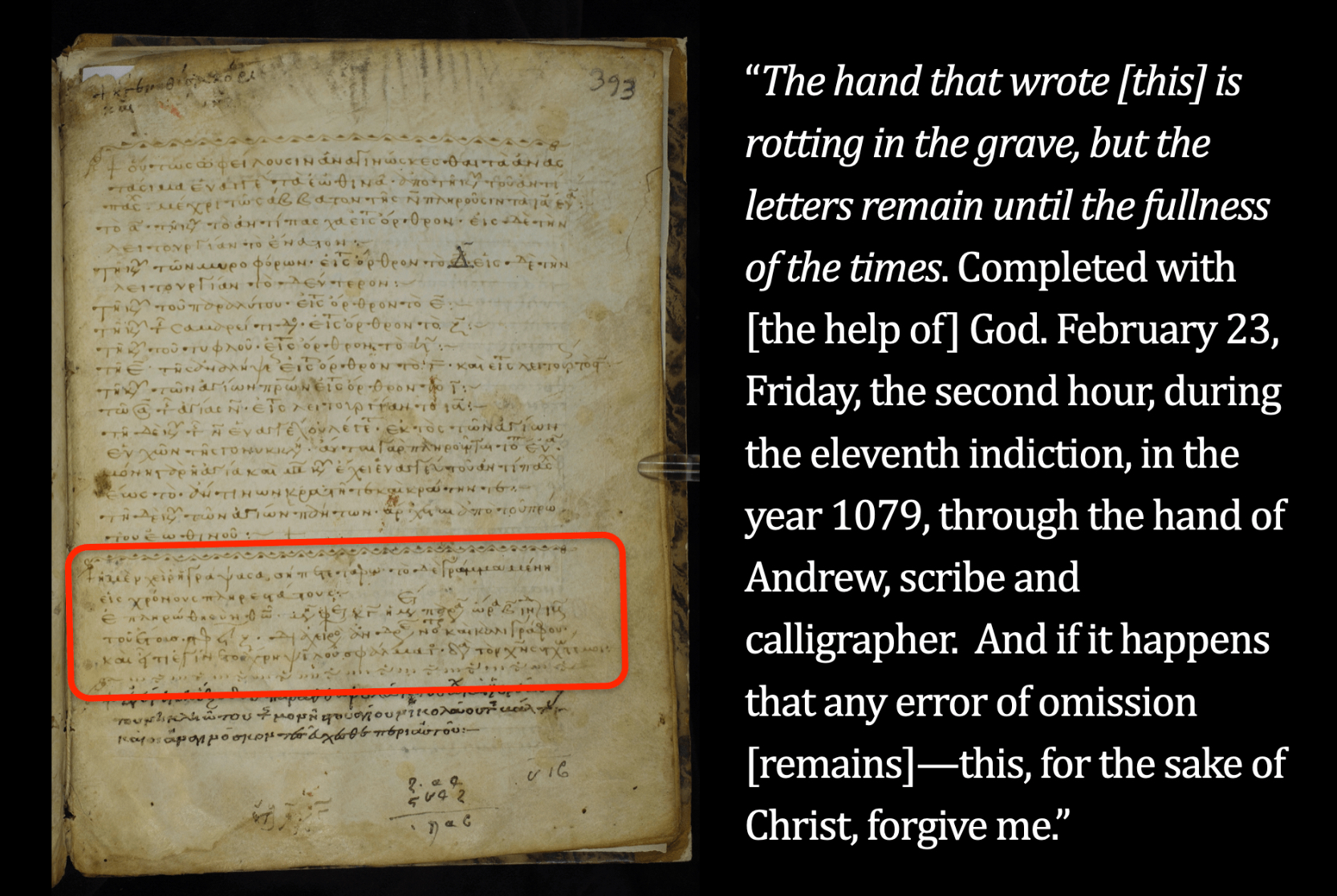
The ways the biblical text has been preserved and transmitted down to us today is nothing short of miraculous! Daniel Wallace is at the forefront of continuing to preserve the Word of God for future generations. Here is an example of the dedication of the biblical scribes: “The hand that wrote [this] is rotting in the grave, but the letters remain until the fullness of the times. Completed with [the help of] God. February 23, Friday, the second hour, during the eleventh indiction, in the year 1079, through the hand of Andrew, scribe and calligrapher. And if it happens that any error of omission [remains|—this, for the sake of Christ, forgive me.”

Just as archeological finds continue to confirm biblical accounts, fossil discoveries continue to confirm the biblical claim of Creation. Paleontologists have now created the term “problematica” to try to address fossil finds that don’t fit their evolutionary models.

T.M. Moore is sharing a thought-worthy series of posts on the biblical view of our economic activities, including a look at how governments and businesses should operate under God’s laws. Moore says, “Since God has written the works of the Law on the heart of all His image-bearers (Romans 2:14, 15), we should expect that awareness (if only subconsciously) to find expression. Put another way, whether they know it or not, people long for an economy guided by Biblical principles and guidelines.”

Faith Fueled By The Promise

Listen to the podcast of this post by clicking on the player below, and you can also subscribe on AppleSpotify, or Audible. 

Last week we looked at the amazing genealogy in Matthew 1 that connects Jesus to King David! 

After this genealogy, we read that an angel says to Joseph, “Joseph son of David, do not be afraid to take Mary home as your wife, because what is conceived in her is from the Holy Spirit” (Matthew 1:20). And then notice this commentary from Matthew—

All this took place to fulfill what the Lord had said through the prophet: “The virgin will conceive and give birth to a Son, and they will call Him Immanuel” (which means “God with us”). (Matthew 1:22-23)

Matthew says, “all this took place to fulfill what the Lord had said.” All what? Everything that came before that statement: the genealogy with all its exceptional items, the 70-year exile of the Jewish people, the Immaculate Conception, the fulfillment of a 700-year-old prophecy. 

I find this absolutely astounding! And so, apparently, did Joseph!  

But remember that Jesus is not only “the son of David” but He is also called a “son of Abraham.” This means that Jesus came to be more than just the King of the Jews. 

We have a cliché that says something like, “Don’t miss the forest for the trees.” By this, we mean that sometimes in the moment we only see one large tree or obstacle in front of us and we miss seeing the majesty of the whole forest. Or maybe we only see the obstacle and not the path that would take us where we need to go. 

We are living between the Advents now so you would think that we have a good “forest” perspective, but even we sometimes get bogged down in the moment, wondering what God is doing. The story of Abraham should help us to see the whole forest of God’s plan a little better. 

In Genesis 12:1-3 we read God’s promise to Abraham that all people on earth would be blessed by his obedience to God’s call. Listen to the opening words of Stephen’s sermon as he looked back on this—

The God of glory appeared to our father Abraham while he was still in Mesopotamia, before he lived in Harran. “Leave your country and your people,” God said, “and go to the land I will show you.” So he left the land of the Chaldeans and settled in Harran. After the death of his father, God sent him to this land where you are now living. (Acts 7:2-4) 

Stephen reminds us that God spoke to Abraham while he was still living in Mesopotamia. Abraham must have shared this promise with his father because in Genesis 11:31 we read that Terah takes Abraham, Sarah, and Lot with him to make this journey, but they only traveled as far as Harran. 

Why did they stop here? We’re not sure. Perhaps Terah was still grieving the death of his youngest son who had died before they left. Maybe Terah was concerned about his middle son Nahor who chose not to travel with them. Or maybe Terah was paralyzed by the magnitude of the journey still ahead of them. Whatever the reason, Terah allowed a “tree” to obscure his view of the whole “forest” of God’s plan. 

Stephen then says that Abraham continued the journey to Canaan “after the death of his father.” But if we do the math, it appears that Terah was still biologically alive when Abraham left (see Genesis 11:26, 32; 16:3, 16). 

Abraham had to trust God more than he respected his father, even to the point of considering his father as dead. 

Later on, God gave Abraham a similar test with his own son. Abraham passed this test and God repeated His promise about blessing all people through Abraham (see Genesis 22:1-18). 

In Romans 4, Paul explains that Abraham’s faith in God’s promise was rewarded, and that through our faith in Jesus we are connected to this same promise. 

Just as there was an “all this took place to fulfill what the Lord had said” about Jesus—including the faith-filled obedience of Abraham and David—God has an “all this” for your life too. 

God saw you before you were born. He had a plan for your life. He gave you gifts and talents to be used for His glory. There is not a single part—not a single experience—of your life that is accidental (Psalm 139:16; Ephesians 2:10; Romans 8:28). 

Just as He used all this for Jesus, He is using all this for your life too. Will you trust Him? 

Through David, God fulfilled the promise that Jesus would be King of the Jews. Through Abraham, God fulfilled the promise that Jesus would be King of all nations. Through Jesus, God fulfilled the promise that Jesus would be our Righteousness. 

Abraham died without seeing the promise fulfilled. But we have seen the promise fulfilled, and that should fuel our faith to trust God to fulfill the promise He has for each of us. I pray that this assurance will be renewed in your heart as you celebrate Advent this year. 

If you’ve missed any of the messages in our series called Long Live the King of Kings, you can check them all out here. 

►► Would you please prayerfully consider supporting this ministry? My Patreon supporters get behind-the-scenes access to exclusive materials. Like this video where I talk about the logic in Psalm 119. ◀︎◀︎

The Craig And Greg Show: Christmas Traditions

Listen to the audio-only version of this podcast by clicking on the player below, or scroll down to watch the video.

Christmas seems to be the one time of year when everyone loves to share their traditions, both in their families and in their organizations. As leaders we should embrace organizational traditions, and use them to show our team the culture of our organization. We also need to be aware that the personal traditions of our team members might make their lives a bit more hectic, and understanding and flexibility on our part will go a long way for them.

Books make great Christmas gifts! Pick up a copy of my and Greg’s new books to give to the leader in your life. Greg wrote Sage Advice and I wrote Shepherd Leadership.

  • [0:22] Christmas has more traditions than probably any other holiday—both in our families and in our organizations. 
  • [2:22] Organizational culture isn’t written down, so holiday traditions can help us convey the culture to our teammates.
  • [3:28] I share one of my family Christmas traditions.
  • [6:00] What does generosity have to do with traditions?
  • [7:14] Greg shares one of his Christmas traditions with his family.
  • [9:02] Traditions bring comfort in uncertain times, but we can still adapt them as some situations change.
  • [12:25] Leaders need to be aware of the stress our teammates may feel during the holidays.
  • [15:17] Leader should be especially aware of our staff members’ needs during this time of year.
  • [18:00] Greg shares a mistake that his organization made that generated a lot of stress, and how they corrected it.
  • [21:18] We both share some fun stores about Christmas.
  • [24:23] Leader need to really leverage what Christmas really means.

Check out this episode and subscribe on YouTube so you can watch all of the upcoming episodes. You can also listen to our podcast on Spotify and Apple.

The Promise Of The King

Listen to the podcast of this post by clicking on the player below, and you can also subscribe on AppleSpotify, or Audible.

My podcast partner Greg and I just recorded an episode of our leadership podcast about Christmas traditions. I think there more traditions associated with this time of year than with any other event on our calendars. Traditions keep us connected to our roots, but they also help us feel like we can be in control of things. 

There has been a tradition in countries with monarchies that whenever a king died, the people would say something like, “The king is dead. Long live the king!” They would say this because the next king ascended to the throne immediately after his predecessor died. Except when a nation had been defeated, the traditional cry of, “The king is dead” was unanswered by, “Long live the king!” 

It appears at this moment that a new tradition has to be started—one where we take leadership over our own fates. 

The apostle Peter noted that people awaiting the Second Coming of Jesus would question if that event was ever going to happen. And the prophet Malachi closed the Old Testament with people saying much the same thing: “There doesn’t seem to be any advantage to following God’s laws, so maybe we should just do things our own way” (2 Peter 3:3-4; Malachi 3:13-15).

But then we turn the page to the dawn of the New Testament, and Matthew writes his Gospel about the First Advent of Jesus. He wants to show us that although the line of earthly kings in Israel may have been broken, the promised King of kings had now come to earth. 

I’m intrigued by the exceptions Matthew lists in his opening genealogy to illustrate this truth. First, as you might expect, the phrase “the father of” appears 39 times. This tells us a biological fact of life. These men didn’t know if they had fathered a son or a daughter, what their child’s contribution to the world might be, or even if their child would live faithfully to God. 

Matthew opens his genealogy by saying “the son of” twice. First, Matthew lists Jesus as the son of David—the king to whom God gave a very special promise of an eternal King coming from David’s family line. Then Matthew traces the genealogy back further to say “the son of Abraham”—the one through whom God said He would bless all nations (2 Samuel 7:11-16; Genesis 12:1-3). 

And what about the exceptional women Matthew records in this male-dominated genealogy? We have Tamar, Judah’s daughter-in-law, who tricked him into fathering a child by her; Rahab, a Canaanite prostitute who put her faith in God; Ruth, a Moabitess who left her homeland because she trusted God; Bathsheba, an adulteress who became David’s wife; and then Mary, the mother of Jesus, who was called “highly favored” of God (Luke 1:28). 

The phrase “son of” appears one more time when the angel calls Joseph by this title (Matthew 1:20). Jospeh is also called “the husband of Mary” (Matthew 1:16). 

Whereas Abraham and David were rewarded for their faithfulness to God and were told of future blessings, Joseph’s act was different. Joseph had a choice. He was told that the Child in Mary’s womb would be the Messiah. Now Jospeh had to decide: Would he choose to believe this? Would he choose to bear the shame and reproach to accept his role as father? 

We have the a similar choice today: Will we choose to believe that God has announced His plan and that He is fulfilling His plan? 

Here’s the simple truth. It appears as two statements, but it is really the same thought—

The Advent of Jesus has come. The Advent of Jesus will come. 

The First Advent of Jesus should build our anticipation for the Second Advent. His First Advent should be proof that God keeps His promise. 

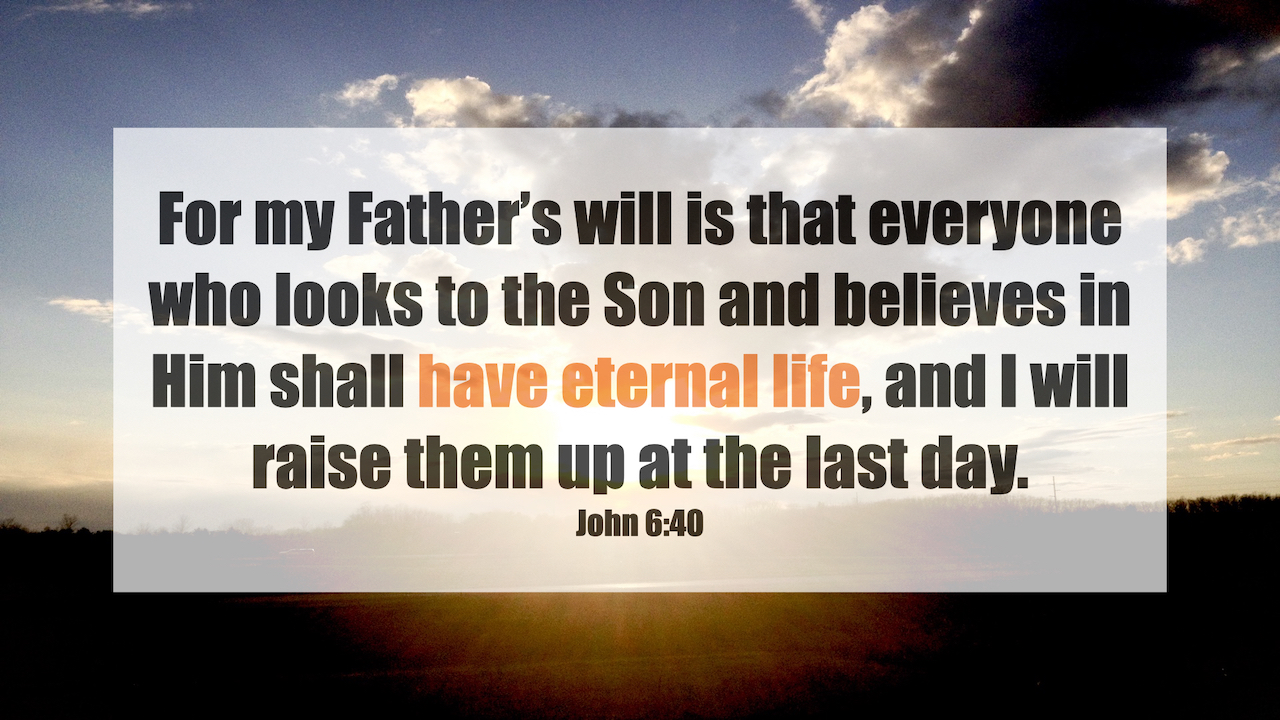
Jesus told us that believing God’s promise would bring us into God’s family. Jesus said, “For My Father’s will is that everyone who looks to the Son and believes in Him shall have eternal life, and I will raise them up at the last day” (John 6:40). 

The apostle Paul also assures us, “So in Christ Jesus you are all children of God through faith” (Galatians 3:26). 

Let’s not blindly follow the traditions of previous generations, but let us chose for ourselves to believe in God’s promised Messiah, to trust that He alone can give us eternal life, and then let us live in both celebration of His First Advent and expectation of His Second Advent. 

If you’ve missed any of the messages in our Christmas series called Long Live The King Of Kings, you can find them all by clicking here. 

►► Would you please prayerfully consider supporting this ministry? My Patreon supporters get behind-the-scenes access to exclusive materials. ◀︎◀︎

Long Live The King Of Kings

Listen to the podcast of this post by clicking on the player below, and you can also subscribe on AppleSpotify, or Audible.

Throughout human history, whenever a king died, the people would say something like, “The king is dead. Long live the king!” They would say this because the next king ascended to the throne immediately after his predecessor died. 

Except when a nation had been defeated, the cry, “The king is dead” was unanswered by, “Long live the king!” 

Israel must have felt like this. After being defeated by Nebuchadnezzar and spending 70 years in exile, it appeared to many that the line of kings was broken. Even after retuning to their homeland, Israel continued to live under the thumb of other powerful nations. 

And yet, some still clung to the glimmer of the promise God had made about an eternal King sitting on Jerusalem’s throne. 

The First Advent of Jesus revealed to us in the Gospels reassures us that the promise of an eternal King is true. Jesus came to earth to reveal His majesty to us. 

The First Advent is so important because it bolsters our faith for the imminent Second Advent when Jesus will return as the King of kings! Christmas is a great time to be reminded that even now we can confidently declare, “Long live the eternal King of kings!” 

I would like to invite you to join us for this encouraging series of messages of faith, hope, and eternal encouragement every Sunday during December. Check out any messages you may have missed:

Year-End Review (2022 Edition)

Listen to the podcast of this post by clicking on the player below, and you can also subscribe on AppleSpotify, or Audible.

The apostle Peter said he wrote two letters to the church “as reminders to stimulate you to wholesome thinking” (2 Peter 3:1). And Paul reminded his young friend Timothy to “keep reminding [your congregation] of these things” (2 Timothy 2:14). 

In the spirit of those great apostles, I have made it a practice to take time at the end of each year to look back on all that we have learned in the previous year, and then to look forward to where God may be leading Calvary Assembly of God in this upcoming year.

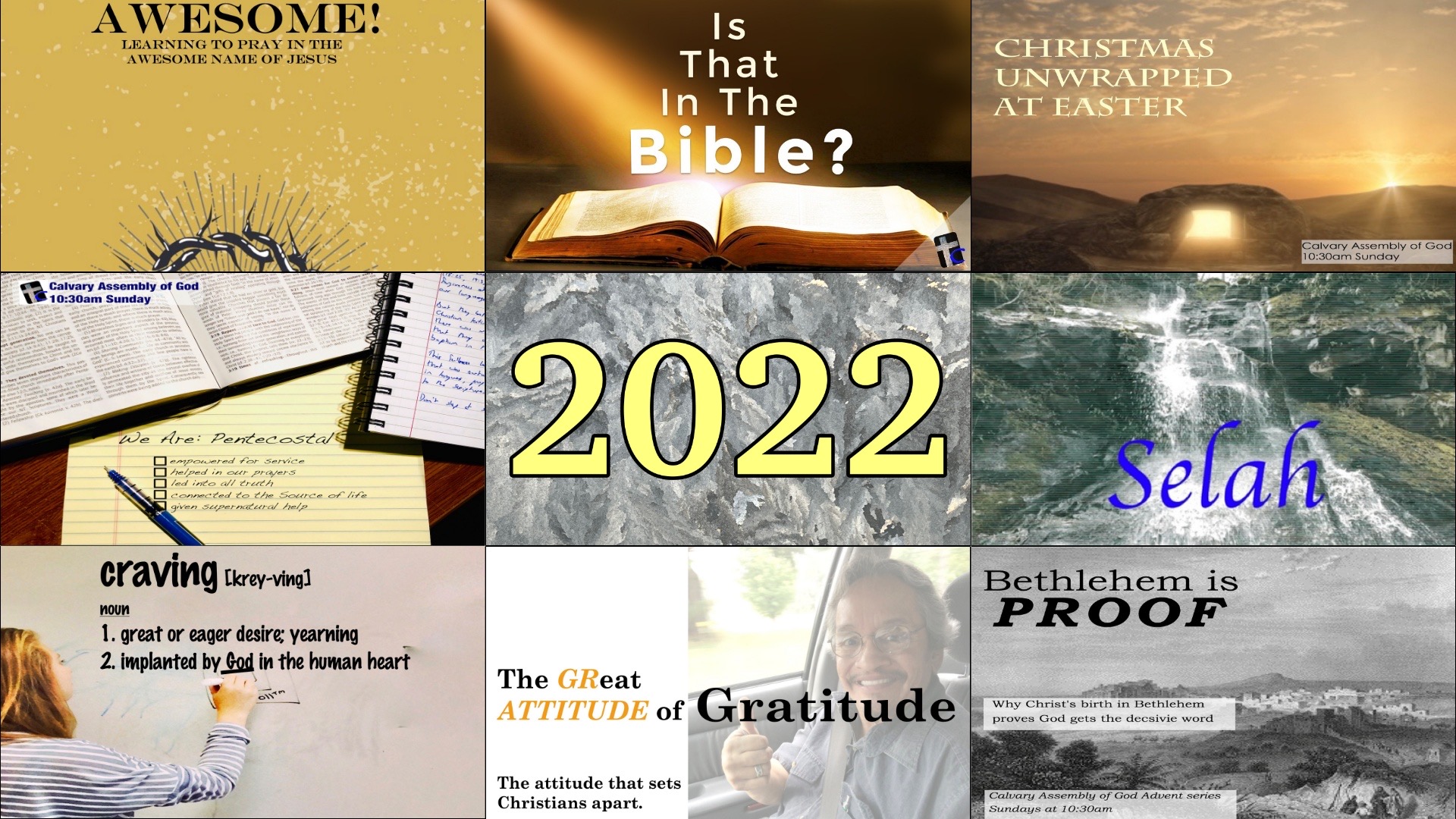
Clicking on each series title will take you to a list of all of the sermons in that series. 

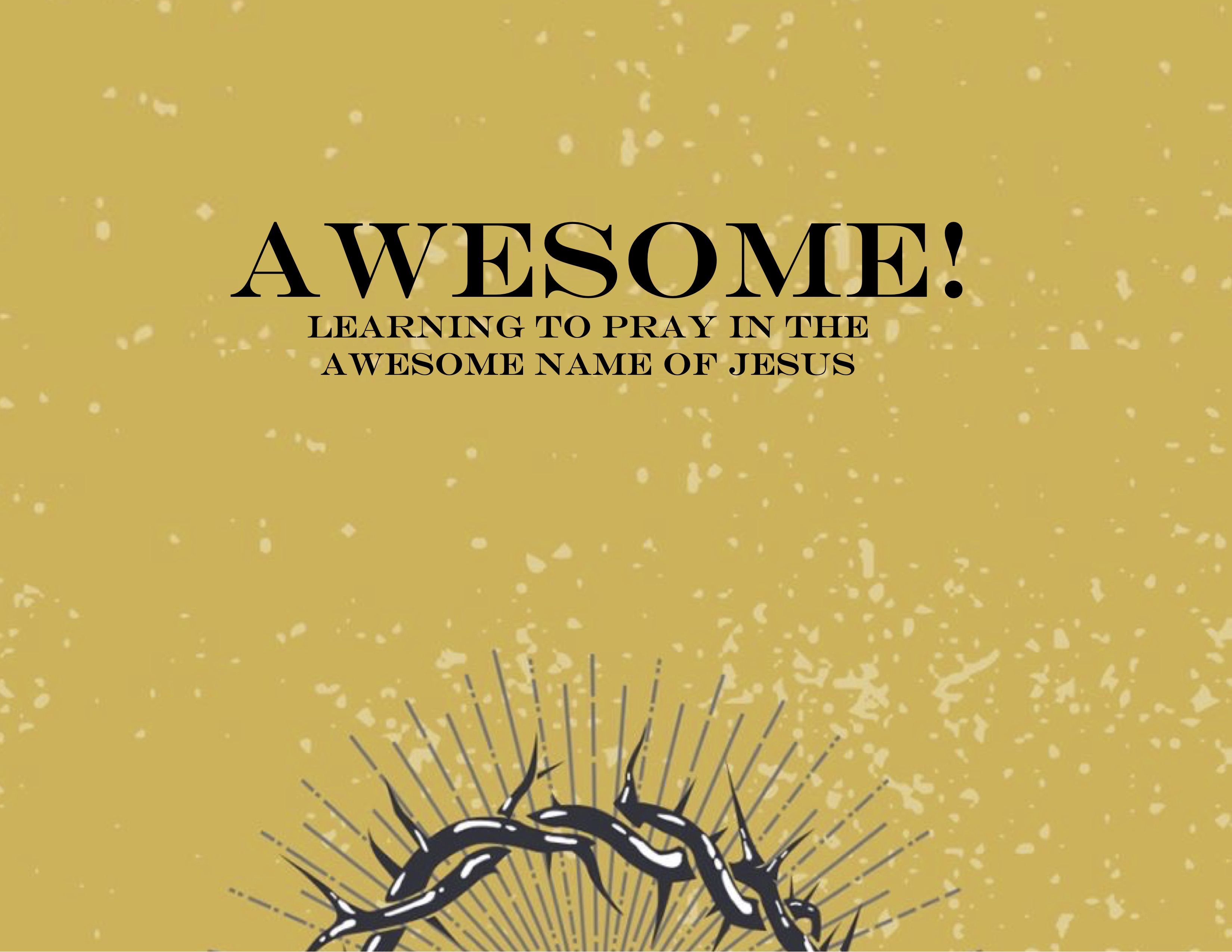
Awesome—Jesus told us that we could pray in His name and expect amazing things (see John 14:13-14, 15:16, 16:23-24). This does not mean that simply adding the phrase “in Jesus’ name, Amen” to the end of a prayer unlocks a secret code. Rather, it means that the more we understand just how awesome our Savior is, and that He is the Key to God’s storeroom, the more we will being to align our prayers with the will of God. Jesus desires for His Father’s glory to be seen on earth through the answers to our prayers. The writer of Hebrews opens his letter by reminding us that Jesus is “the radiance of God’s glory and the exact representation of His being, sustaining all things by His powerful word” (Hebrews 1:3).

Is That In The Bible? (part 1 and part 2)—A meme that makes me chuckle every time I see it is a “quote” attributed to Abraham Lincoln in which he says, “The problem with quotes found on the internet is that they are often not true.” (Not to spoil the joke for you, but unless Lincoln knew how to time travel to the future, I don’t think he knew about the modern internet! 😂). I love this meme because it captures something that so many people fall into: a quick acceptance of a statement without verifying its source or thinking through the implications of the statement’s truthfulness. I think you may be surprised to discover just how many phrases we call biblical aren’t, and how many phrases there are that we never realized are actually in the Bible.
Christmas Unwrapped At Easter—Remember as a kid when you would unwrap a gift and discover it wasn’t something you really wanted, but then your parents explained that it was something you needed? The birth of Jesus in Bethlehem was a little like that—it wasn’t exactly what people were hoping for, but it was exactly what they needed. The real meaning of that Christmas gift wasn’t realized until after Jesus was crucified and resurrected back to life.

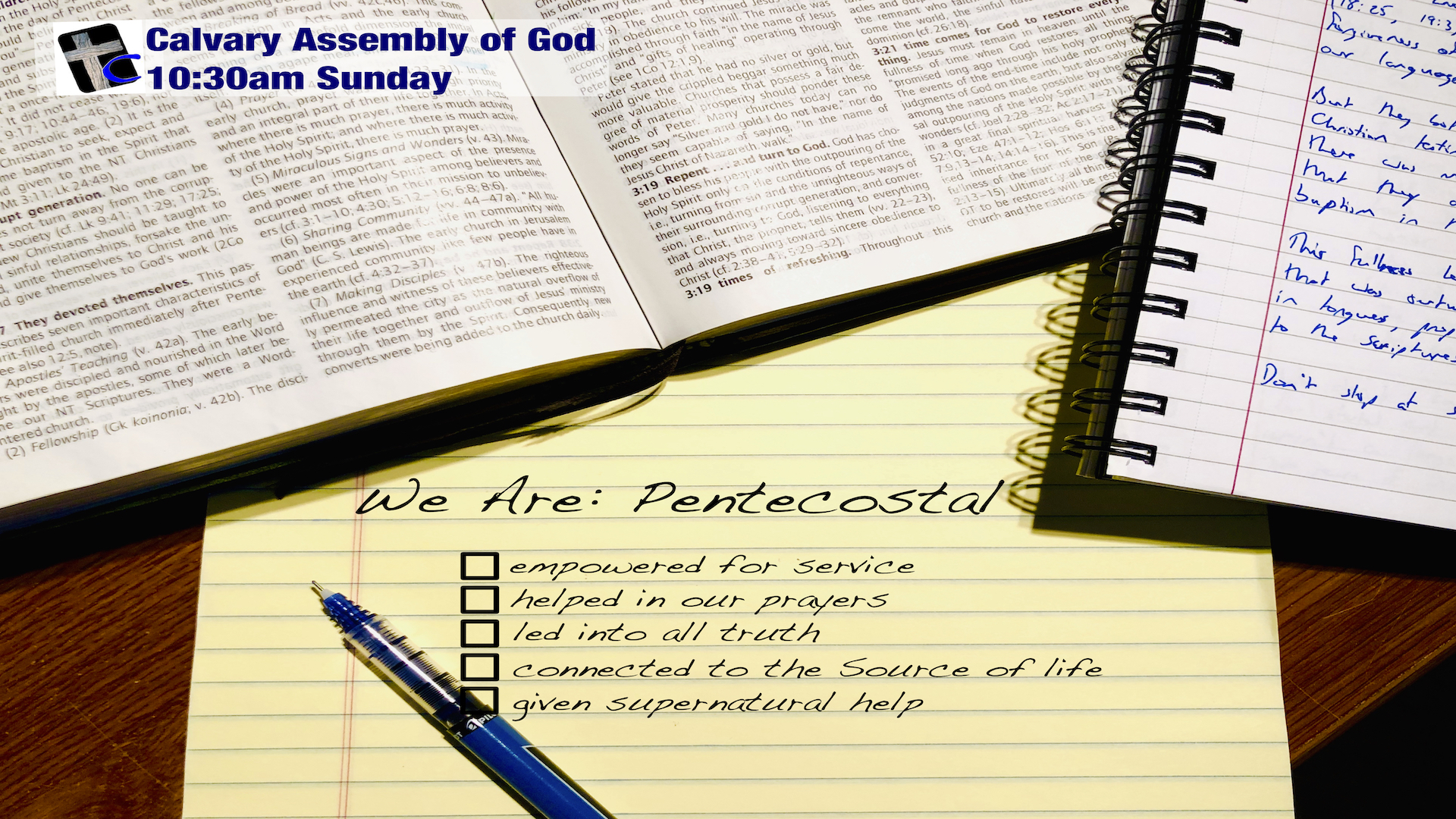
We Are: Pentecostal—Pentecost for over 1500 years was a celebration in Jerusalem that brought in Jews from all over the world. But on the Day of Pentecost that came just ten days after Jesus ascended back into heaven, the meaning of Pentecost was forever changed! Followers of Jesus—now empowered by an infilling of the Holy Spirit—began to take the good news of Jesus all over the world. These Spirit-filled Christians preached the Gospel and won converts to Christ even among hostile crowds, performed miracles and wonders, stood up to pagan priests and persecuting governmental leaders, and established a whole new way of living as Christ-followers. We, too, can be Pentecostal followers of Jesus Christ today. 

Selah—The word Selah appears nearly 70 times in the Bible, almost exclusively in the Psalms. Although it is primarily a musical term, it applies beautifully to our summer series. It means a pause. Throughout the Psalms, Selah appears at the end of a verse, at the end of the psalm, or sometimes even mid-sentence. But each one of them is perfectly placed by the Spirit-inspired authors to get us to take a breath and deeply contemplate what we just read or sang. 

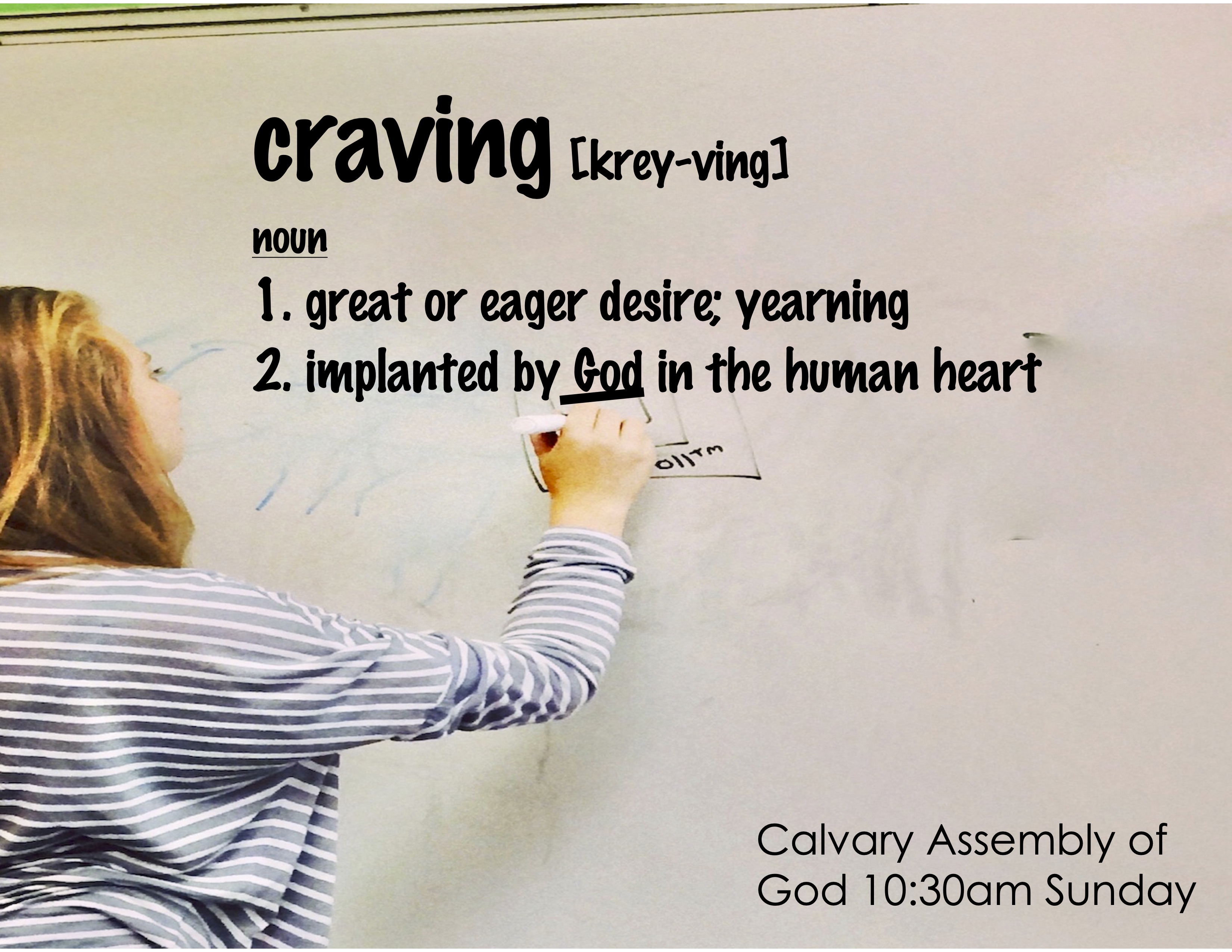
Craving—Doesn’t it seem like far too many Christians think of their relationship with Jesus as bland? After all, we’ve been told that any cravings we have should be quickly downplayed so that they don’t carry “good Christians” away. But what we discover in the Bible is that God made us to be craving creatures—He wants us to long deeply and find ultimate satisfaction for those longings. In short, God created us to long after the things that only He can fulfill. As we dive into this new series, I think you will find it quite eye-opening and heart-lifting. 

The Great Attitude Of Gratitude—There’s something about gratitude that distinguishes people. Think about it: would you rather hang around with grumblers or grateful people? The gratitude of Paul and Silas certainly made them stand out from the crowd when they were in Philippi. Wrongly accused, beaten, and thrown in prison, but instead of bellyaching, they were praising God. Later on, when Paul wrote his letter to the Christians in Philippi, the theme of gratefulness permeates his letter. The distinguishing mark is actually in the title: The GReat ATTITUDE spells out GRATITUDE!

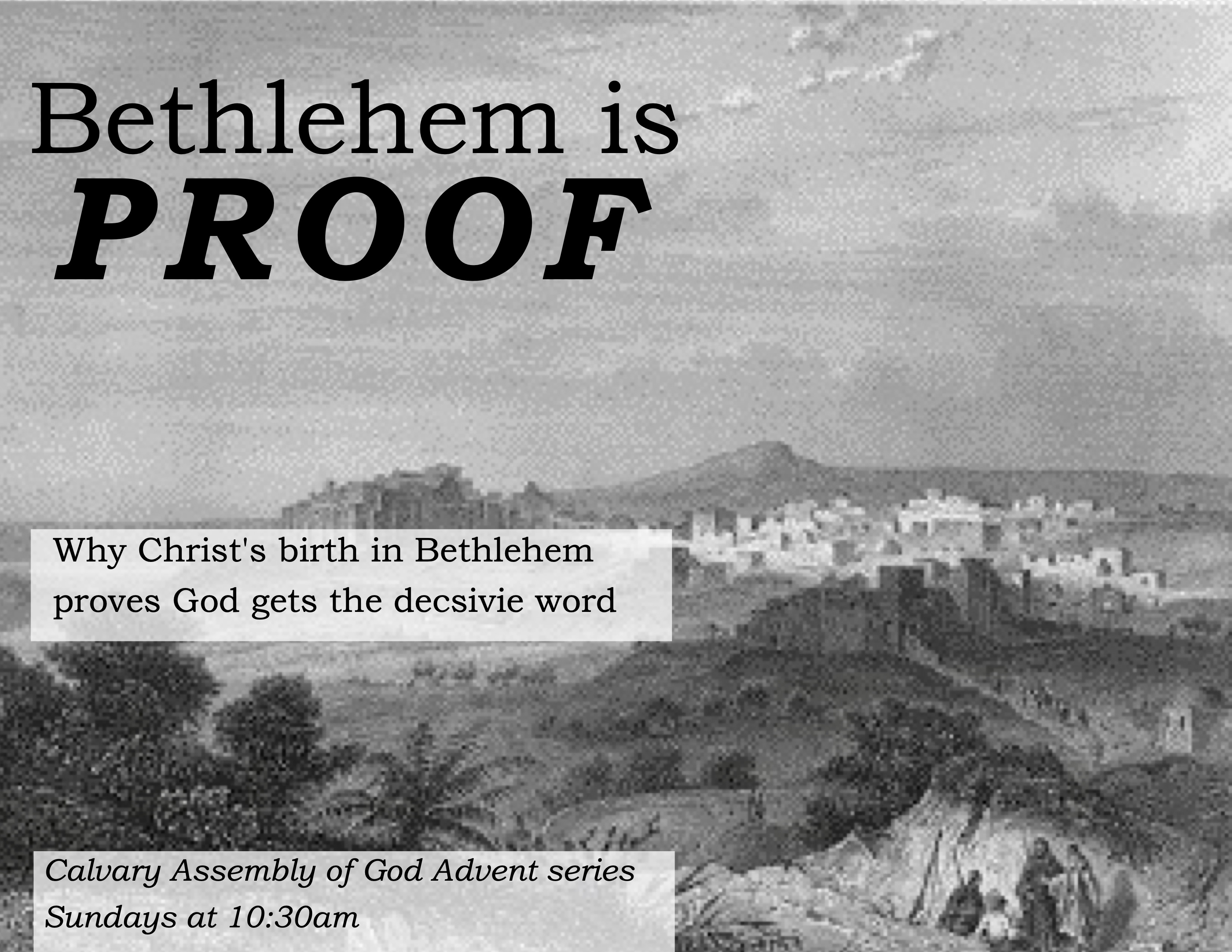
Bethlehem Is Proof—The prophet Micah foretells that the Messiah will arrive in dark times. Enemies will surround Israel, and Israel’s ruler will receive a nasty punch to the jaw. Demonic strongholds, witchcraft, and idolatry will appear to be gaining the upper hand. And then Micah turns his attention to a small village just south of Jerusalem—a village so small that it is often overlooked—a village from which no one would expect Israel’s Deliverer. And yet, Micah writes, “But you, Bethlehem Ephrathah, though you are small among the clans of Judah, out of you will come for Me One who will be Ruler over Israel, Whose origins are from of old, from ancient times” (Micah 5:2). Jesus the Deliverer was born in the little town of Bethlehem, and His birth there 700 years after Micah foretold it is our proof that God always gets the last word, the decisive word, and the best word!

We will be returning to a couple of these series in 2023, and we’ll be launching some brand-new ones as well. If you don’t have a home church in the northern Kent County area, I would love to have you join us! 

►► Would you please prayerfully consider supporting this ministry? My Patreon supporters get behind-the-scenes access to exclusive materials. ◀︎◀︎

Links & Quotes

Every Monday I share a 1-minute thought to get your week started. It’s my weekly Monday Motivation series of videos. Check out this week’s video that I posted the day after Christmas, and please subscribe on YouTube.

T.M. Moore wrote one of the endorsements for my book Shepherd Leadership. In an interview I then did on his Fellowship of Ailbe podcast, I shared my dismay over unbiblical ideas and practices that have crept into the church. Both T.M. and I share a passion to see our church leadership return to our secure biblical foundation. 

In a recent blog post, T.M wrote, “From the days of the apostles onward, a tendency has existed among church leaders to drift from the plain teaching of the Word of God into forms of Christian life and ministry that derive from sources other than Scripture. Or that stretch the meaning of Scripture to fit the shape of certain cultural forms.” Please check out T.M.’s post “Do not go beyond.”

In a fascinating post from Rabbi Benjamin Blech, I read these thoughts about the power of a name: “The Hebrew word for soul is neshamah. Central to that word, the middle two letters, shin and mem, make the word shem, Hebrew for ‘name.’ Your name is the key to your soul. … When the Torah says, ‘God created,’ it doesn’t suggest that He worked with what He fashioned by labor, but merely that He spoke—and the very words describing the object came into being. God said, ‘Let there be light and there was light.’ The Almighty merely gave it a name, and the very letters defined its atomic structure.” Check out the full post here.

And once again archeologists discover evidence that corroborates the biblical accounts. In this case, more evidence is found from King Hezekiah. As I have said numerous times, the historicity of the Bible is amply verified.

“Success” doesn’t always mean bigger numbers. King David got into trouble with God when he wanted to measure his success by how many fighting men he had under his command. Consistently throughout the Bible God’s measure of success is our trust in Him. This thought was a key part of the sub-title of my book Shepherd Leadership: The Metrics That Really Matter.

Cold-case detective J. Warner Wallace tackles an important topic: Does objective truth exist, and how can it be defined? This is a quite lengthy post but it is well worth your time.

“Pain nourishes courage. You can’t be brave if you’ve only had wonderful things happen to you.” —Mary Tyler Moore

Triumphant King

Listen to the podcast of this post by clicking on the player below, and you can also subscribe on AppleSpotify, or Audible. 

Have you ever noticed how many of our Christmas carols celebrate the dark night giving way to the bright light? For instance, the hymn O Holy Night contains the line, “long lay the world in sin and error pining until He appeared.” 

English historian and theologian Thomas Fuller was the first to put into print what has now become a cliché that so many people use: “It is always darkest just before the Day dawneth.” Indeed, Micah paints a very dark scene just before the Messiah makes His First Advent (Micah 5:1). 

The Light of Jesus that burst onto planet Earth in a Bethlehem stable revealed Him as our Great Shepherd, our Prince of Peace, and our Mighty Deliverer. And there is also one more title that Micah foretells: our Triumphant King! 

What does our Triumphant King do? He confronts and defeats the darkest foes. Check out the words in Micah 5:9-15: destroy (5x), demolish (2x), tear down, uproot, take vengeance. 

Christ’s birth in Bethlehem is our proof that God’s plan prevails. God always gets the final word, the decisive word, and the best word! 

Most of the Old Testament prophets foresaw both the first and second advents of Jesus simultaneously. The mountains of prophecy look like they are on top of each other, so it’s very common for the prophets to see events of both advents happening simultaneously. So Micah sees both the coming of Jesus in Bethlehem and His coming at the end of time as King.

There is a spiritual battle that has been raging since before Time began (Ephesians 6:12). It started when Lucifer became satan by his rebellion against God, and then he began his agenda of the destruction of God’s people (Ezekiel 28:12-17; Revelation 12:7-9, 13, 17). 

Into this dark battle, Jesus enters the scene. The reason the Son of God was made manifest (visible) was to undo—destroy, loosen, and dissolve—the works the devil has done (1 John 3:8 AMP). 

I already talked about how the death of Jesus on the Cross meant the death of Death, and Jesus became our Mighty Deliverer! The resurrection of Jesus means satan’s time is nearing an end. It may be dark now, but the darkness has to give way to the Light of the King of kings (check out these verses in Revelation). 

“It is always darkest just before the Day dawneth” should assure us of the victory of the King of kings! Jesus assured us that darkness is only afforded an hour, and then the Light will completely overwhelm it. The Light dawned in Bethlehem and is returning soon to completely vanquish every last bit of darkness!

If you missed any of the messages in our Advent series, you can find a list of all of those messages by clicking here. 

►► Would you please prayerfully consider supporting this ministry? My Patreon supporters get behind-the-scenes access to exclusive materials. ◀︎◀︎

Verifiable Facts About The Birth Of Jesus

Listen to the podcast of this post by clicking on the player below, and you can also subscribe on AppleSpotify, or Audible. 

Check out the resources I mention in this video:

►► Would you please prayerfully consider supporting this ministry? My Patreon supporters get behind-the-scenes access to exclusive materials. ◀︎◀︎

Mighty Deliverer

Listen to the podcast of this post by clicking on the player below, and you can also subscribe on AppleSpotify, or Audible. 

The world can marshal its weapons of war. They may gain a temporary victory. They may build strongholds, and cast spells, and appear to be the unquestioned ruler. But God always gets the final word, the decisive word, and the best word! 

Don’t despair in the middle of the Story! All of History is His Story. No matter how dark it seems, we are assured of God’s victorious outcome! 

Bethlehem is our proof:

  • 700 years before it happened, Bethlehem is named as the birthplace of Jesus (Micah 5:2; Luke 2:1-7) 
  • 700 years before Jesus was born in Bethlehem, His titles were given and then fulfilled in the way that Jesus lived (see for example Isaiah 9:6 and Hebrews 13:20) 

Sometimes God has to let the darkness fall so heavy so that it seems hopeless. In fact, in human power alone it is hopeless and impossible. So God foretells His victory—

“Listen to this, you descendants of Jacob, you who are called by the name of Israel and come from the line of Judah, you who take oaths in the name of the Lord and invoke the God of Israel—but not in truth or righteousness—you who call yourselves citizens of the holy city and claim to rely on the God of Israel—the Lord Almighty is His name: I foretold the former things long ago, My mouth announced them and I made them known; then suddenly I acted, and they came to pass. … Therefore I told you these things long ago; before they happened I announced them to you so that you could not say, ‘My images brought them about; my wooden image and metal god ordained them.’” (Isaiah 48:1-5) 

We have seen how Micah prophesied our Messiah coming as the Great Shepherd and as the Prince of Peace, but He also comes as our Mighty Deliverer (Micah 5:1-6). He comes at an incredibly dark time that is described like this: “He will rescue us from the Assyrians when they pour over the borders to invade our land” (Micah 5:6 NLT). 

Darkness may appear to have a stranglehold even now in our time. One of the verses in the New Testament that pretty accurately sums up a Christ-less culture says, “The god of this world has blinded the unbelievers’ minds that they should not discern the truth, preventing them from seeing the illuminating light of the Gospel of the glory of Christ” (2 Corinthians 4:4 AMP) . 

But this is only temporary darkness. When the mob came to arrest Jesus, He said, “This is your hour—when darkness reigns” (Luke 22:53). Darkness only gets an hour, but the Light of God shines for all of eternity! 

One of my favorite Advent texts is found in Hebrews 2:14-15:

Since the children have flesh and blood, [Jesus] too shared in their humanity so that by His death He might destroy him who holds the power of death—that is, the devil—and free those who all their lives were held in slavery by their fear of death. 

Our Mighty Deliverer came to destroy satan’s power and free those held hopelessly in darkness. The word “destroy” is a powerful, all-encompassing word. Imagine a tyrannical ruler who sent one of his strongest police officers with an arrest warrant, who then grabbed onto you and subdued you with his vice-like grip. 

Only someone stronger than that officer can release you from that grip. That’s what Jesus did when He destroyed satan’s ironclad grip on your soul. Paul asks mockingly, “Where, O death, is your victory? Where, O death, is your sting? The sting of death is sin, and the power of sin is the law. But thanks be to God! He gives us the victory through our Lord Jesus Christ!” (1 Corinthians 15:55-57)

Now you may be free of the grip of that officer, but the arrest warrant still remains—you are still subject to the penalty. But that word “destroy” also means that the charges against you have been set aside so that there is no penalty outstanding against you. The apostle Paul again addressed this when he wrote, “For we know that our old self was crucified with [Jesus] so that the body ruled by sin might be done away with, that we should no longer be slaves to sin. … Who will bring any charge against those whom God has chosen? It is God who justifies” (Romans 6:6, 8:33). 

You are now set completely and irrevocably free! “But it has now been revealed through the appearing of our Savior, Christ Jesus, who has destroyed death and has brought life and immortality to light through the gospel” (2 Timothy 1:10). 

The Messiah—our Mighty Deliverer—destroys darkness and delivers those who believe in Him! 

No matter how hopeless it may seem, the Mighty Deliverer always prevails! Jesus has destroyed every enemy that has opposed God’s people! Jesus our Champion shines a light so brightly that nothing in satan’s arsenal can ever diminish it. 

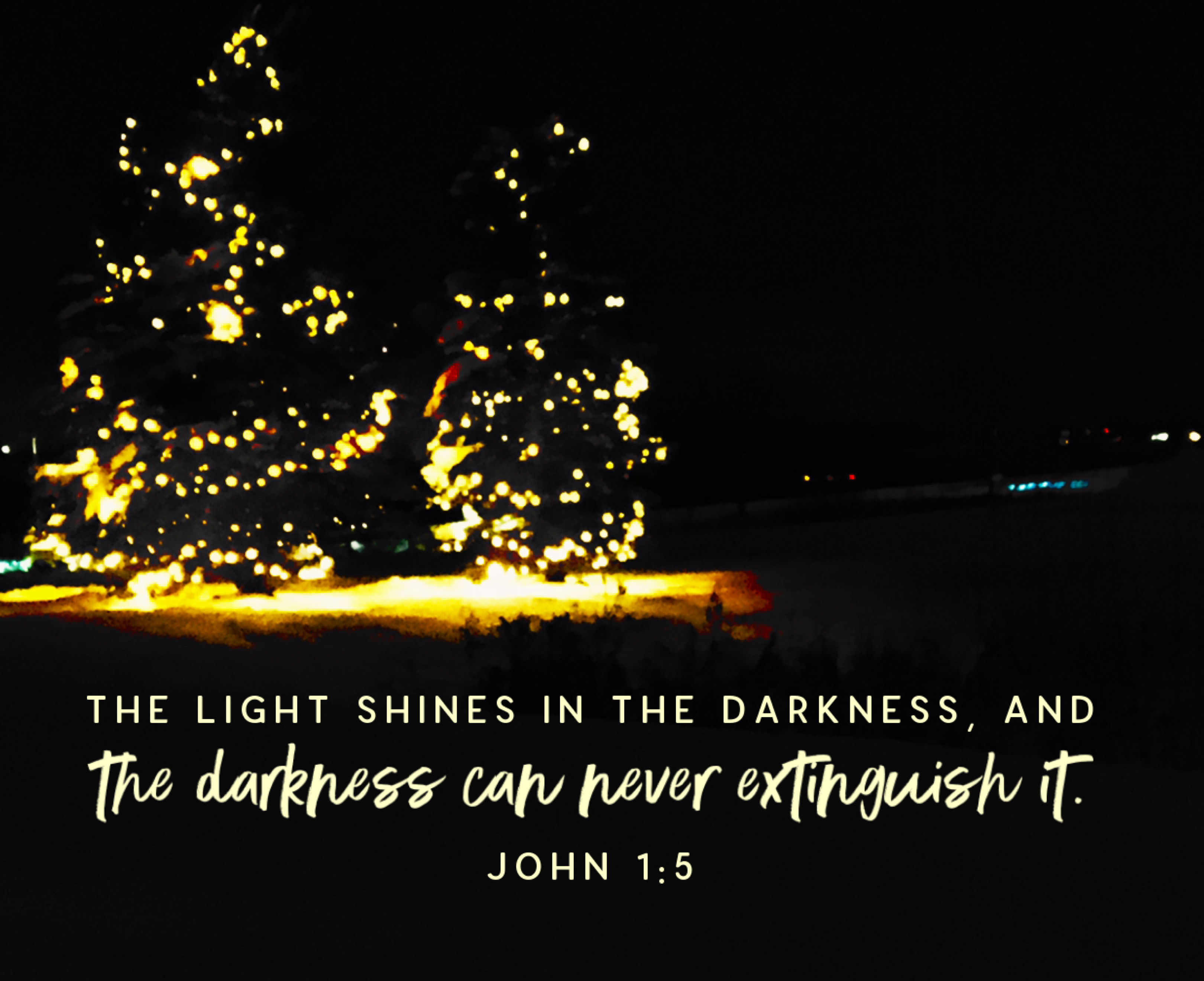
The Light shines in the darkness, and the darkness can never extinguish it (John 1:5 NLT). 

So allow me to repeat: Don’t despair in the middle of the Story! All of History is His Story. No matter how dark it seems, Bethlehem is our proof that Jesus has destroyed our enemy and removed from him all grounds for charging us with sin. Bethlehem is our proof that we can live assured of God’s victorious outcome! 

What a great Christmas gift that truly is! 

If you’ve missed any of the messages in this Advent series, you can find a list of all of those messages by clicking here. 

►► Would you please prayerfully consider supporting this ministry? My Patreon supporters get behind-the-scenes access to exclusive materials. ◀︎◀︎