‘The Depth Of My Love For You’

Listen to the podcast of this post by clicking on the player below, and you can also subscribe on AppleSpotify, or Audible. 

The apostle Paul’s letters to the church in Corinth show two things: a lot of correction and a lot of love. In fact, it’s in the middle of some correction and redirection about the misuse of spiritual gifts that Paul gives us the quintessential definition of love in 1 Corinthians 13. 

Paul also wrote, “For I wrote you out of great distress and anguish of heart and with many tears, not to grieve you but to let you know the depth of my love for you” (2 Corinthians 2:4). 

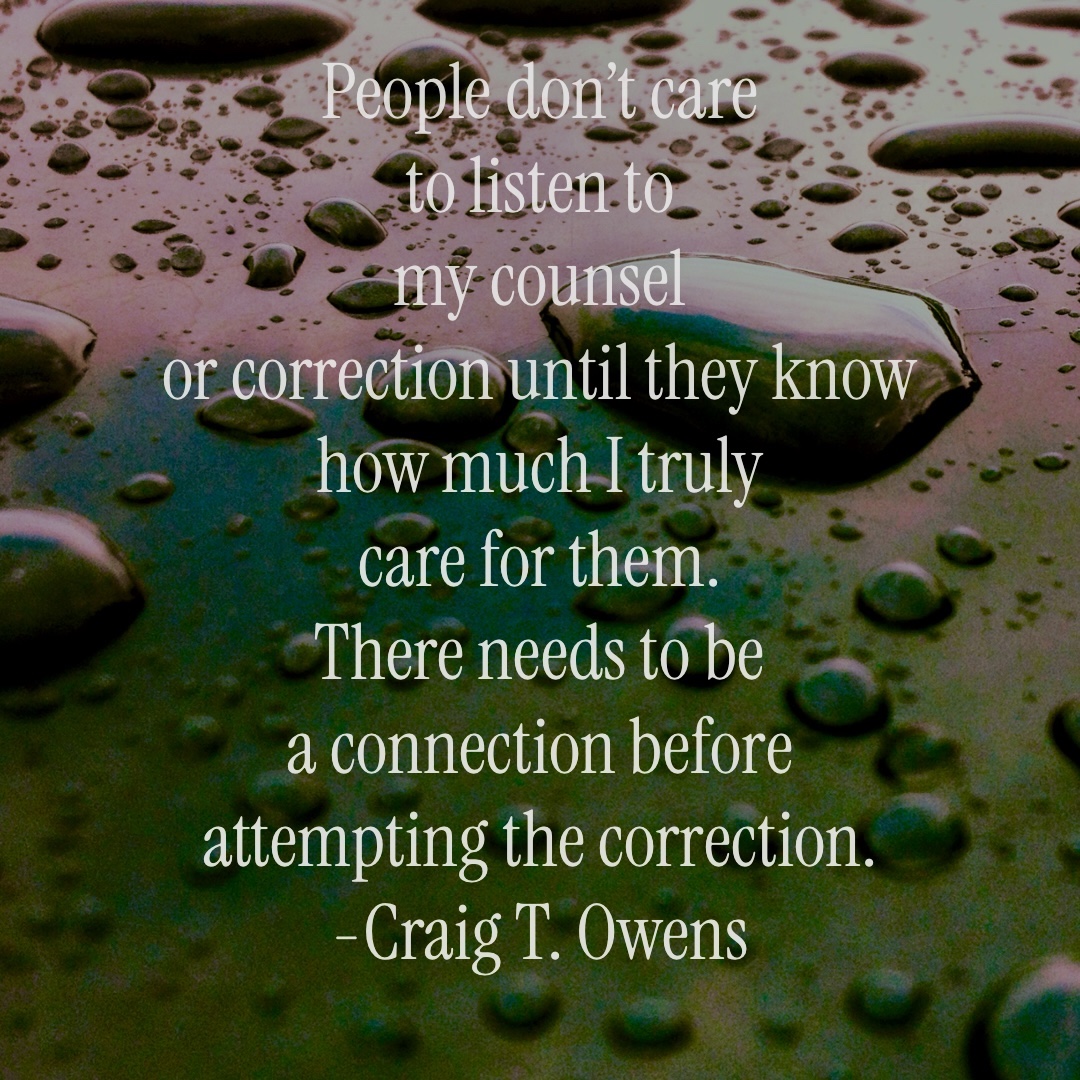
The truth does need to be spoken to wayward sheep, but it has to be birthed in love and spoken in love or else it will alienate more than help. People don’t care to listen to my counsel or correction until they know how much I truly care for them. 

There needs to be a connection before attempting the correction. 

I have an entire chapter in my book When Sheep Bite on this topic. Here’s an excerpt—

     It is possible that our grace-filled response to our biting sheep may make the difference to their eternal home. The apostle Paul told Timothy that those sheep who were out of line were trapped by the devil, and unless Timothy did something those sheep may never break free—

     And the Lord’s servant must not be quarrelsome but must be kind to everyone, able to teach, not resentful. Opponents must be gently instructed, in the hope that God will grant them repentance leading them to a knowledge of the truth, and that they will come to their senses and escape from the trap of the devil, who has taken them captive to do his will. (2 Timothy 2:24-26) 
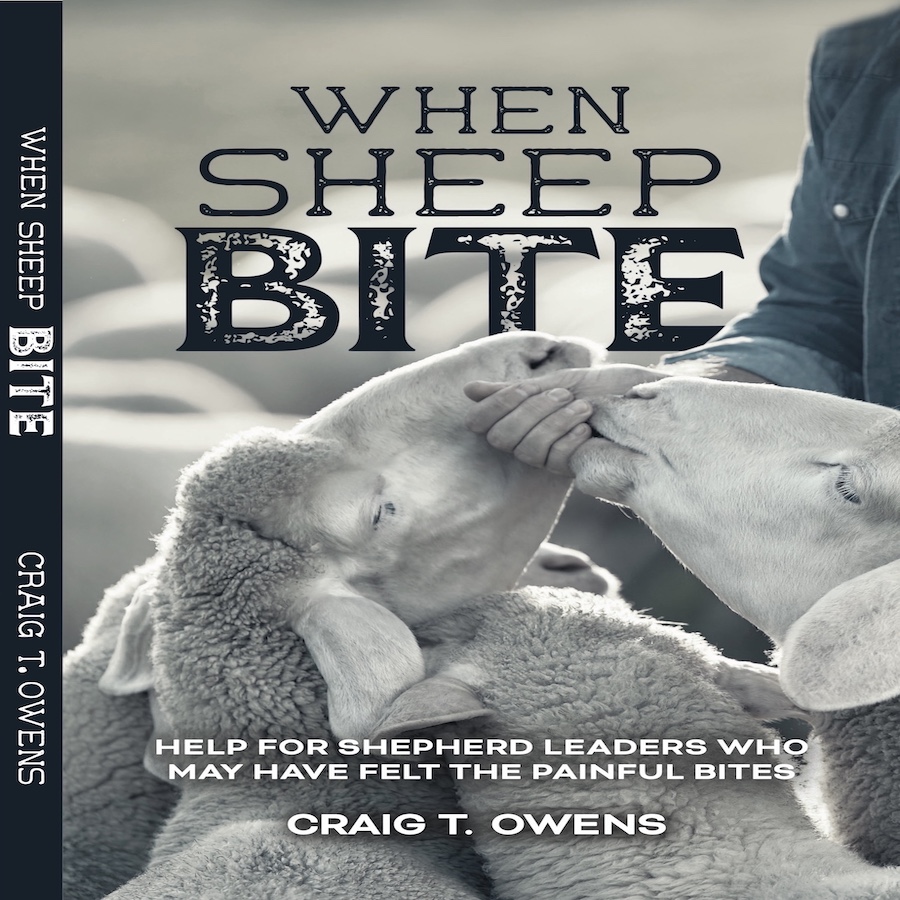
     For some reason many shepherd leaders have made “confrontation” a dirty word, or have sullied its usefulness by confronting in an ungodly way. One thing that will help us handle confrontation the right way is to remember why we confront: The goal of confrontation is restoration, not destruction! 

     There is a cliché that says, “Once bitten, twice shy.” As I mentioned earlier, after we’ve been bitten we need to allow the Holy Spirit to search our hearts to point out anything in us that may have contributed to such a painful outburst from that sheep. Perhaps after doing all of that you attempted to confront a sheep and it didn’t go so well. As a result, you are now a bit shy to confront another wayward sheep. Dick Brogden wrote:

     “Experience so easily leads us to cynicism. Information too easily leads to pain. Leadership often makes us jaded because we’ve seen so much junk, all the effects of broken people breaking people. … A strong heart determines that it will stay soft, that it will absorb hurt, disappointment, and reality, and yet believe that God can redeem people and circumstances.” 

     Handled correctly, confrontation can lead to restoration, a deeper intimacy, and newfound maturity. Handled incorrectly, and, well, let’s just say it can get very ugly!

     I imagine we have all heard stories of the fallout from confrontation in another pasture, or perhaps we know the painful consequences in our own pastures. But let’s try for a moment to put those past experiences or secondhand stories out of our minds and take a fresh look at how to handle confrontation. 

     Samuel was going to be sent by God to confront King Saul about the sin he had committed. Look at this passage: “Then the word of the Lord came to Samuel: ‘I am grieved that I have made Saul king, because he has turned away from Me and has not carried out My instructions.’ Samuel was troubled, and he cried out to the Lord all that night” (1 Samuel 15:10-11). 

     Did you catch how Samuel responded? He cried out to the Lord all that night. 

     Perhaps if we, as godly under-shepherds, cried before we confronted the results might be more healthy. Billy Graham noted, “Tears shed for self are tears of weakness, but tears shed for others are a sign of strength.” (from Chapter 5 ‘Cry Before You Confront’) 

If you have some difficult but necessary words to speak to someone, take time to cry before you confront. Ask the Holy Spirit to reveal to you the most loving way to handle this situation. Cry before you confront, and may your tears soften your heart to speak truthful words saturated in your love for God and your love for this wayward saint. 

Please pick up a copy of When Sheep Bite to learn more biblical strategies for handling biting sheep and for healing from biting sheep. If I can be of help to you, please get in touch with me.

P.S. You may also be interested in a whole series about growing and showing our love called Loving the Unlovable.

►► Would you please prayerfully consider supporting this ministry? My Patreon supporters get behind-the-scenes access to exclusive materials. ◀︎◀︎

Links & Quotes

My courage and my success are directly tied to my obedience of God’s Word. The life of Joshua is just one example. Check out this full message here. I have lots of new content every week, which you can check out on my YouTube channel.

Donald Fairbairn, Professor of Early Christianity at Gordon-Conwell Theological Seminary, presents a brief history of the great Persian persecution of the 4th-century Christians.

“Christ is more of an Artist than the artists. He works in the living spirit and the living flesh; He makes men instead of statues.” —Vincent van Gogh

Bryan Windel echoes something I’ve frequently said on this blog, “The Bible is rooted in real history. This is why archaeology is such a valuable tool; it helps us uncover the biblical world and provides us with important background knowledge about the people, places, and events described in the text.” Bryan was a part of a dig at Shiloh (where Joshua and Samuel play key roles) and he shares some of his observations and discoveries.

“I trained four years to run nine seconds, and people give up when they don’t see results in two months.” —Usain Bolt

“Those who have turned the tide of history have turned it by means of prayer. This should be the motto of every follower of Jesus Christ. Never stop praying, no matter how dark and hopeless it may seem.” —Billy Graham

I love these stories of hope from To Write Love On Her Arms. They have lots of great words of encouragement for you to share with others.

“The year was 1932. The world’s economic and political systems were groaning under the weight of an economic depression.” Against this backdrop, Myer Pearlman wrote to Christians about how they should live in those times. His message is just as relevant for us today.

Fight The New Drug shares six ways porn has lied to you about sex.

Dangerous Prayers (book review)

Prayer changes things. That makes prayer dangerous and the pray-ers themselves a danger to anything that opposes the kingdom of God. Dangerous Prayers is a collection of powerful prayers and a brief biography of those who prayed them. 

Growing up, a constant refrain rang in my ears from my parents whenever I faced a problem: “Have you prayed about it?” I’m not sure why we make prayer our last resort instead of our first response, but it often seems that some of the most heartfelt, passionate prayers are offered up in the darkest of times. 

Dangerous Prayers offers a short biography of some world-changing people who changed the world in large part because of their desperate dependence on God’s help, as seen in the frequent and bold prayers they prayed. Many of these prayers were prayed in dark places—prisons, before the executioner, in the midst of war, in unimaginable poverty, or staring down the evils of slavery. These men and women repeatedly turned to God, and God repeatedly strengthened them to accomplish amazing things. Some of the answers to prayer came in their lifetimes, and some prayers were only answered long after they had died. 

Dangerous Prayers is an excellent coffee table book. By that, I mean it’s a great book to leave out in the open as a conversation-starter. Parents could read these short biographies and prayers with their children, and friends could use them as a bridge from past history to current events. But more than anything, keep Dangerous Prayers close at hand will—I sincerely hope—cause you to turn to prayer frequently and boldly. 

I am a Thomas Nelson book reviewer. 

Book Reviews From 2018

What’s Behind A Church’s ♥able Reputation?

Last week I said if people are going to say “I ♥ That Church!” it has to be a ♥able church. A ♥able church has a ♥able reputation that compromises what Luke captured about the very first Church—internal unity, sincere piety, supernatural results, and practical help.

Once a church has this kind of reputation, how is it sustained? 

First, let me tell you how it’s NOT sustained: A church’s ♥able reputation isn’t sustained by that church focusing on it’s ♥able reputation. 

A ♥able reputation must flow from the constant development of godly character. Otherwise, we substitute what sounds good with what is actually sound, and we substitute what looks good with what is actually good. 

That’s what the Pharisees did—they were more concerned about how their religion looked to others, and not how it aligned with God’s heart. In fact, Jesus told two stories about people that thought they were “in” with God because of their reputation, but God actually says to them, “I don’t know who you are” (see Matthew 7:21-23; 25:1-12). 

Matthew Henry reminded us, “Men may go to hell with a good reputation!” 

But D.L. Moody got the order right when he said, “If I take care of my character, my reputation will take care of itself.”

I believe the first Church shows us three components of a maturing godly character. 

  1. Our source must be pure. The Christians devoted themselves to the apostles’ teaching. In other words, they grew with sound doctrine, not with things that sounded like doctrine (2 Timothy 4:3; Acts 17:11). 
  1. Our daily disciplines must be productive. The Christians saw “church” as an every day thing. They didn’t view studying the Scriptures, prayer, fellowship, and other maturing activities a merely something to be checked off their To Do list. 
  1. Our accountability must be in our fellowship. The Greek word for fellowship (koinonia) means an active involvement with the “one anothers” in the Church. What’s especially important is maintaining the highest levels of accountability with each other so that the growth of godly character can continue (see especially Hebrews 10:24-25; James 5:16). 

“When wealth is lost, nothing is lost. When health is lost, something is lost. When character is lost, everything is lost.” —Billy Graham 

My church’s ♥able reputation will be sustained as I am committed to growing in godly character. 

So… are you committed to that continual growth? 

What If I Sin?

I have been trumpeting this truth: God is for you! He’s not looking for opportunities to blast you, but to bless you. God wants you to know that you have found His favor. 

But what happens if we sin? Do we lose God’s favor? In a word—NO! 

Here’s what happens instead: God becomes our Prodigal Father. 

Let me show you from both the Old Testament and the New Testament what I mean, but first, let’s define prodigal: it means recklessly extravagant or lavishly abundant. This is always how God treats His children. 

In Isaiah 59, the prophet reminds us that nothing about God’s strength or ability to respond to our pleas has been diminished. Instead: your sins have separated you from your God—we can leave God, but He never leaves us! 

Isaiah catalogs all our sins that have become a quicksand trap for us. God looks to see who can help us, and finding no one, here’s what He does: so His own arm worked salvation for Him, and His own righteousness sustained Him. 

God did what was underserved. God did what no one else could do: HE HIMSELF BECAME OUR SALVATION! 

If ever there was a definition of recklessly extravagant, lavishly abundant love… this is it!! 

In Luke 15, Jesus tells a story that people often call the story of the prodigal son, but it’s really the father who is prodigal. The son squanders all his father’s blessings on wild living and finds himself bankrupt, starving, and completely disgraced. But the moment the son came to his senses and began to move toward his father by confessing his sin, his prodigal father ran to him! 

Jesus tells us this father was overflowing with compassion. There wasn’t anything his son could have done to diminish the father’s love, nor was there anything the son could have done to make his father love him more. The father was all-loving all the time. He was recklessly extravagant and lavishly abundant in his love. 

The father RAN to his son and covered his son’s disheveled, stinking rags with his royal robe. 

This is exactly what Isaiah said God would do for us…

  • instead of ashes, we get a crown 
  • instead of rags of mourning, we get an anointing of gladness
  • instead of a spirit of despair, we get a garment of praise
  • instead of shame, we get a double portion of God’s riches
  • instead of disgrace, we get God’s inheritance

How does all this happen? Our Prodigal Father abundantly, lavishly “clothes me with garments of salvation and arrays me in a robe of righteousness”!!

Don’t ever buy into satan’s lies that God loves you less, or that you’ve used up your changes, or that your sins are too many or too big. If we confess our sins, He is faithful and just and will forgive us our sins and purify us from ALL unrighteousness (1 John 1:9). 

Join me this coming Sunday either in person or on Facebook Live as we learn more about God’s favor toward us. 

10 Quotes From “Life Wisdom From Billy Graham”

I love the wisdom that was constantly flowing from Billy Graham! Before you read these quotes, check out my review of Life Wisdom From Billy Graham by clicking here.

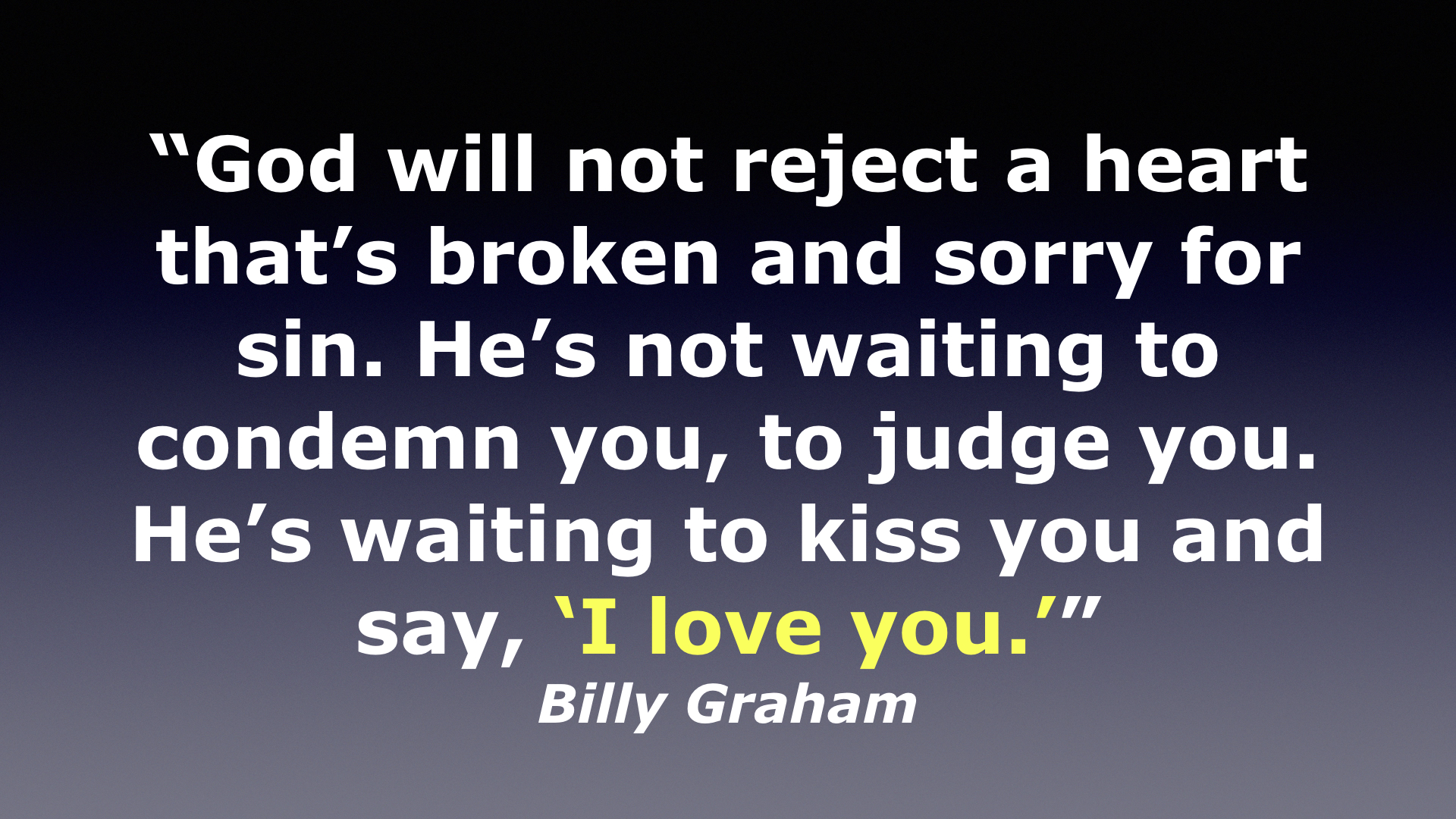
“God will not reject a heart that’s broken and sorry for sin. He’s not waiting to condemn you, to judge you. He’s waiting to kiss you and say, ‘I love you.’” 

“Comfort and prosperity have never enriched the world as much as adversity has.” 

“God measures people by the small dimensions of humility and not by the bigness of their achievements or the size of their capabilities.” 

“In God’s economy, a person must go down into the valley of grief before he or she can scale the heights of spiritual glory…. One must come to the end of ‘self’ before one can really begin to live.” 

“Everybody needs some friends around him who will say, ‘You are wrong!’ And that includes me. I really value the friendship of people who will just tell it to me like it is, even though I may try to defend my position for a while.” 

“Racial prejudice, anti-Semitism, or hatred of anyone with different beliefs has no place in the human mind or heart. I urge all people to examine themselves and renew their own hearts before God. Only the supernatural love of God through changed lives can solve the problems that we face in our world.” 

“All of us in Christian ministry need to live and work with integrity. By integrity, I mean the moral value that makes people the same on the inside as they are on the outside—with no discrepancy between what they say and what they do, between their walk and their talk.” 

“The social needs of man call for our urgent attention, but we believe that ultimately, these needs can be met only in and through the gospel. Man’s basic need is to be born from above—to be converted to Christ. Man must be changed. Man’s biggest problem is man himself.” 

“In a world of greed, where materialistic values often take first place, pleasure has become a god—and a great premium is placed on cleverness—our greatest need is moral integrity.” 

“Government will never be better than the men and women who have given their lives to it.” 

Life Wisdom From Billy Graham (book review)

Sometimes I need a dose of wisdom from someone who can be trusted—someone who has been-there-done-that and handled it all with the utmost integrity. No one better exemplified that in my lifetime than Billy Graham. 

Life Wisdom From Billy Graham is a quick read, but it is packed with timeless insights from a man who lived his life only for God’s glory. Billy had opportunities to talk to the most influential people during his lifetime, and yet he never used that open door to gain privilege for himself. His ministry had a worldwide reach, yet there was never a question about how he handled the finances. He was revered by millions, and never let that go to his head. 

In Life Wisdom, Billy gives words of truth on financial and moral integrity, staying true to what God has called you to, friendships, stewardship, vision, power, influence, and so much more. Anyone who wants to grow in wisdom will benefit from this book. 

Billy Graham On Gratitude

BillyGraham“We hurt people by being too busy. Too busy to notice their needs. Too busy to drop that note of comfort or encouragement or assurance of love. Too busy to listen when someone needs to talk. Too busy to care.”

“The smallest package in the world is a person who is all wrapped up in himself.”

“Gratitude is one of the greatest Christian virtues; ingratitude, one of the most vicious sins.”

“Grumbling and gratitude are, for the child of God, in conflict. Be grateful and you won’t grumble. Grumble and you won’t be grateful.”

Billy Graham’s Humility

BillyGraham

This story was shared by Max Lucado—

I witnessed an example of this humility last October. I partnered with Michael W. Smith for a ministry weekend near Charlotte, NC. The retreat was held at “The Cove,” a beautiful facility that is owned and maintained by the Billy Graham Association.

A few hours before the event, Michael and I met to go over the weekend schedule. But Michael could hardly discuss the retreat. He was so moved by what he had just experienced. He had just met with Billy Graham for the purpose of planning Rev. Graham’s funeral. The famous evangelist was, at the time, 94 years old. He was confined to a wheelchair, on oxygen. His mind was sharp and spirits were high. But his body was seeing its final days. So he called for Michael. And he called for his pastor. He wanted to discuss his funeral. He told them that he had a request.

“Of course,” they said. “Anything you want. What is it?”

“Would you not mention my name?”

“What?”

“Can you not mention my name? Just mention the name of Jesus.”