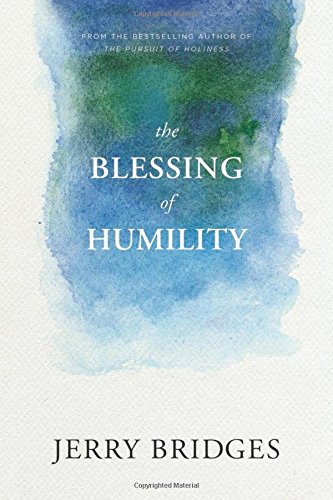
6 Quotes On Mourning From “The Blessing Of Humility”

The Blessing Of HumilityAs I stated in my review of Jerry Bridges’ book The Blessing Of Humility, reading through these thoughts slowly—Beatitude by Beatitude—would bring about the most life-changing impact. In that spirit, I will be sharing some noteworthy quotes one Beatitude at a time. Here are some quotes on blessed are those who mourn (Matthew 5:4)…

“The word that Jesus used in this Beatitude is the strongest word in the Greek language for mourning. It is the word for Jacob’s morning over what he thought was the death of Joseph (Genesis 37:35). … Jesus uses this word to show the intensity of mourning He blesses here. He is, however, actually talking about mourning not over death but over our sin.”

“To be ‘poor in spirit’ is to be convicted of one’s sin, whereas to ‘mourn’ is to be contrite for it.” —John Blanchard

“King David committed two sins: first adultery, and then (essentially) murder to try to cover up his adultery. God sent the prophet Nathan to confront him, and in his skillful accusation of David, Nathan twice used the word despised (2 Samuel 12:7-11). First, David despised the Word of the Lord—that is, he despised the law of God (verse 9). In so doing, he also despised the Person of God (verse 10). Why is this true? Despising the law of God is not only an expression of rebellion. It is also a despising of His very character, since His law is a reflection of His character. This is true not only of such heinous sins as adultery and murder, but also of our more refined sins: pride, selfishness, gossip, and the like. So let us pray that God will indeed allow us to see our sin as rebellion against the rule of God—a despising of God’s law and even of His character.”

“Failure to see our sin as primarily against God is, I believe, the reason we experience so little heartfelt grief over it. … But be it ever so small in our own eyes, whenever we sin we also break God’s law. And Scripture says, ‘Whoever keeps the whole law but fails in one point has become accountable for all of it’ (James 2:10). God’s law is seamless, one complete whole. So when we break any of it, we break the whole law.”

“Is mourning over sin just for those first coming to Christ? No, Jesus’ words are in the present active tense. We could literally translate them as ‘blessed are those who continue to mourn.’ He is pronouncing a blessing on those whose attitude toward their sin is characterized by mourning. One mark of a growing Christian, then, is a growing sense of his or her sin, and an attitude of mourning over it.”

“So mourning over our sin is truly a display of humility in action. We cannot be proud and mourn over sin at the same time. We cannot be judgmental toward other believers, or even toward unbelievers, if we are truly contrite and brokenhearted over our own sin.”

I just shared quotes on blessed are the poor in spirit. Quotes on the next Beatitude will be posted soon. Stay tuned…
6 Quotes On Being Poor In Spirit From “The Blessing Of Humility”

The Blessing Of HumilityAs I stated in my review of Jerry Bridges’ book The Blessing Of Humility, reading through these thoughts slowly—Beatitude by Beatitude—would bring about the most life-changing impact. In that spirit, I will be sharing some noteworthy quotes one Beatitude at a time. Here are some quotes on blessed are the poor in spirit (Matthew 5:3)…

“The Greek word that Jesus used for ‘poor’ is the word ptochos. It is used to describe not ordinary poverty but abject poverty. Ptochos is not like my parents struggling to make ends meet [during the Great Depression]. Rather it describes a person who is completely destitute and helpless to do anything about it.”

Spirit refers to one’s inner being, our self-awareness. Specifically here it means how we evaluate ourselves with regard to our own spiritual condition. This abject poverty of spirit comes from our awareness of our own dreadfully sinful condition.”

“In the Beatitudes Jesus is talking about the character traits of those already in the kingdom. And He says we should be poor in spirit. It should be the ongoing daily attitude of one who is growing spiritually. Believers who are growing continue to see more sin in their lives. It is not that they are sinning more; rather they are becoming more aware of and more sensitive to the sin that has been there all along. … And it is the realization that even the sins, which seems so minor in our eyes, would bring us under the wrath of God, were it not for the atoning blood of Christ shed for us on the Cross, that should cause us to be poor in spirit.”

“Those who are poor in spirit…see Christ’s blood and righteousness as their hope not only for eternity but for God’s favor each day. They groan over their sin and earnestly pursue holiness but they do not trust in their holiness. Instead they say, ‘We are unworthy servants; we have only done what was our duty’ (Luke 17:10).”

“The person who is poor in spirit has a deep, awe-filled reverence for God and His Word.”

“We live in a culture that promotes self-esteem. And I am concerned that this attitude has permeated the body of Christ. We see ourselves as better than we are. We look at sinful society around us, and we can be like the Pharisee who prayed, ‘God, I think You that I am not like other men’ (Luke 18:11).”

Quotes on the next Beatitude will be posted soon. Stay tuned…

12 Blessings While Going Through A Valley

Listen to the podcast of this post by clicking on the player below, and you can also subscribe on AppleSpotify, or Audible.

Valley times come to all people. Even Christians.

The Songs Of Ascent in the Psalms imply this, since the pilgrims are ascending from a valley to the place of worship in Jerusalem. But this idea of going through a valley is especially seen in Psalm 121.

The psalmist starts by saying I lift my eyes up to the hills. He then sings that he found his help in God. This idea of help is not what we think of in today’s world. It’s not like dialing 911, reporting our need, and waiting for help to arrive. It’s not even like driving to a hospital, checking into the emergency room, and waiting for a doctor to see us.

The idea of help in the Bible is a picture of surrounding. It’s not something we have to wait to arrive, but something—or should I say Someone—Who is already right there!

In verses 4-8, the phrase watch over is used five times. This too gives us the idea of the closeness of our help. The Hebrew word translated watch over has four powerful word pictures:

  1. A Gardener carefully watching over his precious garden.
  2. A Soldier dutifully guarding a valuable treasure.
  3. A Watchman diligently scanning the horizon for any approaching enemies.
  4. A Shepherd lovingly attending to his flock.

I especially like the picture of a shepherd because of another valley reference. The opening words to Psalm 23 are, “The Lord is my Shepherd.” Then we read of 10 blessings the Good Shepherd gives His sheep while they pass through the Valley of the Shadow of Death. Our Shepherd…

  1. Gives us His confidence so we will fear no evil
  2. Reveals His close, intimate presence
  3. Protects us with His rod
  4. Guides us with His staff
  5. Brings comfort to our hurts
  6. Provides us with food
  7. Anoints us with His blessings
  8. Pours out His overflowing blessings
  9. Allows His goodness and love to always follow us
  10. Gives us the assurance of eternal life

Then adding a couple of more blessings from Psalm 121, we see He…

11.  Never lets our foot slip (121:3)

12. Never sleeps or slumbers, so that we can rest securely (121:3-4)

Remember these songs of ascent are sung by those coming out of the valley. They are sung to remind us of God’s deliverance, they are also sung as encouragement to those still in the Valley.

Jesus went through the darkest Valley anyone has ever gone through. It wasn’t just the valley of the shadow of death, He went through death, hell, and the grave. He overcame for you and me! He now walks with us in our valleys. He says to us, “I’ve been there, done that, and have the scars to prove it. I will never leave you or forsake you. I know this valley. I know how to get you out of this valley. Trust Me!”

We, too, who have been through the valleys and are now singing the song of ascent, need to sing loudly for those who are still in the valleys. We need to sing songs of assurance to them: “I have been in that same valley. I know how dark it is. But I know God watched over me and brought me safely through. Now I have a much better vantage point. And I say to you, trust Him! He is watching over you too. He will not let your foot slip. He will not sleep or slumber. He will protect you, and anoint you, and feed you, and give you His own dear presence. Don’t stop walking!”

If you’ve missed any of the messages in this series, you can access the complete list by clicking here.

►► Would you please prayerfully consider supporting this ministry? My Patreon supporters get behind-the-scenes access to exclusive materials, like this recent post about building trust. ◀︎◀︎

7 Quotes For Leaders Who Love The Church

Catalyst devotionsI recently completed an excellent reading plan on YouVersion called Catalyst: Devotions For Leaders Who Love The Church. Here are some quotes I especially liked…

“Too often we view leadership as purely outward, thinking only of how we will climb the next mountain, or overcome the next obstacle without considering who we will be when we do. But true leadership, great leadership, starts within.” 

“Your capacity for life changing leadership is directly related to your willingness to be led, not your eagerness to perform. Lean in to the promises of God, allow Him to mature you in goodness, knowledge, self-control, perseverance, and love; true hallmarks of a leader worth following.”

“The more we look, act, love, and lead like Jesus, the more impactful our leadership will be to the world around us.” 

“There is no choosing to lead through the Spirit of God without choosing to be changed by the Spirit. … What is not cultivated in secret cannot be called upon in public. We have to pray for the transformative power of the Spirit to work His way in our hearts and minds, changing us forever, so our leadership is not a facade, but a reflection of His power at work within us.”

“Jesus calls us further, calls us to more, and through His power we have to change the landscape of leadership in our world. We must demonstrate that leadership through Christ speaks life and value into people’s hearts. That the way we treat the Father’s children matters, and is our greatest end.” 

“Father, help me to see Your children the way You do. Give me eyes to look beyond what my flesh sees, and to focus on how to affirm, love, and care for those You’ve entrusted me to lead. Create in me a compassionate heart, one that turns first to You in worship and then towards Your children with love.”

“God, this world is Yours, everything in it is Yours. I am Yours, do with my life what You will. Help me to release the things of my flesh, so that I may be transformed according to Your Spirit. Give me a heart for those around me, a burden for my community that compels me to fulfill the mission You have may give me. Teach me to clothe myself in You, to speak Your words and offer Your hands. May my leadership radiate You, and draw people towards Jesus.”

Overcoming Anxiety

God's answersI remember visiting Denver, Colorado. The scenery was so breathtaking, so I decided to go for an early morning hike. Quickly I discovered that my hike became breathtaking in more than one way! Even though I was in good shape, I had a hard time getting my breath because of the mile-high atmosphere.

I learned later that this is why many top athletes train in high elevation: it increases their lung capacity and endurance so that they now have an advantage when they compete against others.

God trains us on His mountains, but He made us to live and minister in the valleys. Our ascent into God’s mountaintop presence is so important for godly maturity!

In the first song of ascent, I noticed something unusual in the very first verse. Some Bibles translate the verbs in the present tense (I call on the Lord and He answers me), but some translations use the past tense (I called on the Lord and He answered me). Which is correct? Actually both of them are correct!

The verbs are written in the perfect tense—something done at a specific point in the past, but still relevant and powerful in the present. In other words, we can say it like this, “I called on the Lord in the past and He most definitely answered me. That gives me confidence to call on the Lord today, knowing that He will answer me again.”

Past answers lead to present power and future hope.

But—oh wow!!—check out how God answers us! The word literally means that God answers us in song. God so loves it when you trust Him enough to bring all your cares to Him, that He sings His answer to you. For the Lord your God is living among you. He is a mighty Savior. He will take delight in you with gladness. With His love, He will calm all your fears. He will rejoice over you with joyful songs (Zephaniah 3:17).

If we don’t continue to recall how God has answered us in the past, we’re missing out on the blessing of hearing Him sing His answers over us again today. As a result, we begin to live in the world’s valley-level turmoil and anxiety.

Peace is longed for in verses 6 and 7. The Christian wants to live in peace, but the world loves turmoil. Want proof? Just look at what makes the headlines today! The solution is to keep going back to God again and again and again—

Do not be anxious about anything, but in everything, by prayer and petition, with thanksgiving, present your requests to God. And the peace of God, which transcends understanding, will guard your hearts and minds in Christ Jesus. (Philippians 4:6-7)

Check out the full message to find the peace you are longing for!

If you don’t have a home church, please join us this Sunday as we continue our look at the psalms of ascent, or you can tune in to our live Periscope broadcast from wherever you are.

If you’ve missed any of the messages in this series, you can access the complete list by clicking here.

Psalms Of Ascent

The Psalms Of AscentEvery year, Jews from around the world made four pilgrimages to Jerusalem for various feasts and sacrifices. These journeys reminded them of God’s goodness as they went to the Temple to worship, and they helped refocus on God’s ways as they returned to their regular routines.

Jerusalem is over 2500 feet above sea level, so the pilgrimage there was a physical workout as well as a spiritual workout. So these times climbing up into God’s presence were beneficial for God’s people, preparing them to minister in their cities in the following months.

The Book of Psalms contains 15 songs that these pilgrims would sing to and with each other as they traveled up to Jerusalem. These Psalms of Ascent are still instructive for Christians today.

Please join me this Sunday as we begin a look at the life-changing truths these pilgrimage songs can still teach today to all of God’s people.

Here are the psalms we looked at:

11 Ways To Be A Good Minister

© Lori Oxford Photography

Here are 11 ways to “be a good minister of Christ Jesus” (1 Timothy 4:6)—

  1. Know the Scripture well enough to point out false doctrines (vv. 1-6a)
  2. Be a good teacher (v. 6b)
  3. Train myself to be godly (v. 7)
  4. Take care of my physical health (v. 8)
  5. Put my hope solidly in God (vv. 9, 10)
  6. Set an example worth following (vv. 11, 12)
  7. Use the Scriptures in everything I preach (v. 13)
  8. Turn my God-given gifts into strengths (v. 14)
  9. Have a good work ethic (v. 15a)
  10. Be consistently growing (v. 15b)
  11. Carefully and prayerfully evaluate my doctrine (v. 16)

4 Ways To Share The Good News With Everyone

Everybody EveryoneJesus told His followers that their ministry assignment was to take His message of salvation throughout the entire world. One requirement to do this, is to be able to communicate with lots of people. Actually to be able to communicate with everyone.

Be careful to do what is right in the eyes of everybody. If it is possible, as far as it depends on you, live at peace with everyone. (Romans 12:17-18)

Really? Everybody and everyone?!

Yes!

Jesus said our Helper would be the Holy Spirit. He would come to empower us to be witnesses to everyone, everybody, everywhere (Acts 1:8).

We have been learning how to communicate with others better, but noticing their communication style “accent.” Check out this post to get some more insight into this. In a nutshell…

  • Doers are action-oriented
  • Planners like to work out all the details
  • People want to make sure everyone is connected
  • Visions are imagining a better future

So if you are a Doer, and you’re trying to share the Good News about Jesus with a Planner, you can probably see a potential problem. The Doer is speaking in bullet points, but the Planner is wanting a lot more facts and figures.

This is where the Holy Spirit can help us. He has the insight that we don’t, and He can direct our words, just as He directed Christ’s words (see John 12:49-50).

Here’s how to talk their talk when you’re sharing the Good News:

(1) Doer

  • Keep it brief
  • Share more facts than stories
  • Stress now/today
  • Rely on the Gospel of Mark (action oriented)

(2) Planner

  • Tell them the who, what, where, when, why, and how
  • Be ready for lots of questions
  • Give them time to process your information
  • Rely on the Gospel of Matthew (lots of background, lots of Old Testament references to answer the who, what, where, when, why and how)

(3) People

  • Develop a friendship first
  • Share more stories than facts
  • Don’t tell them, show them your personal life
  • Rely on the Gospel of Luke (lots of personal stories about changed lives)

(4) Vision

  • Share both the facts and the stories
  • Encourage them to “Imagine what would happen …”
  • Give them time to ask questions
  • Rely on the Gospel of John (very poetic and image-rich)

You can connect with everyone, everybody, everywhere and share the Gospel with them in an effective way. Allow the Holy Spirit to give you the insight you need.

Check out how I describe this in more detail here…

Don’t Try To Change Your Bad Behavior

Thoughts to beahviorsAs I wrote previously, I believe Christians should be the best at getting along with others. First of all, Christians have been empowered by the Holy Spirit with the skills necessary to live at peace with everyone, IF we will only allow the Spirit to do the necessary work in us. And second, the way Christians treat others goes a long way toward either attracting or repelling others from a relationship with Jesus.

But here’s an important thing: If you don’t get along well with others now, don’t try to change your behavior!

Stephen Covey wrote, “To try to change outward behaviors does very little good in the long run if I fail to examine the basic paradigms from which those attitudes and behaviors flow.”

You see, behavior is the fruit. If we want to change the fruit, we need to back up a few steps.

The Apostle Paul used the life of Jesus as an example for Christians on how we can get along with others. But notice this: most of what Paul discusses is the “inside stuff.”

The progression goes like this (see Philippians 2:1-13)—

Thoughts → Values → Attitudes → Behaviors

(1) Thoughts—These need to be humble thoughts about God’s love toward us (v. 1).

(2) Values—Paul tells us to be “one in spirit and purpose” with others (v. 2). The definition of the Greek words here mean valuing the well-being of everyone. Paul then explains how our humility can lead to these win-win relationships (vv. 3, 4).

(3) Attitudes—“Your attitude should be the same as Christ Jesus” (v. 5). Jesus showed us what it was to have an attitude related toward obedience to God’s will.

(4) Behavior—If our thoughts, values and attitudes are rightly aligned to God, then our behavior will naturally be Christ-like as well. We see the example of Jesus in verses 6-8, and God’s reward for that behavior in verses 9-11. Then Paul calls on Christians to follow that pattern in our own lives (vv. 12, 13).

Most decent, reasonably-thinking human beings share the same values. Harry Truman said, “When we understand the other fellow’s viewpoint—understand what he is trying to do—nine times out of ten he is trying to do right.”

The problem is this: When the other person behaves differently from me, my natural tendency is to assume he doesn’t value what I value. In other words, I’m judging his value system on the way I normally behave.

The break-down is in my attitude. That’s the area I need to address. That’s the attribute of Jesus that Paul told us to copy.

So if I want to get along better with others, I shouldn’t try to change my behavior, but my attitude. My prayer should be: “I want this same attitude to be in me which was also in Christ Jesus. He served God and others, so I too want to follow His example of obedience, and I want to demonstrate my appreciation for all that Jesus has done for me by working hard to better get along with others. Help me change my attitude!”

Check out this video of the full message…

I hope you can join us next Sunday as we continue learning how to get along with others. Please join us in person or on Periscope.

12 More Quotes From “The Place Of Help”

The Place Of HelpAs always, there are more quotes from Oswald Chambers’ books than I have space to share them. So here are a few more from The Place Of Help.

“If we are going to be used by God, He will take us through a multitude of experiences that are not meant for us at all, but meant to make us useful in His hands. There are things we go through which are unexplainable on any other line, and the nearer we get to God the more inexplicable the way seems. It is only on looking back and by getting an explanation from God’s Word that we understand His dealings with us.”

“The essence of Christianity is that we give the Son of God a chance to live and move and have His being in us, and the meaning of all spiritual growth is that He has an increasing opportunity to manifest Himself in our mortal flesh.”

“Temptation is a short cut to what is good, not to what is bad. satan came to our Lord as an angel of light, and all his temptations center around this point—‘You are the Son of God, then do God’s work in Your own way; put men’s needs first, feed them, heal their sicknesses, and they will crown You King.’ Our Lord would not become King on that line; He deliberately rejected the suggested short cut, and choose the long trail, evading none of the suffering involved (cf. John 6:15).”

“God expects His children to be so confident in Him that in a crisis they are the ones upon whom He can rely. … God expects of us the one thing that glorifies Him—and that is to remain absolutely confident in Him, remembering what He has said beforehand, and sure that His purposes will be fulfilled.”

“God has never promised to keep us immune from trouble; He says ‘I will be with him in trouble,’ which is a very different thing.”

“The Bible characters never fell under weak points but on their strong ones; unguarded strength is double weakness.”

“Do we trust in our wits or do we worship God? If we trust in our wits, God will have to repeat the same lesson until we learn it.”

“The coming of Jesus Christ is not a peaceful thing, it is a disturbing thing, because it means the destruction of every peace that is not based on a personal relationship to Himself.” [Matthew 10:34]

“The peace that Jesus gives is never engineered by circumstances on the outside; it is a peace based on a personal relationship that holds all through. ‘In the world ye shall have tribulation: … in Me … peace.’”

“God is a holy God, and the marvel of the Redemption is that God the Holy One puts into me, the unholy one, a new disposition, the disposition of His Son.”

“In the Sermon on the Mount our Lord teaches us not to look for justice, but never to cease to give it. That is not commonsense, it is either madness or Christianity.”

“When the love of God is in me I must learn how to let it express itself; I must educate myself in the matter; it takes time. Acquire your soul with patients, says Jesus [Luke 21:19]. Never give way to this spirit—‘Oh well, I have fallen again, I will stay down now.’ Have patience with yourself, and remember that this is salvation not for the hereafter, but for the here and now.”

You can read the first set of quotes from The Place Of Help by clicking here.

My review of The Place Of Help is here.

And be sure to look for “Thursdays With Oswald” to read quotes and thoughts from the current Chambers’ book I am reading.