Shaken (book review)

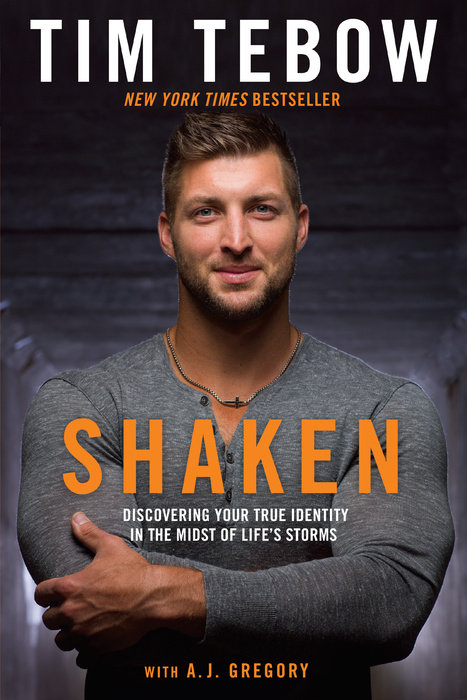
shakenI continue to be so impressed with the way Tim Tebow always finds a way to let his light shine for Jesus in everything he does. Many people find it easy to give God praise when things are going well, but it might not be as easy to praise Him in the down times. This is exactly what Tim Tebow explores in his latest book Shaken.

Football fans have seen the on-field celebrations after a big victory, the joyous locker rooms, and the upbeat press conferences. But seldom do we see much from the team that loses the big game. Even less often do we get a glimpse behind the scenes of the heartache for athletes in the day-to-day grind of their sport.

Tim Tebow has won the Heisman Trophy, the NCAA football national championship, and one of the most exciting NFL playoff games in history. Tim has also been traded, benched and cut by other NFL teams. During these times, Tim has learned to rely on his bedrock faith. And in Shaken we get to hear the lessons he’s learned, and to discover the truth behind an important Bible verse (from which the name of the book comes): I keep my eyes always on the Lord. With Him at my right hand, I will not be shaken (Psalm 16:8).

Shaken isn’t all about Tim. He is refreshingly transparent to share with us about his struggles and the lessons he’s learned, but he also shares with us the overcoming stories of some other amazing people—folks who wouldn’t normally be in the spotlight. And in so doing, Tim shows us that each and every one of us has immeasurable value to God, that tragedies don’t have to shake our world, but that we can use even the difficult times to lean into God and to do great things for Him.

My level of respect for Tim Tebow, and the way he uses his notoriety for God’s glory, has risen again after reading this book. For anyone who is looking for a way to make sense of the hard things in life, Shaken will be an eye-opening, heart-changing book.

I am a Waterbrook book reviewer.

(By the way, Tim’s first book—Through My Eyes—is also an excellent read!)

One Of The Few (book review)

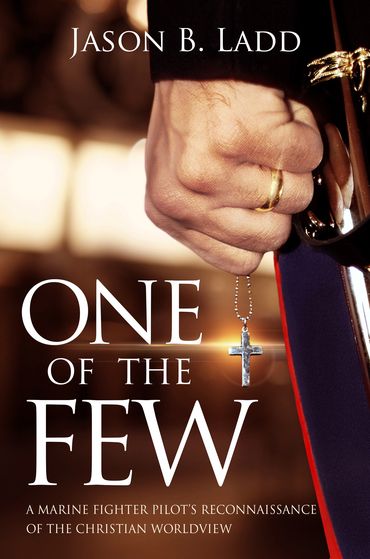
one-of-the-fewI love to read stories that take me “behind the scenes.” Which is one of the reasons I enjoy reading autobiographies, where the author is candid and transparent, and gives me the scoop on things I wouldn’t have experienced myself. That’s exactly what I got in One Of The Few by Jason Ladd.

Jason takes us inside the United States Marine Corp, specifically into the seat of a Marine pilot. We get to see firsthand the grit, intelligence, and perseverance it takes to be one of the few, the proud, the Marines. Learning a little more about what it takes to attain this elite status, increased my respect for our men and women in military service even more.

But as I read Jason’s story, I quickly learned that he was learning from his own life experiences as well. As he pursues his dream, as he learns new skills, as he is confronted with the harsh realities of wartime situations, Jason must also come to grips with his beliefs about spiritual matters. His journey is uniquely his, but he shares his story in a way that will benefit anyone who is either wrestling with spiritual questions, or anyone who is trying to befriend someone who is skeptical about the Christian faith.

One Of The Few resonated with me on many levels: a great personal story, excellent leadership lessons, new military insights, and great Christian apologetic skills. Definitely put this book on your “to be read” list.

I am a Boone Shepherd book reviewer.

So, Anyway… (book review)

So AnywayGood comedy is something which is appreciated by nearly everyone. A comedian who can make us laugh, or think, or think while we’re laughing, is in limited company. But have you ever wondered how a comedian formulates his or her comedy? In So, Anyway… we get some comedic insight from the very talented John Cleese.

I’ll admit it: I am fan of Monty Python. Their offbeat humor is brilliant in the way they capture a side of life that goes mostly unnoticed. One of the pillars of Monty Python is John Cleese. John has a physical presence that can make you laugh, an intelligence that is lightning-fast, and an ability to use the Queen’s English to draw out nuanced comedy unlike few I’ve heard. But, again, I was always intrigued by that nagging question: How did he get to be so funny? Was he born with a “comedic gene”? Were his parents comical? Is good comedy something that can be learned?

As I read his delightful memoir So Anyways… I discovered the answer was “yes” to all of the above. John looks back on his life in a prescient way that allows the reader to see all of the ingredients that go into making a world-class comedian. Is there such a thing as a “comedic gene”? If there is, John was probably born with it. Were his parents odd? They were probably considered “normal” people (but, what is “normal”?). And along the way John definitely learned what was funny and what wasn’t, and used that to his advantage.

Throughout this memoir you will see John’s comedic routines interspersed in the story of his life. You will discover the “seeds” that blossomed in a particular character or paradigm or comedy routine. You will meet the people, places, and experiences that John leveraged as he discovered what makes people throughout the English-speaking world laugh. Anyone interested in how comedy is birthed and nurtured will love seeing comedy develop through the life of John Cleese.

I am a Three Rivers Press book reviewer.

Book Reviews From 2015

Intentional Living (book review)

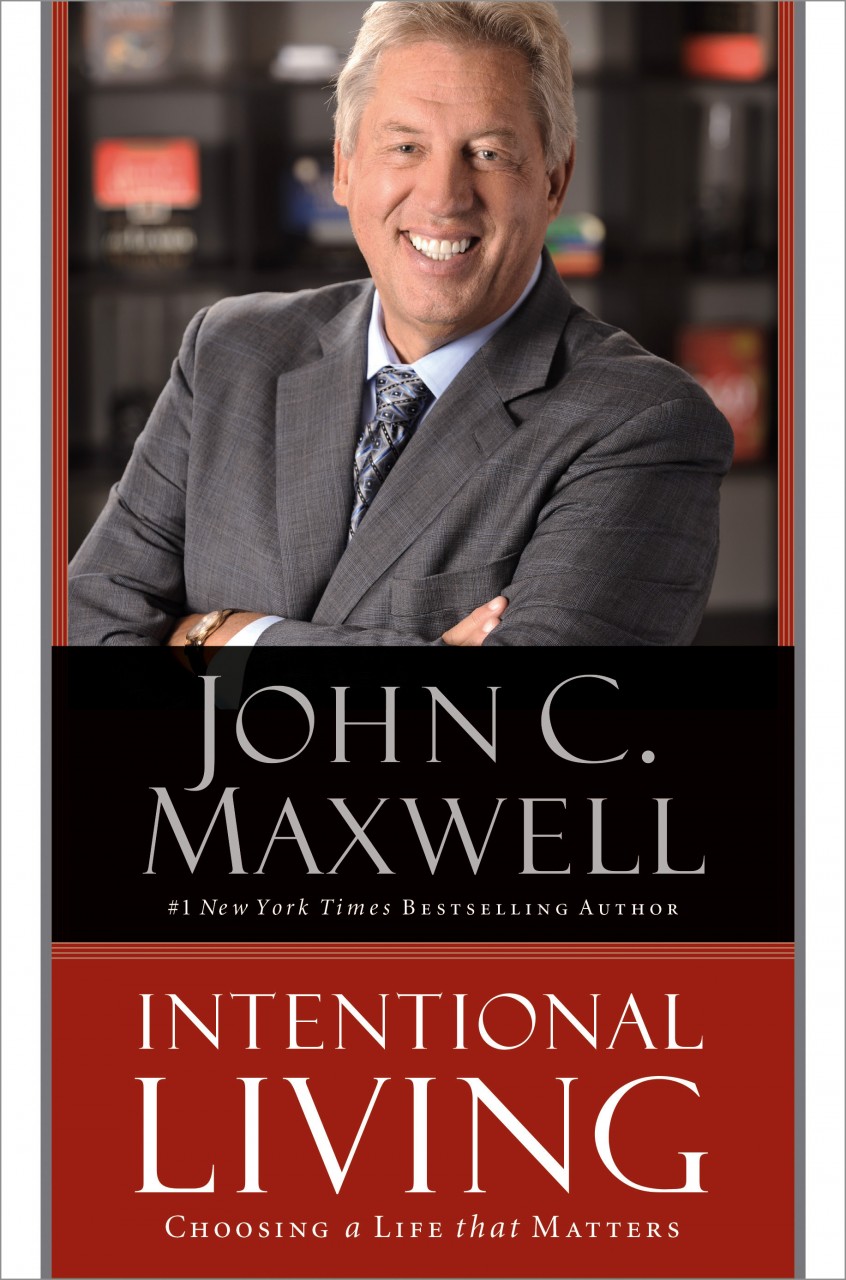
Intentional LivingI believe I have read every book John Maxwell has written, and I found Intentional Living to be different from every other book so far.

The teaching points were still there, but they felt different. The quotes from other wise men and women were still there, but not as many of them. This book was different, because it was personal.

I love to read biographies and autobiographies of successful men and women, and then try to dig out the leadership lessons from their lives. But Dr. Maxwell did this for me in Intentional Living. He told his life story in a very personal way (it felt a lot like a memoir or autobiography), but then he also wrote about the leadership lessons from his life. Thankfully, he didn’t stop there, but then went on to challenge us with ways to apply those leadership lessons to our own lives.

John Maxwell calls us to live an intentional life—

“Living intentionally will motivate you to start asking questions and begin prioritizing whatever is important to you. … Can I make a difference? Whom should I help? How can I help them? How can I add value to them? … An unintentional life accepts everything and does nothing. An intentional life embraces only the things that will add to the mission of significance.”

If you feel that your life lacks intentionality, this book will help you make the changes necessary. If you feel that your life is intentional now, this book will help you laser-focus on the most significant things you can do to take your impact of significance to a whole new level.

I am a Center Street book reviewer.

13 Quotes From “Seeking Allah, Finding Jesus”

Seeking Allah Finding JesusIf you want to know about Islam from an insider’s perspective, Seeking Allah, Finding Jesus by Nabeel Qureshi is simply a phenomenal book! Check out my book review by clicking here. Below are just a few of the quotes I found quite educational.

“There is much division in Islam. The best determination of whether a man is Muslim is if he exclusively declares that Allah is God and Mohammad is Allah’s messenger. Beyond this point, there is great diversity in Islam.”

“There is no book of sharia. We must derive the law from a hierarchy of sources using a process of jurisprudence called fiqh. The first and greatest source is the Quran. Nothing can supersede the Quran because it is the word of Allah. But the Koran is not comprehensive. As Muslims, there is much we must do and believe that is not found in the Quran. For this, we go to the second source, hadith. The hadith elaborate and clarify what is found in the Quran, but they never contradict. There is no contradiction in Islam. If a hadith is found in any way to contradict the Quran, then it is inauthentic and must be disregarded. If no hadith can be found to clarify an issue, then we must turn to the third source of sharia: the ulema, Muslim scholars who are wise and experienced in Islam.”

“Muftis from different schools of thought have different precedents and therefore provide different fatwas. Each denomination differs on what hadith they consider accurate. Since the hadith are the second rung of sharia, these differences of opinion have real consequences. Many of the differences between the ways Sunnis and Shias practice Islam are over this very matter. Their books of hadith are disparate. This difference, combined with the Shia position regarding the authority of imams, results in a significantly different view of sharia. … Most Muslims do not know these things. They know Islam to the extent that they practice it, and these are matters for the learned.”

“Christians believe Jesus is God incarnate, and this is a necessary belief for orthodox Christianity. Muslims believe that Jesus is no more than a prophet, and to consider Him God incarnate would be blasphemy and would cause one to be condemned to hell eternally, according to the Quran.”

“Regarding Jesus, there are two issues on which Muslims particularly disagree with Christians: that Jesus died on the Cross and that Jesus claimed to be God. The Quran specifically denies both of these beliefs.” 

“Sahih Bukhari…is the most trustworthy book of hadith, compiled by Imam Bukhari. The hadith were not collected into the books until a long time after Mohammad’s death. Many false hadith had been fabricated, and it was difficult to determine which ones were accurate. Imam Bukhari sifted through five hundred thousand hadith and pick out the five thousand most accurate.”

“The earliest historical records show that Mohammad launched offensive military campaigns and used violence at times to accomplish his purposes. He used the term jihad in both spiritual and physical contexts, but the physical jihad is the one Mohammad strongly emphasizes. The peaceful practice of Islam hinges on later, often Western, interpretations of Mohammad’s teachings, whereas the more violent variations of Islam are deeply rooted in orthodoxy and history.”

“The Bible and the Quran were nothing alike. Not in the slightest. … Mohammad dictated the contents of the Quran to his scribes over a period of twenty-three years. Only after his death was the Quran collected into a book. Verses that had been dictated years or decades apart are frequently found side-by-side in the Quran, often with no obvious connection. The result is that Muslims placed relatively little weight on surrounding passages when trying to interpret sections of the Quran.”

“Almost everything Muslims know about Mohammad comes to them orally, rarely from primary sources. Unlike Christians learning about Jesus from the Bible, the Quran has very little to say about Mohammad.”

“Mohammad’s first biography, Sirat Rasul Allah by Ibn Ishaq, comes down to our date only through the transmission of a later biographer, Ibn Hisham. In his introduction, Ibn Hisham explains that he altered the story of Mohammad’s life. ‘Things which it is disgraceful to discuss, matters which would distressed certain people, and such reports as [my teacher] (sic) told me he could not accept as trustworthy—all these things I have omitted.’”

“According to the hadith, Mohammad named four men as the best teachers of the Quran. The first one was Abdullah ibn Mas’ud, whome Mohammad distinguished as the foremost expert of the Quran. The last one was Ubay ibn Ka’b, whom Sahih Bukhari identifies as the best reciter of the Quran. These were the men that Mohammad hand selected as the best teachers of the Quran, but as I studied the early sources, I found that they did not agree with the final Quran, which has been passed down as today’s version. They did not even agree with each other. … Ubay is known to have had 116 chapters in his Quran, two more than Zaid’s edition. Ibn Mas’ud had only 111 chapters in his Quran, insisting that the additional chapters in Zaid’s Quran and Ubay’s Quran were just prayers, not Quranic recitation.”

“In Islam, there is only one unforgivable sin, shirk, the belief that someone other than Allah is God. Shirk is specifically discussed in the context of Jesus in 5:72. He who believes Jesus is God, ‘Allah has forbidden Heaven for him, and his abode will be the Hellfire.’”

“All suffering is worth it to follow Jesus. He is amazing.”

Seeking Allah, Finding Jesus (book review)

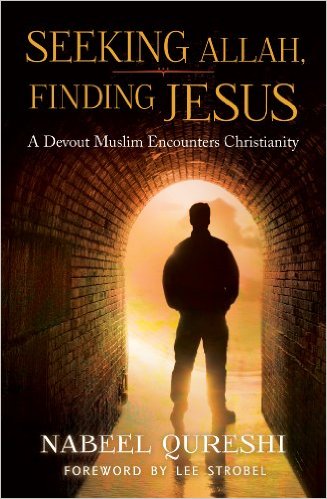
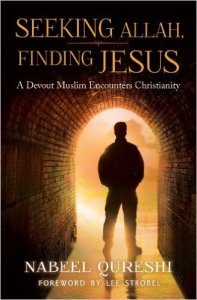
Seeking Allah Finding JesusI have a family member who works in predominately Muslim areas of the world. I recently asked him how I could learn more about Muslims and the Islamic belief system, and he highly recommended Seeking Allah, Finding Jesus by Nabeel Quereshi. I am so glad he did!

This book is told in the narrative style of an autobiography, as Nabeel walks us through his devout Muslim upbringing, and the conversations and confrontations that got him thinking about his religion in contrast to Christianity. The book has a “documentary” feel to it, as Nabeel takes us inside his home, school and mosque to let us see his life portrayed almost in real-time. Many of the conversations include Arabic phrases, which Nabeel footnotes at the beginning of the book, and then continues to use without the footnoted translation later, allowing the reader to become more immersed in his world.

Nabeel states his three main purposes for his book:

  1. To tear down walls by giving non-Muslim readers an insider’s perspective into a Muslim’s heart and mind. The mystical beauty of Islam that enchants billions cannot be grasped by merely sharing facts. But it is my prayer that by entering my world, you will come to understand your Muslim neighbor, so you can love him as yourself.
  2. To equip you with facts and knowledge, showing the strength of the case for the gospel in contrast with the case for Islam.
  3. To portray the immense inner struggle of Muslims grappling with the gospel, including sacrifices and doubts.

In my mind, he accomplished all three of these purposes beautifully. In addition, I discovered a whole new way to pray for my Muslim friends, as well as feeling like I may now carry on a more intelligent conversation with them about their cherished beliefs.

I too highly recommend this book to anyone who wants to learn more about what Muslims believe.

There Is A God (book review)

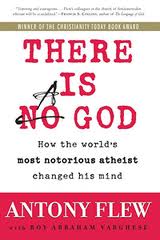
There Is A GodIt’s a mark of a strong, confident person that can admit, “I was wrong. I made a mistake.” Anthony Flew is just such a strong man. His book is called There Is A God: How the world’s most notorious atheist changed his mind.

The one sentence summary of this book could be: Anthony Flew was a noted philosopher who concluded there was no God, but then was persuaded to rethink his position and came to a complete reversal. But that would sell his story short.

The real meat-and-potatoes of the book are the arguments which helped change Anthony Flew’s mind. This, I must warn you, is no easy reading. The arguments are so nuanced and metaphysical at times, that it really requires a careful reading. This was not a book I could speed read, because the chain of logic in the arguments was simply too good to miss anything.

I throughly appreciated the candor with which Flew shared his metamorphosis from atheist to Theist. The book also includes two appendices which address the current state of modern atheism, and an interview with N.T. Wright on Jesus being God Incarnate.

If you are ready to study some of the atheistic and theistic arguments that the brightest apologists for both viewpoints are presenting today, then this is the book for you! I thought the journey of discovery was fantastic and mind-expanding!

Book Reviews From 2013

BookshelfHere are the books I read and reviewed in 2013. Click a title to read the review…

10 People Every Christian Should Know

A Harmony Of The Gospels

Alive To Wonder

All In

Alone

Altar Ego

Andrew Murray Daily Reader

Dear Abba

Decision Points

Did The Resurrection Happen … Really?

Draw The Circle

Fight

Firsthand

Francis

God’s Favorite Place On Earth

God’s Workmanship

Habitudes

He Shall Glorify Me

I Never Thought I’d See The Day

If Thou Wilt Be Perfect

If Ye Shall Ask

It Is Finished

Jesus Is _____.

Jesus: A Theography

Knocking At God’s Door

Love To The Uttermost

One Year Book Of Personal Prayer

Outliers

Plastic Donuts

Pouring Holy Water On Strange Fire

Promotion

Raising Your Child To Love God

Seven Men

Smith Wigglesworth On Healing

Sometimes You Win, Sometimes You Learn

Stopping Words That Hurt

The 13th Resolution

The Baptism With The Holy Spirit

The Bare Facts

The Five Levels Of Leadership

The Highest Good

The Hobbit

The Man Who Knew Too Much

The Purpose Of Christmas

The Ragamuffin Gospel

The Reagan Diaries

The Secrets Of Intercessory Prayer

Things We Couldn’t Say

Understanding Sexting

Unfinished

Unstoppable

Visioneering

Who Do You Think You Are?

You Don’t Need A Title To Be A Leader

For my book reviews of 2011 click here, and for 2012’s list click here.

Firsthand (book review)

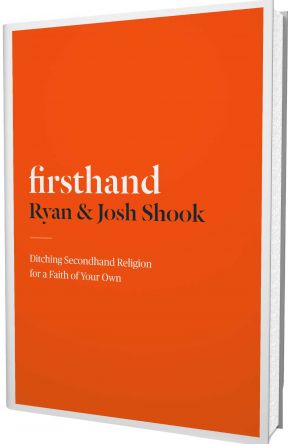
FirsthandWhile I was reading Firsthand by Ryan & Josh Shook, I felt a little bit like I was reading my own autobiography. Ryan & Josh write about their journey to embrace faith in God as something personal for them—something firsthand. Prior to this point in their lives, these brothers felt like they were living and believing in a secondhand relationship with God.

I can relate. I’m a fourth-generation Christian, with my parents, grandparents, and great-grandparents professing a relationship with Jesus Christ. I remember vividly my “crisis of faith” as I wrestled with my burning questions: Do I believe what the Bible says about God just because my parents believed it, or do I believe it because it’s true?

I would encourage all Christian parents to purchase a copy of this book for their kids. Ryan & Josh’s words will resonate with them, and will prepare them for their own journey of discovery. We Christian parents must do all we can to help our children successfully navigate this crucial time in their lives, and Firsthand will be an invaluable resource.

Here’s a video review I did for WaterBrook Multnomah Publishers—

I am a WaterBrook book reviewer.