Above The Line (book review)

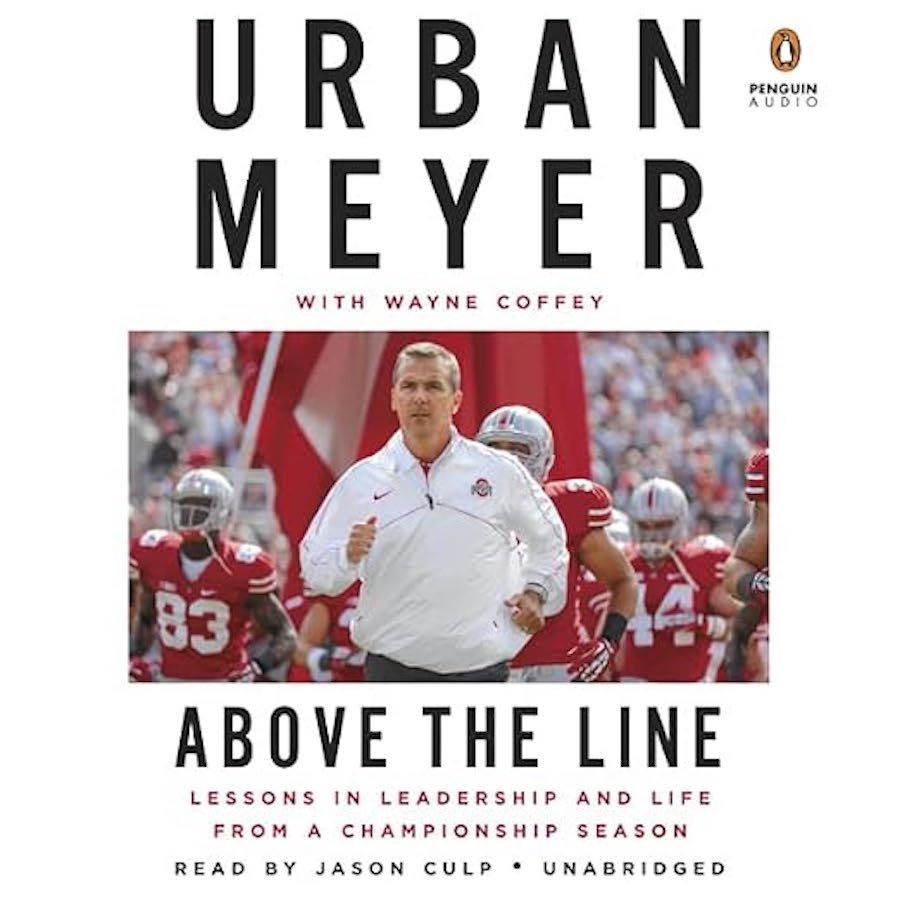
Being a diehard University of Michigan Wolverines fan, it’s hard for me to say anything good about that school to the south of us. But being a lifelong learner of quality leadership insights, I have to tip my cap to Urban Meyer for the outstanding principles he presents in his book Above The Line. 

Coach Meyer has been developing the principles he shares in this book for years, but he tells the story of how they all came together for his team during the season they went undefeated and won the college football national championship. As he correctly notes, leadership isn’t just for sports teams: “Where the coach’s job comes in is to get great players to play great. That is the responsibility of any leader in any organization.” 

The title of this book comes from the overarching maxim for all of Meyer’s leadership teaching. It goes like this: E + R = O (where E is the Event, R is your Response to the event, and O is the Outcome. The response winning leaders are trying to develop in their team is an above-the-line response. He says that most of us default to below-the-line behaviors—

     “It isn’t hard to find people who are caught up in Below the Line behavior. All you need to do is look for those whose first reaction is to blame (others), complain (about circumstances), and defend (yourself), or BCD. … Instead of accountability, BCD creates a culture of excuse making and victimization—things that are toxic for your organization and performance.” 

The bulk of the rest of Above the Line is Coach Meyer elaborating on the six healthy “R” responses that leaders should be building into their team members. He says, “Here’s the bottom line: exceptional leaders think about common things in an uncommon way.” In keeping with this truism, Coach Meyer doesn’t share any uncommon leadership principles, but he does share them in ways that most leaders probably haven’t considered before. 

Although this book is written by a college football coach, there isn’t much football talk on the pages of this book. So I can highly recommend this to any student of leadership who is ready to learn some new ways to get better outcomes to the events that happen to them and their organizations. 

►► Would you please prayerfully consider supporting this ministry? My Patreon supporters get behind-the-scenes access to exclusive materials. ◀︎◀︎

The Craig And Greg Show: Mistake Your Way To Success

Listen to the audio-only version of this podcast by clicking on the player below, or scroll down to watch the video.

On this episode of “The Craig And Greg Show” we talk about: 

  • [0:20] Craig shares an insightful quote from John Maxwell 
  • [0:45] The guys claim to have never made a mistake, and we definitely believe them…
  • [1:12] Mistakes help both individuals and teams grow 
  • [2:12] Craig shares a lesson from his wife’s classroom about it being a safe place to make mistakes 
  • [3:06] Leaders need to distinguish between success and perfection 
  • [3:50] What do our faces show when others make mistakes? 
  • [4:40] Greg explains how grace and humility from the leader will help other teammates deal with their mistakes 
  • [6:16] Sports show us how mistakes can lead to excellence 
  • [7:24] Greg’s football mistakes led to his high level of success 
  • [11:06] Leaders have to remind everyone that mistakes aren’t fatal 
  • [13:30] Thomas Edison gave us a good example about success coming from failure 
  • [15:31] When leaders share their mistakes, it’s freeing for the rest of the team
  • [17:26] Leaders need to take initiative—as the leader goes, so goes the team

Check out this episode and subscribe on YouTube so you can watch all of the upcoming episodes. You can also listen to our podcast on Spotify and Apple.

Shaken (book review)

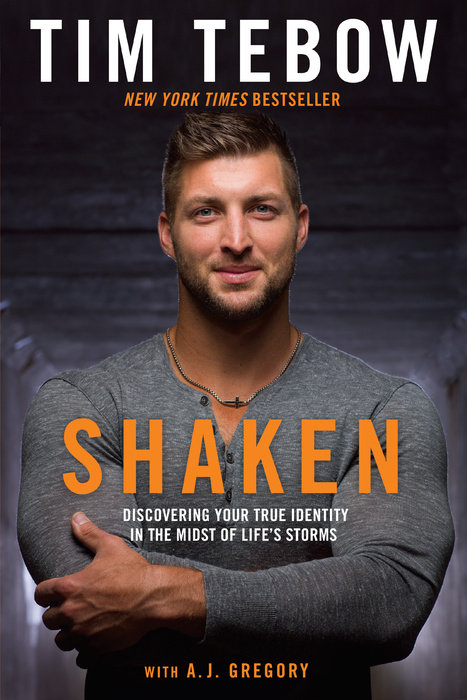
shakenI continue to be so impressed with the way Tim Tebow always finds a way to let his light shine for Jesus in everything he does. Many people find it easy to give God praise when things are going well, but it might not be as easy to praise Him in the down times. This is exactly what Tim Tebow explores in his latest book Shaken.

Football fans have seen the on-field celebrations after a big victory, the joyous locker rooms, and the upbeat press conferences. But seldom do we see much from the team that loses the big game. Even less often do we get a glimpse behind the scenes of the heartache for athletes in the day-to-day grind of their sport.

Tim Tebow has won the Heisman Trophy, the NCAA football national championship, and one of the most exciting NFL playoff games in history. Tim has also been traded, benched and cut by other NFL teams. During these times, Tim has learned to rely on his bedrock faith. And in Shaken we get to hear the lessons he’s learned, and to discover the truth behind an important Bible verse (from which the name of the book comes): I keep my eyes always on the Lord. With Him at my right hand, I will not be shaken (Psalm 16:8).

Shaken isn’t all about Tim. He is refreshingly transparent to share with us about his struggles and the lessons he’s learned, but he also shares with us the overcoming stories of some other amazing people—folks who wouldn’t normally be in the spotlight. And in so doing, Tim shows us that each and every one of us has immeasurable value to God, that tragedies don’t have to shake our world, but that we can use even the difficult times to lean into God and to do great things for Him.

My level of respect for Tim Tebow, and the way he uses his notoriety for God’s glory, has risen again after reading this book. For anyone who is looking for a way to make sense of the hard things in life, Shaken will be an eye-opening, heart-changing book.

I am a Waterbrook book reviewer.

(By the way, Tim’s first book—Through My Eyes—is also an excellent read!)

Life Lessons From College Football

Tebow & Meyer

Football is hands-down my favorite sport. I love watching coaches strategizing with their teams, and players executing so precisely the plays they have practiced over and over again. I love the emotional highs and lows I feel after great plays for and against my team.

Over the past couple of years, I have thoroughly enjoyed watching three premier college quarterbacks that are not only great players but great men too: Colt McCoy at Texas, Sam Bradford at Oklahoma, and Tim Tebow at Florida.

Saturday, in his game against Mississippi State, Tim Tebow had a rough outing. Twice he was intercepted. And if that wasn’t bad enough, both of the interceptions were returned for touchdowns. Ouch!

But then after the game, his coach Urban Meyer made an amazing statement. When asked about the interceptions he said, “I put Tim in a bad position. He shouldn’t have had to make those throws.”

This really got me thinking about the coaching I do with my own kids. Do I put them in a position where they can be successful? Do I put them in places where their strengths can come into play? Do I try my best to keep them out of positions where their weaknesses could overwhelm their strengths?

Obviously, Urban Meyer did not throw those interceptions; Tim Tebow did. But Coach Meyer took responsibility, saying, “As a coach, it’s my job to put my players in a place to be successful.” This is what I’m striving for: not yelling at my kids for their “interceptions” but looking first at my coaching skills. I want to set up my kids to be winners.