3 Apologetics For Your Christian Hope

There was a story circulating that a physicist once claimed that the bumblebee was defying the laws of physics and aerodynamics in its flight. Apparently, he calculated that the ratio of the bumblebee’s wing size in comparison to his body size just didn’t make the math work.

But entomologists and physicists quickly jumped in to say, “Hey, look, the bumblebee is flying, so clearly it works!” And then they went to work to try to explain it. They figured out that the bumblebee flaps its wings more back-and-forth than up-and-down, creating tiny hurricanes the propel them through the air. But then that created a whole new set of problems, like how does the bumblebee control a hurricane so precisely as it turns, stops, dives, and climbs. So then they had to create a new explanation, which they named dynamic stall.

All the while, the bumblebee is flapping its too-small wings 230 times per second(!), and going about its daily activities without being able to explain tiny hurricanes, the laws of physics or aerodynamics, or even knowing what dynamic stall is. It simply flies!

The ultimate argument for anything is doing something that critics say is impossible.

Peter tells Christians to be prepared to answer anyone for the reason for the hope that they have (1 Peter 3:15-16). The Greek word for “give an answer” is apologia, from which we get our word apologetic. Here are three apologetics for Christians to use for the hope that they have.

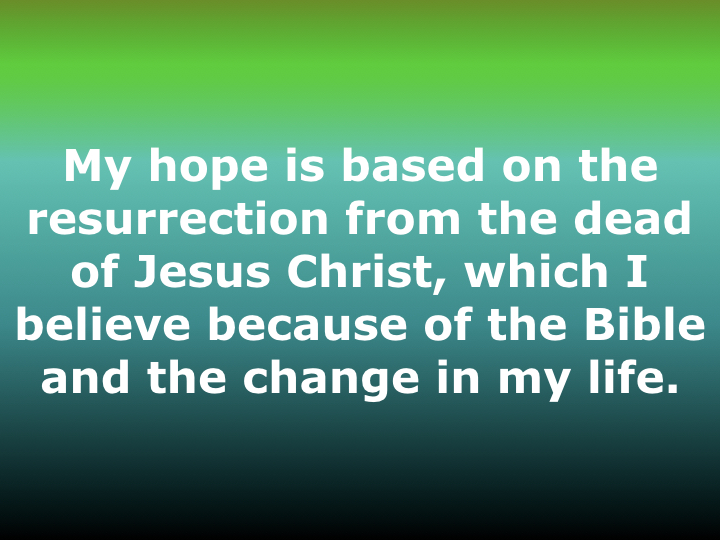
It really comes down to this: My hope is based on the resurrection from the dead of Jesus Christ, which I believe because of the Bible AND because of the change in my life.

  1. The Bible’s authenticity

“No other work in all literature has been so carefully and accurately copied as the Old Testament. The particular discipline and art of the Jewish scribes came out of a class of Jewish scholars between the fifth and third centuries BC. They were called the Sopherim, from a Hebrew word meaning ‘scribes.’ The sopherim, who initiated a stringent standard of meticulous discipline, were subsequently eclipsed by the Talmudic scribes, who guarded, interpreted, and commented on the sacred texts from AD 100 to AD 500. In turn, the Talmudic scribes were followed by the better-known and even more meticulous Masoretic scribes (AD 500-900).” —Josh McDowell, God-Breathed

“No other ancient text is substantiated by such a wealth of ancient textual witnesses as is the New Testament. Roughly 5,500 separate manuscripts are available, variously containing anything from the entire New Testament corpus to a slight fragment of a single verse. … This textual support is far superior to that available for any other ancient documents, such as the classical texts from Greek and Roman writers (e.g., Plato, Aristotle, and Cicero). Only partial manuscripts have survived for many works of antiquity, and it is not unusual to find that the only complete manuscript for some ancient writing is a copy dating from 1,000 years after its composition.” —Archaeological Study Bible, “The New Testaments Texts” (page 1859)

“The biblical Dead Sea Scrolls are up to 1,250 years older than the traditional Hebrew Bible, the Masoretic text. We have been using a one-thousand-year-old manuscript to make our Bibles. We’ve now got scrolls going back to 250 BC. … Our conclusion is simply this—the scrolls confirm the accuracy of the biblical text by 99 percent.” —Dr. Peter Flint

I have shared other apologetic evidence for the authenticity of Scripture here and here.

  1. Christ’s resurrection 

In 1 Corinthians 15:1-8 Paul lists all of the eyewitnesses to Christ’s resurrection, giving critics ample opportunity to challenge these witnesses in person. If these witnesses would have been perpetrating a hoax, skeptics of their day would have been able to uncover the inconsistencies in their story. If the account of Christ’s resurrection was made-up, it’s doubtful the early Christian martyrs would have “stuck to their story” as they were being tortured, but none recanted.

Josh McDowell notes, “By AD 100, the apostles had died, but the Christian Church was still in its infancy, with fewer than twenty-five thousand proclaimed followers of Christ. But within the next two hundred years, the fledgling church experienced explosive multiplication of growth, to include as many as twenty million people. This means the church of Jesus Christ quadrupled every generation for five consecutive generations!

  1. My personal experience

“I am a changed person. I am not who I was before I met Jesus” and “My life tends to go better when I live by biblical principles” are both excellent apologetics!

Let others argue that God doesn’t exist, or that you shouldn’t have hope, and then you—like the bumblebee—just keep flying with Jesus! (see 2 Timothy 3:14)

If you’ve missed any messages in this series, you may find the complete list by clicking here.
Attend To The Questions

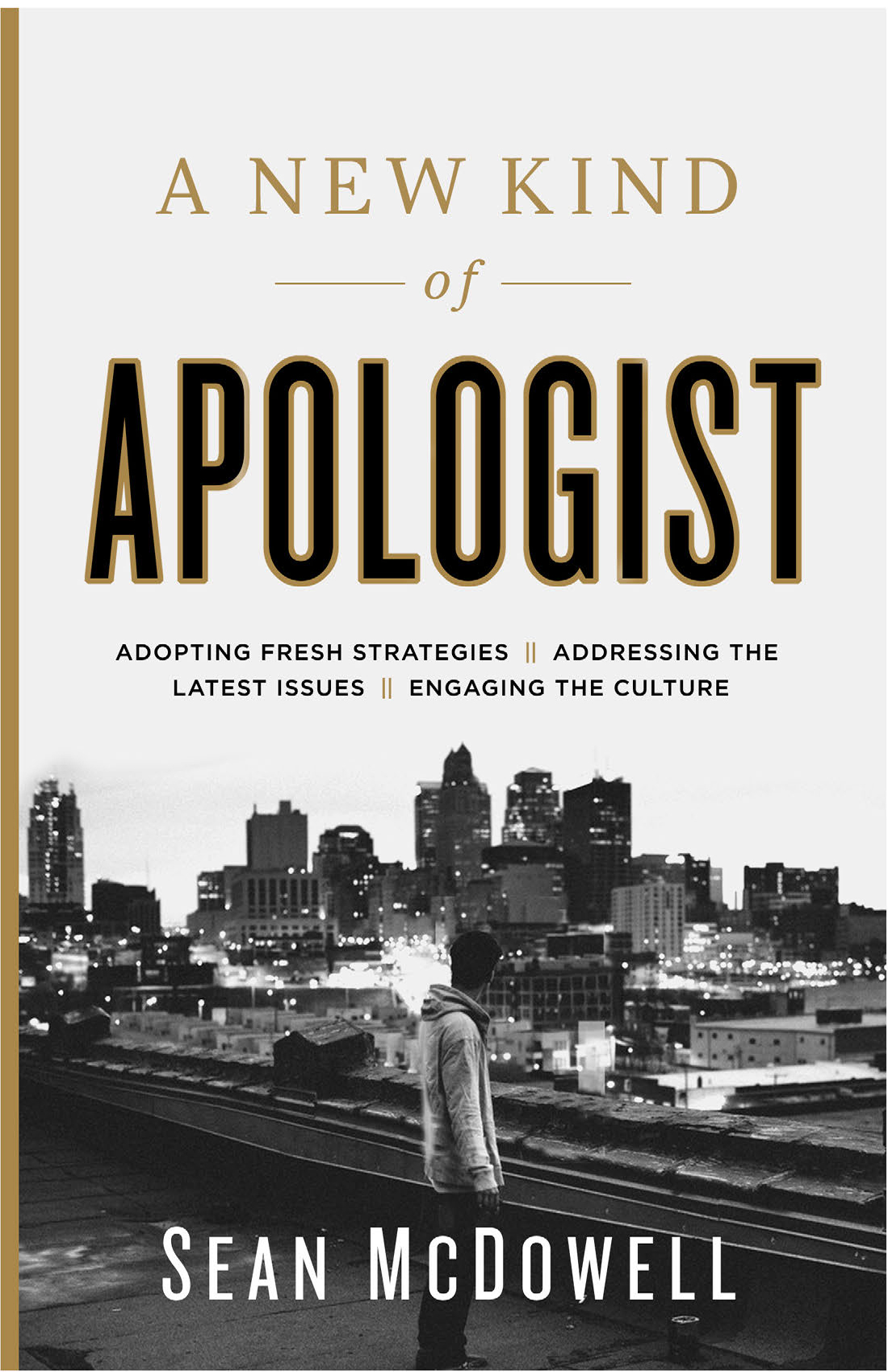
“For people burdened to say and defend the goodness and truthfulness of Christianity, it is tempting to hurriedly skip past the questions in our rush to demonstrate our answers. Such an impulse makes sense. Christianity, after all, has the most profound answers to offer the world’s most difficult questions. But if the work of apologetics involves more than building up the faithful, its primary orientation should be toward helping those who are already traveling to arrive. It is persuasion that apologetics hopes for, not only defenses or justifications of the Christian position as true or reasonable. We should point the way home rather than shout from the balcony of our bedrooms about how good looking it is. We have to care about the means of travel, not just the intellectual destination. We have to attend to the questions if we are going to help people find answers.” —Matthew Anderson, in A New Kind Of Apologist

For other quotes from this book, please click here.

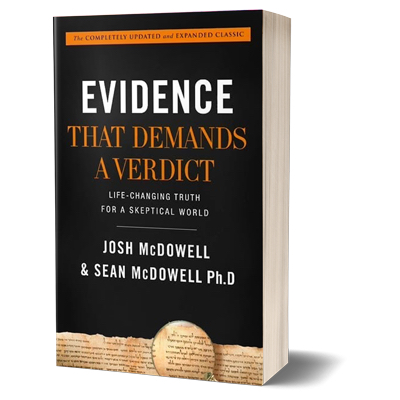
Evidence That Demands A Verdict (book review)

The Apostle Peter wrote a letter to Christians in which he called them “aliens and strangers” because of their belief in a personal Creator and Lord. In this letter, he tells Christians to “always be prepared to give an answer” to those skeptics who want to know about their faith in God. In Evidence That Demands A Verdict, Josh and Sean McDowell have given Christians a key component to help them be prepared to give sound answers.

This book is massive (at just under 900 pages)! But it is an encyclopedia of evidence that will prepare Christians to respond to any argument that an atheist or skeptic may bring up. To be honest with you, the Table of Contents is usually one of the first places I study in books I’m reading, but I usually end up skimming through it pretty quickly. But in Evidence, I was pleasantly surprised at the layout. Not only will you find a listing of the chapters, but a brief description of the contents. At the opposite end of the book, the Subject Index is also quite extensive. I know these are not things usually bragged on in a book review, but for a book this size—and for the numerous times you undoubtedly will be returning to prepare to answer a skeptic—these two reference points are extremely handy!

The first edition of Evidence (written by just Josh) came out nearly 20 years ago. If anything, the evidence for the beliefs that Christians hold has been further validated through research, archeological discoveries, and the like. So it was time for this classic book to be updated. The additional apologetic insights from Sean in this edition is a very nice addition.

Whether you read Evidence when it was first released or not, every Christian that wants to answer Peter’s directive for preparedness needs to get this new edition.

I am Thomas Nelson book reviewer.

The Christian’s Secret Weapon

Over the past couple of weeks, people have been rattled by both real and imagined catastrophic events. We experienced a fabulous astronomical sight in a full solar eclipse, wept for our fellow citizens in Texas and Florida as hurricanes battered their businesses and homes, and then dealt with doomsayers who predicted the end of the world and the second coming of Jesus Christ.

Peter spent a lot of time right next to Jesus, soaking up His teaching and observing how Jesus lived. One thing Peter never saw in Jesus was panic.

So it’s not unexpected that Peter would write to followers of Jesus: Don’t fear what the world fears (1 Peter 3:14). Instead, Peter counsels his friends to keep their focus on Jesus.

Don’t run around in fear, but instead in your hearts set apart Christ as Lord. Some other translations say things like…

    • …revere Christ as Lord
    • …acknowledge Him as Lord
    • …worship Christ as Lord of your life
    • …keep your hearts at attention, in adoration before Christ (see 1 Peter 3:15)

In other words: let Jesus Christ be your focal point.

When you live this way—focused on the eternal Jesus and not the temporary shakings on earth—Earthlings are bound to notice that there is something different about you. So Peter tells us to always be prepared to give an answer to everyone who asks you the reason for the hope that you have.

Hope—not wishful thinking, but a rock-solid, joyful, confident expectation!

This hope is the Christian’s secret weapon!

This hope is unshakable during difficult times. This hope is unshakable on death’s doorstep. This hope is unshakable when the end of the world is predicted.

The Christian who has a personal experience of the hope that Jesus brings is never at the mercy of the happenings in the world nor the arguments from non-Christians.

But Peter cautions us to never use this hope as a club. He tells us to make sure we never use hope as a means of feeling superior to others. Instead we are to speak to others about our hope gently, respectfully, and with a clear conscience.

So here’s my question to you, fellow Christian: Can those around you see your hope? When they’re fearful and running for cover, do they see you right alongside them, or do they see you standing firm in hope as you keep your eyes fixed on Jesus. Your hope is a powerful persuader for a personal relationship with Jesus Christ!

If you’ve missed any messages in this series, you may find the complete list by clicking here.
Is Jesus The Only Way?

“Sometimes people ask me ‘Is Jesus the only way?’ and of course the question alludes to a journey. It occurs to me that when attempting to be helpful in giving directions, some facts are more relevant than others. In this case, perhaps none more so than one: the question of destination. When asking ‘Is Jesus the only way?’ it begs at least one further question, which is ‘To what?’ or ‘To where?’

“In our society, it is not uncommon to hear the statement ‘All religions lead to God.’ Although it’s not a logical statement, I find the second part of it—the ‘lead to God’ bit—very interesting. There seems to be an awareness, however subconscious, however little thought through, that only God Himself is the appropriate destination. Where does this thought come from? …

“Don’t all religions lead to God? No, they don’t even claim to.

“I have found it helpful at times to ask, ‘What is the destination you are aiming for? What is the destination you hope would be true?’ It seems to me that in the search for truth and meaning, many of us are not primarily or only looking for logical answers, but for a response to the existential longing for true life.

“Jesus says that He has come so that we might have life and life in all its fullness—life abundantly. The Message translation puts it as ‘real and eternal life, more and better life than [you] ever dreamed of’ (John 10:10). But what I find so intriguing about this is that Jesus tells us not just that He will give us life, not just that He will change and transform our lives, not just that He will show us the way to life, but that He Himself is the life (John 14:6). In other words, He is the destination. There is one faith that does claim to lead to God: Jesus stands unique across the ages. He is not simply the means through which we might get to some other destination. He is not a means to an end. Relationship with Jesus is the end.” —Tanya Walker, in A New Kind Of Apologist

The Q Series—The Bible

Our annual Q Series is where folks send their questions to me on a variety of subjects and we do our best to answer them. This week many of the questions were about the Bible. Questions like:

  • What books should be included in the Bible?
  • What about Bible translations?
  • Is it okay for the Bible to have pictures in it?

Here’s what we discussed, along with the time this discussion appears on the video:

  • How was it decided what books would be included in the New Testament? [5:38] **Be sure to check out this post: How We Got The Bible on Biblegateway.
  • J. Warner Wallace’s list of criteria for New Testament books [9:45]
  • Did contemporary sources support or refute the New Testament authors? [11:45]
  • How did the final 27 books of the New Testament make the list? [15:02]
  • How was it decided what books would be included in the Old Testament? [18:22]
  • Evidence presented by the Apostle Paul [20:31]
  • How do we know the Scriptures were accurately transcribed? [22:50] **Be sure to check out this post: Why Trust The Bible? on Biblegateway.
  • The history surrounding the complete Latin Bible and the Dead Sea Scrolls [23:45]
  • What are Bible translations and paraphrases (with references to the Wycliffe Bible and the discovery of the Rosetta Stone)? [25:45]
  • Some cautions about Bible paraphrases [33:23]
  • Is it okay for a Bible to have pictures in it? [35:16]
  • Are icons of the Cross acceptable or a blasphemy? [37:42]
  • How can someone better understand the Bible when they read it for themselves? [41:32]
  • Why ask questions? [48:39]

We’ll be discussing more questions this upcoming Sunday, so be sure to send them my way. For all of the ways you can send questions, please click here.

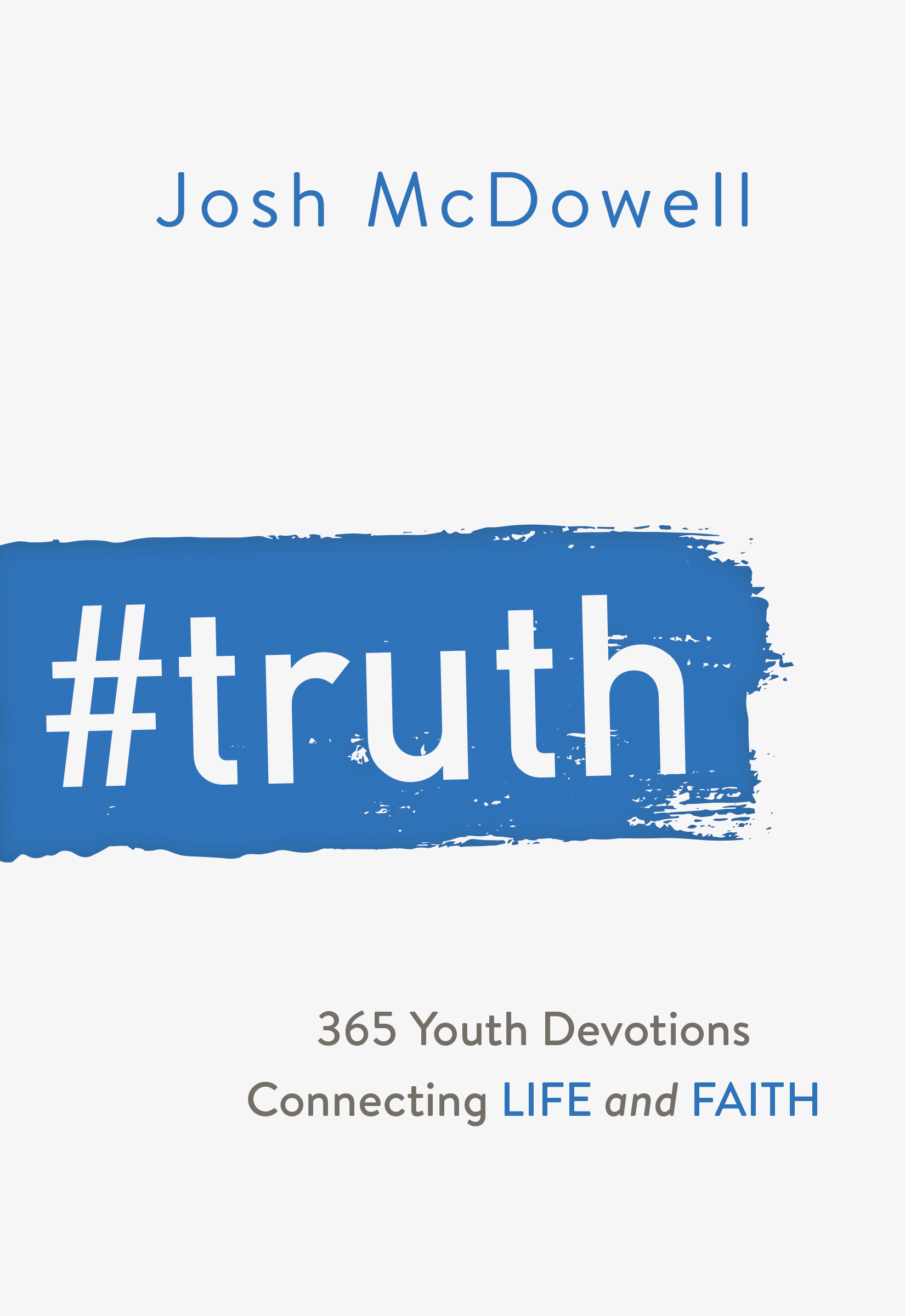
#Truth (book review)

Josh McDowell has consistently pursued two things: (1) Teaching people how to find and defend truth, and (2) Equipping students to overcome the challenges they will face. His book #Truth is the perfect convergence of these two pursuits.

#Truth is a 365-day devotional specifically written for teens. Each day’s reading starts off with a statement of truth from the Bible. Then Josh gives insight from his years of study and experience which shines a light on that biblical passage. Each devotional then concludes with a prayer that is designed to help the student settle the illuminated thought in his or her heart.

But for me the real payoff in each day’s devotional is the paragraph that starts off “Truth is….” This is not a man’s opinion. It’s not some touchy-feely sentiment. It’s not even some hard-to-grasp philosophy. It is a real-life, where-the-rubber-meets-the-road application. Each and every day Josh is pouring into students’ lives words of truth to help them see how biblical truth and real life intersect.

Although this book is written to teenagers, I would encourage adults who love teenagers to read it with them. Parents, youth pastors, grandparents, and mentors will all find great material each day to have a meaningful conversation with their teen.

I would highly recommend #Truth as a study guide to stimulate life-impacting conversations.

I am a Barbour Publishing book reviewer.

12 Quotes From “A New Kind Of Apologist”

A New Kind Of Apologist is edited by Sean McDowell and contains a collection of fabulous essays to prepare Christian apologists to be effective in this current generation. You can read my full book review by clicking here. These quotes mainly deal with the attitude that a Christian apologist should adopt.

“Truth must be wedded to grace, and what we say is important…but how we say it is equally critical.” —Sean McDowell 

“To listen to a person will require that we temporarily set aside our objections to what a person is saying and allow him or her to speak openly without fear of being challenged.” —Tim Muelhoff

“Our character and relationships with others have a greater capacity for attracting those around us to the Christian message than do our arguments or rhetoric.” —Ken Wytsma & Rick Gerhart 

“If our beliefs are not expressed in love and by example, we miss the greatest command of all, which is loving God and loving others.” —Dan Kimball

“The Barna Research Group found that twentysomethings who stay in church were twice as likely to have a close personal friendship with an adult inside the church. Those who had an adult mentor at church, aside from the pastor, were almost three times as likely to stay as those who did not.” —Jeff Myers

“Any fully-orbed presentation of the truth about ourselves and God’s plan for us cannot be a disembodied, purely intellectual truth; it must truthfully reflect our nature as created beings.

“Part of being incarnate means that it is good and right for us to have emotions and express them—as our Lord did, for example, by weeping at the tomb of Lazarus and getting angry with the money changers in the temple. The fact that little children wanted to come to Him suggests that He had a welcoming physicality and a warm personality that they instinctively trusted and found attractive. He wasn’t just a walking dictionary of Christian theology.” —Holly Ordway

“At its core, apologetics is the art and science of defending the faith. However, practically understood, the work of the apologist is simply to answer with integrity, clarity, and compassion the questions critics are asking about the gospel (1 Peter 3:15). The context of this passage implies a lifestyle on the part of the apologist that engenders and welcomes questions from their audience. The encouragement of Peter seems to be that we avoid the telemarketer approach of simply enduring questions solely for the sake of closing the deal. Rather, Peter calls us to anticipate and patiently answer the questions of our unbelieving friends, family members, and neighbors in an uncompromising and yet humble manner.” —Christopher Brooks

“We must be Christians first and apologists second, which means our intellectual lives must be primarily shaped by seeking to understand the faith we live within rather than debating, disputing, or even persuading those who do not believe it.” —Matthew Anderson 

“It is our responsibility to share the message of hope through Christ ‘with gentleness and respect’ and ‘with grace,’ as Peter and Paul taught. The gospel message is already offensive to some. We need not make it more offensive by presenting it in a manner that lacks gentleness, respect, and grace.” —Mike Licona

“Truth without grace is abusive and arrogant. Grace without truth is mushy sentimentalism. … As much as possible, always deal with the person in grace and the issue itself in truth.” —Glenn T. Stanton

“Paul doesn’t say that we ought to know how to answer each question [see Colossians 4:5-6]. He specifically teaches us to answer each person. … Paul tells us that we aren’t in the question-answering business. We are in the people-answering business. Today’s apologist must understand that questions don’t need answers; people need answers. … I am convinced that the key to apologetics today is to identify what non-Christians thirst for most and show how the Christian faith alone can slake that thirst.” —Abdu Murray

“The manner in which we communicate the gospel is not a minor add-on to the gospel itself [see 1 Peter 3:15-16]. Very often it is the nature of the communication that determines whether the gospel gets a hearing at all. …

“It remains true that it is not arrogant to make truth claims, it is not arrogant to pursue a knowledge of that truth, and to argue that we’ve found it. It is important that the content of our message is a genuine reflection of the gospel, and that the manner in which we communicate it doesn’t become a stumbling block.” —Tanya Walker

More quotes from A New Kind Of Apologist will be coming soon. You can also follow me on Tumblr and Twitter to read great quotes every single day.

A New Kind Of Apologist (book review)

For years, Josh McDowell has been ranked as a first-class Christian apologist: one who can persuasively defend the Christian faith. Sean McDowell grew up in this environment, being well mentored by his apologist father, and has become a world-renown apologist himself. So when Sean speaks of the need for a new kind of apologist, Christians should take notice.

A New Kind Of Apologist is a collection of essays edited by Sean McDowell. The book also contains short interviews which Sean has conducted with both those defending and opposing Christianity. This book covers everything from how apologists can be the most effective in a new generation of skeptics and seekers, as well as some thoughtful ways to address the issues at the forefront of the minds of this new generation.

The essays in this book are written by seasoned veterans of Christian apologetics, and some who are newer to the scene. But all of them write with a voice that is relevant to this current generation.

Not only will this book inform your brain, but it will challenge your heart as well. The overriding theme through all of these excellent essays is this—Christians must seek to love people more than win an intellectual argument. The new apologist knows his “stuff” but also knows how to develop genuine, caring relationships with those skeptics and seekers that need to hear the good news that Christianity offers.

I loved this book! It is clearly one that I am going to be referring to again and again and again as I seek to hone my apologetic and relationship-building skills.

I am a Harvest House reviewer.

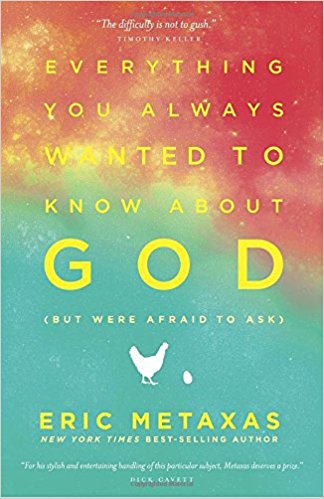
10 Quotes From “Everything You Always Wanted To Know About God”

This book from Eric Metaxas is a great way to stimulate a conversation about spiritual questions, or a wonderful resource for you to read together with a friend who is on a spiritual journey of discovery. Check out my review of this book by clicking here, and then enjoy a few of the quotes I especially appreciated.

“We aren’t responsible for having answers to every question about God or the Bible posed to us, but we are responsible for how we answer, even if we don’t have a full answer.”

“Our culture is so obsessed with the physical and the material that we have lost the ability to think logically about anything outside that realm.”

“The bottom line is that those who follow God have to have genuine love and compassion for others, and if we recognize how profoundly messed up we ourselves are, we will have compassion for other people. So if people don’t have serious humility about their own state of affairs, they should probably keep their mouth shut. God doesn’t want His followers to add to the pain of the people He loves. He wants His children to treat others as people He desperately loves.”

“The idea of a moral structure that cuts God out of the picture is very attractive to humans because that puts us in control. But God wants us to understand that without a relationship with Him, moral behavior isn’t worth anything. Mere moral rectitude doesn’t fool God.”

“Religion in the negative sense of simply being a bunch of rules and rituals is pretty much the same as superstition. Without a relationship with God at its core, all religion devolves to superstition.”

“One of the most harmful things in human history is when people have confused fear-based superstition with faith in God.”

“Either Jesus was God and died on the Cross and then rose bodily from the dead, thereby destroying sin and death and making it possible for us to be with Him in paradise forever, or having faith in him is bogus. Period. Without the central events of Jesus’ crucifixion and resurrection, you simply don’t have Christianity. You can call it Christianity, but it’s not. All religions are not alike, so ultimately you have to choose.” 

“That’s always the case with sin. It never presents itself as sin. It’s always presented as a doorway to a higher consciousness, as a path to enlightenment meant, as the path to divinity—to becoming a god, or like God.”

“To try to earn God’s love is to miss the point entirely. He loves us already. We can’t be more loved by Him. So to try is like adding numbers to infinity. You can’t get higher than infinity, and His love for us is infinite.”

“Faith does not necessarily make us perfect, but perhaps it does have a way of making us more aware of our feelings.”