Poetry Saturday—Joy And Sorrow

I know this technically isn’t a “poem” but I found this allegory poetically beautiful. I hope you enjoy it as I did!

FullSizeRender“…sorrowful, yet always rejoicing…” (2 Corinthians 6:10)

Sorrow was beautiful, but her beauty was the beauty of the moonlight shining through the leafy branches of the trees in the wood, and making little pools of silver here and there on the soft green moss below. When Sorrow sang, her notes were like the low sweet call of the nightingale, and in her eyes was the unexpectant gaze of one who has ceased to look for coming gladness. She could weep in tender sympathy with those who weep, but to rejoice with those who rejoice was unknown to her.

Joy was beautiful, too, but his was the radiant beauty of the summer morning. His eyes still held the glad laughter of childhood, and his hair had the glint of the sunshine’s kiss. When Joy sang his voice soared upward as the lark’s, and his step was the step of a conqueror who has never known defeat. He could rejoice with all who rejoice, but to weep with those who weep was unknown to him.

“But we can never be united,” said Sorrow wistfully.

“No, never.” And Joy’s eyes shadowed as he spoke. “My path lies through the sunlit meadows, the sweetest roses bloom for my gathering, and the blackbirds and thrushes await my coming to pour forth their most joyous lays.”

“My path,” said Sorrow, turning slowly away, “leads through the darkening woods, with moon-flowers only shall my hands be filled. Yet the sweetest of all earth-songs—the love song of the night—shall be mine; farewell, Joy, farewell.”

Even as she spoke they became conscious of a form standing beside them; dimly seen, but of a Kingly Presence, and a great and holy awe stole over them as they sank on their knees before Him.

“I see Him as the King of Joy,” whispered Sorrow, “for on His Head are many crowns, and the nail prints in His hands and feet are the scars of a great victory. Before Him all my sorrow is melting away into deathless love and gladness, and I give myself to Him forever.”

“Nay, Sorrow,” said Joy softly, “but I see Him as the King of Sorrow, and the crown on His head is a crown of thorns, and the nail prints in His hands and feet are the scars of a great agony. I, too, give myself to Him forever, for sorrow with Him must be sweeter than any joy that I have known.”

“Then we are one in Him,” they cried in gladness, “for none but He could unite Joy and Sorrow.”

Hand in hand they passed out into the world to follow Him through storm and sunshine, in the bleakness of winter cold and the warmth of summer gladness, “as sorrowful yet always rejoicing.” —Lettie Cowman
F.B. Meyer On The Purpose Of Obstacles

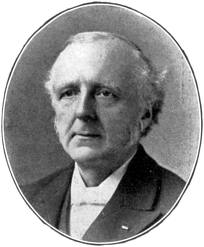
F.B. Meyer“God will make our obstacles serve His purposes. …

“The obstacles may be untruths told about us; a difficult occupation; ‘a thorn in the flesh’ (2 Corinthians 12:7); or our daily cross. And often we pray for their removal, for we tend to think that if only these were removed, we would live a more tender, pure, and holy life. … These are the very conditions we need for achievement, and they have been put in our lives as the means of producing the gifts and qualities for which we have been praying so long.

“We pray for patience for many years, and when something begins to test us beyond our endurance, we run from it. We try to avoid it, we see it as some insurmountable obstacle to our desired goal, and we believe that if it was removed, we would experience immediate deliverance and victory. This is not true! We would simply see the temptations to be impatient end. This would not be patience.

“The only way genuine patience can be acquired is by enduring the very trials that seem so unbearable today. Turn from your running and submit. … There is nothing in your life that distresses or concerns you that cannot become submissive to the highest purpose. Remember, they are God’s mountains. He puts them there for a reason, and we know He will never fail to keep His promise.” —F.B. Meyer

9 Quotes From “Your Joy Will Turn To Sorrow”

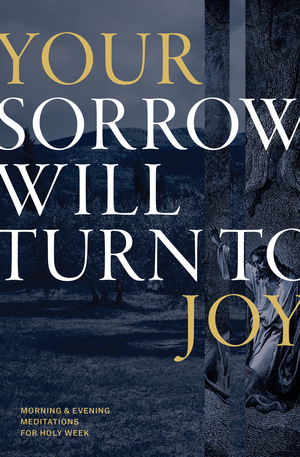
Your Sorrow Will Turn To JoyAlthough Your Joy Will Turn To Sorrow is intended to be read each morning and evening of Holy Week (check out my book review here), the content is so good that it will benefit you anytime you decide to read it! Here are some quotes that especially caught my attention.

“The only Savior who truly saves, only saves through suffering. The Cross was the only means of making us sinners right before a holy God. Our salvation was purchased with suffering, and it will be sealed and preserved with suffering (James 1:2-4), not comfort. We are promised comfort in the Christian life (2 Corinthians 1:4), but not the cheap, temporal imitation we’ve grown accustomed to in our modern world.” —Marshall Segal

“Jesus did not come to purchase the approval of others. No, He ‘was despised and rejected by men; a Man of sorrows, and acquainted with grief; and as One from whom men hide their faces He was despised’ (Isaiah 53:3). Why? Because it is God’s approval we desperately need. And God’s approval doesn’t come by popular opinion, but by divine intervention—the substitution of His own Son in our place.” —Marshall Segal

“The irony of Mark 14 is that Judas could see the value of the ointment rolling down Jesus’ head, but he couldn’t see the value of Jesus. He was a pawnbroker with cataracts. That’s why he took such offense at the woman. The woman, on the other hand, could see both the value of the ointment and the value of Jesus. That’s why she broke the flask.” —Jonathan Bowers

“No one understands better than God how difficult it can be for a human to embrace the will of God. And no human has suffered more in embracing the will of God the Father than God the Son. When Jesus calls us to follow Him, whatever the cost, He is not calling us to do something He is either unwilling to do or is never done Himself.” —Jon Bloom

“So, now, we say with an entirely different meaning, let His blood be on us, not defiantly as the crowds that crucified Him, but desperately—with gratitude and hope and adoration—as those who depend wholly on His sacrifice. Jesus, let Your blood be on us. Let it cover us. Let the blood that flows from Your head, Your hands, Your feet wash over us and cleanse us from all our iniquity. We proclaim Jesus’ death. We rejoice in his death, not because we believe He was a fraud or a lunatic, but because it is by His death, by His wounds, by His blood that we are healed.” —Marshall Segal

“Jesus spoke of this joy as He faced the torture of Good Friday. He faced denial, faced betrayal, faced beatings, faced splinters and nails and spears—He could not stop talking about joy! Only joy would keep Him going. Joy was on His mind, joy was on His tongue, and joy was drawing Him, not away from suffering, but into it (Hebrews 12:2). Jesus went to the Cross for joy: to buy joy, create joy, and offer joy. As the world celebrated the savage killing of God, out of this sea of foaming rebel hostility emerged a blood-bought, inextinguishable joy.

“If the killing of the Author of life could not extinguish this joy Jesus speaks about, nothing can—and nothing ever will. No opposition from the world, no opposition to the gospel, and no cultural despising of Christ will overcome the resurrection joy of Jesus.” —Tony Reinke

“If Christ is still dead, death reigns, and all our joys our vain. So hoard every plastic Easter egg you find, because whatever you find inside is all the joy you have to grab. Or, as Paul says, ‘If the dead are not raised, let us eat and drink, for tomorrow we die’ (1 Corinthians 15:32). But if death is dead, and if the dead are raised—if Christ is risen from the dead!—brothers and sisters, let us feast and celebrate, for the daunting light of our inextinguishable and inexhaustible eternal pleasures have broken into the darkness, offering us a life of joy in Christ that cannot fade or rust or be stolen away!” —Tony Reinke

“Easter has now become our annual dress rehearsal for that great coming Day. When our perishable bodies will put on the imperishable. When the mortal finally puts on immortality. When we join in the triumph song with the prophets and the apostles, ‘O death, where is your victory? O death, where is your sting?’ (Hosea 13:14; 1 Corinthians 15:55).” —David Mathis

“Indeed, even agony will turn to glory, but Easter doesn’t suppress our pain. It doesn’t minimize our loss. It bids our burdens stand as they are, in all their weight, with all their threats. And this risen Christ, with the brilliance of the indestructible life in His eyes, says, ‘These too I will claim in the victory. These too will serve your joy. These too, even these, I can make an occasion for rejoicing. I have overcome, and you will more than conquer.’ 

“Easter is not an occasion to repress whatever ails you and put on a happy face. Rather, the joy of Easter speaks tenderly to the pains that plague you. Whatever loss you lament, whatever burden weighs you down, Easter says, ‘It will not always be this way for you. The new age has begun. Jesus has risen, and the Kingdom of the Messiah is here. He has conquered death and sin and hell. He is alive and on His throne. And He is putting your enemies, all your enemies, under His feet.’” —David Mathis

Light & Truth—Acts And the Larger Epistles (book review)

Light & Truth [Acts]Horatius Bonar has given us a fantastic companion for our Bible reading time. This is my second review of his Light And Truth series (the first review on the Gospels may be read here). This installment covers the biblical books of Acts, Romans, and 1 & 2 Corinthians.

Bonar grew up in a pastoral home, with plenty of other pastors and evangelists in his family tree. You might say that he was weaned on Scripture and its application to our lives. This Bible-based heritage comes through in all he writes. By no means, though, does Bonar simply ride the coattails of his esteemed family, but he is quite brilliant in his own Holy Spirit-inspired insights.

Bonar’s commentaries are not a verse-by-verse exposition of the Scripture. Instead, he may just take one or two verses and “go deep” with them. A short passage may be taken apart word by word, and many rich applications are thus brought forth.

As I am reading through the New Testament, I am finding Horatius Bonar to be a helpful “tour guide” on my journey.

10 Benefits From Suffering

Horatius BonarCommenting on one of the opening passages in Paul’s second letter to the church at Corinth, Horatius Bonar shares ten benefits to Christians who will cling to God during times of suffering.

“The meaning and use of trial:

  1. It shows God to be in earnest with us. He does not let us alone. He takes great pains with our spiritual education and training. He desires fruit and progress.
  2. It assures us of His love.
  3. It draws us to prayer. When one member suffers all the others suffer with it. As soon as it is said, ‘such a brother or sister is in sorrow,’ all who hear of this begin to pray for the afflicted one. Thus sorrow becomes a magnet which attracts the prayers of the church.
  4. It knits us in sympathy to the whole body.
  5. It teaches us sympathy with brethren.
  6. It brings us into a mood more receptive of blessing. It makes our spirits tender, it softens our hearts, it makes our consciences alive, it empties us of adverse influences.
  7. It makes us prize the Word.
  8. It shuts out the world.
  9. It bids us look up.
  10. It turns our hope to the Lord’s great coming.”

Week Of Prayer—Wednesday

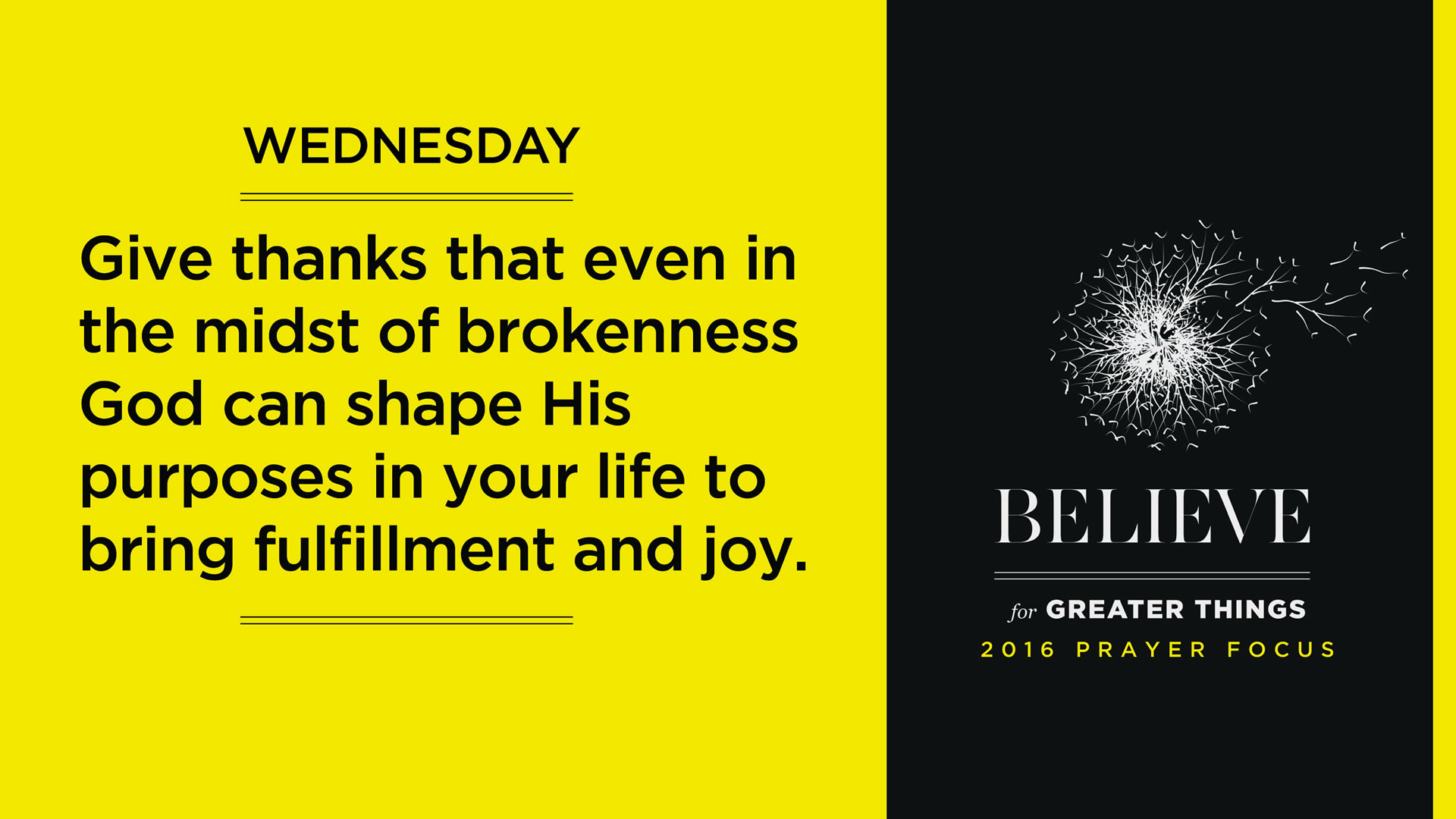
WOP_2016_Slide_WedOur week of prayer continues today with this prayer focus—

Give thanks that even in the midst of brokenness God can shape His purposes in your life to bring fulfillment and joy.

All week long we’ve been praying God’s Word for each of these prayer points. Today, perhaps you could pray something like this:

Heavenly Father, I know that in everything that is happening to me, You are working circumstances for the good. I know that You love me, and that You have a distinct purpose for my life [Romans 8:28]

Sometimes, in order to keep me from becoming too reliant on my own abilities, You send “a thorn in the flesh” to me. But even in the midst of that You say to me, “My grace is sufficient for you, for My power is made perfect in your weakness.” Therefore I will boast about my weaknesses, so that Christ’s power may rest on me. That is why, for Christ’s sake, I delight in my weaknesses, in insults hurled at me, in all my hardships, in my persecutions, in my difficulties. For when I am weak in my own ability, then I am strong in You [2 Corinthians 12:7-10]

Even though this is a difficult time for me, I still rejoice in what You are going to accomplish in my life. I pray this Jesus’ name, Amen.

6 Facts About Angels

Angels from the realms of gloryAngels play a fairly visible role in the First Advent story. As a result, we can begin to piece together some facts about angels from the biblical accounts. In my series on The Carols Of Christmas, I was looking at Angels From The Realms Of Glory, and there is information about the angels in this carol that is well-support from the Scripture.

  1.  Angels were created before the Earth was created, and they celebrated as God created our universe (Job 38:4-7). The Christmas carol says, “ye who sang Creation’s story now proclaim Messiah’s birth,” which we see in Luke 2:8-14.
  2. Angels are messengers sent from God, and they carry a message from God to turn people toward God (Daniel 10:12; Matthew 1:20-23; Luke 1:11-20, 26-38). In the Christmas carol they remind us to leave our contemplations and “seek the great Desire of nations.”
  3. Angels are not to be worshiped, because they are created beings. Lucifer’s desire to be worshipped is what led to his rebellion against God and expulsion from Heaven (Isaiah 14:13-14). And he still tries to appear today as an angel of light (2 Corinthians 11:14).
  4. Angels long to look into the Gospel that humans can know by personal experience (1 Peter 1:12).
  5. Angels know that Christ’s First Advent is a reminder of His Second Advent (Acts 1:10-11; see also 1 Thessalonians 4:13-18).
  6. We have been given an angelic responsibility to tell others about Christ’s First and Second Advents (notice that the messengers in the churches are called angels in Revelation 2:1, 8, 12, 18; 3:1, 7, 14; 22:16). The carol reminds us that it’s “all creation” (that includes us!) that joins the angels in praising God.

One of the biggest lessons we need to learn from this Christmas carol, and the corresponding verses about angels, is that we aren’t just celebrating the First Advent. We are anticipating and looking forward to the Second Advent as well! 

Next Sunday we will be continuing our look at the rich messages in the familiar Christmas carols. Please join me!

In the video below, we had some slight technical difficulties. But it clears up about the 5-minute mark, so hang in there!

If you have missed any of the messages in our series The Carols Of Christmas, you can find the full list by clicking here.

8 Quotes Worth Studying From “Proverbs”

ProverbsIn my review of Proverbs by Charles Bridges (which you can read by clicking here), I noted how he weaved the principles in the biblical book of Proverbs into the teaching that occurs throughout the Scripture. In others words, he showed that the wisdom in Proverbs wasn’t just a “stand-alone” wisdom, but integrated into the whole.

In the quotes I’m sharing today, I trust you will get a glimpse of what I mean. The reference in brackets before the quote indicate the Proverb to which Bridges is commenting. I have also linked all of the Scripture references to my friends at Bible Gateway, so you can look them up easily (and I encourage you to do so!).

[Proverbs 1:10-16] “If the temptation prevail, charge it not on God; no—nor on the devil. As the worst he can do, he can only tempt, he cannot force us, to sin. When he has plied us with his utmost power, and most subtle artifice, it is at the choice of our own will, whether we yield or no (see James 1:13-15). The habitual resistance of the will clears us of responsibility (cp. Romans 7:14-17, 19-20, 23). The consent, even if it be not carried out into the act, lays the responsibility at our own door.”

[Proverbs 2:10-11] “The forsaken sin only makes way for some more plausible, but not less deadly passion. The heart, cast into the mold of the Gospel, is the only cover from those snares within and without (Romans 6:17, 18; 2 Corinthians 3:18), which so imperceptibly, yet so fatally, estrange us from God. Never, till the vital principle is implanted, is their mischief discerned. Never, till then, does the heart find its proper object, its true resting-place.”

[Proverbs 3:5-6] “Take one step at a time, every step under Divine warrant and direction (cp. Ezekiel 18:21-23; Nehemiah 1:11). Ever plan for yourself in simple dependence on God. It is nothing less than self-idolatry to conceive that we can carry on even the ordinary matters of the day without His counsel. He loves to be consulted. Therefore, take all thy difficulties to be resolved by Him. Be in the habit of going to Him in the first place—before self-will, self-pleasing, self-wisdom, human friends, convenience, expediency. Before any of these have been consulted, go to God at once. Consider no circumstances too clear to need His direction. In all thy ways, small as well as great; in all thy concerns, personal or relative, temporal or eternal, let Him be supreme.”

[Proverbs 3:11-12] “Faith understands the reasons of the discipline (1 Peter 1:6, 7); acknowledges it as a part of His gracious providence (Deuteronomy 8:2, 15, 16), and the provision of His everlasting covenant (Psalm 89:30-32); waits to see the end of the Lord (James 5:11); and meanwhile draws its main support from the seal of adoption.”

[Proverbs 4:14-17] “To pray not to be led into temptation; yet not to watch, that we enter not into it (Matthew 6:13; 26:41)—is practically to contradict our prayers; to mock our God, by asking for what we do not heartily wish.”

[Proverbs 11:18-19] “Righteousness is the seed; happiness is the harvest. The reward indeed is not from cause, but of consequence; not of debt, but of grace depending upon a free promise; mercifully yet surely linked with Christian perseverance (Ecclesiastes 11:6; Hosea 10:12; 1 Corinthians 15:58; Galatians 6:7, 8).”

[Proverbs 17:22] “If then, Christian, you believe the Gospel to be ‘glad tidings’ (Luke 1:19; 8:1), show that you believe it, by lighting up your face with a smile.”

[Proverbs 28:13] “The love of sin struggles with the power of conscience. The door of access to God is barred (Psalm 66:18). Christian confidence is clouded (Psalm 32:3, 4); and, unless Sovereign mercy interpose, it must end in the sting of ‘the never-dying worm’ (Isaiah 66:24; Mark 9:44-48). The covering of the disease precludes the possibility of the cure. Only the penitent confessor can be the pardoned sinner.”

“The best work on the Proverbs. While explaining the passage in hand, he sets other portions of the Word in new lights.” —C.H. Spurgeon, commenting on this book

Thursdays With Oswald—Your Thought Life DOES Matter

Oswald ChambersThis is a periodic series with things I’m reading and pondering from Oswald Chambers. You can read the original seed thought here, or type “Thursdays With Oswald” in the search box to read more entries.

Your Thought Life DOES Matter

“Beware of saying, ‘Oh well, it doesn’t matter much what I think about in secret’; it does, for the opportunity will come when what you think about in secret will find expression and spurt out in an act. The Bible always speaks of sin as it appears in its final analysis. Jesus does not say, ‘You must not covet because it will lead to stealing’; He says, ‘You must not covet because it is stealing.’ He does not say, ‘You must not be angry with your brother because it will lead to murder’; He says, ‘You must not be angry with your brother because it is murder.’”

From Our Portrait In Genesis

This is why the Apostle Paul tells us to take all of our thoughts captive (2 Corinthians 10:5). What you are thinking about IS determining who you will become in the future. Capture those negative, unbiblical thoughts and replace them with the truth found in God’s Word.

A Perspective On Problems

False ideas on problemsWe were blessed to have a special guest speaker yesterday morning: Jeff Hlavin. Wow, what a great word he shared with us! He continued in our series called Aliens and Strangers, on how Christians are to live in this world as citizens of Heaven. Below are a few notes I jotted down.

Dear friends, do not be surprised at the fiery ordeal that has come on you to test you, as though something strange were happening to you. (1 Peter 4:12)

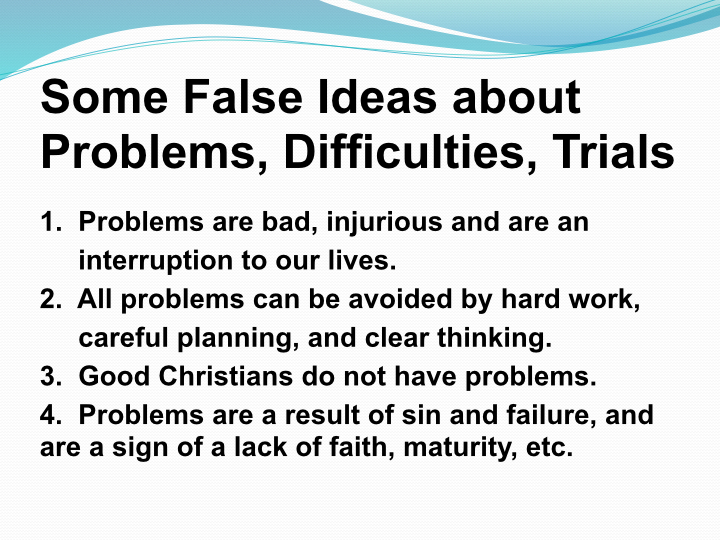
Using this verse as his introduction, Pastor Jeff shared four false ideas about problems:

  1. Problems are bad and are an interruption to our lives.
  2. All problems can be avoided by hard work, careful planning and clear thinking.
  3. Good Christians don’t have problems.
  4. My problems are a result of sin or are a sign of a lack of faith/maturity.

Instead I should see from a biblical perspective that…

“The Holy Spirit is the greatest Change Agent in a Christian’s life. I can only resolve this tension by obedience. … The devil tries to invoke turmoil in my life, but I can overcome this turmoil by submitting to God (James 4:7).” —Jeff Hlavin

“Trials develop spiritual/emotional/mental muscles that we need to have to soar into the place God has for us.” —Jeff Hlavin

If you would like to download a copy of the outline Pastor Jeff handed out to us, click here → Perspective on Problems Outline ←

We will be continuing in our Aliens and Strangers series this Sunday, and I’d love to have you join us. If you’ve missed any messages in this series, you may find the complete list by clicking here.