Listen to the podcast of this post by clicking on the player below, and you can also subscribe on Apple, Spotify, or Audible.
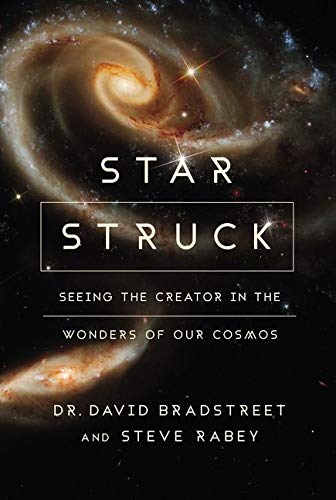
Because of my science background, I’m always fascinated by the discoveries of scientists that bring glory to God. So I was drawn in especially by the subtitle of Dr. David Bradstreet’s book Star Struck: Seeing The Creator in the Wonders of Our Cosmos.
This book is part autobiographic in how Dr. Bradstreet got into astronomy, part historical as he walks us through the advancements in the study of the heavens, and part devotional as he attempts to tie in biblical passages with these fascinating astronomical discoveries. But for me, this attempt to be all-encompassing didn’t “scratch the itch” that I thought it would when I first saw the subtitle. I think I would have appreciated it more if this were presented as three books: memoir, history, and devotional.
For me, the best part of Star Struck was the history of astronomy. Hearing from an astronomer how his predecessors thought, reasoned, hypothesized, and then presented their findings to an often skeptical world (and usually an even more skeptical church) was quite fascinating. I especially enjoyed some of the many tidbits about stars and planets, particularly the look at our Sun, Earth, and Moon.
I would not, however, recommend this book as a means to understand how astronomy shines such a clear light on the majesty of the Creator seen in the pages of the Bible, as I found that attempt quite lacking.
As a pure astronomy history book, Star Struck is a great read for anyone, from students to adults.
Listen to the podcast of this post by clicking on the player below, and you can also subscribe on Apple, Spotify, or Audible.
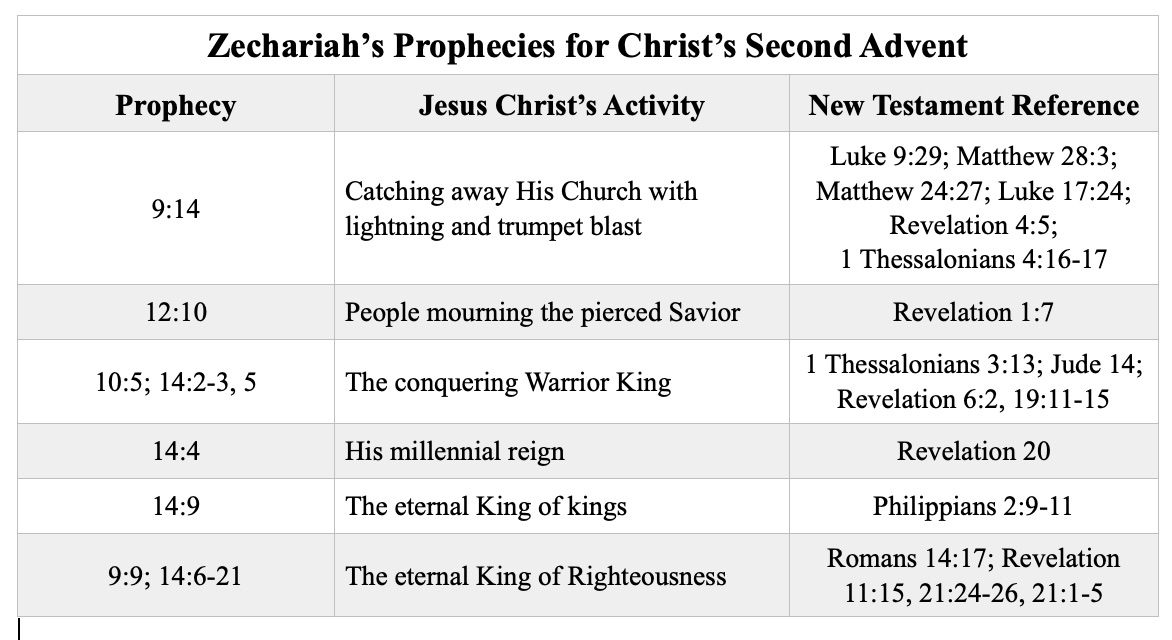
Zechariah pronounces more messianic prophecies than any other biblical writer, with the exception of Isaiah (and he wrote 66 chapters!). These prophecies are fulfilled in Christ’s First Advent, and promised for His Second Advent. Check these out for yourself…
(All of the biblical references for the above chart can be viewed by clicking here.)
(All of the biblical references for the above chart can be viewed by clicking here.)
Why is it so vital that Jesus fulfilled these prophecies?
(1) The historicity of these fulfilled prophecies gives us a confidence for the future.
These fulfilled prophecies assure us that God is sovereign over all history. There are no accidents, and God needs no help from anyone else in fulfilling what He has promised. As a result, no world event—no matter how big it may seem—should be able to rattle us!
(2) The authenticity of what God has done gives us boldness for today.
When God does the miraculous, He authenticates His Word. This authenticity has always made God’s people stand out (see Genesis 41:39). It’s also why people recognized Jesus as the divine Son of God (John 3:2; 9:30-33). So we can live with the boldness to know that what God says He will do, He will do!
(3) The exclusivity of God’s promises and fulfillment of those promises gives us joy for our testimony.
Only Jesus could have done all of this (Luke 24:26-27, 44), so only Jesus can fulfill what is still remaining to be fulfilled! We can have supreme joy in knowing that only Jesus is our hope of salvation (John 14:6; Acts 4:12).
It’s vital that we know this is true so that we can live confident, bold, and joyful!Our confident boldness and our bold joy both glorify God and attract seekers to Him.
As regular readers of this blog probably know, on Saturdays I like to share poems that I have read during the week. One place I encounter poetry on a regular basis is in my daily Bible reading. But if you have read the Bible, no doubt you have discovered what I have discovered: ancient Hebrew poetry is very different from the poetry we usually read!
I found this helpful chart explaining the parallelism of Hebrew poetry in my Faithlife Illustrated Study Bible, and I thought you might benefit from it too.
If you would like to download this chart, I have shared it as a PDF here → Parallelism
Listen to the podcast of this post by clicking on the player below, and you can also subscribe on Apple, Spotify, or Audible.
I had a great time on the Thriving In Ministrypodcast with Kyle Willis and Dace Clifton.
Jesus demonstrated an important principle for all leaders: In order for us to lead effectively over a long period of time, leaders must be healthy. Jesus showed us His mental, physical, spiritual, and emotional health.
In my discussion with Kyle and Dace, we talked about the value of creating margins in our life to keep us at our full potential.
I’ll be sharing more clips from this Thriving In Ministry interview soon, so please stay tuned. Shepherd Leadership: The Metrics That Really Matter is available in print or ebook, and in audiobook through either Audible or Apple.
This is a weekly series with things I’m reading and pondering from Charles Spurgeon. You can read the original seed thought here, or type “Thursdays With Spurgeon” in the search box to read more entries.
Listen to the podcast of this post by clicking on the player below, and you can also subscribe on iTunes or Spotify.
Keep Moving Forward
For we walk by faith, not by sight. (2 Corinthians 5:7)
God does not say to us, ‘This is the way,’ and then stop. He says, ‘This is the way, walk in it.’ We are always to be making advances. We are to be going from faith in its beginnings to faith in its perfections, from faith to assurance, from assurance to full assurance. And from there, we are to go to the full assurance of hope to the full assurance of understanding, always forward, waxing stronger and stronger. …
The Christian’s motto is ‘Upward and onward.’ Not as though he has already obtained, either is already perfect, he presses forward to the mark for the prize of his high calling in Christ Jesus. …
Can you perform the common activities of the household and the daily duties that fall to your lot in the spirit of faith? This is what the apostle means. He does not speak about running or jumping or fighting, but about walking—and he means to tell you that the ordinary life of a Christian is different from the life of another man—that he has learned to introduce faith into everything he does.
From Faith Versus Sight
I have a t-shirt that says on the front, “Keep moving forward.” But the back of the t-shirt has the real-life challenge: “Crawling is acceptable. Falling is acceptable. Puking is acceptable. Crying is acceptable. Pain is acceptable. Quitting is not!”
How true!
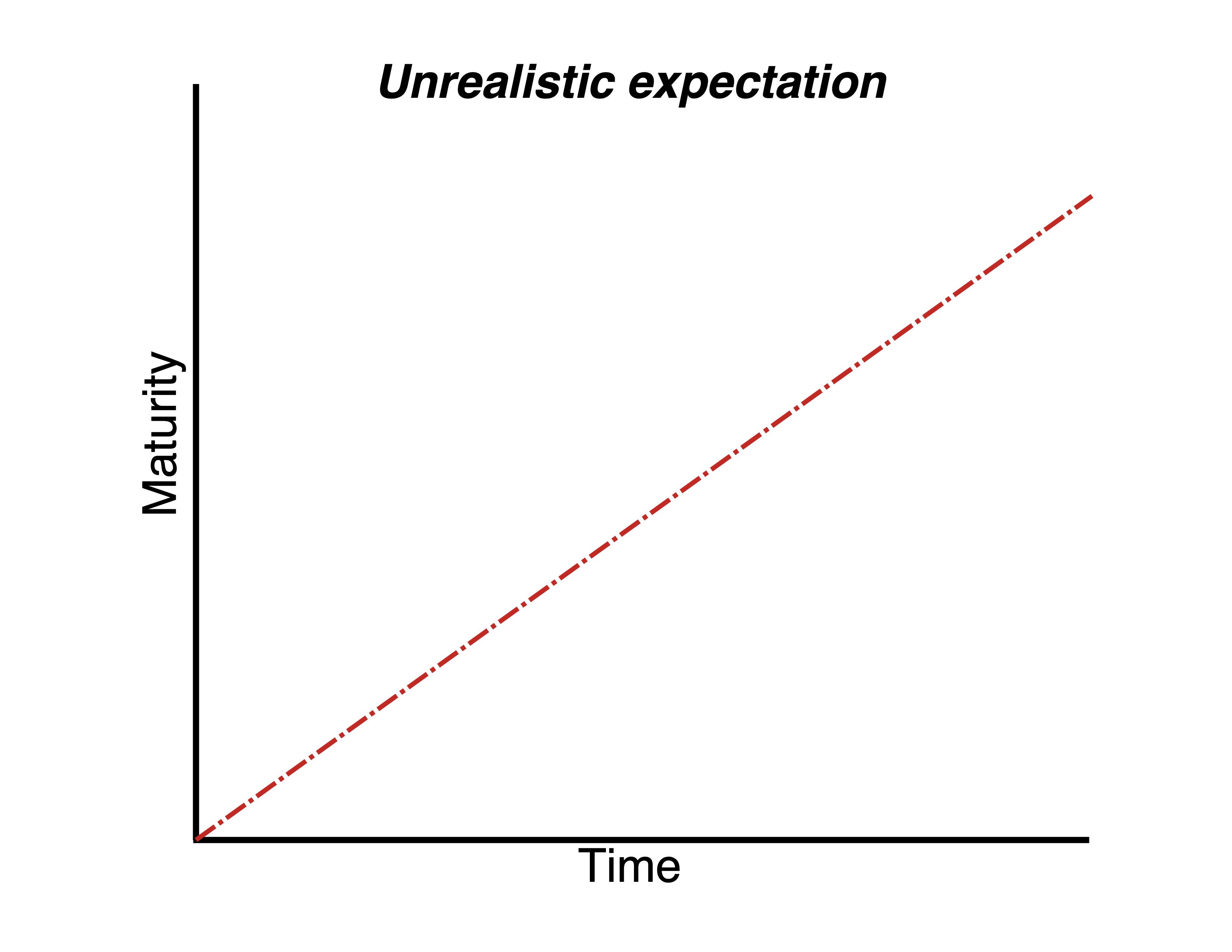
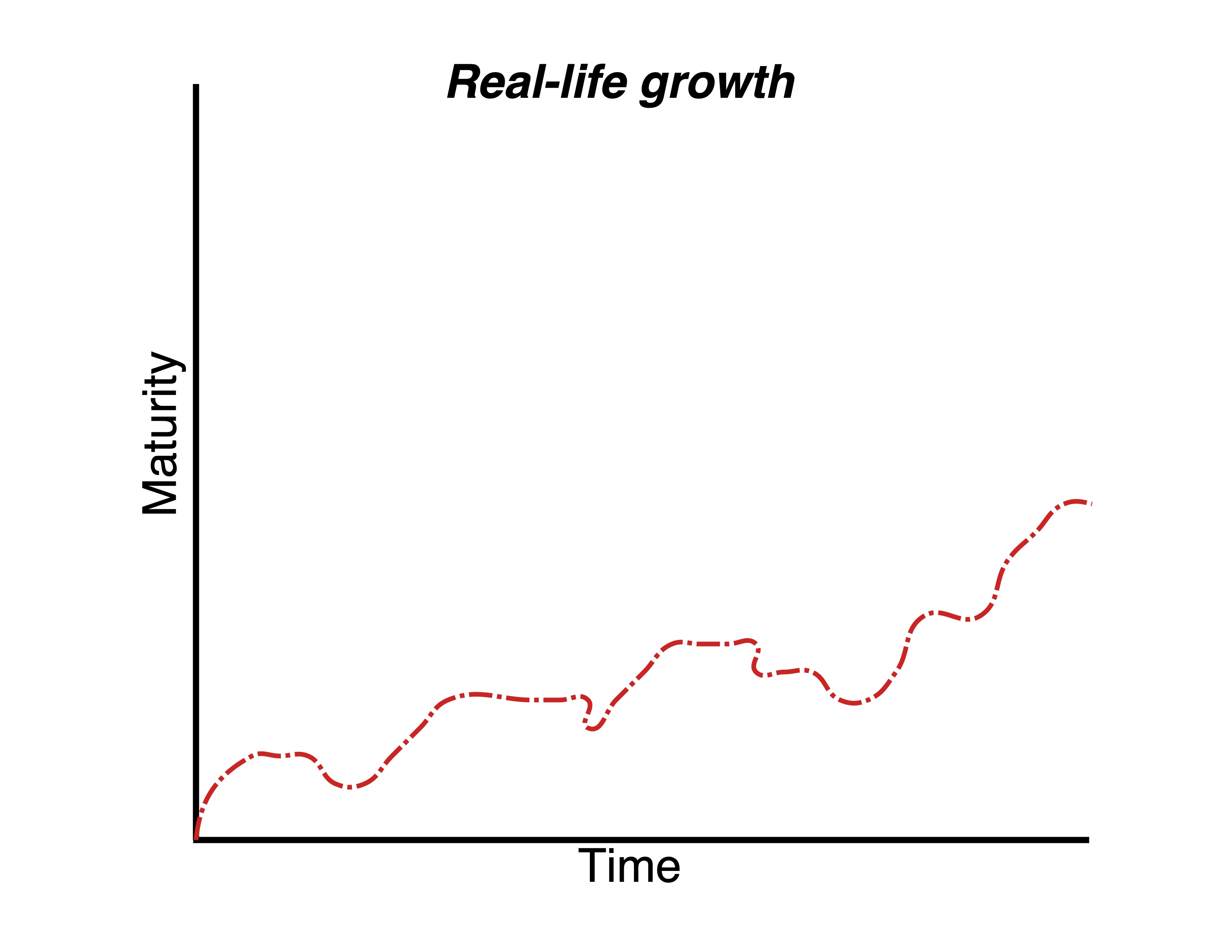
I think the problem for many Christians is that they have an unrealistic expectation of growth. Somehow we’ve come to believe that our Christian growth is a constant upward trajectory to maturity, and that if there are ever any stumbles along the way, that means we’ve blown it. (By the way, Oswald Chambers has some helpful thoughts on our stair-step growth.)
But Paul tells us, “We walk”: We keep moving forward. That doesn’t mean there aren’t times of stumbling, or a plateau, or even a pause to catch our breath. Paul tells us that an important aspect of our walk is that we forget what’s behind us and we keep moving forward—keep walking—keep going.
Every single day, let us say along with Paul, “I don’t mean to say that I have already achieved these things or that I have already reached perfection. But I press on to possess that perfection for which Christ Jesus first possessed me. No, dear brothers and sisters, I have not achieved it, but I focus on this one thing: Forgetting the past and looking forward to what lies ahead, I press on to reach the end of the race and receive the heavenly prize for which God, through Christ Jesus, is calling us” (Philippians 3:12-14 NLT).
My friend, keep moving forward in faith, believing that the Holy Spirit is with you—maturing you, strengthening you—on every single step on your Christian walk.
A recent article called “Soul Watchers” really caught my attention. Here are a few excerpts to whet your appetite…
Elders are called “overseers” and “shepherds” in their relationship to the congregations of the Lord (1 Peter 5:1-3). … Elders were charged with the responsibility of watching over the flocks of the Lord (Acts 20:28), preserving sound doctrine and right practice in the churches (Acts 15:1-6; Titus 1), and, in particular, keeping watch over the souls of God’s people (2 Corinthians 12:15; Hebrews 13:17). …
The elders appointed to serve the churches of the New Testament were called to be shepherds, leading the Lord’s flocks into fuller realization of His Kingdom and promises. In fact, so vital were elders to the churches of the New Testament that Paul insisted that any church that didn’t have elders was to that extent not “in order” (Titus 1:3).
(Check out the bible verses T.M. references in this piece by clicking here.)
Listen to the podcast of this post by clicking on the player below, and you can also subscribe on Apple, Spotify, or Audible.
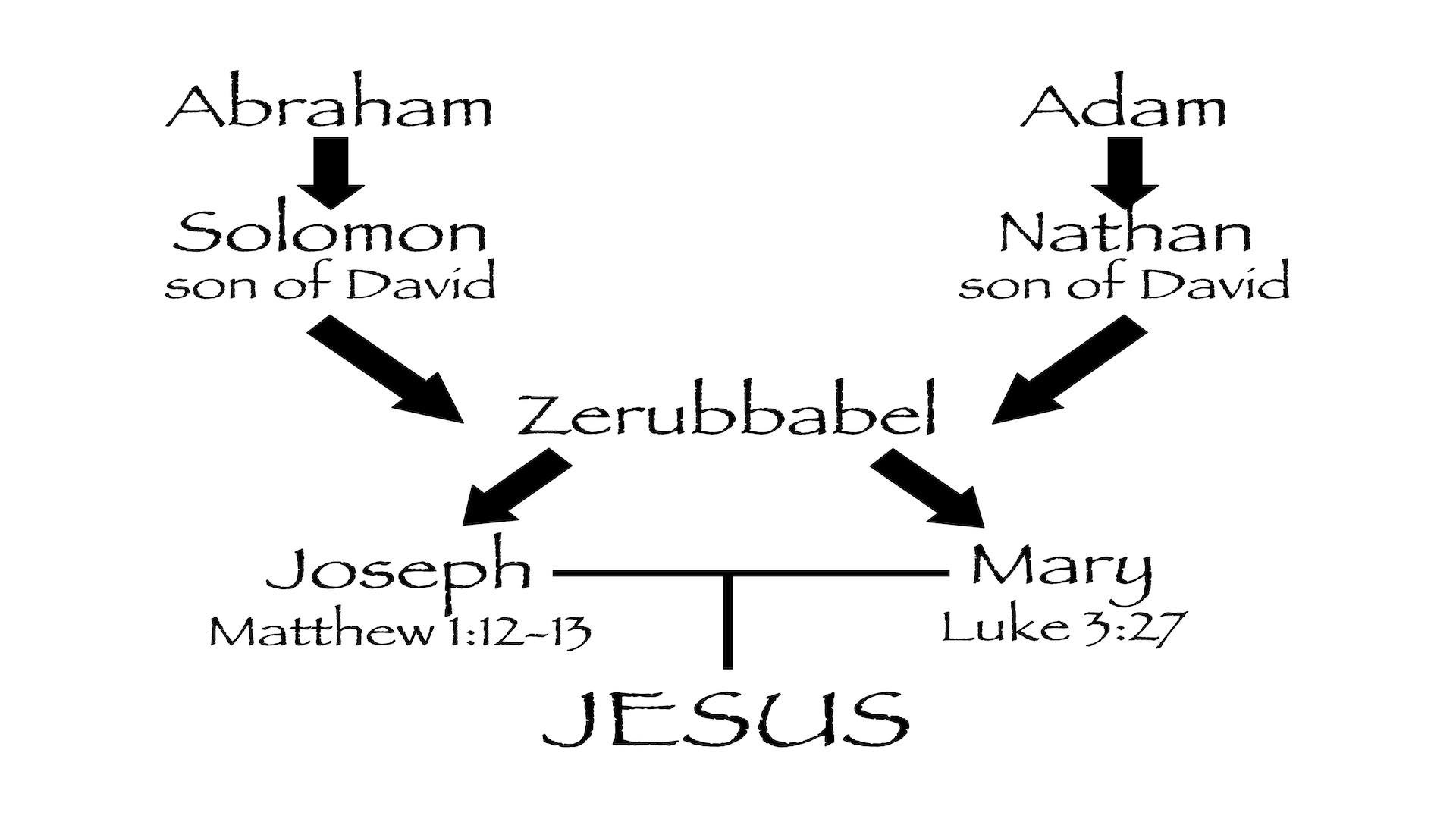
God foretells that He will make governor Zerubbabel “like My signet ring.” This means that Zerubbabel would have God’s supreme authority—he could speak for God.
How could this happen? Zerubbabel couldn’t do it himself, but God sovereignly placed him in the family lines of both Joseph and Mary. This family lineage of Jesus Christ carried BOTH the covenant-fulfilling, kingly authority that traced back to Abraham AND the satan-crushing promise given to Adam’s human line.
Jesus joined these two promises through Zerubbabel the signet ring. Jesus became God’s Ultimate Signet Ring so that now every promise is “Yes” in Him. This mens every time we pray and claim promises in God’s Word, Jesus adds His stamp of authority—His “Amen!”—to our prayers (see 2 Corionthians 1:20).
Many pastors limit their leadership effectiveness by clinging to either confidence or humility. The better option—and one that Jesus Himself demonstrated for us—is to be both confident and humble.
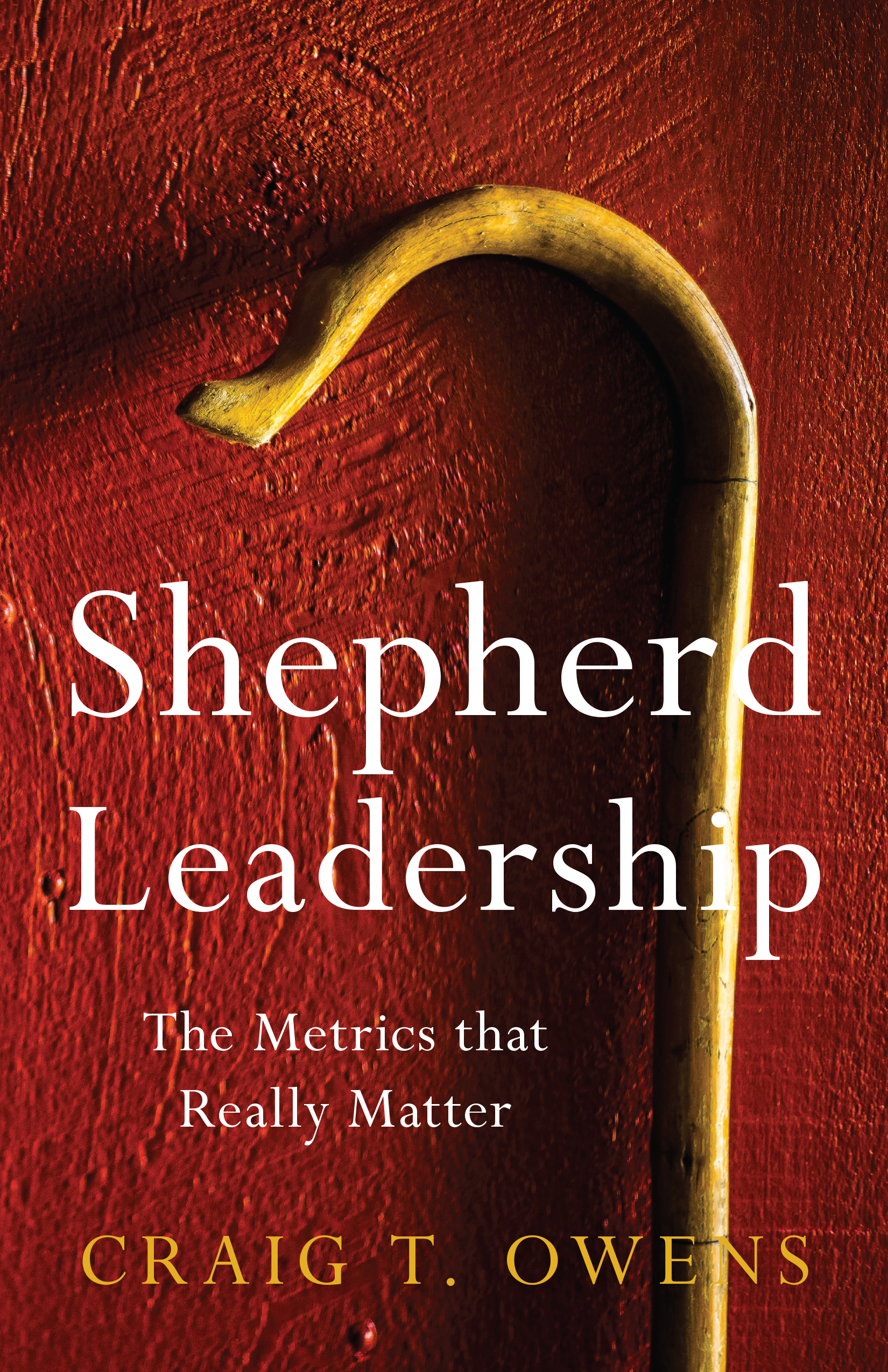
I unpack this idea in my book Shepherd Leadership: The Metrics That Really Matter. It’s available in print, ebook, and audiobook.
Actually, I want to share with you what others have said about my book:
“If one is searching for an easily understandable road map to biblical leadership, you have an excellent resource in Pastor Craig’s new offering. … Pastor Craig translates deep spiritual truths to simple, attainable processes which will certainly achieve desired results and personal growth.” —Kurt
“Owens has created a concise guide for pastors that will model how Jesus wants them to lead and serve. I highly recommend this book for not only pastors but those attending seminary.” —Anonymous
“After 23 years of Army service, and 17 of those years in a leadership role, I can tell you that this book would have helped me be a better leader back then. It is geared to help the Ministry Leadership; however, after reading it, I believe will help everyone.” —Daniel
“This book is such a good resource, not only for leaders in ministry but any person who wants a refreshing look at leadership relationships in general.” —Anonymous
“This is a great addition to the leadership library and is a must for those in nonprofit, ministry leadership, or considering going into those fields. … Having been led as a layperson in a church that had leaders who lacked humility and security in serving, and seeing the damage they did to people and the Church, this book really spoke to me.” —Steven
“I am so thankful to Craig for cutting through all the delusion and confusion of what ministry and leadership has become and taking us back to the simple reality of laying down our lives for others. Crucified shepherds are neither popular nor common, but they do look and live like Jesus.” —Dick
“Craig does a great job of reminding us of some simple truths that far too often get lost in the world of leadership. As he calls us back to model our leadership after Jesus, he does so with practical advise and a shepherd’s heart.” —Kevin
“Having served in executive leadership positions on two large church staffs and also on a non-profit paraministry, I can tell you from experience this book is a must-read.” —Steve
“Craig provides a much needed guide, based on biblical principles, on how the church can regain its impact on the culture through more effective leadership.” —Stuart
“Craig Owens describes his Biblical understanding of how leaders serve through humility and confidence, utilizing their mental, physical, spiritual, and emotional health. It is through this balance that effective leaders can honor God with their servanthood.” —Denise
“This book is filled with practical ideas that challenge me to check my priorities. In a world that screams for more, more, more, this book asks me to identify what I want more of.” —Faye
The reviews on Amazon currently have this book rated at 4.9 stars.
I’m so humbled that this book is connecting with so many people! I loved writing it, and I still love talking to people about it.
My book is available in print, ebook, and audiobook. If you’d like to know more about Shepherd Leadership: The Metrics That Really Matter, or to pick up a copy for yourself, please go to ShepherdLeadershipBook.com.



 Because of my science background, I’m always fascinated by the discoveries of scientists that bring glory to God. So I was drawn in especially by the subtitle of Dr. David Bradstreet’s book Star Struck: Seeing The Creator in the Wonders of Our Cosmos.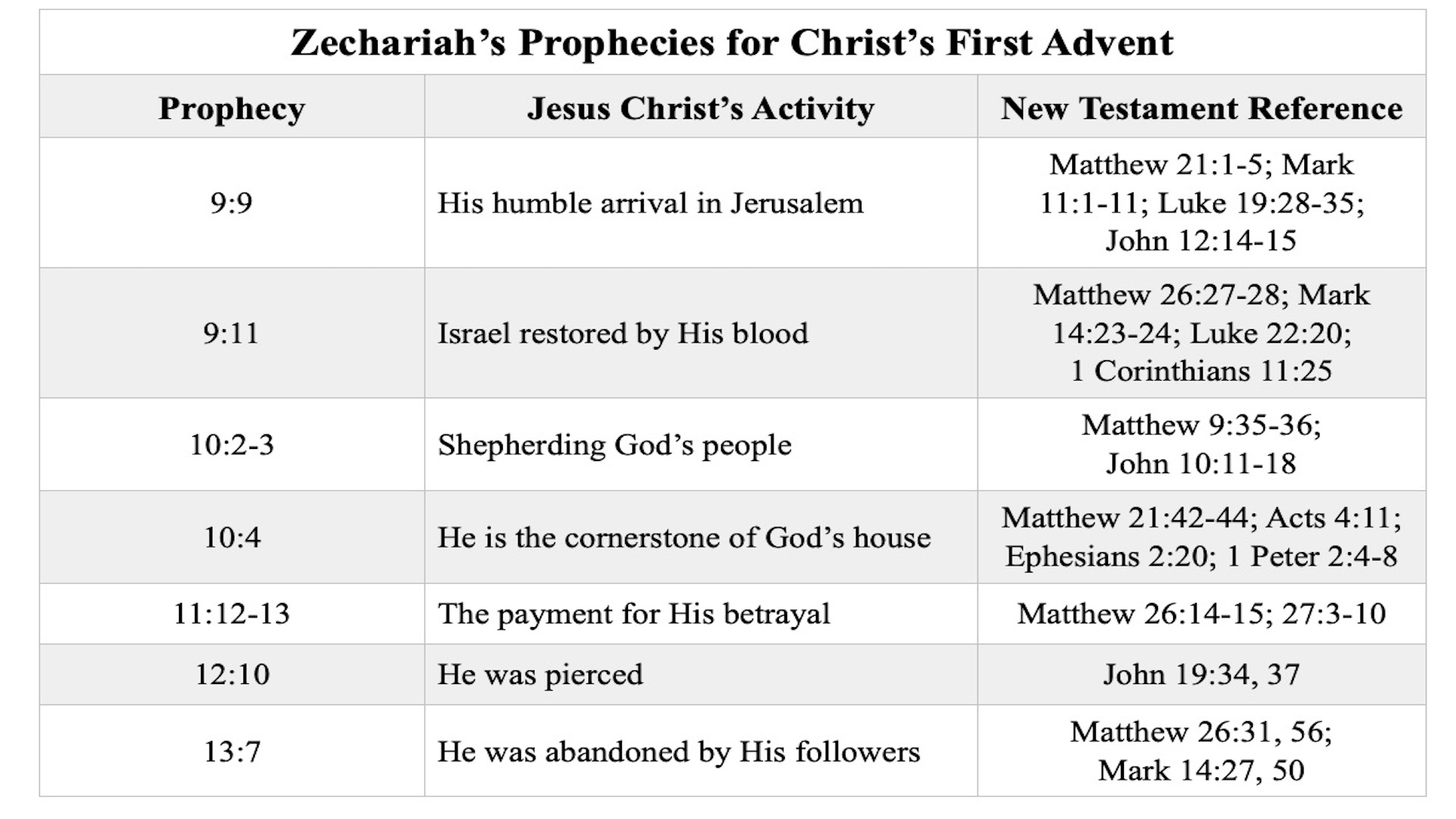






 Craig T. Owens