Listen to the podcast of this post by clicking on the player below, and you can also subscribe on Apple, Spotify, or Audible.
Don’t be too quick on this one: I’m wondering if criticism can ever be a good thing?
Check out this episode of The Podcast.
The Scriptures that I reference in this video are found in Acts 10-11.
I mentioned my blog post where I talk more about Peter’s rooftop vision and how we went from confused to enlightened. The post is Clearing Up the Confusion.
In the chapter on the bite of criticism, I wrote this—
Treating our critic as an opponent we have to defeat is sure to injure them and provide an opening for the enemy of our souls to pounce. Perhaps instead we should consider these wise words from A.W. Tozer: “Never be afraid of honest criticism. If the critic is wrong, you can help him; and if you’re wrong, he can help you. Either way, somebody’s helped.”
On the other hand, if you come into your meeting with a critic with a humble, willing-to-learn attitude, you will immediately soften the mood in the room. This kind of quietness keeps tempers from flaring (Proverbs 15:1).
See beyond the criticism to the critic. … Keep reminding yourself that this is a person to be loved, not an argument to be dismantled.
Listen to the podcast of this post by clicking on the player below, and you can also subscribe on Apple, Spotify, or Audible.
The apostle Peter had a very unusual encounter with a vision and with the voice of Jesus.
It was so unusual that Luke records that Peter was “wondering“ and later on “still thinking“ about what he had seen and heard, and what the implications of the vision were (Acts 10:17, 19). In the KJV, the word for “wondering” is translated “doubted within himself.” The Greek words that Luke uses here mean perplexed and entirely at a loss. In essence, Peter was asking, “What did I just see? What in the world does this even mean?!”
The vision came to Peter as he was praying on the roof of Simon‘s house. Because he was still on the roof when some men from Cornelius the centurion arrived, I believe this means that Peter stayed in an attitude of prayer while he was still wondering. That is an excellent posture for us to remain in as well when we are unclear as to what to do next.
As I mentioned, Luke says that Peter “was still thinking” about what he had seen and heard (v. 19). This is a different Greek word which means to revolve in mind. In other words, Peter didn’t brush it off or think it was simply too complex for him to grasp, but he continued to look at it, wondering about what it could mean.
I believe Peter is desirous to obey God, but he just doesn’t know what that obedience is supposed to look like. Instead of shutting down or launching out too quickly, Peter continues to wait for some illumination.
It was at this point—while still in a prayerful, thoughtful posture—that the Holy Spirit could speak to him. The Holy Spirit simply said, “there are some men here to see you. You must not hesitate to go with them“ (vv. 19-20).
Although Peter couldn’t see this yet, his obedience would actually be the first step toward understanding and applying the vision.
It was as Peter talked with his visitors that afternoon, and then as he heard Cornelius‘ story the next day, that the application became clear to him. We can gather this when we hear Peter say, “God has shown me“ (v. 28). As he was retelling this story to some Jewish Christians later, he also said, “then I remembered what the Lord had said” (11:16).
For Peter and his companions that traveled with him, God’s message in the vision became crystal clear when they all saw “that the gift of the Holy Spirit had been poured out even on Gentiles” (10:45-47).
Here are some important takeaways for all of us. When God speaks a word to us that seems to be confusing, we must stay in a prayerful, expectant posture. Don’t brush it off, and don’t jump to any conclusions. Like Peter, stay in prayer and wait for a clearer word from the Holy Spirit. When the Holy Spirit reveals something else to you, walk forward in the part that is clear. It is as you are walking in obedience that God‘s full message will become clear to you.
Listen to the podcast of this post by clicking on the player below, and you can also subscribe on Apple, Spotify, or Audible.
Last week I mentioned that I was a bit surprised that scientists had done so much research on the benefits of gratitude because science tends to have an over-reliance on the tangible world. But it’s hard to ignore that there are so many intangibles (like gratitude) which make a tangible difference in people’s lives.
We get ourselves into trouble if we focus exclusively on the tangible or intangible. We also get ourselves into trouble if we don’t use all of the resources God has given us.
The Bible tells us that we have been created in the image of God, and that one of the things that separates us from the other creatures in the world is our soul (Genesis 2:7). Our soul is compromised of our mind, our will, and our emotions.
We cannot allow any one of these to lay dormant or even considered less valuable than the others, nor we can allow any one of these to bully the others.
If my emotions dominate (especially emotions like fear or anger) I can give into fight-or-flight—Psalm 106:7
If my mind dominates, I can become dark and confused—Romans 1:21 NLT
If my willpower dominates, I tend to be very selfish—Isaiah 14:13-14
When my emotions flare up, when my mind is dark, or when I feel selfish, I need to remember to engage the other two parts of my God-breathed soul. This is where gratitude comes into play.
I love reading the Psalms when I’m battling the negative emotions that seem to rush in during trying times. The psalmists were so honest about what they were feeling. Check out a couple of examples in Psalm 7:17 and 9:1-2 where we see David engaging his mind and his will to make the choice to be grateful to God despite his circumstances.
In the New Testament, we see a similar response from Paul and Silas when they are falsely imprisoned in Philippi (see Acts 16:22-26). Despite their cruel circumstances, they chose to life thankful worship to God. Luke write that the other inmates were listening, and so was the jailer and his family, who ended up accepting Jesus as their Savior.
I’ve got three important words for you when dark times threaten to hijack your gratefulness:
TALK TO YOURSELF
We see another psalmist doing this in Psalm 42:1-6. He asks his soul why it is so downcast, and then he says, “I chose to remember God in all His goodness and I chose to praise Him!” These words are repeated again in Psalm 42:11 and 43:5, which tells me that giving thanks to God is not a one-and-done thing, but something that needs to be continually repeated.
You can get some conversation starters for your self-talk in two simple ways:
Write down your gratitude
Talk about your gratitude
Keep a gratitude journal: Write something down at the end of each and every day. Write it down. Re-read it regularly. Tell others about it. And then be ready for others to ask you about Jesus—just like the Philippian jailer—when they notice how thankful you are!
Use your mind to talk back to your fears and worries, and then engage your willpower. Don’t let your gratitude get hijacked by the circumstances around you, but allow your thankfulness to help you reframe your circumstances into God’s plan.
Check out the other messages in our Be Thankful series by clicking here.
Let’s not let the candidate for whom we vote be something that separates us from others in the Body of Christ. As the apostle Paul says, “Let’s agree together in the Lord.” Check out my full sermon How Christians Can Live Biblically in an Election Season.
I have lots of new content every week, which you can check out on my YouTube channel.
“It was from Joppa (Acts 10:5) that God sent Jewish Peter to Gentile Cornelius. In this same Joppa, 800 years before, God had to use a little extra persuasion on Jewish Jonah to get him to go to Nineveh, a city of Gentiles (Jonah 1:3).” —Henry Halley, Halley’s Study Bible
“We don’t stop playing because we grow old; we grow old because we stop playing.” —George Bernard Shaw
“No big challenge has ever been solved, and no lasting improvement has ever been achieved, unless people dare to try something different.” —Tim Cook, CEO of Apple
Jesus went to the Cross to fulfill His Father’s “predetermined plan.” This brought glory to God and joy to Jesus. God has a plan for your life, too. He sees you, He planned for you, He equipped you. As you live for Him, your life is also bringing glory to your Heavenly Father and joy to your heart. Unlike Jesus, you may not see how your part fits into God’s plan, but you will know it completely when you hear your Savior say, “Well done, good and faithful servant!”
Listen to the podcast of this post by clicking on the player below, and you can also subscribe on Apple, Spotify, or Audible.
Do you remember this song: “If you’re happy and you know it clap your hands”? It goes on to say, “If you’re happy and you know, then your life will surely show it….” Frankly, I’m concerned about Christians that are unhappy.
Charles Spurgeon was talking to his students and he said, “I commend cheerfulness to all who would win souls; not levity and frothiness, but a genial, happy spirit. There are more flies caught with honey than with vinegar, and there will be more souls led to heaven by a man who wears heaven in his face than by one who bears Tartarus in his looks.” Tartarus, in Greek mythology, is a sunless abyss, below Hades, in which Zeus imprisoned the Titans, which is the exact opposite of the Paradise described in the Bible.
Unhappiness generally comes from ingratitude. An unhappy Christian gives God no praise, robs Him of glory, and paints God in a bad light. A happy Christian lifts God high and invites others to know this All-Good, All-Happy God too!
Christians need to fight against the downward pull of negativity in which our culture seems to so easily gravitate. In his letter to the Philippians, the apostle Paul says that a Christian who doesn’t engage in the complaining that the world is known for will shine brightly. Quite simply, thankfulness is the antidote to complaining (Philippians 2:14-18).
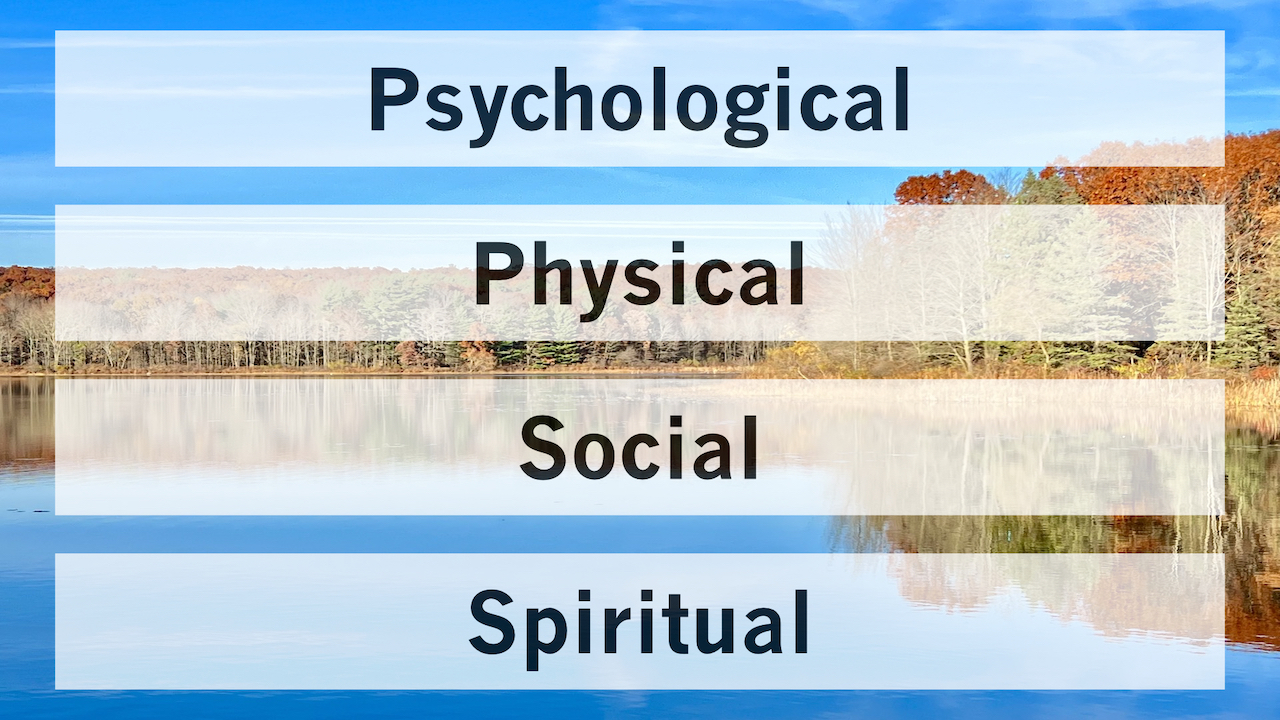
Even those who may not recognize the the authority of Scripture have extolled the benefits of gratitude. Psychologists and medical professionals have identified three benefits from a thankful heart:
Physical benefits—stronger immune system, less body aches and pains, regulated blood pressure, a better sleep-wake cycle
Social benefits—better communication with others, increased empathy, increased likability
And Christians can add one more benefit to this list:
Spiritual benefits—more dynamic corporate worship, enchanted Christian testimony, perseverance through trials, fortification against giving in to temptation
The well-known Cleveland Clinic reported that an attitude of gratitude leads to overall wellness. When you are grateful for what you have, it improves your outlook mentally, physically, spiritually, and relationally.
Here are five things you can start doing today that will increase your gratitude levels, enhance your Christian testimony, and generally improve your life:
Switch your perspective. Worry is focusing on what you don’t have. Make the switch to gratitude by giving thanks for what you do have (Matthew 6:25-34).
Strengthen your relationships. It’s fine to weep with those who weep, but let’s encourage others and be encouraged by others so that we can rejoice with those who rejoice (1 Thessalonians 3:6-10),
Foster healthy habits. Dr. Luke gives us the pyramid of health that Jesus demonstrated in Luke 2:52. The pinnacle is strong relationships, and grateful people are more empathetic and likable.
Keep a gratitude journal so that you don’t forget what God has done for you (Psalm 106:7).
Talk about your gratitude. This instills thankfulness in other saints (Isaiah 63:7) and in future generations of your family (Isaiah 46:4), and it becomes a testimony for seekers (1 Peter 3:15).
Let me close with this observation from Blaise Pascal: “There are three kinds of people in the world; those who have sought God and found Him and now serve Him, those who are seeking Him, but have not yet found Him, and those who neither seek Him nor find Him. The first are reasonable and happy, the second reasonable and unhappy, and the third unreasonable and unhappy.”
Reasonable, happy saints are the ones who lift God high and invite others to know this All-Good, All-Happy God too! Not just at the Thanksgiving season, but starting now and then going all year long!
Follow along with all of the messages in this series called Be Thankful by clicking here.
Psalm 133 tells us that in order for us to sharpen others—and for us to be sharpened by them—we have to be around other them. Christian saints put a high priority on spending time with others.
I have lots of new content every week, which you can check out on my YouTube channel.
From Desiring God’s Here We Stand series comes this great snippet from the history of the Reformation: “[John] Calvin intended to go to Strasbourg for a life of peaceful literary production. But while Calvin was staying the night in Geneva, William Farel, the fiery leader of the Reformation in that city, found out he was there and sought him out. It was a meeting that changed the course of history, not just for Geneva, but for the world. Calvin remembers, ‘Farel, who burned with an extraordinary zeal to advance the gospel, immediately learned that my heart was set upon devoting myself to private studies . . . and finding that he gained nothing by entreaties, he proceeded to utter an imprecation that God would curse my retirement, and the tranquillity of the studies which I sought, if I should withdraw and refuse to give assistance, when the necessity was so urgent. By this imprecation I was so stricken with terror, that I desisted from the journey which I had undertaken.’”
Have you ever heard people claim that celebrity deaths seem to come in threes? It does seem that many times the major cataclysmic events happen in bunches. Dr. Roy Spencer has an interesting post (with corresponding data) in which he outlines the role of randomness in these events.
“In Hebrews 12:2 the writer uses a participle—‘fixing your eyes’—to describe what should be the characteristic orientation of our every waking moment. True and full faith wants to say with David, ‘I have set the Lord always before me’ (Psalm 16:8). … If we are living full faith, having the eye of our heart fixed on the world of unseen things, the reality of that world and all its beauty, goodness, and truth will begin to be evident in our daily lives, filling our lives with the overflowing Presence of Jesus Christ (John 7:37-39).” —T.M. Moore
“There are three kinds of people in the world; those who have sought God and found Him and now serve Him, those who are seeking Him, but have not yet found Him, and those who neither seek Him nor find Him. The first are reasonable and happy, the second reasonable and unhappy, and the third unreasonable and unhappy.” —Blaise Pascal
Evolutionists are now using language that sounds like words Creationists use: “Flowers like hibiscus use an invisible blueprint established very early in petal formation that dictates the size of their bullseyes—a crucial pre-pattern that can significantly impact their ability to attract pollinating bees.” Check out this article from the Institute for Creation Research.
Another very helpful apologetic video from J. Warner Wallace. This video explains how the origin of DNA is best explained not by scientific theories but by the existence of God.
Just as the smallest enzyme is invaluable to the human body, the gift God has given you is invaluable to the Body of Christ. Check out the full sermon called Let’s grow together.
Listen to the podcast of this post by clicking on the player below, and you can also subscribe on Apple, Spotify, or Audible.
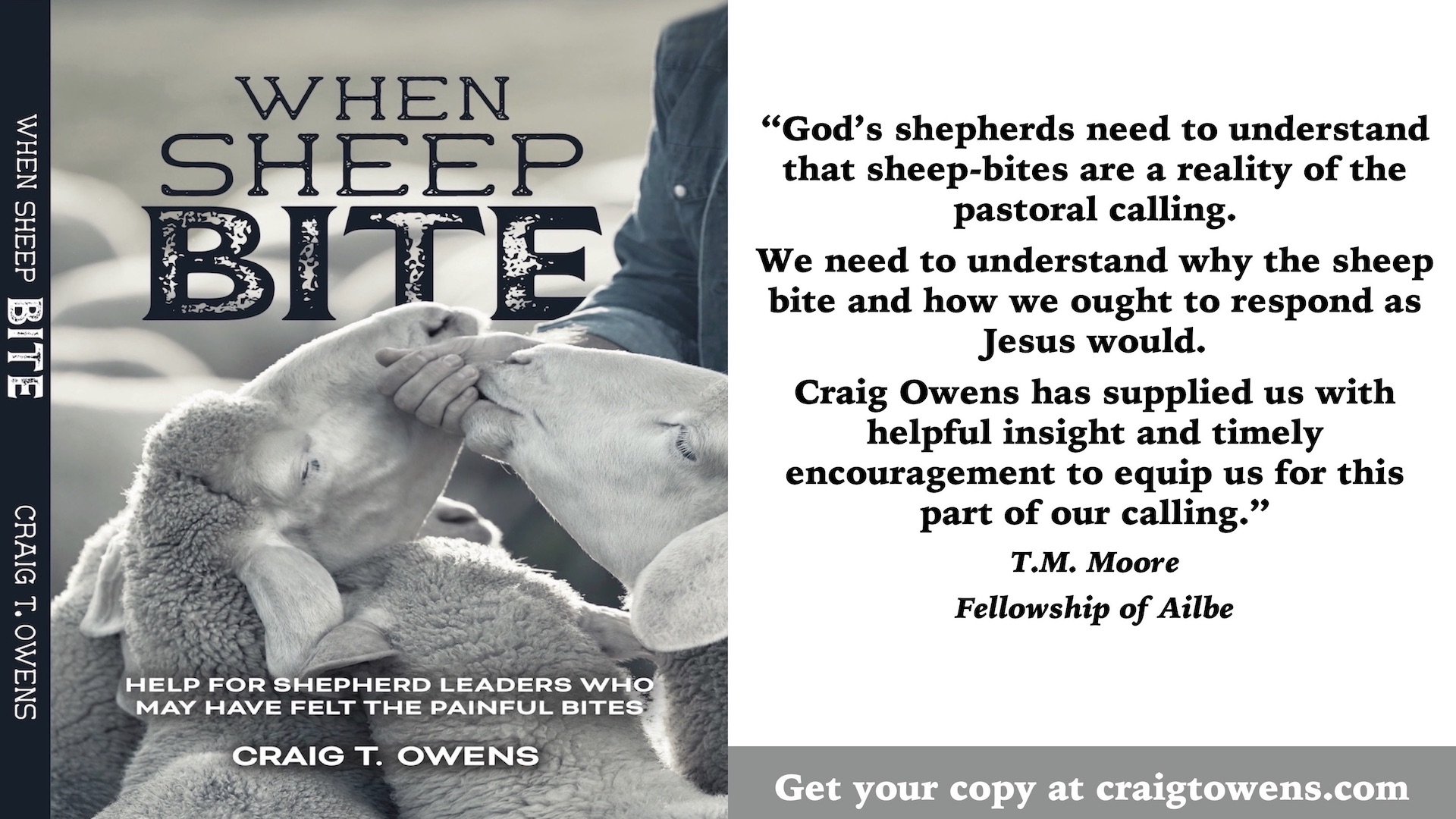
In someways, my new book When Sheep Bite came out of my first book Shepherd Leadership. And yet, in many ways I consider When Sheep Bite to be the prequel of Shepherd Leadership.
Check out this short clip from my interview on the Leading From Alignment podcast with John Opalewski and Jim Wiegand where I try to explain what I mean.
In whatever order you choose to read these books, I have been thrilled to hear back from pastors and other church leaders who have found encouragement from both of them.
You can watch the full Leading Form Alignment interview here.
Listen to the podcast of this post by clicking on the player below, and you can also subscribe on Apple, Spotify, or Audible.
We’ve now learned about all three circles that help us discover our God-implanted gifts:
Passion—what thrills you?
Pain—what kills you?
Proficiency—what fulfills you?
What do you do with these gifts? What’s the whole purpose in learning about them? I think the goal as saints is to help the Body of Christ mature in ways that brings God glory (Ephesians 4:12-16).
Solomon also gives a great word picture of friends using their gifts for each other—“As iron sharpens iron, so a friend sharpens a friend” (Proverbs 27:17 NLT).
In an earlier message in this series, I talked about the thousands of enzymes in our human bodies. Each enzyme has just one task, and each task is indispensable to the health of the whole body. It is exactly the same in the Body of Christ—your gift-in-action is indispensable to the health of the whole Body.
How do you squander your grace gift? I think these are five basic ways:
Not discovering it—“I have a gift?”
Devaluing it—“My gift is nothing special.”
Overvaluing it—“My gift is super-important.”
Laziness—“My gift is fine just the way it is.”
Selfishness—“My gift is just for me.”
We need to discover our own gifts, but then we need to work on making the switch from “me” to “we.” I want to excel in using my gift so that I can help you excel in using your gift so that we can help another brother or sister excel in using their gift.
Oswald Chambers said, “The Book of God is insistent on this: we cannot develop a holy life alone, it would be a selfish life, without God in it and wrong. … Beware of isolation; beware of the idea that you have to develop a holy life alone. It is impossible to develop a holy life alone, you will develop into an oddity and a peculiarism, into something utterly unlike what God wants you to be. The only way to develop spiritually is to go into the society of God’s own children, and you will soon find how God alters your set.”
Frequently we need another brother or sister in Christ to help nudge us into discovering and using our gifts. For example, look how…
Mordecai assured Esther (Esther 4:13-14)
Matthias was chosen by those in the upper room (Acts 1:21-26)
The first deacons were unanimously chosen by the Church (Acts 6:3-6)
Barnabas and Saul were chosen by the Holy Spirit and confirmed by other prophets and teachers in the church (Acts 13:1-3)
Paul encouraged his proteges to appoint elders who were recognized by others in the church (Titus 1:5; 1 Timothy 3:1f)
Consider this poem—
For want of a horseshoe nail the shoe was lost.
For want of a shoe the horse was lost.
For want of a horse the rider was lost.
For want of a rider the message was lost.
For want of a message the battle was lost.
For want of a battle the kingdom was lost.
And all for the want of a horseshoe nail.
Listen to the Holy Spirit. Listen to the confirming words from fellow saints—words like “You are gifted,” “You are so good at…,” and “How did you know how to do that?” Then step out of your comfort zone and soar into your gift zone!
My book Shepherd Leadership has five chapters dedicated to the health and wellbeing of pastoral leaders. One important principle: Only healthy shepherds can help their sheep get healthy.
I have lots of new content every week, which you can check out on my YouTube channel.
Clinton Manley has a great post on the way the Holy Spirit empowers a Christian’s life. He tells of this work in terms of an adventure: “We were made to go to God, the Home for our souls, made to enjoy God more and more forever, to really live. And the only way to get there is by following the Way crossing the only Bridge that brings us to God (John 14:6; 1 Peter 3:18). And we can only walk that Way when God’s own breath fills our lungs and animates our steps, when His Spirit sets us walking in a new direction as new creations on new adventures.”
Even among the reformers, Conrad Grebel was consider something of a radical. “Grebel was convinced that the city councilmen should have no authority over the church and its practice — more so, they should have no authority over the word of God itself. On the flip side, he didn’t think the church should have authority over the state either, and he opposed compulsory tithing and the like. The seeds of a separation between church and state were germinating. To us, this separation is as familiar as the air we breathe; to them, it was revolutionary.” Read more about both Grebel and other reformers here.
“If we would rise into that region of light and power plainly beckoning us through the Scriptures of truth, we must break the evil habit of ignoring the spiritual. We must shift our interest from the seen to the unseen.” —A.W. Tozer
“Success is dangerous. One begins to copy oneself and to copy oneself is more dangerous than to copy others.” —Pablo Picasso
Christian apologist J. Warner Wallace has a great strategy for responding to skeptics who claim that the Bible contradicts itself.