Awesome God, Awesome Praise

Last I week I told you how Hebrew poetry often puts the climax in the middle. In Psalm 47 that middle climax is in verse 5—God has ascended. This is one of seven “psalms of enthronement” in the Psalter. Since all of the Scripture points to Jesus, let’s look at the definition of this word ascend and see how it fits with Jesus: 

When a king is coronated—when he is heading toward his throne—we can expect the people to be happy. So the psalmist tells us that in God’s case the people are clapping and shouting (v. 1), telling God how awesome He is (v. 2), thanking Him for subduing their enemies (v. 3), and expressing their gratitude that He has established them as His people (v. 4). 

Then comes the Selah / Pause—what is happening during this pause? The King is being crowned. He has ascended to His rightful throne. So this is selah/pause is really a deep breath that’s about to explode in a crescendo of praise! 

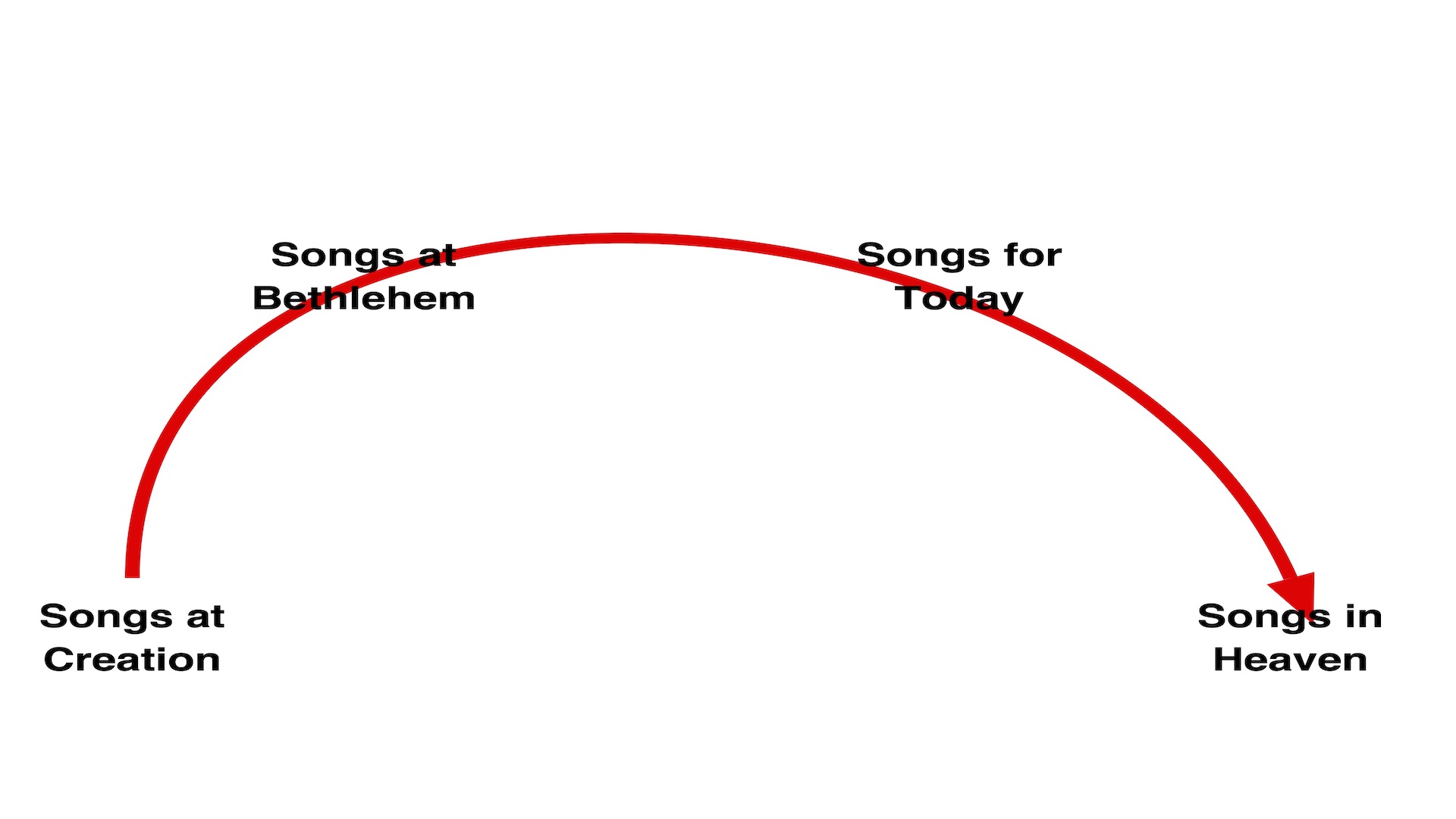
Now there are shouts of joy (v. 5a). In our earthly understanding, it would be something like: “LONG LIVE THE KING!!” There is also a sounding of trumpets (v. 5b) which literally means a thundering of trumpets. And then there’s the singing—lots and lots of singing. In fact, the word sing appears five times in the next two verses. 

From The Infographic Bible (click the image for more)

There are so many ways to say LONG LIVE THE KING—singing, dancing, raising our hands, falling down on our knees. shouting.  

Our God is praise-worthy. He is clap-worthy! He is sing-worthy! He is dance-worthy! He is shout-worthy! He is bowing-worthy! 

Our awesome God deserves awesome praise! 

Why does it seem that we are prone to worship so quietly? Perhaps we need to take it up a notch or two (or three or four). Perhaps we haven’t gazed into His awesome beauty enough to realize just how incredible He is! 

Do you think shouting praises to the King of kings is too undignified? Did you know that when the King of kings returns, He is going to shout and there is also going to be a thundering trumpet? For the Lord Himself shall descend from heaven with a shout, with the voice of an archangel, and with the trumpet of God (1 Thessalonians 4:16)! 

Here are 4 important lessons from this Psalm of Enthronement—

  1. God is the King of all kings, enthroned on the Throne above all thrones. He is worthy of your “undignified” praise and acclamation. 
  2. God should always get your best praise. In verse 7 the phrase sing praises with understanding really means to sing with insight and skill. 
  3. God deserves a holy vocabulary. We see the word awesome in verse 2. Every time this word is used in the Scripture, it’s speaking of God. So why would we use a word like this for something like a hamburger!?!
  4. All nations and kings and peoples and tribes will bow before God at the end. They will bow in either acclamation for their King, or in abject terror of the All-Righteous Judge. Let’s remain missional so more people in the end are crowning Him as their All-Merciful King. 

I hope you can join me this next Sunday as we continue our series looking at the Selahs in the Psalms. 

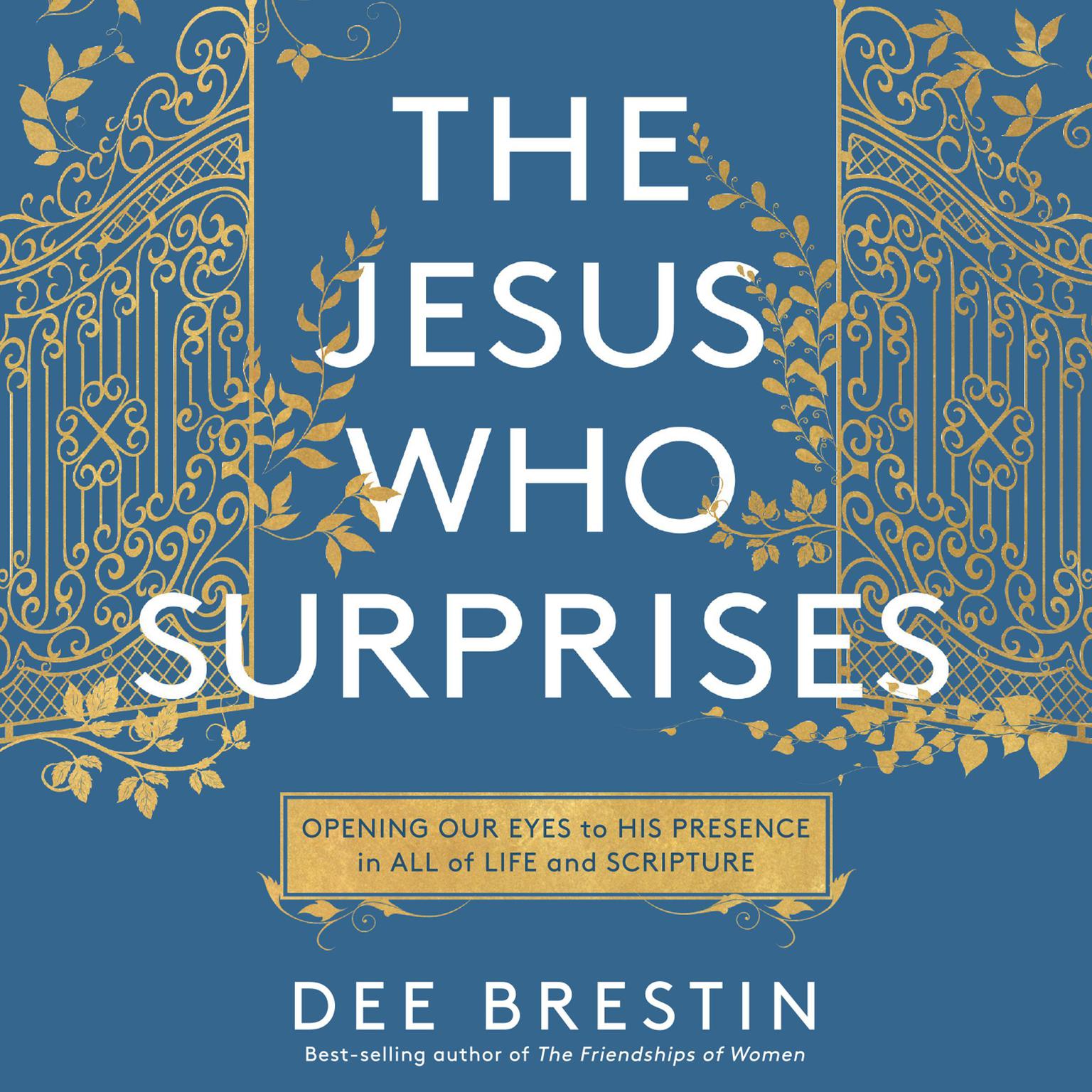
The Jesus Who Surprises (book review)

Oswald Chambers wisely noted, “God did not give a progressive revelation of Himself through the Old Testament: the people progressively grasped the revelation, which is very different.” Jesus is all throughout the Old Testament, giving us ample opportunity to discover Him on every page. A helpful guide to get you started on this journey of discovery is The Jesus Who Surprises by Dee Brestin. 

Dee wrote that she was intrigued by Christ’s words to the questioning disciples walking the road to Emmaus on the morning of His resurrection. These men were having a hard time wrapping their minds around the report from eyewitnesses who said Jesus was alive! As Jesus walked with them (although unrecognized by them for the moment), Luke records, “And beginning with Moses and all the Prophets, He explained to them what was said in all the Scriptures concerning Himself” (Luke 24:27). 

The Jews divided their Scripture—the part we now refer to as the Old Testament—into three sections: the Law, the Writings (the poetic books), and the Prophets. In The Jesus Who Surprises, Dee divides her book into the same three sections, giving us samples of how Jesus surprises us in the pages of each section of the Old Testament Scripture. Each chapter concludes with a Bible study that can be done on your own, or in a small group setting. 

The two disciples on the road Jesus commented to each other later that they felt their hearts burning as Jesus revealed Himself all throughout the Scriptures. I pray that as you read The Jesus Who Surprises you will experience the same burning. Then I believe this book will start you on your own lifelong journey to read the Scriptures for yourself and see Jesus on every single page! 

I am a Multnomah book reviewer. 

Poetry Saturday—Let It Be On Earth

Psalm 93
The Lord sits upright on His throne, 
draped in a mountain, rising through 
the clouds, forever changeless, new, 
eternally impervious to 
all storms or time, a growing stone 
of splendor and unmeasured girth:
As there, Lord, let it be on earth!

Psalm 45:6-8
What sweetness bathes our every sense!
What radiating gladness swells 
around us! What delightful smells 
engulf, what happy music tells
Your glory! Joys beyond expense 
from You and from Your throne pour forth:
As there, Lord, let it be on earth!

Psalm 47
They gather in Elysian Fields, 
a vast and varied, joyful host, 
with one objective uttermost—
their King to celebrate and toast!
There, casting down their crowns and shields, 
they tell His holy, matchless worth:
As there, Lord, let it be on earth!

Revelation 4, 5
Throughout the vast, far-flung expanse 
a chorus rises, joyous, strong:
Unnumbered hosts, an endless throng, 
their voices joined in glorious song, 
extol their King’s eminence, 
rejoicing in His matchless worth:
As there, Lord, let it be on earth!

Hebrews 12:1
Now let us focus on one saint, 
one from that boisterous crowd of those 
who prays together, dressed in clothes 
of linen white. See how he glows 
in mien and body! No restraint 
impedes his holy, joyful mirth:
As there, Lord, let it be on earth!

Hebrews 1:7 
Christ speaks, and angels all obey, 
and hurry off to implement
His Word. They are as servants sent, 
a holy, unseen regiment, 
to guard and guide us on our way.
Of faithfulness they know no dearth:
As there, Lord, let it be on earth!

Psalm 97:1-6
Fire flows to mark His path, and burns 
away His foes by righteousness 
and justice, oozing forth to bless 
the world and overpave the mess 
we men have made of things. He turns 
this way and that in all His worth:
As there, Lord, let it be on earth!T.M. Moore

3 Lessons From A Devoted Dad

If you were to pick a man that would have been desperately devoted to Jesus as his Savior, Cornelius wouldn’t make anyone’s “top 10” list! 

Just take a look at all the strikes against this man. He was a… 

  • Gentile—to Jews, Gentiles were just the fuel to stoke the fires of hell. 
  • resident of the city of Caesarea—since this was the headquarters of the Roman government for Palestine, not many Jews would venture there. 
  • Roman—historians say only 10% of Romans in this era were monotheistic. 
  • centurion—not just any centurion, but an extremely powerful centurion from the Italian Regiment (not just a local mercenary who was in it for the money). And he took his name from Cornelius Sulla, a Roman general known both for his mercy and his ruthlessness.

All of this makes Cornelius a fully self-sufficient and a well-to-do man who was not likely to look for help from God. Nor was he the type of person that a Christian missionary might seek out. 

But clearly, something was missing in Cornelius’ life because he was completely countercultural in his pursuit after God. Not just his pursuit of God, but his quick understanding of exactly who Jesus was. 

Luke the historian describes Cornelius as:

  • devout and God-fearing. The Greek word for devout literally means “a right worshipper.” It’s a word Luke only uses three times in Acts, and two of those times are describing Cornelius. 
  • prayerful. The word Luke uses for him means someone who makes prayer personal and ongoing. 
  • generous. Cornelius took care of people who couldn’t take care of themselves. 

All of this got God’s attention (see Psalm 141:2; Revelation 5:8; Proverbs 19:17), and He sent an angel to direct Cornelius to Peter. 

When Peter came to Cornelius’ house, twice he said “as you know” (vv. 36, 37), showing us that Cornelius was aware that there was not only one true God, but that a relationship with Jesus was the only way to be in right relationship with God. As Peter spoke with Cornelius, his family, his relatives, his close friends, and even his fellow soldiers, the Holy Spirit baptized them just as He had done with the disciples of Jesus on the day of Pentecost. 

So here are 3 vital lessons for all men to learn from the life of Cornelius the centurion—

  1. Your devotion to God is influential. People around you do notice your devoted pursuit of God.
  2. Your openness to all that God has puts your family, friends, and coworkers in a place to receive God’s blessings too.
  3. God’s blessings flowing through you have lasting and far-reaching results. The outpouring of the Holy Spirit on Cornelius may have opened the door for Christian evangelism to Gentiles unlike anything that had happened before.

Dads, be devoted to God. Desire all He has for you, and all He has for those around you. Pursue Him no matter how many “strikes” there may be against you. 

If you missed any of the messages in this series, you can access the full list of messages by clicking here.

Surprised By Paradox (book review)

Many years ago, as I struggled with some of the either-or challenges of Christianity, I read C.S. Lewis’ wisdom that the safest course between two either-or extremes was a course straight between them. Jen Pollock Michel embraces this profound wisdom in her thoughtful book Surprised By Paradox—The Promise of And in an Either-Or World.

Jen wrestled with many of the same either-or struggles I wrestled with, which I actually found encouraging. The reason I find this encouraging is that it tells me that I’m not alone in my wrestling, and you aren’t either! So embracing the same C.S. Lewis wisdom that helped guide me, Jen opens up her heart to us in an intimate journey of discovery. 

Surprised By Paradox felt like I was getting a glimpse at Jen’s personal diary. Every chapter seemed like it could start out “Dear Diary…” with Jen sharing what prompted her wrestling thoughts, the alternatives she considered, and then the AND solution that God revealed to her. I could feel her growing in insight and confidence as I turned to each successive chapter. 

This book will cause you to question and ponder and wrestle as well. And that’s a good thing! To help you along the way, there are some very helpful discussion questions sprinkled throughout the book. Although these would be fine questions for you to answer on your own, I encourage to invite someone else alongside you on your journey. Surprised By Paradox will help you and your friends grow in your spiritual maturity. 

I am an IVP book reviewer. 

The Mysteries Of God

“Relinquish your demand to understand; accept the fact that many things are simply beyond your comprehension. Because I am infinite and you are finite, the limitations of your mind make it impossible for you to understand much of what happens in your life—and in the world. So it’s vital to make room for mystery in your worldview.

“You are privileged to know many things that were formally mysteries—things that had been kept hidden for ages and generations. The New Testament is full of revelations that came through My incarnation, life, death, and resurrection. You are immeasurably blessed to have this priceless knowledge!

“Nonetheless, the ways I work in your world are often mysterious to you—beyond tracing out. This presents you with a choice: to resent My ways or to bow before Me and wonder and worship.” —Jesus (in Sarah Young’s Jesus Always)

I hope you will choose wonder and worship—that’s what I’m trying to choose.

Immeasurable!

Your value to God is immeasurable!

Jesus called satan the father of lies, that means every word he speaks is false. He uses his falsehoods to constantly slander God’s children, “For the accuser of our brothers and sisters has been thrown down to earth—the one who accuses them before our God day and night” (Revelation 12:10).

But we’re not helpless victims against the devil’s slander. The Holy Spirit reminds us of what the Word of God says, and what the God of the Word has done (John 14:26). That Word becomes our sword and shield against the slanderer, “They triumphed over him by the blood of the Lamb and by the word of their testimony” (Revelation 12:10-11).

This passage from Psalm 139 is a great weapon to use against the devil whenever he slanderously calls into question your worth in God’s sight. Silence his lies and strike him down with the Truth that your value to God is immeasurable!

Living Between The Advents

We live in an amazing time—the First Advent of Jesus has already happened in Bethlehem, and yet we are eagerly anticipating Christ’s Second Advent at any moment! 

The fourth stanza of Charles Wesley’s classic Christmas carol Hark! The Herald Angels Sing is a wonderful between-the-Advents look at what happened at the First Advent, and what we have to look forward to in the Second Advent. The key thing to note in this stanza is the verbs: come, fix, rise, bruise, efface, stamp, and reinstate. 

COME, Desire of nations—What is the “desire of nations”? It’s the restoration of God’s glory on earth, so it’s not really a what but a Who. The prophet Haggai informs us that our Desire is realized in the Advent of Jesus (2:1-9).  

FIX in us Thy humble home—At His First Advent, Jesus came and humbly made His home among us, even dying to pay the penalty for our sins (Hebrews 2:14, 17; Philippians 2:7-8). 

RISE, the woman’s conquering seed—Although Jesus was obedient to death—even death on a Cross, He didn’t stay dead but was resurrected (Philippians 2:8-9; Revelation 1:18)! 

BRUISE in us the serpent’s head—With His death and resurrection, Jesus took away the sting of death from satan, fulfilling one of God’s first prophesies (Genesis 3:15; 1 Corinthians 15:19-26, 54-57).  

Adam’s likeness now EFFACE—That means to wipe out, do away with, expunge. That’s exactly what God does with our forgiven sins (Psalm 103:1-4, 10-12)! 

STAMP Thine image in its place—Although our sin has been effaced, God doesn’t leave us as blank slates, but instead He allows the image of His Son Jesus to be stamped onto our lives (2 Corinthians 1:21-22; 2 Corinthians 3:18). 

REINSTATE us in Thy love—The relationship we longed for is now reborn in us (1 Corinthians 15:49)! 

The Desire of Nations HAS come, and yet He WILL come again! We’re living between the Advents now, so a good question for Christians to ask is: “How are we to live?” I think there are three key things—

  1. In celebration that Jesus came at His First Advent to be our Savior
  2. In anticipation of the Second Advent
  3. In obedience to God’s Word (Revelation 22:7)

To take a look at the other stanzas of this Christmas carol, please click here.

Joining The Angel Choir

The angels are highly visible around the birth of Jesus Christ in Bethlehem, but here’s the amazing thing—we are invited to join the angelic choir singing praise to Jesus! 

Nowhere else do we see such a concentration of angels as during Christ’s time on earth, and especially at His birth. In the Old Testament prior to Christ’s birth, and in the New Testament following Christ’s ascension, we don’t see as many angels clustered together on Earth— 

  • Gabriel brings a birth announcement to Zechariah 
  • Gabriel brings a birth announcement to Mary
  • an angel talks to Joseph in a dream (three times!) 
  • an angel gives instructions to the wise men in a dream
  • angels minister to Jesus in the wilderness after His battle with the devil 
  • angels are poised for action in case Jesus calls on them prior to His crucifixion
  • angels are present at Christ’s tomb after His resurrection
  • and a massive angel choir sings at Christ’s birth (Luke 2:8-14) 

Charles Wesley wrote a Christmas carol called Hark! The Herald Angels Sing. In the first stanza, we’re invited to “join the triumph in the skies.” But how can someone sing a song grand enough, majestic enough, or worthy enough to honor Almighty God?! That would be like me being asked to compose a song or play something on the piano to honor Mozart—how could I play anything worthy of his musical talent? 

In a similar way, when the Israelites thought about coming into God’s presence, they were gripped with knee-knocking, gut-churning fear (Exodus 19:16-19; 20:18-19)! 

But notice that the angels didn’t sing, “God is born in Bethlehem.” They sang, “Christ is born in Bethlehem.” Christ: the Messiah; the One who sets things right. No wonder this is such good news of great joy that brings peace and God’s favor (Luke 2:10, 14). 

The simple fact is that we couldn’t approach God and join in their angelic song. Instead, Jesus approached us as our Messiah, our Deliverer. How could this happen? Wesley’s carol reminds us that Jesus came so that God and sinners are reconciled! 

The First Advent is God approaching us. If we allow Jesus to reconcile us to our Holy Heavenly Father, then we have no fear of Christ’s Second Advent. His Second Advent will be attended to by angels just like His First Advent (Matthew 25:31-32; Mark 8:38; Jude 1:14-15). Those who haven’t had their sins forgiven will hear a song that is soul-crushing to them, while those who have accepted the reconciling work of Jesus will join with the angelic host in a victorious song bringing glory to God forever and ever (Revelation 14:9-11; 15:1-4). 

We don’t have to wait until we get to Heaven to join the triumph of the skies. We can join the angelic choir right now in singing our praise to God today. And every day! 

To take a look at the other stanzas of this Christmas carol, please click here.

Overcoming Unbelief Before It’s Too Late

Unbelief can shut down the “Shalom Cycle” that God intends for our lives. Even worse, unbelief can put us on a slippery slope that could be disastrous for our future! So it is vital that we understand what unbelief is, how we can recognize it in our own lives, and the steps we can take to recover from unbelief. 

First of all, let me remind you of what the Shalom Cycle looks like—

Quite simply, when we are grateful for what God has already done for us it fuels our trust in God’s future grace to meet our needs. 

But when we forget to be grateful and gratitude turns to grumbling, unbelief displaces trust.

A good way to remember how unbelief works is thinking of it as an un-complete faith. An un-complete faith is lacking power to trust God because of one of two reasons:

  • Either we don’t know there is a promise available to us,
  • Or we know of a promise but don’t think it applies to our circumstance. 

J.C. Ryle pointed out that, “Unbelief has a power to rob man of highest blessings.” 

Hebrews 3 shows us that left unchecked and uncorrected, unbelief can turn into disbelief. You can remember this word by defining it as a complete disintegration of faith. Notice in Hebrews 3 how quickly the word unbelieving becomes turns away from God, and how closely associated are the words unbelief and disobeyed (Hebrews 3:12, 19-20). 

We need to correct and reverse unbelief as quickly as possible. We do this through capturing our thoughts—or thinking about what we’re thinking about—and identifying three warning signs: 

  1. Worrying all the time—God wants you to enter His rest, not wallow in worry (Hebrews 3:11) 
  2. Making contingency plans—the Israelites forgot to be grateful and they grumbled instead. The next step (since they didn’t trust that God’s future grace would take them into the Promised Land) was to disobey by concocting a Plan B: “Let’s go back to Egypt.” 
  3. An inward focus on self-preservation—we no longer encourage others but think only of ourselves (Hebrews 3:13). 

If you detect any of these warning signs, quickly repent (Revelation 3:2-3) and then run to Jesus for help. One of the most honest prayers you can pray—and one of the prayers Jesus answers the quickest—is “Lord, I believe; help me overcome my unbelief!” (Mark 9:22-24). 

“Lord, I believe; help me overcome my unbelief!” 

Take control of grumbling by gratitude
Take control of unbelief by repentance and running to Jesus for help
Then help others take control of their unbelief by encouraging one another daily

Join me next Sunday for the final message in our 4-part series on God’s Shalom.