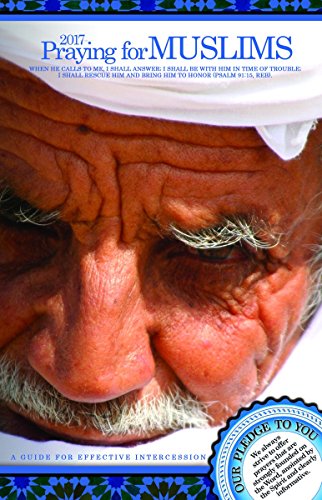
5 Quotes From “Praying For Muslims”

Sobhi Malek put together an extremely helpful guide for praying for Muslims. Each week has a prayer, but there are also several helpful insights which Sobhi shares. Here are a few of those insights.

“This warfare is not against people of any religion or affiliation. Christ, who died for all human beings, instructed us to love our neighbors. Rather, this war is against the evil powers which control people and hinder them from seeing the light of the Gospel of Christ (Ephesians 6:12). In other words, we are warring against satan who ‘has blinded the minds of unbelievers.’ His goal is to keep people from seeing ‘the light of the Gospel of the glory of Christ, who is the image of God’ (2 Corinthians 4:4). When we pray and ask others to pray, this does not mean that we feel superior. We do not think we are better than Muslims or any other people.  Rather, we believe we are fallen human beings like all others, but we have been saved by God’s grace.”

“When Muslims say, ‘In the name of God the merciful, the compassionate,’ all Muslims and many Christians do not know that this is taken from the Bible. This phrase demonstrates the early influence of Judaism and Christianity on Muhammad. Here are some occurrences of this combination in the Bible: compassionate and gracious (Exodus 34:6, NIV); compassionate and merciful (Psalm 86:15, GW; 103:8, NLT; James 5:11, GW); merciful and tender (Luke 1:78, TEV).”

“There are many teachings in Islam that we, believers in Christ, can use as bridges to help Muslims draw near to and enter the Kingdom of God. The Qur’an states that God created Adam and Eve, that He sent the flood but rescued Noah, that He spoke to Abraham, that He gave the Torah (Pentateuch) to Moses, that He sent Jesus who was born of a virgin. All these narratives, common to both Muslims and Christians, can be used as bridges to bring Muslims closer to the Gospel of our Lord Jesus Christ. This does not mean that all the details of these stories in Islam are in full agreement with the biblical accounts, but they can work as starting points. It is also rewarding to establish friendships with Muslims as you seek to share with them the Gospel of Christ. Friends trust each other, depend on each other and desire each other’s wellbeing. Building bridges of common narratives and friendship pays dividends.”

“The Qur’an, Islam’s holy book, is a collection of jumbled statements and stories in a random arrangement. Most of its stories are fractured and lack consistency. Subjects and themes are not connected. So fractured are narratives in the Qur’an that only one story has a clear beginning, middle, and end: the story of Joseph. All the other stories pick up in the middle, or else they are never carried to their conclusion. The Qur’an admits that satan sometimes intervened and gave Muhammad ‘inspiration.’ It also states that Muhammad forgot some parts of it. Several chapters start with meaningless three-letter words such as alr, alm, etc. Even great quranic interpreters cannot find a meaning for such words. In one place the Qur’an states that no changes occurred in its text, and in another it says changes to it indeed took place.”

“In the past few decades, millions of Muslims have migrated to the West. Some seek jobs, others pursue freedom and a better living, and still others hope to conquer the West by converting Westerners to Islam or by sheer reproduction and numerical growth! I personally take this migration to mean the Lord wants to help the Church win large numbers of Muslims to Christ by bringing them to her doorstep.”

Next week I will share a few of the prayers Sobhi leads us in each week. I would also recommend that you check out my review of Praying For Muslims.

Book Reviews From 2017

I love reading, and I love sharing my love of good books with others! Here is a list of the books I read and reviewed in 2017. Click on a title to be taken to that review.

#Truth

10 Commitments For Dads

50 Core American Documents

A New Kind Of Apologist

Absolute Surrender

As Kingfishers Catch Fire

Born After Midnight

Brady vs. Manning

Cherish

Everything You Always Wanted To Know About God

Evidence That Demands A Verdict

How Great Is Our God

If

Interpretation Of The Scriptures

Islam Booklets

Joy To Your World

Know Who You Are

Leadership Promises For Every Day

Live Dead Journey

Live Dead Life

Longing For A Changed World

Man—The Dwelling Place Of God

Marching Off The Map

No Limits

On Calvary’s Hill

Ordering Your Private World

Paths To Power

Peace In The Face Of Cancer

Prevailing Prayer

Run Today’s Race

Seeing Jesus

Shade Of His Hand

Take Your Life Back

The Broken Way

The Christian Book Of Mystical Verse

The Christian In Complete Armour

The Christmas Candle

The Dawn Of Christianity

The Servant As His Lord

The World’s Last Night

Transforming Grace

When A Nation Forgets God

Your Next 24 Hours

Here are my book reviews for 2011.

Here are my book reviews for 2012.

Here are my book reviews for 2013.

Here are my book reviews for 2014.

Here are my book reviews for 2015.

Here are my book reviews for 2016.

A Prayer For The New Year

“Especially would we make mention of the goodness of the Lord during another year. Each believer here has trodden a different pathway to some it has been a very smooth road, to others a very rough climb: to some a deep descent into the valley of sorrow and humiliation. But Thou hast led Thy people by a right way. With all the twisting of the wilderness march, we are persuaded that when Thou leadest us about, still we go the nearest way. Thou knowest best, and oftentimes to retreat is to advance, and to be beaten back is to make surest headway. We would again in the recollection of the whole year, whatever it may have been, lift up the song of grateful praise, raise another stone of help to record the loving-kindness of our God.

“And now do we hoist sail and draw up anchor to sail into another year. O Thou blessed Pilot of the future as of the past, we are so happy to leave all to Thee; but in leaving all to Thee we have one wish, and it is that Thou wouldst in the next year glorify the Father’s name in us more than in any other year of our lives. Perhaps this may involve deeper trial, but let it be if we can glorify God. Perhaps this may involve the being cast aside from the service that we love; but we would prefer to be laid aside if we could glorify Thee the better. Perhaps this may involve the ending of all life’s pleasant work and the being taken home—well, Thy children make no sort of stipulations with their God, but this one prayer ascends from all true hearts this morning, ‘Father, glorify Thy name.’” —Charles Spurgeon

Poetry Saturday—A Private Litany Of Humility

From the desire of being praised, deliver me, Jesus.
From the desire of being honored, deliver me, Jesus.
From the desire of being preferred, deliver me, Jesus.
From the desire of being consulted, deliver me, Jesus.
From the desire of being approved, deliver me, Jesus.
From the desire of comfort and ease, deliver me, Jesus.
From the fear of being humiliated, deliver me, Jesus.
From the fear of being criticized, deliver me, Jesus.
From the fear of being passed over, deliver me, Jesus.
From the fear of being forgotten, deliver me, Jesus.
From the fear of being lonely, deliver me, Jesus.
From the fear of being hurt, deliver me, Jesus.
From the fear of suffering, deliver me, Jesus.
That others may be loved more than I,
Jesus, grant me the grace to desire it.
That others may be chosen and I set aside,
Jesus, grant me the grace to desire it.
That others may be praised and I unnoticed,
Jesus, grant me the grace to desire it.
O Jesus, meek and humble of heart, make my heart like Yours.
O Jesus, meek and humble of heart, strengthen me with Your Spirit.
O Jesus, meek and humble of heart, teach me Your ways.
O Jesus, meek and humble of heart,
help me put my self-importance aside
to learn the kind of cooperation with others
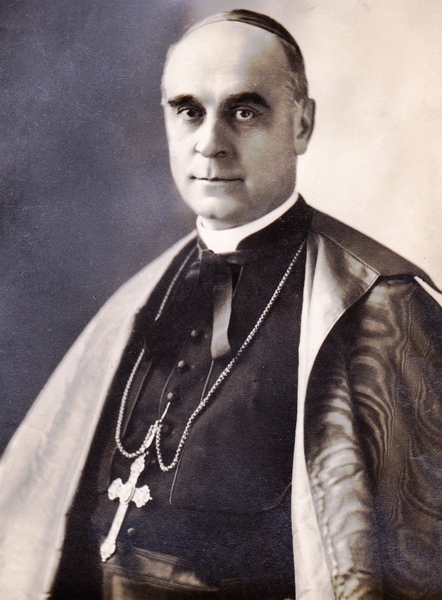
that makes possible the presence of your Abba’s household. Amen. —Rafael Cardinal Merry Del Val

An Ordinary Simple Christian

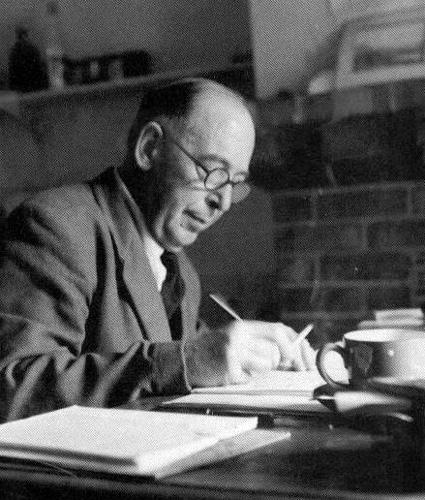
“An ordinary simple Christian kneels down to say his prayers. He is trying to get into touch with God. But if he is a Christian he knows that what is prompting him to pray is also God: God, so to speak, inside him. But he also knows that all his real knowledge of God comes through Christ, the Man who was God—that Christ is standing beside him, helping him to pray, praying for him. You see what is happening. God is the thing to which he is praying—the goal he is trying to reach. God is also the thing inside him which is pushing him on—the motive power. God is also the road or bridge along which he is being pushed to that goal. So that the whole threefold life of the three-personal Being is actually going on in that ordinary little bedroom where an ordinary man is saying his prayers. The man is being caught up into the higher kinds of life—what I called Zoe or spiritual life: he is being pulled into God, by God, while still remaining himself.” —C.S. Lewis

The Christmas Candle (book review)

Max Lucado is a storyteller par excellent! His craft is on full display in the engaging short story The Christmas Candle.

Lucado takes us back to Victorian-era England, to the small village of Cotswolds. Nothing much seems to happen in this little village, except for a visit from an angel every 25 years to one specific family. The Haddington family have been candle-makers for as far back as anyone can remember. Every quarter-century, just before Christmas, an angel appears in the Haddington’s shop and points out one special candle. When this unique candle is given away by the Haddingtons to an individual, they can pray for a miracle and expect that God will answer that prayer.

Lucado’s story centers on a time when the angel should be appearing soon. But Mr. and Mrs. Haddington are older now, and worried that they don’t have an heir to which the candle-making trade can be passed on, the townspeople are in more desperate need than ever before, and the village’s new pastor is highly skeptical about the so-called “miracle qualities” of an ordinary looking candle. And all the while, the time of the angel’s appearing is getting closer and closer.

The message Lucado is able to drive home through this story is truly a God-given gift that will encourage your faith. Whether you read this book at Christmas time or not, you will be uplifted in your faith in God’s power to do the miraculous!

The Transparency That God Loves

Have mercy … heal me … deliver me … save me … (Psalm 6:2, 4).

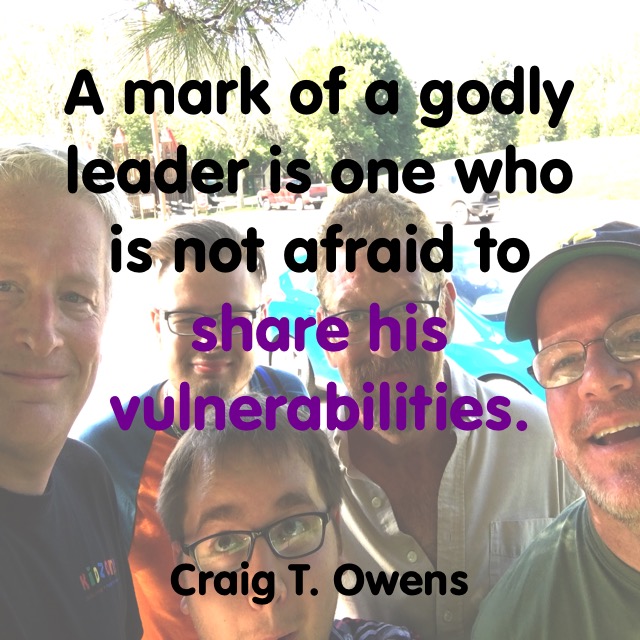
A mark of a godly leader is one who is not afraid to share his vulnerabilities.

David freely admits his fear of punishment, his need for God’s help, and his grief that robbed him of sleep.

But he also admitted just as freely his rock-solid assurance of God’s help:

  • The Lord has heard my weeping
  • The Lord has heard my supplication
  • The Lord will receive my prayer

Godly leaders are confidently transparent before God and before those around them. God delights in that transparency, and He delights to answer vulnerable prayers.

This is Part 17 in my series on godly leadership. You can check out all of my posts on this topic by clicking here.

Thursdays With Oswald—Prayer Is The Work

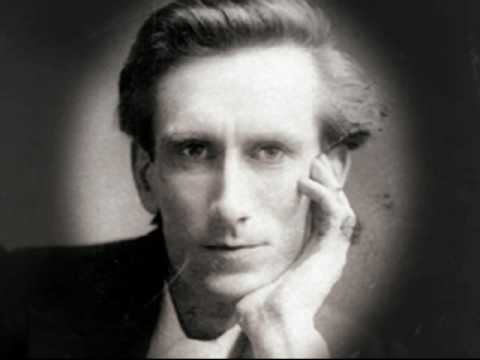
Oswald ChambersThis is a weekly series with things I’m reading and pondering from Oswald Chambers. You can read the original seed thought here, or type “Thursdays With Oswald” in the search box to read more entries.

Prayer Is The Work 

     The key to the missionary problem is in the hand of God, not of man, and according to Our Lord, the key is prayer, not work, as that word is popularly understood, because work may mean evading spiritual concentration. Our Lord says—“Pray therefore…” [Matthew 9:38]. … 

     We are apt to think of prayer as a common-sense exercise of our higher powers in order to prepare us for work; whereas in the teaching of Jesus, prayer is not to fit us for the “greater works,” prayer is the work. Prayer is the outcome of our apprehension of the nature of God, the means whereby we assimilate more and more of His mind, and the means whereby He unveils His purposes to us. …  

     God is not impressed by our earnestness, He nowhere promises to answer prayer because of our agony in intercession, but only on the ground of Redemption. We have “boldness to enter into the holiest by the blood of Jesus,” and in no other way. … 

     The armor is for the battle of prayer [see Ephesians 6:11-20]. “Take up the whole armor of God … stand therefore …” and then pray. The armor is not to fight in, but to shield us while we pray. Prayer is the battle. … 

     We have to live depending on Jesus Christ’s wisdom, not on our own. He is the Master, and the problem is His, not ours. We have to use the key He gives us, the key of prayer. Our Lord puts the key into our hands, and we have to learn to pray under His direction. That is the simplicity which He says His Father will bless.

From So Send I You

In light of these thoughts from Oswald Chambers, how does this change your view of prayer?

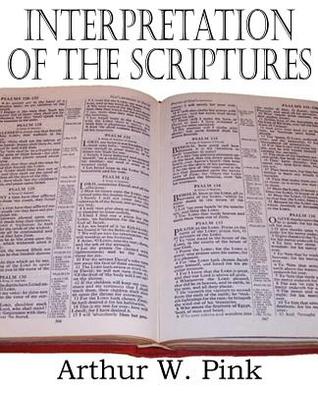
11 Quotes From “Interpretation Of The Scriptures”

In my review of A.W. Pink’s book Interpretation Of The Scriptures, I noted that any student of the Bible will benefit from reading this exceptional book. The quotes I want to share today are for that universal audience, but I will also be sharing some additional quotes soon that are specifically aimed at those who are Bible teachers or pastors.

“God does not ask for blind credence from us, but an intelligent faith, and for that three things are indispensable: that His Word should be read (or heard), understood, and personally appropriated.”

“Moreover, the obscurity is not in them [the Scripture], but in the depravity of our nature which resists the holy requirements of God, and the pride of our hearts which disdains seeking enlightenment from Him.”

“It has pleased God to furnish His people with gifted instructors, and instead of haughtily ignoring them we ought (while testing their teaching—Acts 17:11) to accept thankfully whatever help they can afford us.”

“Methods of Bible study are only of relative importance; but the spirit in which it is studied is all-important. It calls for no argument to prove that a spiritual book calls for a spiritually minded reader. … Only where there is honesty of soul and spirituality of heart will there be clearness of vision to perceive the Truth; only then will the mind be capable of discerning the full import of what is read. … None but the Spirit of Truth can write God’s Law on my heart. Here, then, is the first and most essential qualification for understanding and interpreting the Scriptures, namely a mind illumined by the Holy Spirit.”

“That which conflicts with what is taught, plainly and uniformly, in the Scriptures as a whole, and which whole is set before us as the alone rule of our faith and obedience. This requires from the expositor not only a knowledge of the general sense of the Bible, but also that he takes the trouble to collect and compare all the passages which treat of or have a definite bearing upon the immediate point before him, so that he may obtain the full mind of the Spirit thereon. Having done that, any passage which is still obscure or doubtful to him must be interpreted by those which are clear. No doctrine is to be founded on a single passage.”

“By divorcing a verse from its setting or singling out a single clause, one may ‘prove’ not only absurdities but real falsities by the very words of Scripture.”

“The word for ‘search the Scriptures’ (John 5:39) signifies diligently to track out, as the hunter does the spoor of animals. The interpreter’s job is to bring out the sense and not merely the sound of the Word.”

“To a very large extent, and far more so than any uninspired book, the Bible is a self-explaining volume: not only because it records the performance of its promises and the fulfillment of its prophecies, not only because its types and antitypes mutually unfold each other, but because all its fundamental truths may be discovered by means of its own contents, without reference to anything extra or outside itself.”

“Assuredly God has not subordinated His Word to our reason for us to accept only what commends itself to our judgment. Nevertheless, He has furnished His people with this faculty, and though insufficient of itself it is a valuable aid in the understanding of Truth. While reason is not to be made the measurer of our belief, yet it is to be used as the handmaid of faith, by comparing passage with passage, deducing inferences and drawing consequences according to the legitimate laws of logic.”

“The concordance will stand [the Bible reader] in far better stead than the best dictionary.”

“There is a middle ground between hastily condemning or accepting, namely to weigh carefully and prayerfully what is presented, testing it by other passages and by our own experience.”

A Leader’s Confidence

Give ear to my words, O Lord, consider my meditation. Give heed to the voice of my cry, my King and my God, for to You I will pray (Psalm 5:1-2).

When David prays, he prays with confidence—he is confident that God will hear him.

Where does his confidence come from? From these two truths about the nature of God:

  1. You are a God who takes no pleasure in wickedness (v. 4), so David must confess his sin quickly.
  2. In fear of You I worship (v. 7), so David doesn’t have to cower before God wondering if God will forgive his sin.

David didn’t take the condition of his soul for granted (v. 5), but he came quickly into God’s presence because he knew of God’s mercy to forgive.

Not only was David confident that God would hear his prayer, but he also eagerly anticipated receiving…

  • …God’s answer to his prayer
  • …God’s joy
  • …God’s blessing
  • …God’s protection

A mark of a godly leader is one who prays confidently and then eagerly expects God to answer.

If you want confidence in your earthly leadership, do what David modeled: Enter God’s presence quickly and confidently, and then eagerly anticipate what God is going to do!

This is Part 16 in my series on godly leadership. You can check out all of my posts on this topic by clicking here.