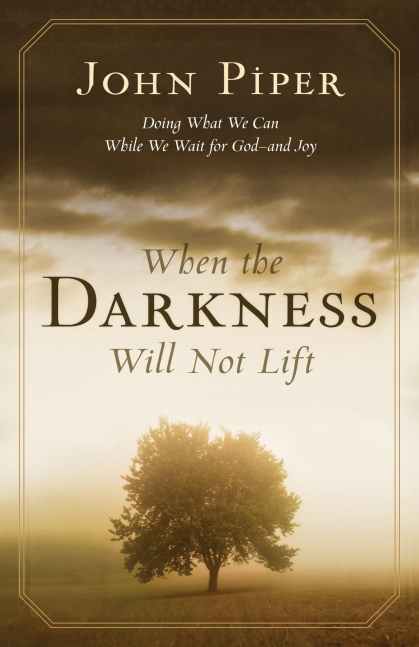
11 Quotes From “When The Darkness Will Not Lift”

John Piper has given us an extremely helpful book whether we ourselves are battling the darkness of depression, or someone close to us is. Please check out my full book review of When The Darkness Will Not Lift by clicking here. 

“This is the rock where we stand when the dark clouds gather and the floods lick at our feet: justification is by grace alone (not mixed with our merit), through faith alone (not mixed with our works) on the basis of Christ alone (not mingling His righteousness with ours), to the glory of God alone (not ours).” 

“Where should you start? Start at the easiest place for those in darkness. Start with despair. Despair of finding any answer in yourself. I pray that you will cease from all efforts to look inside yourself for the rescue you need. I pray that you will do what only desperate people can do, namely, cast yourself on Christ.” 

“You cannot isolate the spiritual from the physical for we are body, mind and spirit. The greatest and the best Christians when they are physically weak are more prone to an attack of spiritual depression then at any other time and there are great illustrations of this in the Scriptures.” 

“It will be of great advantage to the struggling Christian to remember that seasons of darkness are normal in the Christian life.” 

“One of the reasons God loved David so much was that he cried so much. … It is a beautiful thing when a broken man genuinely cries out to God.” 

“Faith is sustained by looking at Christ, crucified and risen, not by turning from Christ to analyze your faith. … Paradoxically, if we would experience the joy of faith, we must not focus much on it. We must focus on the greatness of our Savior.” 

“It follows from this that we should all fortify ourselves against the dark hours of depression by cultivating a deep distrust of the certainties of despair. Despair is relentless in the certainties of its pessimism. But we have seen again and again, from our own experience and others, that absolute statements of hopelessness that we make in the dark are notoriously unreliable. Our dark certainties are not sureties. While we have the light, let us cultivate distrust of the certainties of despair.” 

“Instead of only saying, ‘Just do your duty,’ we must say…that joy is part of your duty. The Bible says, ‘Rejoice always’ (1 Thessalonians 5:16). And in regard to the duty of giving, it says, ‘God loves a cheerful giver’ (2 Corinthians 9:7). In regard to the duty of service, it says, ‘Serve the Lord with gladness’ (Psalm 100:2). In regard to the duty of mercy, it says do it ‘with cheerfulness’ (Romans 12:8). In regard to the duty of afflictions, it says, ‘Count it all joy’ (James 1:2). We simply water down the divine command when we call someone to half their duty.” 

“In dealing with our sin we can make two mistakes. One is to make light of it. The other is to be overwhelmed by it.” 

“If we want the joy of seeing and savoring God in Christ, we must not make peace with our sins. We must make war.” 

“Sometimes the darkness of our souls is owing in some part to the fact that we have drifted into patterns of life that are not blatantly sinful but are constricted and uncaring. … Unconsciously we have become very self-absorbed and oblivious and uncaring toward the pain and suffering in the world that is far worse than our own.”

“Paradoxically, depressed persons may say that they must care for themselves and cannot take on the problems of the world, when in fact part of the truth may be that their depression is feeding on the ingrown quality of their lives. … Joy in Christ thrives on being shared. That is the essence of Christian joy: it overflows or dies.”

When The Darkness Will Not Lift (book review)

Depression and a “dark night of the soul” can happen to anyone. It falls over us sometimes because of physical issues, sometimes spiritual issues, and sometimes mental or emotional issues. Whatever its root cause, When The Darkness Will Not Lift by John Piper gives hope for those battling joy-suppressing melancholy. 

Depression, as with most ailments that humans face, doesn’t have a simple starting point. Most likely, depression is the result of a combination of many things—environmental, physical health, emotional crisis, spiritual attack, among other things. Sadly, many Christians attempt to address this multifaceted problem with a singular solution. Darkness doesn’t lift simply because someone has enough faith to make it so! 

“It is utterly crucial that in our darkness we affirm the wise, strong hand of God to hold us, even when we have no strength to hold Him.” —John Piper 

Pastor John weaves together Scripture, practical insights, and historical examples to help us see depression in its entirety. This comprehensive look will help you better understand both your own battle with darkness as well as helping you be a better friend to others who are also struggling with depression. 

Pastor John looks at the physical, emotional, and spiritual causes of depression, and then helps us battle for joy when the darkness will not lift. This is a short book, but one that you should return to frequently to help yourself and others in times of depression.

Feeding Hungry Kids

Some of the volunteers that help us week after week

It was a snowy day in West Michigan. So snowy, in fact, that schools had been canceled for the day. While many people were bundled up at home, the local police department was responding to a call of an alarm that had been tripped at an elementary building. When the police arrived they found a young body going to each door attempting to get inside his school. When the police officer asked him what he was doing, the young lad looked at him innocently and said, “This is where I get breakfast.” 

Sometimes we forget how many of our students get at least one or two meals at their school each day. In my community, 49 percent of Cedar Springs students are eligible for free or reduced lunch. So our churches decided to do something about this. The Cedar Springs Ministerial Association has organized teams to provide nutritious food for hungry students to eat on the weekends. 

Someone once asked me, “Before agreeing to get this program started in our city, did you pray about it?” 

“No,” I quickly responded. “I didn’t need to pray about it because I knew Jesus had already said, ‘If you see someone hungry, feed them.’” 

Our program is currently serving 200 students each week!

Think about that—without the generous and faithful support of so many volunteers and donors, 200 students in Cedar Springs would be going without adequate food each weekend. 

Would you consider helping us? 

We have set up a separate website to keep people updated on the current food and volunteering opportunities. We also have a link for online financial gifts. If you would like to make a recurring donation, just $20 per month will provide healthy food for a student for the whole month. Whatever you can do with your time or financial support will be a blessing to so many!

The Value In Retreating

So He Himself often withdrew into the wilderness and prayed (Luke 5:16).

So”—in light of what just happened. What happened? Jesus was preaching everywhere, He healed a leper, and great multitudes came to hear Him speak and to be healed. So Jesus had to withdraw frequently to pray and be replenished.

All of us have only a finite amount of energy. When we are sensing that energy level is low, we also need a retreat. Otherwise, our low energy levels can sabotage us and diminish what God wants to do through us. 

Then check out the results after Christ’s time of replenishing:

  • God’s power was “present to heal” (v. 17)
  • People were saved (v. 20)
  • Jesus had holy perception (v. 22)
  • Miracles confirmed the word that Jesus preached (v. 24)
  • God was glorified (v. 26)
  • People followed Jesus (vv. 27, 28)
  • Jesus had enough grace and patience to handle criticism (v. 30)
  • Jesus had enough wisdom and patience to handle tricky theological questions (vv. 33-39)

J.C. Ryle noted, “The most successful workmen in the Lord’s vineyard are those who are, like their Master, often and much upon their knees.”

Healthy leaders are keenly aware of their own energy levels. 

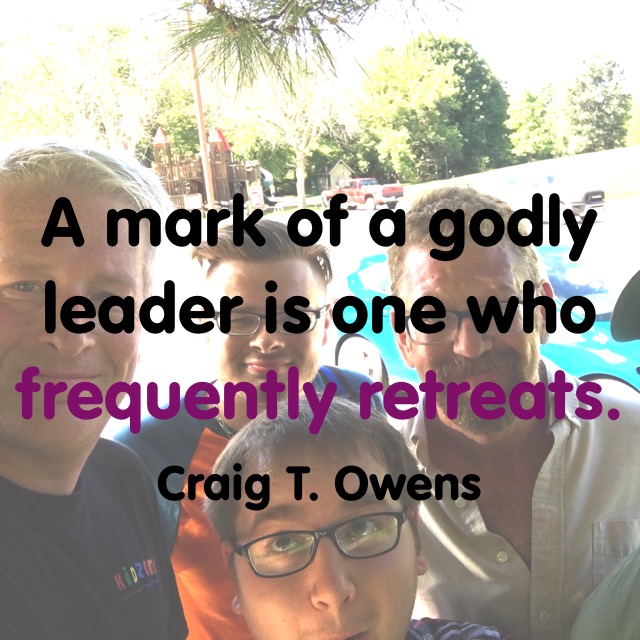
So… A mark of a godly leader is one who frequently retreats. 

This is part 32 in my series on godly leadership. You can check out all of my posts in this series by clicking here.

Book Reviews From 2018

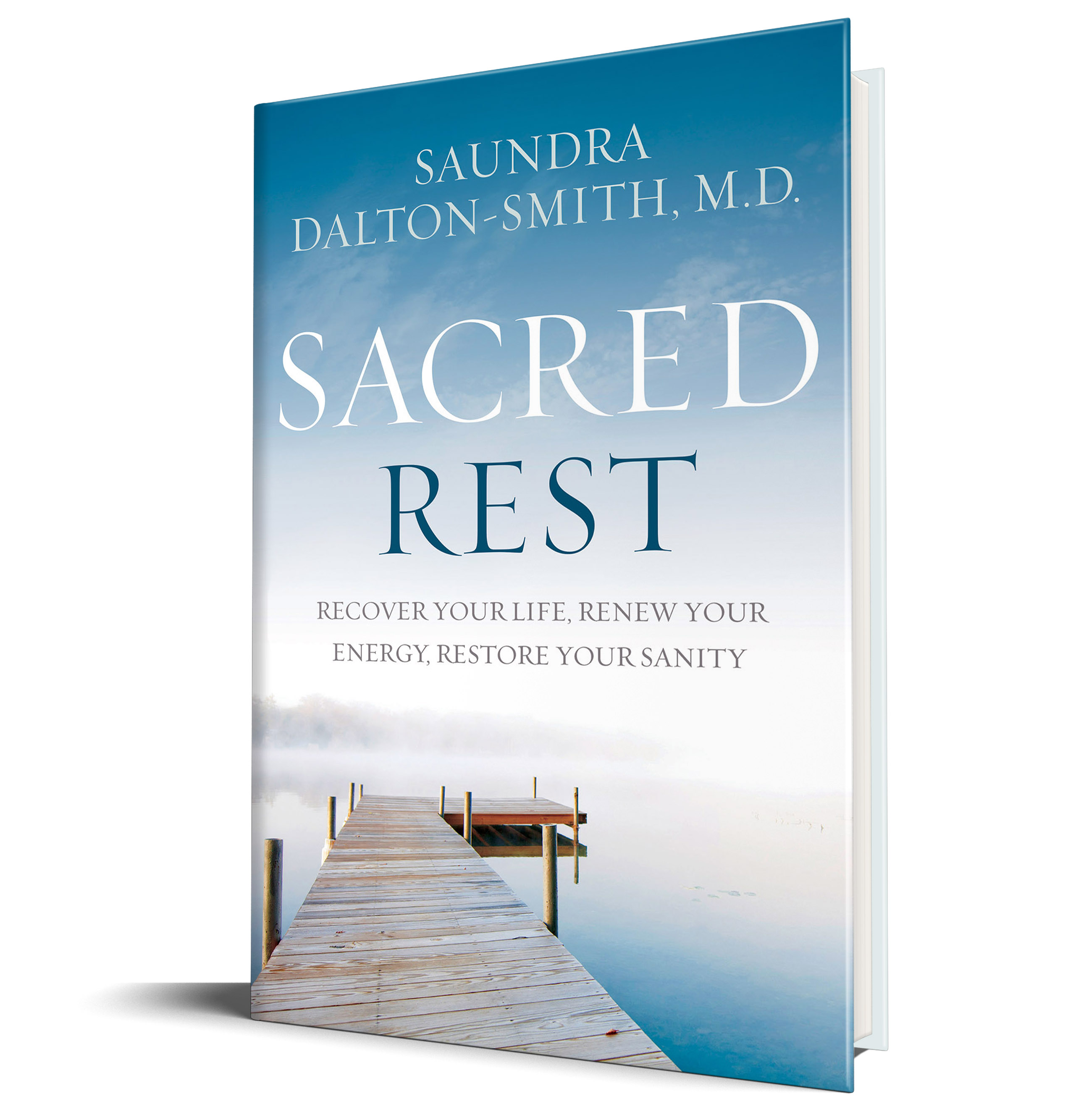
10 Quotes From “Sacred Rest”

Dr. Saundra Dalton-Smith thinks you may be too busy to read her book Sacred Rest, and she was candid enough to admit that she was almost too busy to write it! But rest is absolutely vital to keep our lives on track and productive. Check out my full review of Dr. Dalton-Smith’s book by clicking here.

“When I am resting because my body is weak, I need to remember that I’m not wasting the day doing nothing. I am doing exactly what I need to do. I’m recovering.” —Anonymous 

“There has to be a bridge between good and bad sleep, and that bridge is rest. Sleep is solely a physical activity. Rest, however, penetrates into the spiritual. Rest speaks peace into the daily storms your mind, body, and spirit encounter. Rest is what makes sleep sweet.”

“All rest is not created equal. Much of what we consider rest fails to work because it is not restful. Shifting our activities or changing the location of where we are active is no more restful than doing those same activities at home. The most effective rest occurs when we are purposefully reviving the parts of our life we regularly deplete. Any so-called rest that does not meet this goal isn’t rest; it’s just more work adding to the busyness.”

“As important as it is to rest your body, it’s equally important to quiet your mind from the ongoing influx of information it receives. Much like our social media news feeds, our mental background noise is often infused with negativity. Thoughts about the future are contaminated with anxiety, thoughts about the past are tainted with regret, and thoughts about the present are spoiled with discontentment. The mind is magnificent, but it has its own agenda. Rather than willingly focusing on positive affirming thoughts, the mind prefers to settle upon negative ones that intensify stress, worry, anger, and frustration. It will attempt to occupy your attention with useless information, depleting your time and your energy. Mental rest involves relinquishing the constant stream of thoughts entering your mind quickly and obtaining a sense of cerebral stillness.”

“One should not set about treating the body without the soul. This is exactly why most ailments are beyond the capabilities of Greek healers: they neglect the whole when that is what they should be paying attention to.” —Plato

“Physical pain increases when you are under emotional stress and spiritual distress. Anything you can do to improve emotional pain will also improve how you feel physically.”

“Social rest is when we find comfort in our relationships and social interactions. … Studies show an improved immune system, better cardiovascular health, and less dementia in those who regularly enjoy the companionship of close confidantes.”

“We are not made for rest; rest was made for us. Rest is God’s gift back to His people. His presence is how He connects us to His rest. It is part invitation and part prescription.”

“Excuses are invented reasons we create to defend our behavior. It’s how we rationalize our neglect and how we avoid taking responsibility for our choices. … With excuses, we’ve placed external blame for internal problems and stay in a cycle of unproductivity.”

“A well-rested life is a secret hidden in plain sight. It is a life at one with God, self, and others. It’s a life strengthened by winding down the expectations of others and charging up your expectations for yourself. You become in tune with what you need to be at your best. You become comfortable with your strengths and knowledgeable about your weaknesses. You then use that information to pour into the areas needing strengthening and reinforce areas already strong. You find your sweet spot in living, loving, being, doing, and resting.”

The Power Of Laughter

“Laughter increases the number and activity of some white blood cells called ‘T’ and ‘B’ cells, natural killers that fight viral infections and some types of cancer cells. It multiplies the antibody IgA, which fights upper respiratory tract infections. A hearty chuckle builds up gamma interferon, which stimulates the various components of the immune system.

“Laughing speeds up our heart rate, and some have likened this to ‘internal jogging.’ It’s an aerobic activity that works the diaphragm and increases the body’s ability to use oxygen. That’s why after a big laugh you often feel the need to sigh and take a big breath of air. It sure beats thirty minutes on the treadmill.

“As we laughed, our blood pressure temporarily is elevated; however, that is followed by a prolonged, mild decrease in blood pressure. Laughter also lowers various hormone levels—the kind associated with the fight-or-flight response—and makes us feel less stressed, more relaxed. That’s why people say things like ‘I laughed so hard I couldn’t get up’ or ‘I laughed so hard I fell over.’

“Science is figuring out that laughter is good for the body, something the Bible told us long ago—Proverbs 15:30; Proverbs 17:22.” —Lynn Eib, in Peace In The Face Of Cancer

To read other quotes from this exceptional book, click here and here.

Are You Healthy Enough To Love Serving Others?

Jesus was wholly healthy. That is to say, He was healthy in every aspect of His life—mentally, physically, spiritually and emotionally (see Luke 2:52). This is important to note because Christians are called to be healthy in all of these same areas.

The phrase Dr. Luke uses about Christ’s growth is a telling one: Jesus grew in favor with men. People liked having Jesus around. The word for favor is from the same root word where we also get grace. So Jesus was a graceful man.

What does it mean when someone is graceful? It means they are pleasant to be around … you feel safe around them, knowing they will never belittle you or put you down … their focus is on your agenda, not their own … they are a “there you are!” person, not a “here I am!” person.

Bottom line: they are filled with love for others.

Jesus was healthy in His mind, His body, His spirit and His emotions, which allowed Him to be in a unique place where He fully knew how powerful He was, yet He chose to use His power not for His own benefit, but to serve others (see John 13:1-4).

Healthy love loves God and then serves God by loving and serving others. Only a wholly healthy person can truly serve with a right attitude…

  • People with unhealthy thoughts won’t serve because they don’t know they’re supposed to serve.
  • People with unhealthy bodies can’t serve because their disease won’t let them.
  • People with unhealthy spirits shouldn’t serve because they are promoting hypocrisy.
  • People with unhealthy emotions don’t serve because their attitude gets in the way.

Jesus not only told us His loving service was an example for us (John 13:15-17), but He went on to say that our loving service would be an example for others (vv. 34-35).

Healthy love loves God and then serves God by loving and serving others.

Do you have that kind of healthy love? Are you becoming wholly healthy enough to serve?

Ask yourself these questions:

  1. What do I know that I’m not yet doing?
  2. What will it take for me to turn knowing into doing?
  3. Can people tell I am growing wholly healthier year by year?

Becoming Spiritually Fit

To me this sounds weird: Jesus grew spiritually strong. Think about that: Isn’t He already God?!

When Jesus came to Earth as a man, the writer of Hebrews says He was made like us humans in every way. So just as you and I have a spiritual health to maintain, so did Jesus while He was on earth.

Dr. Luke noticed this as well when he noted that Jesus grew mentally, physically, spiritually and emotionally. Luke notes His spiritual growth by saying Jesus “grew…in favor with God.” In other words, God was more and more pleased by what He saw developing in His Son.

Yesterday I listened to Pastor Josh Schram explain the parallels between our physical health and our spiritual health. He said that we all know what we need to do to grow physically strong—eat the right food, exercise, get proper rest, and have some way of monitoring our health.

It’s exactly the same way spiritually! We need…

…a good dietMan does not live on bread alone but on every Word that comes from the mouth of the Lord (Deuteronomy 8:3). Jesus repeated this truth when He was confronted by the devil, and lived it out every day.

…proper exercise—All the health food in the world won’t do us a bit of good if we just sit around. It’s the same with the Bible: we can read it, memorize it, and talk about it, but if we don’t exercise it we won’t get spiritually fit. Be doers of the Word, and not hearers only (James 1:22).

…the right amount of rest—We can’t be in perpetual “go” mode if we want to be healthy physically or spiritually. Jesus knew the value of rest, and frequently He would “withdraw to deserted places and pray” (Luke 5:16).

…to monitor our progress—James talks about the Word of God being a mirror for us, and Paul advises us to “examine yourselves to see whether you are in the faith” (2 Corinthians 13:5).

But here was the most important takeaway for me in Josh’s message…

Health is not just one big one-time choice. Health is small daily choices.

A good question for all of us to ask ourselves: Am I making good daily choices which will help me grow spiritually fit like Jesus.

I so enjoy sharing the teaching duties with a couple of really solid pastors-in-training in our church. They have helped me develop this series called Wholly Healthy, and have taken part in sharing messages in various aspects of this series. Please watch how Josh lays out the plan for our spiritual fitness.

4 Essential Qualities To Be An Effective Leader

November 5, 1920

General John S. Mallory
15 University Place
Lexington, Virginia

My Dear General Mallory,

Last summer during one of our delightful rides I commented on the advice I would give a young officer going to war, based on my observation of what had constituted the success of the outstanding figures in the American Expeditionary Forces, and you asked me to write out what I had said. A discussion with Fox Conner this morning reminded me of my promise to do this, so here it is.

To be a highly successful leader in war four things are essential, assuming that you possess good common sense, have studied your profession and are physically strong.

When conditions are difficult, the command is depressed and everyone seems critical and pessimistic, you must be especially cheerful and optimistic.

When evening comes and all are exhausted, hungry and possibly dispirited, particularly in unfavorable weather at the end of a march or in battle, you must put aside any thought of personal fatigue and display marked energy in looking after the comfort of your organization, inspecting your lines and preparing for tomorrow.

Make a point of extreme loyalty, in thought and deed, to your chiefs personally; and in your efforts to carry out their plans or policies, the less you approve the more energy you must direct to their accomplishment.

The more alarming and disquieting the reports received or the conditions viewed in battle, the more determined must be your attitude. Never ask for the relief of your unit and never hesitate to attack.

I’m certain in the belief that the average man who scrupulously follows this course of action is bound to win great success. Few seemed equal to it in this war, but I believe this was due to their failure to realize the importance of so governing their course.

Faithfully yours,

George C. Marshall
Major, General Staff
Aide-de-Camp [emphasis mine]