I pray that your partnership with us in the faith may be effective in deepening your understanding…. (Philemon 6 NIV)
Faith works! As Dr. Henry Halley noted, “Working faith is a sharing faith.”
Faithful working deepens our understanding of all the good things Jesus has given us. Those good things should then fuel us to share the good things—and the Source of all good things—with others.
I pray that the faith you share with us may deepen your understanding of every blessing that belongs to you in Christ. (Philemon 6 NET)
A faith that merely believes without acting would be an ineffective faith. A faith that works becomes a lifestyle testimony that points others to Jesus.
And I keep praying that this faith we hold in common keeps showing up in the good things we do, and that people recognize Christ in all of it. (Philemon 6 MSG)
It is a double blessing to do good things for others:
Listen to the podcast of this post by clicking on the player below, and you can also subscribe on Apple, Spotify, or Audible.
Paul salutes his friend Titus, “Grace, mercy, and peace from God the Father and the Lord Jesus Christ our Savior” (Titus 1:4).
I’m not sure why several English translations of the Bible leave the word mercy out of this verse, because the Greek clearly says charis, eleos, eirene. Especially when we consider that this was an intentional word Paul was inspired to pen to a specific person.
In every letter Paul writes to a church (plus in his personal letter to his friend Philemon), he greets the saints with “grace and peace” (Romans 1:7; 1 Corinthians 1:3; 2 Corinthians 1:2; Galatians 1:3; Ephesians 1:2; Philippians 1:2; Colossians 1:2; 1 Thessalonians 1:1; 2 Thessalonians 1:2; Philemon 3). This is also the greeting of Peter and John to the churches (1 Peter 1:2; 2 Peter 1:2; Revelation 1:4).
But in Paul’s three pastoral letters, he says, “Grace, mercy, and peace” (1 Timothy 1:2; 2 Timothy 1:2; Titus 1:4). Only John in the New Testament uses this salutation in a personal correspondence to another church leader (2 John 3).
From this, I think we would be wise to note that Paul feels his pastoral proteges need to keep mercy in the forefront of their minds. Not that pastors—and the “dear lady” in John’s second letter—don’t know that God has been merciful to them, but as a reminder of just how importantmercy truly is to both pastors and to the saints under their care.
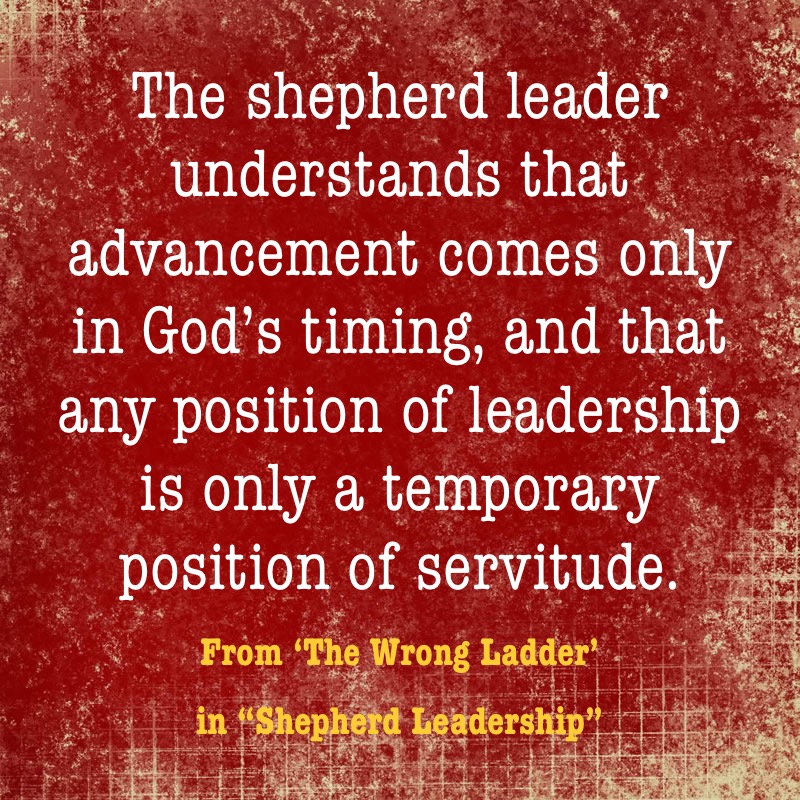
Charles Spurgeon wrote that pastors need to be reminded of mercy “as if the higher the office, the greater the liability to sin.” I think one of the biggest temptations for leaders is to believe their elevated title means they are to be served by others, rather than to continually take the role of a servant serving others.
Pastoral leaders will also do well to recall that “all we like sheep have gone astray” (Isaiah 53:6; 1 Peter 2:25), and that “all” includes both pastors and saints. Pastors need to quickly recognize anytime they may be straying from their servant’s role, repent, and receive God’s mercy.
Shepherd leaders also need to guard against the frustration that can creep into their heart when they see the sheep in their flock going astray. Paul and John are reminding these pastors to keep in mind how merciful the Chief Shepherd has been to them, and how this should stir up their mercy toward the flock around them.
Shepherd leaders have a vital need to keep mercy always in mind.
I think a good prayer for pastors might be—
Holy Spirit, in my moments of frustration, remind me of the “grace, mercy, and peace from God the Father and the Lord Jesus Christ [my] Savior” which has been extended to me innumerable times. May that recollection awaken in me increased depths of mercy toward the flock around me, despite how frequently they may stray. In Jesus’ name. Amen!
P.S. If you are interested in going deeper on the topic of pastors as leaders, please check out my book Shepherd Leadership.
G.K. Chesterton penned these words over a century ago. If they were true then, imagine how much more so they are now: “These are the days when the Christian is expected to praise every creed except his own.”
“The only way to do great work is to love what you do. If you haven’t found it yet, keep looking. Don’t settle.” —Steve Jobs
Epaphras literally put his life on the line to tell others about Jesus (Colossians 1:7; Philemon 23) and then tenaciously wrestled in prayer for the saints he led to the Lord (Colossians 4:12). That is a life worth emulating!
Sarah Young uses passages of Scripture and writes in the first-person voice as though Jesus Himself was speaking to us. “When you bring Me prayer requests, lay out your concerns before Me. Speak to Me candidly; pour out your heart. Then thank Me for the answers that I have set into motion long before you can discern results. When your requests come to mind again, continue to thank Me for the answers that are on the way. If you keep on stating your concerns to Me, you will live in a state of tension. When you thank Me for how I am answering your prayers, your mind-set becomes much more positive. Thankful prayers keep your focus on My Presence and My promises.”
Listen to the podcast of this post by clicking on the player below, and you can also subscribe on Apple, Spotify, or Audible.
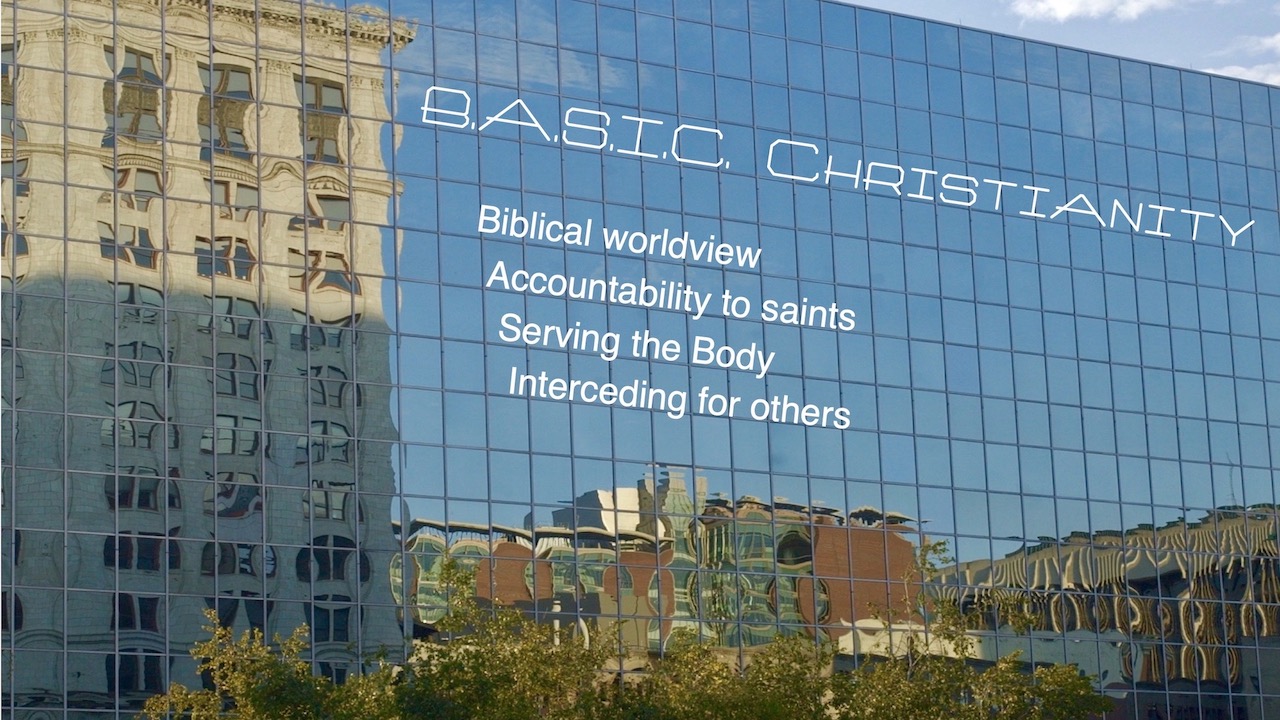
Sanctification (“saint-ification”) is an ongoing process that usually involves the help of other saints. We learn this by having a biblical worldview (that’s the “B”), being accountable with saints (“A”), and serving the Body of Christ (“S”). These are the things that bring out increased fruitfulness in our lives, make us more joy-full people, and enhance our testimony to others.
What a blessing it is to be involved in all of these saint-ification things alongside other brothers and sisters. Isn’t nice to know that you’re not all alone on your journey?
Two brothers walked up the hill to the park every afternoon to play baseball. One day a neighbor who lived near the bottom of the hill saw the younger brother pulling his older brother up the hill in a wagon. He observed this for a couple of days before he finally asked what was going on.
The younger brother said, “My big brother broke his leg so I pull him in the wagon so he can watch us play baseball and can be our coach.”
“He must be heavy,” the neighbor replied.
“He’s not heavy,” the little boy said, “he’s my brother!”
In the first brothers that the Bible shows us, we see the origin of the phrase “brother’s keeper.” Cain was jealous of the way God was blessing his younger brother, and so he murdered Able. God came to Cain and asked him, “Where is your brother Able?”
Cain responded with another question, “Am I my brother’s keeper?” (Genesis 4:9).
The word brother is someone connected to me by blood or some other common bond. Cain used the same word for brother but then asked if He was supposed to be his brother’s keeper—his guard, helping to keep him in bounds, celebrating his victories.
The clear teaching of Scripture is that the answer to Cain’s question is an emphatic “Yes!”
That definition of brother’s keeper sounds a lot like the definition of an intercessor. In the Hebrew, that word mean to go to God on someone else’s behalf (Genesis 25:21; 2 Samuel 24:25). The Greek of the New Testament sounds more intense (hyperentygchano): to meet a person of the purpose of conversation in behalf of someone else.
Remember that the Hebrew word for brother was pretty narrow? The Christians in the New Testament took the word for relative-by-blood (adelphos) and made it a synonym for fellow saint, regardless of where they are from (Acts 9:17; 2 Corinthians 13:11).
John used Cain’s misunderstanding of brother’s keeper to show us the spiritual responsibility we have to our adelphos (1 John 3:12, 15-16).
When we intercede for our adelphos—our fellow saints—we are participating in the same work as both the Spirit and Jesus (Romans 8:26-27, 34;Hebrews 7:25; 1 John 5:16).
A couple of weeks ago we looked at Philemon’s service to the Body of Christ. Look at how Paul’s intercession may have released Philemon to do this (Philemon 7, 16, 20).
As Paul said to Philemon, I say to you—
I appeal to you on the basis of love: Be your brother’s keeper!
Guard your adelphos, keep them in bounds, and celebrate both their righteousness and God’s blessing on their lives.
Listen to the podcast of this post by clicking on the player below, and you can also subscribe on Apple, Spotify, or Audible.
Last week we saw the in-ness of the Holy Spirit guiding us, teaching us, and empowering us to overcome evil. For what purpose? Why does the Holy Spirit lead us this way? Because the Spirit desires to draw everyone into this in-ness. His work in and through our lives is always unmistakable and irrefutable.
A good word to describe the unmistakable and irrefutable work of the Spirit is: Miracles.
Miraculous signs characterized the earthly ministry of Jesus, and they also should to the hallmark of Spirit-baptized Christians today who are sharing the Gospel with others (Acts 10:38; 2:43; Mark 16:20).
Some may ask, “Why don’t we see as many miracles today?” And some skeptics even point to a decrease in miracles as proof of their cessationist paradigm. But consider this: Has God’s power been diminished? Have all needs been met? Are there no more sickness or unsolvable problems of human suffering? Is everyone free of the power of the devil?
No, of course not!
So that would mean if there is any diminishment in miracles, the diminishment would seem to be in us! Particularly I think it is that we no longer expect miracles to happen.
Not only should we expect miracles, but we should also expect to be the vessel through which the Holy Spirit demonstrates the miracle.
Here are 8 miracles that we should be expecting:
Minds opened that were blinded to the Gospel message—2 Corinthians 4:4-6
Disclaimer: I’m a patriotic crier. I love the United States of America, and proudly call her the greatest nation in history. So whenever I watch a patriotic movie, or serve at a veteran’s funeral, or even sing the national anthem before a Cedar Springs football game, I get misty.
I believe we owe a huge debt of gratitude to our veterans. But I also believe we may not be honoring that debt in the right way.
We usually honor our soldiers, sailors, airmen and Marines who have given “their last full measure of devotion” by playing taps at their funeral, firing a 21-gun salute, or even putting a flag in the sacred ground of their burial site every year at Memorial Day.
But what about our vets who are still living? Don’t they deserve more than just an occasional visit on Veterans Day?
In many ways, we treat Veterans Day like we do Thanksgiving Day: it’s just one day on our calendar to take care of our obligations to be grateful, and then we can continue on with business-as-usual until the next year.
Wouldn’t it be more fitting for us to treat Veterans Day—like Thanksgiving Day—as a culmination of another year full of gratitude? After all, it’s very likely that we wouldn’t even be able to enjoy our business-as-usual lives if it were not for the sacrifices of our veterans.
The Apostle Paul gives us a good pattern to follow. Four times in his letters he says, “I thank God for you every time I remember you” (Romans 1:9; Philippians 1:3; 2 Timothy 1:3; Philemon 4). In these times of thanks, he is remembering others who put their lives on the line for freedom, just as our veterans have done for us.
Here are at least three things we can learn from Paul’s thankfulness to apply to our gratitude for our veterans —
Keep mementos of remembrance around you. Perhaps it’s an American flag, or a picture, or a Veterans Day program. Simply find something that will jog your memory frequently about the debt of gratitude we owe to our vets.
Pray for our veterans. Paul often told his friends that when he was filled with thoughts of gratitude about them, he turned those thoughts into prayers for them.
Turn your feelings into actions. When you see one of your mementos and say a prayer for a veteran, take it a step further. Jot a note to a vet, send an email, send flowers, or take them out to lunch. Perhaps you could invite a veteran into your home for Thanksgiving or Christmas or Easter, or “adopt” a veteran on Mother’s Day or Father’s Day.
The point is this: Let’s not make honoring our veterans something we only do on November 11. Let’s remember them often, be thankful for them always, and turn those thoughts and gratitude into action all year long.
Horatius Bonar’s insights on the Scriptures are amazing! So far I’ve read and reviewed three of the four commentaries he has prepared on the New Testament (you can read those reviews here, here and here). These are a few quotes from the third book on the epistles Galatians through Jude. Any reference in brackets is the passage from the Bible on which Bonar is commenting.
“It is a busy, lighthearted, laughing, pleasure-seeking world. But sin is here, and pain is here, and broken hearts are here, and weeping is here, and death is here, and the grave is here. Oh! in spite of all its laughter and vanity, it is an evil world. And the great proof of its evil is, that it cost the death of the Son of God to deliver you from it. … Give yourselves to Him Who came to deliver you from it, and Who stretches out His hands to you all day long, asking you to allow Him to deliver you. He yearns over you; and with sincere earnestness proffers to you His love, His friendship, His great salvation. Consent, O man, consent! His desire is to bless, and not to curse; to save, and not to destroy.” [Galatians 1:4]
“There never have been two gospels. There is not an Old Testament gospel and a New Testament Gospel. There is not one gospel for the Jew, and another for the Gentile, one gospel for the first century, and another for the nineteenth. It is but one gospel, as there is but one Cross and one Savior. Many ages, but one gospel; many sinners, but one gospel; many prophets and apostles, but one gospel. As our earth has had but one sun, so it has had but one gospel. Nor does it need more; that one is sufficient.” [Galatians 1:6-9]
“As the earth without rain or sunshine turns to barrenness, so is it with the Church or soul without the Spirit. … The age thinks it can do without the Spirit. Let the Church watch against this blasphemy. Let her keep hold of the Lord’s promise, the promise of the Father. Let her prize the gift; long for more of it. Let every saint seek more of it. Let our cry be continually: More of the Holy Spirit; more of His fullness; more of His gifts and graces!”
“Strength for the race is needed, hourly strength, superhuman strength; for it is no earthly race, but something lofty, supernatural, divine. Forgetting the supernatural source of strength, we betake ourselves to the internal or the simply external. And so we weary. For only God can supply the power which keeps us running. By Him only shall we run, and not be weary.” [Galatians 5:7]
“‘To Him who is able’—He is the Mighty One, the mighty God, the Lord God Almighty. Hear how this word ‘able’ is used. ‘He is able to subdue all things unto Himself’ (Philippians 3:21). ‘He is able to help them that are tempted’ (Hebrews 2:18). ‘He is able to save to the uttermost’ (Hebrews 7: 25). ‘He is able to keep us from falling’ (Jude 24). It is with the mighty God that we have to do; mightier than ourselves or our foes; mightier than earth or hell; omnipotent.” [Ephesians 3:20]
“Are you expecting the Lord? Are you living in this expectation? Is it a deep-seated, abiding, cherished hope? Is it a hope that tells upon your character, your life, your daily actings in public or private, your opinions, your whole man? Does it quicken you? Does it purify you? Does it keep you separate from the world? Does it keep you calm in the midst of earth’s most exciting events, or most untoward changes? Does it give you a new view of history as well as prophecy? … Let your expectation of the Lord’s coming be a calm and healthy one; not one that excites, but one that tranquilizes; not one that unfits for duty, but one that nerves you more firmly for it; not one that paralyzes exertion, but one that invigorates you for it; not one that makes you indifferent to present duty, but one that makes you doubly in earnest about everything that your hand findeth to do; not one that stops liberality, and prayer, and work, but one that increases all these a hundred fold; not one that dwells exclusively on the future’s dark side—the judgments that are at hand—but one that realizes the glory and the joy of Messiah’s approaching victory and triumphant reign.” [Philippians 3:20]
“The Christian is to seek the upper things, setting his mind upon them, and everywhere and everywhen he is to be hoping for, and endeavoring after, the ultimate. That is the simple meaning of prayer: reaching forward, wishing forward, desiring forward, seeking the upper, the higher, the nobler.”
The Bible is clear, too, about us praying everywhere and everywhen for the very best:
We ought always to pray and not to turn coward, faint, lose heart, and give up (Luke 18:1)
God has seen how I never stop praying for you (Romans 1:9)
For I always pray to the God of our Lord Jesus Christ, the Father of glory, that He may grant you a spirit of wisdom and revelation (Ephesians 1:17)
In all my prayers for all of you, I always pray with joy (Philippians 1:4)
Our prayers for you are always spilling over into thanksgivings. We can’t quit thanking God our Father and Jesus our Messiah for you! (Colossians 1:3)
Epaphras always prays earnestly for you, asking God to make you strong and perfect, fully confident that you are following the whole will of God (Colossians 4:12)
We always thank Godfor all of you and pray for you constantly (1 Thessalonians 1:2)
We ought always to thank God for you, and rightly so, because your faith is growing more and more (2 Thessalonians 1:3)
I give thanks to my God for you always when I mention you in my prayers (Philemon 1:4)
Pray for us. We have no doubts about what we’re doing or why, but it’s hard going and we need your prayers (Hebrews 13:18)
Someone needs your prayers today.
Will you keep on praying for a friend that he or she will be able to
I live by the axiom, “If you’re through learning, you’re through.” So I try to learn something new every day.
I just finished a class called New Testament Survey: a quick overview of the 27 books that compromise the New Testament of the Bible. Here’s a couple of interesting factoids I picked up from my studies:
The earliest-written book was James. Interesting, because at one point James thought Jesus (his half-brother) was nuts.
Only Matthew uses the term kingdom of heaven; all of the other writers use kingdom of God.
Mark uses the word immediately more times than anyone else. Perhaps because his source (Peter) was always doing things so quickly… sort of a ready, FIRE!, aim kinda guy.
Luke wrote what is called “the global gospel” for everyone, so he included 45 teachings/events that no one else records.
John doesn’t record any of Jesus’ parables.
John uses the word believe nearly 100 times— way more than any other writer.
Luke talks about the Holy Spirit nearly 60 times in the 28 chapters of Acts.
Romans is the longest of Paul’s epistles with 7101 words; Philemon is the shortest with just 355 words.
With the exception of the pastoral epistles (1 Timothy, 2 Timothy, Titus) Paul’s letters are arranged in the Bible from longest to shortest.
In 1 & 2 Thessalonians (only 136 verses) Paul refers to God, Christ, the Holy Spirit, or a combination thereof more than 150 times.
Paul gives Timothy seven word pictures to describe the kind of pastor he should be: son, soldier, athlete, farmer, workman, instrument, and servant.
Hebrews is called “the book of better things” so better is used 13 times. This word is used only six times in the remaining 26 books of the New Testament.
James wrote 108 verses but issues 50+ direct commands.
In John’s three short epistles he uses the word know 33 times, and the word dear ten times.
Keep on learning! There’s a lot of good stuff out there. What have you learned lately?
Listen to the podcast of this post by clicking on the player below, and you can also subscribe on Apple, Spotify, or Audible.
I sort of remember the days of full-service gas stations. My Dad would drive in and say, “Fill ’er up!” and the gas station attendant would jump into action. Filling up the gas tank, cleaning the windshield, checking the oil level, and even checking the air pressure in the tires.
But, alas, those days of full service seem to be long gone, replaced by highly-efficient, less-personal self-serve stations. And I’m not necessarily talking just about gasoline stations either.
All of our lives seem to have become more efficient and less personal. We are a more do-it-yourself, leverage-technology kind of society today. And I wonder if the result is that many people aren’t getting filled up like they used to.
There is a well-known Bible story in 2 Kings 4. A widow is facing what would amount to foreclosure today. Except this foreclosure was on her sons. Her husband, a God-fearing man, had died and left her with debts she could not pay. The practice in that society was for her sons to be “sold” to pay off the debts. These boys would have to work all day long for someone else, and whatever money they would have earned for their labors would go to the creditors.
In her desperation, the widow turned to the prophet Elisha. He asked her if she had anything of value in her house, and she replied, “Just a little oil. But not enough to pay off my debts.” The counsel Elisha gave her is applicable for our self-serve society today—
Elisha said, “Go around and ask all your neighbors for empty jars. Don’t ask for just a few” (v. 3).
Elisha asked the woman and her family to humble themselves—ask all your neighbors. Sometimes this is one of our biggest hindrances: pride which keeps us from admitting we have a need. And this was no small task because she had to ask ALL her neighbors to, “Fill ’er up!”
Elisha asked them to be persistent—don’t ask for just a few. Not just a jar here and there, but ask for every available jar to, “Fill ’er up!”
The principles in this story shouldn’t just apply to times of desperation in our lives. Because maybe if we worked on being around our neighbors and asking what needs they have, and sharing our needs as well, maybe we wouldn’t get into such desperate situations.
In the story in 2 Kings, the oil stopped flowing only after every available jar had been filled. If I want God to continue to pour His oil of blessing into my life, He has to have room in which to pour. That means that I need to be pouring into others’ lives as often as I can. Listen to the blessings when we, “Fill ’er up!”—
I want you to know how delighted I am to have Stephanas, Fortunatus, and Achaicus here with me. They partially make up for your absence! They’ve refreshed me by keeping me in touch with you. (1 Corinthians 16:17-18, The Message paraphrase)
In addition to our own encouragement, we were especially delighted to see how happy Titus was, because his spirit has been refreshed by all of you. (2 Corinthians 7:13)
God bless Onesiphorus and his family! Many’s the time I’ve been refreshed in that house. And he wasn’t embarrassed a bit that I was in jail. The first thing he did when he got to Rome was look me up. May God on the Last Day treat him as well as he treated me. (2 Timothy 1:16-18, The Message paraphrase)
Your love has given me much joy and comfort, my brother, for your kindness has often refreshed the hearts of God’s people. (Philemon 7 NLT)
Get around other “full” people and let them fill you up.
Seek out “empty” people and pour abundantly into them.
The more you pour out into others, the more room there is for God to pour into you.
God is always pleased when our lifestyle is one of “Fill ’er up!”





















 Craig T. Owens
6 Quotes From “Light & Truth—The Lesser Epistles”
July 13, 2016 — Craig T. Owens“It is a busy, lighthearted, laughing, pleasure-seeking world. But sin is here, and pain is here, and broken hearts are here, and weeping is here, and death is here, and the grave is here. Oh! in spite of all its laughter and vanity, it is an evil world. And the great proof of its evil is, that it cost the death of the Son of God to deliver you from it. … Give yourselves to Him Who came to deliver you from it, and Who stretches out His hands to you all day long, asking you to allow Him to deliver you. He yearns over you; and with sincere earnestness proffers to you His love, His friendship, His great salvation. Consent, O man, consent! His desire is to bless, and not to curse; to save, and not to destroy.” [Galatians 1:4]
“There never have been two gospels. There is not an Old Testament gospel and a New Testament Gospel. There is not one gospel for the Jew, and another for the Gentile, one gospel for the first century, and another for the nineteenth. It is but one gospel, as there is but one Cross and one Savior. Many ages, but one gospel; many sinners, but one gospel; many prophets and apostles, but one gospel. As our earth has had but one sun, so it has had but one gospel. Nor does it need more; that one is sufficient.” [Galatians 1:6-9]
“As the earth without rain or sunshine turns to barrenness, so is it with the Church or soul without the Spirit. … The age thinks it can do without the Spirit. Let the Church watch against this blasphemy. Let her keep hold of the Lord’s promise, the promise of the Father. Let her prize the gift; long for more of it. Let every saint seek more of it. Let our cry be continually: More of the Holy Spirit; more of His fullness; more of His gifts and graces!”
“Strength for the race is needed, hourly strength, superhuman strength; for it is no earthly race, but something lofty, supernatural, divine. Forgetting the supernatural source of strength, we betake ourselves to the internal or the simply external. And so we weary. For only God can supply the power which keeps us running. By Him only shall we run, and not be weary.” [Galatians 5:7]
“‘To Him who is able’—He is the Mighty One, the mighty God, the Lord God Almighty. Hear how this word ‘able’ is used. ‘He is able to subdue all things unto Himself’ (Philippians 3:21). ‘He is able to help them that are tempted’ (Hebrews 2:18). ‘He is able to save to the uttermost’ (Hebrews 7: 25). ‘He is able to keep us from falling’ (Jude 24). It is with the mighty God that we have to do; mightier than ourselves or our foes; mightier than earth or hell; omnipotent.” [Ephesians 3:20]
“Are you expecting the Lord? Are you living in this expectation? Is it a deep-seated, abiding, cherished hope? Is it a hope that tells upon your character, your life, your daily actings in public or private, your opinions, your whole man? Does it quicken you? Does it purify you? Does it keep you separate from the world? Does it keep you calm in the midst of earth’s most exciting events, or most untoward changes? Does it give you a new view of history as well as prophecy? … Let your expectation of the Lord’s coming be a calm and healthy one; not one that excites, but one that tranquilizes; not one that unfits for duty, but one that nerves you more firmly for it; not one that paralyzes exertion, but one that invigorates you for it; not one that makes you indifferent to present duty, but one that makes you doubly in earnest about everything that your hand findeth to do; not one that stops liberality, and prayer, and work, but one that increases all these a hundred fold; not one that dwells exclusively on the future’s dark side—the judgments that are at hand—but one that realizes the glory and the joy of Messiah’s approaching victory and triumphant reign.” [Philippians 3:20]
Share this: