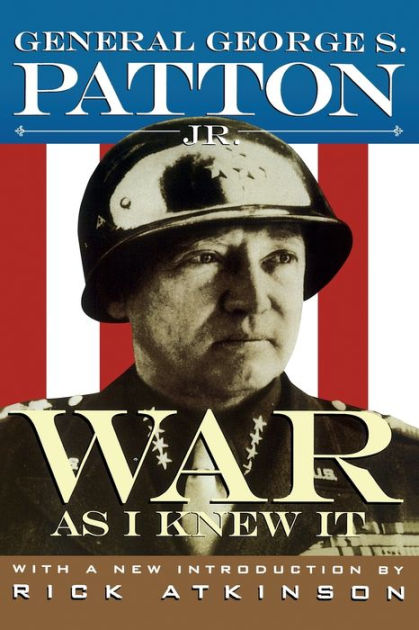
War As I Knew It (book review)

Throughout my life, I’ve had the privilege of meeting World War II soldiers who fought in the Third Army in Europe. I’ve said to them, “Oh, so you were Patton’s man.” And the response is always the same, “Yes sir!” they proudly respond with a smile. General George Patton was a unique military leader, and his memoirs called War As I Knew It capture his uniqueness. 

George Patton lived as if he were always in pursuit of something big. He always pushed himself, those under his command, and even those in leadership over him, to keep moving forward. His memoirs cover the final 2+ years of World War II, from the time he landed his troops in Africa until Germany surrendered. 

Patton’s Third Army was an unstoppable force! They covered more ground, took more territory, captured or killed more enemy combatants, liberated more cities, and destroyed more enemy material than any other army in US history! This was because of Patton’s drive, and because of his strenuous personal preparation before the war even started. 

These memoirs record Patton’s successes, but he also is transparent enough to list where he miscalculated and where he was simply a beneficiary of good fortune. 

For students of leadership, US history, or military history, War As I Knew It is a very insightful book. 
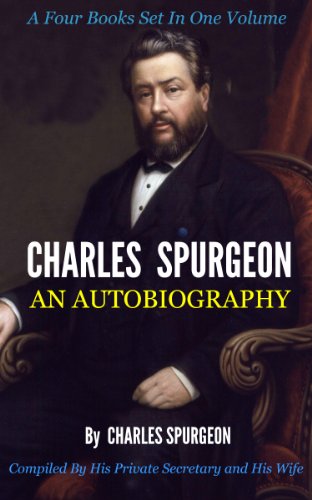
The Autobiography Of Charles Spurgeon (book review)

For a man who preached up to 10 times per week for nearly 40 years, you would think that people knew all about Charles Spurgeon’s personal life. Although he frequently used some small personal examples in his sermons, he still kept much of his personal life personal. In reading Spurgeon’s Autobiography, I expected to get an inside look, but that was not what I found. 

Like his sermons, Spurgeon’s Autobiography was fascinating. Like his sermons, his recollections of his past are thoroughly steeped in Scripture. I love this! This shows us that this Prince of Preachers didn’t just put on a performance when he stepped into his pulpit, nor did he simply teach Christian principles for others to apply only to their lives; instead, we see a man who truly patterned his life after the Bible. 

I also love the honesty in Spurgeon’s stories. He tells of his struggles before and after his conversion. He talks openly of his disagreements with some “church” people that didn’t behave very Christ-like. He discusses his battles with depression, and with those who were outright critics of his ministry. In other words, Spurgeon reveals himself without putting himself on some sort of pedestal. 

Charles Spurgeon’s sermons are always a delight to read, but I think you will find in his Autobiography a living sermon that we can all emulate. 

The Strenuous Life (book review)

I just finished reading Theodore Roosevelt’s Autobiography, so it was quite fascinating to read some of the speeches he was giving during the same periods he covered in his memoirs. TR practiced what he preached, and one of his consistent messages is that anything worthwhile is worth the strenuous effort it takes to get it. This collection of speeches is called The Strenuous Life. 

TR himself described the strenuous life like this: 

“The doctrine of the strenuous life, the life of toil and effort, of labor and strife: to preach that highest form of success which comes, not to the man who desires mere easy peace, but to the man who does not shrink from danger, from hardship, or from bitter toil, and who out of these wins the splendid ultimate triumph. … A life of slothful ease, a life of that peace which springs merely from lack either of desire or of power to strive after great things, is as little worthy of a nation as of an individual.” 

In The Strenuous Life, you will read the consistent message TR delivered to a wide variety of people—from the rough-and-tumble outdoorsmen and women, to the diplomats attending a World’s Fair, to business people—nothing of lasting value ever came to those who sat around and waited for it to come to them. The strenuous life is one of initiative, of hard work, of sacrifice, of perseverance, and ultimately a life rewarded by self-satisfaction in a job well done. 

This book is inspiring as a stand-alone read, but I highly recommend you read it in conjunction with TR’s Autobiography, as it adds an extra level of insight to both works. 

Book Reviews From 2016

BookshelfHere are the books I read and reviewed in 2016. Click a title to read the review…

#struggles

Alive

An Angel’s Story

Answering Jihad

Archeological Study Bible

Chase The Lion

Churchill’s Trial

Culture

Hope … The Best Of All Things

How To Read A Book

I Stand At The Door And Knock

Jesus Always

Letters To A Birmingham Jail

Light & Truth—Acts & The Larger Epistles

Light & Truth—Revelation

Light & Truth—The Lesser Epistles

More Than A Carpenter

Of Antichrist And His Ruin

On This Day

One Of The Few

Our Iceberg Is Melting

Shaken

So, Anyway…

Streams In The Desert

The American Patriot’s Almanac

The Bad Habits Of Jesus

The Beauty Of Intolerance

The Blessing Of Humility

The Dawn Of Indestructible Joy

The Duty Of Pastors

The Gospels Side-By-Side

The Mathematical Proof For Christianity

The Philosophy Of Sin

The Place Of Help

The Porn Circuit

The Psychology Of Redemption

The Seven Laws Of Love

The Shadow Of An Agony

The Tabernacle Of Israel

Think On These Things

Today’s Moment Of Truth

Useful Maxims

Your Sorrow Will Turn To Joy

Here are my book reviews for 2011.

Here are my book reviews for 2012.

Here are my book reviews for 2013.

Here are my book reviews for 2014.

Here are my book reviews for 2015.

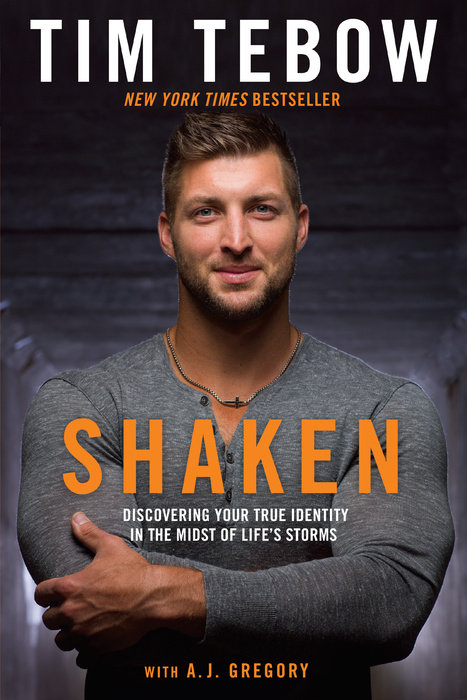
Shaken (book review)

shakenI continue to be so impressed with the way Tim Tebow always finds a way to let his light shine for Jesus in everything he does. Many people find it easy to give God praise when things are going well, but it might not be as easy to praise Him in the down times. This is exactly what Tim Tebow explores in his latest book Shaken.

Football fans have seen the on-field celebrations after a big victory, the joyous locker rooms, and the upbeat press conferences. But seldom do we see much from the team that loses the big game. Even less often do we get a glimpse behind the scenes of the heartache for athletes in the day-to-day grind of their sport.

Tim Tebow has won the Heisman Trophy, the NCAA football national championship, and one of the most exciting NFL playoff games in history. Tim has also been traded, benched and cut by other NFL teams. During these times, Tim has learned to rely on his bedrock faith. And in Shaken we get to hear the lessons he’s learned, and to discover the truth behind an important Bible verse (from which the name of the book comes): I keep my eyes always on the Lord. With Him at my right hand, I will not be shaken (Psalm 16:8).

Shaken isn’t all about Tim. He is refreshingly transparent to share with us about his struggles and the lessons he’s learned, but he also shares with us the overcoming stories of some other amazing people—folks who wouldn’t normally be in the spotlight. And in so doing, Tim shows us that each and every one of us has immeasurable value to God, that tragedies don’t have to shake our world, but that we can use even the difficult times to lean into God and to do great things for Him.

My level of respect for Tim Tebow, and the way he uses his notoriety for God’s glory, has risen again after reading this book. For anyone who is looking for a way to make sense of the hard things in life, Shaken will be an eye-opening, heart-changing book.

I am a Waterbrook book reviewer.

(By the way, Tim’s first book—Through My Eyes—is also an excellent read!)

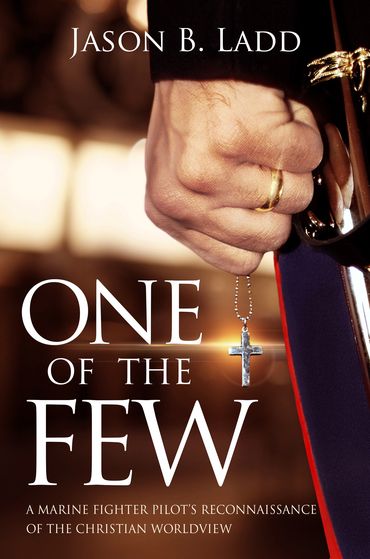
One Of The Few (book review)

one-of-the-fewI love to read stories that take me “behind the scenes.” Which is one of the reasons I enjoy reading autobiographies, where the author is candid and transparent, and gives me the scoop on things I wouldn’t have experienced myself. That’s exactly what I got in One Of The Few by Jason Ladd.

Jason takes us inside the United States Marine Corp, specifically into the seat of a Marine pilot. We get to see firsthand the grit, intelligence, and perseverance it takes to be one of the few, the proud, the Marines. Learning a little more about what it takes to attain this elite status, increased my respect for our men and women in military service even more.

But as I read Jason’s story, I quickly learned that he was learning from his own life experiences as well. As he pursues his dream, as he learns new skills, as he is confronted with the harsh realities of wartime situations, Jason must also come to grips with his beliefs about spiritual matters. His journey is uniquely his, but he shares his story in a way that will benefit anyone who is either wrestling with spiritual questions, or anyone who is trying to befriend someone who is skeptical about the Christian faith.

One Of The Few resonated with me on many levels: a great personal story, excellent leadership lessons, new military insights, and great Christian apologetic skills. Definitely put this book on your “to be read” list.

I am a Boone Shepherd book reviewer.

So, Anyway… (book review)

So AnywayGood comedy is something which is appreciated by nearly everyone. A comedian who can make us laugh, or think, or think while we’re laughing, is in limited company. But have you ever wondered how a comedian formulates his or her comedy? In So, Anyway… we get some comedic insight from the very talented John Cleese.

I’ll admit it: I am fan of Monty Python. Their offbeat humor is brilliant in the way they capture a side of life that goes mostly unnoticed. One of the pillars of Monty Python is John Cleese. John has a physical presence that can make you laugh, an intelligence that is lightning-fast, and an ability to use the Queen’s English to draw out nuanced comedy unlike few I’ve heard. But, again, I was always intrigued by that nagging question: How did he get to be so funny? Was he born with a “comedic gene”? Were his parents comical? Is good comedy something that can be learned?

As I read his delightful memoir So Anyways… I discovered the answer was “yes” to all of the above. John looks back on his life in a prescient way that allows the reader to see all of the ingredients that go into making a world-class comedian. Is there such a thing as a “comedic gene”? If there is, John was probably born with it. Were his parents odd? They were probably considered “normal” people (but, what is “normal”?). And along the way John definitely learned what was funny and what wasn’t, and used that to his advantage.

Throughout this memoir you will see John’s comedic routines interspersed in the story of his life. You will discover the “seeds” that blossomed in a particular character or paradigm or comedy routine. You will meet the people, places, and experiences that John leveraged as he discovered what makes people throughout the English-speaking world laugh. Anyone interested in how comedy is birthed and nurtured will love seeing comedy develop through the life of John Cleese.

I am a Three Rivers Press book reviewer.

41 (book review)

41It’s only happened twice in American history: A father and son both serving as President. The first was John Adams and John Quincy Adams, then George H.W. Bush and George W. Bush. But only once has the son written a memoir about his father, and that is 41: A Portrait Of My Father.

In the book’s preface, President George W. Bush writes, “Over the years, I suspect there will be many books analyzing George Herbert Walker Bush, the man and his presidency. Some of those works may be objective. This one is not. This book is a love story—a personal portrait of the extraordinary man who I am blessed to call my dad.” What a perfect description of this book, for indeed it is a love story, and a very moving one.

President Bush (the 43rd President) does an amazing job showing the “stuff” that went into making President Bush (the 41st President) the man that he is. It also helps us to then understand the decisions that 41 made throughout his extensive political career. I also appreciated reading how 43 used his personal, eye-witness experience with his Dad as material for his presidential decision-making.

This was a unique way to write a biography, and I found it very engaging and heartwarming. A truly great read!

Book Reviews From 2013

BookshelfHere are the books I read and reviewed in 2013. Click a title to read the review…

10 People Every Christian Should Know

A Harmony Of The Gospels

Alive To Wonder

All In

Alone

Altar Ego

Andrew Murray Daily Reader

Dear Abba

Decision Points

Did The Resurrection Happen … Really?

Draw The Circle

Fight

Firsthand

Francis

God’s Favorite Place On Earth

God’s Workmanship

Habitudes

He Shall Glorify Me

I Never Thought I’d See The Day

If Thou Wilt Be Perfect

If Ye Shall Ask

It Is Finished

Jesus Is _____.

Jesus: A Theography

Knocking At God’s Door

Love To The Uttermost

One Year Book Of Personal Prayer

Outliers

Plastic Donuts

Pouring Holy Water On Strange Fire

Promotion

Raising Your Child To Love God

Seven Men

Smith Wigglesworth On Healing

Sometimes You Win, Sometimes You Learn

Stopping Words That Hurt

The 13th Resolution

The Baptism With The Holy Spirit

The Bare Facts

The Five Levels Of Leadership

The Highest Good

The Hobbit

The Man Who Knew Too Much

The Purpose Of Christmas

The Ragamuffin Gospel

The Reagan Diaries

The Secrets Of Intercessory Prayer

Things We Couldn’t Say

Understanding Sexting

Unfinished

Unstoppable

Visioneering

Who Do You Think You Are?

You Don’t Need A Title To Be A Leader

For my book reviews of 2011 click here, and for 2012’s list click here.

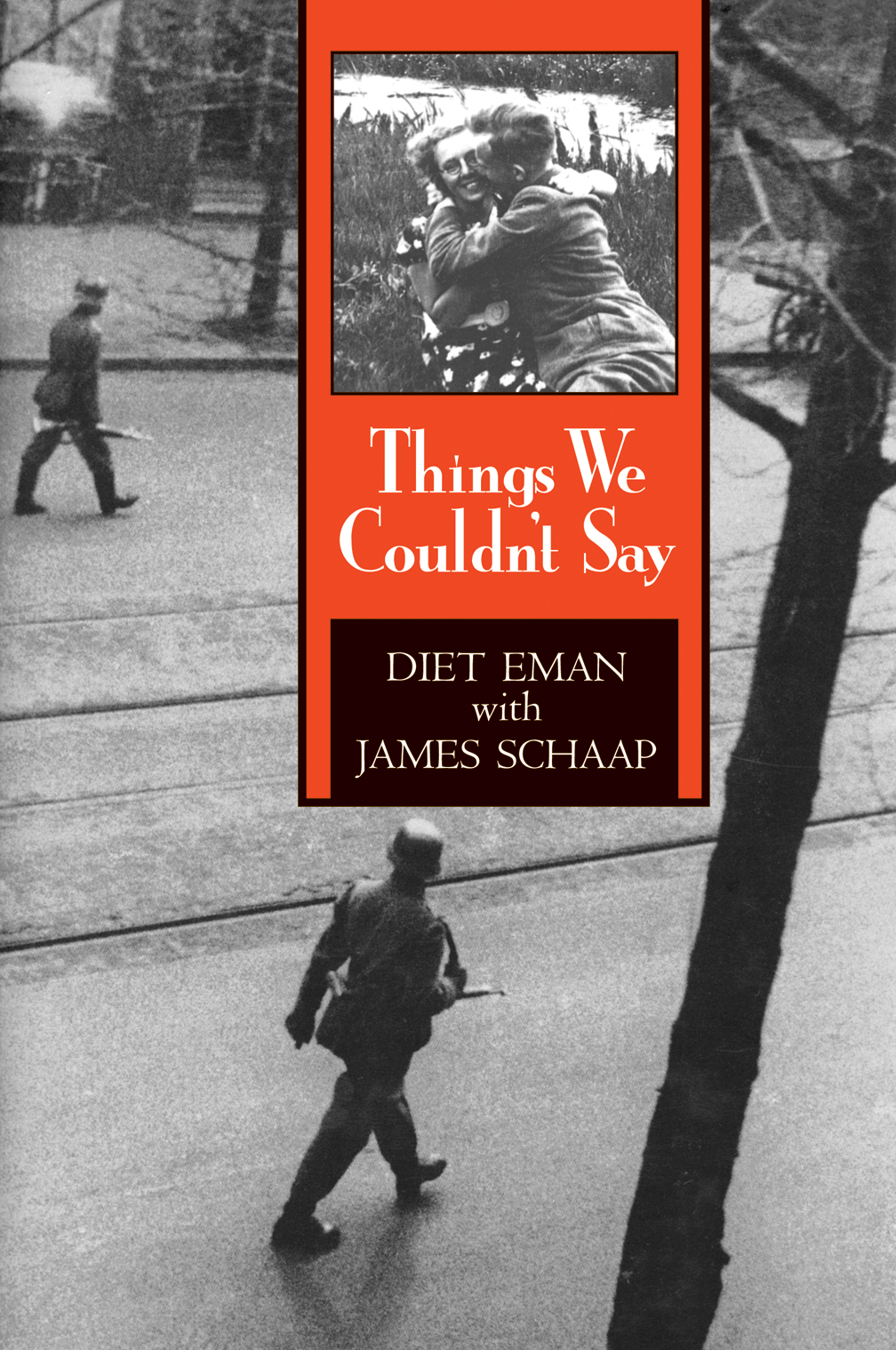
Things We Couldn’t Say (book review)

EMANPBBACK.qxdIt’s not often that a historical memoir could read like a spy thriller, but that’s exactly how Things We Couldn’t Say by Diet Eman reads.

Diet (pronounced “deet”) was a young girl when the Nazis invaded The Netherlands where she lived, and she quickly got caught up the Dutch Underground resistance against their unwelcome invaders. Alongside her fiancee, her family members, and several of her friends, they worked at hiding Jews from the Gestapo. This involved all of the tricks you would thrill at in any modern-day telling of espionage, with read page-turning excitement.

Part of the interesting underlying plot in this story is Diet’s love for her fiancee Hein and both of their families. Diet and Hein were constantly changing their names and residence to keep the Gestapo from catching up with them, yet they still found time to write some amazing love letters back and forth to each other. Their love was a bright light in a very dark time, and makes their involvement in this dangerous business even more impressive.

Not only is this a story about human ingenuity, but also about God’s divine provision as well. Diet records time after time that God miraculously provided for safety and provision and favor in order to keep alive. At the end of the war, every single one of the Jews Diet and Hein helped hide and care for were still alive!

For those reasons alone Things We Couldn’t Say is a fascinating read, but it’s an important read too. In the postscript Diet talks about her reluctance to write this book because of the painful memories it would reawaken. She said, “When the war ended we all said, ‘This can never happen again.’ But now polls show that 22 percent of the U.S. population does not believe there was a Holocaust. The story has to be retold so that history does not repeat itself.”

I can’t recommend this book strongly enough for readers of any age!