Book Reviews From 2021

Listen to the podcast of this post by clicking on the player below, and you can also subscribe on AppleSpotify, or Audible.

I love reading, and I love sharing my love of good books with others! Here is a list of the books I read and reviewed in 2021. Click on a title to be taken to that review.

24

AC/DC

Churchill’s Ministry Of Ungentlemanly Warfare

Faithlife Illustrated Study Bible

George Whitefield

Hal Moore On Leadership

His Last Bow

Holy Sexuality And The Gospel

How Christianity Changed The World

How I Got This Way

How To Bring Men To Christ

Jesus On Trial

John Adams

Miracles Out Of Somewhere

My Lucky Life

Out Of The Silent Planet

Perelandra

Pilgrim’s Progress

Prayer

Prophet With A Pen

QB

Reading The Bible With The Founding Fathers

Secrets Of Dynamic Communication

Seeing Beauty And Saying Beautifully

Shepherd Leadership

Star Struck

Talking To GOATs

That Hideous Strength

The Art Of Writing And The Gift Of Writers

The Hidden Smile Of God

The Hiding Place

Thompson Chain-Reference Bible

To The Work!

Voice Of A Prophet

Washington’s Immortals

Word-For-Word Bible Comic: Jonah

Here are my book reviews for 2011.

Here are my book reviews for 2012.

Here are my book reviews for 2013.

Here are my book reviews for 2014.

Here are my book reviews for 2015.

Here are my book reviews for 2016.

Here are my book reviews for 2017.

Here are my book reviews for 2018.

       Here are my book reviews for 2019.

Here are my book reviews for 2020.

►► Would you please prayerfully consider supporting this ministry? ◀︎◀︎

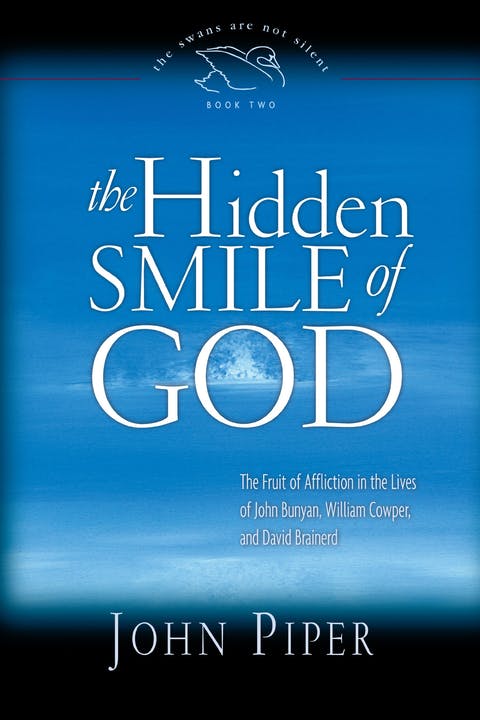
The Hidden Smile Of God (book review)

Listen to the podcast of this post by clicking on the player below, and you can also subscribe on AppleSpotify, or Audible. 

It’s one thing for someone to dispense sound advice, but it’s an entirely different thing for that advice to come from hard-won life experiences. The Hidden Smile Of God is the second book in John Piper’s excellent series of biographies called “The Swans are Not Silent.” 

Each book in this series features biographies and life lessons of three notable saints. Pastor John weaves these character studies together around a common theme. In this book, the lives of John Bunyan, William Cowper, and David Brainerd are examined to see the fruitful ministry that can emerge from a life plagued by affliction. 

John Bunyan, well-known author of The Pilgrim’s Progress, spent over a decade in prison, as well as the balance of his life under severely pressing circumstances. David Brainerd was a missionary to several American Indian tribes, while struggling with failing health and crushing loneliness. And William Cowper was suicidally depressed through nearly all of his life, and yet wrote some of the most intimate and moving poems. 

In fact, it is a line in one of Cowper’s poems from which the title of this John Piper book emerges—

Judge not the Lord by feeble sense, 
But trust Him for His grace; 
Behind a frowning providence 
He hides a smiling face.

Pastor John does more than merely share memorable biographies of these three men, but he extracts insights about suffering and affliction that will enable others to have a new biblical paradigm about their own suffering. Such amazing lessons for any of us struggling through dark times.

Even if you don’t personally struggle with affliction or anxiety or depression, chances are very good that someone around you does. Perhaps you could read this book and share some of these helpful insights with your friends or family members who are struggling. 

If you would like to check out my review of another book in this series—Seeing Beauty and Saying Beautifullyplease click here. 

►► Would you please prayerfully consider supporting this ministry? ◀︎◀︎
Our Blessed Hope

Listen to the podcast of this post by clicking on the player below, and you can also subscribe on AppleSpotify, or Audible. 

As we wrap up our series looking at our foundational belief statements, I want to combine the last four statements together, not only because they all cover the same theme of end-times events, but also because these statements should give every Christian hope! 

  • “Hope is the power of being cheerful in circumstances which we know to be desperate.” —G.K. Chesterton 
  • “One of the great enemies of hope is forgetting God’s promises.” —John Piper 
  • “Hope is not wishful thinking; it’s well-founded believing!” —Craig T. Owens 

Christians have a fantastic, unshakable, blessed hope on which we can stand not only secure but joyful! 

Foundational truth #13: “The resurrection of those who have fallen asleep in Christ and their translation together with those who are alive and remain unto the coming of the Lord is the imminent and blessed hope of the church.” 

This blessed hope in the future helps us live with joy today! Knowing that death has been defeated and Jesus will come back to take us home with Him should fuel us to say “no” to the temporary pleasures of sin, and live such godly lives that it turns others’ eyes to Jesus (Titus 2:11-14; 1 Corinthians 15:51-52; 1 Thessalonians 4:16-17). 

Foundational truth #14: “The second coming of Christ includes the rapture of the saints, which is our blessed hope, followed by the visible return of Christ with His saints to reign on earth for one thousand years.” 

Sometimes you will hear Christians talk about the “rapture” of the Church. Although this word itself isn’t in the Bible, the Greek word harpazo in 1 Thessalonians 4:17 means “catching up.” It also means “to eagerly claim for one’s self,” which reminds me that Jesus is thrilled to bring His Bride home to be with Him forever! After the Church has been caught up to Heaven, a period of tribulation will plague the earth, followed by Christ’s Second Coming and His millennial reign (Zechariah 14:4-5; Revelation 19:11-15; 20:1-10). 

Foundational truth #15: “There will be a final judgment in which the wicked dead will be raised and judged according to their works. Whosoever is not found written in the Book of Life, together with the devil and his angels, the beast and the false prophet, will be consigned to the everlasting punishment in the lake which burns with fire and brimstone, which is the second death.” 

Christians have no fear of the second (or final) death because our names are written in the Book of Life (Luke 12:4-6; Revelation 20:11-15). Not only is there judgment for the wicked, but there will be rewards for the righteous. 

Foundational truth #16: “In keeping with His promise we are looking forward to a new heaven and a new earth, where righteousness dwells” (2 Peter 3:13). Revelation 21-22 give us a small glimpse of our eternal home. 

In light of these truths, how should Christians live while still on earth? I think there are three ways we should live: 

  1. Live circumspectly
  2. Live on-mission
  3. Live unafraid

(see Ephesians 5:15; Matthew 28:18-20; Proverbs 24:11-12; Jude 1:20-25) 

With this blessed hope of the Second Coming of Jesus and our security in knowing we will remain with Him forever, let’s tell everyone we can how they too can know what it is to live with this hope in their heart. 

If you’ve missed any of the messages in our series exploring our foundational beliefs, you can access the full list by clicking here. 

►► Would you please prayerfully consider supporting this ministry? ◀︎◀︎
Seeing Beauty And Saying Beautifully (book review)

Listen to the podcast of this post by clicking on the player below, and you can also subscribe on Apple or Spotify.

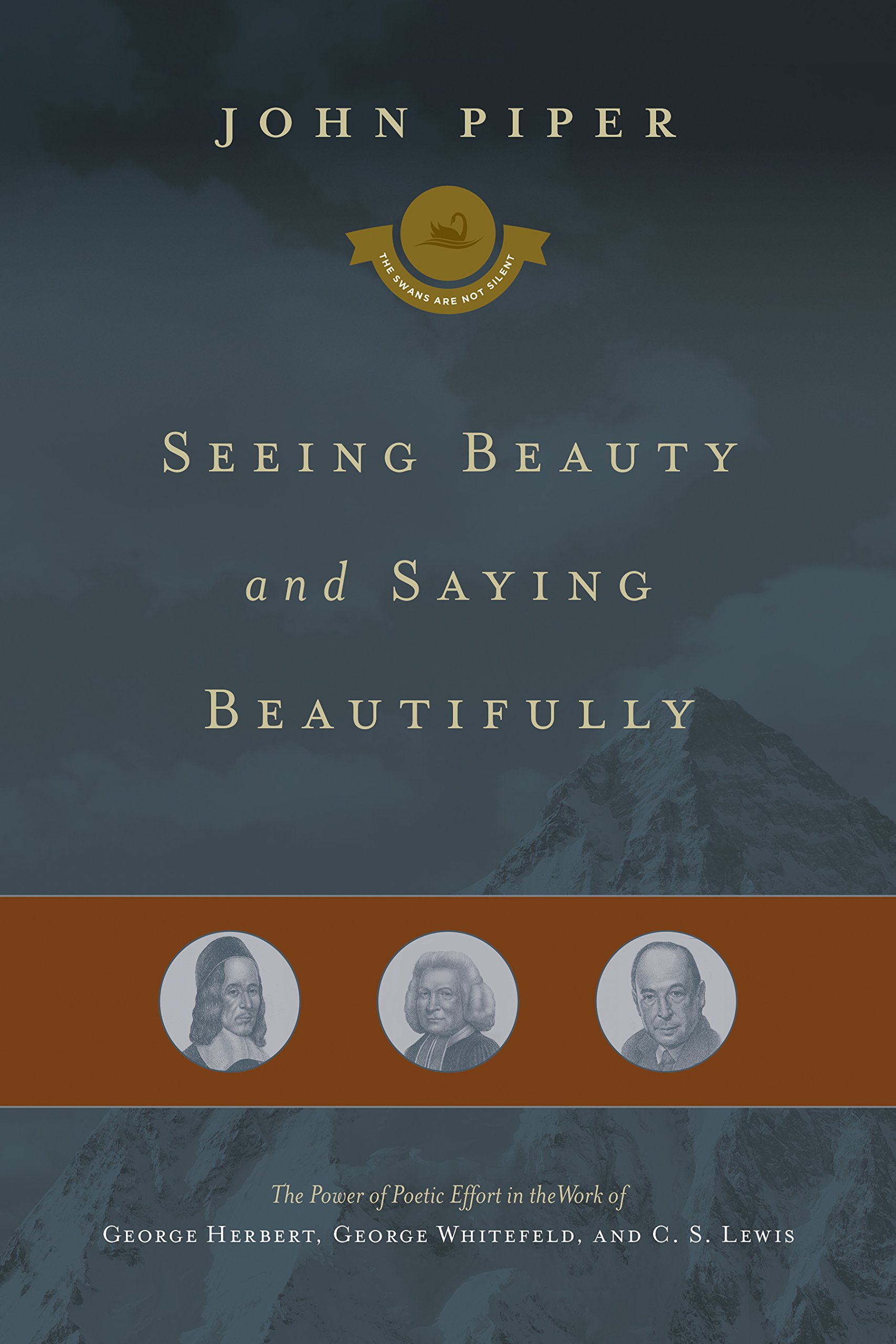
Seeing Beauty And Saying Beautifully is, in my mind, a grand slam! It features one of my favorite poets (George Herbert), possibly the most prolific evangelist of history (George Whitefield), my all-time favorite author (C.S. Lewis), all tied together by my go-to theologian (John Piper). Seeing Beauty And Saying Beautifully is part 6 in Piper’s series called “The Swans Are Not Silent.” 

George Herbert was a pastor of a small country church and a prolific poet who wrote almost all of his poems uniquely. “Of the 167 poems in The Temple, 116 are written with meters that are not repeated,” which even modern poets find astounding. George Whitefield spent more hours of his life preaching than he did sleeping, and he spoke with such a captivating style that he was quite possibly the first celebrity of the American colonies. C.S. Lewis wrote everything from history to fantasy, autobiography to poetry, theology to children’s novels. Peter Kreeft says of him, he “was not a man: he was a world.” 

John Piper finds in all three of these men a common thread: They all were able to not only see the beauty of God in everything, but they were able to express it in a beautiful way that drew in others to see the beauty of God for themselves. Pastor John calls this “poetic effort.” 

Pastor John also wrestles with how the profound creativity and eloquence of his three subjects meshes with the apostle Paul’s admonition that human eloquence could drain the Cross of Jesus of its power (see 1 Corinthians 1:17-2:5). He concludes that poetic effort for the sake of exalting the speaker or poet does turn people’s eyes to man and away from God. But that poet, evangelist, or author that uses the beauty in God’s creation to point people to the Creator is doing so in a way in which God is supremely exalted. This, Pastor John says, is exactly what Herbert, Whitefield, and Lewis have done, and done so well that their poetic efforts are still fruitful and God-glorifying long after their deaths. 

Seeing Beauty And Saying Beautifully is a wonderful book for those who enjoy biographies, theology, or the craft of skilled artisans. If you don’t know about the poems of George Herbert, the preaching of George Whitefield, or the vast library of literature of C.S. Lewis, let this book be your doorway to a rich new world of discovery, enjoyment, and God-glorification. 

►► Would you please prayerfully consider supporting this ministry? ◀︎◀︎
Book Reviews From 2020

10 Quotes From “Coronavirus And Christ”

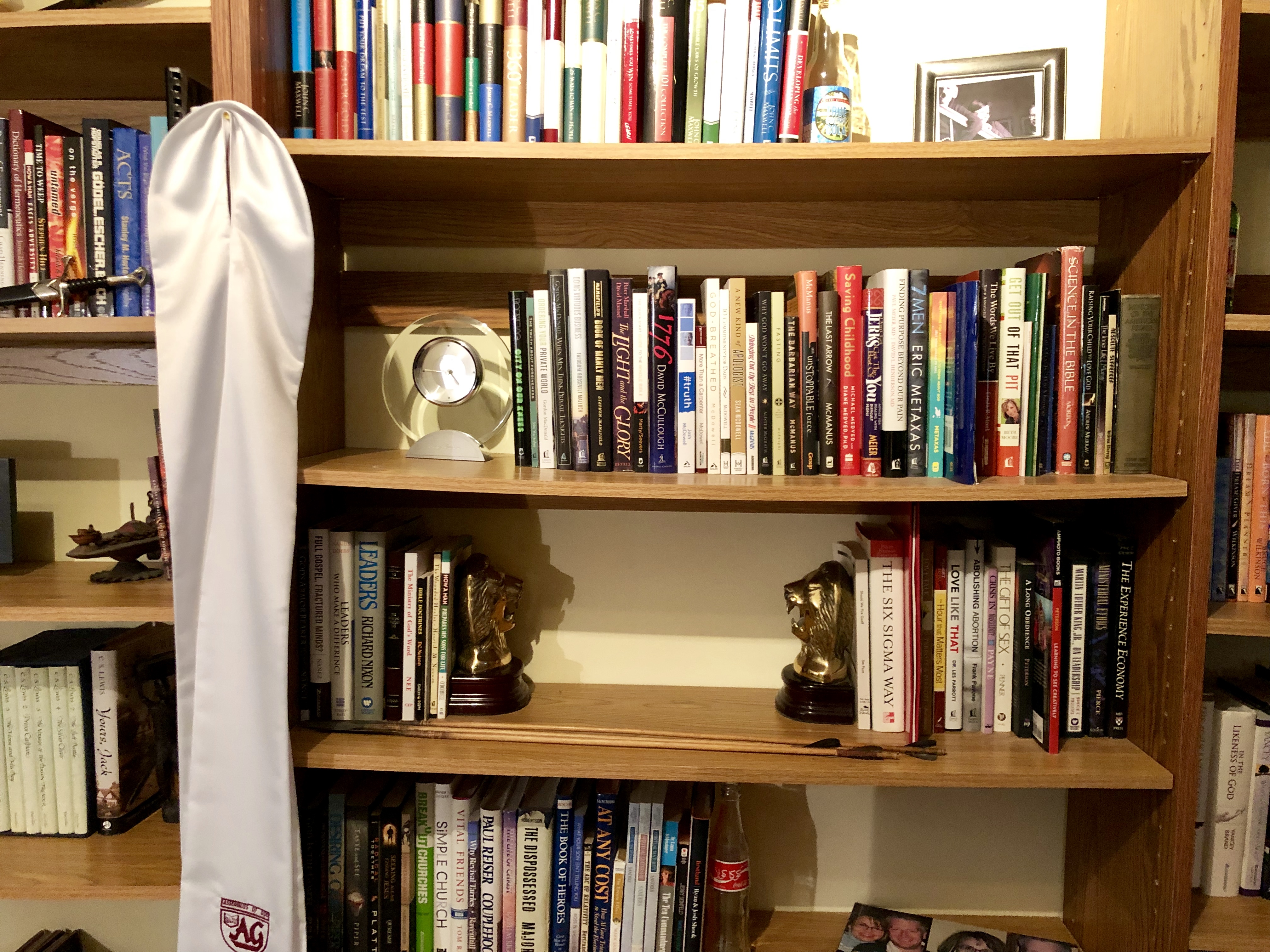
John Piper has given us a book that is so spot-on timely for this unusual time we are going through. Check out my full book review by clicking here. 

“I am a sinner. I have never lived a day of my life—not one—without falling short of God’s standards of love and holiness. So how can this be? How can God say, ‘You, John Piper, will be with Me—live or die’ [1 Thessalonians 5:9-10]? God didn’t even wait for the question before He answered. It’s because of Jesus.” 

“To be God is to cause His own counsel to stand—always. God does not just declare which future events will happen; He makes them happen. He speaks His word, and then He adds, ‘I am watching over My word to perform it’ (Jeremiah 1:12).” 

“Jesus expresses the sweetness of God’s sovereignty for His disciples as beautifully as anyone: ‘Are not two sparrows sold for a penny? And not one of them will fall to the ground apart from your Father. But even the hairs of your head are all numbered. Fear not, therefore; you are of more value than many sparrows’ (Matthew 10: 29–31). Not one sparrow falls but by God’s plan. Not one virus moves but by God’s plan. This is meticulous sovereignty. And what does Jesus say next? Three things: you are of more value than many sparrows; the hairs of your head are all numbered; fear not.” 

“Christians get swept away in tsunamis. Christians are killed in terrorist attacks. Christians get the coronavirus. The difference for Christians—those who embrace Christ as their supreme treasure—is that our experience of this corruption is not condemnation.” 

“God put the physical world under a curse so that the physical horrors we see around us in disease and calamities would become a vivid picture of how horrible sin is. In other words, physical evil is a parable, a drama, a signpost pointing to the moral outrage of rebellion against God.” 

Physical pain is God’s trumpet blast to tell us that something is dreadfully wrong in the world. Disease and deformity are God’s pictures in the physical realm of what sin is like in the spiritual realm.” 

“Jesus wants us to see the birth pains (including the coronavirus) as reminders and alerts that He is coming and that we need to be ready [Matthew 24:44].” 

“What God is doing in the coronavirus is showing us—graphically, painfully—that nothing in this world gives the security and satisfaction that we find in the infinite greatness and worth of Jesus.” 

“Paul does not view this experience of desperation as satanic or random [2 Corinthians 1:8-9]. It is purposeful. And God is the One whose purpose is mentioned: this life-threatening experience ‘was to make us rely not on ourselves but on God who raises the dead.’” 

“Jesus taught His followers to ‘let your light shine before others, so that they may see your good works and give glory to your Father who is in heaven’ (Matthew 5:16). What is often not noticed is that being the salt of the earth and the light of the world in this way was the more salty and the more bright because the good deeds were to be done even in the midst of suffering. …

“It is nor mere good deeds that give Christianity its tang and luster. It is good deeds in spite of danger.”

Coronavirus And Christ (book review)

Coronavirus And Christ is a quintessential example of how the Bible’s message is applicable to any situation we face. This book could have been written as “The Bubonic Plague And Christ” or “The Great War And Christ” or even “The Spanish Flu And Christ” and the message would have been the same. 

John Piper himself states, “What John Piper has to say on this topic isn’t nearly as important as what God has to say on this topic.” God’s Word is timeless, always applicable, and always authoritative. Coronavirus And Christ is steeped in biblical principles. 

The first half of this book reminds us of God’s sovereignty even in times that we may see as unexpected or chaotic. Pastor John writes, “The secret of ‘sorrowful, yet always rejoicing’ [2 Corinthians 6:10] is this: knowing that the same sovereignty that could stop the coronavirus, yet doesn’t, is the very sovereignty that sustains the soul in it. Indeed, more than sustains—sweetens. Sweetens with hope that God’s purposes are kind, even in death—for those who trust Him.” 

In the second half of this book, Pastor John elaborates on six possible answers to the question, “What is God doing through the coronavirus?” I am confident that you will be encouraged to see how God is in control of events that seem out of our hands. 

Coronavirus And Christ is a short book, but one that will arm you with faith-building insights that will help you throughout not just this time, but any others that will inevitably come along. Desiring God has made the ebook version of this book available for free (click here to access the link). 

4 + 4 Strategies To Eliminate Distractions To Your Prayer Time

There’s a quote that has been the theme for this series on prayer: “Prayer pursues joy in fruitful fellowship with Jesus, knowing that God is glorified when we bear fruit in answer to prayer. Why do God’s children so often fail to have consistent habits of happy, fruitful prayer? Unless I’m badly mistaken, one of the reasons is not so much that we don’t want to, but that we don’t plan to.” —John Piper 

And unless I’m badly mistaken, the most obvious thing we need to plan to eliminate is distractions. 

Some people say they can juggle a lot of things at once. “I’m a really good multitasker,” they say. But science says differently. MIT neuroscientist Earl Miller concluded that our brains are “not wired to multitask well…. When people think they’re multitasking, they’re actually just switching from one task to another very rapidly. And every time they do, there’s a cognitive cost.” What is that cognitive cost? “Multitasking can drop IQ as much as 15 points, essentially turning you into the cognitive equivalent of an 8-year-old” (Inc. Magazine). 

If the devil can make you think you can multitask prayer with other things, he has seriously inhibited the effectiveness of your prayers. 

Jesus was not a multitasker—but He was singularly focused on His Father’s plan. And yet He accomplished more in His three years of public ministry than anyone else in history! 

Here are 4 strategies to help you get ready to pray:

  1. Try to have your prayer time in the same place and at the same time. Your brain likes routine and it will help you zero-in during your scheduled prayer times. 
  2. Silence your cell phone or other noisy distractions. 
  3. Keep a notepad handy for random thoughts that pop into your head. Writing them down will keep your brain from switching back-and-forth to them.
  4. Focus on listening, not on talking—Eugene Peterson said, “Prayer is first of all a means of listening. Prayer is an act of attention.” 

When we get right down to it, prayer is spiritual warfare (2 Corinthians 2:11; Ephesians 6:10-18). In the context of warfare, the word strategy means the maneuvering that takes place prior to the battle. The devil is a masterful tactician, and he will do everything he can to keep you distracted. 

That’s why three times Peter tells us to be clear-minded and singularly-focused in our thoughts SO THAT we can pray without the hindrances of distractions (1 Peter 1:13-14; 4:7; 5:8-9). And Paul tells us to take all our thoughts captive, so that no un-Christlike thoughts are inhibiting our prayer time (2 Corinthians 10:4-5). 

Here are 4 strategies to help you stay focused in prayer:

  1. A—adoration. Enter into God’s presence with a Psalm or worship music. 
  2. C—confession. Deal with unconfessed sin, unforgiveness, or relationship strife as quickly as possible (Psalm 66:18; Matthew 5:21-24). 
  3. T—thanksgiving. Paul counseled us, “Do not be anxious about anything, but in everything, by prayer and petition WITH thanksgiving, present your requests to God” (Philippians 4:6).  
  4. S—supplication. Intercede for your brothers and sisters in the battles they are facing (James 5:16; Job 42:10; Ephesians 6:18).  

Remember—

Prayer isn’t preparation for the battle; prayer IS the battle! Let’s not be distracted from that!

Prayer Expectations

Many of our prayers could be much bolder and much more specific than they are. Why is that? Because how we view God is going to determine what we pray and what we expect after we pray.

When we pray, we approach an All-Loving Father, and we approach an All-Powerful God. I have found that typically people get warmed by the idea of Father and get scared by the idea of God. They say things like: “What if my prayers don’t hallow God’s name? What if He’s mad at me? What if I pray an improper prayer?” 

God wants us to come to Him in prayer, so He makes Himself very accessible! The Father is both Father and God; the Son is both Friend and King; the Spirit is both Comforter and Convictor. We get ALL of this in One God. 

Charles Spurgeon had this word of encouragement: “If You are my Father, then You love me. If I am Your child, then You will regard me, and poor though my language is, You will not despise it.” Jesus came to earth fully God and fully man, making Him our perfect intermediary (see Job 9:32-35; 1 Timothy 2:5; Hebrews 7:25). And the Holy Spirit helps interpret our groaning prayers (Romans 8:26-27). 

Have you ever noticed that neither the prophets of the Old Testament, nor Jesus in the Gospels, nor the apostles in the New Testament ever prayed, “God, if this is Your will please do such-and-such”? They simply prayed. Or more accurately, they prayed so boldly and specifically it almost sounded like a command: “Stand up” or “Be clean” or “Go, your prayer has been answered.” 

When you and I are praying to an All-Loving and All-Powerful Father, with Jesus interceding for us, and the Spirit helping us, we too can pray these bold and highly specific prayers. 

After all, if you don’t pray specifically and expectantly, how will you know when your prayer is answered? 

I find John Piper’s acrostic very helpful in praying these bold and expectant prayers. He calls it APTAT: 

  • A—Admit I can’t do anything without Christ. This hallows His Name. 
  • P—Pray for help to do it. 
  • T—Trust a specific promise of God to help me (two general promises are found in Isaiah 41:10 and Romans 8:32). 
  • A—Act. Do the things I need to do: apply for the job, ask forgiveness, schedule a meeting. 
  • T—Thank Him when I’m done. 

Two final thoughts—

  1. Make prayer more of a listening relationship than a talking relationship. 
  2. Give yourself some grace as you are maturing; don’t expect immediate perfection. Start praying and then let the Father, the Son, and the Spirit help you mature in your prayer life. 

I hope you can join me this Sunday as we continue to work on our plans to pray.

11 Quotes From “When The Darkness Will Not Lift”

John Piper has given us an extremely helpful book whether we ourselves are battling the darkness of depression, or someone close to us is. Please check out my full book review of When The Darkness Will Not Lift by clicking here. 

“This is the rock where we stand when the dark clouds gather and the floods lick at our feet: justification is by grace alone (not mixed with our merit), through faith alone (not mixed with our works) on the basis of Christ alone (not mingling His righteousness with ours), to the glory of God alone (not ours).” 

“Where should you start? Start at the easiest place for those in darkness. Start with despair. Despair of finding any answer in yourself. I pray that you will cease from all efforts to look inside yourself for the rescue you need. I pray that you will do what only desperate people can do, namely, cast yourself on Christ.” 

“You cannot isolate the spiritual from the physical for we are body, mind and spirit. The greatest and the best Christians when they are physically weak are more prone to an attack of spiritual depression then at any other time and there are great illustrations of this in the Scriptures.” 

“It will be of great advantage to the struggling Christian to remember that seasons of darkness are normal in the Christian life.” 

“One of the reasons God loved David so much was that he cried so much. … It is a beautiful thing when a broken man genuinely cries out to God.” 

“Faith is sustained by looking at Christ, crucified and risen, not by turning from Christ to analyze your faith. … Paradoxically, if we would experience the joy of faith, we must not focus much on it. We must focus on the greatness of our Savior.” 

“It follows from this that we should all fortify ourselves against the dark hours of depression by cultivating a deep distrust of the certainties of despair. Despair is relentless in the certainties of its pessimism. But we have seen again and again, from our own experience and others, that absolute statements of hopelessness that we make in the dark are notoriously unreliable. Our dark certainties are not sureties. While we have the light, let us cultivate distrust of the certainties of despair.” 

“Instead of only saying, ‘Just do your duty,’ we must say…that joy is part of your duty. The Bible says, ‘Rejoice always’ (1 Thessalonians 5:16). And in regard to the duty of giving, it says, ‘God loves a cheerful giver’ (2 Corinthians 9:7). In regard to the duty of service, it says, ‘Serve the Lord with gladness’ (Psalm 100:2). In regard to the duty of mercy, it says do it ‘with cheerfulness’ (Romans 12:8). In regard to the duty of afflictions, it says, ‘Count it all joy’ (James 1:2). We simply water down the divine command when we call someone to half their duty.” 

“In dealing with our sin we can make two mistakes. One is to make light of it. The other is to be overwhelmed by it.” 

“If we want the joy of seeing and savoring God in Christ, we must not make peace with our sins. We must make war.” 

“Sometimes the darkness of our souls is owing in some part to the fact that we have drifted into patterns of life that are not blatantly sinful but are constricted and uncaring. … Unconsciously we have become very self-absorbed and oblivious and uncaring toward the pain and suffering in the world that is far worse than our own.”

“Paradoxically, depressed persons may say that they must care for themselves and cannot take on the problems of the world, when in fact part of the truth may be that their depression is feeding on the ingrown quality of their lives. … Joy in Christ thrives on being shared. That is the essence of Christian joy: it overflows or dies.”