Living Lives That Make Sense

This sounds totally contrary to common sense, but I’ll bet you’ve seen this before—Someone does something unexpectedly nice, and gets criticized for it. 

Why would that be? 

Christians can expect to experience this more frequently. Jesus told His followers to be prepared for persecution from those who didn’t believe in Him. One of Christ’s disciples named Peter added a few other warnings for Christians: 

  • Non-Christians will accuse you of doing wrong even when you’re doing right
  • Non-Christians will think it’s weird that you don’t do the same evil deeds they do
  • Non-Christians will heap abuse on you for not doing the evil deeds they do (1 Peter 2:12; 4:4)

This is because living good, Christ-honoring lives causes a burning in those hearts that don’t know Jesus yet. 

Solomon said there’s an aching void in the heart of every human being. It’s a longing to know what makes sense in life (see Ecclesiastes 3:11). When Christians live their lives focused on God, and they live—as Peter said—“such good lives,” it reminds non-Christians of what they’re missing. 

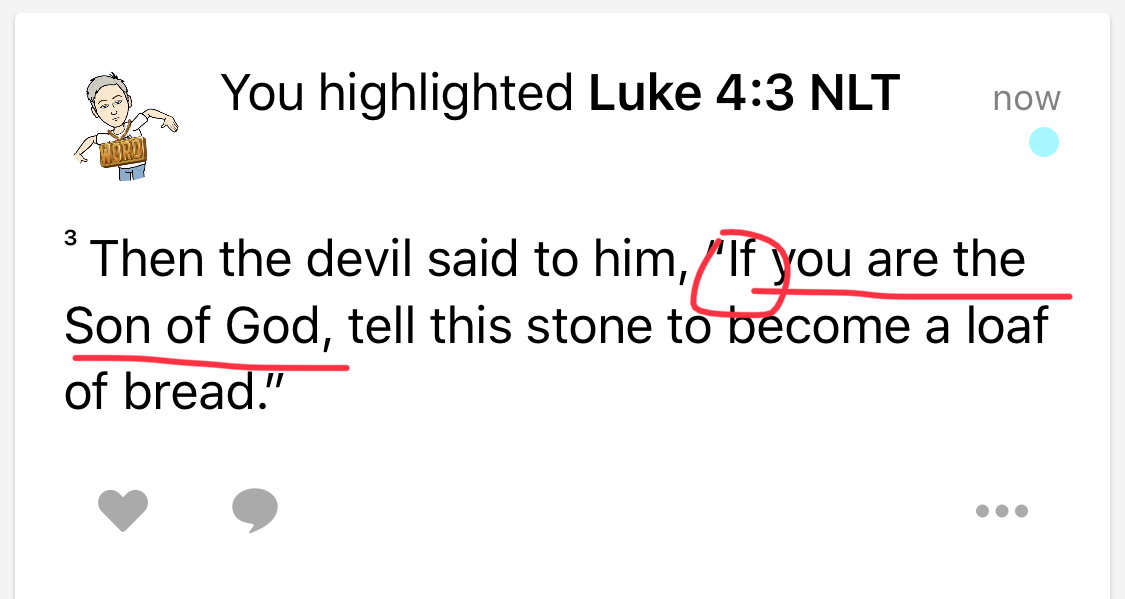
Christian, you need to remember why we live this way. The belief that Jesus is the Christ, the Son of the living God (Matthew 16:18) is the foundation for our lives. In fact, Peter called Jesus the Living Stone. As His followers, we are also called “living stones” that the Holy Spirit is building together to make a spiritual signpost to point others to Jesus (see 1 Peter 2:4-5, 9, 12). 

We cannot do this under our own power. Jesus Himself reminded us that we need the Scriptures which all point to Him (Luke 24:27, 44-45), and the Holy Spirit which will help us apply the revealed Scriptures (John 14:26) and live “such good lives.” 

So here’s how I’m challenging myself this week, and I’d like to extend this challenge to you too. For the next seven days, just before going to bed I’ll be asking myself these three questions:

  1. Did I read the Word of God today? 
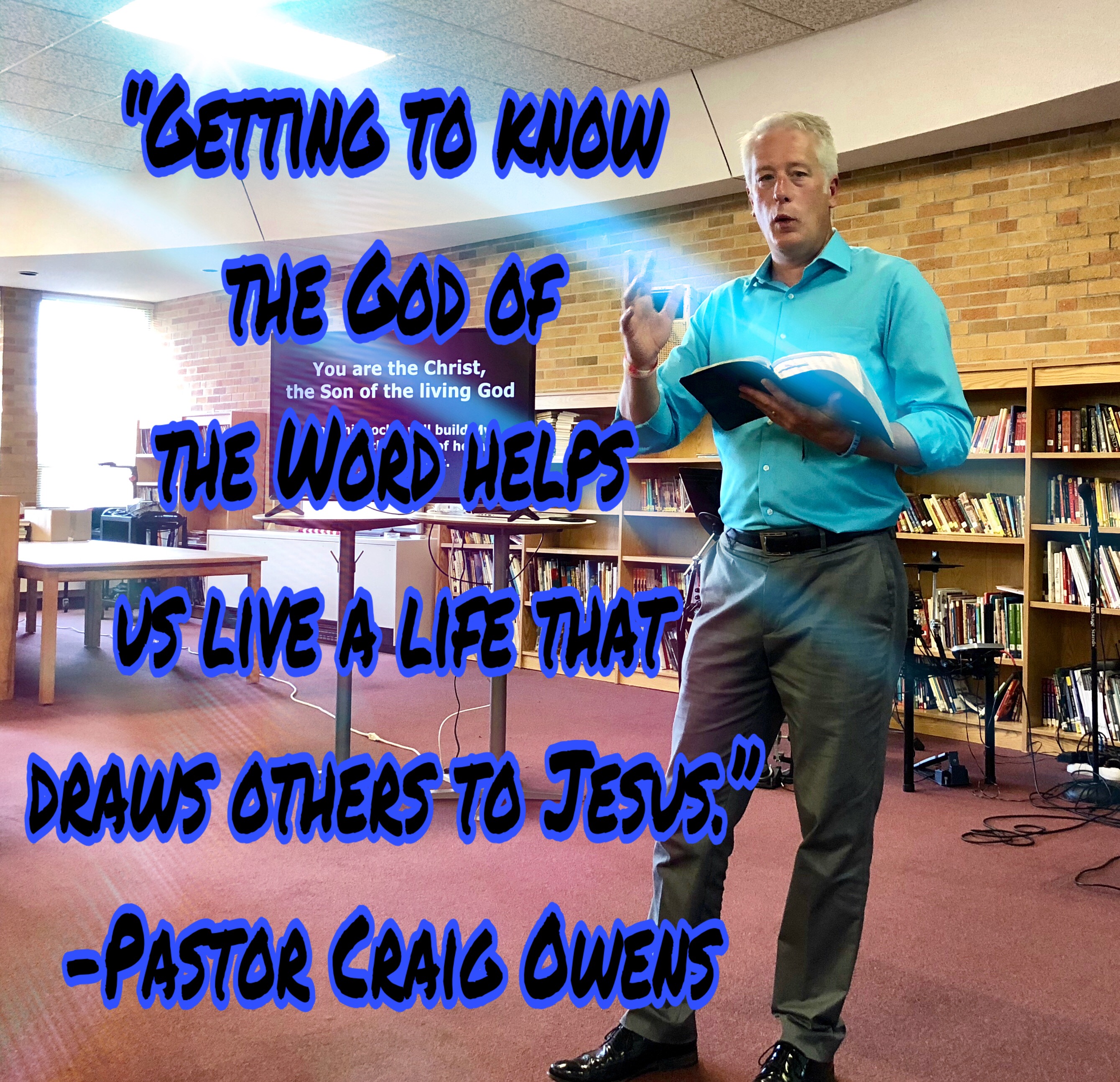
  2. Did I see the God of the Word in the Word of God a little more clearly today?
  3. Did I live a good, Christ-honoring life today that pointed others to Jesus?

Join me this Sunday as we continue our look at how Christians should live as aliens and strangers. If you’ve missed any messages in this series, you may find the complete list by clicking here.

Thursdays With Oswald—Jeremiah 18

Oswald ChambersThis is a weekly series with things I’m reading and pondering from Oswald Chambers. You can read the original seed thought here, or type “Thursdays With Oswald” in the search box to read more entries.

Jeremiah 18

[These are notes from Oswald Chambers’ lecture on Jeremiah 18.] 

     These people are affecting to be the people of God—“We are the people of God, this is the temple of God…the prophets we like to listen to are those who prophesy smooth things.” … The early aspirations God stirred in them have gone, and now they simply make God and everything in connection with Him an affectation to go on their own ways. …

     There is an obstinacy that deliberately takes the law into its own hand and leaves the source of its life. There needs to be a recognition of where the source of life is and a determination to stay at it. Backsliding is the prevailing human stubbornness after the experimental knowledge of salvation. Backsliding is never spoken of in the Bible as a degenerate tendency, but as a conscious forsaking. …  

     It is no longer “Satisfy us early with Thy mercy,” but “Satisfy us with these other things, we want material prosperity and success.” … Never falter by trying to make anything lesser the cause for what is greater; for instance, trying to make health of body the cause for a right spiritual relationship, or material prosperity the cause for worshiping God, and never make obedience the reason that God is blessing you, obedience is the effect of being rightly related to God. 

From Notes On Jeremiah 

Backsliding occurs when we deliberately try to find loopholes, evasions, or excuses for not obeying the Word of God. 

Whenever the Holy Spirit prompts us to make a change, we have a decision to make: we can obey or we can make excuses (which is conscious disobedience). Obedience shows we are rightly related to God. Our excuses and evasions show we are trying to get God to be rightly related to our way of thinking. 

What God is asking you to obey may be a hard thing, but it is always the best thing! Don’t evade, justify, or make excuses—simply, as the words of the old hymn remind us, trust and obey, for there’s no other way to be happy in Jesus. 

Thursdays With Oswald—Jeremiah 17

Oswald ChambersThis is a weekly series with things I’m reading and pondering from Oswald Chambers. You can read the original seed thought here, or type “Thursdays With Oswald” in the search box to read more entries.

Jeremiah 17

[These are notes from Oswald Chambers’ lecture on Jeremiah 17.] 

     All sin is unpardonable, every sinner is pardonable. … 

     God cannot pardon sin, but He instantly receives the sinner when the sinner leaves his sin and comes to Him. The Atonement of the Lord Jesus Christ does not mean that God forgives the sinner and leaves him in his sin; God forgives a man for being a sinner and puts him in the place where he need never be a sinner any more. …  

     God is only after one thing, a right relationship to Himself, and He does not care about our physical comforts. Until we are rightly related to Him, God will play ruthless havoc with every comfort and relationship we have. … 

     When we are sanctified the perpetual temptation is to do what Jesus did not do—“Now I am sanctified I can do what I like.” I cannot. My natural life and natural gifts are to be turned into a spiritual possession by offering them to God. 

From Notes On Jeremiah

God cannot tolerate sin, but He loves the sinner so much that He sent His Son to die in our place as payment for our sin. While we are still wallowing and trapped in our sin, God will not leave us alone; He will not make life comfortable for us; He will ruthlessly ruin everything that we try to use as a substitute for a relationship with Him. 

Once we do confess our sin and receive the Atonement that Jesus purchased on the Cross for us, the Holy Spirit will continue to harass our old nature. Our sinful flesh wants to return to wallowing in the muck of sin, but the Holy Spirit will make it tremendously uncomfortable for us to go there. 

Don’t strive for a comfortable life; strive for a God-honoring life. Pay attention to those areas of discomfort or dissatisfaction, because God is speaking to you through those and calling you into a deeper, more vibrant life in Him.

Saturday In The Proverbs—Setting Myself Up For Failure (Proverbs 20)

[Each chapter in the Book of Proverbs contains thoughts that fit into a theme; they are not just random thoughts gathered together. In this “Saturday In The Proverbs” series, I will share a theme that I see in each chapter. But the cool thing about God’s Word is that you may see an entirely different theme. That’s great! If you do, I would love for you to share it in the comments below.]

Wine is a mock, strong drink is a brawler, and whoever is led astray by it is not wise (Proverbs 20:1).

This collection of proverbs warns against things that impair a person’s judgment, or things that set us up for failure. Things like…

  • intemperance (v. 1)
  • making leaders angry (vv. 2, 8, 26)
  • starting petty quarrels (v. 3)
  • laziness (vv. 4, 13)
  • shallow thinking (vv. 5, 12, 25)
  • unfaithfulness or a lack of integrity (vv. 6, 7, 11, 27)
  • unconfessed sin (vv. 9, 24)
  • duplicity or favoritism (vv. 10, 14, 17, 23)
  • not valuing wisdom (vv. 15, 18. 25)
  • risky business deals (vv. 16, 25)
  • gossiping (v. 19)
  • dishonoring your parents (vv. 20, 21)
  • holding a grudge (v. 22)
  • unkindness or dishonesty (v. 28)
  • not valuing life (v. 29)
  • not allowing anyone to correct you (v. 30)

Now that you know these items that set you up for failure, ask the Holy Spirit to help you root any of these out of your life before failure happens to you! 

❤️ The Love Test

The description of love that Paul gives in 1 Corinthians 13 is well known, and I think most people would agree that this is an outstanding definition of true love. But the ultimate test is this: can this definition of love be said of me?

God wants you to be able to say “yes!” and so the Holy Spirit works on us to make this definition more and more consistently true of us. Here’s how we can test ourselves and find out where we need to allow the Spirit to work on us—put your name in this passage everywhere you find the word “love.”

Can this be truly said of me:

“Craig is patient. Craig is kind. Craig isn’t jealous. Craig doesn’t sing his own praises. Craig isn’t arrogant. Craig isn’t rude. Craig doesn’t think about himself. Craig isn’t irritable. Craig doesn’t keep track of wrongs. Craig isn’t happy when injustice is done, but he is happy with the truth. Craig never stops being patient with others, he never stops believing the best for others, he never stops hoping for the best for others, he never gives up on others. Craig’s love never fails.”

If you put your name in that passage, how well do you do on the love test? If you will let Him, the Holy Spirit will help you get all As on these tests.

10 Marriage Tips For Guys

Listen to the podcast of this post by clicking on the player below, and you can also subscribe on AppleSpotify, or Audible.

Guys, here’s how to add heat to your marriage (regardless of its current temperature)—

  1. Let the Holy Spirit continue to develop His fruit in you—this is the only way to become a truly exceptional lover.
  2. Pray for your wife, and pray with your wife.
  3. Say “I love you” every day. 
  4. Learn her love language and speak it regularly. 
  5. Hold her hand. 
  6. Compliment her privately—not just for how she looks or what she does, but for who she is. 
  7. Praise her publicly in front of her friends, family, and coworkers.
  8. Find ways to assure her that she is your #1 priority. Every single day.
  9. Take her out on a date that you have planned. 
  10. Repeat steps 1-9.

“The most joyful, peaceful, patient, kind, good, faithful, gentle, trustworthy lovers are Spirit-empowered lovers.” —Craig T. Owens

►► Would you please prayerfully consider supporting this ministry? My Patreon supporters get behind-the-scenes access to exclusive materials, like this recent video where I explain how God reveals previously-unknown truths to us. Become a supporter today and get instant access to everything I have already shared with my supporters. ◀︎◀︎

Going Into The Heavy Presence Of God

“The King of glory” is a phrase that’s only used five times in the Bible, and all five times are packed into just four verses of Psalm 24. In this psalm, David lets us know who can enter into this awesome, heavy presence of the King of Glory. 

Why do I say “heavy”? The definition of the Hebrew word for glory always refers to a heaviness. There is something majestically, awesomely heavy about going before the All-Righteous, All-Powerful, All-Holy, All-Knowing, Absolutely Perfect God. Can any mere mortal enter into this presence? 

In an earlier psalm, David said, “For the Lord is righteous, He loves justice; the upright will see His face” (Psalm 11:7). But in this psalm, David asks, “Who can ascend Your holy hill? Who can come into Your presence?” (Psalm 24:3). 

He answers the question with these words: the upright, the one with clean hands and a pure heart (he expands this list even more in Psalm 15), then he calls on us to Selah—pause and weigh this as if on a scale. David is asking, “Do you really want to enter into the weighty presence of the King of Glory?” 

If you do, something needs to happen first. David calls his generation (and our generation) the generation of Jacob. You can read the story of Jacob’s life beginning in Genesis 27. Jacob was a pragmatic man. If he could get away with something, he did. He only looked out for his own interests. He deceived, he connived, he bribed, he calculated his odds—he did what he had to so that he could advance himself. He didn’t realize God’s weight. He saw God only through a scarcity-mindset that gave God limits. He thought there was only a limited supply, and if somebody else was getting a blessing, then that meant there was less for him to get.

Then Jacob encountered God and discovered that he couldn’t do a thing against this weighty King of Glory. When he finally submitted to God, his name was changed to Israel. Jacob—the self-sufficient man—would never be allowed to enter the doors into God’s heavy glory. But Israel—the submitted man—may ascend the hill of the Lord and stand in His holy presence. Jacob means deceitful; Israel means the man without any deceit. 

For the rest of his life, Israel walked with a limp. It was a constant reminder that he simply wasn’t the man he was before he wrestled with God.

  • Jacob could only obtain what he could finagle; Israel is the recipient of all God’s blessings. 
  • Jacob could only keep his gains for this life; Israel got God’s blessings for eternity. 
  • Jacob might be vindicated by men; Israel is definitely and completely vindicated by God. 
  • Jacob couldn’t enter the presence of the King of Glory; Israel was welcomed as a prince into God’s presence.

Here’s the challenge I would give you… Use either Psalm 15 or Psalm 24:3-4 and let the Holy Spirit wrestle with you. Is there anything that’s holding you back from going through those doors into the weighty presence of the King of glory? If there is, confess it, repent from it, and even limp away from it (if you have to) so that you don’t miss out on God’s eternal blessings. 

Join me this coming Sunday as we continue our look at the Selahs in the Book of Psalms. 

Thursdays With Oswald—Jeremiah 13

Oswald ChambersThis is a weekly series with things I’m reading and pondering from Oswald Chambers. You can read the original seed thought here, or type “Thursdays With Oswald” in the search box to read more entries.

Jeremiah 13

[These are notes from Oswald Chambers’ lecture on Jeremiah 13.] 

     When a man is afraid of God the only right thing for him to do is to run straight to God and not wait to dress himself. The further we get away from God the more we want to dress ourselves up in prayer, etc., but if we fly, just as we are, God will take us and remove the unclean thing. … 

     Spiritually when an individual builds his confidence on anything less than God inevitably there will be a perishing of the ground of confidence. … Beware of building your faith on your experience of God’s grace instead of on God Who makes the experience possible. … 

     Never succumb to believing in an inevitable fate, but fly to God, then you will never know the darkness or the judgments on sin (cf. John 3:19). Judgment comes because of conscious rejection or a conscious neglect. If we see and do not obey, there will be the wandering in the shadows, by God’s decree. There is always a way back to God, and that is to fly as you are, not as you want to be. …  

     Never trust innocence of outlook in yourself or in other people when the statements of God’s Word are directly opposite (see Mark 7:21 and Jeremiah 17:19). … It is difficult when convicted to turn to Jesus Christ; we turn to vowing; but unless we turn to Jesus in obedience and let His life enter in, it is hopeless, for we build again on the same old foundation.

From Notes On Jeremiah

When the Holy Spirit convicts us, our natural human tendency is to (a) justify, (b) make excuses, (c) vow that we will never do that again, (d) ask a friend to help hold us accountable to better behavior, or (e) try to cover up with a lot of religious activity. 

What God wants instead is for us to run to Him. Just as we are. No pretenses. No excuses. No delay. He alone has the healing and restoration we desperately need. 

Covenants To God

Christmas Evans tells us in his diary that one Sunday afternoon he was traveling a very lonely road to attend an appointment, and he was convicted of a cold heart. He wrote,

“I tethered my horse and went to a sequestered spot, where I walked to and fro in an agony as I reviewed my life. I waited three hours before God, broken with sorrow, until there broke over me a sweet sense of His forgiving love. I received from God a new baptism of the Holy Ghost.

“As the sun was westering, I went back to the road, found my horse, mounted it and went to my appointment. On the following day I preached with such new power to a vast concourse of people gathered on the hillside, that a revival broke out that day and spread through all Wales.”

Christmas went on to write 13 covenants to God. You can read all 13 of them by clicking here, but here are six of them that especially resonated with me—

V. O Jesus Christ, Son of the living God, take for the sake of Thy cruel death, my time, and strength and the gifts and talents I possess; which, with a full purpose of heart, I consecrate to Thy glory in the building up of Thy Church in the world, for Thou art worthy of the hearts and talents of all men.

VI. I desire Thee, my great High Priest, to confirm, by Thy power from Thy High Court, my usefulness as a preacher, and my piety as a Christian, as two gardens nigh to each other; that sin may not have a place in my heart to becloud my confidence in Thy righteousness, and that I may not be left to any foolish act that may occasion my gifts to wither, and I be rendered useless before my life ends…. 

VIII. … Grant that I may experience the power of Thy Word before I deliver it, as Moses felt the power of his own rod, before he saw it on the land and waters of Egypt. Grant this, for the sake of Thine infinitely precious blood, O Jesus, my hope, and my all in all.

IX. Search me now, and lead me into plain paths of judgment. Let me discover in this life what I am before Thee, that I may not find myself of another character when I am shown in the light of the immortal world, and open my eyes to all the brightness of eternity…. 

X. Grant me strength to depend upon Thee for food and raiment, and to make known my requests…. 

XII. Grant, O blessed Lord, that nothing may grow and be matured in me to occasion Thee to cast me off from the service of the sanctuary, like the sons of Eli; and for the sake of the Thine unbounded merit, let not my days be longer than my usefulness…. (emphasis mine)

If you want to do great things for God—if you want Him to do great things through you—then you must be wholly committed to Him. Perhaps Christmas Evans’ covenant statements will help you draft your own, or adopt a couple of his, to consecrate yourself to God’s service. 

God Is The Sun

John Piper said, “We were made to live with God as the all-satisfying center of our lives, with everything else in good, godly, happy orbit. Instead, we have a solar system with competing gravitational centers, and nothing else flying in its right orbit.” 

In Psalm 16:11 David wrote, “In Your presence there is fullness of joy; at Your right hand are pleasures forevermore.” Lasting joy and guilt-free pleasure are found in God’s presence. If He is the “sun” of our universe, everything else stays in its proper “orbit.” How do we make sure God is our sun? The first phrase in Psalm 16:11 is the key: “You make known to me the path of life.”

Did you catch that? Not only is God the sun-center of our universe, but He tells us when our sun-center has become (or is becoming) something other than Himself. That’s why David also prayed, “Search me, O God,” and why Paul told us to regularly examine ourselves.

The Holy Spirit will keep us properly centered and in the place of ultimate joy!