The Supreme Jesus

Listen to the podcast of this post by clicking on the player below, and you can also subscribe on AppleSpotify, or Audible.

Last week here in wintry Michigan we had a couple of snow days (for those of you in non-snow states, that means the roads were too dangerous even for us Michiganders, so the schools were closed). Students and teachers too “work” very hard for snow days. By that I mean they try a bunch of tactics that are supposed to increase the likelihood of school being called off—like flushing ice cubes down the toilet, wearing their PJs inside-out, or even sleeping with a spoon under their pillow. 

But I’ve also noticed it’s not just praying for snow days where people employ some tactics they think will help things go their way. Like saying, “Pretty please with sugar on top” when trying to get special favor, or athletes not saying anything at all to a teammate who’s on the brink of something historic, or business people saying, “Wish me luck” before going into the big meeting. And even Christians who end their prayer with, “In Jesus’ name, Amen” to help make their prayer answerable. 

In case you haven’t noticed, just saying that phrase is not some magical, abracadabra formula for success (for some very notable examples of this check out Matthew 7:21-23 and Acts 19:13-16). 

But still, Jesus does specifically say, “And I will do whatever you ask in My name, so that the Father may be glorified in the Son. You may ask Me for anything in My name, and I will do it” (John 14:13-14). 

This is where context is king. In John 13-16, Jesus is giving His final instructions to His disciples before His arrest and crucifixion. They are clearly anxious about His departure because chapter 14 opens with the words, “Do not let your hearts be troubled.” 

In this passage of John 14, Jesus is giving the disciples the basis for their confident hope in Him. He tells them that He is THE way to the Father (they don’t have to look for another path), and He is THE revelation of the Father (He will make the Father’s will crystal clear to them). 

Jesus tells them that He has been doing His Father’s work, which is verified by the evidence of the miracles—or we could say the answers to His prayers (v. 10-11). Jesus wants His followers to pray this same way, live this same way, and see even greater things done in His name (v. 12). 

So we can infer from this that praying in the name of Jesus essentially means two things:

  1. We pray in harmony with the character of Jesus. That means that we pray prayers that Jesus Himself would pray. If you cannot imagine Jesus asking for what you’re asking for, then it’s not in alignment with His character. 
  2. We pray in faith in the supreme authority of Jesus to do what we ask. Jesus is Supreme over everything else. To pray in His name means we look for answers from no other source.

I think the key to understanding this is found in the small preposition Jesus uses 12 times in this passage: IN. 

Jesus is IN the Father, the Father is IN Jesus, and the Holy Spirit is IN us. This means that we are also IN the Father with Jesus! 

Which means we don’t have to try to be like Jesus or to merely imitate Him, but we let the Holy Spirit sanctify us into the character of Jesus. 

When I talk to my Dad I don’t have to remind myself that I am his son—I just am his son. I don’t have to carefully calculate how I’m going to make requests of him. I know his heart, and I know my inseparable relationship with him, so I just talk to him. 

Have you ever noticed in the Gospels that when Jesus does a miracle, He doesn’t pray the way that we typically pray? When the man with leprosy came to Jesus, He merely said, “Be clean.” I think we might have bowed our heads, closed our eyes, placed our hands on him and said something like, “Dear heavenly Father, if it’s Your will bring Your healing touch to our dear brother. In Jesus’ name we pray, Amen.” But Jesus knew the Father’s heart was to heal this suffering man, so Jesus simply spoke the words. His statement was a prayer that resonated with the heart of His Father, and that prayer was immediately answered. 

The Holy Spirit is sanctifying you to pray this same way: 

  • He wants to mold your heart to be passionate for the things of the Father—John 5:17
  • He wants to transform your mind to think the Father’s thoughts—John 16:13-14
  • He wants to soften your will to be yielded to the will of the Father—Matthew 26:36-44 
  • He wants to settle your emotions to be at peace in the Father—John 14:1
  • He wants to even change your vocabulary to the very words Jesus would use—John 12:49

(read the above verses by clicking here)

When your heart, mind, will, and emotions are being sanctified, the supremacy of Jesus will naturally be at the forefront of everything you feel, think, do, and say. Then you will be naturally praying in the name and character of Jesus for God’s glory to be seen. 

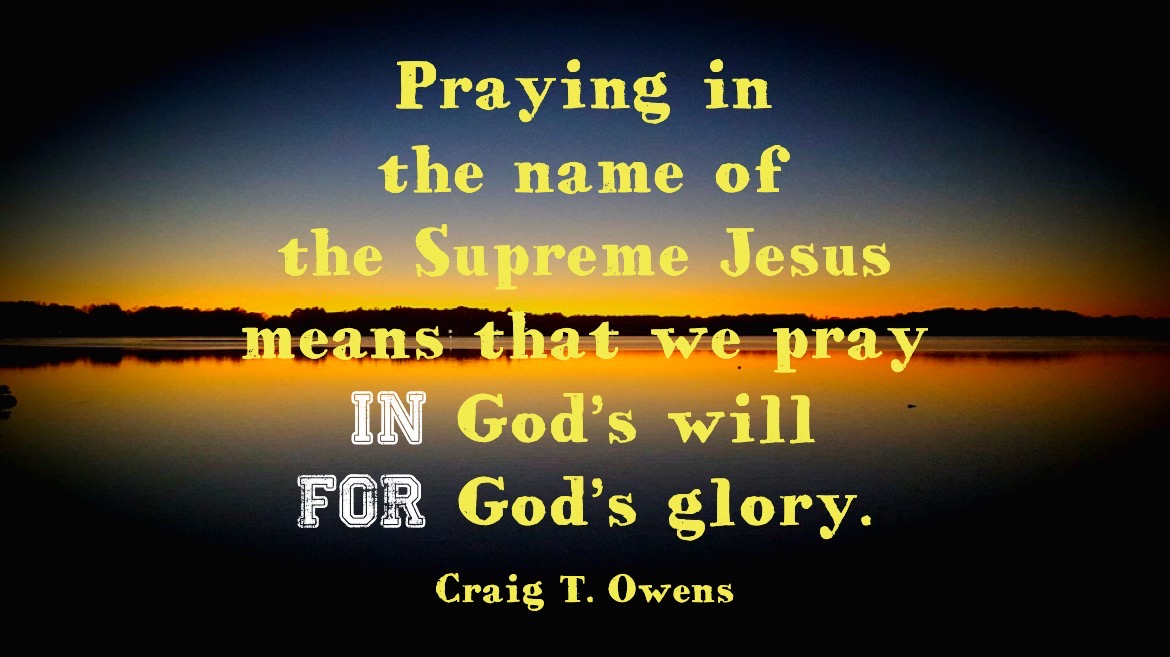
Praying in the name of the Supreme Jesus means that we pray IN God’s will FOR God’s glory. 

To see all of the messages in our series called Awesome: Learning to pray in the awesome name of Jesus, please click here. 

►► Would you please prayerfully consider supporting this ministry? ◀︎◀︎

Year-End Review (2021 Edition)

I have the privilege of pastoring Calvary Assembly of God. One of the things I am honored to do is share a message from God’s Word with our church each week. And nor just teaching, but reminding folks of whatwe have learned too. The apostles Peter and Paul both saw the value in this as well.

So here are all of the sermon series that I shared in 2021. Clicking on each series title will take you to a list of all of the sermons in that series. 

Foundation Stones—Any architect will tell you: You can’t build a great building on a weak foundation. This is just as true in the spiritual realm, which is why John Calvin warned, “Those who are strong only in fervor and sharpness, but are not fortified with solid doctrine, weary themselves in their vigorous efforts, make a great noise…[and] make no headway because they build without foundation.” We have had on the Calvary website since Day 1 a link to “What we believe,” but more than just having them listed there, it is important to discuss them.

Be A First Responder—There is a line in an old hymn that convicts me every time I sing it: “Oh, what peace we often forfeit; Oh, what needless pain we bear all because we do not carry everything to God in prayer.” Why are we so slow to drop to our knees in prayer when trouble strikes? It seems we fool ourselves into thinking the problem is small enough to handle on our own, or we think God isn’t concerned with something that may seem trivial, or we’ve been-here-done-this before and know the way to go. But this isn’t what our Heavenly Father desires; instead, He wants us to come to Him before we try anything else. Instead of making prayer our last resort, why don’t we strive to make it our first response!

Confessions Of A Dying Man—In our justice system, rarely will a judge allow hearsay testimony to be introduced in court. But there is one notable exception: a dying declaration. A dying declaration is the statement of a mortally injured person who is aware he or she is about to die. This statement is admissible testimony in court on the theory that a dying person has no reason not to tell the truth. Jesus was nailed to a Cross. Mortally injured, unable to escape, He had no reason to lie. In His dying moments, struggling to get enough air in His lungs to be able to speak, Jesus choked out seven statements that still have a profound impact on us today.

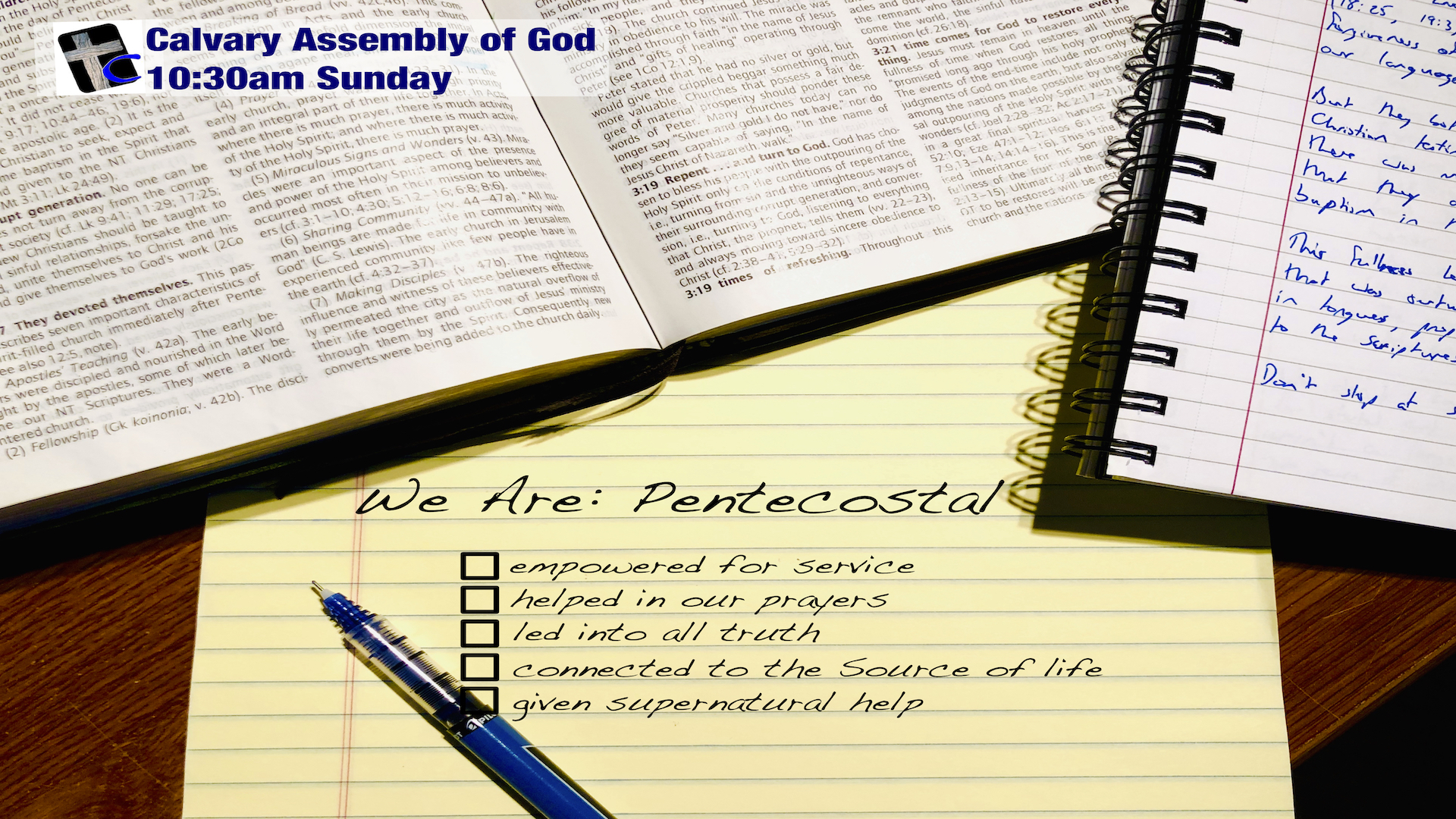
We Are: Pentecostal—Pentecost for over 1500 years was a celebration in Jerusalem that brought in Jews from all over the world. But on the Day of Pentecost that came just ten days after Jesus ascended back into heaven, the meaning of Pentecost was forever changed! Followers of Jesus—now empowered by an infilling of the Holy Spirit—began to take the good news of Jesus all over the world. These Spirit-filled Christians preached the Gospel and won converts to Christ even among hostile crowds, performed miracles and wonders, stood up to pagan priests and persecuting governmental leaders, and established a whole new way of living as Christ-followers. We, too, can be Pentecostal followers of Jesus Christ today. 

Selah—The word Selah appears nearly 70 times in the Bible, almost exclusively in the Psalms. Although it is primarily a musical term, it applies beautifully to our summer series. It means a pause. Throughout the Psalms, Selah appears at the end of a verse, at the end of the psalm, or sometimes even mid-sentence. But each one of them is perfectly placed by the Spirit-inspired authors to get us to take a breath and deeply contemplate what we just read or sang. 

Major Lessons From Minor Prophets—Sometimes the naming of things gives us an inaccurate picture of the thing being named. For instance, many people think the “old” in Old Testament means outdated or perhaps updated by the “new” in the New Testament. When in fact, both Testaments are needed to give us the full picture of God’s love and glory. A similar thing happens with the headings “major prophets” and “minor prophets.” It makes it sound like the major prophets have something major to say to us, while we could take or leave the minor messages of the minor prophets. In reality, they were given these headings simply because of the volume of writing—the five major prophets consist of 182 chapters, whereas the 12 minor prophets only have 67 chapters. The volume of their writing may be minor, but their content carries major messages of meteoric power! 

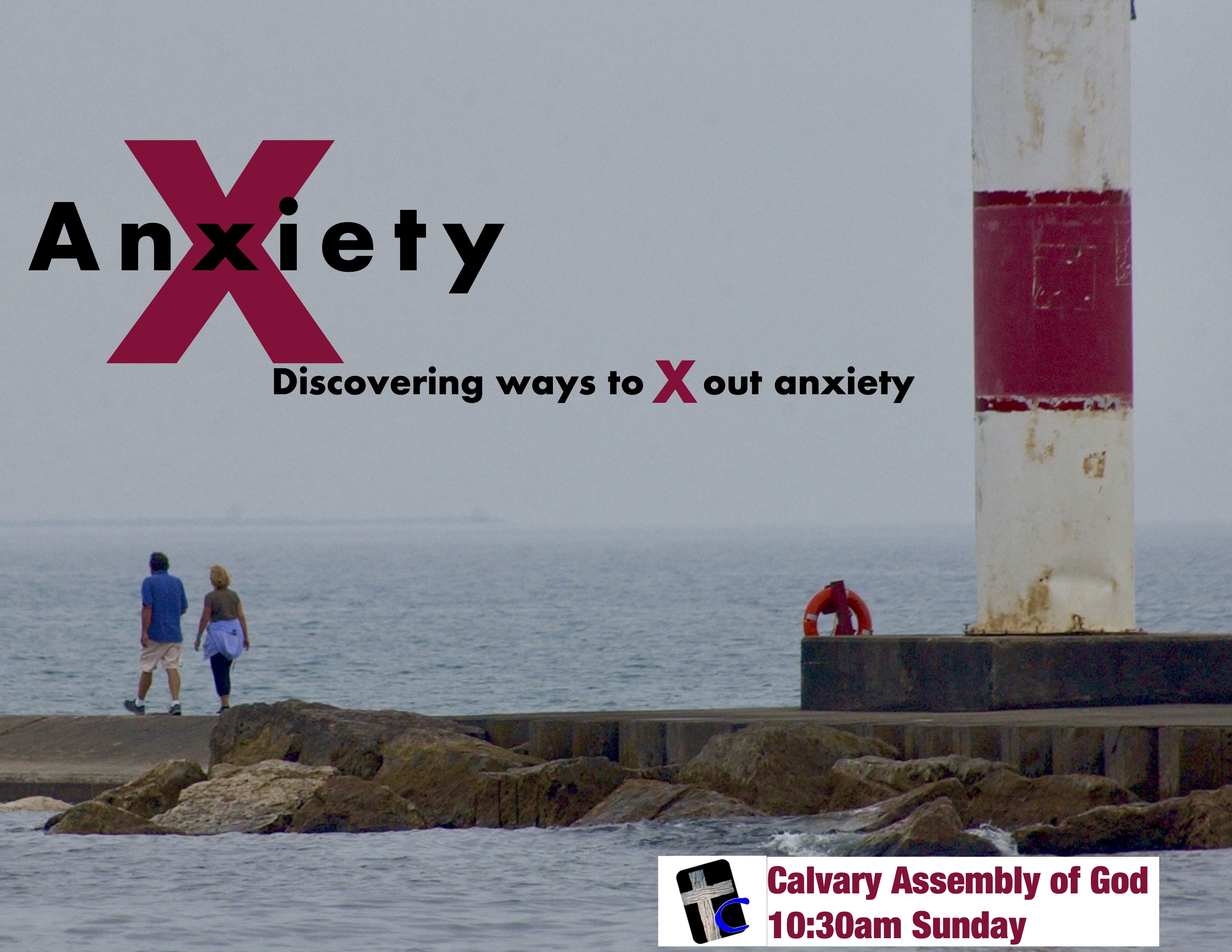
X-ing Out Anxiety—Two brothers—one a doctor and one a pastor—addressed the prevalence of anxiety in our culture. They wrote, “A recent survey of primary care physicians in the United States revealed that at least one-third of office visits were prompted by some form of anxiety.” Anxiety can negatively impact our relationships, our ability to think creatively, our physical health, and even our relationship with God. Thankfully, one of the titles given to Jesus is The Prince of Peace. Join us for this freeing series called X-ing Out Anxiety, where we will be learning what God’s Word says about getting free from the anxiety that is robbing us of life, and replacing that anxiety with His peace.

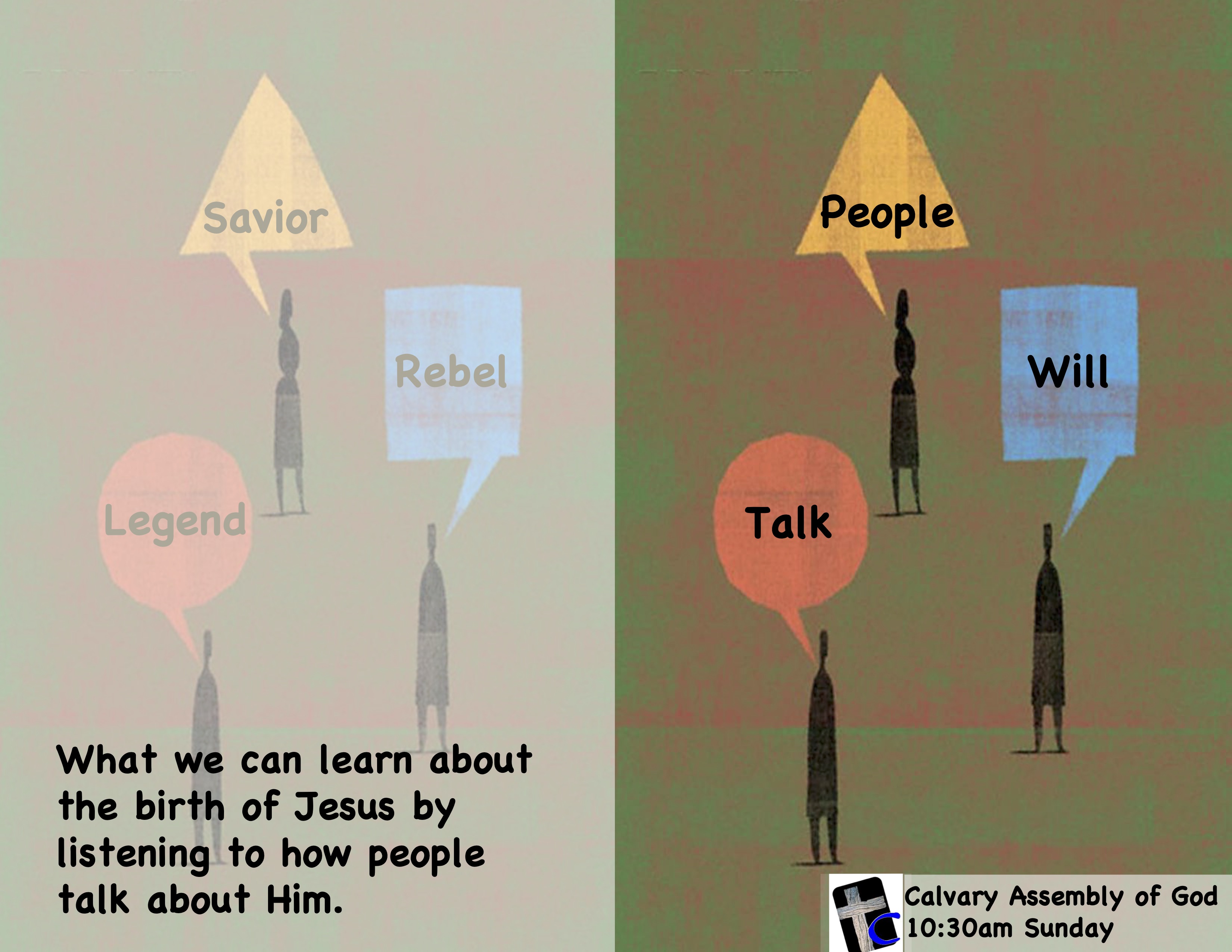
People Will Talk—Sometimes celebrities and other people in the public spotlight will hire a publicist to help promote their cause, build their brand, or present them in the best possible light. If you wanted to stretch the terms, you could say that some of the Old Testament prophets and the New Testament disciples could have been viewed as the “publicists” for Jesus. At least, that’s what critics might point to. But despite the best efforts and high salaries of publicists—both ancient and modern—they cannot control the “word on the street.” What people are actually saying about the one in the spotlight is usually the best evidence of who that person truly is. As we celebrate this Advent season, we are going to look at what the people on the street were saying about Jesus at the time of His birth. Before He ever performed a miracle or presented a parable—before any of His “publicists” could try to make Him look good—people were already talking. And what they said about Him is truly enlightening.

We will be returning to a couple of these series in 2022, and we’ll be launching some brand new ones as well. In either case, if you don’t have a home church in the northern Kent County area, I would love to have you join us! 

T.A.

Listen to the podcast of this post by clicking on the player below, and you can also subscribe on AppleSpotify, or Audible. 

I was recently reading a book about the “electrificiation” of America, which included biographies of Thomas Edison, George Westinghouse, and Nikola Tesla. 

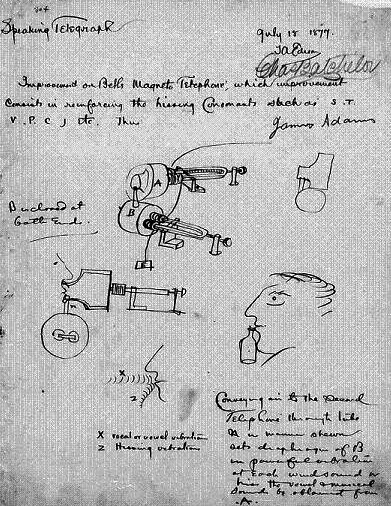
From this book I learned that Thomas Edison’s most-used notation in his journals documenting his experiments was “T.A.” That stood for “try again.” This requires a certain amount of perseverance, or what I like to call stick-to-it-iveness. 

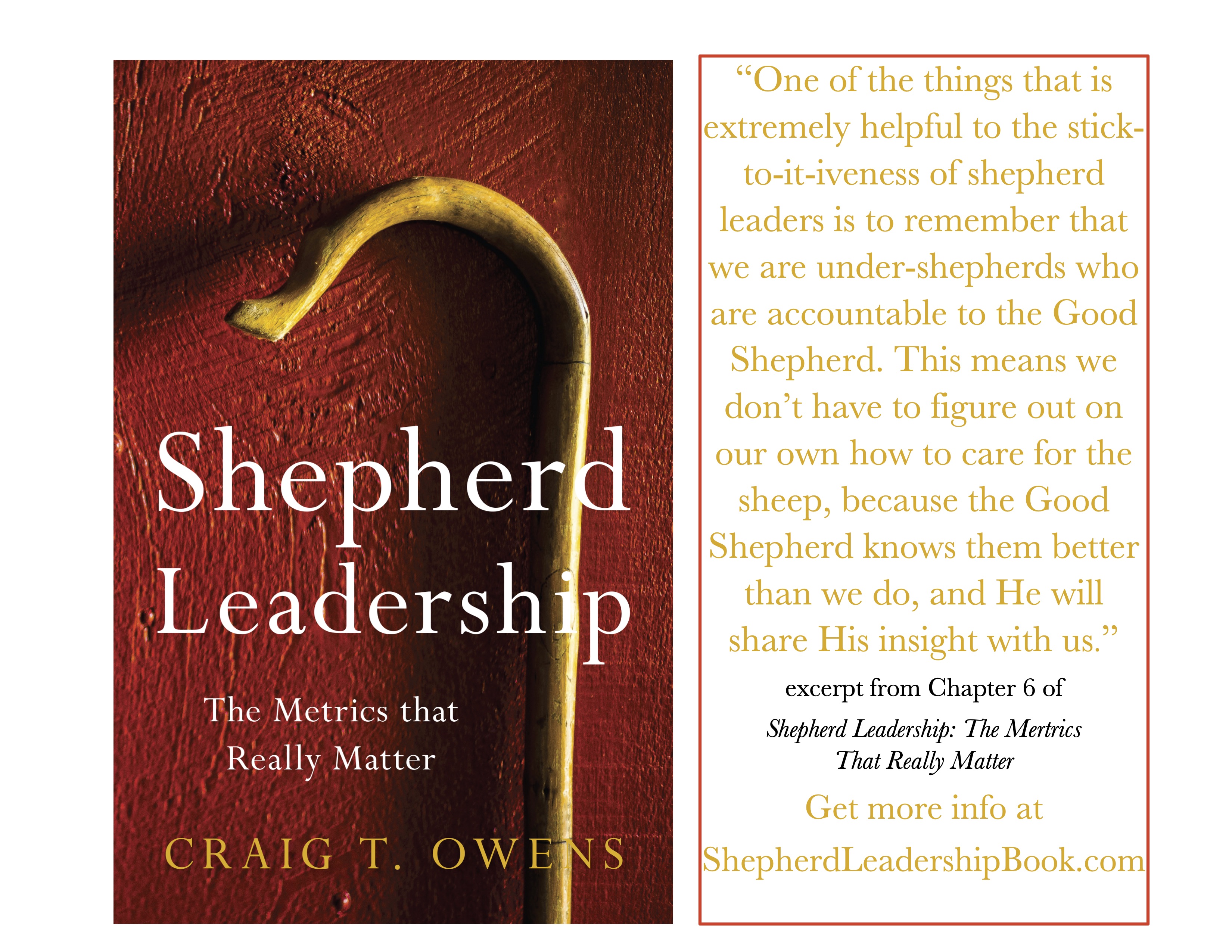
I have a whole chapter in my book Shepherd Leadership: The Metrics That Really Matter entitled Stick-to-it-iveness. Here are a couple of excerpts from that chapter—

Let’s be honest: caring for sheep is frequently a thankless role. Just as soon as they are brought to a green pasture, some of them decide they don’t like this particular pasture, or the water is too cold, or they would rather be with another shepherd. The long hours that shepherds put in are only rarely recognized by the sheep, and often the sheep ask why the shepherd wasn’t available more. 

This is the reason why shepherd leaders need to be secure in our simple statement: ‘God chose me.’ If God chose you for this role, He also equipped you for this role. And if He equipped you for this role, He also expects a return on His investment. This security of God’s calling and equipping and the weighty understanding of bringing to God a return on His investment should be our motivators to help us stick with our joyful responsibility. … 

One of the things that is extremely helpful to the stick-to-it-iveness of shepherd leaders—especially in those times we may be battling a pity party—is to remember that we are under-shepherds who are accountable to the Good Shepherd. This means that we don’t have to figure out on our own how to care for the sheep, because the Good Shepherd knows them better than we do, and He will share His insight with us. Neither do we need to learn the shepherding ropes on our own, because both God the Father (the Shepherd of Israel) and Jesus the Son have already demonstrated for us all that we need to do, and the Holy Spirit will continually impart to us the ways we can apply those practices to our particular sheepfold. 

I close this chapter with an attitude-correcting, security-building prayer that I wrote using Psalm 23 as my guide. 

Leaders especially need to be T.A. people—try again, and try again, and try again. Stick with it, and with God’s help you will be successful. 

I invite you to check out my book for yourself. You can read some reviews and additional excerpts by going to ShepherdLeadershipBook.com. 

►► Would you please prayerfully consider supporting this ministry? ◀︎◀︎

Thursdays With Spurgeon—When God Seems Distant

This is a weekly series with things I’m reading and pondering from Charles Spurgeon. You can read the original seed thought here, or type “Thursdays With Spurgeon” in the search box to read more entries.

Listen to the podcast of this post by clicking on the player below, and you can also subscribe on AppleSpotify, or Audible. 

When God Seems Distant 

     You may possibly be in such a condition that every promise scowls at you as though it were transformed into a threat. When you turn over the pages of the Book once so full of comfort to you, it seems withered into a howling wilderness. … 

     Even those promises that you have been accustomed to offer to others in their time of need appear to shut their doors against you. ‘No admittance here,’ says one promise. Unbelief puts its burning finger right across another. Past sin accuses you and cries, ‘You cannot claim this word, for your transgression has forfeited it.’ So you may look through the whole Bible and find nothing upon which your souls may rest. … The fault is not in the promise but in us. …  

     Why does our gracious God permit this? Perhaps it is because you have been living without Him, and now He is going to take away everything upon which you have been in the habit of depending. Another reason may be that He wishes to drive you to Himself. … The prodigal was never safer than when he was driven to his father’s bosom, because he could find sustenance nowhere else. And, brothers and sisters, I think our Lord favors us with a famine in the land that it may make us seek after the Savior more. …

     When everything goes well with us, we frequently run a long way from God, but as soon as we are overtaken by trouble or see a lion in the way, we fly to our heavenly Father. I bless God for the mire and for my sinking in it, when it makes me cry out, ‘Deliver me, O my God, out of the deep mire, and let me not sink.’

From The Believer Sinking In The Mire

David said, “I keep my eyes always on the Lord. With Him at my right hand, I will not be shaken” (Psalm 16:8). And in another psalm he elaborated on this by saying, 

Yes, my soul, find rest in God; my hope comes from Him. Truly He is my rock and my salvation; He is my fortress, I will not be shaken. My salvation and my honor depend on God; He is my mighty rock, my refuge. Trust in Him at all times, you people; pour out your hearts to Him, for God is our refuge. (Psalm 62:6-8) 

God allows shaking so that we will recognize that He is the only sure foundation. The only things that shake and prove themselves to be untrustworthy are those things not standing on God. So if God seems distant, ask the Holy Spirit to show you if there are any idols in your heart. If there are, repent from trusting those and return to God alone. 

After this, the next step is to silence the voice of the enemy. Jesus said satan’s native language is lies and slander. As Spurgeon said, the enemy of your soul would love to tell you that God’s promises aren’t for you—that somehow you are disqualified from claiming them. 

We need to take every thought captive, and if those thoughts don’t line up with God’s Word we tear them down with the truth in Scripture. Once again, the Holy Spirit is our Counselor to remind us of the truth and assure our hearts that the promises are still for all of God’s children. 

As the words of the old hymn remind us:

Standing on the promises that cannot fail
When the howling storms of doubts and fear assail
By the living Word of God I shall prevail
Standing on the promises of God

►► Would you please prayerfully consider supporting this ministry? ◀︎◀︎

Thursdays With Spurgeon—Always Follow The Example Of Jesus

This is a weekly series with things I’m reading and pondering from Charles Spurgeon. You can read the original seed thought here, or type “Thursdays With Spurgeon” in the search box to read more entries.

Listen to the podcast of this post by clicking on the player below, and you can also subscribe on iTunes or Spotify.

Always Follow The Example Of Jesus  

     The heathen moralists, when they wished to teach virtue, could not point to the example of their gods, for, according to their mythologists, the gods were a compound of every imaginable and, I had almost said, unimaginable vice! Many of the classic deities surpassed the worst of men in their crimes—they were as much greater in iniquity as they were supposed to be superior in power. It is an ill day for a people when their gods are worse than themselves! The blessed purity of our holy faith is conspicuous, not only in its precepts, but in the character of the God whom it reveals. There is no excellence that we can propose, but we can see it brightly shining in the Lord our God! There is no line of conduct in which a believer should excel, but we can point to Christ Jesus our Lord and Master as the pattern of it! In the highest places of the Christian faith, you have the highest virtue, and to God our Father and the Lord Jesus be the highest praise. 

From Forgiveness Made Easy 

If you’ve ever studied ancient mythologies, the gods and goddesses of those stories did not live a life worthy of emulation! But Jesus is an entirely different story. Even people who don’t want to acknowledge the deity of Jesus still find His lifestyle worthy of following. 

So not only did Jesus say, “Bless those who curse you, pray for those who mistreat you,” but He lived it out. “When they hurled their insults at Him, He did not retaliate; when He suffered, He made no threats. Instead, He entrusted Himself to Him who judges justly,” and said, “Father, forgive them, for they do not know what they are doing.” (See Luke 6:28; 1 Peter 2:21-23; Luke 23:34). 

Don’t say, “That person really injured me. It was unfair! I cannot forgive them.” Instead, follow the example of Jesus, the only one who ever lived an absolutely perfect life and yet He was still shamefully mistreated. Peter reminds us that by forgiving His tormenters, Jesus was entrusting Himself to the Perfect Judge—He trusted God to take care of it. 

It may seem impossible, but the same Holy Spirit that empowered Jesus to do these things is living in you and He will empower you too. Always, always, always follow the example of Jesus. 

Check out some other posts on forgivness by clicking here

►► Would you please prayerfully consider supporting this ministry? ◀︎◀︎


True Friends

Listen to the podcast of this post by clicking on the player below, and you can also subscribe on AppleSpotify, or Audible. 

Wounds from a sincere friend are better than many kisses from an enemy (Proverbs 27:6 NLT). 

Proverbs 27 may have more wisdom about our friends than any other chapter in this book. But sprinkled throughout the entire book of Proverbs is outstanding wisdom about our closest relationships. Allow me to share just a few observations with you.

(Click here to see all of the verses I reference below.)

In a previous post where I noted the conjunctions “but” and “and,” I see this—The righteous choose their friends carefully, BUT the way of the wicked leads them astray (12:26). Righteous friends keep me on the right path. 

Friends love me through my worst moments (17:17) because they have committed to stick closer than a brother to me (18:24).

I must be careful not to make friends with a hot-tempered person (22:24), and to be cautious of people who want to be friends with me only for what I can give them (19:4). 

My true friends will wound me in love to help me become the best that God intended me to be (27:5-6, 9, 17), so I must never forsake these friends (27:10). 

False friends will gossip to me and about me, but my true friends will guard my secrets and guard my reputation (16:28; 17:9). 

In order to have true friends, I first have to be a true friend.

In my book Shepherd Leadership: The Metrics That Really Matter, I noted how true friends will help us go farther and avoid the stumbles that could cut short our leadership influence. 

David was the gold standard for every king of Israel who followed him. Numerous times throughout the history of Israel, we will see a note that a certain king either followed God like David, or turned from God unlike David. Yet there exists a wart on David’s portrait: an adulterous affair with the wife of a man in his inner circle, and then subsequent lies and a murder to cover up the affair. “The thing David had done displeased the Lord” (see 2 Samuel 11). 

But I’d like to turn your attention to when this affair occurred: “In the spring, at the time when kings go off to war…David remained in Jerusalem” (2 Samuel 11:1). He was without his usual comrades. The men who knew David best, who could probably sense if something was amiss, weren’t around to warn him. When David tried to find out the identity of the bathing beauty on the roof next door to his palace, an unnamed attendant tried to remind him, “Isn’t that Bathsheba, the wife of Uriah?” but David dismissed him. 

Elijah was arguably the most forceful and fearless prophet in Israel’s history. Not only did he stand up to the evil kings of Israel, but he spoke out against the kings of surrounding nations, too. In answer to Elijah’s prayer, God brought a drought on the land, and again in answer to Elijah’s prayer, God sent rain. Elijah challenged the 450 prophets of the god Baal and the 400 prophets of the goddess Asherah to a duel to the death, which ended up in a decisive victory for Yahweh. Yet, shortly after this massive victory, Elijah was depressed to the point that he wanted to die. 

What led to Elijah’s depression? Something very similar to David’s slide into adultery: He was alone. Elijah ran away from Queen Jezebel’s death threat, left his servant behind, and proceeded all by himself into the desert. It was when he was without a comrade that he prayed to God, “I’ve had enough. Take my life” (see 2 Kings 17–19). 

And what about Peter? He boldly claimed his loyalty to Jesus, even to the point of wielding a sword at the guards who came to arrest his Master. But when Peter was alone, after the other disciples fled, he denied three times that he knew Jesus (Matthew 26:33, 51, 69–75). 

God designed us to be in relationship with others. His statement to Adam in some of the earliest words of the Bible—“It is not good for you to be alone”—are words for us still today. —from the chapter “Going Farther” 

We need true, God-fearing friends close to us. Ask God to bring those friends around you, and ask the Holy Spirit to make you into that kind of friend for those He does bring around you. 

►► Would you please prayerfully consider supporting this ministry? ◀︎◀︎

Poetry Saturday—Praise To The Redeemer

Listen to the podcast of this post by clicking on the player below, and you can also subscribe on AppleSpotify, or Audible. 

Prepare a thankful song
To the Redeemer’s name
His praises should employ each tongue
And every heart inflame!

He laid His glory by,
And dreadful pains endured;
That rebels, such as you and I,
From wrath might be secured.

Upon the Cross He died,
Our debt of sin to pay;
The blood and water from His side
Wash guilt and filth away.

And now He pleading stands
For us, before the throne;
And answers all the Law’s demands,
With what Himself hath done.

He sees us, willing slaves
To sin, and satan’s pow’r;
But, with an outstretched arm, He saves,
In His appointed hour.

The Holy Ghost He sends.
Our stubborn souls to move;
To make His enemies His friends,
And conquer them by love.

The love of sin departs,
The life of grace takes place,
Soon as His voice invites our hearts
To rise and seek His face.

The world and satan rage,
But He their pow’r controls;
His wisdom, love, and truth, engage
Protection for our souls.

Though pressed, we will not yield,
But shall prevail at length,
For Jesus is our sun and shield,
Our righteousness and strength.

Assured that Christ our King,
Will put our foes to flight;
We, on the field of battle, sing
And triumph, while we fight. —John Newton

►► Would you please prayerfully consider supporting this ministry? ◀︎◀︎

The Confident-Humble Tension

Listen to the podcast of this post by clicking on the player below, and you can also subscribe on AppleSpotify, or Audible. 

I had a great time on the Thriving In Ministry podcast with Kyle Willis and Dace Clifton. 

When I was trying to explain to my friends why I was writing Shepherd Leadership: The Metrics That Really Matter, I found that many were quite intrigued by the idea of the confident humility—or the humble confidence—that Jesus so perfectly demonstrated for us. 

Almost every leader I’ve met tends to be naturally wired as either a confident leader or a humble leader. Our effectiveness as a shepherd leader comes in allowing the Holy Spirit to help us maintain a healthy tension between those two poles. Jesus did this perfectly, and we are to follow His example. 

I have two chapters in my book discussing this tension. Here’s how I introduce the topic in the chapter “A confident leader’s attitude adjustment: 

God has created each of us uniquely—implanted with the temperament, talents, and personality He wanted each of us to have. God made you on purpose, and He made you for a purpose. But that being said, shepherd leaders are almost never perfectly balanced. If you’ve ever taken a temperaments assessment or any other kind of personality test, you know that you had some attributes that were more prominent than others. God never gives us weaknesses, but our areas of strength can become a self-imposed weakness if we rely on our strength instead of on our Strength Giver. 

Leaders tend toward two poles: confidence or humility. God made us this way on purpose. But to be the best shepherd leader, we each must allow the Holy Spirit to help us learn to lead in a more balanced way. If we lean too much toward confidence, we can come across as arrogant and even tyrannical. But if we lean too much toward humility, we can appear to be weak, indecisive, and unsure of our leadership direction. None of us will be perfect in this at every single moment, but with the proper attitude adjustments, we can learn to more consistently stay at the balanced point of being humbly confident or confidently humble. 

I’ll be sharing more clips from this interview soon, so please stay tuned. Shepherd Leadership: The Metrics That Really Matter is now available in print or ebook, and in audiobook through either Audible or Apple. 

►► Would you please prayerfully consider supporting this ministry? ◀︎◀︎

Thursdays With Spurgeon—Holy Familiarity

This is a weekly series with things I’m reading and pondering from Charles Spurgeon. You can read the original seed thought here, or type “Thursdays With Spurgeon” in the search box to read more entries.

Listen to the podcast of this post by clicking on the player below, and you can also subscribe on iTunes or Spotify.

Holy Familiarity  

     All these thirteen years, so far as Scripture informs us, Abram had not a single visit from his God. We do not find any record of his either doing anything memorable or having so much as a single audience with the Most High. Learn from this that if we once forsake the track of simple faith, once cease to walk according to the purity that faith approves, we strew our path with thorns, cause God to withhold the light of His countenance from us, and pierce ourselves through with many sorrows. 

     But mark, beloved, the exceeding grace of God: The way to recover Abram from his backsliding was that the Lord should appear to him…. This brings to my remembrance the words in the book of Revelation concerning the church in Laodicea: ‘You are neither cold nor hot. I could wish you were cold or hot. So then, because you are lukewarm, and neither cold nor hot, I will vomit you out of My mouth’ (Revelation 3:15-16)—a very solemn declaration. But what follows? ‘Behold, I stand at the door and knock. If anyone hears My voice and opens the door, I will come in to him and dine with him, and he with Me’ (Revelation 3:20). That means just this: For recovery out of a horrible state of languishing and lukewarmness there is no remedy but the coming of Jesus Christ to the soul in near and dear communion! …

     Distance from God’s presence always means sin. Holy familiarity with God engenders holiness. The more you think of God, the more you meditate on His works, the more you praise Him, the more you pray to Him, the more constantly you talk with Him and He with you by the Holy Spirit, the more surely are you on the road to thorough consecration to His cause!

From Consecration To God

I’ve often said that one of the most powerful prayers we can pray is simply, “God, help!” In those two words we acknowledge our helplessness and His omnipotence, our sin and His forgiveness, our shortcomings and His desire to restore us. 

The devil lies! He loves to whisper the condemning words of, “You’ve messed up one too many times. You’re too far away for God to rescue you now. This time you exhausted God’s mercy.” 

Once again, by simply crying out, “God, help!” you are calling out satan’s lies. Jesus paid too high of a price for Him to ever let you go. Near the end of this sermon, Charles Spurgeon spoke a powerful reminder: “The blessings of grace are not given today to be taken back tomorrow, but are eternal blessings [Genesis 17:7, 13, 19].” Amen! 

My friend, cry out to God today—He loves you and He’s longing to restore you!

►► Would you please prayerfully consider supporting this ministry? ◀︎◀︎


The Heart Is The Heart Of The Matter

Listen to the podcast of this post by clicking on the player below, and you can also subscribe on AppleSpotify, or Audible. 

A heart that devises wicked schemes… (Proverbs 6:18). 

This is the item listed in the exact middle of the list “there are six things the Lord hates, seven that are detestable to Him.” Check out the whole passage: 

There are six things the Lord hates, seven that are detestable to Him: [1] haughty eyes, [2] a lying tongue, [3] hands that shed innocent blood, [4] a heart that devises wicked schemes, [5] feet that are quick to rush into evil, [6] a false witness who pours out lies and [7] a man who stirs up dissension among brothers. (vv. 16-18) 

Now let’s follow this progression from the middle item outward: 

  • …it begins in a devious heart—[4] 
  • …it moves to the actions of the hands and feet—[3] and [5] 
  • …it is excused or justified by lies—[2] and [6] 
  • …it hardens into unrepentant pride that divides a community—[1] and [7]

The heart is the heart of the matter!

 Verse 18 is also the middle verse of this whole 6th chapter of Proverbs—

  • it is a heart issue that leads to making rash vows (vv. 1-5) 
  • it is a heart issue that causes a poor work ethic (vv. 6-11) 
  • it is a heart issue that prompts double-talk, equivocation, and a lack of integrity (vv. 12-15) 
  • it is a heart issue that takes a person spiraling down into adultery (vv. 20-35)

Let me repeat this principle: The heart is the heart of the matter! This is why Solomon told us in an earlier chapter, “Guard your heart above all else, for it determines the course of your life” (Proverbs 4:23). 

But a wise person, who allows the Holy Spirit to correct sinful thoughts, can see a different outcome. With the Spirit’s help, it could look like this:

  • …it begins in a heart sensitive to the Holy Spirit’s prompting—[4] 
  • …it moves to the actions of the hands and feet—[3] and [5] 
  • …it is demonstrated in truthful, loving words—[2] and [6] 
  • …it promotes the humility that unites a community—[1] and [7]

Let’s make this our prayer: Holy Spirit, help me to guard my heart today. No compromising, no justifying, but just a quick obedience to Your prompts to repent and soften my heart. 

Let it start in your heart and just watch what happens. The heart IS the heart of the matter! 

►► Would you please prayerfully consider supporting this ministry? ◀︎◀︎