Thursdays With Spurgeon—The Purpose Of The Baptism In The Holy Spirit

This is a weekly series with things I’m reading and pondering from Charles Spurgeon. You can read the original seed thought here, or type “Thursdays With Spurgeon” in the search box to read more entries.

The Purpose Of The Baptism In The Holy Spirit

On the day of Pentecost all the believers were meeting together in one place. Suddenly, there was a sound from heaven like the roaring of a mighty windstorm, and it filled the house where they were sitting. Then, what looked like flames or tongues of fire appeared and settled on each of them. (Acts 2:1-3) 

     Ordinary winds blow from this or that quarter of the skies, but this descended from heaven itself. It was distinctly like a downdraft from above. This sets forth the fact that the true Spirit, the Spirit of God, comes from neither this place nor that, neither can His power be controlled or directed by human authority. His working is always from above, from God Himself! The work of the Holy Spirit is, so to speak, the breath of God, and His power is always, in a special sense, the immediate power of God. …  

     Tongues of flame sitting on each man’s head symbolized a personal visitation to the mind and heart of each one of the chosen company. The fires came not to consume them, for the flaming tongue injured no one. To men whom the Lord has prepared for His approach, there is no danger in His visitations. They see God and their lives are preserved. They feel His fires and are not consumed. This is the privilege of only those who have been prepared and purified for such fellowship with God. The intention of the symbol was to show them that the Holy Spirit would illuminate them as fire gives light. ‘He will guide you into all truth’ (John 16:13). … 

     But the fire does more than give light; it inflames, and the flames that sat upon each show them that they were to be ablaze with love, intense with zeal, burning with self-sacrifice, and that they were to go forth among men to speak not with the chill tone of deliberate logic, but with burning tongues of passionate pleading, persuading, and entreating men to come to Christ that they might live! The fire signified inspiration. God was about to make them speak under a divine influence, to speak as the Spirit of God should give them utterance. …  

     O You who are our God, answer us by fire, we pray! Answer us both by wind and fire and then we will see You to be God indeed. The kingdom comes not and the work is flagging. Oh, that You would send the wind and fire! You will do this when we are all of one accord: all believing, are expecting, and all prepared by prayer. Lord, bring us to this waiting state!

From Pentecostal Wind And Fire

As I said earlier, Pentecost is not the culmination of God’s power, it is the initiation of His power that is necessary to empower us to be witnesses for Jesus. 

If Jesus said that we needed this power to live and testify for Him, why would we ever want anything but the full outpouring of this Holy Spirit power?! Jesus Himself relied on the power of the Holy Spirit during His earthly ministry, so how much more so do we need this baptism into the fire and wind of the Spirit!

Clinging To God’s Words

When it comes right down to it, faith and fear both hinge on our beliefs: Fear believes something bad; faith believes something good. Fear is an invitation for us to evaluate in who or in what we have placed our trust.  

According to the dictionary, fear is a distressing emotion we feel whether the threat is real or imagined. Five hundred years ago, Michel de Montaigne said, “My life has been filled with terrible misfortune; most of which never happened.” Even more recently, an extensive study found that 85 percent of things people feared never happened!

According to the dictionary, faith is trust in something even without proof or evidence. That sounds tremendously close to the biblical definition of faith: Now faith is the assurance—the confirmation, the title deed—of the things we hope for, being the proof of things we do not see and the conviction of their reality—faith perceiving as real fact what is not revealed to the senses. (Hebrews 11:1 AMP) 

Mary is the second person to whom an angel says “Do not be afraid” in the First Advent story. Consider her story alongside Zechariah’s story and especially notice when these words were spoken. The angel Gabriel first tells Mary, “Greetings, you who are highly favored! The Lord is with you.” 

Mary’s initial response is being “greatly troubled.” This Greek word means an internal agitation that today psychologists would call “cognitive dissonance.” In other words, what Mary believed about herself didn’t line up with what God believed about her. Her next response is wondering how she could ever measure up to God’s high standard of her. 

It’s at this point that Gabriel says those key words, “Do not be afraid, Mary, you have already found favor with God.” She didn’t have to make herself worthy of God’s favor because she already had it! Now Mary just had to believe it. 

Fear is overcome by clinging to God’s words instead of the world’s words. 

Mary did indeed choose this. Her song (in vv. 46-55) is loaded with Old Testament references, and she concludes by singing to God, “You have helped Your servant Israel, remembering to be merciful to Abraham and his descendants forever, even as You said to our fathers.” 

Here’s the truth—

  • Your Word, Lord, is eternal; it stands firm in the heavens. (Psalm 119:89) 
  • God is not human, that He should lie, not a human being, that He should change His mind. Does He speak and then not act? Does He promise and not fulfill? (Numbers 23:19) 
  • And Jesus would tell us that clinging to God’s words puts us on the surest of foundations that no storm of life could ever shake (Luke 6:46-49)! 

Clinging to God’s words lets us realize God’s grace toward us. 

If you know Jesus as your Savior, you can insert your name in the same place where Gabriel said to Mary: “Do not be afraid, ____________, you have found favor with God!” 

If you have missed any of the messages in our Advent series Do Not Be Afraid, you can access the full list by clicking here. 

Thursdays With Spurgeon—The Initiation Of Power

This is a weekly series with things I’m reading and pondering from Charles Spurgeon. You can read the original seed thought here, or type “Thursdays With Spurgeon” in the search box to read more entries.

The Initiation Of Power 

     Whatever the Holy Spirit was at the first, He is that now, for as God, He remains forever the same. … We would greatly grieve the Holy Spirit if we supposed that His might was less today than in the beginning. …  

     If at the commencement of the gospel we behold the Holy Spirit working great signs and wonders, may we not expect a continuance of and, if anything, increased displays of His power as the ages roll on? … 

     It ought not to be forgotten that Pentecost was the feast of firstfruits. It was the time when the first ears of ripe corn were offered to God. If, then, at the commencement of the gospel harvest we see so plainly the power of the Holy Spirit, may we not most properly expect infinitely more as the harvest advances and, most of all, when the most numerous sheaves will be gathered? May we not conclude that if the Pentecost was thus marvelous, the actual harvest will be still more wonderful?

From Pentecostal Wind And Fire

When Jesus was approaching the Cross, He gathered His disciples together to tell them what was coming. One of the assurances He gave His followers was this: “I assure you, most solemnly I tell you, if anyone steadfastly believes in Me, he will himself be able to do the things that I do; and he will do even greater things than these, because I go to the Father” (John 14:12). 

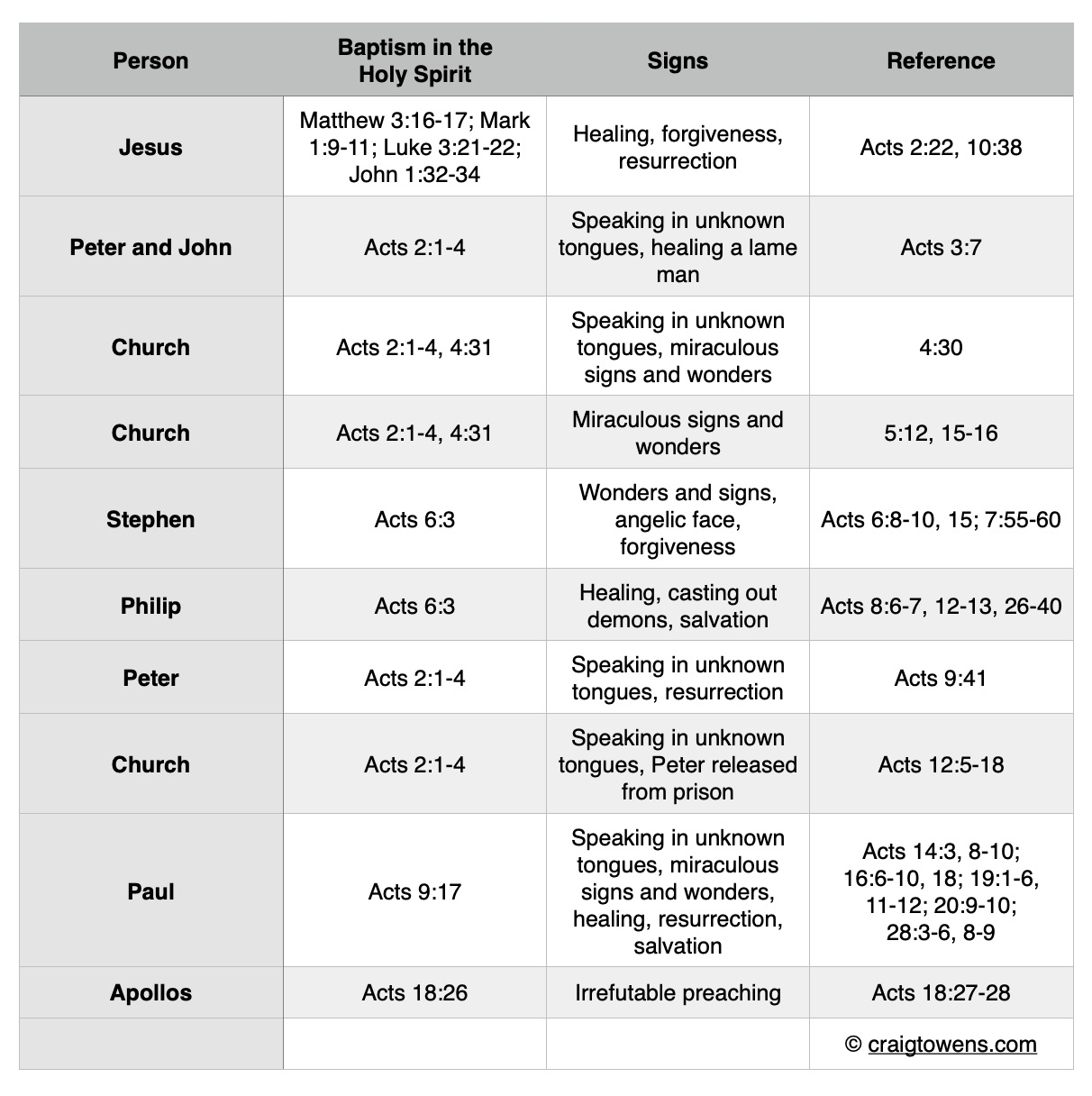
The empowering force for these “greater things” would be the Holy Spirit indwelling the Christian (Matthew 3:11; Luke 24:49; Acts 1:8, 2:1-4). 

Pentecost wasn’t the culmination, it was the initiation. 

Pentecost was the launching point for followers of Jesus to be filled with dunamis power that would enable them to go into all the world and preach the gospel, and to have signs and wonders follow to confirm the preaching of the Word. 

As Spurgeon said, we greatly grieve the Holy Spirit when we attempt to put Him in a box as to what He can or can’t do today, or if we try to limit Him to one era of long-past history. The Holy Spirit is as vital for a Christian today as He was on that Pentecost Sunday described in Acts 2! 

Fear’s Invitation

Have you ever had a really good scare? Maybe in the dark or when you were young? Then in the light or as you got older you thought, “Why was I afraid of that?” Our relief came from the fact that we think we know more. But here’s the problem: there is a difference between a healthy fear and an unhealthy fear, so not every fear is something we should try to alleviate.

Sometimes we treat too lightly the things that are really quite powerful. Consider the arrival of Jesus in Bethlehem. There are more angels sent by God surrounding this one event than anywhere else in all the Bible. Yet all four angelic appearances have the same message: “Do not be afraid.” 

Why would people fear what we now celebrate as such a joyous event? I think it’s because God Himself—the All-Holy Creator of the Universe—is coming near to sinful man (see John 1:9; 1 Timothy 6:15-16). 

God is holy, and His holiness is unapproachable by sin. At the exact same moment, God is love, and His love desires for us to approach Him. We cannot make this happen on our own, which leads to more fear. 

Thankfully for us, God Himself has provided the way for sinful man to approach His awesome, unapproachable holiness!  

In the Greek language of the New Testament phobeō is the main word for “fear.” This word can be defined as either fleeing from a terrible thing or clinging in obedience to an awesomely reverent thing. Jesus said the same things when He told us, “I tell you, my friends, do not be afraid of those who kill the body and after that can do no more. But I will show you whom you should fear: Fear Him who, after your body has been killed, has authority to throw you into hell. Yes, I tell you, fear Him” (Luke 12:4-5). 

In the Advent story, the first appearance of “Do not be afraid” is when an angel appears to Zechariah. Why would Zechariah be so afraid at the approach of God? I think there may have been three reasons: 

  • Herod was king—making the society Zechariah lived in politicized and irreligious 
  • Zechariah was without a priestly heir to carry on his family name 
  • his wife Elizabeth may have sinned—at least that’s what people would have whispered about her barrenness 

All of this added up to Zechariah feeling like God was displeased with them and that He was only coming close to bring fiery judgment. 

The angel told Zechariah not to fear because “your prayer has been heard.” In other words, “I am inviting you to trust in what God HAS already done versus trusting in what you might or might not be able to do on your own.” Phobeō was an invitation to choose reverential obedience (holy fear) of the eternal over the terror of the temporal. 

Sadly, Zechariah initially clung to the negative phobeō. Yet after Elizabeth did conceive and John was born, this was transformed into holy, reverential fear, as heard in the Spirit-inspired song he sang. Notice in Luke 1:67-75 Zechariah’s emphasis on all that God has done: He has come, He has redeemed, He has raised, He said, He has kept His covenant, He has rescued, He has enabled.  

Have you put yourself in the category of “unworthy of God’s favor”? Has fear crippled you—like it had done with Zechariah—from continuing to pray, believe, and try? 

Fear is an invitation to evaluate in who or in what I have placed my trust.

I invite you to accept the invitation to take your eyes off the temporary and put them on the Eternal One. “…The time is coming quickly, and what I show you will come true. It may seem slow in coming, but wait for it; it will certainly take place, and it will not be delayed. (Habakkuk 2:3 GNT) 

Check out the other messages in this Do Not Be Afraid series by clicking here. 

Learning Perseverance

I have shared three lessons I learned going through dark times in my life (you can check them out here, here, and here), but we aren’t even close to exhausting all of the lessons that can be learned in the night. I want to teach you one principle that will allow for lifelong learning and application of these nighttime lessons. 

The apostle Paul shared how he had matured during his times of struggle. He told the Corinthians he realized that God had delivered him in the past, was delivering him now, and would continue to deliver him in the future (see 2 Corinthians 1:3-11). The key is to hang in long enough to actually see how God brings about the deliverance and teaches the lessons. 

Paul told the Corinthians, “No temptation has overtaken you except what is common to mankind. And God is faithful; He will not let you be tempted beyond what you can bear. But when you are tempted, He will also provide a way out so that you can ENDURE it (1 Corinthians 10:13). And the writer of Hebrews said, “So do not throw away your confidence; it will be richly rewarded. You need to PERSEVERE so that when you have done the will of God, you will receive what He has promised” (Hebrews 10:35-36). 

The Greek word translated “persevere” means keeping focused on the goal despite the struggles that it takes to get there. Jesus used this same Greek word at the conclusion of His parable of the sower: “The seed on good soil stands for those with a noble and good heart, who hear the Word, retain it, and by PERSEVERING produce a crop”; a crop that Jesus said was a hundred times more than what was sown (see Luke 8:5-15). 

I love riding my bike on the White Pine Trail by my house. My long rides have a really fun stretch where I am flying downhill! But as fun as that part is, I’m not really building anything of lasting value. However, when I am coming back uphill and I want to quit because my legs are burning and I can hardly breathe, that becomes a valuable struggle. I cannot build endurance by any other way than to push myself just a little bit farther each time. When I want to quit, I pedal just a few more feet. Gradually, the uphill becomes less daunting. 

A friend gave me a t-shirt I like to wear on my rides. When I put it on the blue-lettered message on the shirt says, “Do It!” but as I struggle uphill and the sweat begins to pour off my body, a new message emerges: “Don’t Quit! 

I have learned that easy roads teach very few valuable lessons. 

So here are three thoughts to help you persevere in your struggling times: 

  1. Keep your eyes on Jesus and on His eternal rewards (Hebrews 12:1-3; James 1:2-4, 12) 
  2. Keep persevering friends close by—notice the “let us” phrases the writer of Hebrews uses 
  3. On your worst day, don’t quit but commit to going one day longer (Romans 5:3-4) 

[check out all of the verses by clicking here]

Remember that as you struggle and persevere, you are not only building your own endurance, but you are strengthening yourself to be able to help others. So we can be thankful IN the night because God is building our endurance for the next night, and our endurance for our friend’s next night. 

If you have missed any of the other lessons in this series called Thankful In The Night, you can access the full list by clicking here. 

Our Most Effective Shield And (S)word

…with Your mouth You have promised and with Your hand You have fulfilled it… (2 Chronicles 6:15). 

I rest solely on what God says—He says it and He fulfills it. 

I can live on “every Word” He speaks (Deuteronomy 8:3).

“Every Word” of God is flawless and is a protection for me (Proverbs 30:5).

None of God’s Word ever fail (Isaiah 55:11).

God gives us His Word to speak (Jeremiah 26:12; John 12:49; Luke 21:15).

We defeat our enemies by God’s Word in our mouth (Matthew 4:4, 7, 10; Revelation 12:11).

Every Word of God gives life because of the Holy Spirit’s anointing on it (John 6:63).

Every Word of God is a sword (Hebrews 4:12; Revelation 1:16; 2:12, 16; 19:15). Or as my friend Sasha reminds me God’s Word is our S(word)! 

There isn’t a more effective shield against enemies, there isn’t a more deadly weapon against temptation, there isn’t a more sure foundation in storms than the Word spoken and fulfilled by God! 

[check out all of the above passages for yourself by clicking here] 

Jesus Says

Jesus says, “I will… 

…make you fishers of men” (Matthew 7:23; Mark 1:17) 

…acknowledge in Heaven those who acknowledge Me on earth” (Matthew 10:32-33) 

…give you rest” (Matthew 11:28) 

…build My church” (Matthew 16:18) 

…give you the keys of the Kingdom of Heaven” (Matthew 16:19) 

…show you whom you should fear” (Luke 12:5) 

…drive out demons and heal people” (Luke 13:32) 

…never drive away those who come to Me” (John 6:37) 

…give My life for your life” (John 6:51) 

…rise again from the dead” (Matthew 27:63; Mark 14:28; John 2:19) 

…raise up believers to eternal life” (John 6:40, 44, 54) 

…come back to take you to be with Me forever” (John 14:3) 

…do whatever you ask in My name” (John 14:13, 14; 16:28) 

…not leave you as orphans” (John 14:18) 

…ask the Father to give you an Advocate” (John 14:18) 

…give you words and wisdom that are irresistible” (Luke 21:15) 

…see you again and give you eternal joy” (John 16:22)

Oh, what a Savior!

History Matters

The minor prophets cover a span of about 300 years, from 760-450 BC, and Jonah appears right in the middle of that. Jonah overlaps Amos and Hosea in northern Israel, and he finishes his ministry just before Isaiah’s ministry begins in southern Judah. 

Jonah is the only narrative in the minor prophets. He was a prophet during the reign of Jeroboam II when Israel was temporarily growing in strength. He is the first of Israel’s prophets to be sent to a non-Jewish population. 

Critics have raised questions about this book. Questions like: Did Jonah write this book himself or is it just a story about him? Is this book historical or allegorical? 

The five biggest objections that are raised to Jonah’s historicity are: 

  1. The hyper-nationalistic feel is more like when Ezra and Nehemiah led people back to Jerusalem after their captivity in Babylon, and not during the time of Jeroboam II. 
  2. Parts of Jonah appear copied from the prophet Joel. 
  3. There are no (or incorrect) details about the major city of Nineveh that Jonah visited. 
  4. There are no extra-biblical historical records of a revival in Nineveh. 
  5. Jonah was swallowed by a fish?! 

I think there are very good reasons to believe that Jonah was both autobiographical and historically accurate. 

First, there was a revival of sorts (although not religiously) in Israel during the time of Jeroboam II. This was a time that Israel felt like it could flex its muscles again, so Jonah would not be acting out of character to be so pro-Israel. 

Second, Jonah 3:9 and Joel 2:14 sound similar, but scholars cannot tell which was written first. Couldn’t God amplify a message? Consider how many parts of the Gospel of Mark are used in the Gospels of Matthew and Luke. And it’s a regular practice for authors even today to directly quote other sources. 

Third, regarding the lack of details about Nineveh, the biblical writers give very few details of any places outside of Israel or Judah. The only “incorrect” detail skeptics point to is Jonah 3:3 stating that the city was so big that it would take three days to walk around it. Nineveh was a city of about 120,000 inhabitants, so it could easily take three days of walking and preaching in order to get the message to everyone. 

Fourth, the revival in Nineveh was clearly short-lived. Jonah was probably in Nineveh around 760 BC. Assyria was rising politically and militarily during that time and defeated Israel just 40 years after Jonah’s preaching. Assyria itself was then defeated in 605 BC. 

Finally, Jonah was swallowed by a fish?! The root word for fish in Hebrew means something that has grown to such an enormous size that it overshadows everything else. But notice that what caused the sailors to be in awe of God was not the whale/fish swallowing Jonah, but the immediate calming of the ocean when Jonah was thrown overboard (Jonah 1:15-16). Miracles appear throughout this book. And throughout the entire Bible! 

Why should the appearance of miracles surprise us? Some people have a bias against the supernatural, where they wrongly believe that we can know everything through naturalistic means. C.S. Lewis pointed out, “I use the word Miracle to mean an interference with Nature by supernatural power. … Nature as a whole is herself one huge result of the Supernatural: God created her.” 

I don’t think this story is a parable or an allegory because nowhere else in the Bible are such details given in the form of a parable. 

I believe this story is historical because Jesus talked about the historicity of Jonah in the same breath as He talked about other historical people: the Queen of the South and Solomon (Matthew 12:38-42). Jesus clearly viewed Jonah as historically reliable and accurate. To call Jonah into question is to call into question the truthfulness of Jesus Himself! 

History matters because all of History is God’s story! 

Our belief in the message of the Bible is not based upon “once upon a time” or “a long time ago in a galaxy far, far away.” It’s based upon real people in real places, especially the historicity of Jesus (notice all of the historical details Luke lists in the birth account of Jesus). 

Jonah was clearly one of those historical people, in an historic place, and at a precise moment in world history that tells the story of Jesus and our redemption which He purchased! 

If you want to check out all of the messages in our series on the major lessons from the minor prophets, you can find that list by clicking here.

He Who Laughs Last

Traced back to a play in the early 1600s, it still rings true: “He who laughs last, laughs best. 

The distraught father named Jairus hurriedly left his home. He was looking for this Man named Jesus. People said Jesus could perform miracles, and Jairus needed one. 

He found Jesus and quickly explained that his 12-year-old daughter was dying. They had tried everything they knew to do, but she kept inching closer and closer to death’s door. Jesus readily agreed to go with Jairus to his home. 

Along the way, Jesus was interrupted by another woman in desperate need, and He stopped to heal her. As Jairus was (im)patiently waiting for Jesus to continue on the journey, one of his servants ran up to Jairus with the sad news, “Your daughter is dead.” 

Jesus looked at this heartbroken father and simply said, “Don’t be afraid. Just believe, and your daughter will be well.” 

Jairus took Jesus at His word and continued walking with Jesus to his home. 

While Jairus was gone, family members and friends had shown up to mourn the death of this sweet girl. They were wailing loudly, but the clear voice of Jesus could be heard even over their woeful cries: “Stop crying. She is not dead, only asleep.” 

There was a pause, and then there was a totally unexpected and out-of-place response: laughter. 

Not joy-filled laughter, but mocking, derisive laughter at the utter foolishness of the words of Jesus. 

“What do you mean, ‘She isn’t dead’” they yelled. “We’ve been in her room. We’ve seen the cold, lifeless body! She is absolutely, undeniably dead!” And they continued to laugh at the sheer ridiculousness of what Jesus had pronounced. Many of the laughs probably turned to jeers as they began to mock His foolish, insensitive statement. The historian Luke wrote, “They knew the girl was dead.” 

Jesus took the grieving yet believing parents into the girl’s room, He took her lifeless hand in His hand, and simply said, “Little girl, get up.” 

And she did. Fully alive! 

Let me ask you something: Who was laughing now?! 

I’m sure the uncontainable joy of these parents burst out into laughter. And I think Jesus shared in the joyful laughter as well. 

“He who laughs last, laughs best.” 

Friend, what do you “know” right now? What’s gone wrong that cannot be fixed? What terminal diagnosis have the doctors given? What is approaching death’s door? What has already died? 

Listen again to the words of Jesus: “Don’t be afraid. Just believe.” 

Jesus gets the final word. Jesus gets the final laugh. Jesus will make all things new! 

The Sovereign Lord will wipe away the tears from all faces; He will remove His people’s disgrace from all the earth. (Isaiah 25:8) 

He will wipe every tear from their eyes. There will be no more death or mourning or crying or pain, for the old order of things has passed away. He who was seated on the throne said, “I am making everything new!” (Revelation 21:4-5) 

Don’t be afraid. Just believe. 

Jesus has secured the last—and best—laugh for both you and Himself! A laughter that will reverberate through all of eternity! 

Seeking God

…David sought the face of the Lord… (2 Samuel 21:1). 

בָּקַשׁ פָּנִים יְהֹוָה

The Hebrew phrase is baqash paniym YHWH: 

  • baqash is to ask for, beg, desire “specifically in worship or prayer.” It’s a “searching as done by touching.” 
  • paniym literally means the face, but it carries the idea of being in someone’s presence.
  • YHWH (Yahweh) is Jehovah God. 

David repeatedly asked, sought, and begged through both prayer and worship that he might be in God’s presence. “Almighty God, I want to be with You. I want to know your heart intimately. I want to see Your face. I’m not seeking help from any other source, but I am resolutely seeking You alone.” 

Perhaps Jesus had this in mind when He told us, “Keep on asking, keep on seeking, keep on knocking. You will get an answer, you will find what you’re seeking, the door to God’s presence will be opened to you. Your Father—YHWH, God Almighty—longs to reveal Himself to you.” 

Q: How long did David seek the face of the Lord? 

A: Until God spoke, until God delivered, until God opened the door. 

Q: How long am I willing to keep on seeking the face of the Lord? 

A: I hope I can say until God speaks, until God delivers, until God opens the door.