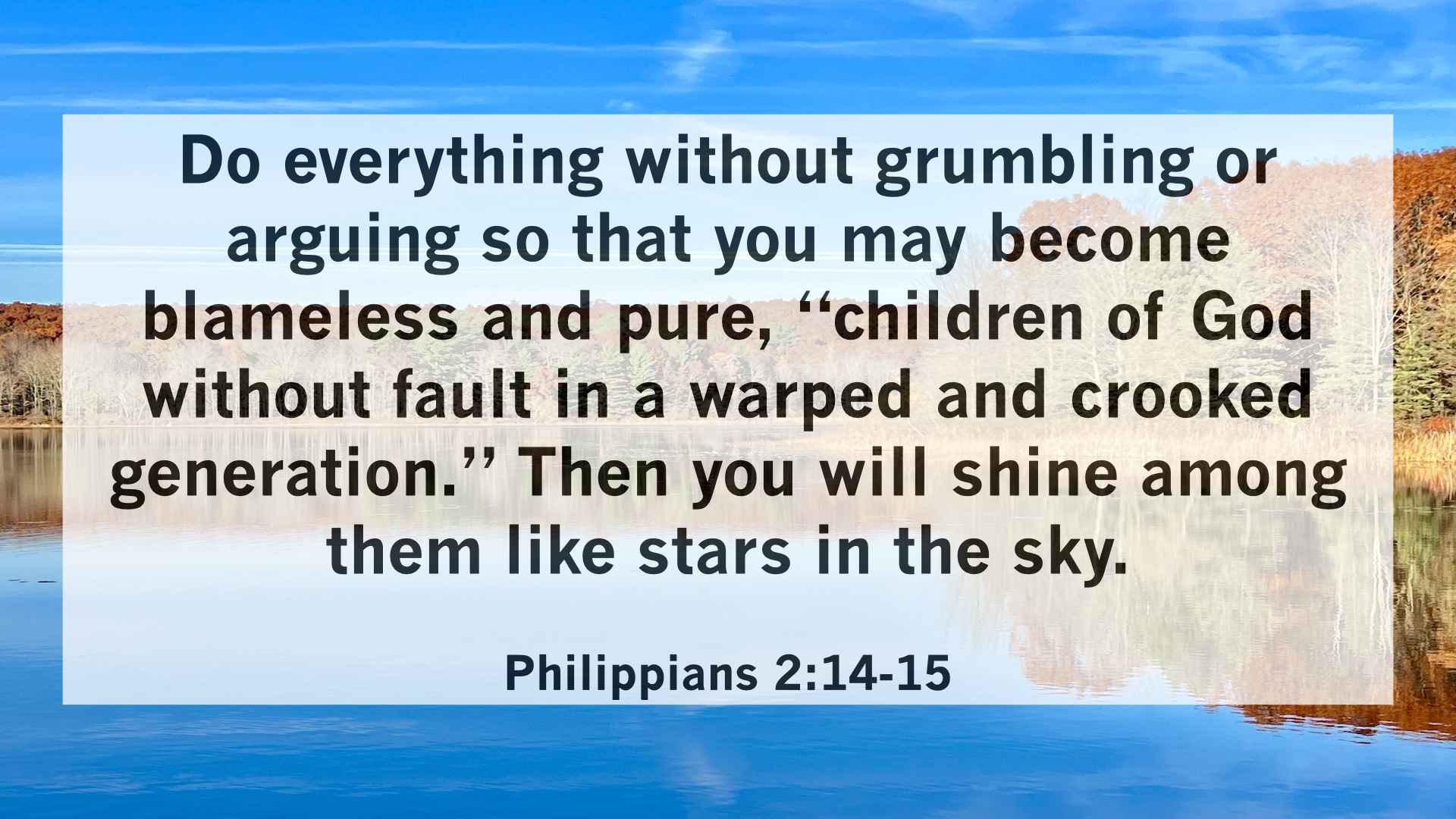
Moreover, [God] called for a famine upon the land of Egypt; He cut off every source of bread [Genesis 41:54]. He sent a man before them, even Joseph, who was sold as a servant [Genesis 45:5; 50:20, 21]. His feet they hurt with fetters; he was laid in chains of iron and his soul entered into the iron, until his word to his cruel brothers came true, until the word of the Lord tried and tested him. The king sent and loosed him, even the ruler of the peoples, and let him go free. He made Joseph Lord of his house and ruler of all his substance [Genesis 41:40]. To bind his princes at his pleasure and teach his elders wisdom. (Psalm 105:16-22 AMPC)
“The word of the Lord tried and tested him.” When we cling to God’s promises despite the seemingly impossible circumstances we are in, that faithful clinging matures us. It both softens our heart and strengthens our trust in God.
Before going through the difficulties, Joseph wasn’t ready to operate effectively in such a lofty leadership position. God uses all things to mold us and shape us for His purpose (Romans 8:28). We certainly see a more mature Joseph standing before Pharaoh than we saw interacting with his brothers earlier in his life.
God called Joseph and he prepared Joseph. All that was lacking was Joseph’s faithful clinging to God and yielding to God’s maturing process. The end result was one of the most impactful leaders that history has ever known!
Listen to the podcast of this post by clicking on the player below, and you can also subscribe on Apple, Spotify, or Audible.
You may have noticed that the intensity of the pain of these sheep bites has been escalating—from flattery, to criticism, to gossip. Now we come to probably the most painful of bites: slander. This is the bite that will have the strongest pull toward the natural response, which will require our greatest reliance on the Holy Spirit to respond supernaturally.
Remember that gossip has a veneer of truth on it; slander has no truth at all. They are outright lies. They are flimsy lies. They are malicious lies. One of the Hebrew words translated slander means scandal-monger: someone who trades in lies (Jeremiah 6:28 NLT; Leviticus 19:16).
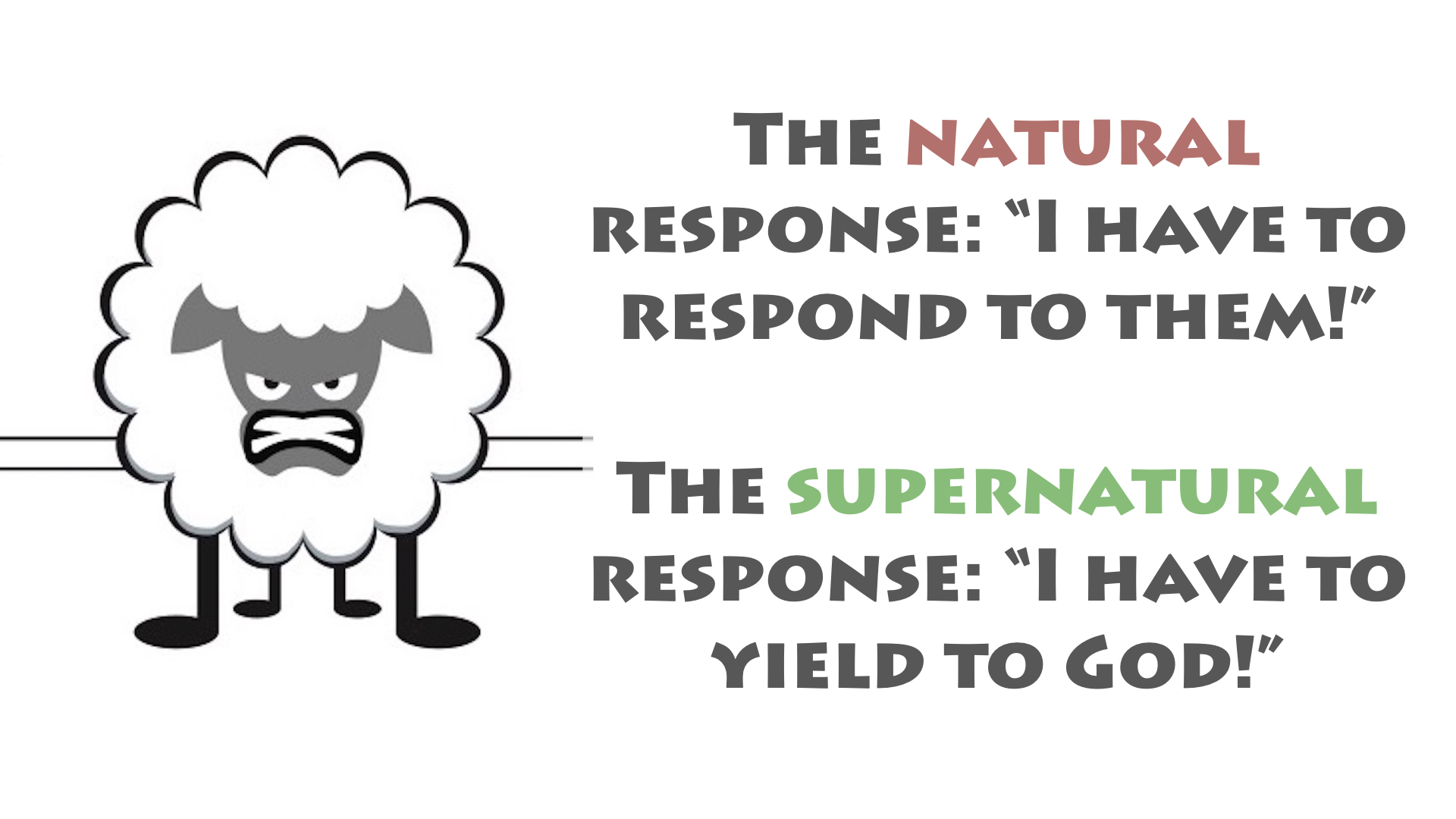
The natural response to slander is, “I have to respond to them!” The supernatural response to slander is, “I have to yield to God!”
The natural response, however, is fueled by my wounded pride. On the other hand, the supernatural response is fueled by humility toward God.
Slanderers are arrogant people too (remember Jeremiah said “they are as hard as bronze and iron” [Jeremiah 6:28]). God’s people are learning to humble themselves to wait for God (Psalm 38:12-15). These humble people are the ones who get God’s help, and not His laughter (James 4:6; Proverbs 3:34 NLT).
Look at how Jesus dealt with the very natural urge to respond to those who slandered Him. After Jesus was arrested by the temple guards, He was hauled before one group after another and each time the slanderous lies were spitefully spit at Him. In front of the Sanhedrin, before Roman governor Pontius Pilate, and in the throne room of King Herod Antipas, angry men unleashed their venomous claims—none of which were true.
There are two common themes we can notice in all of these settings.
The lies were seen for what they were: complete fabrications without any truth behind them—Mark 14:55. Governor Pilate said “I find no basis for a charge against Him” (Luke 23:4), and he added, “Herod came to the same conclusion and sent Him back to us” (v. 15).
The silence of Jesus: “Jesus remained silent and gave no answer” (Matthew 27:13-14; Mark 14:61, 15:5). The only red letters in this interaction with both the Sanhedrin and Pilate are when Jesus is asked a direct question. Jesus quickly answers the questions, “Are You the Messiah,” “Are You a King,” and “Don’t You know the power I have?” (Mark 14:61, 15:2; John 19:10), but He never responds to the slander.
Let me repeat: Our supernatural response can only come from yielding to the Holy Spirit’s influence.
We cannot treat slanderers as anything less than people created in the image of God (Genesis 1:27; Psalm 15:1, 3).
We must take our pain into God’s presence. This is what Jesus did (1 Peter 2:21-23). We can help ourselves by praying imprecatory prayers. These are words for God’s ears only (Jude 1:9; Psalm 58:6-8).
We have to learn to pray for our slanderers. We have to mature from praying against them to praying for them. Look at how Jesus interceded for His slanderers (Luke 23:34), which He calls us to as well (Luke 6:28).
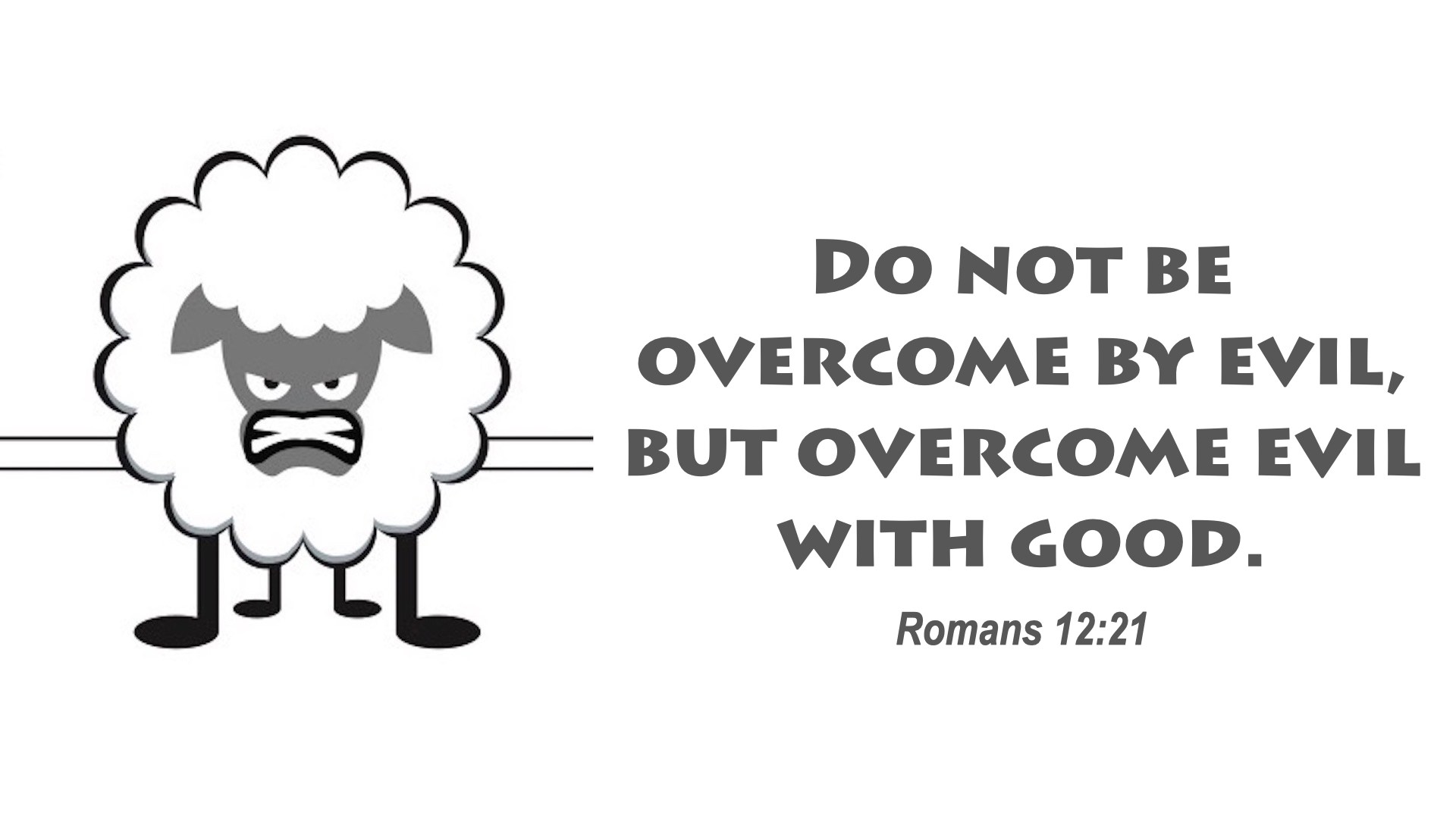
We have to live as overcomers. We overcome by NOT responding to slander in the natural way (Romans 12:21). But we allow our supernatural response to be used as a powerful testimony (2 Corinthians 6:3-10; Colossians 3:1-2, 8, 12-14).
We can do this—the Holy Spirit is empowering us to do this. Let’s not get down in the mud with those who slander us, but let’s yield to God and allow Him to handle this painful situation far better than we ever could.
If you’ve missed any of the messages in this series, you can find them all here. And if you are a pastor, please check out my book When Sheep Bite, which will help you both respond to sheep bites and teach others how to respond as well.
Listen to the podcast of this post by clicking on the player below, and you can also subscribe on Apple, Spotify, or Audible.
Last week I asked, “How long do we keep praying?” Answer: Until God answers or until He lifts our burden. In the meantime, the Bible encourages us to…
Keep asking with full confidence that God hears you
Keep expecting an answer
Keep worshiping God for Who He is
Keep trusting that your Heavenly Father wants to give you the very best!
With that in mind, let me ask you another question: What does this look like? How do we wait expectantly for God to answer? I’ve got three thoughts from the Scripture.
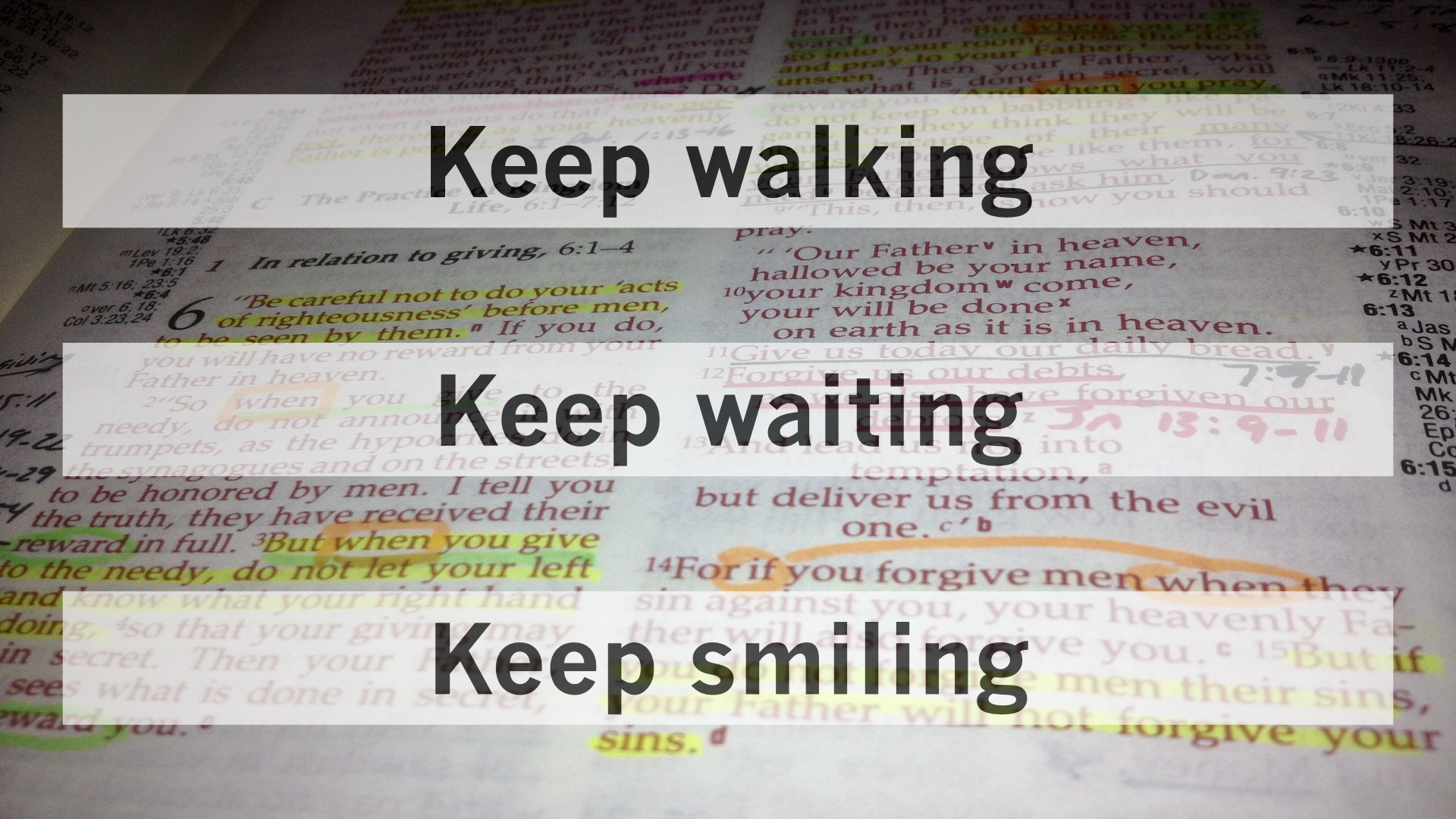
(1) Keep walking
Eliezer had a 300-mile journey which would have taken him about 10 days. Abraham prayed for him before he left and Eliezer prayed when he arrived (Genesis 24:7, 12, 15). His expectation that God would answer him kept him walking. The answer came after 10 days—before he even finished praying!
Nehemiah prayed for God’s favor with King Artaxerxes (Nehemiah 1:11) but then he had to keep walking to work every single day for at least 4 months (2:4). All the while he was praying, expecting, and planning, so when the king asked him what he wanted, Nehemiah was ready to answer.
A royal official met Jesus in Cana and asked Him to heal his son who was was sick in Capernaum. Jesus said, “Go! Your son will live,” and that father began walking his 20-mile journey home. Along the way, his servants met him to deliver the good news of the boy’s full recovery. When the father asked, he found out it was at the very moment Jesus had said, “Go” (John 4:46-53).
Faith takes Jesus at His word and starts walking toward the approaching miracle!
(2) Keep waiting
There are two Hebrew words in the Old Testament that frequently are translated “wait”:
qava = expecting in hope
yahal = guarding that hope
Check out how one psalmist linked hoping and waiting—
Out of the depths I cry to You, LORD; Lord, hear my voice. Let Your ears be attentive to my cry for mercy. … I wait for the LORD, my whole being waits, and in His Word I put my hope. I wait for the Lord more than watchmen wait for the morning, more than watchmen wait for the morning. (Psalm 130:1-2, 5-6)
And David wrote how he had learned to quiet himself in God’s loving presence: But I have calmed and quieted myself, I am like a weaned child with its mother; like a weaned child I am content (Psalm 131:2).
Then listen to the wait-hope-quiet link in Jeremiah’s prayer—
I say to myself, “The LORD is my portion; therefore I will wait for Him.” The LORD is good to those whose hope is in Him, to the one who seeks Him; it is good to wait quietly for the salvation of the LORD. (Lamentation 3:24-26)
In the New Testament, the idea is patience for an expected result is like a farmer who had prepared his field, planted good seed, watered it with his prayers, and is now assured of an abundant harvest (James 5:7-8; Galatians 6:9).
(3) Keep smiling
We put on a smile, not a show!
Contrast what Jesus said about the wrong way to pray and fast…
And when you pray, do not be like the hypocrites, for they love to pray standing in the synagogues and on the street corners to be seen by others. … And when you pray, do not keep on babbling like pagans … When you fast, do not look somber as the hypocrites do, for they disfigure their faces to show others they are fasting… (Matthew 6:5, 7, 16)
…with the God-honoring, God-trusting way—
But when you pray, go into your room, close the door and pray to your Father, who is unseen … But when you fast, put oil on your head and wash your face. (Matthew 6:6, 17)
It’s not a fake smile, but a smile that comes from the joy in our rock-solid expectation in God’s reply to our prayer (Psalm 28:6-7; 38:15)
Pray—then keep walking, keep waiting, and keep smiling in anticipation of what your Heavenly Father is doing on your behalf.
If you want to check out the other messages in this prayer series, please click here.
Listen to the podcast of this post by clicking on the player below, and you can also subscribe on Apple, Spotify, or Audible.
Charles Spurgeon said, “We too often rush into the presence of God without forethought or humility. We are like people who present themselves before a king without a petition, and what wonder is it that we often miss the end of prayer?” I hope you are starting to…
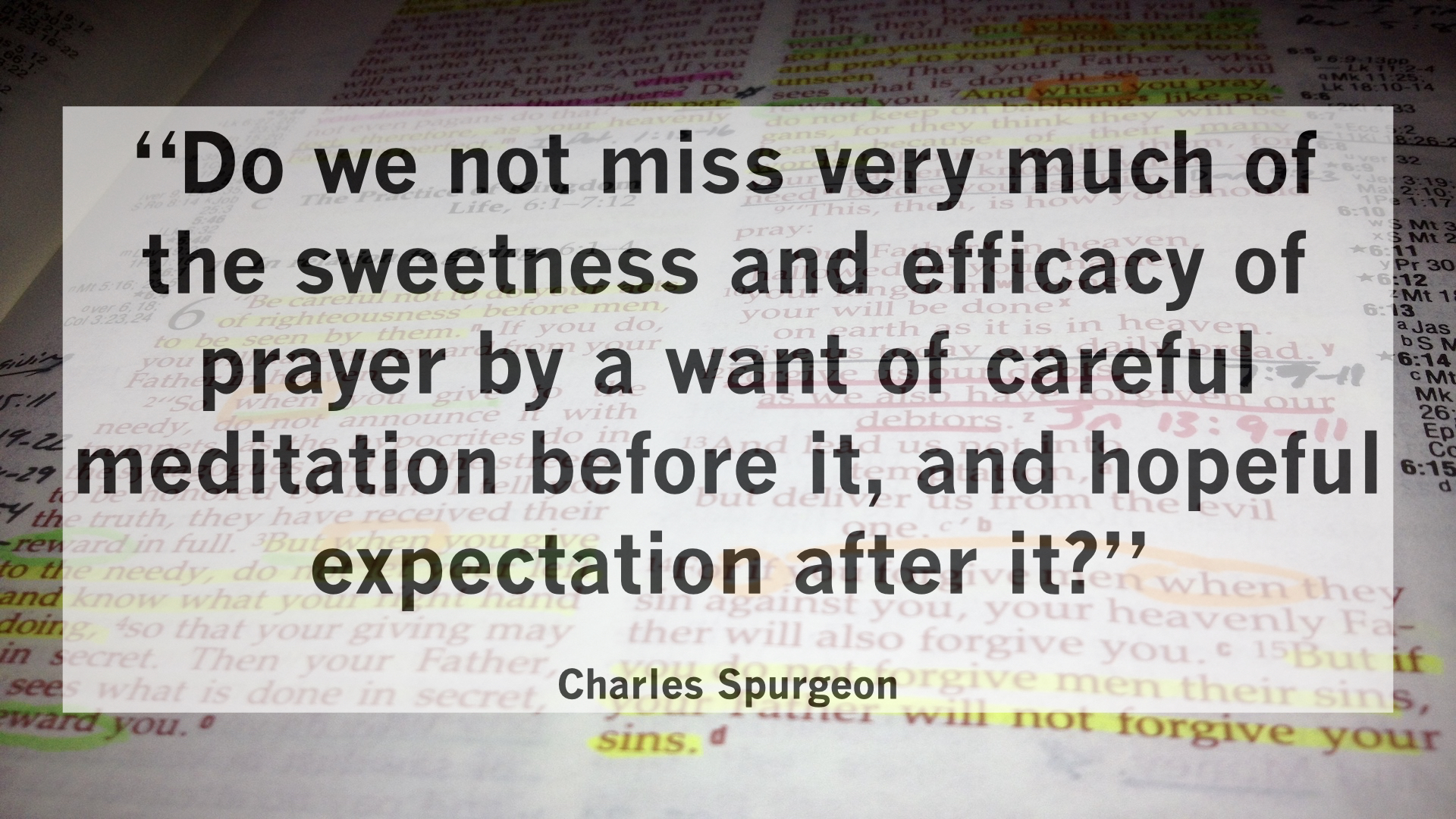
Spurgeon also asked an important question: “Do we not miss very much of the sweetness and efficacy of prayer by a want of careful meditation before it, and hopeful expectation after it?”
We talked about competing priorities, but also how Jesus made prayer the priority for His life. This means that some things we call important may have to temporarily be set aside.
Let’s look at the example of Jesus. He prioritized prayer over:
Training. In Luke 5:16 and 9:18 we see Jesus praying in private even though His disciples were right there with Him. This was so revolutionary to the disciples that it prompted them to ask Jesus how they could pray like He did (Luke 11:1-13).
Sleep. Mark 1:32-35 tells us Jesus was up after sunset ministering to the needs of people, and that He was up and praying while it was still dark. And Luke 6:12 tells us Jesus spent the whole night in prayer before making a big decision.
Strategizing. The big decision Jesus had to make was choosing the twelve men who would be His apostles—the ones He would spend the most time training and preparing. He didn’t hold strategizing sessions or interviews with the perspective candidates, but He spent the night praying for wisdom (Luke 6:12-13).
Ministering. People were looking for Jesus, but He guarded His prayer time so the Holy Spirit could guide Him into His ministry time (Mark 1:37).
Why did He treat prayer this way? Because He knew that God knows our day better than we do. He knows the people will encounter, the conversations that we need to have, the decisions that await us. So we must prayerfully entrust our days to Him (Proverbs 16:9, 3:5-6).
Remember that Spurgeon said “careful meditation” before prayer and then “hopeful expectation after it.” This is exactly what David said in Psalm 5:1-3 where he was expectant of God’s answers throughout the day.
We see this example throughout the Bible, but let me give you three quick examples:
Hagar’s eyes were opened to see the supply of water that was already there (Genesis 21:14-19)
Eliezer had success in finding a wife for Isaac by seeing a woman that was already at the well (Genesis 24:7, 12-15, 21, 27)
Nehemiah prayed for 4 months so he could pray in the moment that the king asked him what he needed to be successful (Nehemiah 1:4, 11; 2:1-4, 8)
I think this is what Paul meant when he told us to “pray continually “ (1 Thessalonians 5:17).
Jesus could announce that everything He did (John 5:19) and everything He said (John 12:49) was directed by the Father.
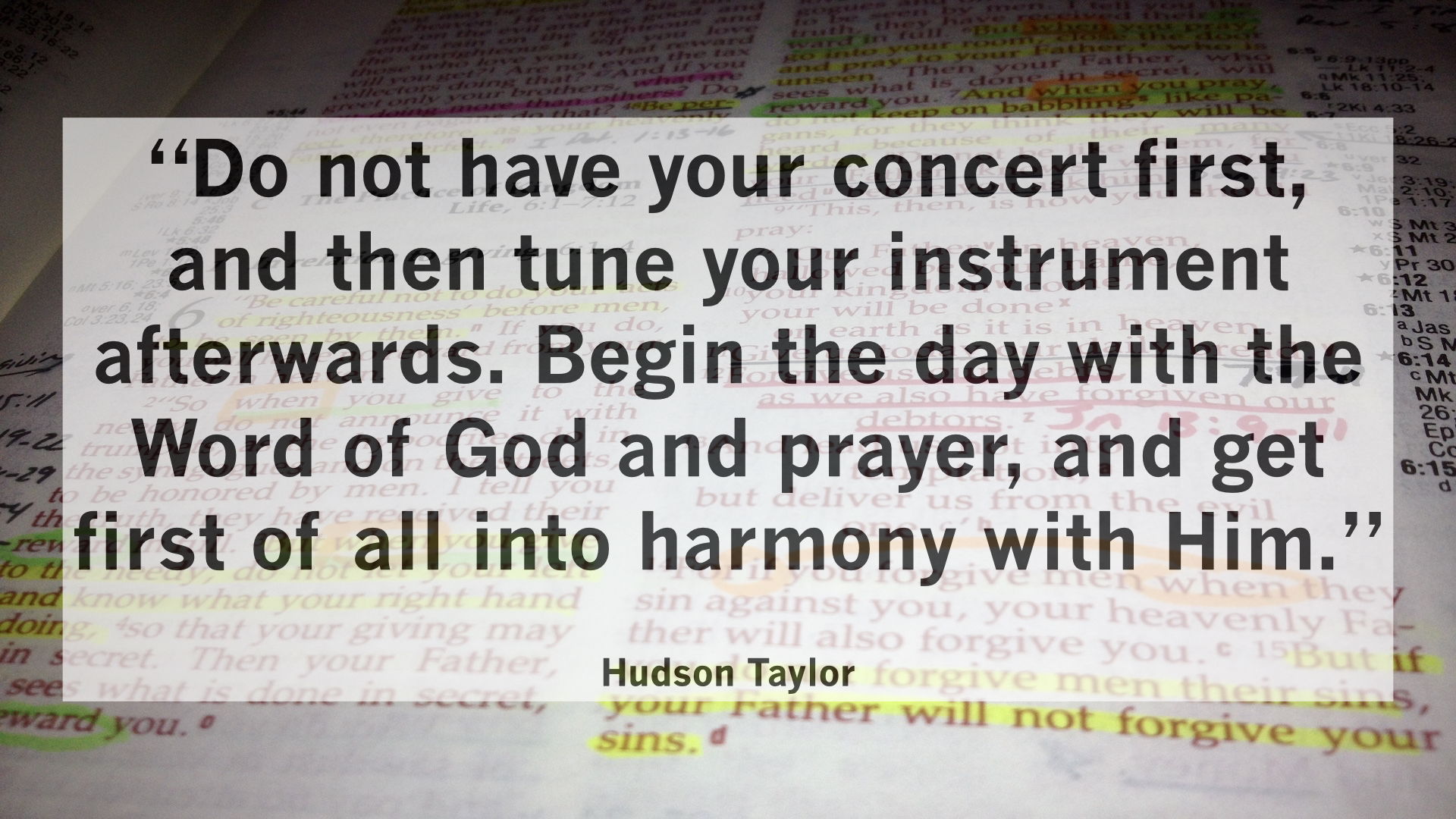
We can live like this too, if we will only make prayer the priority that sets the order for any other thing that we call a priority. Missionary Hudson Taylor said, “Do not have your concert first, and then tune your instrument afterwards. Begin the day with the Word of God and prayer, and get first of all into harmony with Him.”
If you have missed any of the messages in our series called Our Prayer Book, you can find them all by clicking here.
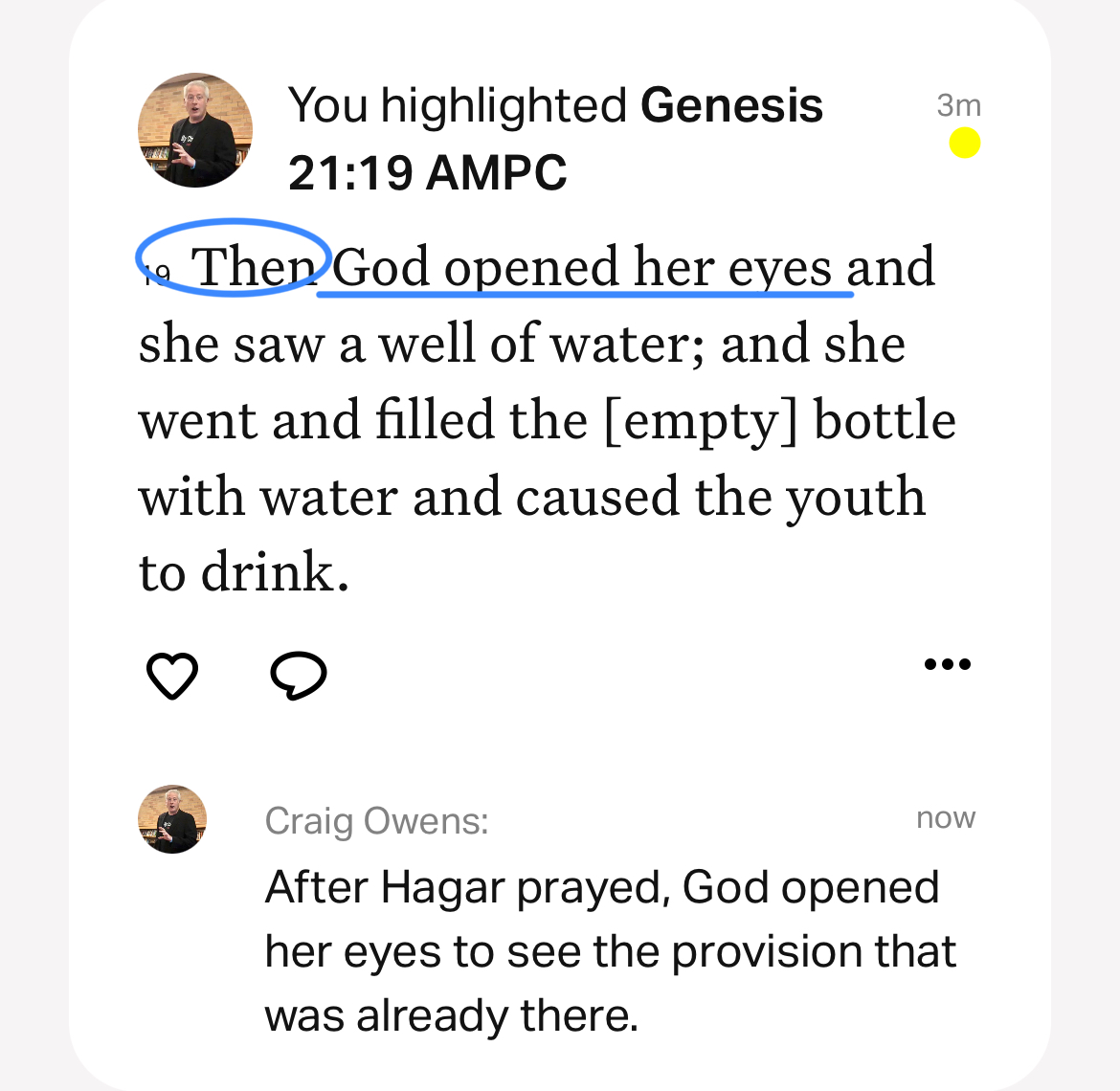
And God heard the voice of the youth, and the angel of God called to Hagar out of heaven and said to her, “What troubles you, Hagar? Fear not, for God has heard the voice of the youth where he is.” … Then God opened her eyes and she saw a well of water; and she went and filled the [empty] bottle with water and caused the youth to drink. (Genesis 21:17, 19 AMPC)
After Hagar prayed, God opened her eyes to see the provision that was already there.
How many times do we struggle on our own, trying to make our way, exhausting all our strength, and ending up frustrated. In all our efforts, we forget the One who has all wisdom and who can provide everything we need.
Listen to the podcast of this post by clicking on the player below, and you can also subscribe on Apple, Spotify, or Audible.
Jesus said His Second Coming would occur at a time in history that was just like the behaviors during “the days of Noah” (Matthew 24:36-39; Luke 17:26-27).
What exactly did those days look like?
The earth was depraved and putrid in God’s sight, and the land was filled with violence (desecration, infringement, outrage, assault, and lust for power). And God looked upon the world and saw how degenerate, debased, and vicious it was, for all humanity had corrupted their way upon the earth and lost their true direction. (Genesis 6:11-12 AMPC)
Paul describes this same environment to his friend Timothy—
For people will be lovers of self and [utterly] self-centered, lovers of money and aroused by an inordinate [greedy] desire for wealth, proud and arrogant and contemptuous boasters. They will be abusive (blasphemous, scoffing), disobedient to parents, ungrateful, unholy and profane. [They will be] without natural [human] affection (callous and inhuman), relentless (admitting of no truce or appeasement); [they will be] slanderers (false accusers, troublemakers), intemperate and loose in morals and conduct, uncontrolled and fierce, haters of good. [They will be] treacherous [betrayers], rash, [and] inflated with self-conceit. [They will be] lovers of sensual pleasures and vain amusements more than and rather than lovers of God. (2 Timothy 3:2-4 AMPC)
It seems to me that we are now living in “the days of Noah” and “the last days.” For Christians, I think this means two things:
(1) Be diligent to keep yourself devoted to living for God.Noah stood out in stark contrast to everyone else because of his righteousness and blamelessness “in his evil generation” (Genesis 6:9). Peter wrote,
So, beloved, since you are expecting these things, be eager to be found by Him [at His coming] without spot or blemish and at peace [in serene confidence, free from fears and agitating passions and moral conflicts]. (2 Peter 3:14 AMPC)
(2) Be active in telling people about the Second Coming of Jesus and that the only door to salvation from God’s judgment is Jesus Christ. Jude wrote this—
Guard and keep yourselves in the love of God; expect and patiently wait for the mercy of our Lord Jesus Christ (the Messiah)–[which will bring you] unto life eternal. And refute [so as to] convict some who dispute with you, and on some have mercy who waver and doubt. [Strive to] save others, snatching [them] out of [the] fire; on others take pity [but] with fear, loathing even the garment spotted by the flesh and polluted by their sensuality. (Jude 1:21-23 AMPC)
The time is short. Let’s stay righteous and let’s stay active in proclaiming the Good News that Jesus is coming as the All-Righteous Judge, but He has already paid for our forgiveness so that we can “stand in the presence of His glory, blameless and with great joy” (Jude 1:24).
Listen to the podcast of this post by clicking on the player below, and you can also subscribe on Apple, Spotify, or Audible.I am sometimes amazed at how much Jesus accomplished in just a little over three years of public ministry. What I would have expected to see is a Man burning the candle at both ends—up early, working hard without any breaks each day, very little (if any) leisure time, and then burning the midnight oil.
But instead we see Jesus never seeming to be rushed or exhausted. He takes time for meals with friends, time away from the crowds, and still in just a short period of time He fulfilled hundreds of ancient prophecies and trained His followers to take the Gospel around the globe!
One of the keys is His priority. Notice that I said priority and not prioritieS. Jesus was singularly focused on His Father’s glory and He showed total dependence on Him. I think one of the most telling verses is Mark 1:35: “Very early in the morning, while it was still dark, Jesus got up, left the house and went off to a solitary place, where He prayed.”
If Jesus needed prayer to start His day, how much more do we need this!
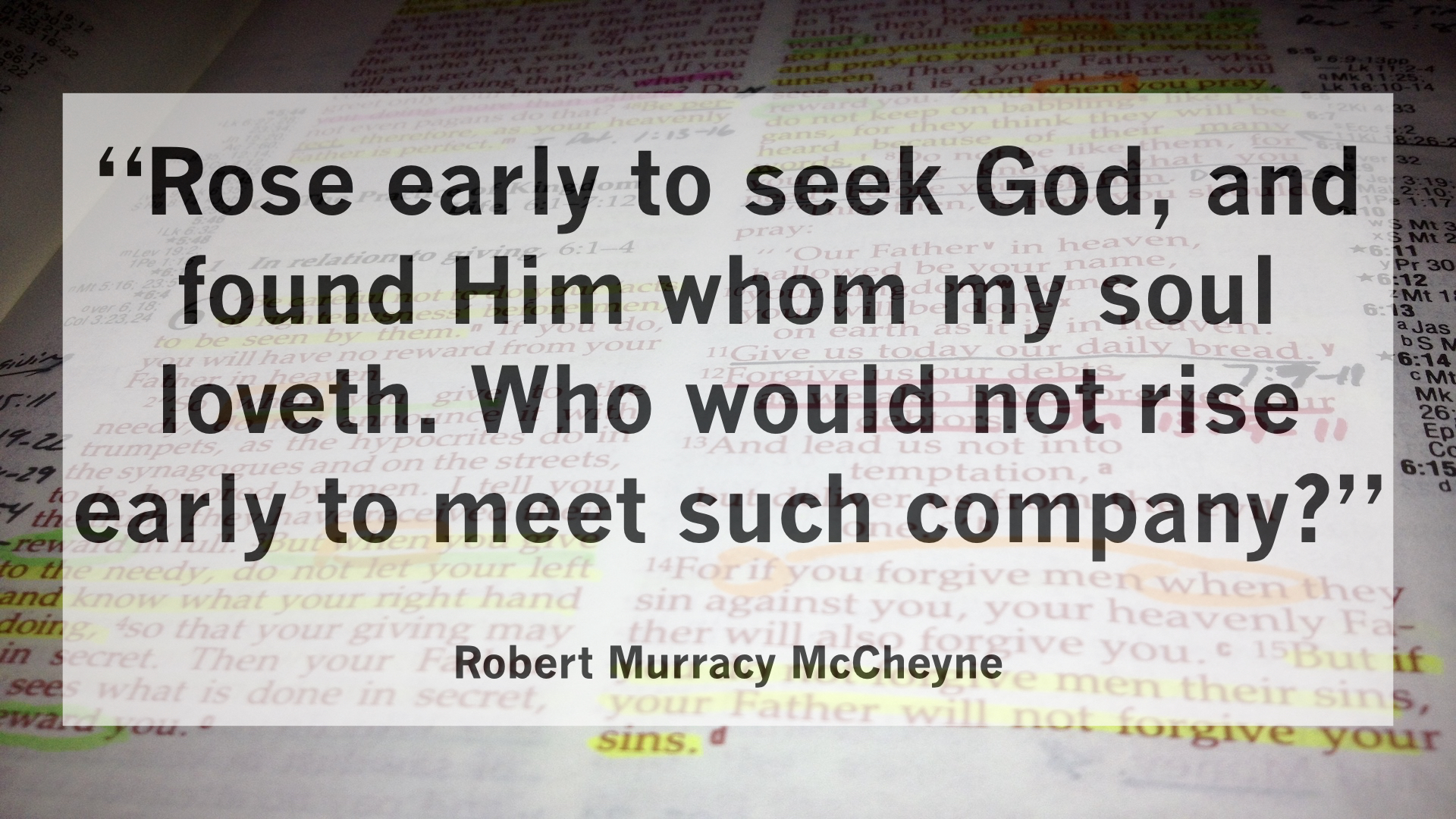
Scottish pastor Robert Murray McCheyne wrote in his journal, “Rose early to seek God, and found Him whom my soul loveth. Who would not rise early to meet such company?”
So why don’t we treat prayer like this? I think there are three main hindrances to keep us from making prayer a priority.(1) Self-reliance. A common phrase we use is, “I need to get to work.” But this puts the emphasis on me—my plans, my abilities, my work ethic. I believe I can do more than pray, but I also believe that I shouldn’t do anything until I have prayed.
Prayer, therefore, is a reminder of my utter God-reliance.
God has a better plan than we do. God has more wisdom than we do. God has more strength than we do. So wouldn’t it be better to ask Him what we should be doing, how we should be doing it, and then ask Him for the strength to do it?
When we have this focus, our prayer time will keep us aligned with His plans and empowered with His wisdom and strength. Look at a couple of examples.
Sarah knew how to believe God because He showed how He kept His promise in His perfect timing (Genesis 21:1-2).
Mary knew how to pray and behave in alignment with God’s word (Luke 1:31-38). Her prayer shortly after this is sautéed in Scripture, showing how she relied on God to keep His Word (vv. 46-55).
Saul of Tarsus (who became Paul the apostle) had assurances of God’s direction for his life at almost every turn (Acts 9:15-16, 20:22-24, 21:10-14, 23:11, 27:21-25). Then he writes to his friends at Philippi how God received the glory throughout this whole process (Philippians 1:12-14, 25-26).
We can live and pray with the same assurance that God is completely in control (Isaiah 55:8-11; Romans 8:26-28). (2) Distractions. When Martin Luther was asked about his plans for the next day he said, “I have so much to do that I shall spend the first three hours in prayer.” That sounds unrealistic to most of us, but that is because we call too many things “priorities.” We need a singular priority: The knowledge of God’s will and the help that only God can give.
Stephen Covey has a very helpful tool that I use regularly: the urgent/important grid. Bible reading and prayer time is most decidedly a Quadrant II activity. We make time for these important activities by removing unimportant activities from Quadrant IV. The Bible frequently couples a “take off” with a “put on” (see 1 Corinthians 13:11; 2 Timothy 2:4; Ephesians 6:11-18), which should prompt us to ask, “What’s one thing I can take off of my Quadrant IV and put on that time for prayer in Quadrant II?”(3) Uncertainty. Sometimes we may wonder if our prayers are doing anything. Maybe we think we are not praying the “right way” or perhaps we wonder if we are praying for something in alignment with God’s will or only our own selfishness.
The only two things Jesus said were the “wrong ways” to pray were praying to show off, and babbling like pagans (Matthew 6:5-8). As we read in Romans 8, the Holy Spirit will help us pray, if we will let Him.One way we pray in alignment with God’s will is to pray using the Scripture. The Bible is our Prayer Book. Pastor Timothy Keller wrote, “Your prayer must be firmly connected to and grounded in your reading of the Word. This wedding of Bible and prayer anchors your life down in the real God. … Without immersion in God’s words, our prayers may not be merely limited and shallow but also untethered from reality.”
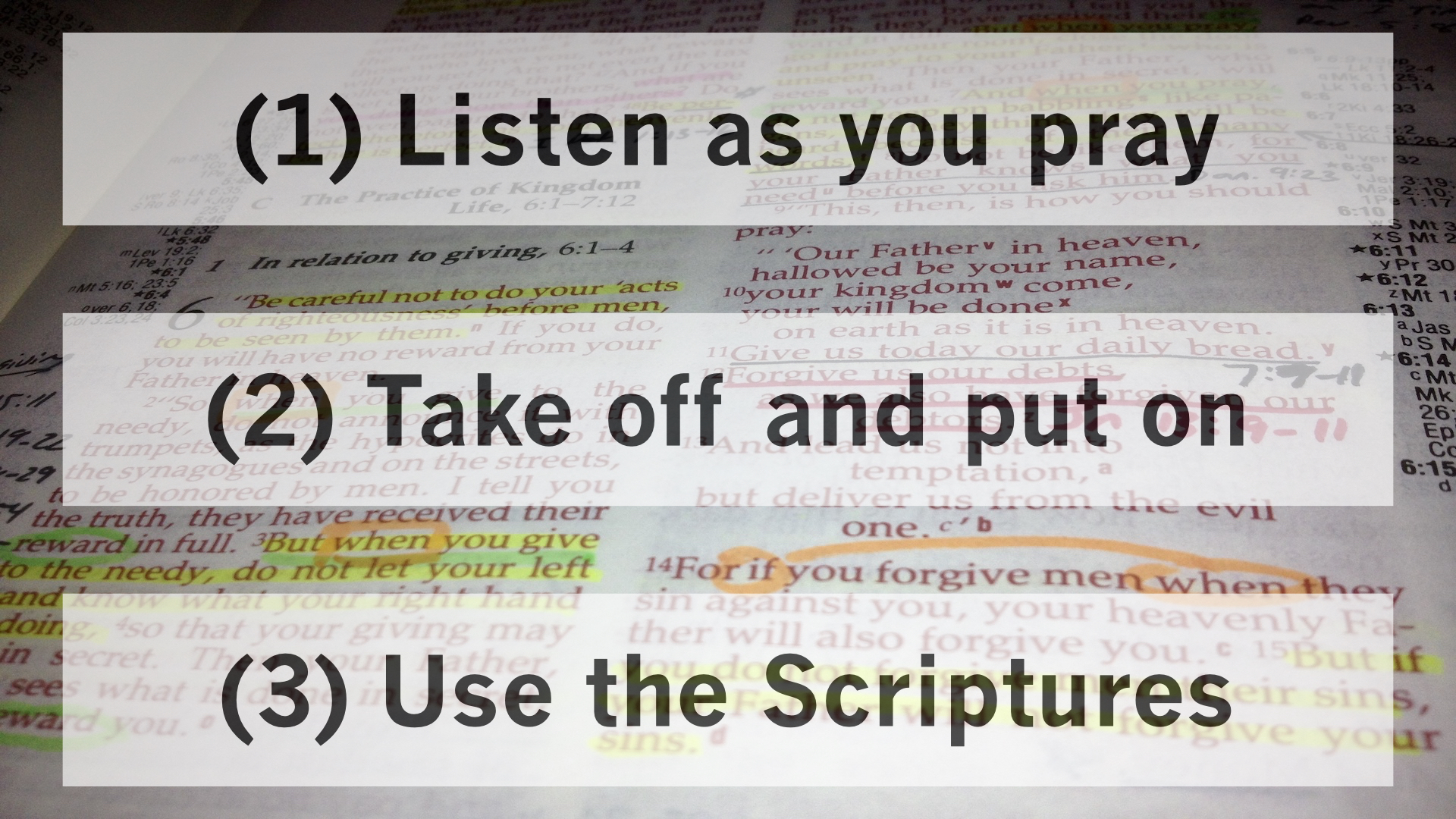
So here are three steps we need to implement to counteract those three hindrances to a consistent, meaningful prayer life:
Listen to yourself pray—replace the “I have to” with “God, I trust You to direct me and help me.”
Track your time in each quadrant and identify just one Quadrant IV activity you can replace with prayer.
Listen to the podcast of this post by clicking on the player below, and you can also subscribe on Apple, Spotify, or Audible.
We lit the candle of Hope last week and today we light the candle of Peace.As we saw, hope is what allows us to experience peace and joy: “May the God of hope fill you with all joy and peace as you trust in Him, so that you may overflow with hope by the power of the Holy Spirit” (Romans 15:13).
But notice the phrase “as you trust in Him” in that verse. Peace doesn’t come just because we want it to, but it only comes as we trust in the One called the Prince of Peace.
Light drives out darkness and exposes sin, and often people don’t like it (John 1:9-11). In fact, Jesus Himself said that He was first coming with a sword to do battle against all of the things that rob us of lasting peace (Matthew 10:34).
Oswald Chambers described it this way, “The coming of Jesus Christ is not a peaceful thing; it is overwhelmingly and frantically disturbing, because the first thing He does is to destroy every peace that is not based on a personal relationship to Himself.”
Peace is only possible when the war is over. Modern-day diplomats use a phrase “sue for peace,” but this can only be done when one side admits defeat. God is at war with sin and He only gives peace to those who throw up their hands in total surrender to Him (Isaiah 57:14-21).
Jesus said He was the Light of the world and the only way to peace with the Father. The apostle Paul elaborates on that idea—
Remember that at that time you were separate from Christ, excluded from citizenship in Israel andforeigners to the covenants of the promise, without hope and without God in the world. But now in Christ Jesus you who once were far away have been brought near by the blood of Christ. For He Himself is our peace, who has made the two groups one and has destroyed the barrier, the dividing wall of hostility, by setting aside in His flesh the law with its commands and regulations. His purpose was to create in Himself one new humanity out of the two, thus making peace, and in one body to reconcile both of them to God through the Cross, by which He put to death their hostility. He came and preached peace to you who were far away and peace to those who were near. For through Him we both have access to the Father by one Spirit. Consequently, you are no longer foreigners and strangers, but fellow citizens with God’s people and also members of His household. (Ephesians 2:12-19)
That’s what Jesus provided for us at His First Advent. Now, as we live between the Advents of Jesus, we can expect to have trouble in the world, but never peacelessness (John 14:27, 16:33).
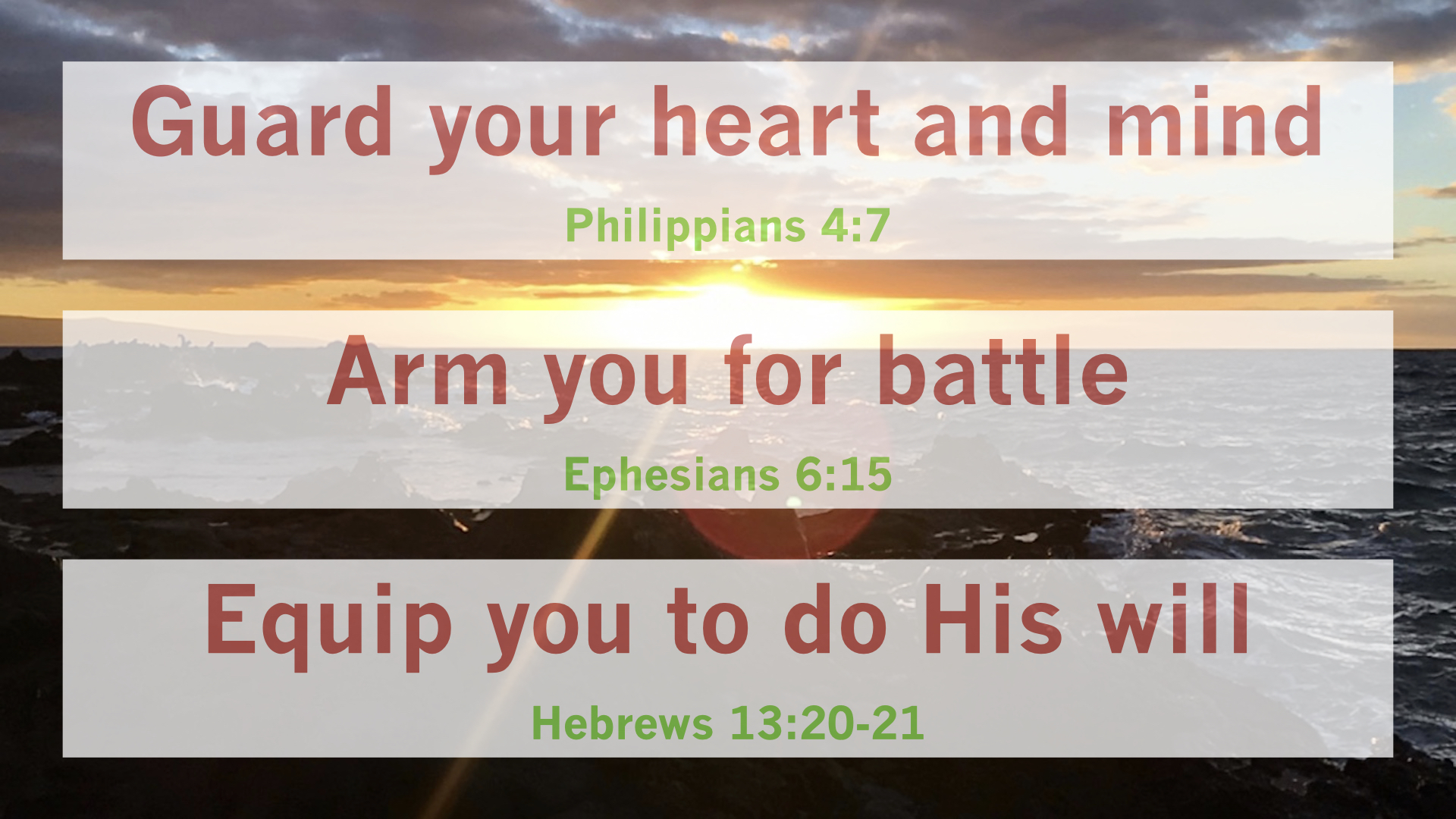
The Messiah’s peace will:
Guard your heart and mind—Philippians 4:7
Arm your for battle against the enemy—Ephesians 6:15
Equip you to do His will—Hebrews 13:20-21
As our hearts are guarded, we are prepared to stand firm in spiritual battle, and we are equipped to do God’s will, we can live in peace concerning Christ’s Second Advent.
Jesus will appear again to fulfill one of the first promises made about the peace He would bring. God told satan that Jesus would crush his head, and then Paul tells us, “The God of peace will soon crush satan under your feet” (Genesis 3:15, Romans 16:20)!
So we have no fear of Death or Hell because the Prince of Peace has forever defeated those things for those who “trust in Him” (Revelation 20:10, 14; 21:1-5).
Listen to the podcast of this post by clicking on the player below, and you can also subscribe on Apple, Spotify, or Audible.
The word Advent means the appearing—something that bursts onto the scene. At this time of year we are actually thinking about TWO Advents. We look backward in gratitude to celebrate the first Advent of Jesus when He was born in a manger in Bethlehem. And then we look forward in joyful expectation to the second Advent of Jesus when He will return to earth again as King of kings. As we will in this time between the Advents, there are four qualities that we should exemplify—the first is hope.
When the candle is lit, darkness disappears.
Darkness is not the opposite of light, it is the absence of light. In the same way, despair or hopelessness is the absence of hope.
Adam and Eve lived in perfection, but when they tried to do things their way—instead of obeying God’s way—their sin caused them despair. They tried to cover their nakedness, but with a hopeless covering of dying leaves. God came with a promise of full restoration, and illustrated it by covering them with the skin of a sacrificial animal (Genesis 3:7, 15, 21).
Job knew the hopelessness of self-covering and finality of earthly life, and even David—the man after God’s own heart knew this too (Job 6:11-13, 17:13-16; 1 Chronicles 29:15).
But Job and David both knew the hope they could have in their Redeemer (Job 19:25; Psalm 16).
Hope in both the Old and the New Testaments means a patient waiting, anticipating with pleasure, having a confident expectation. It’s a light shining in the darkness that cannot be extinguished—it’s hope that despair cannot darken (Isaiah 9:1-2, 6-7).
At His first Advent, Jesus appeared in our “clothing” so that He could become our sin and then clothe us in His righteousness (Hebrews 2:17; John 1:14; Romans 4:6-8; Hebrews 6:16-20). For this we look back in gratitude.
But we don’t live today merely in gratitude for Christ’s first Advent, but we also live in confident hope of Christ’s second Advent (Acts 1:11; John 14:1-3; 2 Corinthians 5:1-8; Revelation 22:7, 12, 20).
He came into this world of sin,
Made flesh and blood His dearest kin;
He died, that He might take us in,
And keep us till He comes again. —Scott Hubbard
How do we live out this confident hope—
May the God of HOPE fill you with all JOY and PEACE as you trust in Him, so that you may overflow with HOPE by the power of the Holy Spirit. (Romans 15:13)
Follow along with all four of the Advent attributes by clicking here.
Listen to the podcast of this post by clicking on the player below, and you can also subscribe on Apple, Spotify, or Audible.
Last week I mentioned that I was a bit surprised that scientists had done so much research on the benefits of gratitude because science tends to have an over-reliance on the tangible world. But it’s hard to ignore that there are so many intangibles (like gratitude) which make a tangible difference in people’s lives.
We get ourselves into trouble if we focus exclusively on the tangible or intangible. We also get ourselves into trouble if we don’t use all of the resources God has given us.
The Bible tells us that we have been created in the image of God, and that one of the things that separates us from the other creatures in the world is our soul (Genesis 2:7). Our soul is compromised of our mind, our will, and our emotions.
We cannot allow any one of these to lay dormant or even considered less valuable than the others, nor we can allow any one of these to bully the others.
If my emotions dominate (especially emotions like fear or anger) I can give into fight-or-flight—Psalm 106:7
If my mind dominates, I can become dark and confused—Romans 1:21 NLT
If my willpower dominates, I tend to be very selfish—Isaiah 14:13-14
When my emotions flare up, when my mind is dark, or when I feel selfish, I need to remember to engage the other two parts of my God-breathed soul. This is where gratitude comes into play.
I love reading the Psalms when I’m battling the negative emotions that seem to rush in during trying times. The psalmists were so honest about what they were feeling. Check out a couple of examples in Psalm 7:17 and 9:1-2 where we see David engaging his mind and his will to make the choice to be grateful to God despite his circumstances.
In the New Testament, we see a similar response from Paul and Silas when they are falsely imprisoned in Philippi (see Acts 16:22-26). Despite their cruel circumstances, they chose to life thankful worship to God. Luke write that the other inmates were listening, and so was the jailer and his family, who ended up accepting Jesus as their Savior.
I’ve got three important words for you when dark times threaten to hijack your gratefulness:
TALK TO YOURSELF
We see another psalmist doing this in Psalm 42:1-6. He asks his soul why it is so downcast, and then he says, “I chose to remember God in all His goodness and I chose to praise Him!” These words are repeated again in Psalm 42:11 and 43:5, which tells me that giving thanks to God is not a one-and-done thing, but something that needs to be continually repeated.
You can get some conversation starters for your self-talk in two simple ways:
Write down your gratitude
Talk about your gratitude
Keep a gratitude journal: Write something down at the end of each and every day. Write it down. Re-read it regularly. Tell others about it. And then be ready for others to ask you about Jesus—just like the Philippian jailer—when they notice how thankful you are!
Use your mind to talk back to your fears and worries, and then engage your willpower. Don’t let your gratitude get hijacked by the circumstances around you, but allow your thankfulness to help you reframe your circumstances into God’s plan.
Check out the other messages in our Be Thankful series by clicking here.



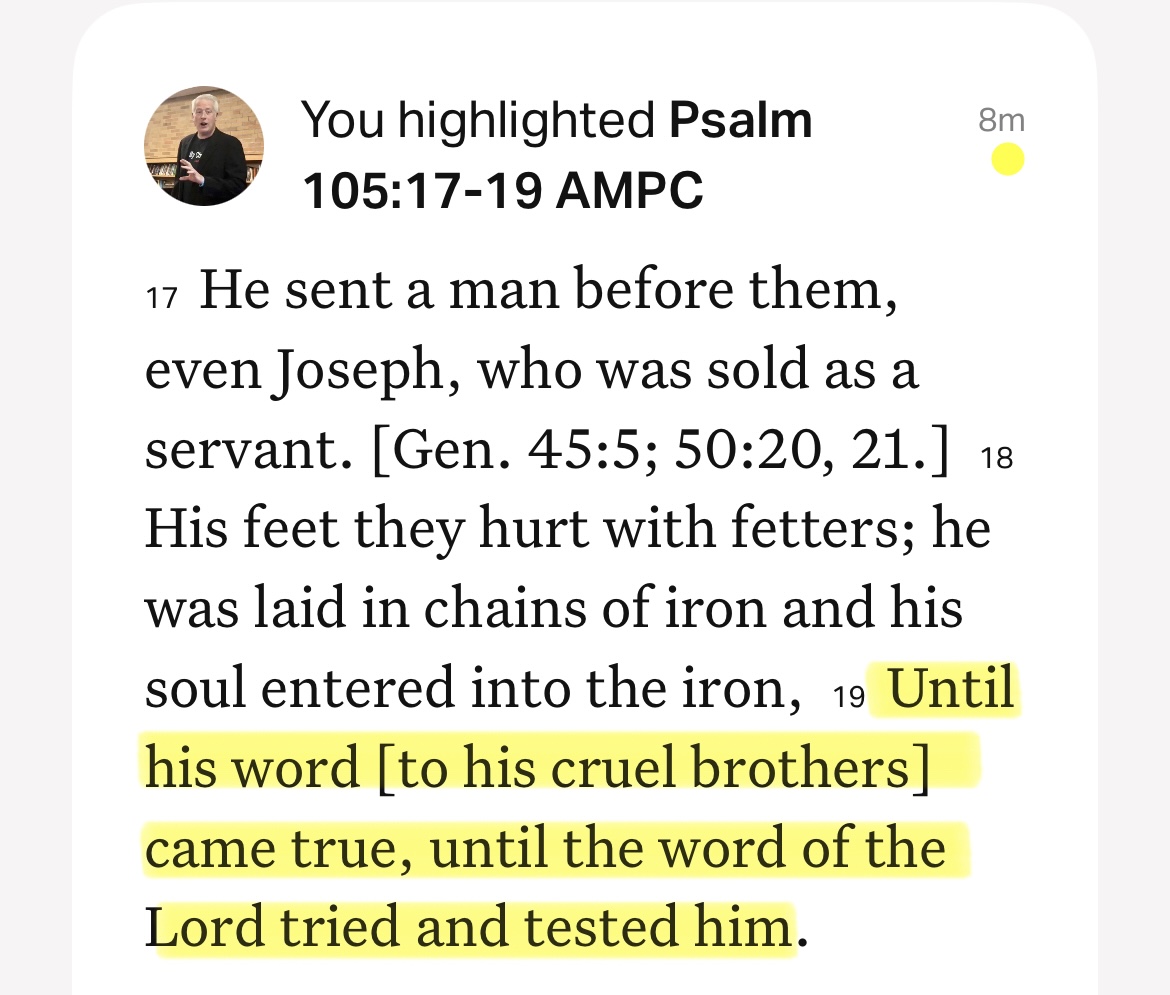 Moreover, [God] called for a famine upon the land of Egypt; He cut off every source of bread [Genesis 41:54]. He sent a man before them, even Joseph, who was sold as a servant [Genesis 45:5; 50:20, 21]. His feet they hurt with fetters; he was laid in chains of iron and his soul entered into the iron, until his word to his cruel brothers came true, until the word of the Lord tried and tested him. The king sent and loosed him, even the ruler of the peoples, and let him go free. He made Joseph Lord of his house and ruler of all his substance [Genesis 41:40]. To bind his princes at his pleasure and teach his elders wisdom. (Psalm 105:16-22 AMPC)