For God so loved the world that He gave His one and only Son, that whoever believes in Him shall not perish but have eternal life. (John 3:16)
Then I said, “Here I am—it is written about Me in the scroll—I have come to do Your will, My God.” (Hebrews 10:7)
“How lowly did Jesus become to purge away our sins and that by Himself, too, using His own body to be the means, by His sufferings, of taking away our guilt. Not by proxy did He serve us, but by Himself. Oh, this is wondrous love!” —Charles Spurgeon
And by that will, we have been made holy through the sacrifice of the body of Jesus Christ once for all. (Hebrews 10:10)
If leaders want to get the best ideas and implement the best strategies, they must invite everyone on their team to share from their unique perspective. This is the only way to get the whole picture. Check out this full conversation from The Craig and Greg Show.
T.M. Moore writes, “We can know that we love our neighbors when, like Jesus, we go seeking them, in order to touch them with His love.”
This last week marked the 187th anniversary of the first time “O.K.” was first published as an abbreviation. The word’s origin is an interesting story, with some calling it “one of the most ubiquitous terms in the world, and certainly one of America’s greatest lingual exports.”
“Meekness and gentleness are two of the ornaments of our faith. I would that some professed Christians would understand that unholy contentiousness is not after the mind of Christ, it is not according to that gracious command, ‘Take My yoke upon you, and learn of Me; for I am meek and lowly in heart and ye shall find rest unto your souls.’ No, the Christian must be willing to suffer wrongfully, and to bear it in patience; he is never to be one who renders evil for evil, or railing for railing.” —Charles Spurgeon, commenting on Titus 3:2
“Then, since according to the Lord’s warnings the blood of so many will be sought for at the hands of their shepherds, careful watch must be kept, that is, the Word of the Lord must be often preached, and preached by the shepherds, by the Church’s bishops and teachers, that none may perish through ignorance; for he perishes through lack of heed, his blood will be on his own head.” —Columbanus, Letter to Pope Boniface
“Knowledge will forever govern ignorance.” —James Madison
“A good friend is like a four-leaf clover, hard to find and lucky to have.” —Irish proverb
“When a man is getting better he understands more and more clearly the evil that is still left in him. When a man is getting worse he understands his own badness less and less. A moderately bad man knows he is not very good: a thoroughly bad man thinks he is all right. This is common sense, really. You understand sleep when you are awake, not while you are sleeping. You can see mistakes in arithmetic when your mind is working properly: while you are making them you cannot see them. You can understand the nature of drunkenness when you are sober, not when you are drunk. Good people know about both good and evil: bad people do not know about either.” —C.S. Lewis, Mere Christianity
“If you want to win the day, you’ve got to flip the script. How? The Bible is a good starting point. Scripture is more than our script; it’s our script-cure. And that’s more than a play on words. Scripture confronts the false identities and false narratives perpetrated by the Father of Lies. It reveals the heavenly Father’s metanarrative and the unique role that each one of us plays in it.” —Mark Batterson, Win The Day
Your gratitude blesses future generations. When you talk about the ways God has blessed you—and you are continually grateful for His provision—you are fortifying future generations as well.
“Wherever men are still theological, there is still some chance of their being logical.” —G.K. Chesterton
“We must not be too hot upon cold matters, but even this is better than to be cold upon matters that require heat.” —Charles Spurgeon
Clinton Manley says, “Although the teaching of Jesus in Matthew 5–7 is often called a sermon, these words are closer to Henry V on the battlefield than to a pastor in his pulpit.” Before you read the Beatitudes again, check out this background to this battlefield message from Jesus.
“The ping of a notification, the silent vibration in a pocket, the ambient awareness that something, somewhere, might require a response: these are not incidental features of modern life. They are now its architecture…. The mind never fully settles. It hovers in a state of anticipatory vigilance, perpetually primed for the next interruption.” —Carl Hendrick
Jesus showed us how to remain faithful as a shepherd even in the face of painful attacks. If you are a pastor—or if you love your pastor—please check out my books Shepherd Leadership and When Sheep Bite.
Every year I see the same unsubstantiated claims that the Christian celebration of Christmas is a hodgepodge of pagan and cultic myths cobble together and hijacked by Christians. Here are three myths refuted by archeological evidence.
Dr. Allen Tennison points out how Luke emphasizes the work of the Holy Spirit all throughout his Gospel, and then continues that theme as he moves into the Book of Acts.
“One of the first gospel blessings is that of complete justification. A sinner, though guilty in himself, no sooner believes in Jesus than all his sins are pardoned. The righteousness of Christ becomes his righteousness, and he is accepted in the Beloved.” —Charles Spurgeon
“For the apostle Paul, as, indeed, for all the apostles and early Christians, the Church is the Body of Christ, the continuing incarnation of the reigning and conquering King of Glory. The Church, according to the apostles, is the centerpiece of Christ’s historical agenda (Matthew 16:18). Whatever Christ intends to do on earth prior to His imminent return, the focal point of that work will be in and through His Church. … We do not have the mind of Christ if we are not thinking the same way about His Body, the Church. We need the Church, and if we do not think this is so, then we do not have the mind of Christ. We need the Church. But we need it according to the purpose with the guidance and blessing of the Lord Jesus Christ.” —T.M. Moore
What an amazing story of faithfulness! The faithfulness of God is seen in the loving actions of an unnamed Sunday School teacher and in a lifelong missionary.
Cold-case detective J. Warner Wallace contrasts blind belief and unreasonable belief with what he calls forensic faith. His conclusion: “A forensic faith gives you confidence in uncertainty, strength in adversity, and the ability to engage intellectually with both believers and skeptics. It transforms faith from mere hope into informed trust, and that makes all the difference in how you live out your beliefs in a world that’s constantly questioning them.”
“Depression is one of satan’s most dynamic weapons to divert you from God’s purpose for your life. If he can scatter a little dejection here and there in your thoughts—and even in your prayers—he can convince you to remove your breastplate of righteousness because it is too cumbersome and will go against your material and temporal interest. Do not give in that easily!” —William Gurnall, The Christian In Complete Armor
“Joy doesn’t wait until everything is repaired and restored. It takes root in God’s presence and grows even in hard soil.
“Advent joy doesn’t mean everything is going well. It’s not shallow optimism or a quick distraction from pain. It’s the deep gladness of knowing God is near, faithful, and making all things new.…
“This joy doesn’t depend on circumstances. It flows from union with God. That means joy can live alongside sorrow. …
“The Advent season invites us to practice this kind of joy. As we remain in God’s love and join his Kingdom work of generosity and mercy, we let joy overflow through our lives like a song that begins quietly now but will one day fill all creation.” —Bible Project’s Anticipating Christmas reading plan
“No other story, no pagan legend or philosophical anecdote or historical event, does in fact affect any of us with that peculiar and even poignant impression produced on us by the word Bethlehem. No other birth of a god or childhood of a sage seems to us to be Christmas, or anything like Christmas.” —G.K. Chesterton
“One incident in angelic history, the angelic pronouncement to shepherds in their fields, is enough to weld our hearts to them forever. How free from envy the angels were! Christ did not come from heaven to save their peers when they fell. When satan, the mighty angel, dragged with him a third part of the stars of heaven, Christ did not stoop from His throne to die for them; but He left them to be reserved in chains and darkness until the last great day. Yet angels did not envy men. Though they remembered that He took not up angels, yet they did not murmur when He took up the seed of Abraham; and though the blessed Master had never condescended to take the angel’s form, they did not think it beneath them to express their joy when they found Him arrayed in the body of an infant.” —Charles Spurgeon
“Long had God promised the world’s redemption would come through the offspring who would sustain a bite to the heel yet, in the very act of battle, crush the serpent’s head. Even as kings and prophets pinned their hopes on the coming births of sons, God unfolds His master scheme of one Son to overshadow them all.
“A glimpse of this Son’s manifold greatness will be captured in His name (Isaiah 9:6), which turns out to be not singular but fourfold. He is Guide, Champion, Caretaker, and Peacemaker, and each of these paired with attendant glory.” —David Mathis
“The manger of Bethlehem was big with God’s glory; in the incarnation was wrapped up all the blessedness by which a soul, snatched from the depths of sin, is lifted up to the heights of glory.” —Charles Spurgeon
When people start throwing mud at you, your natural response is to throw the mud back at them or to run away so the mud can’t reach you. Instead of the natural fight-or-flight response, Jesus shows us a supernatural response. I talk about all sorts of attacks—gossip, slander, betrayal, and more—in my book When Sheep Bite as well as the supernatural, biblical response to these attacks.
“The minute you start talking about what you’re going to do if you lose, you have lost.” —George Schultz
“A decent picture of good leadership: Air-traffic controllers have authority, but they use their authority to enable others to fly.” This is a thoughtful post, but as frequent visitors to my blog might expect, I prefer the term shepherd leader over servant leader.
This post recounts some of the stories people told of how Charles Spurgeon’s sermons led them from the bad news to the Good News. Spurgeon himself noted, “If you really long to save men’s souls, you must tell them a great deal of disagreeable truth. The preaching of the wrath of God has come to be sneered at nowadays, and even good people are half-ashamed of it; a maudlin sentimentality about love and goodness has hushed, in great measure, plain gospel expostulations and warnings. But, if we expect souls to be saved, we must declare unflinchingly with all affectionate fidelity, the terrors of the Lord.”
“Men have not got tired of Christianity; they have never found enough Christianity to get tired of.” —G.K Chesterton
“Advancing the Kingdom economy is not exactly a cakewalk. It’s hard work, like running a marathon, going to war against spiritual adversaries, cultivating a field, or embarking on a long and arduous journey. We may expect to encounter many obstacles and challenges along the way as we seek first the Kingdom of God and His righteousness. … We must neither run from these challenges nor give in to them. Instead, advancing the Kingdom economy requires that we face evil head-on, and determine to overcome it by good works of righteousness, peace, and joy in the Holy Spirit (Romans 14:17-19).” Check out the rest of T.M. Moore’s post Overcoming Evil.
Listen to the podcast of this post by clicking on the player below, and you can also subscribe on Apple, Spotify, or Audible.
As we continue our look at the Book of Jude, let me remind you that Jude calls Christians to contend for the faith with a servant’s attitude and with an all-in attitude that will not give in even when the going gets tough.
What exactly are we contending for? Jude calls it “…the faith once for all entrusted to the saints” (Jude 3).
It might be helpful to look at this phrase in the AMPC: “…to contend for the faith which was once for all handed down to the saints—the faith which is that sum of Christian belief which was delivered verbally to the holy people of God.”
During the Reformation there was a phrase that became prominent: “Sola Scriptura” which means the Bible is our authoritative guide for everything in our lives. Jesus addressed the religious leaders who added to the Scripture (Mark 7:8-9, 13), and here Jude is now addressing those who took away from Scripture (Jude 4).
We have to be so careful here. Contending doesn’t meet fighting for our traditions, nor does it mean compromising with the whims of culture. Jesus told us to preach the Gospel, not to argue nor give in to avoid problems. Jude says this Gospel message have been entrusted to us.
Ronald Reagan was talking about the freedoms in the United States of America, but his warning sounds like it originated with Jude: “Freedom is never more than one generation away from extinction. We didn’t pass it to our children in the bloodstream. It must be fought for, protected, and handed on for them to do the same, or one day we will spend our sunset years telling our children and our children’s children what it was once like in the United States where men were free.”
We don’t want to spend our sunset years telling our children and grandchildren how it used to be when we contended for the faith that was entrusted to us, but we want to tell them how we are still winsomely and consistently contending for this faith still to this day!
So how do we contend for this faith the right way?
(1) Study God’s Word and then study it some more. I like what Charles Spurgeon said of John Bunyan,“Why, this man is a living Bible! Prick him anywhere—his blood is Bibline, the very essence of the Bible flows from him. He cannot speak without quoting a text, for his very soul is full of the Word of God. I commend his example to you, beloved.” May that be said of us!
James encourages Christians to receive God’s Word in their hearts. The Amplified Bible says it this way: “the Word which [is] implanted and rooted in your hearts.” But I really love the KJV rendering that calls it “the engrafted word.” We study God’s Word to us so that it can become a living, breathing part of who we are—the very fabric of our thoughts and attitudes.
(2) Wrestle with the whole counsel of Scripture. This is hard work, but it is the most rewarding work of all! Don’t stick with only passages of the Bible that are enjoyable to read, but consider the whole counsel of God’s Word. Ask yourself things like: What did it mean then? What does it mean now? What does it mean for me? Where can I cross-reference this with another place in Scripture?
(3) Make your “No” merciful, peaceful, and loving. This is how Jude calls us to live in v. 2, and the apostle Peter said something very similar in 1 Peter 4:1-5.
(4) Make your “Yes” compelling and attractive. Remember that we want to be known more for what we’re for, not for what we’re against. Again, Peter sounds this same note in 1 Peter 3:13-16.
As saints entrusted with the faith, we have to learn to contend for this faith without becoming contentious and without compromising the truth.
If you’ve missed any of the other messages in this series Earnestly Contend, you can find them all here.
If you want your heart to be able to perform better, you are going to have to stress it a bit—that’s called exercise. The same thing is true for the heart of leadership—we have to exercise our leadership so that it can rise to the challenge later.
J. Warner Wallace wrote, “Everyone, whether they realize it or not, is engaged in worship. We all adore something, elevating it above the rest, sometimes so much that we overlook its flaws.” Check out this post about being careful about what we worship.
“Nothing teaches us about the preciousness of the Creator as much as when we learn the emptiness of everything else.” —Charles Spurgeon
“We should avoid end-time hysteria and ‘not grow weary in doing good’ (2 Thessalonians 3:13). There will be good work to do (vocationally and socially and personally) right up to the Lord’s coming. Our normal earthly duties will not end until the Lord appears. The rule then, until he comes, is, ‘Whatever you do, work heartily, as for the Lord and not for men’ (Colossians 3:23).” —John Piper
Greg Morse has a fascinating post connecting the fable of Chicken Little with the historical account of Noah and the imminent return of Jesus. “I hope an acorn falls afresh on our heads as we observe an Old Testament saint who was the Chicken Little of his day. A man who remained awake and faithful with his back against the end of the world: a man named Noah.”
Don’t judge your creative efforts by the world’s likes (or even by its silence). If you did your best with the talents that God gave you, the applause from nail-scarred hands is all that really matters.
“It will be vain for me to stock my library, or organize societies, or project schemes, if I neglect the culture of myself; for books, and agencies, and systems, are only remotely instruments of my holy calling; my own spirit, soul, and body, are my nearest machinery for sacred service; my spiritual faculties, and my inner life, are my battle axe and weapons of war.” —Charles Spurgeon
“A man who has faith must be prepared not only to be a martyr, but to be a fool.” —G.K. Chesterton
The paleontological evidence of dinosaur fossils is most easily explained by the Flood described in the Bible. ICR reports, “Virtually every dinosaur fossil ever found is ensconced in sedimentary or (rarely) volcanic sediments, indicating a sudden and catastrophic deposition. … So why would paleontologists entertain bizarre extinction explanations such as slipped discs, sunspots, or magnetic reversals? Because if a scientist dismisses the global Flood out of hand, then anything goes when trying to explain the dinosaur demise.”
Listen to the podcast of this post by clicking on the player below, and you can also subscribe on Apple, Spotify, or Audible.
Last week we saw that if we make prayer our priority, we can expect that our eyes will be opened to the answers that God has for us. Hagar and Eliezer seemed to get pretty quick answers. Nehemiah had to wait four months for the answer to his prayer.
We saw in Psalm 5 that David laid his requests before God first thing in the morning, and then he went out of his prayer closet in expectation of an answer (Psalm 5:1-3). But how long did he wait?
Psalm 6 may not happen historically right after Psalm 5, but listen to David’s heart, “Have mercy on me, LORD, for I am faint; heal me, LORD, for my bones are in agony. My soul is in deep anguish. How long, LORD, how long? (Psalm 6:2-3). And then again in Psalm 13:1-3, David asks, “How long?” four times in the first two verses!
When we read the training Jesus gave His disciples about prayer in Luke 11:9-10, we see how He implores them (and us) to keep on praying. It becomes even more emphatic in the Amplified Bible—
So I say to you, ask and keep on asking and it shall be given you; seek and keep on seeking and you shall find; knock and keep on knocking and the door shall be opened to you. For everyone who asks and keeps on asking receives; and he who seeks and keeps on seeking finds; and to him who knocks and keeps on knocking, the door shall be opened.
But once again we have to ask: how long are we to continue asking, seeking, and knocking? This is what Job asked in the middle of his trial (Job 6:8, 11-13).
Charles Spurgeon said, “God has measured the crosses of all His children: Israel in Egypt, 430 years; Joseph in prison, 3 years; Judah in Babylon, 70 years.” That means that God knows what He is doing, God knows His timing for answering, and that our part is to simply to continue to ask, seek, and knock as we throw our total trust on Him!
I remember my affliction and my wandering, the bitterness and the gall.I well remember them, and my soul is downcast within me.Yet this I call to mind and therefore I have hope.Because of the LORD’s great love we are not consumed, for His compassions never fail.They are new every morning; great is Your faithfulness.I say to myself, “The LORD is my portion; therefore I will wait for Him.” (Lamentations 3:19-24)
During these times of waiting, we need to keep recalling what we know:
God’s love is unfathomable—Romans 5:5, 8:38-39
God’s timing is perfect—Deuteronomy 32:4
God’s method is flawless—Romans 8:28
God’s gifts are good—Luke 11:11-13, 12:32
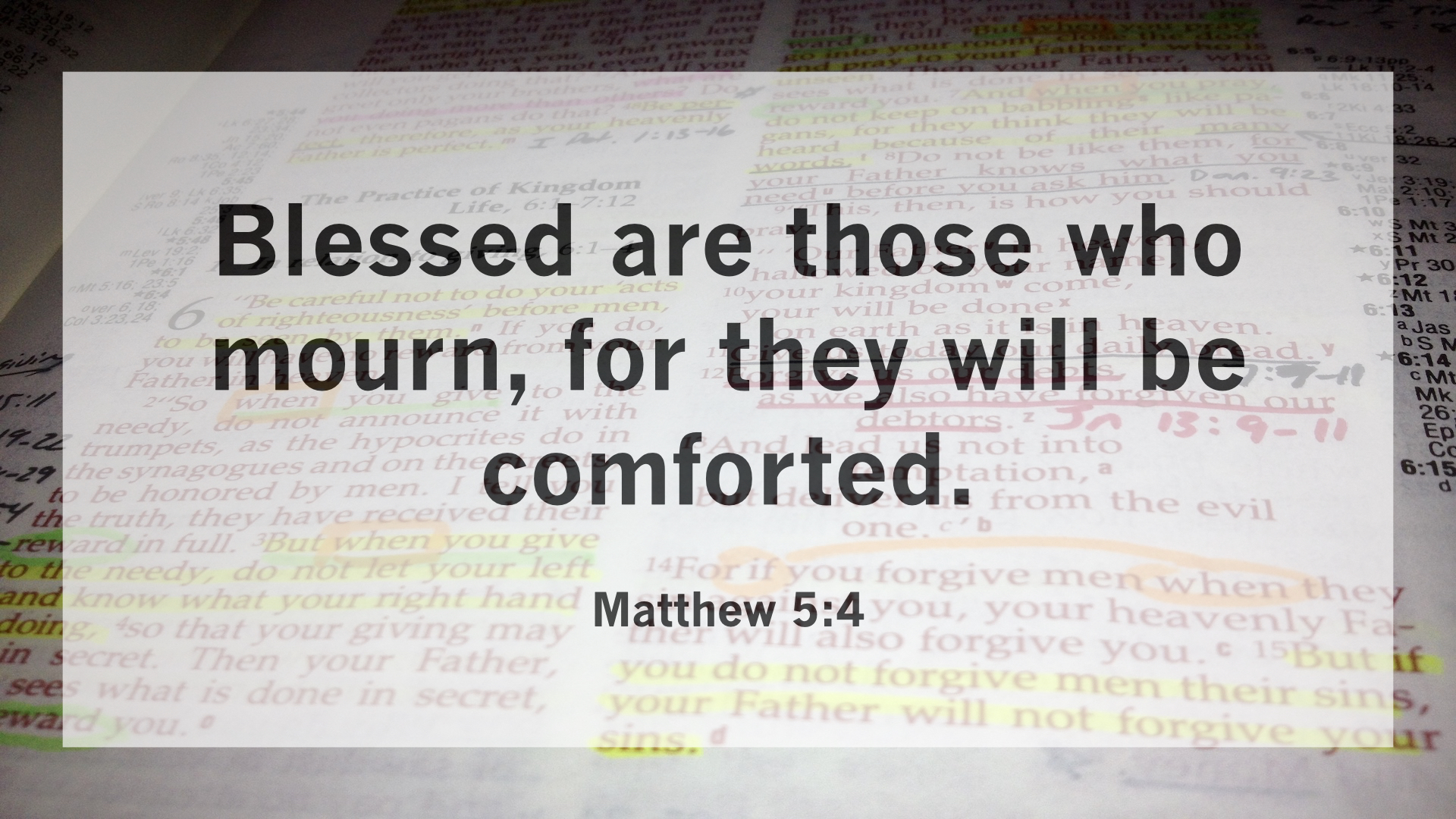
In Psalms 6 & 13, David doesn’t record any answers from God, but listen to this assurance from Jesus, “Blessed are those who mourn, for they will be comforted” (Matthew 5:4).
Jesus doesn’t tell us how or when God will bring us comfort, but He does assure us that we will be comforted!
In a couple of the examples from David, you can see this assurance as he continues his prayers (Psalm 6:2-4, 8-10; 13:1-6). Paul also experienced this confidence (2 Corinthians 12:7-10), and so did Jesus (Matthew 26:38-39, 50-54).
The writer of Hebrews assures us that Jesus was heard in His, “How long?” cries, and therefore He knows exactly how to intercede for us today as we lift up the same cry (Hebrews 5:7-8; 2:10, 14, 17-18)!
How long? Quite simply stated: Until God answers or until He lifts our burden.
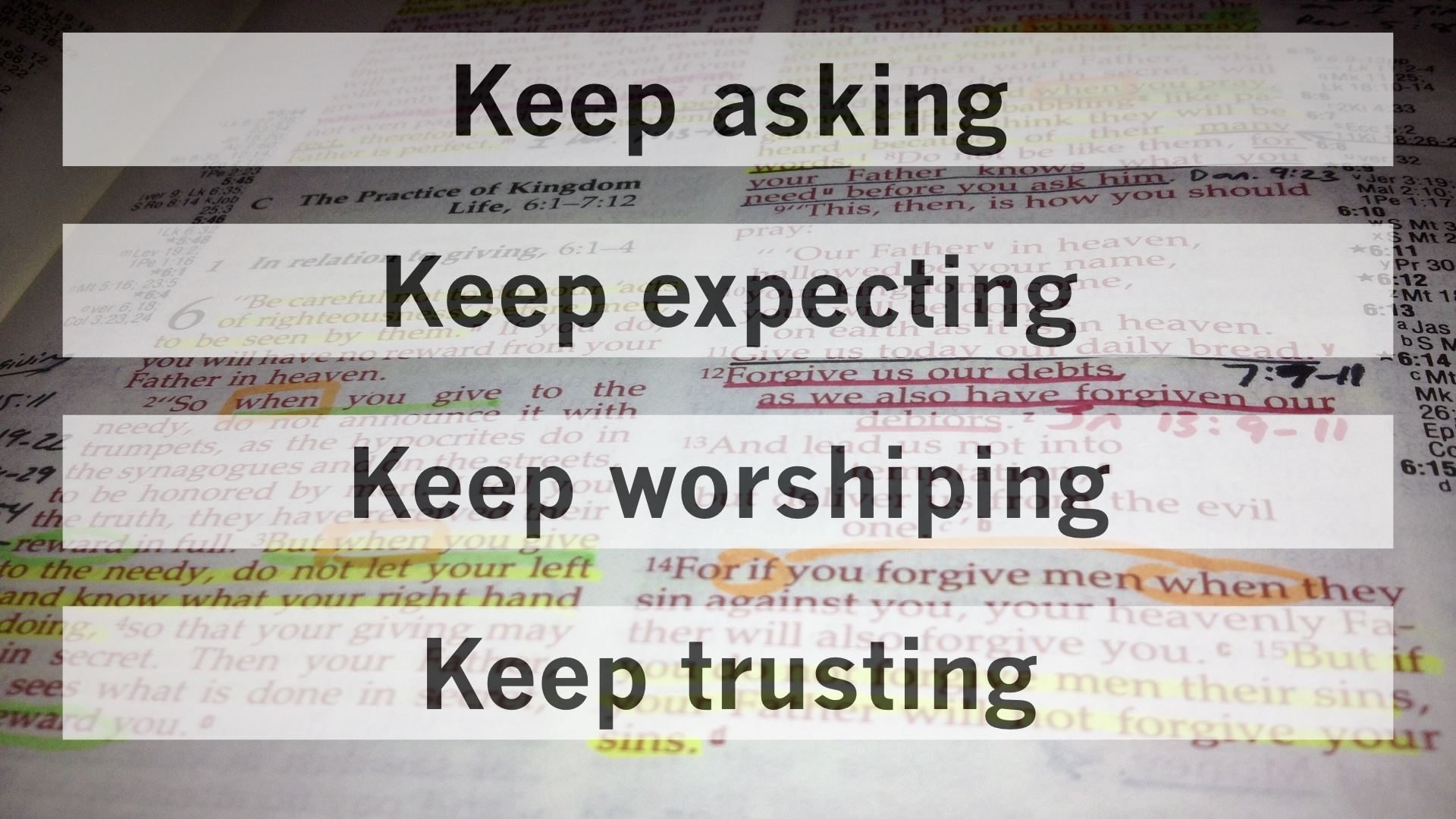
In the meantime, the examples in Scripture and the assurance of Christ’s intercession for us us encourages us to…
Keep asking with full confidence that God hears you
Keep expecting an answer
Keep worshiping God for Who He is
Keep trusting that your Heavenly Father wants to give you the very best!








 Craig T. Owens