Flatten The Rollercoaster

Listen to the podcast of this post by clicking on the player below, and you can also subscribe on AppleSpotify, or Audible. 

I’m not a fan of rollercoasters, but I know a lot of people who really like them. Some even travel all over the world to experience unique rollercoasters. The anticipation as the cars climb slowly up the big hill, knowing that there’s no stopping this thing now! Then the rush of emotions, a deep breath and a laugh at the end (usually laughing at our friends’ responses while on the ride), and then we just walk away. The moment of anticipation leading up to the big drop was usually longer and more intense than the ride itself. 

Not only do people travel all over to find rollercoasters, some people seem to have their emotions perpetually on rollercoasters. 

One of the telltale signs of someone with an immature mental health is the way every situation gets blown out of proportion before anything even happens. Then as an event unfolds, their exaggerations continue: the molehills are mountains, every valley is the valley of the shadow of death, the night is a nightmare, the “crisis” is lasting forever, no one has ever gone through what they’re going through, and the list goes on. 

To break out of this habit requires us developing emotional capacity. John Maxwell describes it like this: “Emotional capacity is the ability to handle adversity, failure, criticism, change, and pressure in a positive way.” Just as athletes have to develop lung capacity or muscle capacity, developing emotional capacity takes time, patience, and diligence. 

Increased emotional capacity is not escaping from our problems or even learning coping skill. Escapism never allows us to confront the things that are keeping our emotional capacity immature. On the other hand, maturing emotional capacity is learning to pause to get perspective so that we can avoid turning every mountain into a molehill, and every challenge into a do-or-die battle.  

Mentally healthy people don’t try to escape, but they learn how to de-escalate by getting a new perspective. Or to use the language of our first mental health strategy, they get off their old, well-worn paths. 

Let me illustrate this by looking at two emotions which seem to be the most rollercoaster-ish. 

(1) The first rollercoaster emotion is anger 

Out-of-proportion anger can either burn everyone around us when we explode, or it can eat away inside us if we hold it in. Neither of these are healthy emotional responses. Jesus got angry at the religious crowd that was keeping people away from God’s kingdom, but He didn’t ride the rollercoaster that led to a sinful expression of His anger. 

God asked Jonah a very helpful question: Have you any right to be angry? (Jonah 4:4). When we feel the Holy Spirit asking us this question, our defiant first response is almost always, “Yes! I didn’t do anything wrong! It was all him!” Solomon would counsel us to cross-examine that thought (Proverbs 18:17). 

Sometimes God will bring someone else across our path to help us pause to get perspective—to flatten the rollercoaster. For instance, God used Abigail to help David (see the story in 1 Samuel 25). However the Holy Spirit cross-examines us, we need to learn to truly listen. James told us: 

My dear brothers and sisters, take note of this: Everyone should be quick to listen, slow to speak and slow to become angry, because human anger does not produce the righteousness that God desires. (James 1:19-20)

(2) The second rollercoaster emotion is fear 

Fear usually causes us to fight or flight. Those are the natural responses, but the supernatural response is to pause to evaluate. I love the reminder that F.E.A.R. means false evidence appearing real. 

As with anger, our first pause to get perspective on this potential rollercoaster that can plunge us into a deep, dark valley should be to cross-examine the false evidence of fear. 

When the group of ladies came to the tomb of Jesus on the Sunday following His crucifixion, they were already battered and bruised in their emotions. Finding an empty tomb brought even more fear in their hearts. But there is a keyword in this account that will help us: 

In their fright the women bowed down with their faces to the ground, but the men [angels] said to them, “Why do you look for the living among the dead? He is not here; He has risen! Remember how He told you, while He was still with you in Galilee: ‘The Son of Man must be delivered over to the hands of sinners, be crucified and on the third day be raised again.’” Then they remembered His words. (Luke 24:5-8)

The Holy Spirit can help us remember the truth in God’s Word to counteract the fear-inducing false evidence (2 Timothy 1:7; John 14:26), but we must pause to listen to this evidence before this rollercoaster emotion picks up speed. 

The bottom line: Don’t try to escape your strong emotions. Pause. Cross-examine the evidence with the help of God’s Word, the Holy Spirit, and a friend to get a healthy perspective. This can help you flatten the rollercoaster before your emotions run away with you. 

If you’ve missed any of the other mental health strategies we’ve already covered in this series, you can find the full list by clicking here. 

►► Would you please prayerfully consider supporting this ministry? My Patreon supporters get behind-the-scenes access to exclusive materials. ◀︎◀︎
In, On, And Through

Listen to the podcast of this post by clicking on the player below, and you can also subscribe on AppleSpotify, or Audible. 

I’ve talked before about the benefits of calling the Old and New Testaments the First and Second Testaments. This helps me not to subconsciously slip into the thought that “old” means outdated or that “new” means a replacement of what came before it. When I say First and Second I remember that there cannot be a Second without a First, that the First anticipates the Second and the Second fulfills the First. 

The people of the First Testament experienced the Spirit of God in an often-repeated phrase: “the Spirit of the Lord came on” someone. It usually came on them for a specific task or season. For instance…

  • 70 leaders to help Moses (Numbers 11:25)
  • the judges that delivered Israel from their enemies (Judges 3:10, 6:34, 11:29, 14:6, 15:14)
  • the anointing for Israel’s king (1 Samuel 16:13)
  • empowerment for prophets to prophesy (Ezekiel 11:5)

(Check out all of the above references by clicking here.)

When the Holy Spirit came on these men, there was a noticeable supernatural anointing and empowerment, but more times than not these men also had visible and sometimes crippling stumbles. 

What happens on the outside often stays on the outside. Sort of like the little boy whose mom brought him to church one Sunday. The little boy was constantly standing up on his chair and disturbing everyone around him. Finally, the exasperated mother whispered, “If you don’t sit down I’m going to take you to the restroom and spank you.” The little boy immediately sat down with his arms tightly crossed. He looked at his mom and said, “Outside I may be sitting down but inside I’m standing up!” 

God looks at the heart. He told the Israelites that their inward defiance didn’t outweigh their outward religious practices. And Jesus said that people who prophesied, cast out demons, and performed miracles, but still had an unrepentant heart, would hear Him say, “I never knew you” (Isaiah 1:12-13; Matthew 7:21-23). 

In the First Testament, we see a desire for the Holy Spirit to be more than on—a desire for Him to come in. David prayed, “Create in me a pure heart, O God, and renew a steadfast spirit within me” (Psalm 51:10). And God promised His people, “I will give them an undivided heart and put a new spirit in them … And I will put My Spirit in you and move you to follow my decrees and be careful to keep My laws” (Ezekiel 11:19, 36:27). 

That is exactly what happened on that Pentecost Sunday immediately following Christ’s resurrection and ascension. The Christians were baptized in the Holy Spirit. He came in them and brought them into the Godhead (John 14:20). 

Jesus described this “in-ness” in the picturesque language of a branch joined to the vine. The branch cannot produce any fruit on its own, but it abides in the vine so that the fruit-producing power can flow into the branch (see John 15:1-5). 

Paul identified this fruit of the Spirit as “love, joy, peace, forbearance, kindness, goodness, faithfulness, gentleness and self-control,” and he concluded with the phrase, “against such things there is no law” (Galatians 5:22-23). The law always sets limits, but when the Holy Spirit abides in us, the production of fruit is limitless! 

Being baptized in the Holy Spirit means that we allow Him to come in us and then to work on us. It’s only when the Holy Spirit has worked in us that can He flow through us to others. Jesus said that we would receive the Spirit’s empowerment to be witnesses—that’s an inward change that produces an outward fruit.

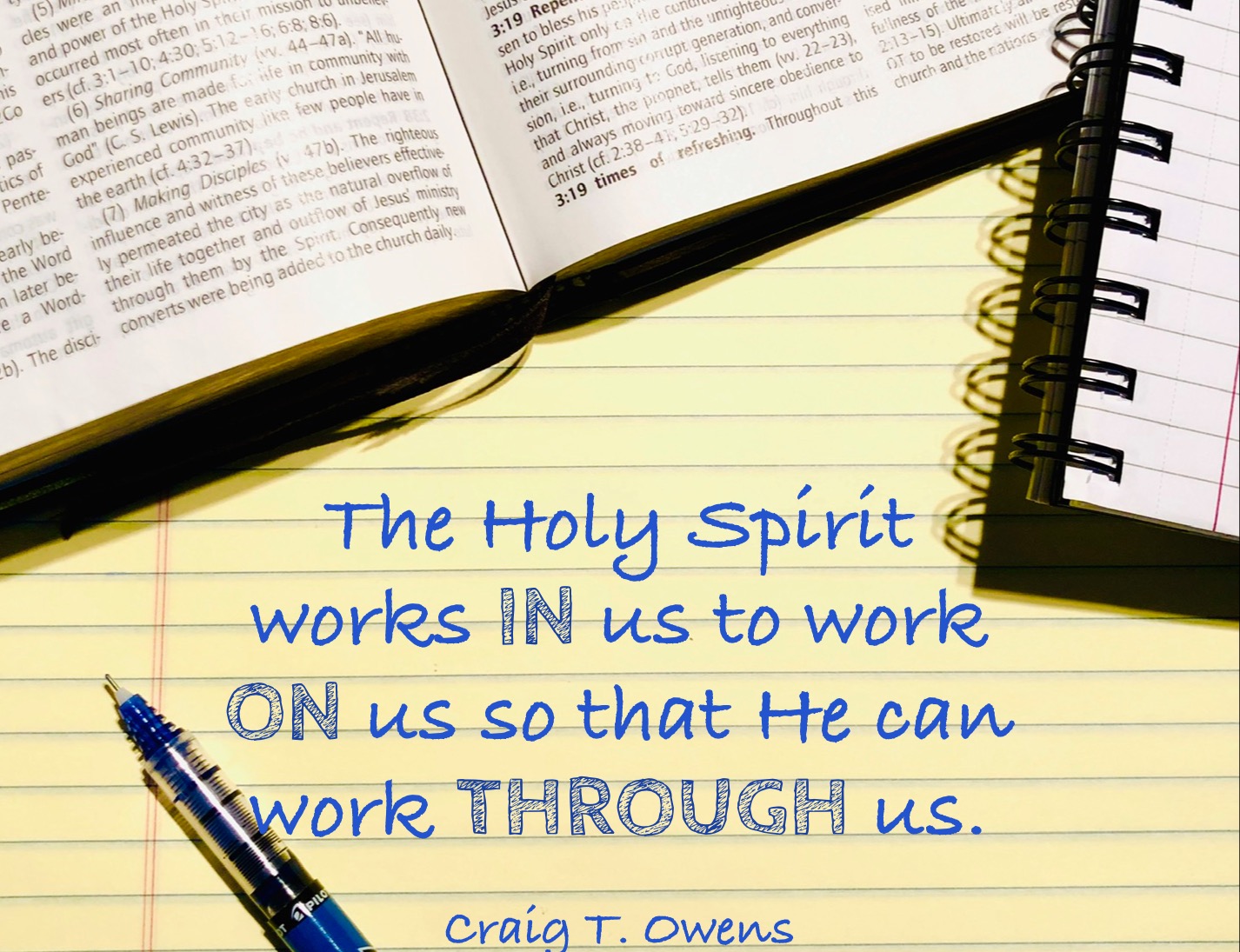
The Holy Spirit works in us to work on us so that He can work through us. So don’t stop at just salvation, but be baptized in the Holy Spirit! 

If you’ve missed any of the messages in our series on the Pentecostal experience, you can find all of those messages by clicking here. 

►► Would you please prayerfully consider supporting this ministry? My Patreon supporters get behind-the-scenes access to exclusive materials. ◀︎◀︎
Links & Quotes

Leaders always go first. I want to develop myself so that I have something to give to other emerging leaders around me. If I’m not growing, I’m not going to be able to help others. Check out this full conversation Greg and I had our on leadership podcast The Craig And Greg Show. And be sure to check out all of my videos on my YouTube channel.

“The important thing is not to stop questioning. Curiosity has its own reason for existing. One cannot help but be in awe when he contemplates the mysteries of eternity, of life, of the marvelous structure of reality. It is enough if one tries merely to comprehend a little of this mystery every day. Never lose a holy curiosity.” —Albert Einstein

This is sort of gross, but kind of cool at the same time. “A new study in the journal Scientific Reports concludes that 12 severed hands discovered in 2011 at Tell el-Dab’a (the site of the ancient Hyksos capital of Avaris) constitute the first bioarchaeological evidence of the gruesome ‘trophy taking’ practice of amputating the right hands of defeated enemies.” Read more about this find here. This is a corroboration of the ‘trophy taking’ David performed for King Saul in the Bible.

The more scientists learn about Creation, the more in awe of our Creator I am! Recently, researchers have discovered even more happening inside our cells that keep everything operating optimally. And then there’s this: “Besides the origin of the eye, Darwin had a problem with the origin of flowering plants (angiosperms—plants that produce seeds within an enclosure, i.e., a fruiting plant), known as Darwin’s abominable mystery. The biblical model of origins maintains that the first forms of life created by God were land plants on Day 3 of the creation week. Land plants were fully-formed and functional—‘in the beginning.’”

Dan Reiland encourages leaders to look at their weaknesses differently. “The chinks in your armor allow you to develop empathy and compassion. They give you insight to human nature. They help you genuinely connect with people. Without these things it’s difficult to lead with God’s heart.”

I am a proud member of the Assembly of God fellowship, so I especially loved reading this report on Breakpoint:

“According to recent research by pastor Ryan Burge of eight major Protestant denominations, only the Assemblies of God has seen a steady increase in church membership since 1987. Each of the others, mostly denominations that are fully progressive theologically and culturally, are experiencing steady decline. 

“Denominations like The Episcopal Church, Evangelical Lutheran Church in America, and the Presbyterian Church (USA) began long ago to move away from orthodoxy and capitulate to new ideas about sex, gender, and marriage. On the other hand, the Assemblies of God (AG) remained committed to orthodoxy on matters of Scriptural authority, the Deity of Christ, the Resurrection, and on sexual matters. It supports the protection of life at all stages, marriage between one man and one woman, and it insists that the body determines identity as male and female. 

“Christians are constantly pressured, within the Church and without, to evolve on these issues or, we are told, we will die out. It seems however, that biblical orthodoxy draws people in. Maybe because it provides an anchor in confusing times.”

Protected To Be Fruitful 

Listen to the podcast of this post by clicking on the player below, and you can also subscribe on AppleSpotify, or Audible. 

We just finished a 2-week look at Psalm 88 & Psalm 89 which reminded us of the reality of temporary darkness and the certainty of eternal light. We said our dark days are meant to get our attention to rely on God’s covenant promise. 

Something else we should be aware of: Whenever we run to or return to Jesus, the enemy of our souls prepares an attack (1 Samuel 7:3-10; 1 Peter 5:8). 

The next psalm with a Selah is David’s prayer in Psalm 140. Selah appears 3 times in this short, 13-verse psalm. 

We’ve said that Selah can mean a pause to carefully consider, a pause to observe the contrasts, or a pause to prepare for a crescendo. The Selahs after verses 3 and 5 don’t appear to fit the second or third definitions, but why would David ask us to pause to consider what wicked men are doing? I believe it is because we need to pause to contemplate two vital things, which I’ll share with you in a moment. 

But first, notice the wicked men and evil times that David is confronting. He speaks of evildoers, violent people, wicked men, arrogant people, and slanderers (vv. 1, 4-5, 8, 11). 

Surrounding the first two Selahs, check out David’s prayer for God to…

  • …rescue me (v. 1a)—get me out of here, or take the evil away from me  
  • protect me (v. 1b, 5b)—don’t let me be defeated or even diminished  
  • keep me (v. 4a)—we might say David is asking God to “watch my six” or guard the places I cannot see (notice the words net and traps in v. 5b) 

The first Selah lesson we should take away is: There, but for the grace of God, go I. 

If I hadn’t accepted Jesus as my Savior and had a new nature imparted to me, I would be doing exactly what these wicked people are doing. Paul tells Timothy what evil people will do, and he tells the Corinthian Christians that they used to be those same kinds of people (2 Timothy 3:1-5; 1 Corinthians 6:11). 

When I see evil men, men of violence, and wicked people who are proud and slandering, I need to Selah to pray that the light and love of Jesus will be revealed to them. 

The second Selah lesson we should take away is: God is doing something in my life through wicked men and evil times. 

The words the Holy Spirit prompted David to pen have a richer definition than what I previously shared with you. Check this out…

  • rescue me (v. 1a) also means make me strong and well-armed for battle  
  • …protect me (v. 1b, 5b) envisions a gardener carefully watching over his vineyard to bring the plants to fruitful maturity (like in John 15:1-2)  
  • keep me (v. 4a) can mean “fight for me”  

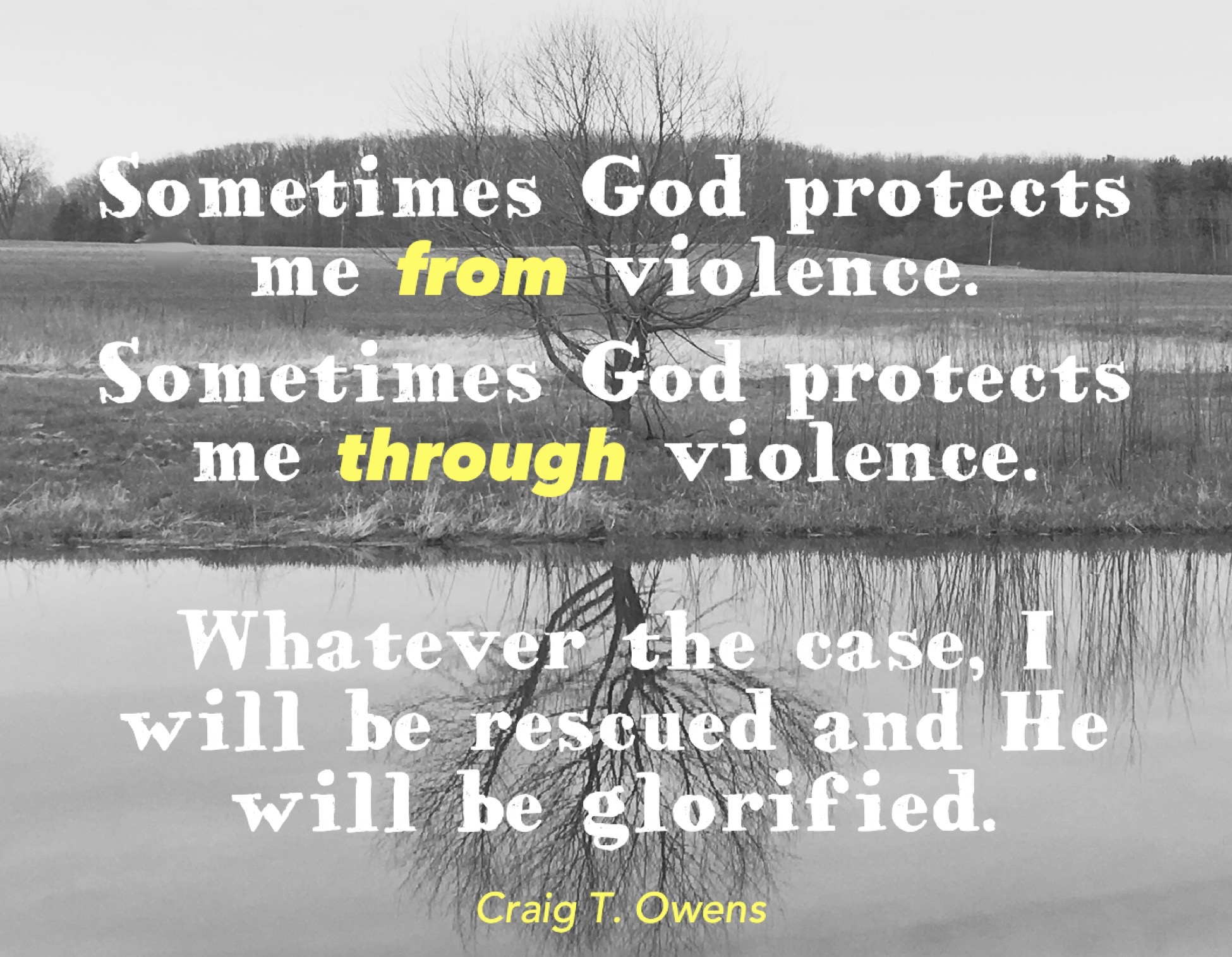
Sometimes God protects me from violence. Sometimes God protects me through violence. Whatever the case, I can be assured that I will be rescued and He will be glorified. This prayer in Psalm 140 is a prayer for protection so that we can be fruitful for God’s kingdom.

We need to Selah during the evil times we live in and whenever we have to endure wicked attacks. 

  1. Selah to thank God that you have been redeemed from that evil lifestyle by your faith in Jesus, and then pray for your attackers (Matthew 5:44). 
  2. Selah to thank God that He is using even evil people to make you more fruitful, to arm you for battle, and to glorify His name (Mark 13:9). 

If you’ve missed any of the messages in our Selah series, you can check them all out by clicking here. 

►► Would you please prayerfully consider supporting this ministry? My Patreon supporters get behind-the-scenes access to exclusive materials. ◀︎◀︎

Saved From The Consequences Of Folly

Listen to the podcast of this post by clicking on the player below, and you can also subscribe on AppleSpotify, or Audible. 

I am so grateful for the blessings of a godly mother and a godly wife! I can relate to Abraham Lincoln who said, “All I am, or can be, I owe to my angel mother. … I remember my mother’s prayers and they have always followed me. They have clung to me all my life.” 

Mothers—both the natural, physical, and adoptive mothers—can save the rest of us from a world of hurt. We see this in a story in the Bible of a mother that saved innumerable people from the consequences of folly. This is an amazing story in 1 Samuel 25, so please take some time to read it for yourself.  

King Saul and David have finally separated from each other, with Saul returning home to Gibeah and David returning to his stronghold at En Gedi. Eventually, David moved west from En Gedi to the Desert of Moan, where the town of Carmel was nearby. 

A prominent citizen of Carmel was a man named Nabal. He is described as “very wealthy,” owning 1000 goats and 3000 sheep. But he apparently gained his wealth through less-than-honorable means because he is described as “surly and mean in his dealings.” We find out later in the story that he’s also hard-hearted and hard-headed, not listening to any counsel others may offer him. 

That fits him because his name means “fool.” I find it hard to believe that his parents named him this from birth. If they did, it reminds me of the opening words of C.S. Lewis’ book The Voyage Of The Dawn Treader: “There was a boy named Clarence Eustace Scrubb, and he almost deserved it.” Instead, I think Nabal’s dealings were so mean, surely, and foolish that the name stuck. Perhaps he even wore that name as a badge of honor. 

It came sheep-shearing time—which is really payday for shepherds—so David sends some of his servants to Nabal to ask for whatever he might find to give as a gift to “your servants and your son David.” David’s men had been a constant source of protection for Nabal’s herdsmen, so a gift of gratitude does seem appropriate. 

Nabal doesn’t just say, “No,” but he insults David. As his foolish nature controlled him, he not only insulted David, but he insulted God too by implying that David wasn’t anointed by God, but was merely ruthlessly climbing a ladder of success. Probably Nabal thought this way because that’s how he himself gained his fortune. 

Nabal’s response lit David’s fuse! In fact, David’s response to his men was just four words long: “Put on your swords!” 

Fortunately, one of Nabal’s servants informed his wife Abigail of this. 

In the same verse where Nabal is described as mean and surely, Abigail is described as “intelligent and beautiful.” Whereas Nabal’s name means fool, Abigail’s name means “my father’s joy.” She must have been born at just the right time for her father and she continues to be a just-in-time woman! 

This servant brought Abigail word of Nabal’s foolish response, telling her that David’s men were indeed “a wall around us” while they were in the desert. And then he says, “Think carefully about what you should do because disaster is hanging over us!” 

Abigail acts quickly, wisely, and humbly. 

The first thing she does is send hundreds of pounds of food to David and his men. She sends the gift that Nabal probably should have sent. Then Abigail herself follows the gifts on her own donkey. When she encounters David and his armed men coming down the mountain pass, she humbly falls at his feet asking David to reconsider. 

Abigail doesn’t tell David he shouldn’t be angry, but she points him to something bigger and more long-lasting than his immediate thought of revenge. She reminds him that he is God’s anointed leader, and she asks, “When you become king, do you want this bloodshed on your conscience?” 

Abigail’s words have an immediate effect on David, who calls off the attack, praises Abigail, and praises God for sending Abigail to him. Abigail rescued Nabal’s family and workers from imminent destruction, and she saves David from the consequences of his rash response. 

The next morning, when she relates this story to Nabal, he has either a stroke or a heart attack, and then dies ten days later. Justice is served, but it’s served by God and not by David.

Later on, David takes the now-widowed Abigail as his wife. 

Abigail’s name scarcely appears anywhere else in the Bible, but there is one notable appearance: 

Sons were born to David in Hebron: His firstborn was Amnon the son of Ahinoam of Jezreel; his second, Kileab the son of Abigail the widow of Nabal of Carmel; the third, Absalom the son of Maakah daughter of Talmai king of Geshur; the fourth, Adonijah the son of Haggith; the fifth, Shephatiah the son of Abital; and the sixth, Ithream the son of David’s wife Eglah. (2 Samuel 3:2-5) 

Amnon, first in line for the throne, raped his half-sister Tamar and was then killed by Absalom, who was Tamar’s brother. Absalom, third in line for the throne, not only avenged his sister’s disgrace but led a coup against David, where he was killed in battle. 

That leaves Kileab as the obvious heir to King David’s throne, yet this is the only place he is mentioned in the Bible. I think Abigail’s wise influence saved Kileab from the drama of aspiring to be king, a painful future, and perhaps a premature death. 

From this amazing story, I would like to offer three takeaways for Moms:

  1. Use your inner beauty to persuade foolhardy men—1 Peter 3:2-3 
  2. Use your Holy Spirit-given wisdom to dissuade foolishness—Matthew 10:19 
  3. Use your prayer life to bring a legacy of peace—Psalm 116:16  

(Please read all of the above verses by clicking here.)

Godly mothers, please be encouraged today at how much influence you exert over others in your life. Your inner beauty, God-given wisdom, humility, and prayers are making more of an impact than you may ever know. I believe in heaven the full story will be shared, and you will be praised for being a wise and faithful servant. 

May God continue to bless, empower, and use our Moms to save us from the consequences of our foolishness! 

►► Would you please prayerfully consider supporting this ministry? My Patreon supporters get behind-the-scenes access to exclusive materials. ◀︎◀︎

Thursdays With Spurgeon—The Natural Out-Gushing

This is a weekly series with things I’m reading and pondering from Charles Spurgeon. You can read the original seed thought here, or type “Thursdays With Spurgeon” in the search box to read more entries.

Listen to the podcast of this post by clicking on the player below, and you can also subscribe on AppleSpotify, or Audible. 

The Natural Out-Gushing

If you remain in Me and My words remain in you, ask whatever you wish, and it will be done for you. (John 15:7) 

   He does not say, ‘If you abide in Me, and My words abide in you, you will do spiritual things,’ but ‘you will ask.’ By prayer you will be enabled to do. But before all attempts to do, you will ask. The choice privilege here given is a mighty prevailing prayerfulness. Power in prayer is very much the gauge of our spiritual condition. …  

     Prayer comes spontaneously from those who abide in Jesus. … Prayer is the natural out-gushing of a soul in communion with Jesus. Just as the leaf and the fruit will come out of the vine without any conscious effort on the part of the branch but simply because of its living union with the stem, so prayer buds and blossoms and produces fruit out of souls abiding in Jesus. … They do not say to themselves, ‘Now is the time for us to get to our task and pray.’ No, they pray as wise men eat—namely, when the desire for it is upon them. …  

     Habitual asking comes out of abiding in Christ. You will not need urging to pray when you are abiding with Jesus. … 

     ‘If you abide in Me, and My words abide in you, you will ask’—and you will not wish to cease from asking. He has said, ‘Seek My face,’ and your heart will answer, ‘Your face, Lord, I will seek’ (Psalm 27:8). … 

     This power in prayer is like the sword of Goliath. Wisely may every David say, ‘There is none like it; give it to me’ (1 Samuel 21:9). This weapon of all-prayer beats the enemy and at the same time enriches its possessor with all the wealth of God.

 From The Secret Of Power In Prayer

When I first met the beautiful young lady that would eventually become my wife, we spent hours and hours and hours talking with each other. It was how I got to know her heart, and how she got to know mine. My conversations with Betsy are still some of the most cherished times I have. 

But what if after we got married I said to Betsy, “I love you, my darling, and I’m so looking forward to a lifetime with you! I will make it a priority to give you my undivided attention for 90 minutes every Sunday morning. Other than that, I’ll be thinking about you while I go about my busy life.” How intimate is this relationship going remain? 

Sadly, this is how many Christians treat their relationship with Jesus. “Thank You for saving me from the penalty of my sin, Jesus! I love You and I’m so looking forward to an eternity with You in Heaven. I will make it a priority to give You my undivided attention every week at church. Other than that, I’ll be thinking about You while I go about my busy life.” 

This is not abiding. 

No branch can remain healthy and produce any fruit if it is only occasionally attached to the vine. In order for the branch to be fruitful, it must be continually abiding in the life-giving sap of the vine. 

Intimacy with Jesus means abiding with Him at all times. It means engaging in conversation with Him at all times. Brother Lawrence commented, “The time of business does not with me differ from the time of prayer; and in the noise and clatter of my kitchen, I possess God in as great tranquility as if I were upon my knees at the blessed sacrament.” 

My friend, let’s all seek to become more aware of the closeness of Jesus. Let us “take delight in the Lord” (Psalm 37:4) and continually engage Him in intimate conversation. As we do, the fruitfulness of our prayer life cannot help but blossom into beautiful things that give God great joy and glory.

►► Would you please prayerfully consider supporting this ministry? My Patreon supporters get behind-the-scenes access to exclusive materials. ◀︎◀︎
People Of The Word

Listen to the podcast of this post by clicking on the player below, and you can also subscribe on AppleSpotify, or Audible.

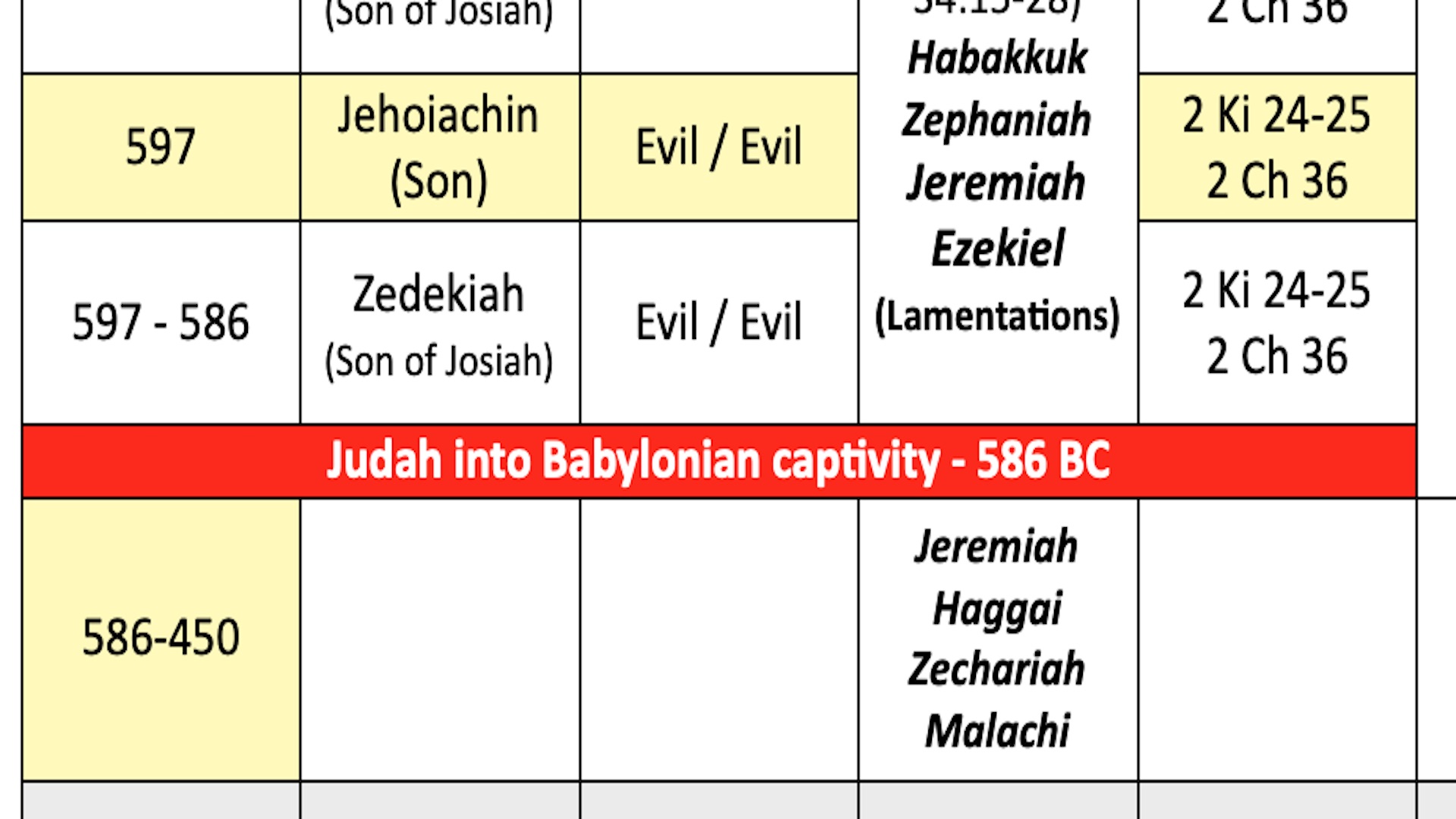
Haggai appears on the historical scene for just five months, but what a bright light he shines! He is the first of three post-exilic prophets to encourage the Israelites who have returned to Jerusalem.

Before we talk about Haggai’s ministry, we need a brief grammar lesson. Specifically, let’s look at two prefixes: un- and non-. Both of them ultimately mean “not,” but there is a distinction that we need to consider when it comes to the Bible: 

    • unbiblical would mean something contrary to the teaching of the Bible 
    • non-biblical is something that may or may not be correct, but it’s not specifically mentioned in the Bible 

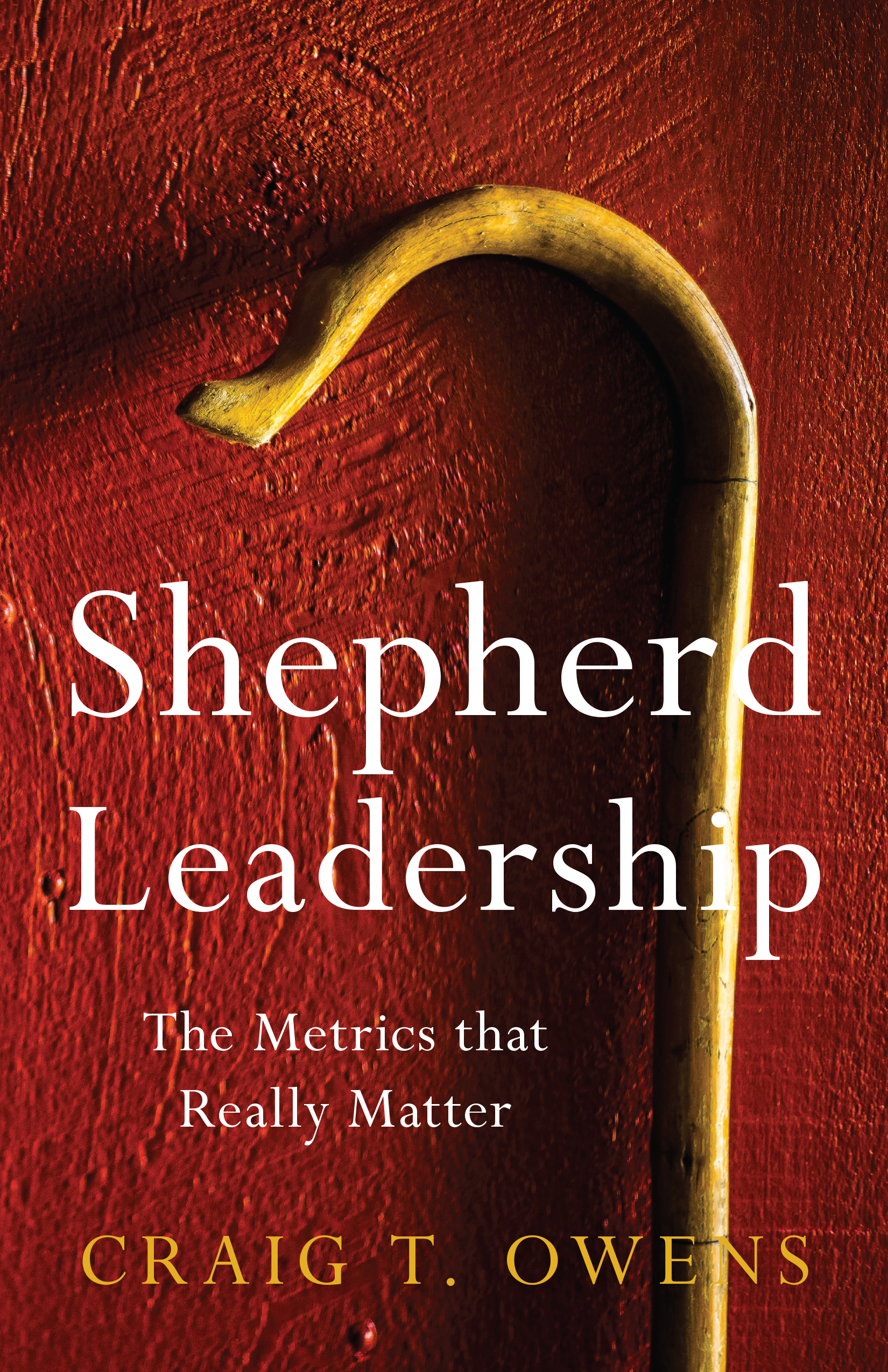
Let me give you an example from my book Shepherd Leadership: The Metrics That Really Matter. Chris asked me whether I preferred the title senior pastor or lead pastor. This is a non-biblical issue; that is, it doesn’t really matter to me because neither of those titles are found in the Bible. Technically, the word pastor isn’t in the Bible either. The word that is usually translated “pastor” is really a herdsman or a shepherd. 

The problem is that if we put too much focus on non-biblical things, those things can end up becoming unbiblical pursuits. Like when Jesus took the Pharisees to task for their focus on traditions over Scripture (see Matthew 15:1-6). I wrote Shepherd Leadership mainly to get pastors and church leaders to spot non-biblical metrics which may have sneakily turned into unbiblical pursuits, so that they could return to pure biblical principles. In the Preface of my book, I wrote—

“My larger concern is that churches, parachurch organizations, and nonprofit ministries that are largely founded to fulfill a biblical mandate are straying from the simple, freeing truths found in the Bible. Or maybe I should say that they are adding things to their ministries that aren’t in the pages of Scripture. Whichever way you want to say it, the result is the same: We are using the wrong metrics to define ‘success’ for our ministries. I fear that in our focus on unbiblical practices, we are missing the joy of really doing ministry.”

Haggai calls God’s people to return to God’s Word. This is the second-shortest book in the Old Testament (at just 38 verses long), yet Haggai says something like “this is what God says” 28 times in these 38 verses! 

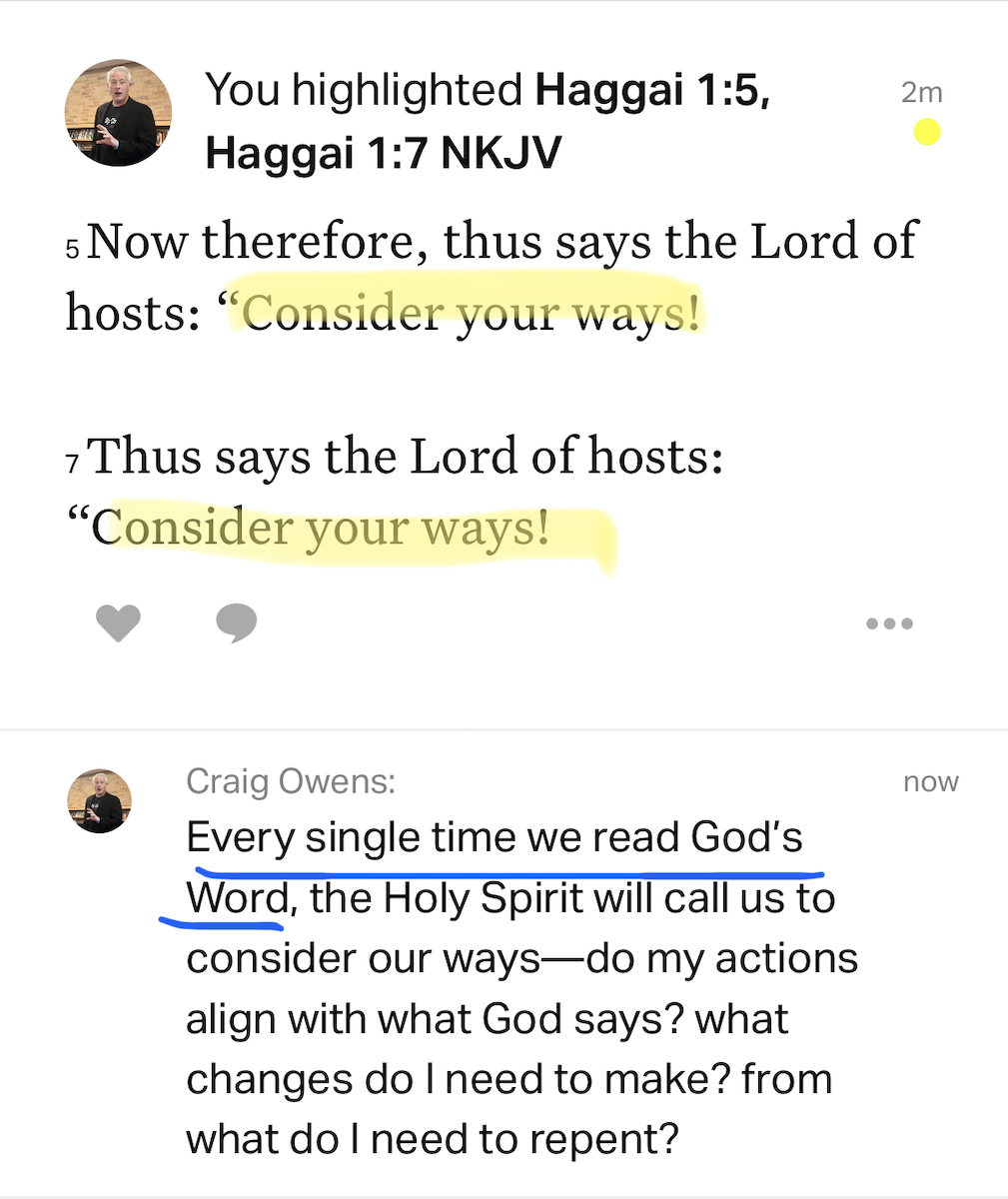
Haggai also records five times that God says, “Give careful thought to your ways.” This phrase literally means to take a strong hold on each thought and examine it intensely. This idea is always connected to a phrase like, “This is what the Lord Almighty says” (1:5, 7; 2:14-15, 17-18). In other words, we are to thoughtfully examine our lifestyle with God’s Word being THE standard of measurement. 

Paul made a similar connection in the New Testament: We demolish arguments and every pretension that sets itself up against the knowledge of God, and we take captive every thought to make it obedient to Christ (2 Corinthians 10:5). 

Jesus did this too. When speaking to the religious leaders, He said, “You are wrong because you know neither the Scriptures nor God’s power” (Matthew 22:29). And even with His own disciples, He had to open their minds to see how the Scriptures pointed to Him and were fulfilled in Him (Luke 24:25-27, 44-45). 

Indeed, the phrase “it is written” is used 75 times in the New Testament! 

That’s why Haggai’s words still ring true to us today: “Give careful thought” to how you live in light of how God says you should be living. Christians need to…

  1. Hear the Word of God every day 
  2. Consider their lives in light of the Word of God
  3. Obey what the Word of God is saying to us 

(check out Acts 17:11; Psalm 139:23-24; 1 Samuel 15:22) 

We must become people of the Word of God or else we run the very real risk of letting our non-biblical decisions spiral downward into a sinful, unbiblical lifestyle that grieves the heart of God. 

If you’ve missed any of the messages in our series Major Lessons From Minor Prophets, you can access the full list by clicking here. 

►► Would you please prayerfully consider supporting this ministry? ◀︎◀︎

Why We Need Loving Friends

Listen to the podcast of this post by clicking on the player below, and you can also subscribe on AppleSpotify, or Audible. 

Check out this excerpt from chapter 13 of my book Shepherd Leadership: The Metrics That Really Matter

David was the gold standard for every king of Israel who followed him. Numerous times throughout the history of Israel, we will see a note that a certain king either followed God like David, or turned from God unlike David. Yet there exists a wart on David’s portrait: an adultrous affair with the wife of a man in his inner circle, and then subsequent lies and a murder to cover up the affair. “The thing David had done displeased the Lord” (see 2 Samuel 11). 

But I’d like to turn your attention to when this affair occurred: “In the spring, at the time when kings go off to war … David remained in Jerusalem” (2 Samuel 11:1). He was without his usual comrades. The men who knew David best, who could probably sense if something was amiss, weren’t around to warn him. When David tried to find out the identity of the bathing beauty on the roof next door to his palace, an unnamed attendant tried to remind him, “Isn’t that Bathsheba, the wife of Uriah?” but David dismissed him. 

Elijah was arguably the most forceful and fearless prophet in Israel’s history. Not only did he stand up to the evil kings of Israel, but he spoke out against the kings of surrounding nations, too. In answer to Elijah’s prayer, God brought a drought on the land, and again in answer to Elijah’s prayer, God sent rain. Elijah challenged the 450 prophets of the god Baal and the 400 prophets of the goddess Asherah to a duel to the death, which ended up in a decisive victory for Yahweh. Yet, shortly after this massive victory, Elijah was depressed to the point that he wanted to die. 

What led to Elijah’s depression? Something very similar to David’s slide into adultery: He was alone. Elijah ran away from Queen Jezebel’s death threat, left his servant behind, and proceeded all by himself into the desert. It was when he was without a comrade that he prayed to God, “I’ve had enough. Take my life” (see 2 Kings 17–19). 

And what about Peter? He boldly claimed his loyalty to Jesus, even to the point of wielding a sword at the guards who came to arrest his Master. But when Peter was alone, after the other disciples fled, he denied three times that he knew Jesus (Matthew 26:33, 51, 69–75). 

God designed us to be in relationship with others. His statement to Adam in some of the earliest words of the Bible—“It is not good for you to be alone”—are words for us still today. 

In a recent episode of “The Craig And Greg Show,” Greg and I discussed one of our favorite verses in the Bible: Wounds from a friend can be trusted, but an enemy multiplies kisses (Proverbs 27:6). 

If you want to go far, don’t try to go alone. If you want an accountability partner that can keep warts away from your leadership legacy, don’t go alone. If you want to extend your leadership influence, don’t go alone. If you want to honor God’s investment in you, don’t go alone. Get those friends around you who love you enough to speak the truth! 

►► Would you please prayerfully consider supporting this ministry? ◀︎◀︎

The Destructive Power Of Self-Sufficiency

…Find me a woman who is a medium, so I may go and inquire of her (1 Samuel 28:7). 

How sad for King Saul! But this is the inevitable path for one who was put into his leadership position by God and then completely turned his back on God. 

God did so much over so many years to try to get Saul to turn back to Him, but Saul persisted in his self-sufficiency. As Paul wrote in Galatians, “A man reaps what he sows.” Militarily, Saul had one shining moment: delivering the people of Jabesh Gilead. The closing words of 1 Samuel show us the valiant man from Jabesh conducting a covert nighttime mission to remove the bodies of Saul and his sons from the Philistines, and then giving them a proper burial. Just imagine how many more valiant men may have been around if Saul had continually obeyed God! 

Now, nearing the end of his life, Saul is at his wits’ end: God is not answering him by any means he tries. As a result, this final chapter of Saul’s leadership is characterized by words like:

  • afraid
  • terror filled his heart 
  • great distress 
  • filled with fear 
  • his strength was gone

Until King Saul ultimately takes his own life.

The consequences of Saul’s sinful self-sufficiency impacted more than just him. A leader’s sins have devastating effects on his followers. Throughout Saul’s reign as king we see the army fearful, hesitant, ill-equipped, slinking away, confused, set up for failure, and ultimately defeated. Saul could never get out of his own way, taking Israel down with him.

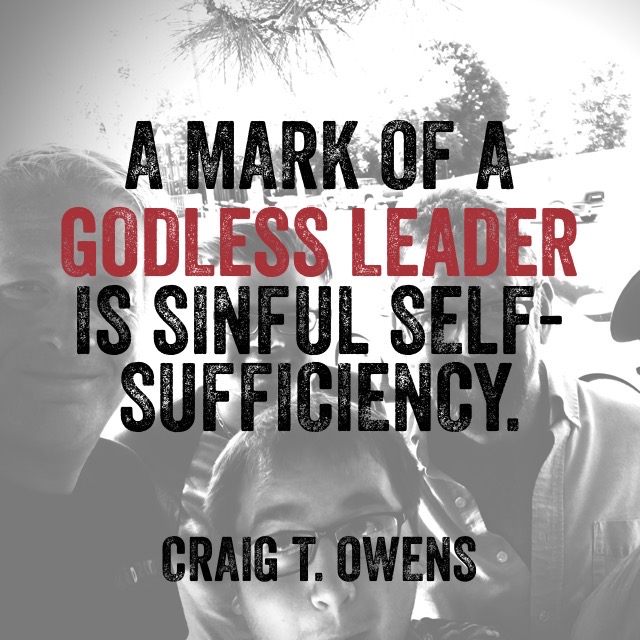
A mark of a godless leader is sinful self-sufficiency.

How sad for Saul and Israel. Especially because Saul’s demise was totally avoidable if he only would have repented of his pride and turned wholeheartedly to God.

This is a sober reminder for all leaders: if God has put you in a place of leadership, you will experience success. Don’t let that success fool you, as it did with Saul, into thinking you created that success. This is the first step toward the downward slide that ultimately destroyed Saul, and it will be your undoing as well. 

This is part 49 in my series on godly leadership. You can check out all of my posts in this series by clicking here.

How To Pray When You’ve Been Stabbed In The Back

Sadly, some of the people who do us the most harm are those whom we least expected to hurt us. They seemed to have our back, but then they are stabbing us in the back! 

It’s sad, but it shouldn’t be totally unexpected. Matthew Henry said it well: “Never let a good man expect to be safe and easy till he comes to heaven. … It is well that God is faithful, for men are not to be trusted. 

David learned that lesson. He rescued the town of Keilah from the Philistines, only to hear that King Saul has called out his army to destroy Keilah and kill David. This prompted David to leave Keilah and flee to the Desert of Ziph. It appears that David has given Saul the slip, but the Ziphites send a message to the king saying, “We know where David is hiding, and we’ll gladly hand him over to you.” 

Here’s the painful part for David: Both Keilah and Ziph were in Judah—David’s tribe! His own family—that should have had his back—stabbed him in the back instead! 

I wish I could say this was a once-in-awhile thing, but we all know that it’s not. In fact, this sort of betrayal probably happens more often than we would care to admit. 

It was during this time of betrayal by the Ziphites that David wrote the 54th Psalm. In the opening verses, David laments the ruthless, Godless men that have betrayed him. And then comes that word of pause: Selah. 

I believe this Selah may have come when “Jonathan went to David at Horesh and helped him find strength in God” (1 Samuel 23:16). One of the definitions of Selah is to weigh things to see what is more valuable. Notice that Jonathan took David’s attention off his evil betrayers and turned it to his loving God. So in the very next phrase after the Selah we read David saying, “Surely God is my help; the Lord is the One who sustains me.” 

Notice four key components of David’s prayer—

  1. David’s motive for praying. In the opening verse, he says, “Your Name…Your might.” To me, that sounds a lot like the opening words to the model prayer Jesus taught us: “Hallowed be Your Name.” 
  2. David’s prayer. He said, “Hear my prayer, O God; listen to the words of my mouth.” It’s interesting to note that David says nothing to the Ziphites themselves, but he only speaks of them when he is alone with God in prayer.  
  3. Prayer’s result. David didn’t have to try to make things right on his own because God took care of it—evil recoiled on those who stabbed David in the back. 
  4. David’s praise. Notice the words “I will praise Your Name…[You] have delivered me.” Again, this praise and focus on God sounds like the end of the model prayer Jesus taught us: “Yours is the kingdom, and the power, and the glory forever!” 

When enemies assail, when you have been stabbed in the back, don’t look to men for help and don’t take matters in your own hands. Instead take a Selah. Consider that God is worthy of your attention, and not the “ruthless men” who hurt you. Turn your pain over to God and say with David: Surely God is my help; the Lord is the One who sustains me. 

Evil will recoil on evildoers, you will be kept safe, and you will be vindicated by God’s might! 

If you missed any of the messages in our Selah series, you can find them all by clicking here.