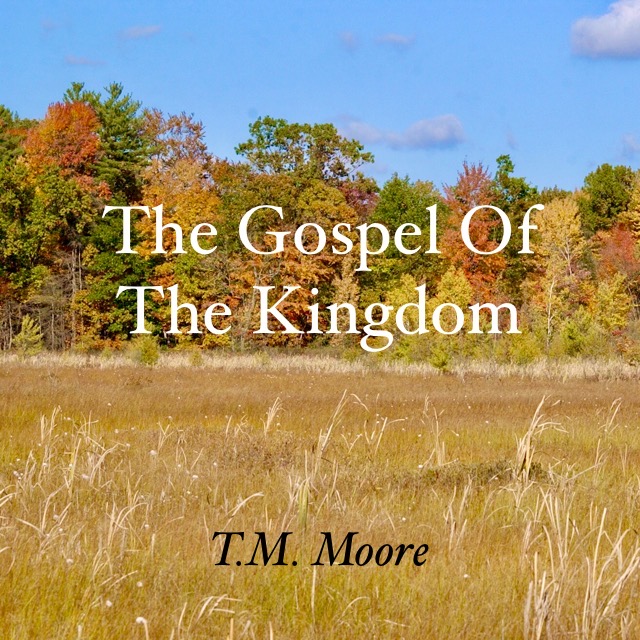
8 Quotes From “The Gospel Of The Kingdom”

T.M. Moore has written a book that I think is a must-read for those who want to “earnestly contend for the faith” (Jude 3)—the orthodox Christianity that is presented in the Scriptures. You can check out my full book review of The Gospel Of The Kingdom by clicking here. 

“We can only discern these wayward ‘winds of doctrine’ when we have a clear understanding of the Gospel of the Kingdom. The better we understand and the more wholeheartedly we embrace this Good News as Jesus and the Apostles taught it, the better able we will be to counsel and lead our fellow believers who may be ensnared in the thrall of a ‘different gospel’ and therefore in danger of having believed in vain.” 

“In the divine economy now established within the Kingdom of God, the Spirit of God works with the Word of God to build the church and further the reign of Christ. An ethic of love and hope prevails within that realm which serves as a platform for embodying and proclaiming the truth of God and Christ. Salvation comes to those who believe, bringing them into the community of the saints and dramatically affecting every aspect of their lives in relationships of mutual service and love.” 

“The Gospel of the Kingdom is not, in the first instance, about you and me going to heaven when we die. It is about the Kingdom of God, first and foremost—about a new reality that has broken into human experience with irresistible, transforming power, making all things new and bringing the knowledge of the glory of God to light in the sight of all men and nations.” 

“Apart from the saving mercy of Christ and liberation into His Kingdom, men can look forward only to lives of uncertainty, doubt, disappointment, false hopes, fear, and death.” 

“The Gospel of the Kingdom is the power of God for transformation, a transformation so complete and thorough that it finally makes all things new. Those who know this power are changed by the glory of God so that, increasingly, their lives actually begin to reflect the living reality of the risen Christ, their King. The fruits and virtues that flow from their lives, like rivers of living water, are precisely those most to be desired and least in supply in a fallen world.” 

“The Kingdom is Good News because it brings power exceeding and abundant to be and do more than we could ever ask or think [Ephesians 3:20]. Here is a power we can never exhaust and that springs up day by day in ever fresher, ever more abounding ways to make all things new in our lives.” 

“Joy, it appears, is not determined by what we can see in our immediate environment. Instead, Joy is a condition that attaches to knowing the Lord and being able to see past what is seen in order to engage what is not seen. …The ability to know joy—in spite of any untoward circumstances or conditions—is dependent on the extent to which one actually knows the Lord and is intimately engaged in a relationship with Him. … Your salvation is an experience of living in the Kingdom of God, where we know the hope of glory, experienced and expressed, as a daily reality, then our joy will be more constant and full because our relationship with the Lord will be as much for the ‘here and now’ as for the ‘then and there.’” 

“God is always ready to meet us with joy, and He has provided ample means whereby we may engage Him for the joy that is to be known in His presence. Only our slothfulness, distractiveness, or neglect of His salvation—or the idolatry of seeking our joy in places other than the presence of God—can keep us from living in joy now, and in anticipation of the fullness of joy yet to come.” 
The Gospel Of The Kingdom (book review)

In the 1940s, C.S. Lewis presented a series of radio talks which became the book Mere Christianity. It was in this book that Lewis went beyond any denominationalism to the basic tenants of Christianity as outlined in the Bible. T.M. Moore persuasively warns us today of the trend away from “mere” Christianity to what he terms “near Christianity.” The Gospel of the Kingdom is an important book for those who desire to “contend for the faith that was once for all entrusted to God’s holy people” (Jude 3). 

An increasing number of people who call themselves Christians—and even more alarmingly, those who are in positions of church leadership—aren’t living or preaching the full Gospel as presented in the Scriptures. Moore sounds the clarion call: “We are in danger, I believe, of having embraced, not the Gospel Jesus and the Apostles proclaimed, and for which our forbearers in the faith lived and died, but another gospel, a shallow, self-centered, merely sentimental gospel, which ‘assures’ us of heaven but does not equip us for the kingdom of God.” 

The followers of near Christianity tout how they have been saved from hell, but their profession and lifestyle don’t go beyond that. In other words, there is very little—if any—evidence that Jesus has become the Sovereign of their lives, and that they are living as citizens of God’s Kingdom. “Near Christianity, therefore, produces little in the way of kingdom evidence in the lives and churches of those who embrace it,” says Moore. 

In The Gospel of the Kingdom, Moore fully defines the imposter known as near Christianity, and then systematically details the characteristics of the Kingdom of God that should be evidenced in the lives of those who call themselves Christians. This isn’t just Moore’s opinion, but this short book is thoroughly cross-referenced with over 100 biblical passages.

All Christians—and especially those in the pastorate or other leadership roles—would do well to digest this book. If we aren’t vigilant, near Christianity may dominate the landscape of our churches, which really isn’t Christianity at all. 

I am a Wax Tablet Publications book reviewer. 

Killing Discontentment

Fading gratitude is a terrible thing. Not being thinkful of our past not only keeps us from being thankful, but it also keeps us stuck in the past. And allowing gratitude to fade also sucks the life out of our every-day experiences.

Asaph told us about the manna that God provided for the Israelites to eat every single day that they were in the wilderness. He called it the bread of angels. But even this wasn’t enough for people who weren’t thinkful nor thankful. Instead, they craved more (Psalm 78:25-30). 

The dictionary defines forgetfulness as “ceasing to think about something.” Gratitude, then, is to continue to think about Someone—that “Someone” being God who daily provides for us.

Fading gratitude brings two ugly realities: 

(1) Discontentment. The dictionary calls this “a restless desire or craving for something one does not have.” In other words, it’s counting up what you don’t have instead of being grateful for what you do have. 

(2) Entitlement. This is discontentment’s sickly twin sister. Where discontentment counts up what it doesn’t have, entitlement says, “I deserve what I don’t have!” Jesus told a story about entitled people who had been given land, a vineyard, and everything they needed to be successful with their farm. Yet when the owner of the farmland asked for his rightful payment, the renters thought they were entitled to keep it all. 

There are serious—and potentially eternal—consequences for our unchecked discontented entitlement. Jesus said, “What then will the owner of the vineyard do? He will come and kill those tenants and give the vineyard to others” (Mark 12:9). And Asaph reported that for the discontented, entitled Israelites, “God’s anger rose against them; He put to death the sturdiest among them, cutting down the young men of Israel. … So He ended their days in futility and their years in terror” (Psalm 78:31, 33). 

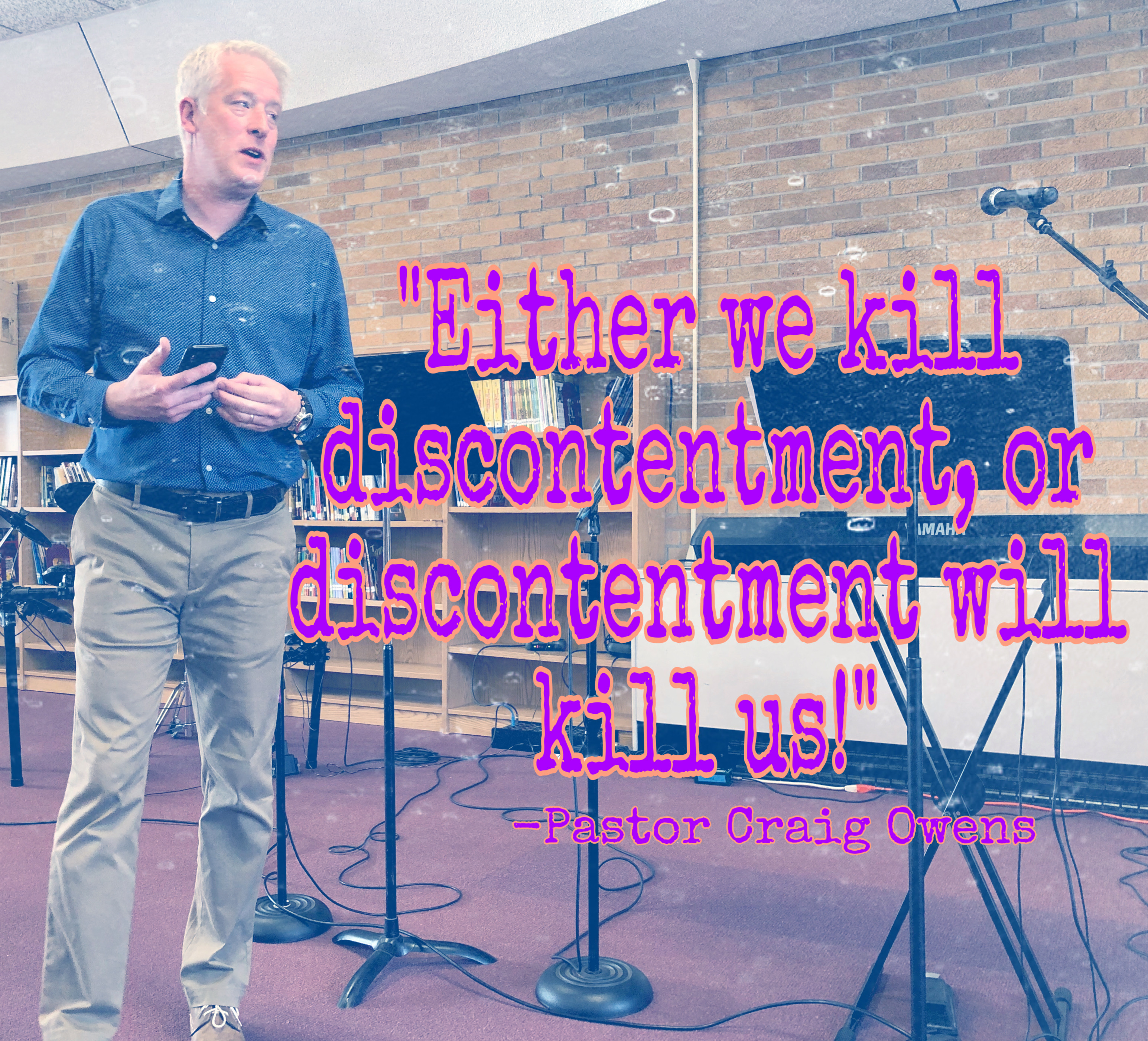
One of two things is going to happen: either we kill discontentment, or discontentment will kill us! 

It’s not complicated to kill discontentment, but it is hard work. We kill discontentment with contentment. We learn to separate the dis from discontentment with the sword of gratitude! 

The apostle Paul wrote “…I have LEARNED to be content whatever the circumstances. I know what it is to be in need, and I know what it is to have plenty. I have LEARNED the secret of being content in any and every situation, whether well fed or hungry, whether living in plenty or in want. I can do all this through Him who gives me strength” (Philippians 4:11-13). 

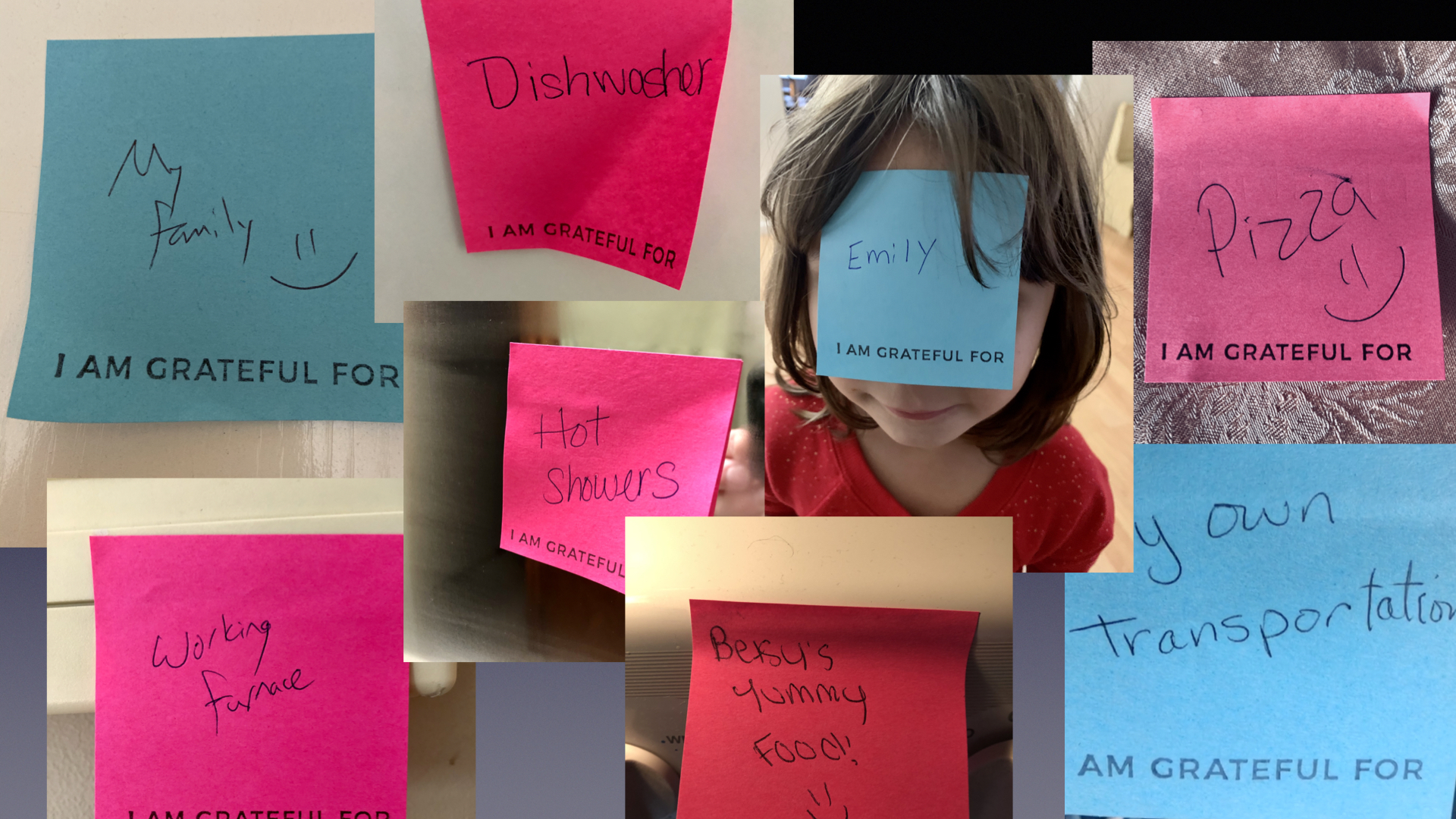
One way to learn contentment is to keep reminders around you of all the things which with God has blessed you. Don’t let your gratitude fade for one moment! 

Next week we will be wrapping up this series by considering what can happen to our future outlook if we let gratitude fade from our hearts and minds. I hope you can join me! 

Poetry Saturday—Come, Thou Fount

Come, Thou Fount of every blessing, tune my heart to sing Thy grace; 
streams of mercy, never ceasing, call for songs of loudest praise. 
Teach me some melodious sonnet, sung by flaming tongues above. 
Praise the mount! I’m fixed upon it, mount of Thy redeeming love. 

Here I raise mine Ebenezer; hither by Thy help I’m come; 
and I hope, by Thy good pleasure, safely to arrive at home. 
Jesus sought me when a stranger, wandering from the fold of God; 
He, to rescue me from danger, interposed His precious blood. 

O to grace how great a debtor daily I’m constrained to be! 
Let Thy goodness, like a fetter, bind my wandering heart to Thee. 
Prone to wander, Lord, I feel it, prone to leave the God I love;
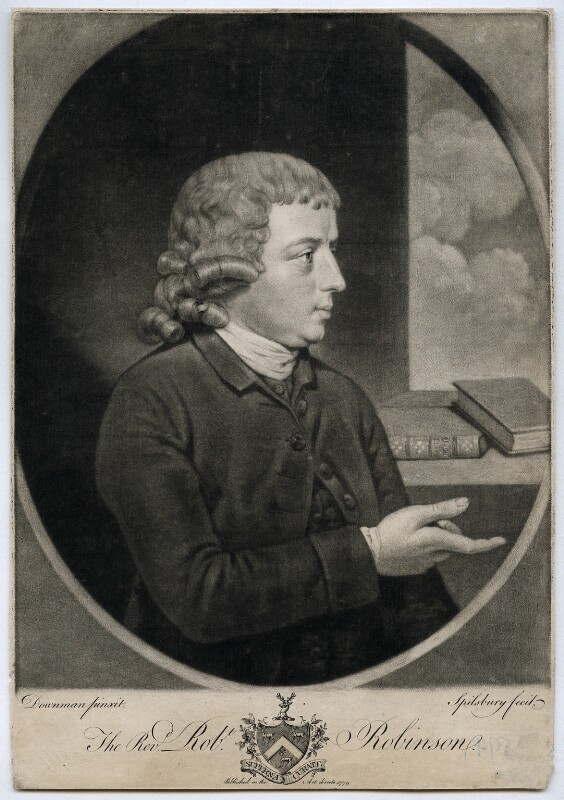
here’s my heart, O take and seal it, seal it for Thy courts above. —Robert Robinson

Thursdays With Spurgeon—You Cannot Hide Your Heart From God

This is a weekly series with things I’m reading and pondering from Charles Spurgeon. You can read the original seed thought here, or type “Thursdays With Spurgeon” in the search box to read more entries.

You Cannot Hide Your Heart From God

Hell and destruction are before the Lord: how much more then the hearts of the children of men? (Proverbs 15:11 KJV) 

     God knows the burial places of all His people. He notes as well the resting place of the man who is buried tombless and alone as the man over home a mighty mausoleum has been raised. He saw the traveler who fell in the barren desert, whose body became the prey of vultures and whose bones were bleach in the sun. He saw the mariner, who was wrecked far out at sea and over whose corpse no dirge was ever wailed, except the howling of the winds and the murmuring of the wild waves. God knows the thousands who have perished in battle, unnumbered and unnoticed; the many who have died alone amid dreary forests, frozen seas, and devouring snowstorms; all these and the places of their sepulcher. God has marked that silent grotto within the sea, where pearls lie deep, where now the shipwrecked one is sleeping, as the death place of one of His redeemed. …

     Yes, hell, horrible as it is and veiled in many clouds and covered over with darkness, is naked before the vision of the Most High. There is the grand fact stated: “Hell and destruction are before the Lord.” After this the inference seems to be easy: “How much more, then, the hearts of the children of men?” … 

     God who sees death and hell sees our hearts, for they are far less extensive. … Scarcely have we time enough to tell the story before it comes to its end. Surely, then, God may easily understand the history of a man, when He knows the history of the monarchies of death and hell. [see Psalm 44:21; Jeremiah 23:24; Revelation 2:23] … 

     God does not judge by the appearance of a man’s great heart, or the outside appearance of a good heart. But He puts it in the scales and weighs it; puts His own Word in one scale and the heart in the other. He knows the exact weight. He knows whether we have grace in the heart, which makes us good weight, or only presence in the heart, which makes us weigh light when put into the scale. He searches the heart in every possible way. …

     Oh, you may endeavor as much as you can to hide your faults from God. But beyond a doubt, He will discover you.  

From God, The All-Seeing One

When—not if—God looks at your heart, what will He find? 

Yes, we should pray—Search me, O God, show me anything that is offensive to You [Psalm 139:23-24]—but then we must repent and ask forgiveness when the offense is revealed. No excuses, no covering up!


Don’t __________ One Another

Listen to the podcast of this post by clicking on the player below, and you can also subscribe on AppleSpotify, or Audible.

Check out James 4:11, “Brethren…

  • …do not speak evil of one another” (NKJV) 
  • …do not accuse or malign one another” (AMP)
  • …do not bad-mouth one another” (MSG)
  • …do not slander one another” (GW)
  • …do not criticize one another” (NLT)
  • …do not defame one another” (Greek definition for katalaleo) 

Why not? James gives us three good reasons:

  1. All humans are made in God’s image. So to defame another person is to defame God. 
  2. All humans are a part of my family. “One another” (Greek allelon) and “brethren” (Greek adelphos) includes me too! 
  3. It only set me up to be judged in the same way—“What right do you have to judge or criticize others?” (TLB) … “Who are you that you presume to pass judgment on your neighbor?” (AMP) … “Who do you think you are to meddle in the destiny of others?” (MSG). 

The bottom line—

If I don’t want someone to ___________ me, I shouldn’t ___________ them! 

(see Luke 6:31 and James 2:8)

►► Would you please prayerfully consider supporting this ministry? ◀︎◀︎

Feeding Hungry Kids

Some of the volunteers that help us week after week

It was a snowy day in West Michigan. So snowy, in fact, that schools had been canceled for the day. While many people were bundled up at home, the local police department was responding to a call of an alarm that had been tripped at an elementary building. When the police arrived they found a young body going to each door attempting to get inside his school. When the police officer asked him what he was doing, the young lad looked at him innocently and said, “This is where I get breakfast.” 

Sometimes we forget how many of our students get at least one or two meals at their school each day. In my community, 49 percent of Cedar Springs students are eligible for free or reduced lunch. So our churches decided to do something about this. The Cedar Springs Ministerial Association has organized teams to provide nutritious food for hungry students to eat on the weekends. 

Someone once asked me, “Before agreeing to get this program started in our city, did you pray about it?” 

“No,” I quickly responded. “I didn’t need to pray about it because I knew Jesus had already said, ‘If you see someone hungry, feed them.’” 

Our program is currently serving 200 students each week!

Think about that—without the generous and faithful support of so many volunteers and donors, 200 students in Cedar Springs would be going without adequate food each weekend. 

Would you consider helping us? 

We have set up a separate website to keep people updated on the current food and volunteering opportunities. We also have a link for online financial gifts. If you would like to make a recurring donation, just $20 per month will provide healthy food for a student for the whole month. Whatever you can do with your time or financial support will be a blessing to so many!

Honoring Veterans The Right Way [repost]

Disclaimer: I’m a patriotic crier. I love the United States of America, and proudly call her the greatest nation in history. So whenever I watch a patriotic movie, or serve at a veteran’s funeral, or even sing the national anthem before a Cedar Springs football game, I get misty.

I believe we owe a huge debt of gratitude to our veterans. But I also believe we may not be honoring that debt in the right way.

We usually honor our soldiers, sailors, airmen and Marines who have given “their last full measure of devotion” by playing taps at their funeral, firing a 21-gun salute, or even putting a flag in the sacred ground of their burial site every year at Memorial Day.

But what about our vets who are still living? Don’t they deserve more than just an occasional visit on Veterans Day?

In many ways, we treat Veterans Day like we do Thanksgiving Day: it’s just one day on our calendar to take care of our obligations to be grateful, and then we can continue on with business-as-usual until the next year.

Wouldn’t it be more fitting for us to treat Veterans Day—like Thanksgiving Day—as a culmination of another year full of gratitude? After all, it’s very likely that we wouldn’t even be able to enjoy our business-as-usual lives if it were not for the sacrifices of our veterans.

The Apostle Paul gives us a good pattern to follow. Four times in his letters he says, “I thank God for you every time I remember you” (Romans 1:9; Philippians 1:3; 2 Timothy 1:3; Philemon 4). In these times of thanks, he is remembering others who put their lives on the line for freedom, just as our veterans have done for us.

Here are at least three things we can learn from Paul’s thankfulness to apply to our gratitude for our veterans —

  1. Keep mementos of remembrance around you. Perhaps it’s an American flag, or a picture, or a Veterans Day program. Simply find something that will jog your memory frequently about the debt of gratitude we owe to our vets.
  2. Pray for our veterans. Paul often told his friends that when he was filled with thoughts of gratitude about them, he turned those thoughts into prayers for them.
  3. Turn your feelings into actions. When you see one of your mementos and say a prayer for a veteran, take it a step further. Jot a note to a vet, send an email, send flowers, or take them out to lunch. Perhaps you could invite a veteran into your home for Thanksgiving or Christmas or Easter, or “adopt” a veteran on Mother’s Day or Father’s Day.

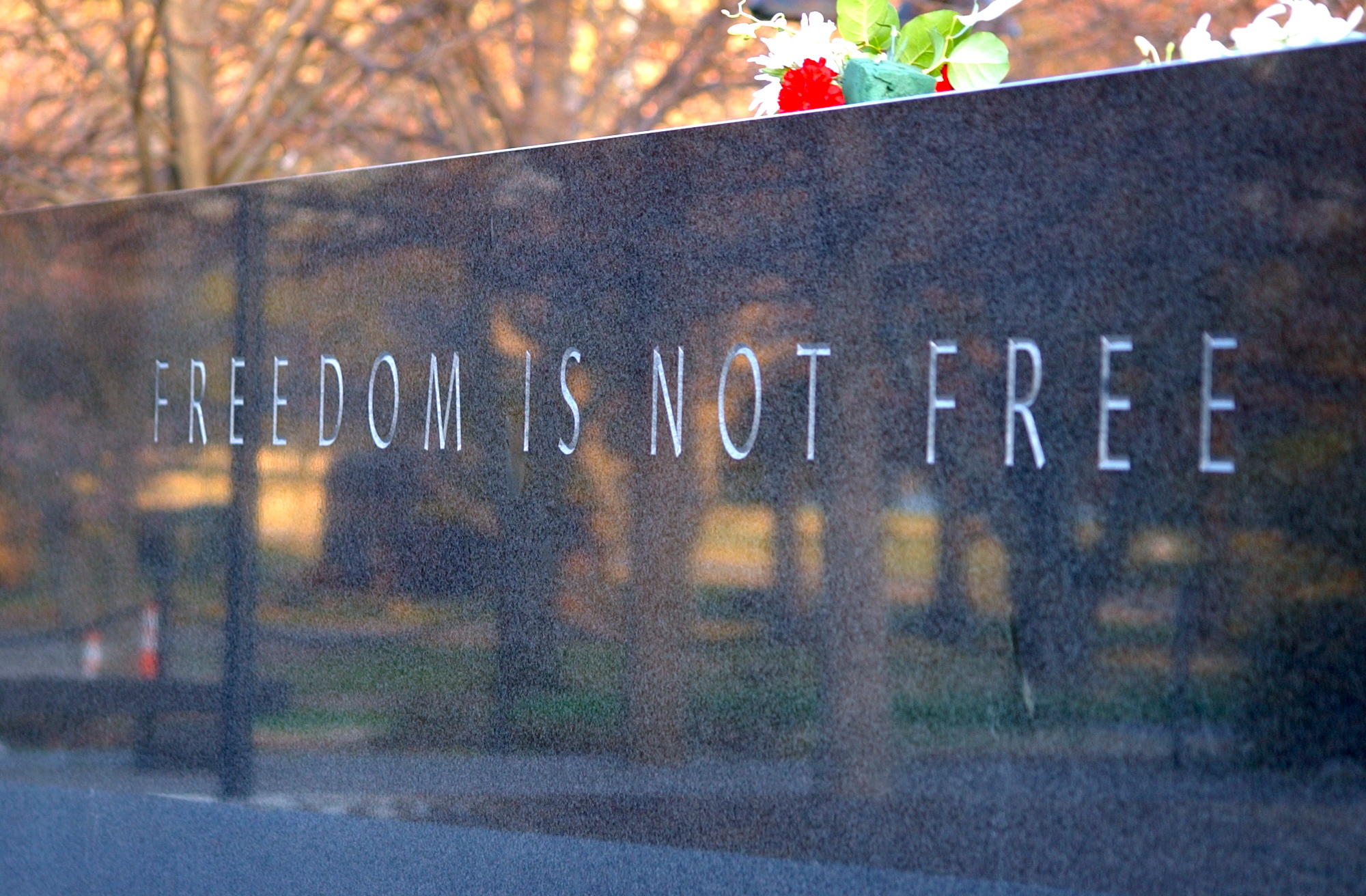
The point is this: Let’s not make honoring our veterans something we only do on November 11. Let’s remember them often, be thankful for them always, and turn those thoughts and gratitude into action all year long.

Ingratitude Can Mess Us Up

Fading gratitude can negatively impact our past, present, and future. Because when our gratitude to God begins to fade, so does our understanding of what God has already done for us, our appreciation of what He is still doing for us today, and our hope for what He will provide for us tomorrow. But we can flip the script—Our continual gratitude can begin to positively impact our past, present, and future! 

“Gratitude is from the same root word as ‘grace,’ which signifies the free and boundless mercy of God. Thanksgiving is from the same root word as ‘think,’ so that to think is to thank.” —Willis P. King 

The more we THINK about God’s grace in our lives, the more we can give THANKS for all He has done. Or said another way…

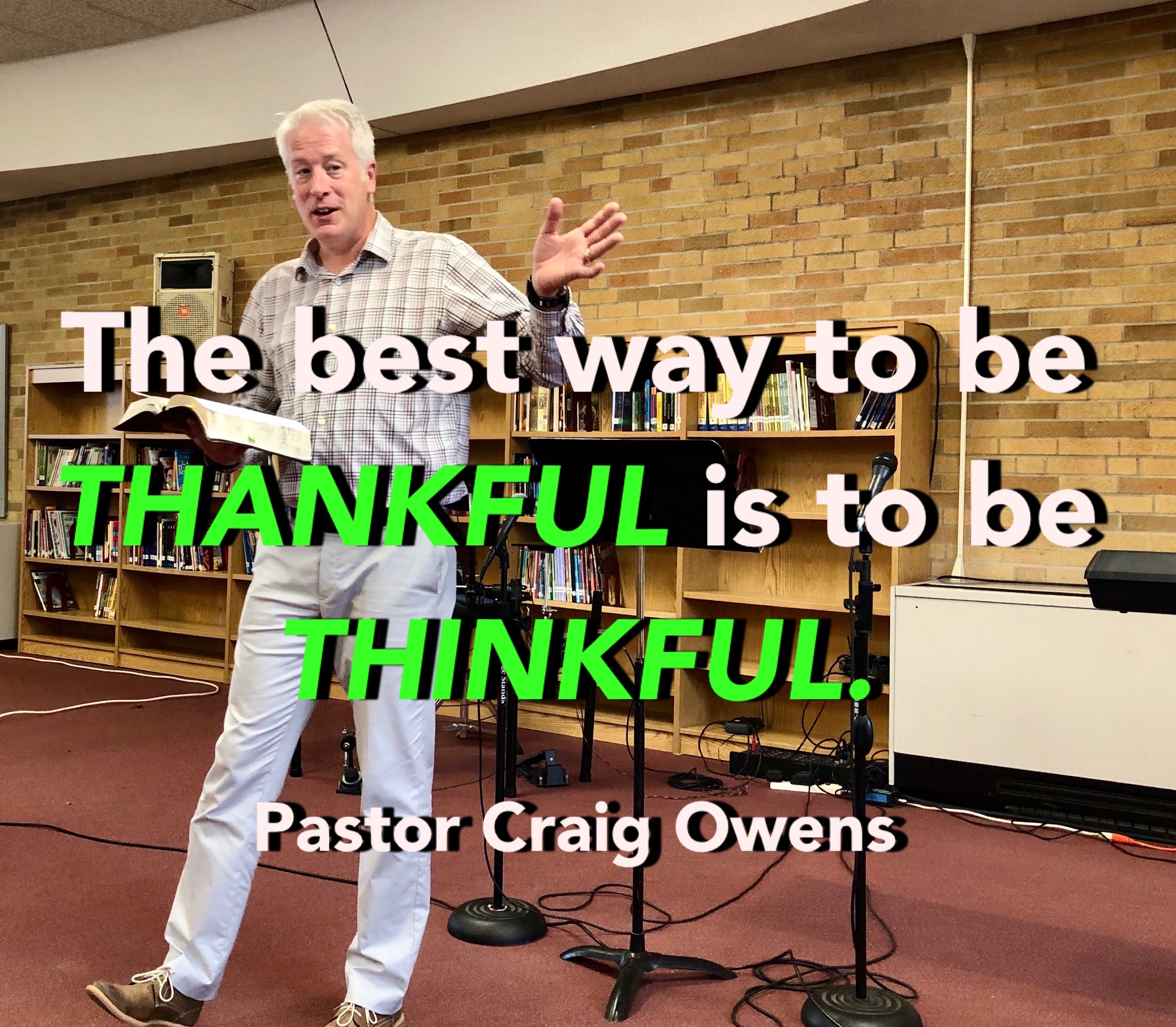
The best way to be THANKFUL is to be THINKFUL!

In Psalm 78, Asaph gives us a two-word reason for the up-and-down history of the Israelites: they forgot. The Israelites’ forgetfulness led to their lack of gratitude, which then caused yet another downward turn away from God. One of the examples he gives us is very informative: the daily provision of manna while the Israelites were in the wilderness (see Psalm 78:11-25; Exodus 16:4, 14-18). 

Every day God’s people had their food needs miraculously supplied for them, yet they begin to take this gift of God for granted. They stopped thinking about His provision, and then they began to ungratefully grumble (Numbers 11:4-6). Their grumbling actually caused them to want to return to slavery in Egypt! 

With fading gratitude, we can get stuck in the past. We even end up looking back at slavery and scarcity and call it “the good old days”! With fading gratitude for the past, sometimes we beat ourselves up. We say things like, “If I would have known then what I know now….” But you couldn’t know then what you know now. You only know now because of what you went through then, which makes another reason to be grateful. After all, God is using everything we have gone through to work out His plan (see Isaiah 46:9-10; Romans 8:28). 

We need to be thinkful about our past so that we can be thankful for what God is doing with it today.

Manna provided food every single day the whole time the Israelites were in the wilderness. It stopped immediately after they entered the Promised Land. For that daily provision, they should have been thankful but it was when they forgot to be thankful that they longed for the past and tried to do things on their own. 

The manna is a picture of Jesus. Not only is He our daily bread for today, but He is also our hope for eternity with God in Heaven. And for that, we should be daily thinkful AND thankful. 

If you’d like a fun idea of how to stay thinkful AND thankful, check this out.

Join us this Sunday as we learn more about the dangers of our fading gratitude. 

Poetry Saturday—Mind Is The Master

Mind is the Master power that moulds and makes,
And Man is Mind, and evermore he takes
The tool of Thought, and, shaping what he wills,
Brings forth a thousand joys, a thousand ills:—
He thinks in secret, and it comes to pass:
Environment is but his looking-glass. —James Allen, in As A Man Thinketh