What if I were to tell you that God wants to bless you?
What if I were to tell you that God’s favor is constantly pursuing you?
Well, here’s me telling you that it’s all true!
“Since God did not spare even His own Son but gave Him up for us all, won’t He also give us everything else?” (Romans 8:32).
Why would God do this? Because if you feel distant from Him, how can you glorify Him? If you feel disconnected from His love, how will you draw others to Him? If you feel like your relationship with Him is hanging by a thread, how can you happily abide in His presence?
Knowing God’s favor is the key to living the abundant life Jesus purchased for you on the Cross!
Join me this Sunday as we begin a new series exploring the wonderful depths of God’s favor. You can join me in person at Calvary Assembly of God, or tune in on Facebook Live at 10:30am Sunday morning.
If you missed any of the messages in this series, you can catch up here:
I like to think of Horatius Bonar as a tour guide as I read through the Bible, pointing out themes and insights I might have otherwise missed. Check out my full review of Light and Truth—Old Testament by clicking here.
“The elders[1 Chronicles 21:16]. They acknowledge the stroke and the sin: ‘It is the Lord.’ They clothe themselves in sackcloth, they fall upon their faces. So far as we know, they had not shared David’s sin, yet they at once place themselves by his side in confession and humiliation. David had sinned (v. 8), Israel had sinned (2 Samuel 24:1). They identify themselves with both. It is thus that we should take up a ruler’s sin, or a brother’s sin, or a nation’s sin; not blazoning it abroad in private gossip, or in the newspapers, but taking it on ourselves, and carrying it to God.”
“We do great injustice to the Old Testament saints and to their privileges, and no less so to the God who made them what they were, when we conceive of them as possessing an imperfect justification, or an imperfect and uncertain knowledge of their justification. Paul’s declaration was explicit on this point: ‘I know Whom I have believed’; and yet it was not a jot more explicit than that of Job: ‘I know that my Redeemer lives.’ When Paul said, ‘It is God that justifies, who is he that condemns?’ he was only speaking what Job had spoken in ages before: ‘I know that I shall be justified. Who is he that will plead with me?’” [Job 13:18-19]
“Everything in God’s character, has by the Cross of Christ been turned into a reason for trusting Him. The more man knows of Him the more he trusts. Trust is the natural and inseparable response of the soul to the divine revelation of the character of God. It is not what man sees in himself, of his good deeds or good feelings, of his graces, or his repentance, or his regeneration, or his faith; but what he sees in God, that calls out confidence.”
“It is with no distant, unheeding God that we have to do; but with that God who fixes the bounds of our habitation, who counts our hairs, who feeds the ravens, notes a sparrow’s death, clothes the lilies of the field. He is nearer to us than the nearest earthly object or being; more closely in contact with us than we are with one another.”
“We disjoined God from creation, and so see nothing in it of divine life and power. … The separation of God from His works is one of the awful features of human unbelief. How much more of Him should we know, were we to interpret His works aright. … These skies of His are not bent over us in beauty without a meaning. These seas of His do not roll for nothing. These flowers of His are not fragrant and fair for nothing. They do not say to us, ‘God is your enemy, He hates you’; but ‘God is your friend, He pities you, yearns over you, wishes to make you happy.’ How full a gospel does creation to preach to us, according to its kind and measure!”
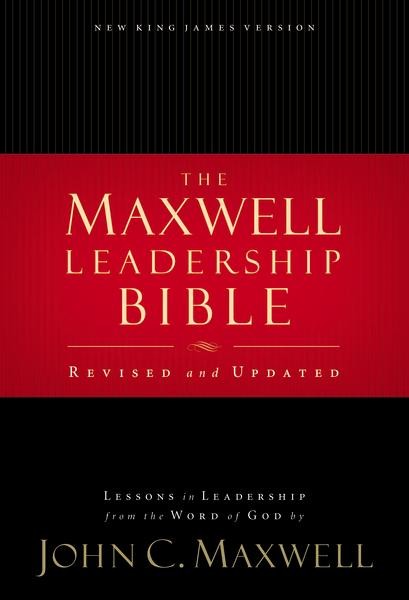
Then Miriam and Aaron spoke against Moses because of the Ethiopian woman whom he had married; for he had married an Ethiopian woman. (Numbers 12:1)
Leaders can bank on two truths. First, they will be criticized. Second, criticism always changes the leader. Unhappy people tend to attack the point person.
Moses’ only family criticized him. Notice what God and Moses teach us on how to handle criticism (Numbers 12):
Maintain your humility. (v. 3)
Face the criticism squarely. (v. 4)
Be specific about the issue. (vv. 5-8)
Lay out consequences. (vv. 9, 10)
Pray for the criticizers. (vv. 12, 13)
Restore them when appropriate. (v. 14)
Beyond that, consider the ways leaders should handle criticism:
Understand the difference between constructive and destructive criticism.
Look beyond the criticism to see the critic.
Guard your own attitude toward the critic.
Keep yourself spiritually in shape. Associate with people of faith.
Wait for time to prove the critic wrong.
Concentrate on your mission; change your mistakes.
But I do have one complaint about this book: it’s too short! Bonar has four volumes of commentary on the New Testament (the Gospels, Acts and the Larger Epistles, the Lesser Epistles, and Revelation), but sadly only one volume for all of the Old Testament.
Bonar’s style is not an exhaustive verse-by-verse—or even chapter-by-chapter—commentary on Scripture, but more of a theme-by-theme. Having read the four New Testament volumes first, I knew what to expect when I picked up this book on the Old Testament. Although at times he may remain silent on large swaths of Scripture, when he does spot something that moves his pen to action, it is brilliant insight.
It bears repeating something I noted in a previous review of Bonar’s commentaries: “The Bible is inspired by the Holy Spirit, so He is the best source of illumination when reading Scripture. But Horatius Bonar is clearly a man immersed in the overall message of the Bible, and guided by the Holy Spirit in his writings.” Bonar is an excellent tour guide to help you see items of significance as you journey through the Old Testament.
If you would like to check out my earlier reviews of Bonar’s Light & Truth series:
Let’s get some insight into the Greco-Roman and Jewish mindsets of the first century AD. Specifically, the mindset of men.
There is a well-known letter written June 17, 1 BC, from a man named Hilarion, who was gone off to Alexandria, to his wife Alis, whom he has left at home. He writes to her: “If—good luck to you—you bear a child, if it is a boy, let it live; if it is a girl, throw it out.” This letter captures the male-dominated mindset in the Roman world concerning women and children. In a word: inferior or even disposable.
This mindset wasn’t limited to the world the Jews called “pagan,” but it was prevalent in Judaism too. Every day Jewish men began their morning prayer time with, “God, I thank You that You did not make me a Gentile, a slave, or a woman.”
With this background, it makes it startling that a Jewish man (who prayed that prayer thousands of times) writing to people in Rome (who undoubtedly had the same mindset as Hilarion), begins his list of thank you notes with gratitude to two women! Paul goes on to list no less than 8 women, even giving preferential treatment to a wife (Priscilla) over her husband (Aquila) when he mentions her name first! (see Romans 16:1-4, 6, 12).
William Barclay wrote, “Anyone who asks the question: ‘What has Christianity done for the world?’ has delivered himself into a Christian debater’s hands. There is nothing in history so unanswerably demonstrable as the transforming power of Christianity and of Christ on the individual life and on the life of society.”
Indeed Christians changed the lives of at least four groups:
Women (especially in the role of marriage)—divorce was so common that it was neither unusual nor particularly blameworthy for a woman to have a new husband every year. Yet Christians taught men to esteem their wives and for marriage to be honored by everyone (Ephesians 5:28; Hebrews 13:4).
Children—who weren’t even considered a part of the family until they had grown up and proven their worth to the father. Yet Christians taught fathers to nurture their children (Ephesians 6:4).
Senior citizens—the pragmatic Romans had little to do with those they considered less valuable. But the first blind asylum was founded by Thalasius, a Christian monk; the first free medical dispensary was founded by Apollonius, a Christian merchant; the first hospital of which there is any record was founded by Fabiola, a Christian lady.
The weak and sick—when a plague hit Rome, all the young, healthy people left the sick and elderly behind. They ran away, but the Christians stayed to help. The Christians taught that everyone (regardless of age, sex, or wealth) was valuable (1 Timothy 5:1-2).
That was just the start of Christianity. Men like William Wilberforce and Abraham Lincoln were Christians who opposed slavery; Clara Barton was nicknamed “the angel of the battlefield” and founded the Red Cross; Paul Brand was a doctor who ran to leprosy patients when everyone else shunned them; Mother Teresa loved those poor, dying souls whom others ignored.
So what’s your conclusion? Throughout history Christians have been martyred for their faith, but not only are they willing to die for their belief that Jesus is alive, but they continue to do good to those who persecute them. Would people do this to perpetuate a hoax? Or does this sound more like the real deal?
Please check out the other evidence I have presented for the resurrection of Jesus:
[Each chapter in the Book of Proverbs contains thoughts that fit into a theme; they are not just random thoughts gathered together. In this “Saturday In The Proverbs” series, I will share a theme that I see in each chapter. But the cool thing about God’s Word is that you may see an entirely different theme. That’s great! If you do, I would love for you to share it in the comments below.]
Some people find this hard to fathom, but it’s an undeniable truth—God wants to bless you!
But His blessings will only come in His ways. You cannot do what you want to do and expect God to bless that behavior. Proverbs 2 tells us that IF we will do what God asks, THEN God will pour out His blessings.
IF
receive God’s Word
treasure His commands
incline your ear to His wisdom
apply God’s understanding to your life
cry out for God’s discernment
lift up your voice for God’s understanding
seek God’s wisdom
search for God like it’s treasure
THEN
you will understand the fear of the Lord
you will find God’s knowledge
you will gain God’s understanding
you will have God’s protection
you will understand God’s righteousness and justice
you will be preserved by discretion
you will be saved by understanding
you will be delivered from evil
you will be kept from immorality
If I will do what God says, then God opens His storehouse of invaluable treasures!
This is a weekly series with things I’m reading and pondering from Oswald Chambers. You can read the original seed thought here, or type “Thursdays With Oswald” in the search box to read more entries.
Isaiah 13-23
[These are the notes on Oswald Chambers’ lecture on Isaiah 13-23.]
Isaiah’s message needs to come home to us today—that God is behind the devil, not the devil behind God; all the great world forces are in front of God, and they cannot do a thing without His permission. Today we are so emphasizing the freedom of the human will that we are forgetting the sovereignty of God, consequently when we come up against the forces at work in the world we are paralyzed by fear and get into despair, which we need never have done if we had been built up in faith in God. … Stand strong in faith in God—“I don’t understand this, but I know God is behind it.” …
There is no cowardice about Isaiah or about his message. He never lost his faith in God or got discouraged, and when the things he foretold happened, he did not desert the people. …
Behind everything stands God; behind the tumult and the confusion God is bringing out everything according to His will. The great thing about faith in God is that it keeps a man undisturbed in the midst of disturbance. … All the forces outside you are futile because they are less powerful than the indwelling of God (see 1 John 4:4). … Discouragement comes when we say what God will do—that God will always keep me healthy, that He will always be bringing me into the land of Canaan where I will eat honey; well, He won’t. God is concerned about only one thing—getting me into a personal relationship with Himself. There is no possibility of discouragement if we will only remember that this is the relationship, not God’s blessings, but Himself.
From Notes On Isaiah
When the news of the day, or events in the world, or even what’s happening in your personal life starts to rattle you, consider how Isaiah handled himself. Isaiah knew enemies were closing in, and that the day of God’s judgment was fast approaching too, but he never got fretful. Why? He kept his eyes on God.
God is sovereign. He is in control. Nothing ever takes Him by surprise. Keep your eyes on Him. And remember: “All the forces outside you are futile because they are less powerful than the indwelling of God.”
The vision of Isaiah…in the days of Uzziah, Jotham, Ahaz, and Hezekiah, kings of Judah (Isaiah 1:1).
Israel (the 10 northern tribes) was in the final stages of collapse, with kings only serving short spans, idolatry running rampant, and enemies closing in on every side. Isaiah boldly proclaimed that Judah was on the same path unless she repented and turned wholly to God.
Uzziah—who started off well, but fell away from God
Jotham—who faithfully served God
Ahaz—who never wanted to serve God
Hezekiah—who led a powerful revival in the return to worshiping God alone
Isaiah’s message never waivers. Through 66 chapters, 4 monarchs, and 60 years of ministry, Isaiah never compromises, waters down, nor alters the message God has given him.
But he does use different methods to deliver God’s consistent message—sometimes he thunders, sometimes he weeps, sometimes he uses illustrated messages, sometimes he speaks plainly, and sometimes he uses word pictures.
A mark of a godly leader is one who is both immovable and flexible.
Immovable on God’s principles; flexible on his delivery.
Can that be said of you and me?
This is part 21 in my series on godly leadership. You can check out all of my posts on this topic by clicking here.
“We naturally tend to interpret Scripture in the light (or shadow) of our own temperament and let our peculiar mental cast decide the degree of importance we attach to various religious doctrines and practices. …
“The minister above all others should look deep into his own heart to discover the reason for his more pronounced views. It is not enough to draw himself up and declare with dignity that he preaches the Bible and nothing but the Bible. That claim is made by every man who stands in sincerity to declare the truth; but truth has many facets and the man of God is in grave danger of revealing only a limited few to his people, and those the ones he by disposition favors most. …
“The Scriptures, critical self-discipline, honesty of heart and increased trust in the inward operations of the Holy Spirit will save us from being too greatly influenced by temperament.” —A.W. Tozer, in Man—The Dwelling Place Of God
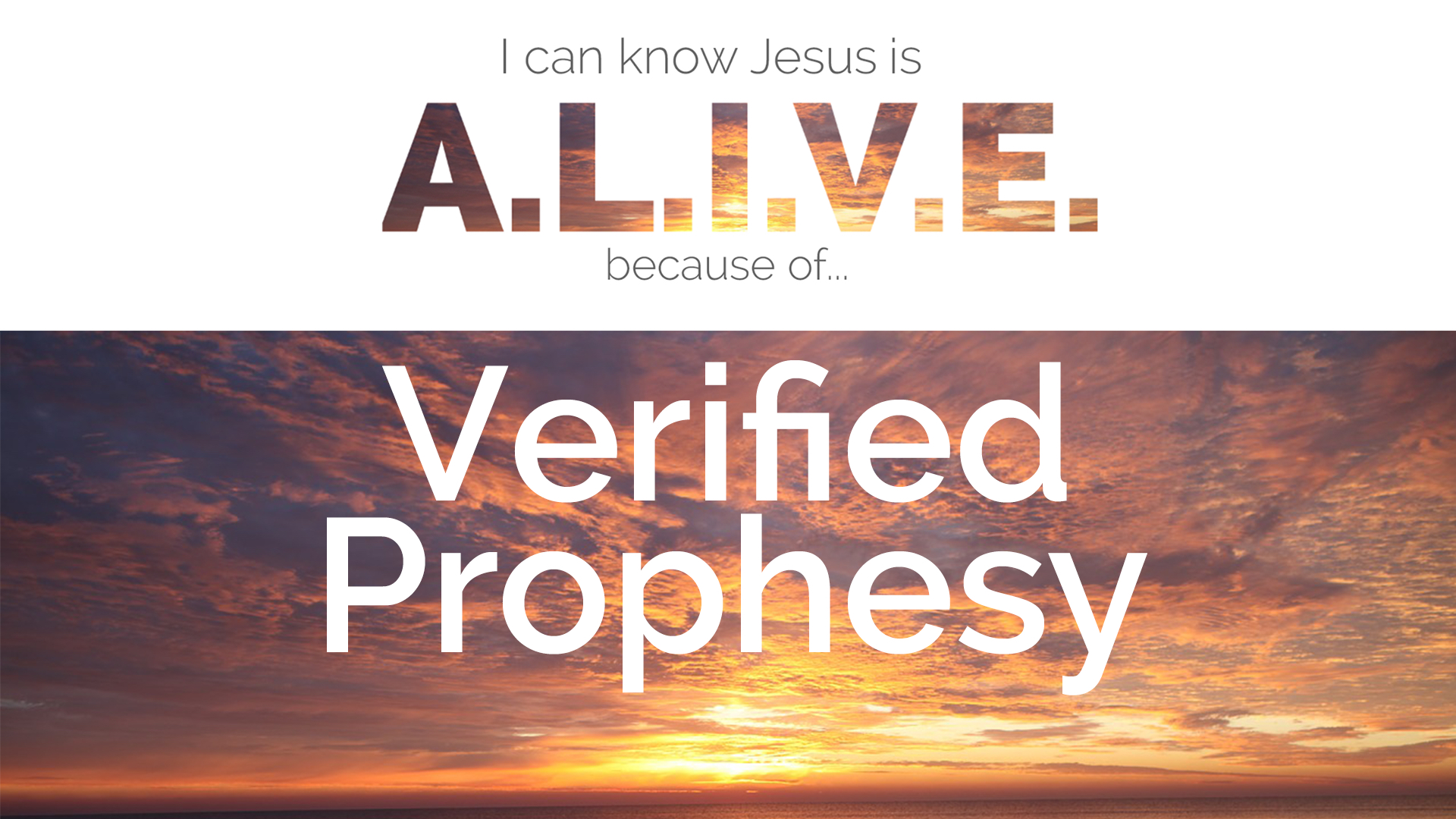
This is part 4 in my 5-part series, “I can know Jesus is A.L.I.V.E. because of ….” I have already addressed A—Apologetics, L—Lives changed, and I—It is finished. Today I want to consider the prophecies that the life, death, and resurrection of Jesus supposedly fulfilled.
We have all heard about “copycat” crimes. Could the life and death of Jesus fit that? Since Jesus was born from the family line of King David, and His family really wanted the promised Messiah to finally appear, perhaps He was pushed that way. Perhaps He lived in a certain way to make it look like He was fulfilling prophecy.
Detective J. Warner Wallace wrote, “Homicide detectives are perhaps the least trusting people in the world. My own experience investigating murders has taught me to consider everyone a liar—until, at least, I have good reason to believe otherwise.”
So was Jesus a liar? Was He following some copycat script to make it merely look like He was the Messiah? Or do we have good reasons to believe He was telling the truth? Consider three points—
How could David describe a crucifixion scene in 1000 BC, since the Persians didn’t invent it until around 400 BC (see Psalm 22:12-18)?
How could Jesus control others’ actions (i.e. Judas’ betrayal; being killed by crucifixion, not by stoning; soldiers gambling for His clothes)?
Even His own followers—whom He would need to perpetrate the hoax—didn’t understand what He was doing (John 12:16).
Prosecutors have to present enough evidence to convince a jury that they have arrested and brought to trial the right man. One of the key terms is beyond a reasonable doubt—“a part of jury instructions in all criminal trials, in which the jurors are told that they can only find the defendant guilty if they are convinced ‘beyond a reasonable doubt’ of his or her guilt.”
Let’s consider a hypothetical case that a prosecutor might present:
multiple eyewitnesses saw a man fleeing the scene, and all of them identified the suspect in a police line-up
the shoe prints at the crime scene were the same size and design that of the suspect was wearing when he was arrested
prosecutors presented text messages in which the suspect threatened to do to the victim exactly what was done to the victim
the wounds made by the weapon which was used on the victim correspond with the weapon the police found in the suspect’s car
the blood on that weapon matched the blood of the victim
the fingerprints on that weapon are the suspect’s fingerprints
That is the evidence. From that evidence, the jury is asked to draw inferences about the reasonableness of that suspect being the one who committed the crime.
I have listed just six pieces of evidence. How strong do you think the prosecutor’s case is? What if the jurors were presented with 50 pieces of evidence? What about 100? 200? How about 300 pieces of evidence?
Jesus fulfilled at least 300 prophecies—which were made before He was born!—in His life, death, and resurrection!
Math professor Peter Stoner calculated that the odds for just one man in history to fulfill only 8 prophecies is 1-in-1×10¹⁷. How amazing is that!? To give us a little perspective, Stoner says that 1×10¹⁷ silver dollars would cover the entire state of Texas in silver dollars two-feet thick. If just one of those silver dollars was marked, and a blindfolded man could select that one marked coin on his very first attempt, that would be about the same odds of Jesus fulfilling only 8 prophecies.
As a juror, if you weighed this evidence, do you find enough proof to “convict” Jesus?
But ultimately Jesus didn’t come just to fulfill prophecy; He came to rescue you and me from the penalty of our sin (Luke 4:16-21), and that is the best news of all!
Join me either in person or on Facebook Live this Sunday for the final message in this 5-part series.



 What if I were to tell you that God is for you?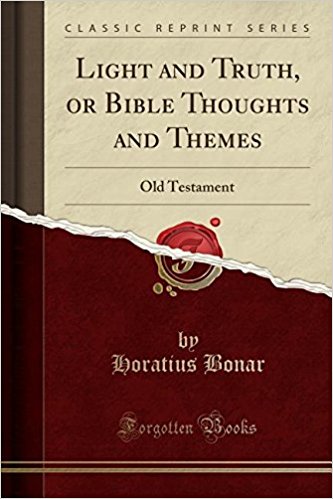







 Craig T. Owens
Light And Truth—The Old Testament (book review)
April 17, 2018 — Craig T. OwensBut I do have one complaint about this book: it’s too short! Bonar has four volumes of commentary on the New Testament (the Gospels, Acts and the Larger Epistles, the Lesser Epistles, and Revelation), but sadly only one volume for all of the Old Testament.
Bonar’s style is not an exhaustive verse-by-verse—or even chapter-by-chapter—commentary on Scripture, but more of a theme-by-theme. Having read the four New Testament volumes first, I knew what to expect when I picked up this book on the Old Testament. Although at times he may remain silent on large swaths of Scripture, when he does spot something that moves his pen to action, it is brilliant insight.
It bears repeating something I noted in a previous review of Bonar’s commentaries: “The Bible is inspired by the Holy Spirit, so He is the best source of illumination when reading Scripture. But Horatius Bonar is clearly a man immersed in the overall message of the Bible, and guided by the Holy Spirit in his writings.” Bonar is an excellent tour guide to help you see items of significance as you journey through the Old Testament.
If you would like to check out my earlier reviews of Bonar’s Light & Truth series:
Share this: