When God Says “No”

Listen to the podcast of this post by clicking on the player below, and you can also subscribe on AppleSpotify, or Audible. 

Last week I asked you to recall a time that your children were asking you for something they really, really wanted. How many times did they ask? If you said, “No” to their first request, did they immediately stop asking? Probably not. And that’s good, because Jesus tells us to keep PUSHing (Luke 11:9-10).

(Check out all of the Scriptures in this post by clicking here.)

Let’s recall the story Jesus told to illustrate the kind of importunity that God responds to. Jesus used the example of a friend going to his neighbor’s house with a request for bread. No matter how many times the neighbor said, “No,” the man continued to ask and knock (vv. 5-8). Jesus concluded by saying that the neighbor would eventually get us and give his friend “as much as he needs.”

That is the key word: needs vs. wants. 

Jesus told us “your Father knows what you need, but He wants to give us so much more than what we are asking for—He wants to give us His Kingdom (Luke 12:30-32). A need is a necessity (Psalm 34:10 AMPC; Matthew 6:8), but wants are merely selfish desires (James 4:3). 

Loving parents know the difference between needs and wants and therefore they know how to respond to the requests from their children. Jesus pointed out that if we “evil” parents know this, how much more does our all-wise, all-loving, all-knowing Heavenly Father know this (Luke 11:11-13)! 

When my kids ask me for something—when they are asking, seeking, knocking—I want to give them the best. But sometimes the best thing means I have to say, “No.” I don’t give them candy for breakfast. I don’t let them drive a car when they’re 7 years old. I don’t give them responsibilities which they are unprepared to manage. They may want all of these things, and they may even enjoy these things for a fleeting moment. But they don’t need them and the end result could be dangerous or even disastrous! 

Jesus says that we human parents even in our very limited wisdom know that giving our children their immediate wants may prevent them from receiving what they really need. My “No” may really mean a better “Yes,” if they will trust me. 

Do you know a surefire way to determine if what you are PUSHing for is a want or a need? A temper tantrum! When we start throwing a fit, it probably means we are looking for a want to be supplied, not a need. Psalm 25:9 tells us that God loves to supply the needs of the humble who say, “Father, You know best.” 

What if I changed “suffering” with “God’s loving ‘no’” in this passage—

Not only so, but we also glory in God’s loving “No,” because we know that God’s loving “No” produces perseverance4 perseverance, character; and character, hope. And hope does not put us to shame, because God’s love has been poured out into our hearts through the Holy Spirit, who has been given to us. (Romans 5:3-5)

Our hope in our heavenly Father’s best “Yes” is vital for our ongoing prayer live (Isaiah 30:18)! 

Our all-wise, all-loving Father KNOWS what is best for us. But still, Jesus directs us to continue asking, seeking, and knocking. Keep PUSHing until His best “Yes” is given, found, and opened. 

God’s loving “No” is only so that He can give you His best “Yes”! 

If you’ve missed any of the other messages in this series, you can find them all here. 

►► Would you please prayerfully consider supporting this ministry? My Patreon supporters get behind-the-scenes access to exclusive materials. ◀︎◀︎

The Best Sermons

Listen to the podcast of this post by clicking on the player below, and you can also subscribe on AppleSpotify, or Audible. 

This one is for my fellow pastors. I want to give you THE question to ask to help you in crafting the most applicable and memorable sermons. 

It’s a question that Paul asks in Romans 4: “What does the Scripture say?” (v. 3). Preachers must make sure they get their ideas from the text of the Bible, not just from their own good ideas. Look at this amazing example from Paul in just this one chapter of his letter to the saints at Rome. 

He starts off with a question: “What then shall we say?” (v. 1). 

Then he answers his question with another question: “What does the Scripture say?” and he proceeds to give his answer by quoting from the Book of Genesis. 

From this, Paul makes a conclusion in vv. 4-5 that is signaled by the word “Now…”. 

In order to support his conclusion, Paul then quotes from Psalm 32: “David says the same thing” (vv. 6-8).

Next Paul alternates between questions and answers in vv. 9-12, bringing this Q&A to a logical conclusion in vv. 13-16. 

He supports his conclusion with even more Scripture: “As it is written” (v. 17), and “Just as it had been said” (v. 18). 

Finally, Paul wraps up this part of his sermon by both quoting more Scripture (vv. 22-23) and then reminding his audience, “The words ‘it was credited to him’ were written not for him alone, but also for us” (vv. 23-24). This shows that God’s words weren’t just for Abraham, nor just for Paul’s audience, but for anyone reading the Scripture today.

This is a short, masterful, and powerful sermon! Why? Simply because it is totally banked on God’s timeless words. 

The way that preachers can design THE perfect sermon—that is both applicable and memorable—is to start with the same question Paul did: “What does the Scripture say?” 

►► Would you please prayerfully consider supporting this ministry? My Patreon supporters get behind-the-scenes access to exclusive materials. ◀︎◀︎

How Long?

Listen to the podcast of this post by clicking on the player below, and you can also subscribe on AppleSpotify, or Audible. 

Last week we saw that if we make prayer our priority, we can expect that our eyes will be opened to the answers that God has for us. Hagar and Eliezer seemed to get pretty quick answers. Nehemiah had to wait four months for the answer to his prayer. 

We saw in Psalm 5 that David laid his requests before God first thing in the morning, and then he went out of his prayer closet in expectation of an answer (Psalm 5:1-3). But how long did he wait? 

(Check out all of the Scriptures in this post by clicking here.) 

Psalm 6 may not happen historically right after Psalm 5, but listen to David’s heart, “Have mercy on me, LORD, for I am faint; heal me, LORD, for my bones are in agony. My soul is in deep anguish. How long, LORD, how long? (Psalm 6:2-3). And then again in Psalm 13:1-3, David asks, “How long?” four times in the first two verses! 

When we read the training Jesus gave His disciples about prayer in Luke 11:9-10, we see how He implores them (and us) to keep on praying. It becomes even more emphatic in the Amplified Bible—

So I say to you, ask and keep on asking and it shall be given you; seek and keep on seeking and you shall find; knock and keep on knocking and the door shall be opened to you. For everyone who asks and keeps on asking receives; and he who seeks and keeps on seeking finds; and to him who knocks and keeps on knocking, the door shall be opened. 

But once again we have to ask: how long are we to continue asking, seeking, and knocking? This is what Job asked in the middle of his trial (Job 6:8, 11-13). 

Charles Spurgeon said, “God has measured the crosses of all His children: Israel in Egypt, 430 years; Joseph in prison, 3 years; Judah in Babylon, 70 years.” That means that God knows what He is doing, God knows His timing for answering, and that our part is to simply to continue to ask, seek, and knock as we throw our total trust on Him! 

I remember my affliction and my wandering, the bitterness and the gall. I well remember them, and my soul is downcast within me. Yet this I call to mind and therefore I have hope. Because of the LORD’s great love we are not consumed, for His compassions never fail. They are new every morning; great is Your faithfulness. I say to myself, “The LORD is my portion; therefore I will wait for Him.” (Lamentations 3:19-24) 

During these times of waiting, we need to keep recalling what we know:

  1. God’s love is unfathomable—Romans 5:5, 8:38-39 
  2. God’s timing is perfect—Deuteronomy 32:4 
  3. God’s method is flawless—Romans 8:28 
  4. God’s gifts are good—Luke 11:11-13, 12:32  

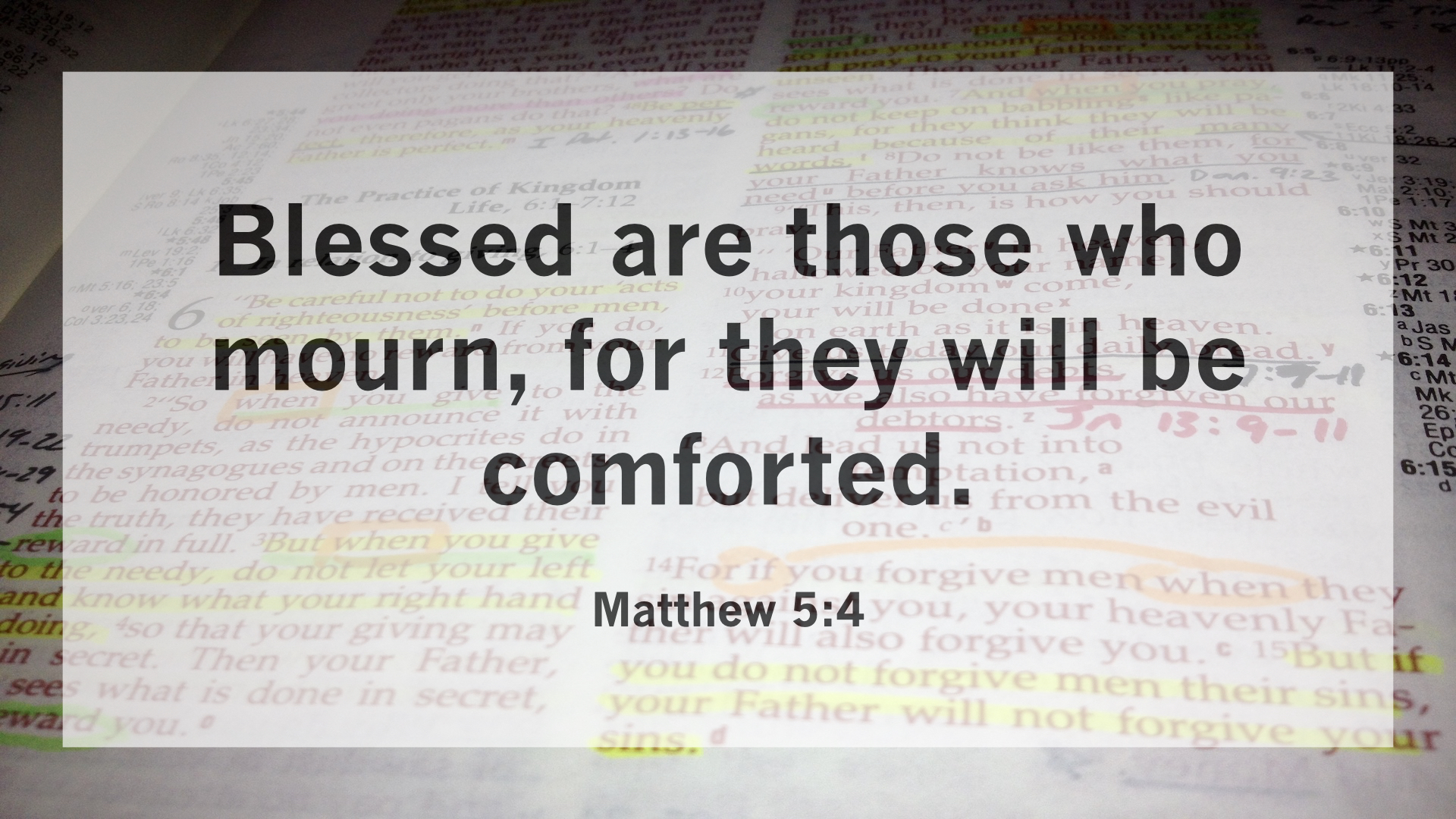
In Psalms 6 & 13, David doesn’t record any answers from God, but listen to this assurance from Jesus, “Blessed are those who mourn, for they will be comforted” (Matthew 5:4). 

Jesus doesn’t tell us how or when God will bring us comfort, but He does assure us that we will be comforted! 

In a couple of the examples from David, you can see this assurance as he continues his prayers (Psalm 6:2-4, 8-10; 13:1-6). Paul also experienced this confidence (2 Corinthians 12:7-10), and so did Jesus (Matthew 26:38-39, 50-54). 

The writer of Hebrews assures us that Jesus was heard in His, “How long?” cries, and therefore He knows exactly how to intercede for us today as we lift up the same cry (Hebrews 5:7-8; 2:10, 14, 17-18)! 

How long? Quite simply stated: Until God answers or until He lifts our burden. 

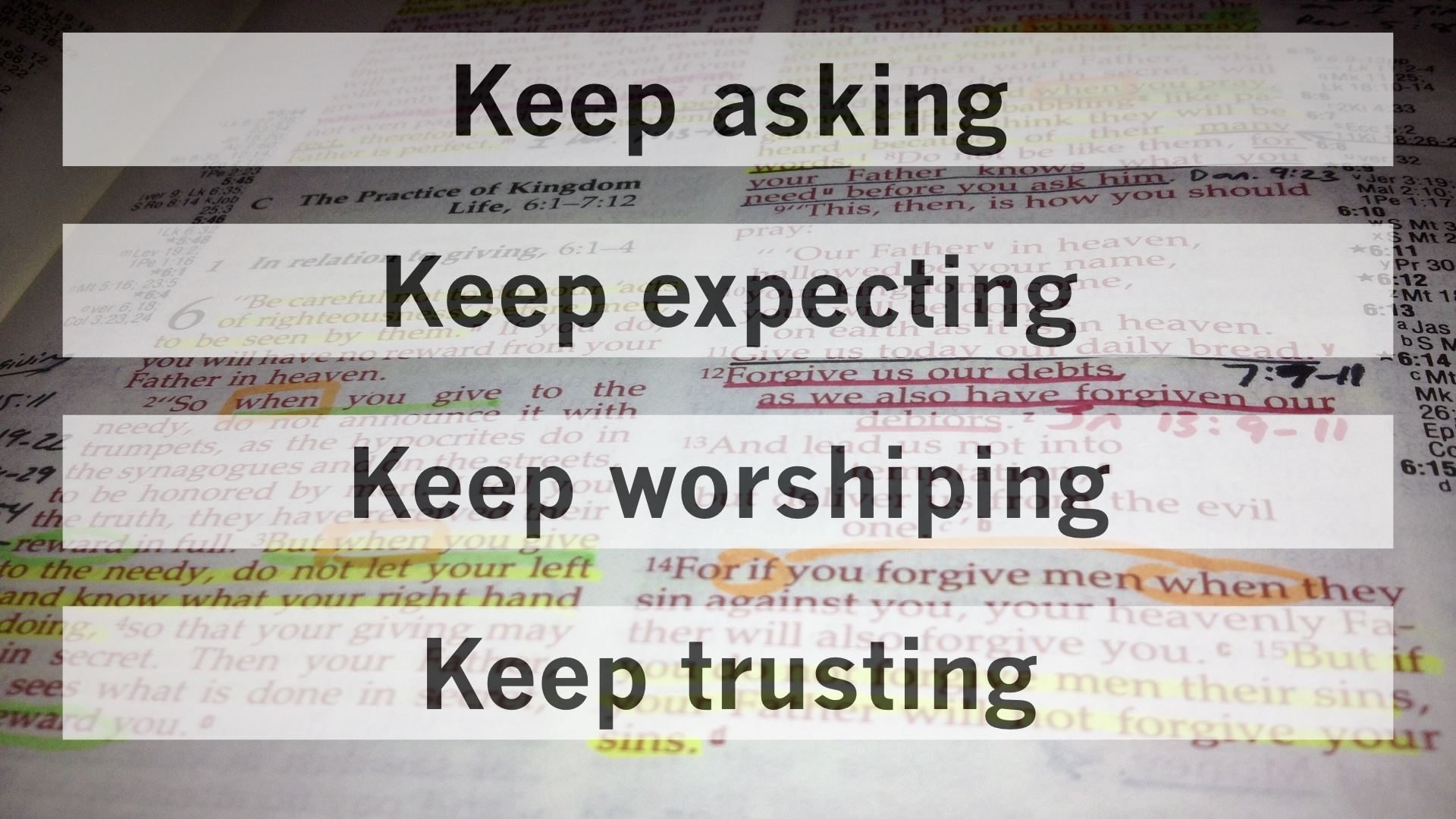
In the meantime, the examples in Scripture and the assurance of Christ’s intercession for us us encourages us to…

  1. Keep asking with full confidence that God hears you 
  2. Keep expecting an answer 
  3. Keep worshiping God for Who He is 
  4. Keep trusting that your Heavenly Father wants to give you the very best!  

If you have missed any of the other messages in our prayer series, you can find them all here. 

►► Would you please prayerfully consider supporting this ministry? My Patreon supporters get behind-the-scenes access to exclusive materials. ◀︎◀︎

The Benefits Of The Right Kind Of Pastoral Stress

I was very honored to be asked to share these thoughts on KarlVaters.com. I was able to interview Karl about his latest book De-Sizing The Church.

(Photo by Official Presidio of Monterey | Flickr)

Jesus was “made like His brothers in every way” (Hebrews 2:17), which means He was not immune to the ravages of stress, yet He never let that stress overwhelm Him.

No one wants more stress. But attempting to avoid all stress can carry negative results that we seldom take into account.

In this guest article, Craig T. Owens (whom I interviewed in The Church Lobby, Episodes 43 and 82 ) writes about how managing the right type of stress (called eustress) can be a benefit, especially in positions of responsibility, like pastoring.

— Karl Vaters

As a pastor, I’m sure your life is practically stress-free. I mean, what do we have to do with our days except commune with God in our quiet study time, and then descend from the mountain to share the words God has given us? Then we can bask in the approval of our congregations as we watch them seamlessly integrate our sermons into their daily lives.

What’s that you’re saying? It’s not like that for you?

Anyone who has been a pastor for any length of time knows how demanding a job it is to be a shepherd of the flock God has placed under our care. And then frequently our shepherding work becomes even more challenging when we have to attend to the needs of obstinate sheep, or heal from the bites of angry sheep.

At times, we may dream about a more stress-free pasture.

But we actually do ourselves, our flock, and the world around us a huge disservice if we are striving for a stress-free life.

The Power To Persevere

First, I don’t think that is even possible. Adam and Eve in the perfection of the Garden of Eden faced a stressful decision. And Jesus, the Perfect Man, was constantly dealing with the stressors that pushed in on Him.

But more importantly, stress is vital for our healthy growth. Recent studies have shown that moderate levels of stress keep our brain sharp. In fact, the study went on to state that a brain that is striving for zero stress (if that’s even possible) begins to become less adept at problem solving. In our attempts to totally eliminate stress, we are actually squeezing out our ability to adapt, overcome, and soar when we face future problems.

In this case, I am talking about the healthy stress that doctors call eustress. Whenever we face a challenge, our body releases a hormone called cortisol that prepares our mind and body for action. In other words, God designed a way for us to be successful in stressful times.

Eustress is the push against the forces that would ultimately pull down our physical health, our relationships, our mental health, and a host of other things if we simply opt to “go with the flow.”

I read this in a recent article from an organization called Fight The New Drug:

“In a world that often sells ways to avoid stress, it’s crucial to remember that stress can be healthy in moderation. Stress and anxiety can trigger neural and chemical processes in your body designed to help you respond to challenges. Stress researcher Daniela Kaufer explains that ‘some amounts of stress are good to push you to the level of optimal alertness for behavioral and cognitive performance.’ Her research on stress in rats has even demonstrated that intermittent stressful events can create new brain cells in the rats that actually improve their future mental performances.”

I love how modern-day psychology validates what the Bible has already told us! The Bible makes it clear that persevering through the stressors that come against us can make us stronger, healthier, and better equipped for the next challenge. We are also fortified to help others through their times of stress (James 1:2-4; Romans 5:3-5; 2 Corinthians 1:3-5).

(Check out all of the Scriptures in this article by clicking here.)

The Greek word in the Bible translated “persevere” means keeping focused on the goal despite the struggles that it takes to get there. Jesus used this same Greek word at the conclusion of His parable of the sower: “The seed on good soil stands for those with a noble and good heart, who hear the Word, retain it, and by persevering produce a crop,” a crop that Jesus said was a hundred times more than what was sown (see Luke 8:5–15).

The Holy Spirit will push us further than we think we can go to develop the spiritual muscles and endurance we need to shepherd the sheep under our care during their trying times. He knows that persevering produces a huge crop.

Easy Roads Teach Few Lessons

I love riding my bike on the White Pine Trail by my house. My long rides have a really fun stretch where I am flying downhill! But as fun and stress-free as that part is, I’m not really building anything of lasting value. However, when I am coming back uphill and I want to quit because my legs are burning and I can hardly breathe, that becomes a valuable struggle.

I cannot build endurance by any other way than to persevere, to push myself just a little bit more each time. When I want to quit, I pedal just a few more feet. Gradually, the uphill becomes less daunting.

A friend gave me a t-shirt that I like to wear on my rides. When I put the shirt on, the blue-lettered message says, “Do It!” but as I struggle uphill and the sweat begins to pour off my body and drench my shirt, a new message emerges: “Don’t Quit!”

I have learned that easy roads teach very few valuable lessons. But persevering through the stressors not only strengthens me, but it builds an empathy for others that I would have otherwise missed.

The poet Epictetus noted this about the mighty Hercules:

“What would have become of Hercules do you think if there had been no lion, hydra, stag or boar—and no savage criminals to rid the world of? What would he have done in the absence of such challenges?

“Obviously he would have just rolled over in bed and gone back to sleep. So by snoring his life away in luxury and comfort he never would have developed into the mighty Hercules.

“And even if he had, what good would it have done him? What would have been the use of those arms, that physique, and that noble soul, without crises or conditions to stir into him action?”

—Epictetus, The Discourses

So the next time you are thinking about avoiding something that causes stress in your life, why don’t you reframe that thought. Instead, think about how you can become stronger, healthier, and more empathetic toward others because you are committed to successfully navigating that stressful situation.

Don’t ask God to get you out of that stressful situation, but ask Him to help you get something out of that stressful situation.

Eustress, Not Distress

Please notice that I have been talking about the good stress (eustress), but there is also a dangerous stress which doctors call distress. If we are trying to overcome a challenge in our own strength alone, instead of relying on God’s supernatural help, or if we are allowing stress to keep us from our healthy habits, eustress can disintegrate into distress.

The stress hormone cortisol is naturally flushed from the body in two ways: physical exercise and proper sleep. Isn’t it interesting that when we are experiencing higher than usual amounts of stress that two of the areas that seem to disappear from our lives are time for exercise and nights with solid, uninterrupted sleep?

When we allow eustress to become distress, everything suffers. Our physical health is compromised, we have an increasingly difficult time coming up with creative solutions, our patience with difficult people is strained, and we find ourselves fighting irritability.

How Jesus Did It

Earlier I mentioned the stressors that Jesus faced, but notice that we never see Him responding inappropriately, acting in an unhealthy way, or “stressed out” by the needs of the sheep around Him. Keep in mind that Jesus was “made like His brothers in every way” (Hebrews 2:17), which means He was not immune to the ravages of stress, yet He never let that stress overwhelm Him. He never even allowed eustress to cross the line into distress.

How did Jesus keep stress in balance? I see so many healthy habits in His life. For instance, I see not only the regular habit of prayer to start His day (Mark 1:35), but I see Him withdrawing for a time of prayer or even a nap when He completed a stressful time of ministry (Luke 5:16).

Jesus encouraged His disciples in this as well. The disciples were excited to tell Jesus about their latest ministry but the activity around Jesus was so hectic that they couldn’t even find time to get a bite to eat, let alone take a deep breath to recover from their ministry. “Come with Me by yourselves to a quiet place and get some rest,” Jesus told them. And then “they went away by themselves to a solitary place” (Mark 6:30-32).

To keep yourself from becoming distressed, be deliberate about maintaining your healthy habits during your times of eustress. Eat healthy, get proper exercise, get a good night’s sleep, spend extra time in your Bible study and prayer time, and schedule time with healthy friends. All of these things will help you leverage all of the benefits of eustress, making you a stronger, more consistent and empathetic leader.

The Prayer Before The Prayer

Listen to the podcast of this post by clicking on the player below, and you can also subscribe on AppleSpotify, or Audible. 

Last week I shared this thought with you from Pastor Tim Keller: “Your prayer must be firmly connected to and grounded in your reading of the Word. This wedding of Bible and prayer anchors your life down in the real God. … Without immersion in God’s words, our prayers may not be merely limited and shallow but also untethered from reality.” 

“Untethered from reality” means that we determine the manner in which we come to God in prayer, the way prayer works, and the way God must respond to our prayer. But what we read in the Bible is the opposite of this (Isaiah 1:11-15). 

(Check out all of the Scriptures in this post by clicking here.)

I think there are two opposite and equal erroneous thoughts about how we approach prayer:

  1. I’m not worthy to come into the presence of an all-holy God 
  2. I can waltz right into God’s presence whenever and however I please 

Both are wrong and both are strategies the devil has used to keep us prayerless. Either we don’t go to God at all or our prayers are unheard because the Bible says that our arrogance has made our prayer ineffectual. 

Our Prayer Book—the Bible—helps us find the balance. George Whitefield noted, “Reading the Bible is a good preparative for prayer, as prayer is an excellent means to render reading effectual.” So here’s what we read about those two errors. 

  1. I’m not worthy. God is unapproachable in His holiness, but Jesus has made it possible for us to enter in through His righteousness (1 Timothy 6:15-16; Isaiah 6:1-5; Hebrews 4:1, 14, 16; John 16:23-24). 
  2. I can come anyway I want to. Passages like Psalm 15:1-5 and Isaiah 58:2-4 make it clear that we cannot simply approach God in a way of our choosing. 

Let’s unpack that second error a little more. We have to be clothed in righteousness in order to come into God’s presence, but we cannot be clothed in a righteousness that is apart from Jesus. When we say that we are praying in the name of Jesus, it means we are praying in the nature of Jesus and through the righteousness of Jesus. We must be wearing His righteous robe (Romans 3:22-24; Isaiah 61:10). 

So I think we need to pray before we pray. Let’s try these actions which are tethered to the reality of our Prayer Book. 

  1. Worship. This is a deep pondering of who God is; it is humbly assigning Him the highest worth. In face, the Old English spelling of this word (“worthship”) gives us insight into what worship does. It is this kind of humility that God responds to (Isaiah 6:5-7; 57:15; Luke 18:9-14).
  1. Confession. As we are worshiping, we will see our inadequacies (much like Isaiah did in Isaiah 6, or the tax collector did in Luke 18). We then need to confession these shortcomings. Dick Brogden wrote, “Confessed sin opens the portals of heaven into our darkness, and light and glory overwhelm shame. Confession is our glory for it lifts our heads and eradicates shame.” We see this so vividly lived out in the prayers of David (Psalm 139:23-24; 51:1-2; 19:12-14). 
  1. Repentance. I think we could also call this Repair. After confession where we have fallen short, we resolve now to both take a different path and repair what was damaged (Matthew 5:23-24; Mark 11:25-26; 1 Peter 3:7). 
  1. Petition. After worship, confession, and repentance / repair, our heart’s attitude is now in the place for God to heed our cries for His help (1 Peter 3:12). 

Let’s learn to pray before we pray. Don’t just rush in and rush out of God’s presence. Take time to worship, confession any sins the Holy Spirit reveals, make things right, and then present your petitions. 

Our hearts need to be prepared to present our petitions. This is how we know that God will hear our voice. 

If you’ve missed any of the messages in our prayer series, you can find them all here. 

►► Would you please prayerfully consider supporting this ministry? My Patreon supporters get behind-the-scenes access to exclusive materials. ◀︎◀︎

3 Hindrances To Prayer

Listen to the podcast of this post by clicking on the player below, and you can also subscribe on AppleSpotify, or Audible.  I am sometimes amazed at how much Jesus accomplished in just a little over three years of public ministry. What I would have expected to see is a Man burning the candle at both ends—up early, working hard without any breaks each day, very little (if any) leisure time, and then burning the midnight oil.  But instead we see Jesus never seeming to be rushed or exhausted. He takes time for meals with friends, time away from the crowds, and still in just a short period of time He fulfilled hundreds of ancient prophecies and trained His followers to take the Gospel around the globe!  One of the keys is His priority. Notice that I said priority and not prioritieS. Jesus was singularly focused on His Father’s glory and He showed total dependence on Him. I think one of the most telling verses is Mark 1:35: “Very early in the morning, while it was still dark, Jesus got up, left the house and went off to a solitary place, where He prayed.”  If Jesus needed prayer to start His day, how much more do we need this!  Scottish pastor Robert Murray McCheyne wrote in his journal, “Rose early to seek God, and found Him whom my soul loveth. Who would not rise early to meet such company?” 

(Check out all of the Scriptures in this post by clicking here.) 

So why don’t we treat prayer like this? I think there are three main hindrances to keep us from making prayer a priority.  (1) Self-reliance. A common phrase we use is, “I need to get to work.” But this puts the emphasis on me—my plans, my abilities, my work ethic. I believe I can do more than pray, but I also believe that I shouldn’t do anything until I have prayed.  Prayer, therefore, is a reminder of my utter God-reliance.  God has a better plan than we do. God has more wisdom than we do. God has more strength than we do. So wouldn’t it be better to ask Him what we should be doing, how we should be doing it, and then ask Him for the strength to do it?  When we have this focus, our prayer time will keep us aligned with His plans and empowered with His wisdom and strength. Look at a couple of examples.
  • Sarah knew how to believe God because He showed how He kept His promise in His perfect timing (Genesis 21:1-2). 
  • Mary knew how to pray and behave in alignment with God’s word (Luke 1:31-38). Her prayer shortly after this is sautéed in Scripture, showing how she relied on God to keep His Word (vv. 46-55). 
  • Saul of Tarsus (who became Paul the apostle) had assurances of God’s direction for his life at almost every turn (Acts 9:15-16, 20:22-24, 21:10-14, 23:11, 27:21-25). Then he writes to his friends at Philippi how God received the glory throughout this whole process (Philippians 1:12-14, 25-26). 
We can live and pray with the same assurance that God is completely in control (Isaiah 55:8-11; Romans 8:26-28).   (2) Distractions. When Martin Luther was asked about his plans for the next day he said, “I have so much to do that I shall spend the first three hours in prayer.” That sounds unrealistic to most of us, but that is because we call too many things “priorities.” We need a singular priority: The knowledge of God’s will and the help that only God can give.  Stephen Covey has a very helpful tool that I use regularly: the urgent/important grid. Bible reading and prayer time is most decidedly a Quadrant II activity. We make time for these important activities by removing unimportant activities from Quadrant IV. The Bible frequently couples a “take off” with a “put on” (see 1 Corinthians 13:11; 2 Timothy 2:4; Ephesians 6:11-18), which should prompt us to ask, “What’s one thing I can take off of my Quadrant IV and put on that time for prayer in Quadrant II?”  (3) Uncertainty. Sometimes we may wonder if our prayers are doing anything. Maybe we think we are not praying the “right way” or perhaps we wonder if we are praying for something in alignment with God’s will or only our own selfishness.  The only two things Jesus said were the “wrong ways” to pray were praying to show off, and babbling like pagans (Matthew 6:5-8). As we read in Romans 8, the Holy Spirit will help us pray, if we will let Him.  One way we pray in alignment with God’s will is to pray using the Scripture. The Bible is our Prayer Book. Pastor Timothy Keller wrote, “Your prayer must be firmly connected to and grounded in your reading of the Word. This wedding of Bible and prayer anchors your life down in the real God. … Without immersion in God’s words, our prayers may not be merely limited and shallow but also untethered from reality.”  So here are three steps we need to implement to counteract those three hindrances to a consistent, meaningful prayer life: 
  1. Listen to yourself pray—replace the “I have to” with “God, I trust You to direct me and help me.” 
  2. Track your time in each quadrant and identify just one Quadrant IV activity you can replace with prayer. 
  3. Start turning Scripture into prayers. 
I will be elaborating more on the idea of using the words of the Bible to form on our prayers as we continue our series Our Prayer Book.  ►► Would you please prayerfully consider supporting this ministry? My Patreon supporters get behind-the-scenes access to exclusive materials. ◀︎◀︎

Christ’s Advents Bring Love

Listen to the podcast of this post by clicking on the player below, and you can also subscribe on AppleSpotify, or Audible

The lights of hope, peace, and joy burn brightly. They drive out the darkness in our own lives and in the lives of others with whom we come in contact. But you and I both know lots of people who are very positive people—always upbeat, seemingly peaceful and joyful. The real question is: What is the source of this light? Or more specifically, how do people know that you are hopeful, peaceful, and joyful because you know Jesus as your Savior and King?  

Jesus said there were two proofs that we are His followers:

  1. That we love others (John 13:35) 
  2. That we are producing God-honoring fruit (John 15:8) 

God IS love—it’s His very nature. Just like an apple doesn’t have the capacity for apple-ness but is by its nature an apple, so God doesn’t have the capacity for love, or love more than others, but He is by His nature Love. 

Any qualities of hope, peace, and joy in our lives have to originate from God’s love. We cannot manufacture these fruits, but they are a natural result of our being connected with Love Himself. 

Love is what brought Jesus to earth at His First Advent (John 3:16-17; Romans 5:5-8). And we can only love others and produce the fruit of hope, peace, and joy because Jesus went first and became our Source (1 John 4:19; John 15:1). 

Love brought Jesus to earth at His First Advent, and Love is what empowers us to be loving and fruitful between His Advents. 

  1. Love one another means that love serves (John 13:1-5, 15-17, 34-35) 
  2. Bear much fruit means that love grows (John 15:1-12) 

We can only serve and be lovingly fruitful as we stay connected to Love (2 Peter 1:2-7; 1 John 2:28). 

Love brought Jesus to earth at His First Advent, Love is what empowers us to be loving and fruitful between His Advents, and Love is what patiently waits for Christ’s Second Advent (2 Peter 3:3-4, 9). 

We continue to grow in our love and produce fruit by being connected to the Vine of Love (1 Corinthians 13:11-12; 1 John 3:1-2 ; Hebrews 10:23-24). 

We need to let our love be continually supplied by Love Himself so that our fruitfulness can shine as a bright testimony. Jesus said, He was the Light of the world, and then He called us to be the light to our part of the world where He has placed us (John 8:12; Matthew 5:14-16). 

Always remember that we celebrate the First Advent and look forward to the Second Advent by staying connected to Jesus, growing in our love for Him and for others, and allowing the fruit of hope, peace, and joy to shine brightly for God’s glory. 

If you’ve missed any of the other messages in our Advent series, you can find them all by clicking here

►► Would you please prayerfully consider supporting this ministry? My Patreon supporters get behind-the-scenes access to exclusive materials. ◀︎◀︎

Christ’s Advents Bring Joy

Listen to the podcast of this post by clicking on the player below, and you can also subscribe on AppleSpotify, or Audible. 

We have the candles of hope and peace burning brightly. Romans 15:13 tells us that our hope in God’s fulfilled promises and our hope in His fulfilling of His future promises is what brings us not only peace but joy as well. 

(You can read all the Scriptures I reference in this post by clicking here.)

William Gurnall noted, “Joy is the highest testimony which can be given to our peace.” That means that hope bubbles up in peace and joy, but joy then sustains and fuels future hope, which allows us to experience peace all over again!  

The English dictionary has the right definition for joy: the emotion of great delight caused by something exceptionally good or satisfying. Unfortunately, all of the examples the dictionary gives for joy are fleeting external things. 

The Bible makes it quite clear that pleasure is not the same thing as joy, but still people try to find what they call joy in things that bring them pleasure. C.S. Lewis wrote, “Joy is never in our power and pleasure often is.” 

Just ask the wisest and richest man who ever lived: King Solomon. He wrote the Book of Ecclesiastes which is all about his pursuit of pleasure, yet every attempts ends with him crying, “Vanity! Meaningless!” But notice something: every time he says this, the phrase “under the sun” is adjacent to it. In other words, nothing on earth can provide true joy. 

Paul experienced the same thing in the New Testament (see Romans 7:18-20). 

Just like we said about these candles that darkness is not the opposite of light, but it is the absence of light, so too, this wretched state of joylessness is the absence of things that are eternally satisfying. 

That means we need something other-worldly—something higher than the sun—to truly bring light and satisfaction. The prophet Isaiah foretold the light that Jesus would bring from Heaven, and this light would be our eternal joy and salvation (Isaiah 9:1-3, 6-7; Matthew 1:21). 

Notice how the angelic announcement of Christ’s birth ties together the thoughts of joy with Savior (Luke 2:8-11).

Isaiah foretold this First Advent which Jesus fulfilled (Isaiah 61:1-3; Luke 4:18-19), and which Paul come to discover as well (Romans 7:24-25).

Another biblical definition for the word joy is delighting in God’s grace in our trials because we understand that these trials enlarge our capacity for even greater joy. This is the joy we can know as we live between the two Advents of Jesus. We see this in the example of Jesus fixing His eyes on the eternal joy even as He walked toward Calvary, and how His Father then exalted Him for that (Hebrews 12:2; Philippians 2:9-11). 

In a similar, Jesus prepares us for the joy following our time of grief (John 16:17-24). The writer of Hebrews agreed with this (Hebrews 12:11), as did the writer of the 126th Psalm (notice the word joy being used four times in just six verses here!). 

The Second Advent of Jesus will be eternally satisfying joy beyond anything we can imagine! I love how Isaiah 35 foretells what we can read on the last pages of the Book of Revelation. 

This thought from Charles Spurgeon is spot-on: “We who trust in Jesus are the happiest of people, not constitutionally, for some of us are much tried and are brought to the utter depths of poverty, but inwardly, truly, our heart’s joy is not to be excelled.” 

May we all live in that hope-filled, peace-fueled joy every single day until Christ returns or calls us Home! 

If you missed it, check out the lights of hope and peace in our previous messages in this series by clicking here. 

►► Would you please prayerfully consider supporting this ministry? My Patreon supporters get behind-the-scenes access to exclusive materials. ◀︎◀︎

No Such Thing As Karma

When the natives saw the creature hanging from his hand, they began saying to one another, “Undoubtedly this man is a murderer, and though he has been saved from the sea, justice has not allowed him to live.” However, Paul shook the creature off into the fire and suffered no harm. (Acts 28:4-5) 

The residents of Malta thought the apostle Paul was experiencing karma. 

The idea of “karma”—blessings or penalties for our good or bad deeds—has been a human mindset since the beginning of time. 

This is really the mindset among Job’s three friends: Good things always happen to good people and bad things always happen to bad people. Except Job’s friends were wrong. We know this because we see behind the scenes in Heaven at the beginning of the story, and we hear God reprimand these men at the end of the story.

“Karma” isn’t how God operates. God fulfills His plan, regardless of what people do or don’t do. 

In this story in Acts 28, God had promised Paul, “You must testify about Me in Rome,” so Paul was invincible until that promise from God was fulfilled.

To chalk things up to “karma” is to deny God’s sovereign plan. We have to guard our minds against this kind of thinking because it slips in so naturally. A part of renewing our minds (Romans 12:1-2) is not jumping to our conclusion, but trusting that God is sovereignly at work. 

You may also want to check out these related blog posts:

How Are Godly Leaders To Use Their Authority?

Listen to the podcast of this post by clicking on the player below, and you can also subscribe on AppleSpotify, or Audible. 

Have you ever heard a parent say to their child, “Because I’m the parent and I say so”? 

Have you ever heard a pastor say that to a sheep in his flock? 

There is a certain authority that comes with God’s calling on a shepherd leader, but how exactly are pastors to use that authority? Or asked another way, how are shepherds to use their shepherding staff? 

When Paul is writing to his friend Titus some instructions for pastors, he uses a Greek word for “authority” three times. 

First, in regard to his own calling he says, “Paul, a bond-servant of God and an apostle of Jesus Christ, for the faith of those chosen of God and the knowledge of the truth which is according to godliness … but at the proper time revealed His word in the proclamation with which I was entrusted according to the commandment of God our Savior” (Titus 1:1, 3 NASB). 

The phrase “chosen of God” in verse 1 literally means the same thing he says in verse 3: “according to the commandment of God.” 

The third usage of this word is when Paul tells Titus that he has this same authority: “These things speak and exhort, and rebuke with all authority. No one is to disregard you” (Titus 2:15). 

Interestingly, Paul uses this Greek word a total of seven times in his letters, with three of those times being in this short letter to Titus. 

Paul also uses this word three times in his two letters to the saints in Corinth (1 Corinthians 7:6, 25; 2 Corinthians 8:8). But in all of three of these instances, Paul says, “I choose not to use my God-given authority on this, but I’m asking you to make a good choice.” 

The only other time Paul uses this word in a letter is found in his closing remarks to the saints in Rome, with the emphasis there on the authority of the Word of God which he preaches—

     Now to Him who is able to establish you according to my gospel and the preaching of Jesus Christ, according to the revelation of the mystery which has been kept secret for long ages past, but now has been disclosed, and through the Scriptures of the prophets, in accordance with the commandment of the eternal God, has been made known to all the nations, leading to obedience of faith. (Romans 16:25-26 NASB) 

Questioning of our pastoral authority is one of the sheep bites I discuss in my book When Sheep Bite. Here is one passage from that chapter—

     When our conversation with criticizing sheep hasn’t gone well, and when those unhealthy sheep begin to gossip and then slander, it’s inevitable that they will eventually began to question your authority as a shepherd. Perhaps they think you’re too young and naive, or too old and out of touch. They may question your motives, or the vision you’ve imparted for the church, or your ability to follow through on what you have already shared. Whatever the case, these biting sheep seem to be implying that they know better than you do how this pasture should be run. 

     During times like these, it is tempting to want to “prove” that we are qualified, that we do know what we’re doing, and that we can indeed successfully pursue the vision we’ve articulated for them. Once again, it’s natural to want to say, “I’ll show you just how qualified I am!” 

     Before we respond, we need to recognize the source of our authority. There is a certain authority that comes with a position or an office. For instance, a parent can say to a child who is questioning a rule, “Because I’m the parent and I say this is how it is going to be.” We see similar positional authority for CEOs, police officers, school teachers, and pastors. But like the little boy we met at the beginning of this book, people may say to a positional leader, “I may be obeying you on the outside, but on the inside I’m questioning everything you’re saying!” 

     Far greater than positional authority is moral authority. This is authority that comes not merely from a title or position, but from who conferred that title or position on the leader. If God has called us and appointed us to this pasture, that is all the authority we need.

Let me wrap up with four takeaways for shepherd leaders:

  1. A godly leader’s authority is imparted by God. Keep in mind these three powerful words, “God chose me.” That means you have nothing to prove. 
  2. As a godly leader, you are “entrusted” with your authority and that means you have to give an account to God for its application. Don’t let the pain of the moment tempt you to react in a shortsighted way. 
  3. There are times to use God’s authority to hold the line; specifically when addressing issues which are biblical or unbiblical (Titus 1:9-14, 3:1-8). 
  4. There are also times for us to sheath this authority; like when addressing a non-biblical issue (Titus 3:9). 

Being a godly shepherd leader is not for the faint of heart! But God has called YOU which means He has also equipped YOU to respond appropriately in each situation. 

My book When Sheep Bite is packed with biblical examples, personal experiences, practical applications, and prayers for each of these biting problems you will face. I hope you will pick up a copy today.

►► Would you please prayerfully consider supporting this ministry? My Patreon supporters get behind-the-scenes access to exclusive materials. ◀︎◀︎