Links & Quotes

link quote

These are links to articles and quotes I found interesting this weekend.

Victory! FCC Pulls The Plug On Its Unconstitutional Plans

John Maxwell talks about delegation: Overloaded & Underempowered

“Before I became a Christian I do not think I fully realized that one’s life, after conversion, would inevitably consist in doing most of the same things one had been doing before, one hopes, in a new spirit, but still the same things.” —C.S. Lewis

“The only people with whom you should try to get even are those who have helped you.” —John E. Southard

“I’m a fool for Christ. Whose fool are you?” —John Wimber

“Holiness is not freedom from temptation, but power to overcome temptation.” —G. Morgan Campbell

Are environmentalists going too far? The War On Humans

[VIDEO] The more I hear Sen. Ted Cruz, the more I like him. “I don′t work for the party bosses.”

Eric Metaxas on a baby′s innate sense of morality: Babies & The Not-So-Blank Slate

“Forget others’ faults by remembering your own.” —John Bunyan

Book Reviews From 2013

BookshelfHere are the books I read and reviewed in 2013. Click a title to read the review…

10 People Every Christian Should Know

A Harmony Of The Gospels

Alive To Wonder

All In

Alone

Altar Ego

Andrew Murray Daily Reader

Dear Abba

Decision Points

Did The Resurrection Happen … Really?

Draw The Circle

Fight

Firsthand

Francis

God’s Favorite Place On Earth

God’s Workmanship

Habitudes

He Shall Glorify Me

I Never Thought I’d See The Day

If Thou Wilt Be Perfect

If Ye Shall Ask

It Is Finished

Jesus Is _____.

Jesus: A Theography

Knocking At God’s Door

Love To The Uttermost

One Year Book Of Personal Prayer

Outliers

Plastic Donuts

Pouring Holy Water On Strange Fire

Promotion

Raising Your Child To Love God

Seven Men

Smith Wigglesworth On Healing

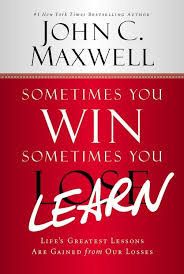
Sometimes You Win, Sometimes You Learn

Stopping Words That Hurt

The 13th Resolution

The Baptism With The Holy Spirit

The Bare Facts

The Five Levels Of Leadership

The Highest Good

The Hobbit

The Man Who Knew Too Much

The Purpose Of Christmas

The Ragamuffin Gospel

The Reagan Diaries

The Secrets Of Intercessory Prayer

Things We Couldn’t Say

Understanding Sexting

Unfinished

Unstoppable

Visioneering

Who Do You Think You Are?

You Don’t Need A Title To Be A Leader

For my book reviews of 2011 click here, and for 2012’s list click here.

Forgetfulness Can Be Deadly

GratitudeSome folks asked me to share the quotes I used in my message today in our Grateful Heart series. Ask, and you shall receive!

“It is no wonder that the Lord’s people should be satisfied with the goodness of their Lord. Here is goodness without mixture, bounty without stint, mercy without chiding, love without change, favor without reserve. If God’s goodness does not satisfy us, what will? What! are we still groaning? Surely there is a wrong desire within if it be one which God’s goodness does not satisfy.” —Charles Spurgeon

“Gratitude unlocks the fullness of life. It turns what we have into enough, and more. It turns denial into acceptance, chaos into order, confusion into clarity. It can turn a meal into a feast, a house into a home, a stranger into a friend. Gratitude makes sense out of our past, brings peace for today, and create a vision for tomorrow.” —John Maxwell

I’m looking forward to wrapping up this series next Sunday!

A Grateful Heart Is A Strong Heart

A Grateful Heart [web]As we approach Thanksgiving Day, many people begin to get their thanks on! They will start rehearsing for their family gathering when someone might ask them, “What are you thankful for this year?”

But I want to make the case for practicing gratitude all year long!

There are emotional, physical, psychological and relational benefits to being a thanks-filled person. Truly those with grateful hearts have strong, healthy hearts … both physically and emotionally.

“Gratitude unlocks the fullness of life. It turns what we have into enough, and more. It turns denial into acceptance, chaos into order, confusion into clarity. It can turn a meal into a feast, a house into a home, a stranger into a friend. Gratitude makes sense out of our past, brings peace for today, and create a vision for tomorrow.” —John Maxwell 

Please join me the next two Sundays at Calvary Assembly of God as I share some of the medical research and biblical truths that will reveal the year-round, whole-person benefits of being grateful.

21 Quotes From “Sometimes You Win, Sometimes You Learn”

Sometimes You WinAs I mentioned in my book review (which you can read by clicking here), John Maxwell always expands my horizons with his writings. I appreciate his ability to use his own life experiences as well as historical and contemporary examples and writings. So some of my favorite quotes from Sometimes You Win, Sometimes You Learn are from Dr. Maxwell, and some are from others that he quotes. Enjoy!

“I sometimes react to making a mistake as if I have betrayed myself. My fear of making a mistake seems to be based on the hidden assumption that I am potentially perfect and that if I can just be very careful, I will not fall from heaven. But a mistake is a declaration of the way I am, a jolt to the way I intend, a reminder that I am not dealing with facts. When I have listened to my mistakes, I have grown.” —Hugh Prather

“Those who profit from adversity possess a spirit of humility and are therefore inclined to make the necessary changes needed to learn from their mistakes, failures, and losses. … When we are focused too much on ourselves, we lose perspective. Humility allows us to regain perspective and see the big picture. … Humility allows us to let go of perfection and keep trying.” —John Maxwell

“Most people spend their entire lives in a fantasy Island called ‘Someday I’ll.’” —Denis Waitley 

“An idealist believes the short-run doesn’t count. A cynic believes the long run doesn’t matter. A realist believes that what is done or left undone in the short-run determines the long run.” —Sydney J. Harris

“Those things that hurt, instruct.” —Benjamin Franklin

“You can’t grow and learn if your focus is on finding someone else to blame instead of looking at your own shortcomings.” —John Maxwell

“The highest reward for our toil is not what we get for it but what we become by it. … Mistakes are not failures. They are proof that we are making an effort. When we understand that, we can more easily move out of our comfort zone, try something new, and improve. … Improvement demands a commitment to grow long after the mood in which it was made has passed.” —John Maxwell 

“Success in most things comes not from some gigantic stroke of fate, but from simple, incremental progress.” —Andrew Wood

“The main trouble with despair is that it is self-fulfilling. People who fear the worst tend to invite it. Heads that are down can’t scan the horizon for new openings. Bursts of energy do not spring from a spirit of defeat. Ultimately, helplessness leads to hopelessness.” —Norman Cousins

“Positive thinking must be followed by positive doing.” —John Maxwell

“When you are influential and highly respected, people tend to tell you what you want to hear, not what you need to hear. They are seeking your approval, or they flatter you. Unfortunately, this creates a gap between what you hear and reality. If you find yourself in that situation, you will need to work extra hard to get the people close to you to speak honestly into your life. And you will have to become highly intentional in observing and listening.” —John Maxwell 

“Wisdom is the reward you get for a lifetime of listening when you would have preferred to talk.” —Doug Larson

“Circumstances are the rulers of the weak; but they are the instruments of the wise.” —Samuel Lover 

“Mistakes are painful when they happen, but years later a collection of mistakes is what is called experience.” —Denis Waitley

“Ninety percent of those who fail are not actually defeated; they simply quit. … As you face bad experiences, it’s important for you to remember that you can rarely see the benefits while you’re in the midst of them. You usually gain perspective on the other side of it.” —John Maxwell 

“Most people would rather change their circumstances to improve their lives when instead they need to change themselves to improve their circumstances. They put in just enough effort to distance themselves from their problems without ever trying to go after the root, which can often be found in themselves. Because they don’t try to change the source of their problems, their problems keep coming back at them.” —John Maxwell

“To grow, you must be willing to let your present and future be totally unlike your past. Your history is not your destiny.” —Alan Cohen

“If I had my life to live over again, I’d make the same mistakes, only sooner.” —Tallulah Bankhead

“Maturity is doing what you are supposed to be doing, when you’re supposed to be doing it, no matter how you feel.” —Dom Capers 

“Have you not succeeded? Continue! Have you succeeded? Continue!” —Fridtjof Nansen, Nobel Peace Prize winner

“How we think when we lose determines how long it will be until we win.” —G.K. Chesterton

Sometimes You Win—Sometimes You Learn (book review)

Sometimes You WinIf you’re like me, you grew up being able to quickly finish the phrase, “Sometimes you win, sometimes you… lose.” But John Maxwell gives us a far better way to finish this well-worn phrase in his latest book Sometimes You Win—Sometimes You Learn: Life’s Greatest Lessons Are Learned From Our Losses.

As in his other books, Dr. Maxwell shares very candidly about his own missteps, and the lessons he learned from them. He also brings in the insight from other friends and authors who have also learned the value of making mistakes and learning the hard lessons from them.

What always amazes about John Maxwell’s writing is the depth of insight. On the surface you would think there wouldn’t be much to say about learning from our losses except another well-worn cliche, “If at first you don’t succeed, try, try again.” But that try-again spirit is only one part of the learning process. John shows us the value of:

  • Humility
  • Reality
  • Responsibility
  • Improvement
  • Hope
  • Teachability
  • Adversity
  • Problems
  • Bad experiences
  • Change

Following through on all of these aspects leads to the most important step in the learning process: Maturity.

The insight, historical stories, personal anecdotes, and wisdom of other been-there-done-that people are woven together with John’s unique teaching style to give us a book that is highly beneficial. I’d especially recommend this book to parents, coaches and mentors.

I am a Center Street book reviewer.

The Despised Pastor

The Despised PastorSurveys reveal that people in the United States do not have a highly favorable view of evangelical Christians, nor of pastors of evangelical Christian churches.

I agree with John Maxwell’s maxim that everything rises and falls on leadership, so this unfavorable view of evangelical Christians must be addressed first in the pastorate. The 2400-year-old words from the prophet Malachi still ring true today—

“The words of a priest’s lips should preserve knowledge of God, and people should go to him for instruction, for the priest is the messenger of the Lord of Heaven’s Armies. But you priests have left God’s paths. Your instructions have caused many to stumble into sin. You have corrupted the covenant I made with the Levites,” says the Lord of Heaven’s Armies. “So I have made you despised and humiliated in the eyes of all the people. For you have not obeyed me but have shown favoritism in the way you carry out my instructions.” (Malachi 2:7-9)

Uh oh!

Is it possible, my dear fellow pastor, that if we become men and women of the Word of God that the views of the population might begin to change?

Servanthood

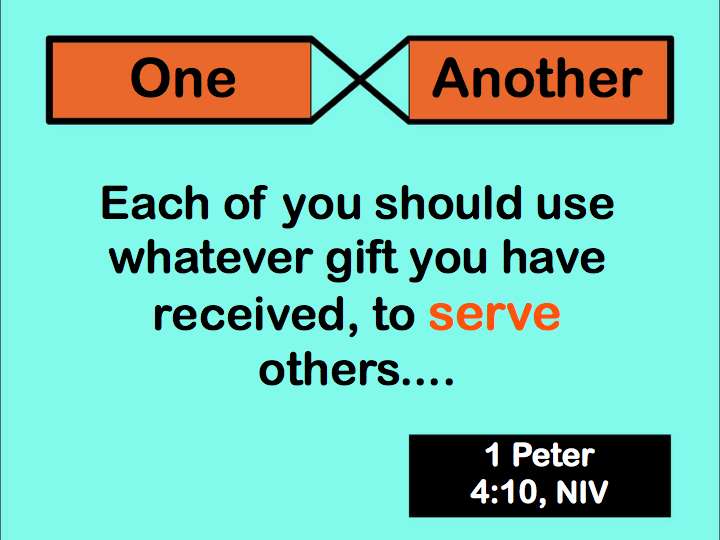
ServanthoodThis morning we wrapped up our series called Life Togetherwhere we looked at the one another phrases in the New Testament that related to the Church—with the thought of serving one another.

I think this 1-minute video from John Maxwell captures this thought about servanthood well…

From The Personalized Promise Bible we looked at this prayer that comes from the servanthood example of Jesus in John 13:13-17

Jesus is my Mentor and the Lord of my life. He has left me an example of the greatest servitude the world has ever known. I will do as he did and wash the feet of my brothers and sisters in Christ. I will see the real good and benefit of others through humble service. With a tender heart of compassion, I will take the time to do good to those around me. Through this generosity of service and willingness to give of myself to others, no matter how humbling the service may be, I store up for myself favor upon favor, and blessing upon blessing.

23 Quotes From “The 5 Levels Of Leadership”

5 Levels of LeadershipThere is always so much rich content in a John Maxwell book, and The 5 Levels Of Leadership is no exception. You can read my full book review by clicking here. These are a few of the quotes that especially caught my attention. Unless otherwise noted, these quotes are from John Maxwell.

“At any level, a leader doesn’t automatically stay at that level. You must earn your level of leadership with each person, and that level can go up or down at any time.” 

“You have no control over how much talent you possess. You control only what you do with it.”

“Leadership is accepting people where they are, then taking them somewhere.” —C.W. Perry 

“Often to make themselves look better or to keep people from rising up and threatening them, positional leaders make other people feel small. How?

  • By not having a genuine belief in them.
  • By assuming people can’t instead of assuming they can.
  • By assuming people won’t rather than believing they will.
  • By seeing their problems more readily than their potential.
  • By viewing them as liabilities instead of assets.”

“Anytime you think you’ve arrived—whether your position is the lowest or the highest in the organization—you’ve lowered your expectations for yourself, sold your leadership short, and fallen into a no-growth mind-set.”  

“Above all else, good leaders are open. They go up, down, and around their organizations to reach people. They don’t stick to established channels. They’re informal. They’re straight with people. They make a religion out of being accessible.” —JackWelch

“You see, when there is danger, a good leader takes the front line. But when there is celebration, a good leader stays in the back room. If you want the cooperation of human beings around you, make them feel that they are important. And you do that by being humble.” —Nelson Mandela 

“People will not get ahead with others unless they are willing to work behind others.”

“[Good leaders] have more than an open-door policy—they know the door swings both ways. They go through it and get out among their people to connect.” 

“If you want to be successful on Level 2, you must think less in terms of systems and more in terms of people’s emotions. You must think more in terms of human capacity and less in terms of regulations. You must think more in terms of buy-in and less in terms of procedures. In other words, you must think of people before you try to achieve progress.”

“Care without candor creates dysfunctional relationships. Candor without care creates distant relationships. But care balanced with candor creates developing relationships. …Caring values the person while candor values the person’s potential. …Caring establishes the relationship while candor expands the relationship. … Caring defines the relationship while candor directs the relationship.” 

“Before having a candid conversation, make sure you can answer yes to the following questions:

  • Have I invested enough in the relationship to be candid with them?
  • Do I truly value them as people?
  • Am I sure this is their issue and not mine?
  • Am I sure I’m not speaking up because I feel threatened?
  • Is the issue more important than the relationships?
  • Does this conversation clearly serve their interests and not just mine?
  • Am I willing to invest time and energy to help them change?
  • Am I willing to show them how to do something, not just say what’s wrong?
  • Am I willing and able to set clear, specific expectations?”

“If achieving the vision is worth building the team, it is also worth risking the relationship. Building relationships and then risking them to advance the team creates tension for the leader. That tension will force you to make a choice: to shrink the vision or to stretch the people to reach it. If you want to do big things, you need to take people out of their comfort zones. They might fail. They might implode. They might relieve their own tension by fighting you or quitting. Risk always changes relationships. If you risk and win, then your people gain confidence. You have shared history that makes the relationship stronger. Trust increases. And the team is ready to take on even more difficult challenges. However, if you risk and fail, you lose relational credibility with your people and you will have to rebuild the relationships. Risk is always present in leadership. Anytime you try to move forward, there is risk. Even if you’re doing the right things, your risk isn’t reduced. But there is no progress without risk, so you need to get used to it.” 

“You can issue all the memos and give all the motivational speeches you want, but if the rest of the people in your organization don’t see you putting forth your very best effort every single day, they won’t either.” —Colin Powell

“The job of a leader is to build a complementary team, where every strength is made effective and each weakness is made irrelevant.” —Stephen Covey

“If you want to be an effective leader, you must move from perfectionist to pragmatist.”

“Since you can’t prevent mistakes, why not adopt and attitude in which you and your team learn from them?” 

“The individual leads in order that those who are led can develop their potential as human beings and thereby prosper.” —Socrates

“The highest goal of leadership is to develop leaders, not gain followers or do work.”

“Leadership is an opportunity to serve.” —J. Donald Walters

“No matter where you are in your leadership journey, never forget that what got you to where you are won’t get you to the next level.” 

“The reality is that no one is indispensable. Worse, allowing others to become dependent does little more that satisfy a leader’s ego. It is a very limiting leadership style that has a very short life span. The first step in developing leaders is to have a desire to develop people so that they can succeed without you. …If you want to develop people, you must help them discover and build upon their strengths. That’s where people have the most potential to grow. Helping to develop their strengths is the only way to help leaders become world-class.”

“What you do daily, over time, becomes your legacy.”

The Five Levels Of Leadership (book review)

5 Levels of LeadershipI was introduced to the wisdom and leadership prowess of John C. Maxwell when I stepped into my first real leadership position. In some of the earliest Maxwell books I devoured, he talk briefly about the five levels of leadership. Now in The Five Levels Of Leadership Dr. Maxwell has given us the in-depth training to these invaluable lessons in growing as a leader.

Leadership is an upward climb. But it’s not just about gaining skills, adding accomplishments to a resume, or even getting a bigger office. True leadership is about investing in more people more deeply. That’s what this book helps leaders do.

People who are content with merely a title, or a new bullet point on their resume, will hate this book because right from the outset Dr. Maxwell bluntly points out the short-sightedness of that pursuit. Instead, the title is just the invitation to Level 1, and the start of a journey that focuses on doing the best good for the most people possible.

For those who have read other Maxwell leadership books, you will hear the echoes of those books woven through these pages. In reality, all of the leadership principles Maxwell has written about—from developing yourself, to building a team, to planning for the future, to communicating with greater clarity—are all built into Levels 1 through 5 of this book.

I appreciated the assessment at the beginning of the book to give me an idea of which Level was going to require my greatest attention. Likewise, the list of needed qualities at the end of each Level’s teaching gave me a handy “To Do” list for my leadership growth plans.

For anyone in any type of leadership position, this book deserves your full attention.

Check out a whole bunch of quotes I share from The Five Levels of Leadership.