5 Quotes On Mercy From “The Blessing Of Humility”

The Blessing Of HumilityAs I stated in my review of Jerry Bridges’ book The Blessing Of Humility, reading through these thoughts slowly—Beatitude by Beatitude—would bring about the most life-changing impact. In that spirit, I will be sharing some noteworthy quotes one Beatitude at a time. Here are some quotes on blessed are the merciful (Matthew 5:7)…

“The first four character traits of the Beatitudes…all address our internal character and our relationship to God. Here in this Beatitude, ‘Blessed are the merciful,’ Jesus begins to address our relationship with other people.”

“Note the subtle distinction between compassion and mercy. The Samaritan had compassion [Luke 10:33] and then showed mercy [v. 34-35].”

“Mercy expresses itself in two general areas: In the temporal sense, mercy seeks to meet the physical needs of others, as the Good Samaritan did in Jesus’ parable. The second way mercy expresses itself is granting forgiveness to those who have sinned against us.”

“The magnitude of our sin is not measured by its effects on other people but by its assault upon the infinite majesty and holiness of God.”

“To forgive others means we regard ourselves as ten-thousand-talent debtors [Matthew 18:23-35].” 

 I have previously shared quotes on:

Quotes on the next Beatitude will be posted soon. Stay tuned…

7 Quotes On Hungering & Thirsting From “The Blessing Of Humility”

The Blessing Of HumilityAs I stated in my review of Jerry Bridges’ book The Blessing Of Humility, reading through these thoughts slowly—Beatitude by Beatitude—would bring about the most life-changing impact. In that spirit, I will be sharing some noteworthy quotes one Beatitude at a time. Here are some quotes on blessed are those who hunger and thirst for righteousness (Matthew 5:6)…

“To hunger and thirst for righteousness, then, indicates a strong overwhelming desire for righteousness. … Righteousness denotes the state of being right. Biblically, it means perfect according to God’s law in every way: thought, word, deed, and even motive.”

“At the moment we trusted Christ as Savior, we were justified—declared by God to be righteous. You will never be more or less righteous before God any day of your life than you were the moment you trusted Christ as your Savior. This raises another question: Why should I hunger and thirst for that which I already have? The answer is that the more we grow and mature in the Christian life, the more sensitive we become to the sin and failure we see in our lives. It is not that we necessarily sin more but rather that we become more aware of and mourn over the sin that is already there. As that happens, we hunger more and more after the righteousness we have only in Christ.”

“There is a legitimate sense in which we are to hunger and thirst for that perfect righteousness we already have in Christ. This should be a continual daily attitude of all growing Christians because we continue to sin every day.”

“There is a second righteousness that we should hunger and thirst for: the experiential righteousness we are to pursue every day. God has inextricably linked together the righteousness we have in Christ and the righteousness we should pursue. He does not give one without the other. Therefore, whoever hungers and thirsts after the righteousness we have in Christ will also hunger and thirst to be righteous in his or her daily experience.” [See 2 Timothy 2:2; 1 Peter 2:24; 1 John 3:10]

“It is clear from Scripture, then, that we are to pursue an experiential righteousness. But what will cause us to hunger and thirst for it? The answer is twofold. First, as we have already observed, the new nature is inclined by the Holy Spirit to pursue righteousness. … The second motivation is gratitude for the righteousness we have in Christ.”

“There will be no growth in experiential righteousness apart from a regular intake of the Word of God.”

“We are absolutely dependent on the Holy Spirit to work in us Himself and to enable us to work. We cannot make one inch of progress toward experiential righteousness without His divine enablement.”

I have previously shared quotes on:

Quotes on the remaining Beatitudes will be posted next week so stay tuned. Even better: subscribe to my blog, and you’ll receive the new quotes directly in your email inbox.

6 Quotes On Meekness From “The Blessing Of Humility”

The Blessing Of HumilityAs I stated in my review of Jerry Bridges’ book The Blessing Of Humility, reading through these thoughts slowly—Beatitude by Beatitude—would bring about the most life-changing impact. In that spirit, I will be sharing some noteworthy quotes one Beatitude at a time. Here are some quotes on blessed are the meek (Matthew 5:5)…

“Meekness is not being timid, spineless, unassertive, and easily dominated. It is not a natural niceness. In fact, it has nothing to do with one’s personality or temperament.”

“There is then a twofold expression of meekness: first toward God and then toward other people. Meekness toward God involves: (1) responsiveness to His Word; (2) submission to His Providence.”

“As I reflect on our evangelical community to the extent I am aware of it, it seems we are more knowers of the Word than doers of the word. … Instead we too often use the Scriptures not as a means of judging ourselves but as a means of judging others, especially those whose sins are more flagrant than ours. The meek person, in contrast, searches the Scriptures (or listens to it taught) not to judge others but to allow the Holy Spirit to judge him or her. In fact, the meek person earnestly desires the Spirit to use His Word to effect a deep change in his or her inner being.”

“Thomas Watson wrote that meekness toward other people consists of three things: the bearing of injuries, the forgiving of injuries, and the returning of good for evil.”

“Because we have been forgiven so much, we have an obligation to forgive those who sin against us. Yet our motive for forgiving should not be our obligation but the realization of how much we have been forgiven.”

“Meekness towards man means bearing patiently with the hurtful actions of others and dealing gently with their failures, not only in the assurance that all of these are under God’s providential control, but in the knowledge that, left to ourselves, we have no claim to be any stronger than the weakest of our friends or any better than the worst of our enemies.” —John Blanchard

I have previously shared quotes on:

Quotes on the next Beatitude will be posted soon. Stay tuned…

6 Quotes On Mourning From “The Blessing Of Humility”

The Blessing Of HumilityAs I stated in my review of Jerry Bridges’ book The Blessing Of Humility, reading through these thoughts slowly—Beatitude by Beatitude—would bring about the most life-changing impact. In that spirit, I will be sharing some noteworthy quotes one Beatitude at a time. Here are some quotes on blessed are those who mourn (Matthew 5:4)…

“The word that Jesus used in this Beatitude is the strongest word in the Greek language for mourning. It is the word for Jacob’s morning over what he thought was the death of Joseph (Genesis 37:35). … Jesus uses this word to show the intensity of mourning He blesses here. He is, however, actually talking about mourning not over death but over our sin.”

“To be ‘poor in spirit’ is to be convicted of one’s sin, whereas to ‘mourn’ is to be contrite for it.” —John Blanchard

“King David committed two sins: first adultery, and then (essentially) murder to try to cover up his adultery. God sent the prophet Nathan to confront him, and in his skillful accusation of David, Nathan twice used the word despised (2 Samuel 12:7-11). First, David despised the Word of the Lord—that is, he despised the law of God (verse 9). In so doing, he also despised the Person of God (verse 10). Why is this true? Despising the law of God is not only an expression of rebellion. It is also a despising of His very character, since His law is a reflection of His character. This is true not only of such heinous sins as adultery and murder, but also of our more refined sins: pride, selfishness, gossip, and the like. So let us pray that God will indeed allow us to see our sin as rebellion against the rule of God—a despising of God’s law and even of His character.”

“Failure to see our sin as primarily against God is, I believe, the reason we experience so little heartfelt grief over it. … But be it ever so small in our own eyes, whenever we sin we also break God’s law. And Scripture says, ‘Whoever keeps the whole law but fails in one point has become accountable for all of it’ (James 2:10). God’s law is seamless, one complete whole. So when we break any of it, we break the whole law.”

“Is mourning over sin just for those first coming to Christ? No, Jesus’ words are in the present active tense. We could literally translate them as ‘blessed are those who continue to mourn.’ He is pronouncing a blessing on those whose attitude toward their sin is characterized by mourning. One mark of a growing Christian, then, is a growing sense of his or her sin, and an attitude of mourning over it.”

“So mourning over our sin is truly a display of humility in action. We cannot be proud and mourn over sin at the same time. We cannot be judgmental toward other believers, or even toward unbelievers, if we are truly contrite and brokenhearted over our own sin.”

I just shared quotes on blessed are the poor in spirit. Quotes on the next Beatitude will be posted soon. Stay tuned…

6 Quotes On Being Poor In Spirit From “The Blessing Of Humility”

The Blessing Of HumilityAs I stated in my review of Jerry Bridges’ book The Blessing Of Humility, reading through these thoughts slowly—Beatitude by Beatitude—would bring about the most life-changing impact. In that spirit, I will be sharing some noteworthy quotes one Beatitude at a time. Here are some quotes on blessed are the poor in spirit (Matthew 5:3)…

“The Greek word that Jesus used for ‘poor’ is the word ptochos. It is used to describe not ordinary poverty but abject poverty. Ptochos is not like my parents struggling to make ends meet [during the Great Depression]. Rather it describes a person who is completely destitute and helpless to do anything about it.”

Spirit refers to one’s inner being, our self-awareness. Specifically here it means how we evaluate ourselves with regard to our own spiritual condition. This abject poverty of spirit comes from our awareness of our own dreadfully sinful condition.”

“In the Beatitudes Jesus is talking about the character traits of those already in the kingdom. And He says we should be poor in spirit. It should be the ongoing daily attitude of one who is growing spiritually. Believers who are growing continue to see more sin in their lives. It is not that they are sinning more; rather they are becoming more aware of and more sensitive to the sin that has been there all along. … And it is the realization that even the sins, which seems so minor in our eyes, would bring us under the wrath of God, were it not for the atoning blood of Christ shed for us on the Cross, that should cause us to be poor in spirit.”

“Those who are poor in spirit…see Christ’s blood and righteousness as their hope not only for eternity but for God’s favor each day. They groan over their sin and earnestly pursue holiness but they do not trust in their holiness. Instead they say, ‘We are unworthy servants; we have only done what was our duty’ (Luke 17:10).”

“The person who is poor in spirit has a deep, awe-filled reverence for God and His Word.”

“We live in a culture that promotes self-esteem. And I am concerned that this attitude has permeated the body of Christ. We see ourselves as better than we are. We look at sinful society around us, and we can be like the Pharisee who prayed, ‘God, I think You that I am not like other men’ (Luke 18:11).”

Quotes on the next Beatitude will be posted soon. Stay tuned…

The Blessing Of Humility (book review)

The Blessing Of HumilityIt’s not very often that someone would describe humility as a “blessing,” but Jerry Bridges solidly makes the case that Jesus taught and exemplified humility as one of the greatest blessings of all. As with every other Jerry Bridges book I have read, The Blessing Of Humility is a paradigm-changer.

Bridges introduces the topic of his book like this: “The character trait of humility is the second-most frequently taught trait in the New Testament, second only to love. At one time I counted fifty instances of love taught, either by precept or example, in the New Testament; I counted forty instances of humility. I regard these two traits as the foundational stones of Christian character. All other character traits, in one way or another, are built upon love and humility” (emphasis mine).

The longest recorded sermon from Jesus in the gospels is the Sermon on the Mount (Matthew 5-7). This sermon begins as Jesus is addressing His followers, and He lists eight “blessed are” statements which we now call The Beatitudes. Jerry Bridges believes that each of the Beatitudes point us to the lovingly humble lifestyle that should characterize all Christians. So one-by-one, Bridges unpacks each Beatitude, showing us how Jesus lived it out, and how His followers can too.

In fact, Bridges says, “Our guide will be Jesus Himself, Who began His longest recorded sermon with a litany of countercultural blessings known to us as the Beatitudes. Taken together, they offer a portrait of humility in action, something which God commands and which God promises to bless.”

This book isn’t very long, and probably could be read through quite quickly. However, if you will read this book slowly, allowing time to “soak in” each Beatitude and its implications for your life, I believe your spiritual heart will be unalterably changed.

I am a Tyndale book reviewer.

…And Then A Miracle Occurs

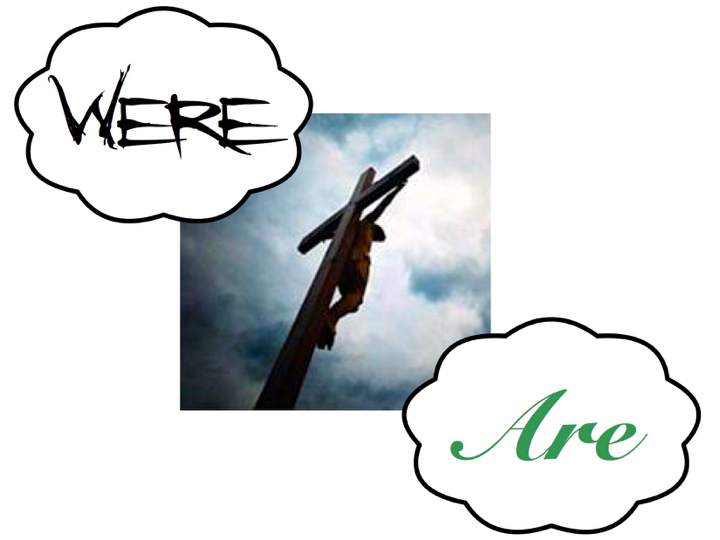
The Miracle of JesusLast week I shared how important it is for us to remember what we were before meeting Christ, and what we now are after meeting Him (you can click here to read that post). But we need to spend some time looking at how we went from “were” to “are.”

First, we need to recall how bad we really were without Christ. We were…

  • …dead (Ephesians 2:1)—this is a rotting corpse.
  • …separated (2:12)—we faced a gaping, unbridgeable, uncrossable chasm.
  • …alienated (4:18)— we were completely shut-out from fellowship with God.
  • …given over (4:19)—this implies an open betrayal which resulted in us running the opposite direction from God.

“The man on the street would simply shrugged his shoulders at this charge and say, ‘Sure, no one’s perfect.’ Even we Christians talk about failures and defeats, but the Bible uses other terms. It speaks of wickedness and rebellion (Leviticus 16:21). The Bible speaks of King David as despising God (2 Samuel 12:9-10). It charges another man of God with defying the word of the Lord… (1 Kings 13:21). It is evident by these descriptive synonyms for sin—rebellion, despising, defying—that God takes a far more serious view of sin than the man on the street or even most Christians.” —Jerry Bridges, in Transforming Grace (bold font added)

…and then a miracle occurs! You who once WERE far away [dead, separated, alienated, disgustingly sinful] HAVE BEEN brought near through the blood of Christ (Ephesians 2:13). Jesus Himself becomes our salvation … He IS the miracle! Notice the wording here—

  • He Himself IS our peace (v. 14a)
  • HE has made the two one (v. 14b)
  • abolishing IN His flesh (v. 15a)
  • create IN Himself (v. 15b)
  • IN this one Body…by which HE put to death their hostility (v. 16)
  • THROUGH Him we both have access to the Father (v. 18)

Jesus Himself IS (1) our peace, (2) our reconciliation, and (3) our atonement.

Not only must we always remember what we WERE and what we ARE, but remember the MIRACLE whereby this transformation could happen: The blood of Jesus spilled for us on the Cross!

We’ll be continuing our walk through the Book of Ephesians next Sunday, and I’d love to have you join us.

Book Reviews From 2014

BookshelfHere are the books I read and reviewed in 2014. Click a title to read the review…

12 Huge Mistakes Parents Can Avoid

A Call To Prayer

Beyond IQ

Bible Reading

C.S. Lewis In A Time Of War

Create

David Wilkerson

Did Jesus Rise From The Dead?

Discipleship In Crisis

Finding God In Hidden Places

Finding The Love Of Your Life

From This Day Forward

God’s Pursuit Of Man

High Adventure In Tibet

Holy Fire

How Do You Kill 11 Million People?

How High Will You Climb?

Humility

I Like Giving

Impertinent Poems

In His Steps

Inspire To Be Great

Jesus Daily

Keeping The Ten Commandments

Lincoln’s Battle With God

Mansfield’s Book Of Manly Men

Miracles

Pentecost

Pilgrim’s Progress

Pleasure & Profit In Bible Study

Sidelined

Smith Wigglesworth On Prayer, Power & Miracles

Stand Strong

Tactics

Taste And See

The Cell’s Design

The Christian’s Secret Of A Happy Life

The Facts On World Religions

The Furious Longing Of God

The Global War On Christians

The Greatest Words Ever Spoken

The Illustrated Guide To The Authors Of The Bible

The Love Of God

The Ministry Of God’s Word

The Moral Foundations Of Life

The Quick-Start Guide To The Whole Bible

The Solomon Seduction

There Is A God

This Day In Christian History

Transforming Grace

Winning With Principle

Yawning At Tigers

Here are my book reviews for 2011.

Here are my book reviews for 2012.

Here are my book reviews for 2013.

5 Quotes On Law & Grace From “Transforming Grace”

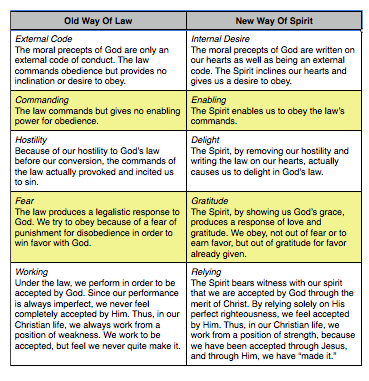
Transforming GraceJerry Bridges wrote a book that was an eye-opener for me called Transforming Grace. I’ve shared a couple of other posts with quotes from this book (you can read them by clicking here and here), but these quotes zero-in on the battle some people have in their minds between law and grace.

“Under a sense of legalism, obedience is done with a view to meriting salvation or God’s blessing on our lives. Under grace, obedience is a loving response to salvation already provided in Christ, and the assurance that, having provided salvation, God will also through Christ provide all else that we need.”

(click for a larger view)

(click for a larger view)

You can download a PDF version of this chart here → Law and Grace  ←

“Do you view God’s moral precepts as a source of bondage and condemnation for failure to obey them, or do you sense the Spirit producing within you an inclination and desire to obey out of gratitude and love? Do you try to obey by your own sheer will and determination, or do you rely on the Spirit daily for His power to enable you to obey? Do you view God as an ogre who has set before you an impossible code of conduct you cannot keep, or do you view Him as your divine Heavenly Father who has accepted you and loves you on the basis of the merit of Christ? In other words, in terms of your acceptance with God, are you willing to rely solely on the finished perfect work of Jesus, instead of your own pitifully imperfect performance?”

“We are much more concerned about someone abusing his freedom than we are about his guarding it. We are more afraid of indulging the sinful nature than we are of falling into legalism. Yet legalism does indulge the sinful nature because it fosters self-righteousness and religious pride. It also diverts us from the real issues of Christian life by focusing on external and sometimes trivial rules.” 

“That is the way a lot of manmade ‘dos and don’ts’ originate. They begin as a sincere effort to deal with real sin issues. But very often we begin to focus on the fence we’ve built instead of the sin it was designed to guard against. We fight our battles in the wrong places; we deal with externals instead of the heart. … For all of us, it may be good to have some fences, but we have to work at keeping them as just that—fences, helpful to us but not necessarily applicable to others. … I’m not suggesting you jump over fences just to thumb your nose at the people who hold on to them so dearly. We are to ‘make every effort to do what leads to peace and mutual edification’ (Romans 14:19). Use discretion in embracing or rejecting a particular fence. But don’t let others coerce you with manmade rules. And ask God to help you see if you are subtly coercing or judging others with your own fences.”

“Spiritual disciplines are provided for our good, not for our bondage. They are privileges to be used, not duties to be performed. … I do think we should actively promote spiritual disciplines. They are absolutely necessary for growth in our Christian lives. And since ours is a largely undisciplined age, many believers are losing out on the benefits of those disciplines that could help them grow to maturity in Christ. But we should promote them as benefits, not as duties.” 

You can read my full book review of Transforming Grace by clicking here.

12 Additional Quotes From “Transforming Grace”

Transforming GraceI already shared a few quotes from Transforming Grace by Jerry Bridges (you can read them by clicking here). Bridges also extensively quoted other authors in this amazing book, so I wanted to share a few of those quotes as well.

“Grace ceases to be grace if God is compelled to bestow it in the presence of human merit…. Grace ceases to be grace if God is compelled to withdraw it in the presence of human demerit…. Grace is treating a person without the slightest reference to desert whatsoever, but solely according to the infinite goodness and supper and purpose of God.” —Dr. C. Samuel Storms

“The most shining deeds and valuable qualities that can be found among men, though highly useful and truly excellent, when set in their proper places, and referred to suitable ends, are, as to the grand article of justification treated as nonentities…. For divine grace disdains to be assisted in the performance of that work which peculiarly belongs to itself, by the poor, imperfect performances of men. Attempts to complete what grace begins, betray our pride and offend the Lord; but cannot promote our spiritual interest. Let the reader, therefore, carefully remember, that grace is either absolutely free, or it is not at all: and, that he who professes to look for salvation by grace, either believes in his heart to be saved entirely by it, or he acts inconsistently in affairs of the greatest importance.” —Abraham Booth

“Perhaps the most difficult task for us to perform is to rely on God’s grace and God’s grace alone for our celebration. It is difficult for our pride to rest on grace. Grace is for other people—for beggars. We don’t want to live by a heavenly welfare system. We want to earn our own way and atone for our own sins. We like to think that we will go to heaven because we deserve to be there.” —R.C. Sproul 

“A lawdriver insists with threats and penalties; a preacher of grace lures and incites with divine goodness and compassion shown to us; for he wants no unwilling works and reluctant services, he wants joyful and delightful services of God.” —Martin Luther, commenting on Romans 12:1

“The great mistake made by most of the Lord’s people is in hoping to discover in themselves that which is to be found in Christ alone.” —Arthur W. Pink

“In the person of Christ God beholds a holiness which abides His closest scrutiny, yea, which rejoices and satisfies His heart; and whatever Christ is before God, He is for His people.” —Arthur W. Pink

“Only what God has commanded in His Word should be regarded as binding; in all else there may be liberty of actions.” —John Owen

“Let us never surrender our judgments or our consciences to be at the disposal and opinions of others, and to be subjected to the sentences and determinations of men. … It is my exhortation therefore to all Christians to maintain their Christian freedom by constant watchfulness. You must not be tempted or threatened out of it; you must not be bribed or frightened from it; you must not let either force or fraud rob you of it. … We must not give up ourselves to the opinion of other men, though they be never so learned, never so holy, merely because it is their opinion. The apostle directs us to try all things and to hold fast that which is good (1 Thessalonians 5:21). It often happens that a high esteem of others in respect of their learning and piety makes men take up all upon trust from such, and to submit their judgments to their opinions, and their consciences to their precepts. This should not be so.” —Samuel Bolton (1645)

“So God supplies perfectly measured grace to meet the needs of the godly. For daily needs there is daily grace; for sudden needs, sudden grace; for overwhelming needs, overwhelming grace. God’s grace is given wonderfully, but not wastefully; freely, but not foolishly; bountifully, but not blindly.” —John Blanchard

“For men have no taste for God’s power till they are convinced of their need of it and they immediately forget its value unless they are continually reminded by awareness of their own weakness.” —John Calvin

“Yet the duties God requires of us are not in proportion to the strength we possess in ourselves. Rather, they are proportional to the resources available to us in Christ. We do not have the ability in ourselves to accomplish the least of God’s tasks. This is a law of grace. When we recognize it is impossible for us to perform a duty in our own strength, we will discover the secret of its accomplishment. But alas, this is a secret we often fail to discover.” —John Owen

“Christian humility does not consist in denying what there is of good in us; but in an abiding sense of ill-desert, and in the consciousness that what we have of good is due to the grace of God.” —Charles Hodge

You can read my full review of Transforming Grace by clicking here.