The First Noël

romans-3-22When I worked in the business field, I was invited to be a teacher for a program called GROW (Grand Rapids Opportunities for Women), where I taught a class on marketing. Then later on, I served as a reviewer as the students turned in their marketing plans.

One of the main points I tried to drive home to my students is a basic Marketing 101 principle which says—you can’t be all things to all people. You have to pick a niche market and then try to dominate that market. There are two general ideas here: (1) Make your product or service pricey and therefore exclusive to a select group, or (2) Make your product or service affordable and accessible for the mass market.

The Incarnation of Jesus totally violates this Marketing 101 principle. (Which goes to show you that God knows more than all the world’s so-called “experts”!)

First, there was a marketing message to shepherds (see Luke 2:8-11). This would have been the “mass market” as shepherds represented the every-day, working-class man. The first two verses of The First Noël carol addresses these “certain poor shepherds in fields where they lay.”

But then there is this appearance of a very exclusive group of Magi (see Matthew 2:1-2, 11). These men were highly educated and had gained great influence and affluence. Verse 3 of The First Noël references these “wise men…from country far” who could present such lavish gifts to Jesus.

God did exactly what I told my GROW students they shouldn’t do if they wanted to be successful!

The Incarnation of Jesus is one of those rarest of rare things that actually can be all things to all people! Why? Because ALL people need what the Incarnation of Jesus brings. That’s why the final verse of The First Noël calls for ALL of us to join in singing our praise to God because of the salvation Jesus had purchased for ALL mankind.

Here’s the reason—

  • ALL we like sheep have gone astray (Isaiah 53:6)…
  •    …and the penalty for that straying from God is death for ALL sinners (Romans 6:23).
  • But Jesus came to ransom ALL from that penalty (Mark 10:45)…
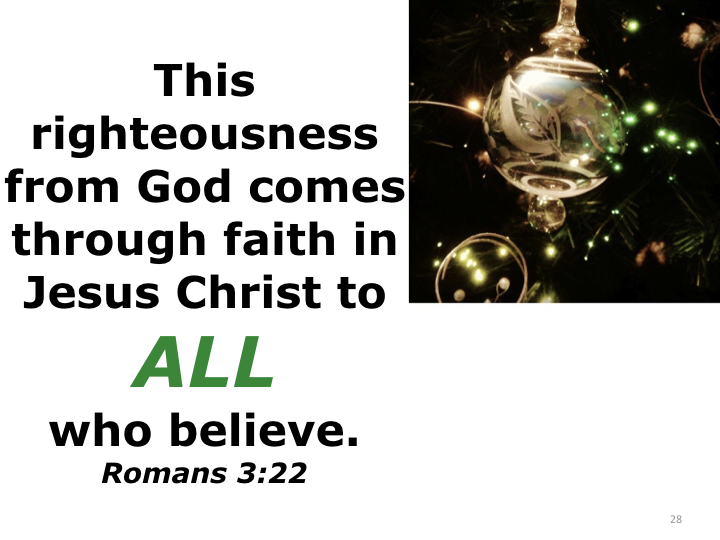
  •    …so that ALL who believe in Him will be saved (Romans 3:22)!

“The coming of Jesus was a search-and-save mission. ‘The Son of Man came to seek and save the lost.’ So Advent is a season for thinking about the mission of God to seek and to save lost people from the wrath to come. … ‘As the Father has sent Me, even so I am sending you’ (John 20:21). It’s the story of how the vertical Advent of God in the mission of Jesus bends out and becomes the horizontal Advent of Jesus in the mission of the church. In us.” —John Piper

You have been rescued, now go be a rescuer. Take this Noël message to ALL … young/old, rich/poor, Black/white, educated/illiterate, healthy/sick, friend/enemy…. the message in the First Noël and every Noël is for everyone! 

If you’ve missed any of the messages in our series The Carols Of Christmas, you can find the full list here.

Don’t Settle For Low Expectations

isaac-newtonSome of the greatest discoveries and revelations came about because people were curious. They refused to just go along with what they had always been told, what they grew up believing, or what the conventional wisdom told them was impossible.

Archimedes had his “Eureka!” moment because he refused to believe that it was impossible to measure the volume of an irregularly-shaped object.

Isaac Newton formulated the laws of gravitation because he curiously wondered about why apples fell perpendicular and at the same velocity.

The Apostle Peter saw a vision from God with animals, but didn’t stop there. His openness helped him realize that God didn’t have “favorites.”

Far too many people live their lives cursed with low expectations. They say, “That’s all there is.” and they put a period on it.

God wants us to soar above those low expectations! He tells us things like:

  • Come now, let us reason together… (Isaiah 1:18).
  • Call to Me and I will answer you and tell you great and unsearchable things you do not know (Jeremiah 33:3).
  • Are you listening to this? Really listening? … The knowledge of the secrets of the kingdom of heaven has been given to you… (Matthew 13:9, 11)

great-expectationsBut we are trapped in the curse of low expectations when we put a period on things, when we refuse to learn more, see more, hear more.

  • Most people—“That’s all there is.” (period)
  • What if we changed it up—“Is this all there is?” (question mark)
  • Perhaps you might get—“There is so much more!” (exclamation point)

For example, Paul uses the word “mystery” multiple times in his letter to the Ephesians. He explains that a mystery is something hidden from those who have it all figured out (the “period” people), but is revealed to those who will ask God (the “question mark” people). Only the “question mark” people get to see the “exclamation points” God has for them. Things like…

  • God has a plan, and it is His pleasure to reveal it to me (Ephesians 1:9-10; 2:10).
  • God’s revelation is fully revealed to me in His Word (3:3-5).
  • Faith in Jesus makes Christians co-heirs and sharers in all God’s promises (3:6).
  • I have access to God’s inexhaustible riches, His immense wisdom, and I may approach Him with freedom and confidence (3:8-12).

Don’t stop with “.” but go on to “?” and experience “!

With great expectation, read God’s Word, approach His throne, dig into His riches, wrestle with the difficult things, learn more of God’s purpose for your life. He wants to give you so much more “!” 

Locked Up On Purpose

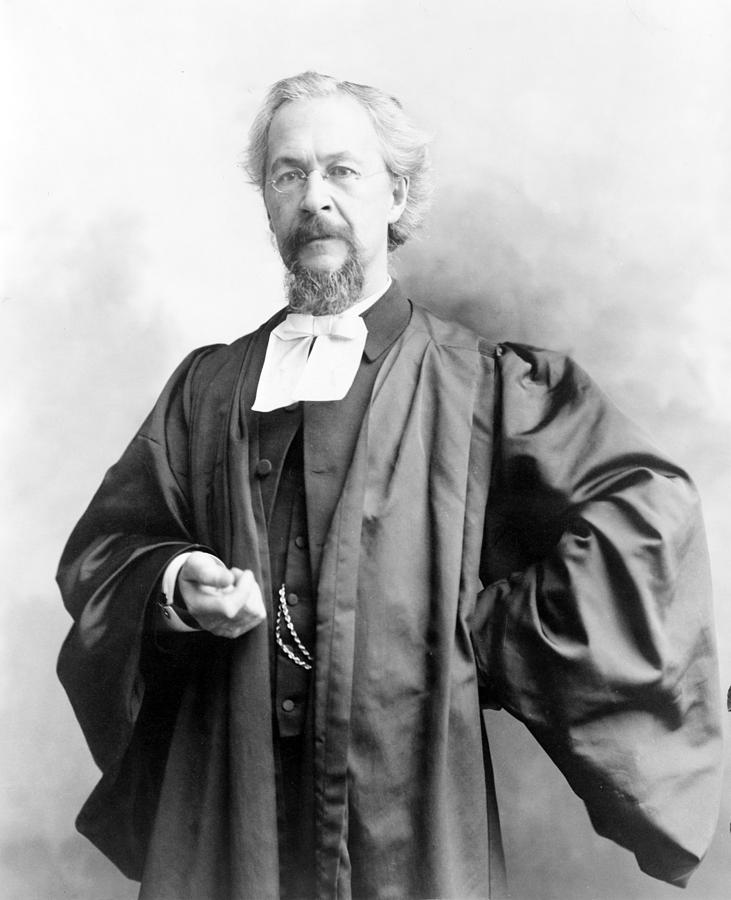
charles-henry-parkhurst‘Before this faith came, we were held prisoners…locked up until faith should be revealed’ (Galatians 3:23). God still causes us to be ‘locked up until faith’ is learned. Our own nature, circumstances, trials, and disappointments all serve to keep us submissive and ‘locked up’ until we see that the only way out is His way of faith. … Are you in some terrible trouble? Have you experienced some distressing disappointment, sorrow, or inexpressible loss? Are you in a difficult situation? Cheer up! You have been ‘locked up’ to faith. Accept your troubles in the proper way and commit them to God. Praise Him ‘that in all things God works for the good of those who love Him’ (Romans 8:28) and that He ‘acts on behalf of those who wait for Him’ (Isaiah 64:4).” —Charles Henry Parkhurst

Charles Spurgeon On Quiet Confidence

C.H. SpurgeonIn quietness and in confidence shall be your strength (Isaiah 30:15).

“It is always weakness to be fretting and worrying, questioning and mistrusting. What can we do if we wear ourselves to skin and bone? Can we gain anything by fearing and fuming? Do we not unfit ourselves for action and unhinge our minds for wise decision?

“We are sinking by our struggles when we might float by faith. Oh, for grace to be quiet!

“Why run from house to house to repeat the weary story which makes us more and more heart-sick as we tell it? Why even stay at home to cry out in agony because of wretched forebodings which may never be fulfilled? It would be well to keep a quiet tongue, but it would be far better if we had a quiet heart. Oh, to be still and know that Jehovah is God!

“Oh, for grace to be confident in God! The holy One of Israel must defend and deliver His own. He cannot run back from His solemn declarations. We may make sure that every word of His will stand though the mountains should depart. He deserves to be confided in; and if we would display confidence and consequent quietness, we might be as happy as the spirits before the throne.

“Come, my soul, return unto thy rest, and lean thy head upon the bosom of the Lord Jesus.” —Charles Spurgeon

9 Quotes From “Your Joy Will Turn To Sorrow”

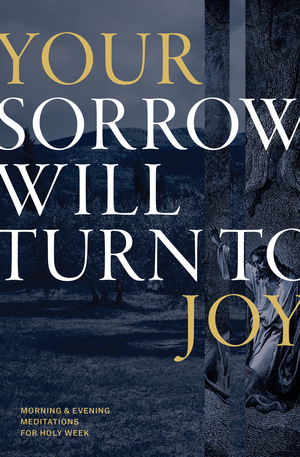
Your Sorrow Will Turn To JoyAlthough Your Joy Will Turn To Sorrow is intended to be read each morning and evening of Holy Week (check out my book review here), the content is so good that it will benefit you anytime you decide to read it! Here are some quotes that especially caught my attention.

“The only Savior who truly saves, only saves through suffering. The Cross was the only means of making us sinners right before a holy God. Our salvation was purchased with suffering, and it will be sealed and preserved with suffering (James 1:2-4), not comfort. We are promised comfort in the Christian life (2 Corinthians 1:4), but not the cheap, temporal imitation we’ve grown accustomed to in our modern world.” —Marshall Segal

“Jesus did not come to purchase the approval of others. No, He ‘was despised and rejected by men; a Man of sorrows, and acquainted with grief; and as One from whom men hide their faces He was despised’ (Isaiah 53:3). Why? Because it is God’s approval we desperately need. And God’s approval doesn’t come by popular opinion, but by divine intervention—the substitution of His own Son in our place.” —Marshall Segal

“The irony of Mark 14 is that Judas could see the value of the ointment rolling down Jesus’ head, but he couldn’t see the value of Jesus. He was a pawnbroker with cataracts. That’s why he took such offense at the woman. The woman, on the other hand, could see both the value of the ointment and the value of Jesus. That’s why she broke the flask.” —Jonathan Bowers

“No one understands better than God how difficult it can be for a human to embrace the will of God. And no human has suffered more in embracing the will of God the Father than God the Son. When Jesus calls us to follow Him, whatever the cost, He is not calling us to do something He is either unwilling to do or is never done Himself.” —Jon Bloom

“So, now, we say with an entirely different meaning, let His blood be on us, not defiantly as the crowds that crucified Him, but desperately—with gratitude and hope and adoration—as those who depend wholly on His sacrifice. Jesus, let Your blood be on us. Let it cover us. Let the blood that flows from Your head, Your hands, Your feet wash over us and cleanse us from all our iniquity. We proclaim Jesus’ death. We rejoice in his death, not because we believe He was a fraud or a lunatic, but because it is by His death, by His wounds, by His blood that we are healed.” —Marshall Segal

“Jesus spoke of this joy as He faced the torture of Good Friday. He faced denial, faced betrayal, faced beatings, faced splinters and nails and spears—He could not stop talking about joy! Only joy would keep Him going. Joy was on His mind, joy was on His tongue, and joy was drawing Him, not away from suffering, but into it (Hebrews 12:2). Jesus went to the Cross for joy: to buy joy, create joy, and offer joy. As the world celebrated the savage killing of God, out of this sea of foaming rebel hostility emerged a blood-bought, inextinguishable joy.

“If the killing of the Author of life could not extinguish this joy Jesus speaks about, nothing can—and nothing ever will. No opposition from the world, no opposition to the gospel, and no cultural despising of Christ will overcome the resurrection joy of Jesus.” —Tony Reinke

“If Christ is still dead, death reigns, and all our joys our vain. So hoard every plastic Easter egg you find, because whatever you find inside is all the joy you have to grab. Or, as Paul says, ‘If the dead are not raised, let us eat and drink, for tomorrow we die’ (1 Corinthians 15:32). But if death is dead, and if the dead are raised—if Christ is risen from the dead!—brothers and sisters, let us feast and celebrate, for the daunting light of our inextinguishable and inexhaustible eternal pleasures have broken into the darkness, offering us a life of joy in Christ that cannot fade or rust or be stolen away!” —Tony Reinke

“Easter has now become our annual dress rehearsal for that great coming Day. When our perishable bodies will put on the imperishable. When the mortal finally puts on immortality. When we join in the triumph song with the prophets and the apostles, ‘O death, where is your victory? O death, where is your sting?’ (Hosea 13:14; 1 Corinthians 15:55).” —David Mathis

“Indeed, even agony will turn to glory, but Easter doesn’t suppress our pain. It doesn’t minimize our loss. It bids our burdens stand as they are, in all their weight, with all their threats. And this risen Christ, with the brilliance of the indestructible life in His eyes, says, ‘These too I will claim in the victory. These too will serve your joy. These too, even these, I can make an occasion for rejoicing. I have overcome, and you will more than conquer.’ 

“Easter is not an occasion to repress whatever ails you and put on a happy face. Rather, the joy of Easter speaks tenderly to the pains that plague you. Whatever loss you lament, whatever burden weighs you down, Easter says, ‘It will not always be this way for you. The new age has begun. Jesus has risen, and the Kingdom of the Messiah is here. He has conquered death and sin and hell. He is alive and on His throne. And He is putting your enemies, all your enemies, under His feet.’” —David Mathis

This Is My Doing

This is My doing“My child, I have a message for you today. Let me whisper it in your ear so any storm clouds that may arise will shine with glory, and the rough places you may have to walk will be made smooth. It is only four words, but let them sink into your inner being, and use them as a pillow to rest your weary head: this is My doing [1 Kings 12:24].

Have you ever realized that whatever concerns you concerns Me too? For whoever touches you touches the apple of My eye [Zechariah 2:8]. You are precious and honored in My sight [Isaiah 43:4]. Therefore it is My special delight to teach you. I want you to learn when temptations attack you, and the enemy comes in like a pent-up flood [Isaiah 59:15], that this is My doing and that your weakness needs My strength, and your safety lies in letting Me fight for you.

Are you in difficult circumstances, surrounded by people who do not understand you, never ask your opinion, and always push you aside? This is my doing. I am the God of circumstances. You did not come to this place by accident—you are exactly where I meant for you to be. Have you not asked Me to make you humble? Then see that I have placed you in the perfect school where this lesson is taught. Your circumstances and the people around you are only being used to accomplish My will.

Are you having problems with money, finding it hard to make ends meet? This is My doing, for I am the one who keeps your finances, and I want you to learn to depend upon Me. My supply is limitless and I will meet all your needs [Philippians 4:19]. I want you to prove My promises so that no one may say you did not trust the Lord your God [Deuteronomy 1:32].

Are you experiencing a time of sorrow? This is my doing. I am a Man of sorrows, and familiar with suffering [Isaiah 53:3]. I have allowed your earthly comforters to fail you, so that by turning to Me you may receive eternal encouragement and good hope [2 Thessalonians 2:16].

Have you longed to do some great work for Me but instead have been set aside on a bed of sickness and pain? This is my doing. You were so busy I could not get your attention, and I wanted to teach you some of My deepest truths. They also serve who only stand and wait. In fact, some of My greatest workers are those physically unable to serve, but who have learned to wield the powerful weapon of prayer.” —Your loving Heavenly Father (as recorded by Laura A. Barter Snow)

4 Terrible Ways & 4 Great Ways To Study Your Bible

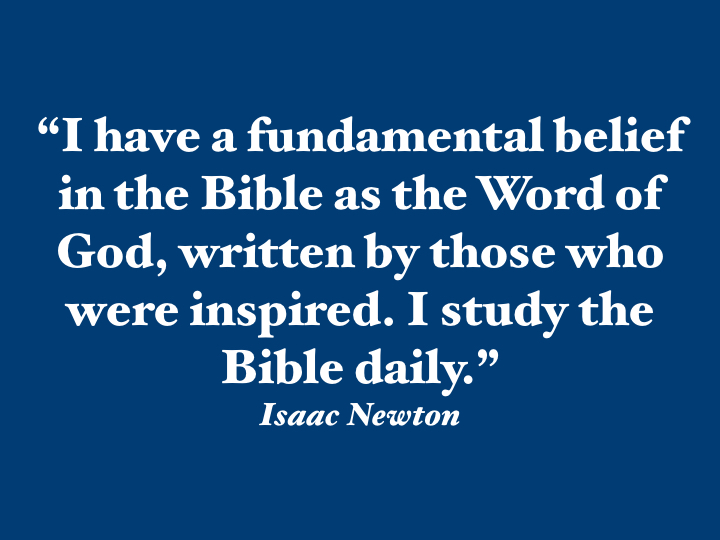
Isaac Newton Bible study.001There are two Greek words in the New Testament that have to do with trying to figure things out. One of them leads to less knowledge, and one opens the way for greater learning. Not surprisingly, Jesus never used the first way, but He confronts people who try to.

The first Greek word is defined as learning through self-calculation. In other words, I try to get at the right answer by either teaching myself, or by talking with people who don’t know any more than I do. This way leaves me in the dark.

For example, notice the phrase “discussed among themselves” in Matthew 16:7 and Mark 11:31. These are people who wanted to try to get answers without going to someone who could teach them. So that leads to four terrible ways to study your Bible—

  1. Approach your Bible with a know-it-all attitude.
  2. Try to figure out what the Bible is saying all on your own.
  3. Try to be your own Bible teacher.
  4. Grade your own tests as to your answers being right or wrong.

These are not only terrible ways to learn, but they are the exact opposite of what God desires. God says things like, “Come, let us reason together” (Isaiah 1:18), and “Call to Me and I will tell you things you do not know” (Jeremiah 33:3).

There is another Greek word which means to learn by having a conversation with someone more knowledgable than myself. So that means four great ways to study your Bible are—

  1. Ask the Holy Spirit to illuminate Scripture to you (John 16:13).
  2. Study the Bible in a daily systematic way (Acts 19:9).
  3. Don’t take anyone else’s word for what the Word says (Acts 17:11).
  4. If you’re confused, ask God to make it clear to you (Jeremiah 33:3).

Luke records an important story for us that took place on the day Jesus was raised from the dead. Two men were walking along “discussing these things with each other,” but not consulting the Scriptures. The result: they were sad and confused. Jesus join them on their journey (although they didn’t recognize Him at first), and took them to the Scriptures that showed them the answers for which they were yearning. They even said, “When He talked to us from the Scriptures, that’s when our hearts burned within us!” (see Luke 24:13-32).

You can try to figure life out on your own, and you will probably end up stymied like the religious leaders in Mark 11, or downcast like the disciples in Luke 24. Or you can ask the Holy Spirit to show you truths from the Scriptures, and have your eyes opened, like the two disciples after Jesus met with them. I think the choice is obvious!

Join me next week as we continue our series How To Study Your Bible.

Week Of Prayer—Tuesday

WOP_2016_Slide_TueOur week of prayer continues today with this prayer focus for Tuesday—

Seek God for strength to keep moving forward even in the midst of discouragement or suffering, knowing that faith to persevere strengthens character and kindles hope.

I love to pray God’s Word. Perhaps today you could pray something like this:

Heavenly Father, this time of life I’m in right now is tough. But I trust You. In fact, I also glory in my suffering, because I know that suffering produces perseverance; perseverance produces character; and character produces hope. And hope does not put me to shame, because Your love has been poured out into my heart through Your Holy Spirit [Romans 5:3-5]

So I trust in You entirely, the everlasting God, the Creator of the ends of the earth. You will never grow tired or weary, and Your understanding is higher than mine. You give strength to me when I’m weary and You increase my power when I’m weak. Even youths grow tired and weary, and young people stumble and fall; but when my hope is in You, You will renew my strength. In You, I will soar on wings like eagles; I will run and not grow weary, I will walk and not be faint [Isaiah 40:28-31]

While I’m in this difficult time, Father, I place my trust and my hope in You. In Jesus’ name, Amen.

6 Facts About Angels

Angels from the realms of gloryAngels play a fairly visible role in the First Advent story. As a result, we can begin to piece together some facts about angels from the biblical accounts. In my series on The Carols Of Christmas, I was looking at Angels From The Realms Of Glory, and there is information about the angels in this carol that is well-support from the Scripture.

  1.  Angels were created before the Earth was created, and they celebrated as God created our universe (Job 38:4-7). The Christmas carol says, “ye who sang Creation’s story now proclaim Messiah’s birth,” which we see in Luke 2:8-14.
  2. Angels are messengers sent from God, and they carry a message from God to turn people toward God (Daniel 10:12; Matthew 1:20-23; Luke 1:11-20, 26-38). In the Christmas carol they remind us to leave our contemplations and “seek the great Desire of nations.”
  3. Angels are not to be worshiped, because they are created beings. Lucifer’s desire to be worshipped is what led to his rebellion against God and expulsion from Heaven (Isaiah 14:13-14). And he still tries to appear today as an angel of light (2 Corinthians 11:14).
  4. Angels long to look into the Gospel that humans can know by personal experience (1 Peter 1:12).
  5. Angels know that Christ’s First Advent is a reminder of His Second Advent (Acts 1:10-11; see also 1 Thessalonians 4:13-18).
  6. We have been given an angelic responsibility to tell others about Christ’s First and Second Advents (notice that the messengers in the churches are called angels in Revelation 2:1, 8, 12, 18; 3:1, 7, 14; 22:16). The carol reminds us that it’s “all creation” (that includes us!) that joins the angels in praising God.

One of the biggest lessons we need to learn from this Christmas carol, and the corresponding verses about angels, is that we aren’t just celebrating the First Advent. We are anticipating and looking forward to the Second Advent as well! 

Next Sunday we will be continuing our look at the rich messages in the familiar Christmas carols. Please join me!

In the video below, we had some slight technical difficulties. But it clears up about the 5-minute mark, so hang in there!

If you have missed any of the messages in our series The Carols Of Christmas, you can find the full list by clicking here.

9 More Quotes From “Our Portrait In Genesis”

The Complete Works Of Oswald ChambersThere are always way too many quotes for me to share when I’ve finished reading an Oswald Chambers book! Check out my review of Our Portrait In Genesis, in which Chambers is our guide through the book of Genesis. Here is my second helping of quotes from Our Portrait.

“Every time your wits compete with the worship of God you had better take a strong dose of Isaiah 30:15-16—‘In returning and rest shall ye be saved; in quietness and in confidence shall be your strength: and ye would not.’ Beware of restlessness and wits persuading you that God has made a blunder—‘God would never allow me to fall sick after giving me such a blessing’; but He has! No matter what revelations God has made to you, there will be destitution so far as the physical apprehension of things is concerned—God gives you a revelation that He will provide, then He provides nothing and you will begin to realize that there is a famine, of food, or of clothes, or money, and your common sense as well as other people’s says, ‘Abandon your faith in God, do this, and that.’ Do it at your peril. Watch where destitution comes; if it comes on the heels of a time of quiet confidence in God, then thank Him for it and stay starving and He will bring a glorious issue.”

“All the qualities of a godly life are characteristic of the life of God; you cannot imitate the life of God unless you have it, then the imitation is not conscious, but the unconscious manifestation of the real thing. … The life of God has no pretense, and when His life is in you, you do not pretend to feel sweet, you are sweet.”

“The only standard for judging the saint is Jesus Christ, not saintly qualities.”

“Always beware when you can reasonably account to yourself for the action you are about to take, because the source of such clear reasoning is the enthroning of human understanding.”

“The reason we know so little about God’s wisdom is that we will only trust Him as far as we can work things out according to our own reasonable common sense.”

“Beware of obeying anyone else’s obedience to God because it means you are shirking responsibility yourself. … Remember, trust in God does not mean that God will explain His solutions to us, it means that we are perfectly confident in God, and when we do see the solution we find it to be in accordance with all that Jesus Christ revealed of His character.”

“It is in the dark night of the soul that the realization of God’s presence breaks upon us: we never see God as long as, like Esau, we are perfectly satisfied with what we are. When I am certain that ‘in me…dwelleth no good thing,’ I begin to experience the miracle of seeing and hearing, not according to my senses, but according to the way the Holy Spirit interprets the Word of God to me.”

“The true worship of God can only be maintained when the passing moments are seen as occurring in God’s order. If you try to forecast the way God will work you will get into a muddle; live the life of a child and you will find that every haphazard occasion fits into God’s order.”

“The nature of love is to give, not to receive. Talk to a lover about giving up anything, and he doesn’t begin to understand you! Love is not blind; love sees a great deal more than the actual, it sees the ideal in the actual, consequently the actual is transfigured by the ideal. … If you love someone you are not blind to his defects but you see the ideal which exactly fits that one. God sees all our crudities and defects, but He also sees the ideal for us; He sees ‘every man perfect in Christ Jesus,’ consequently He is infinitely patient.”

To read the first set of quotes from Our Portrait In Genesis, click here.