The End Of Our Struggle

Listen to the podcast of this post by clicking on the player below, and you can also subscribe on AppleSpotify, or Audible. 

Christmas time finds me sampling a whole lot of delicious treats, and I’m not complaining at all! But I’m a pretty simple guy, so one of my favorite treats is just plain old peanut butter. I love it! Sometimes I stick my spoon right in the jar and eat a big spoonful. 

But then there’s the age-old problem: How do you get peanut butter off the roof of your mouth? You can use your tongue or try blowing on it. Or you can use your finger! 

But then there’s another problem: How do you get peanut butter off your finger? Blow it? Shake it? Or eat it! 

Hmm, now I seem to be back to the original problem: How do you get peanut butter off the roof of your mouth? 

Maybe you’ve tried to solve one problem, only to create another problem. And then when you solve that problem you find yourself right back where you started! Round and round it goes! 

The Israelites were facing much the same situation. They sinned, God punished them through King Nebuchadnezzar, they tried to rebel, they were taken into captivity, and then they were finally allowed to return to Jerusalem after 70 years. But they still weren’t in charge of their own fate. First it was the Babylonians calling the shots, then the Medians, then the Persians, and then the Romans. Luke begins the birth story of Jesus with the words “in the days of Caesar Augustus” (Luke 2:1). 

The Israelites were waiting for God to restore their Promised Land to them. Some people believed a miraculous champion was going to come on the scene (much like Samson of old), and some thought a new anointed king from King David’s line would appear and rally an army to himself. 

We can understand this because of one of the prophecies from Isaiah 9 that talks about a warrior and God’s zeal. 

That word “warrior” got people pumped up! As did the promise that “the zeal of the LORD Almighty will accomplish this”! For many, this was their proof that God wanted His people to rule this Promised Land for themselves 

We’ve been going through a series called People Will Talk, and these voices of a miraculous champion or a new king from David’s line were loud voices to be sure. But interestingly, the Bible doesn’t record much of what these loud voices were saying. 

Also among the people of this time there was another group that were called “the Quiet in the Land.” These were people who didn’t talk very much, but instead they clung to the promise spoken by God Himself of the Messiah. One of these quiet ones was a man named Simeon.

He was called “righteous and devout” and someone “waiting for the consolation of Israel.” Which meant he carefully attended to the prophecies of Scripture. The Amplified Bible says that Simeon “lived in prayerful expectancy [of] the Lord’s Christ. 

I left out an important part of that prophecy in Isaiah 9—something that I think the loud ones overlooked or downplayed too. In between those words about “warrior” and “God’s zeal” we read this: “For to us a Child is born, to us a Son is given. The government will be upon His shoulders. And He will be called Wonderful Counselor, Mighty God, Everlasting Father, Prince of Peace” (Isaiah 9:6). 

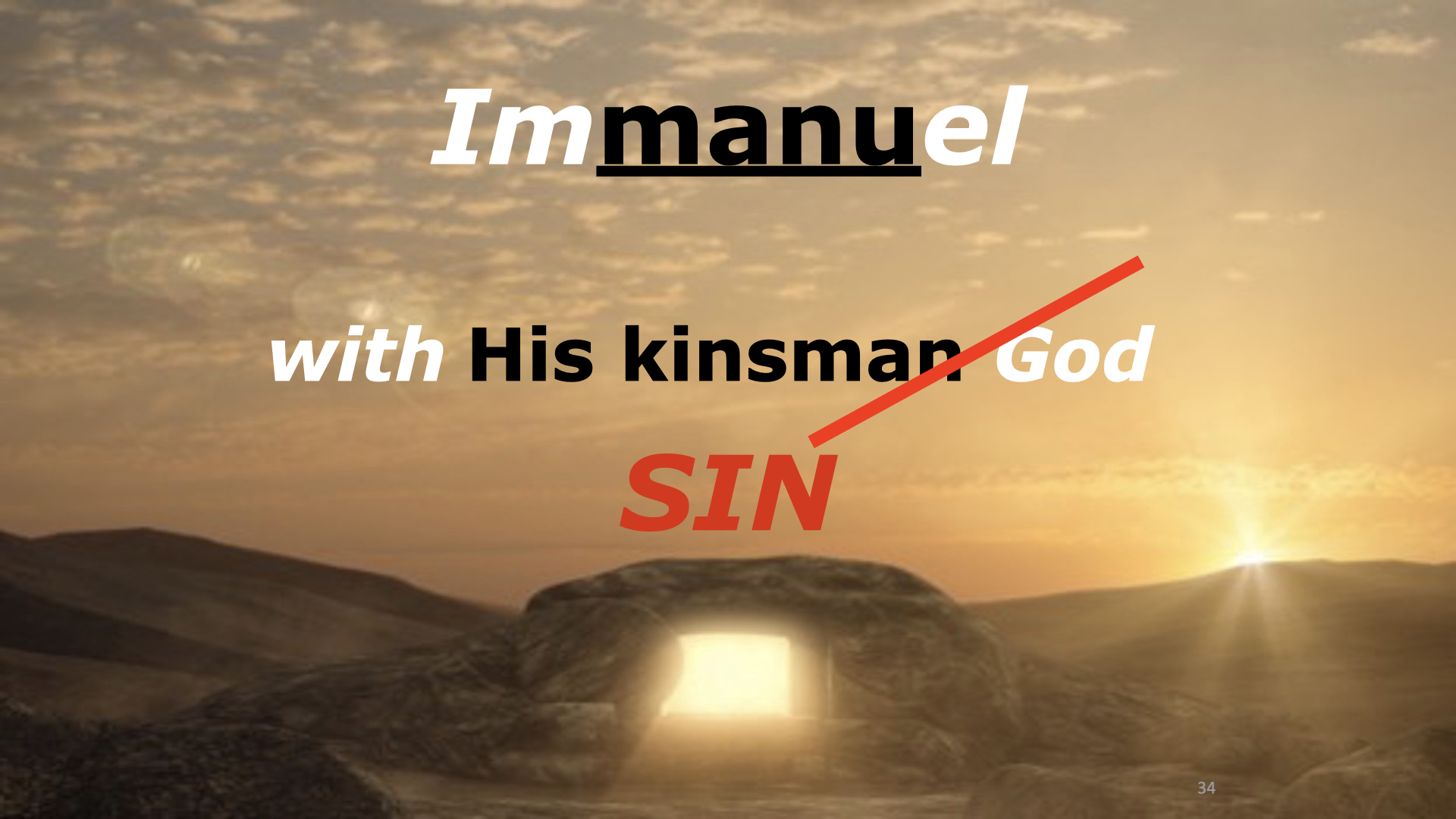
What does the “Prince of Peace” have to do with a warrior? Quite simply, when Jesus the Messiah came, the struggle was over. Jesus was the Warrior King who defeated the enemy of sin that kept us out of God’s presence. 

The loud Israelites believed God wanted His people to rule their Promised Land for themselves. But God wanted a people exclusively for Himself. ALL people—Jews and Gentiles alike—regardless of where or when they lived! 

Jesus is the way into God’s presence. He told us, “I am the way, the truth, and the life” (John 14:6). 

You can try to solve your own problems, but only Jesus can bring the ultimate salvation. In the Christmas carol Come, Thou Long-Expected Jesus, check out the lyrics of the second stanza:

Born Thy people to deliver, 
Born a child and yet a King, 
Born to reign in us for ever, 
Now Thy gracious kingdom bring. 
By Thine own eternal Spirit, 
Rule in all our hearts alone; 
By Thine all sufficient merit, 
Raise us to Thy glorious throne.

A relationship with Jesus means there is no more struggle of trying to solve our own problems, or figure out how things are supposed to work, or pushing down one problem only to have another one pop up. We come to the One and Only One who can raise us to His glorious throne forever and ever! 

Advent is a celebration of the end of our struggle because Jesus has made the way for us to have peace with God. 

And that means a very Merry Christmas indeed! 

If you’ve missed any of the messages in our Advent series People Will Talk, you can find links to all of them by clicking here. 

►► Would you please prayerfully consider supporting this ministry? ◀︎◀︎

All Talk But No Action

Listen to the podcast of this post by clicking on the player below, and you can also subscribe on AppleSpotify, or Audible. 

What people were saying about Jesus from His birth—before He preached a sermon, performed a miracle, or stepped on the toes of religious or political leaders—was revealing the truth. I’ve already discussed the words of the Magi and King Herod the Great, but all of these men also interact with another group (Matthew 2:1-6). Matthew calls them “all the people’s chief priests and teachers of the law.” 

This group was commonly called the Sanhedrin. It was an influential body of 70 + 1 leaders (Numbers 11:16), whose influence was felt in the temple in Jerusalem, in the synagogues in small villages, in King Herod’s throne room, and in the palace of the Roman governors. 

Notice that Matthew says “chief priests” in the plural. At the time of the birth of Jesus, Caiaphas was high priest and Annas his father-in-law was the former high priest. In the time of the early church, Annas is again called the high priest (Luke 3:2; John 18:13; Acts 4:6) 

Even under the Roman government the Sanhedrin held tremendous power…

  • they were experts in the Mosaic law and its application (Matthew 22:35) 
  • Jesus said, “the teachers of religious law and the Pharisees are the official interpreters of the law of Moses” (Matthew 23:2 NLT) 
  • Jesus also said they had storehouses of helpful knowledge (Matthew 13:52) 
  • they decided who would get to use their authority (Mark 11:27-28; 1:22) 
  • they were keepers of the traditions and became “indignant” when those traditions weren’t followed (Mark 7:5; Matthew 21:15) 
  • they were exorcists (Mark 9:14-17; Acts 19:13-14) 
  • Jesus said these leaders would be instrumental in His death (Matthew 16:21) 
  • they had their own armed guards and prisons (Mark 14:43; Acts 4:1; 5:18) 
  • yet they were afraid of the opinions of the people (Luke 22:1-2; Mark 11:31-32) 

(check out all of the above Scriptures by clicking here)

Jesus said they were “the official interpreters of the law,” yet they oftentimes interpreted the law to benefit themselves. 

When Herod asks them where the Messiah is to be born, they quote Micah 5:2 as saying, “a Ruler who will be the Shepherd of My people Israel.” But the word they use for “Ruler” means a leader with authority, or a governor (the same word is used for Joseph in Acts 7:10). Remember Herod’s violent temper and his insane suspicion? The word these religious leaders used gave them an “out.” They were almost saying to Herod, “When the Messiah does come, He will be a governor, which means there’s a good chance that He would report to you.” This “tame” interpretation was an attempt to keep them in the good graces of King Herod the Great 

But Micah himself uses the word for “Ruler” that means one with absolute dominion. Jesus will be THE Sovereign King. 

After hearing that this long awaited Messiah had finally been born in fulfillment of the prophecies, take a look at their response—

  • they said   . 
  • they did   . (even though Bethlehem was only 6 miles away!) 

How sad! 

But I think this is because they believed themselves to be “in” with Jehovah because they so carefully kept the rules. They didn’t need a Messiah to save them because—in their minds—they believed they were already saved from God’s punishment. 

Keeping religious rules doesn’t save anyone. 

Honoring age-old traditions doesn’t save anyone. 

Only coming to Jesus saves anyone! 

A key prophecy about Jesus in Isaiah 9:2 says that the Messiah will save us from darkness and shadows. What exactly are these? 

The writer of Hebrews tells us that the law and rules are merely shadows of the True Substance. God said through Isaiah that relying on the rules keeps us trapped in meaningless religious traditions. But Jesus came as the Light and as the Substance that set us free. His death and resurrection made it possible for our sins to be forgiven (see Hebrews 10:1-7; Isaiah 1:11-14, 18).

Rules don’t take us into God’s presence, but Jesus does. Not just talking about Jesus, but coming to Jesus as our Savior and Lord. 

People will talk about Jesus—even you may talk about Him. That doesn’t do anything. But when we do more than talk—when we come to Him to follow Him as our Ruler and Shepherd—then we find forgiveness and freedom. 

Let’s not just talk about Jesus, but let’s be actively obedient! 

If you’ve missed any of the messages in our Advent series People Will Talk, you can find those messages by clicking here. 

►► Would you please prayerfully consider supporting this ministry? ◀︎◀︎

When Jesus Talked With Just One Person

When Faith Frodsham was teaching at the Peniel Bible Institute, she wrote home to tell her father Stanley about her frustration over the small size of her class. She wondered if she was really being successful with such a small class. 

Stanley Frodsham wrote back:

“We received your good letter yesterday. Don’t get discouraged by the small size of the school. The Lord spent much time ministering to the ones. Read the third of John and see His ministry to one soul. Then in the fourth chapter His ministry to another. Then how wonderful it was when He had just an audience of one, Mary, who sat at His feet. With six students you have six times the audience He had.” 

Success is not about big numbers, but about quality time invested faithfully and for God’s glory. 

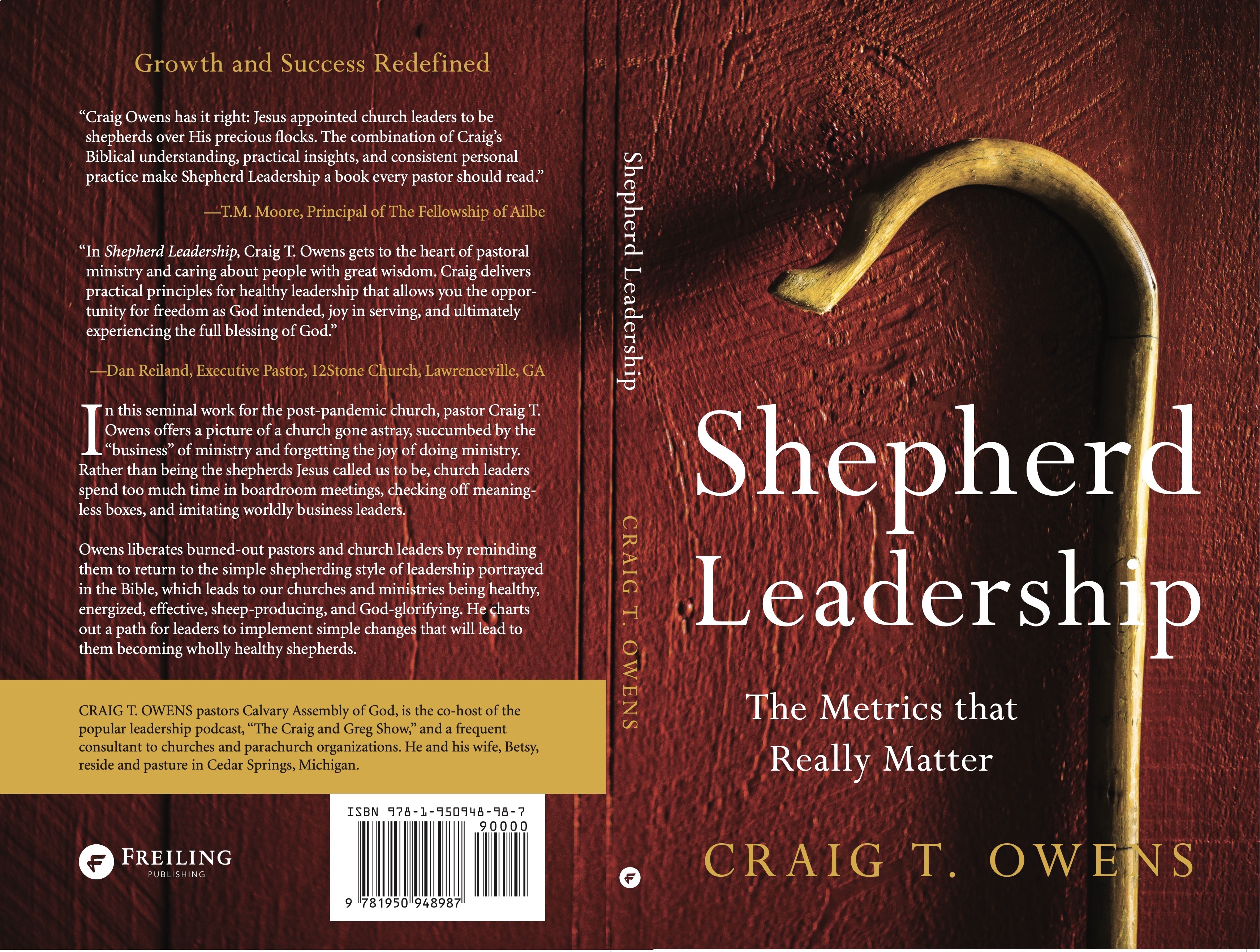
I wrote my book Shepherd Leadership: The Metrics That Really Matter to address this misconception which discourages so many pastors and other ministry leaders. If you are involved in ministry, I truly believe this book will give you a new encouraging perspective. 

Get more information at http://ShepherdLeadershipBook.com

The Best Commentary On The Old Testament

Listen to the podcast of this post by clicking on the player below, and you can also subscribe on AppleSpotify, or Audible. 

Frequently, people will ask me what commentaries I consult when I’m studying for a sermon. Occasionally, I will consult a commentary—but only after I feel I’ve exhausted my own biblical studies. I discussed some thoughts from Charles Spurgeon on the use of commentaries in a previous post. 

But let’s look at this from another angle: Before there was an Old Testament and a New Testament, what did those who lived in the days of Jesus call what we now refer to as “the Old Testament”? They called it Scripture. 

Here’s a clip from a recent sermon where I discuss more in-depth why our New Testament is really the best commentary we have on the Old Testament:

I invite you to check out a couple of other resources: 

►► Would you please prayerfully consider supporting this ministry? ◀︎◀︎

Quieting The Storms

Listen to the podcast of this post by clicking on the player below, and you can also subscribe on AppleSpotify, or Audible. 

“Anxiety disorders are the most common mental illness in the U.S., affecting 40 million adults in the United States age 18 and older, or 18.1% of the population every year.” —Anxiety & Depression Association of America 

A multitude of factors go into someone’s anxiety: genetics, temperament, brain chemistry, life experiences. In addition to those factors, we have to keep in mind that humans are a three-part being—with a body, mind, and spirit—and a disease in one area does affect the other two areas. 

All of this means that there is no one-size-fits-all solution for anxiety. But there is one Healer: 

  • He may supernaturally heal your body, mind, or spirit 
  • He may direct you to a medical doctor, a mental health professional, or a spiritual counselor 
  • But always, He will walk through the challenges with you, strengthening you, and preparing you to minister to others going through a similar struggle (Psalm 23:1-6; 2 Corinthians 1:3-4) 

David wrote, “When I am afraid, I put my trust in You” (Psalm 56:3). Notice that he said “when” not “if.” David knows what you probably know too: we can be easily consumed by our anxiety, doubts, and fears. But David also knows (and I hope you do too) that at those moments, we can go to God as our trustworthy First Source. 

One of the dictionary definitions of anxiety is a feeling of disquiet. All of the conflicting thoughts make it hard to concentrate, the abundance of noise makes it difficult to talk to yourself, let alone talk to God. 

I’d like you to consider another psalmist’s words. Look at the first half of Psalm 94:19—

  • When anxiety was great within me… (NIV) 
  • In the multitude of my anxious thoughts… (AMP)
  • When doubts filled my mind… (NLT) 

The setting of this psalm is one of lots of disquieting voices: a desire to see the wrongdoers punished, listening to arrogant words, getting fed up with boasting words, seeing good people being trampled, hearing foolish words uttered about God (vv. 1-8). 

Experiencing anxiety is not sinful, but I do think that we grieve God’s heart when we immediately run to other sources for relief instead of going to our loving Heavenly Father first. After dealing with the disquiet in the opening verses of Psalm 94, the psalmist says, “My anxiety level was sky high!” But then notice how that verse concludes—

  • Your consolation brought me joy (NIV) 
  • Your comforts cheer and and delight my soul (AMP)
  • Your comfort gave me renewed hope and cheer (NLT)

Jesus told us about our Comforter who would always be with us (John 14:1, 16-17). A little further on in these same remarks Jesus also said, “These things I have spoken to you, that in Me you may have peace. In the world you will have tribulation; but be of good cheer, I have overcome the world” (John 16:33 NKJV). 

I like that phrase, “Be of good cheer.” That phrase is just one word in Greek, and sometimes it’s translated “be of good courage.” In every single instance, it’s only used by Jesus and it’s only used when He comes close to anxious people (Matthew 9:2, 9:22, 14:27; Mark 6:50, 10:49; Luke 8:48; John 16:33; Acts 23:11). 

A furious squall battered the boat, almost swamping it. The disciples were—to say the least—disquieted! In their anxious state they notice Jesus peacefully sleeping. They wake Him up with, “Don’t You care that we’re drowning?!” Jesus stands up and says to the storm, “Quiet. Be still.” 

Recall that one of the descriptions of anxiety was being disquieted. That prefix dis- means to be separated: our anxiety would seek to distance us from God’s presence, to make us feel like His help is too far away. But when we go to Jesus, He alone can say, “Quiet” to our disquieting thoughts. He can remove the “dis-” and bring us close to Him. Only His peace can X-out the noise of the storm and bring you to a place of quiet rest. 

After Jesus said, “Quiet. Be still,” notice this: “THEN the wind died down and it was completely calm” (Mark 4:39). And the great thing is this: Even if another storm begins disquieting us just a few minutes after the calm, we can go to Him again. There is no limit: We can continually go to the Eternal Source of peace, to the only One who can speak, “Quiet” to our anxious thoughts. 

Please follow along with us as we learn more about X-ing out our anxieties. 

►► Would you please prayerfully consider supporting this ministry? ◀︎◀︎

Our Blessed Hope

Listen to the podcast of this post by clicking on the player below, and you can also subscribe on AppleSpotify, or Audible. 

As we wrap up our series looking at our foundational belief statements, I want to combine the last four statements together, not only because they all cover the same theme of end-times events, but also because these statements should give every Christian hope! 

  • “Hope is the power of being cheerful in circumstances which we know to be desperate.” —G.K. Chesterton 
  • “One of the great enemies of hope is forgetting God’s promises.” —John Piper 
  • “Hope is not wishful thinking; it’s well-founded believing!” —Craig T. Owens 

Christians have a fantastic, unshakable, blessed hope on which we can stand not only secure but joyful! 

Foundational truth #13: “The resurrection of those who have fallen asleep in Christ and their translation together with those who are alive and remain unto the coming of the Lord is the imminent and blessed hope of the church.” 

This blessed hope in the future helps us live with joy today! Knowing that death has been defeated and Jesus will come back to take us home with Him should fuel us to say “no” to the temporary pleasures of sin, and live such godly lives that it turns others’ eyes to Jesus (Titus 2:11-14; 1 Corinthians 15:51-52; 1 Thessalonians 4:16-17). 

Foundational truth #14: “The second coming of Christ includes the rapture of the saints, which is our blessed hope, followed by the visible return of Christ with His saints to reign on earth for one thousand years.” 

Sometimes you will hear Christians talk about the “rapture” of the Church. Although this word itself isn’t in the Bible, the Greek word harpazo in 1 Thessalonians 4:17 means “catching up.” It also means “to eagerly claim for one’s self,” which reminds me that Jesus is thrilled to bring His Bride home to be with Him forever! After the Church has been caught up to Heaven, a period of tribulation will plague the earth, followed by Christ’s Second Coming and His millennial reign (Zechariah 14:4-5; Revelation 19:11-15; 20:1-10). 

Foundational truth #15: “There will be a final judgment in which the wicked dead will be raised and judged according to their works. Whosoever is not found written in the Book of Life, together with the devil and his angels, the beast and the false prophet, will be consigned to the everlasting punishment in the lake which burns with fire and brimstone, which is the second death.” 

Christians have no fear of the second (or final) death because our names are written in the Book of Life (Luke 12:4-6; Revelation 20:11-15). Not only is there judgment for the wicked, but there will be rewards for the righteous. 

Foundational truth #16: “In keeping with His promise we are looking forward to a new heaven and a new earth, where righteousness dwells” (2 Peter 3:13). Revelation 21-22 give us a small glimpse of our eternal home. 

In light of these truths, how should Christians live while still on earth? I think there are three ways we should live: 

  1. Live circumspectly
  2. Live on-mission
  3. Live unafraid

(see Ephesians 5:15; Matthew 28:18-20; Proverbs 24:11-12; Jude 1:20-25) 

With this blessed hope of the Second Coming of Jesus and our security in knowing we will remain with Him forever, let’s tell everyone we can how they too can know what it is to live with this hope in their heart. 

If you’ve missed any of the messages in our series exploring our foundational beliefs, you can access the full list by clicking here. 

►► Would you please prayerfully consider supporting this ministry? ◀︎◀︎

Thursdays With Spurgeon—Always Follow The Example Of Jesus

This is a weekly series with things I’m reading and pondering from Charles Spurgeon. You can read the original seed thought here, or type “Thursdays With Spurgeon” in the search box to read more entries.

Listen to the podcast of this post by clicking on the player below, and you can also subscribe on iTunes or Spotify.

Always Follow The Example Of Jesus  

     The heathen moralists, when they wished to teach virtue, could not point to the example of their gods, for, according to their mythologists, the gods were a compound of every imaginable and, I had almost said, unimaginable vice! Many of the classic deities surpassed the worst of men in their crimes—they were as much greater in iniquity as they were supposed to be superior in power. It is an ill day for a people when their gods are worse than themselves! The blessed purity of our holy faith is conspicuous, not only in its precepts, but in the character of the God whom it reveals. There is no excellence that we can propose, but we can see it brightly shining in the Lord our God! There is no line of conduct in which a believer should excel, but we can point to Christ Jesus our Lord and Master as the pattern of it! In the highest places of the Christian faith, you have the highest virtue, and to God our Father and the Lord Jesus be the highest praise. 

From Forgiveness Made Easy 

If you’ve ever studied ancient mythologies, the gods and goddesses of those stories did not live a life worthy of emulation! But Jesus is an entirely different story. Even people who don’t want to acknowledge the deity of Jesus still find His lifestyle worthy of following. 

So not only did Jesus say, “Bless those who curse you, pray for those who mistreat you,” but He lived it out. “When they hurled their insults at Him, He did not retaliate; when He suffered, He made no threats. Instead, He entrusted Himself to Him who judges justly,” and said, “Father, forgive them, for they do not know what they are doing.” (See Luke 6:28; 1 Peter 2:21-23; Luke 23:34). 

Don’t say, “That person really injured me. It was unfair! I cannot forgive them.” Instead, follow the example of Jesus, the only one who ever lived an absolutely perfect life and yet He was still shamefully mistreated. Peter reminds us that by forgiving His tormenters, Jesus was entrusting Himself to the Perfect Judge—He trusted God to take care of it. 

It may seem impossible, but the same Holy Spirit that empowered Jesus to do these things is living in you and He will empower you too. Always, always, always follow the example of Jesus. 

Check out some other posts on forgivness by clicking here

►► Would you please prayerfully consider supporting this ministry? ◀︎◀︎


Thursdays With Spurgeon—Faith Sees Better Than Sight Does

This is a weekly series with things I’m reading and pondering from Charles Spurgeon. You can read the original seed thought here, or type “Thursdays With Spurgeon” in the search box to read more entries.

Listen to the podcast of this post by clicking on the player below, and you can also subscribe on iTunes or Spotify.

Faith Sees Better Than Sight Does  

For we walk by faith, not by sight. (2 Corinthians 5:7) 

     There is walking by faith, and there is walking by sight. The most of men, all men indeed, naturally walk by sight. They have a proverb that says, ‘Seeing is believing,’ and they are wise men, for they trust people as far as they can see them, and no further. … Self-reliance is the name of the principle, and according to the world, the best and grandest thing that a man can do is have faith in himself. … 

     I think the world must be pretty well ashamed of itself if it still considers this poor earth to be all that a soul has to live for. I feel as if I could not talk upon the matter. Solomon tried everything there was in this world—riches, power, pleasure—every sort of delicacy and delight he had, beyond the point of satisfaction. And what was his verdict upon at all? ‘Vanity of vanities, all is vanity’ (Ecclesiastes 1:2). … 

     If there is not another world to live for, I must say that this life is a most unutterably empty kind of thing! It is not worthy of a man! But oh, to believe what God tells me: that there is a God; that God became flesh to bear me up to Himself! To believe that I am God’s son, that I have an immortality within myself that will outlast the stars, that I will one day see His face and sing His praise forever with cherubim and seraphim! Why, there is something here! …

     If you walk only by sight and believe only what you see, what do you believe? You believe that while you are living here, it is a good thing to make the best you can of it. And then you will die and be buried, and that will be the end of you! What a poor, miserable, ignorant belief this is! … But when you believe in what God reveals and come to walk by faith, how your information expands! Now riddles are all solved, and the inexplicable is understood! … 

     The principle of faith does best in the dark. He who walks by faith can walk in the sunlight as well as you can, for he walks with God. He has enlightened eyes, but he can walk in the dark as you cannot, for his light is still shining upon him. He trusts in the unseen and in the invisible, and his soul rejoices when present things are passing away.

From Faith Versus Sight

One of the temptations of the devil has been to try to get us focused on the seen—the temporal. He did this successfully with Adam and Eve in the Garden of Eden. He tried to get Jesus to focus on the temporal in his wilderness temptations, but Jesus steadfastly kept His eyes on the unseen. 

The devil’s strategy hasn’t changed. He will try to get you to say, “Woe is me! Look at all of the bad things happening around me!” 

But we walk by faith, not by sight. “Faith is the assurance—the confirmation, the title deed—of the things we hope for, being the proof of things we do not see and the conviction of their reality—faith perceiving as real fact what is not revealed to the senses” (Hebrews 11:1 AMP).   

Don’t give in to the temptation to believe only what you see. There is so much more waiting for you. It’s all yours by faith in Jesus Christ!

►► Would you please prayerfully consider supporting this ministry? ◀︎◀︎

Confident, Bold, and Joyful

Listen to the podcast of this post by clicking on the player below, and you can also subscribe on AppleSpotify, or Audible.

Zechariah pronounces more messianic prophecies than any other biblical writer, with the exception of Isaiah (and he wrote 66 chapters!). These prophecies are fulfilled in Christ’s First Advent, and promised for His Second Advent. Check these out for yourself…

(All of the biblical references for the above chart can be viewed by clicking here.) 

(All of the biblical references for the above chart can be viewed by clicking here.)

Why is it so vital that Jesus fulfilled these prophecies? 

(1) The historicity of these fulfilled prophecies gives us a confidence for the future. 

These fulfilled prophecies assure us that God is sovereign over all history. There are no accidents, and God needs no help from anyone else in fulfilling what He has promised. As a result, no world event—no matter how big it may seem—should be able to rattle us! 

(2) The authenticity of what God has done gives us boldness for today. 

When God does the miraculous, He authenticates His Word. This authenticity has always made God’s people stand out (see Genesis 41:39). It’s also why people recognized Jesus as the divine Son of God (John 3:2; 9:30-33). So we can live with the boldness to know that what God says He will do, He will do! 

(3) The exclusivity of God’s promises and fulfillment of those promises gives us joy for our testimony. 

Only Jesus could have done all of this (Luke 24:26-27, 44), so only Jesus can fulfill what is still remaining to be fulfilled! We can have supreme joy in knowing that only Jesus is our hope of salvation (John 14:6; Acts 4:12). 

It’s vital that we know this is true so that we can live confident, bold, and joyful! Our confident boldness and our bold joy both glorify God and attract seekers to Him. 

If you’ve missed any of the other messages in our series looking at the major lessons from the minor prophets, you can access all of those messages by clicking here. 

You may download a PDF version of the above charts by clicking here → Zechariah prophecies for the First Advent or here → Zechariah prophecies for the Second Advent

►► Would you please prayerfully consider supporting this ministry? ◀︎◀︎

God’s Signet Ring

Listen to the podcast of this post by clicking on the player below, and you can also subscribe on AppleSpotify, or Audible. 

God foretells that He will make governor Zerubbabel “like My signet ring.” This means that Zerubbabel would have God’s supreme authority—he could speak for God. 

How could this happen? Zerubbabel couldn’t do it himself, but God sovereignly placed him in the family lines of both Joseph and Mary. This family lineage of Jesus Christ carried BOTH the covenant-fulfilling, kingly authority that traced back to Abraham AND the satan-crushing promise given to Adam’s human line. 

Jesus joined these two promises through Zerubbabel the signet ring. Jesus became God’s Ultimate Signet Ring so that now every promise is “Yes” in Him. This mens every time we pray and claim promises in God’s Word, Jesus adds His stamp of authority—His “Amen!”—to our prayers (see 2 Corionthians 1:20). 

►► Would you please prayerfully consider supporting this ministry? ◀︎◀︎