Can A Christian Lose Their Salvation?

As a part of our annual Q Series, this was a question that was turned in: Can a Christian lose his or her salvation?

Check out the video below…

Some of the Scriptures I reference in this answer:

For other Q&As from this series, check out discussions here and here.

The Q Series—The Bible

Our annual Q Series is where folks send their questions to me on a variety of subjects and we do our best to answer them. This week many of the questions were about the Bible. Questions like:

  • What books should be included in the Bible?
  • What about Bible translations?
  • Is it okay for the Bible to have pictures in it?

Here’s what we discussed, along with the time this discussion appears on the video:

  • How was it decided what books would be included in the New Testament? [5:38] **Be sure to check out this post: How We Got The Bible on Biblegateway.
  • J. Warner Wallace’s list of criteria for New Testament books [9:45]
  • Did contemporary sources support or refute the New Testament authors? [11:45]
  • How did the final 27 books of the New Testament make the list? [15:02]
  • How was it decided what books would be included in the Old Testament? [18:22]
  • Evidence presented by the Apostle Paul [20:31]
  • How do we know the Scriptures were accurately transcribed? [22:50] **Be sure to check out this post: Why Trust The Bible? on Biblegateway.
  • The history surrounding the complete Latin Bible and the Dead Sea Scrolls [23:45]
  • What are Bible translations and paraphrases (with references to the Wycliffe Bible and the discovery of the Rosetta Stone)? [25:45]
  • Some cautions about Bible paraphrases [33:23]
  • Is it okay for a Bible to have pictures in it? [35:16]
  • Are icons of the Cross acceptable or a blasphemy? [37:42]
  • How can someone better understand the Bible when they read it for themselves? [41:32]
  • Why ask questions? [48:39]

We’ll be discussing more questions this upcoming Sunday, so be sure to send them my way. For all of the ways you can send questions, please click here.

10 Great Reasons To Go To Church Regularly

Without exception, all human beings have exactly 168 hours in a week. No one gets any bonus time and no one has any hours taken away. We’re supposed to get 8 hours of sleep a night, and most of us work about 40 hours each week. So let’s do the math…

168 hours per week
– 56 hours for sleeping
– 40 hours for work
=72 discretionary hours

In those 72 hours there must be time for eating and taking care of chores. But what about going to church? The problem for many people is looking at church attendance as just another “chore” or item on their “To Do” list.

But instead of thinking of going to church as “I have to,” how about if you looked at all of the “I get to” benefits?

Here are 10 great reasons for going to church regularly. I get to…

  1. …draw closer to my Heavenly Father, just like Jesus did (Luke 2:49)
  2. …be an example to others (1 Timothy 4:12)
  3. …hang out with some really great people (Hebrews 10:24)
  4. …get to know Jesus and my brothers and sisters better (1 John 1:3)
  5. …reaffirm the priority that God is first in my life (Matthew 6:33)
  6. …learn to better understand Scripture (2 Timothy 2:15)
  7. …join with a choir of God worshipers (John 4:23-24)
  8. …grow spiritually (1 Peter 2:2-5)
  9. …complete the Body of Chris (1 Corinthians 12:12)
  10. …avoid becoming isolated and possibly lost (Proverbs 18:1)

“Sometimes we make it sound like we’re making a sacrifice to go to church, but think about the very real sacrifice Jesus made so that we could meet together as brothers and sisters!” —Scott Troost

How about it? Do you think you could invest an hour or two of your 72 discretionary hours in a local church this week?

My thanks to my brother, Scott Troost, for sharing such a timely message!

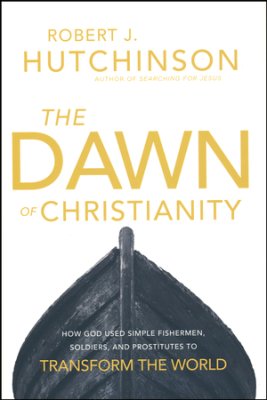
The Dawn Of Christianity (book review)

Sometimes when people are reading the Gospels and the Book of Acts in the New Testament of the Bible they forget what an accurate history is presented at a pivotal time in world events. In The Dawn Of Christianity, Robert J. Hutchinson makes the history behind, surrounding, and after the biblical accounts come to life in a fresh way.

The Dawn Of Christianity tells the history surrounding Jesus of Nazareth and His followers almost in a novel-like format. Hutchinson masterfully puts together the four Gospel accounts and Luke’s history of the early church in chronological order, and then brings in archaeological, geographic, and anthropological resources like a supporting cast to the biblical account. Along the way, we are introduced to extra-biblical characters, places, and customs that add a new depth of understanding to the history presented in Scripture.

Hutchinson notes, “Recent archaeological discoveries are showing that the New Testament in general, and the Gospels in particular, are far more reliable historical sources than previous generations of New Testament experts realized.” Indeed, he makes good use of as many pertinent finds as possible to enhance his storytelling.

The Dawn Of Christianity spans the time from just before the birth of Jesus Christ of Nazareth and then tracks the spread of Christianity for about 20 years following Christ’s ascension into heaven. It’s a fascinating and enlightening story for both Bible aficionados and skeptics alike.

I am a Thomas Nelson book reviewer.

That’s What Friends Are For

Take just a minute to get a clear mental picture of your best friend.

Got it?

Now, think of a few adjectives you would use to describe your best friend.

Did you think of words like loyal … trustworthy … honest … loving … faithful … reliable … authentic … funny … patient ….?

What about godly? Would you describe your best friend with that word? After all, if your friend is godly, wouldn’t he or she also be loyal, trustworthy, honest, loving, and so on?

This gives us an idea of how important friendships are to God. If calling someone “godly” sums up the very best attributes of your very best friend, then that means that you can see God in your friend. And hopefully they can see God in you too!

Jesus told His followers that He viewed them as friends. He told them…

  • …how close to God He could bring them (John 14:20)
  • …how much the Heavenly Father loved them because they loved Jesus
  • …how much He was willing to do for them because of His love (John 15:9-13)
  • …how the Holy Spirit would continue to keep them close to God (John 16:12-15)

Eugene Peterson said, “Friendship is not a way of accomplishing something but a way of being with another in which we become more authentically ourselves.”

Your best friend is someone you can be completely real around, right? No games, no masks, just come as you are. And your friend still loves you completely. This is how it is with God as our Best Friend too!

There is nothing you could ever do to make God love you any less, so stop worrying! 

There is nothing you could ever do to make God love you any more, so stop trying!

Friends love us enough to be totally honest with us. That’s why Solomon said, “Wounds from a friend can be trusted, but an enemy only multiplies kisses” (Proverbs 27:6).

Friends want us to have the very best, and to stay on paths that lead to success. So again Solomon wrote, “As iron sharpens iron, so a friend sharpens a friend” (Proverbs 27:17).

Oswald Chambers tells us, “Friendship with God is faith in action in relation to God and to our fellow men.”

So be assured of God’s friendship with you. Then be God’s friend to those in your life, and allow them to be God’s friend right back to you … THAT’S WHAT REAL FRIENDS ARE FOR!

Just Christians

“I’m thinking we aren’t so unlike these soldiers [see John 19:23-24]. (I’m sorry to say.) We, too, play games at the foot of the Cross.

“We compete for members. We scramble for status. We deal out our judgments and condemnations. Competition. Selfishness. Personal gain. It’s all there. So close to the Cross, yet so far from the blood. We are so close to the world’s most uncommon event, but we act like common crapshooters huddled in bickering groups and fighting over silly opinions.

“We major in the trivial, constantly finding fault with others. We split into little huddles and then, God forbid, we split again. Another name. Another doctrine. Another ‘error.’ Another denomination. Another poker game.

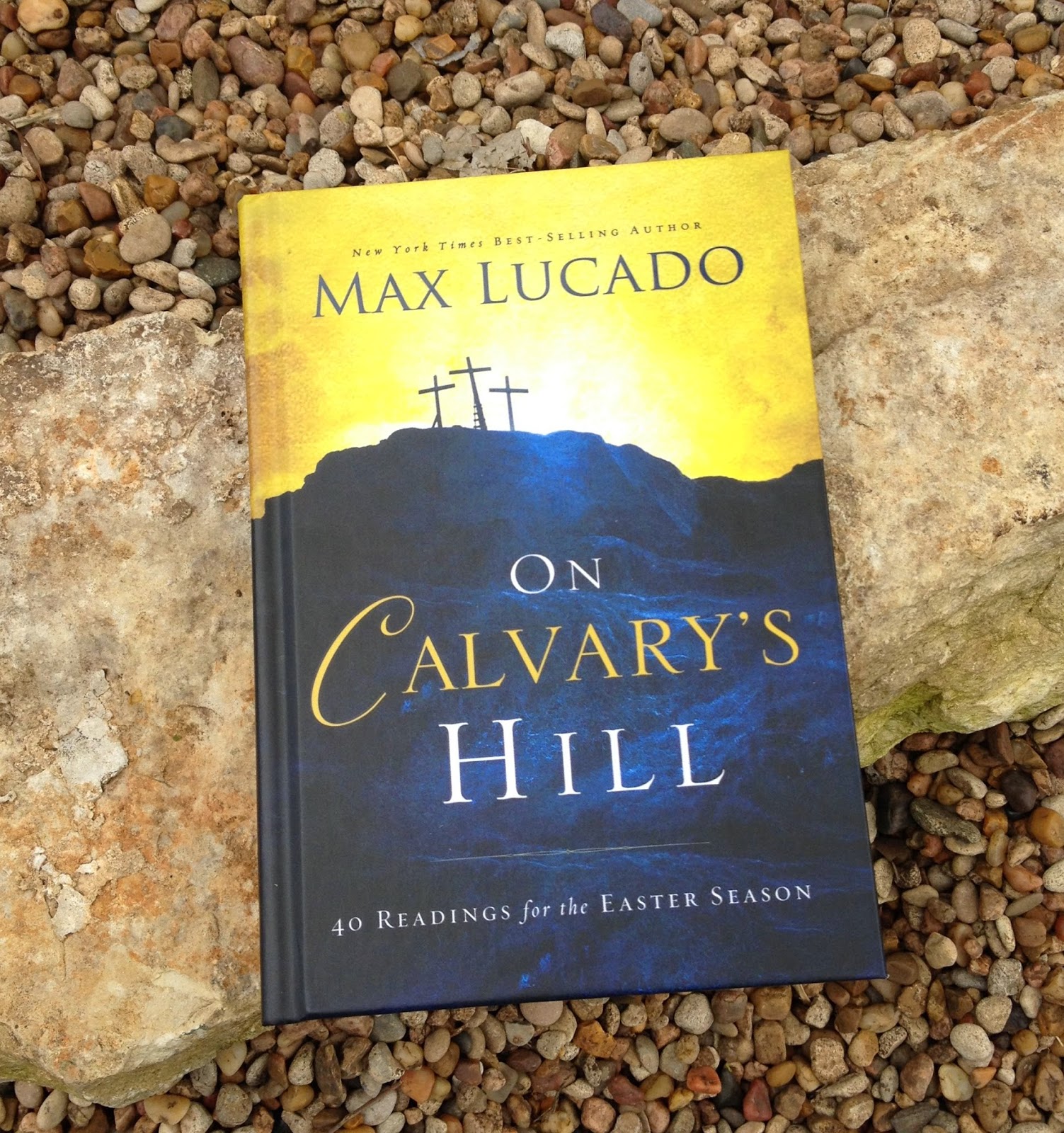
“So close to the Cross but so far from the Christ. ‘May they all be one,’ Jesus prayed. One. Not one in groups of two thousand. But one in One. One church. One faith. One Lord. Not Baptist, not Methodist, not Adventist. Just Christians. No denominations. No hierarchies. No traditions. Just Christ.” —Max Lucado, On Calvary’s Hill

10 More Quotes From “Shade Of His Hand”

In Shade Of His Hand, Oswald Chambers is giving us his insight on the biblical book of Ecclesiastes. I typically share longer passages from Oswald Chambers’ works in my weekly “Thursdays With Oswald” posts. Here are a few shorter quotes from this book.

“In personal life, in church life and in national life, we try Jesus Christ’s teaching, but as soon as it becomes difficult we abandon it, or else we compromise.”

“Jesus Christ says, ‘Come unto Me… and I will give you rest,’ i.e., I will put you in the place where your eyes are open. And notice what Jesus Christ says we will look at—lilies and sparrows and grass. … The salvation of Jesus Christ enables a man to see for the first time in his life, and it is a wonderful thing.”

“The essential element in moral life is obedience and submission. If you want spiritual truth, obey the highest standard you know. ‘If any man will do His will, he shall know of the teaching, whether it be of God or whether I speak from Myself’ (John 7:17). Intellectually, curiosity is the thing; morally, obedience is what is needed.”

“Whenever our spiritual life is unsatisfactory it is because we have said to God—‘I won’t.’ … If Jesus Christ has done no mighty works for me it is either because I don’t believe He can, or I don’t want Him to. … Get to the place where you make the thing inevitable, burn your bridges behind you, make retreat impossible, then go ahead. Solomon’s counsel is wise—‘Trust in the Lord with all thine heart; and lean not unto thine own understanding.’ It is leaning to our own understanding that keeps the bridges behind.”

“When you are joyful, be joyful; when you are sad, be sad. If God has given you a sweet cup, don’t make it bitter; and if He has given you a bitter cup, don’t try and make it sweet; take things as they come. … Suffering, and the inevitable result of suffering, is the only way some of us can learn, and if we are shielded God will ultimately take the one who interferes by the scruff of the neck and remove him.”

“For a man to have doubts is not a sign that he is a bad man.”

“If your religion does not make you a better man, it is a rotten religion. The test of true religion is when it touches these four things—food, money, sex and mother earth. These things are the test of a right sane life with God, and the religion that ignores them or abuses them is not right. … A man needs to hold a right attitude to all these things by means of his personal relationship to God.” 

“We do not think on the basis of Christianity at all. We are taught to think like pagans for six days a week and to reverse the order for one day, consequently in critical moments we think as pagans and our religion is left in the limbo of the inarticulate.”

“It is only when a man is born from above of the Spirit of God that he finds the ‘want to’ is altered.”

“If you are the servant of men for their sake you will soon be heartbroken; but if you serve men for the sake of Jesus Christ, nothing can ever discourage you (cf. 2 Corinthians 4:5).”

To read more quotes from this book, click here. To check out my review of Shade Of His Hand, click here.

Does Your Life Have A “BC/AD” Split?

Today we live in 2017 AD. But 1800 years ago the A.D. stood for “Anno Diocletiani” which means “the year of Diocletian,” a ruthless, anti-Christian Roman emperor. In 525 AD, a monk named Dionysius proposed changing the A.D. to “Anno Domini” which means “the year of our Lord,” referring to the Advent of Jesus Christ. Then to mark the dates of the calendar before Christ’s birth properly, the “B.C.” (before Christ) period was introduced.

But BC/AD is just a dating system. There is no such thing as “BC”—there has never been a time before Christ! He has always been! Throughout what we now refer to as the Old Testament (or the BC period),  Jesus is constantly revealing Himself through little hints here and there, but when He comes to earth as a Man, all the hints become a bright, blazing, unmistakable Truth!

Just like Dionysius came up with a new dating system based on the Advent of Jesus, the Israelites had a new starting point marked by the Passover (see Exodus 12:1-7). Everything from this point backward is reset and dates are now counted forward from this moment. Before this time they were slaves in Egypt; after this time they were free and called God’s special people.

The “BC” Passover had three important components:

  • A perfect lamb without any defect (Exodus 12:5)
  • The lamb is slaughtered at twilight (v. 6)
  • The blood is applied to the door (v. 7)

When Jesus came to Earth, He showed how He was all three of those elements. In the “AD” Jesus is—

In both BC and AD God declares the same message: “When I see the blood, I will pass over you.” The blood seals the deal and brings God’s forgiveness of sins, and His blessings on the life that is now completely His.

The word remember appears frequently in the BC, as in “remember what God did for you.” In the AD remember appears at a pivotal time—when Jesus shared His last supper with His followers, He told them that Communion would be a time for them to remember all that Jesus did for us as the Perfect Lamb, whose Blood is applied to the Door of our heart, so that God’s judgment could pass over us.

Do you have a Passover date? A time when the BC became AD in your life? If so, good! Keep remembering that, and don’t ever go back to being a citizen of anything but God’s Kingdom.

If not, today can be the first day of a new era for you. By faith you can apply the Blood of the Perfect Lamb to the Door of your heart, and you will no longer be a slave of “Egypt” (a picture of being utterly trapped and unable to help yourself), but a citizen of Heaven! All it takes is for you to believe that Christ’s blood purchased your freedom, so you can ask God the Father to forgive you of all your BC past, and then you can live forever in the AD with Jesus as your Savior and Master!

Check out this video where I explain this BC/AD system more, and join me next week as we learn more about how Jesus Christ bridges the BC/AD divide.

Are You Healthy Enough To Love Serving Others?

Jesus was wholly healthy. That is to say, He was healthy in every aspect of His life—mentally, physically, spiritually and emotionally (see Luke 2:52). This is important to note because Christians are called to be healthy in all of these same areas.

The phrase Dr. Luke uses about Christ’s growth is a telling one: Jesus grew in favor with men. People liked having Jesus around. The word for favor is from the same root word where we also get grace. So Jesus was a graceful man.

What does it mean when someone is graceful? It means they are pleasant to be around … you feel safe around them, knowing they will never belittle you or put you down … their focus is on your agenda, not their own … they are a “there you are!” person, not a “here I am!” person.

Bottom line: they are filled with love for others.

Jesus was healthy in His mind, His body, His spirit and His emotions, which allowed Him to be in a unique place where He fully knew how powerful He was, yet He chose to use His power not for His own benefit, but to serve others (see John 13:1-4).

Healthy love loves God and then serves God by loving and serving others. Only a wholly healthy person can truly serve with a right attitude…

  • People with unhealthy thoughts won’t serve because they don’t know they’re supposed to serve.
  • People with unhealthy bodies can’t serve because their disease won’t let them.
  • People with unhealthy spirits shouldn’t serve because they are promoting hypocrisy.
  • People with unhealthy emotions don’t serve because their attitude gets in the way.

Jesus not only told us His loving service was an example for us (John 13:15-17), but He went on to say that our loving service would be an example for others (vv. 34-35).

Healthy love loves God and then serves God by loving and serving others.

Do you have that kind of healthy love? Are you becoming wholly healthy enough to serve?

Ask yourself these questions:

  1. What do I know that I’m not yet doing?
  2. What will it take for me to turn knowing into doing?
  3. Can people tell I am growing wholly healthier year by year?

Jesus—100% God And 100% Human

Listen to the podcast of this post by clicking on the player below, and you can also subscribe on AppleSpotify, or Audible.

On paper, it seems so simple: “We believe in the Deity of the Lord Jesus Christ. As God’s Son, Jesus was both human and divine.” But trying to wrap our finite human minds around the concept of the full humanity and the full deity of Jesus is challenging!

First off, Jesus was fully human. Both Matthew and Luke record details about Christ’s physical birth, and the writer of Hebrews says that Jesus was made every bit as human as us (Hebrews 2:17).

But Jesus was also fully God. John records how God became flesh in the Person of Jesus (John 1:1-2, 14), and Paul tells us how Jesus chose not to use His deity when He came to earth as a human (Philippians 2:6-8).

I know that anytime we say, “God is like…” we’ve already sold ourselves short, but I’d like to try one analogy that’s been helpful for me.

Imagine a coin that has two distinct sides. While we are looking at one side (heads), we cannot see the other side (tails) but that doesn’t mean the other side has ceased to exist. In fact, if we were able to split that coin in half, so that there was only a heads and a tails, we haven’t cut the value of the coin in half, but we’ve made the coin of no value at all! 

In the Greek language of the New Testament, there are a couple of words for “knowing”: one is gnosis and the other oido. Together these words combine head knowledge and heart knowledge, or knowledge by study and knowledge by experience.

C.S. Lewis captures the idea this way: “It is Christ Himself, not the Bible, who is the true Word of God. The Bible, read in the right spirit and with the guidance of good teachers, will bring us to Him.”

Just as Jesus was both God and Man, we are to use both our mind and our heart to know Him.

To focus on the “heads” side—the deity of Jesus—is to pervert gnosis into gnosticism, and deny the humanity of Jesus. To focus on the “tails” side—the humanity of Jesus—is to pervert gnosis into agnosticism, and deny the deity of Jesus. True gnosis keeps both sides in mind: Deity and humanity.

To truly know THE Word of God (Jesus) in all His humanity and in all His deity, we need to study the Word of God. We also need the help of the Holy Spirit. I like the Old English wording of this verse—Ye have an unction [charisma] from the Holy One, and ye know [gnosis] all things (1 John 2:20).

So read your Bible, but not just to read your Bible. Ask the Holy Spirit to make THE Word known to you. Live in the balance of gnosis as you get to know Jesus more deeply and personally.

(When Jesus proclaimed His “I Am” statements in the New Testament, He was tying Himself to all of the “Jehovah” titles of the Old Testament. Check out I Am Jehovah.)

This post is a part of our series studying our foundational beliefs. If you would like to read more about the first foundational beliefs we have discussed, check out this post on the inspiration of Scripture, and this post on the Trinity.

►► Would you please prayerfully consider supporting this ministry? My Patreon supporters get behind-the-scenes access to exclusive materials. ◀︎◀︎