The Promised Power Of Pentecost

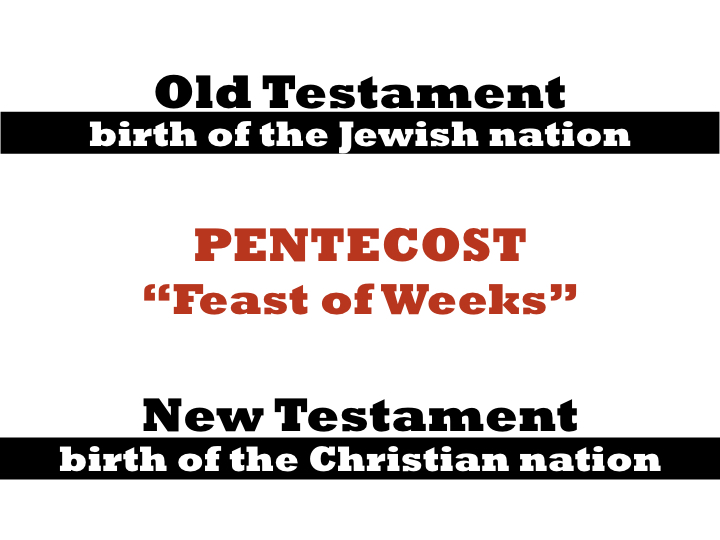
When the Israelites were delivered from Egypt on the night of Passover, fifty days later they arrived at Mount Sinai where God delivered the Ten Commandments to them. This became the birth of the Jewish nation. For millennia following this, not only did the Jewish people observe Passover but they also celebrated “The Feast of Weeks” (also known as Pentecost) fifty days following Passover.

But on the first Pentecost after Christ ascended to Heaven, something amazing happened which was a game-changer for the new Christians. An event which became the birth of the Christian nation.

On that Pentecost Sunday, the Holy Spirit was poured out on Christ’s followers in a way never before seen in history. Although this had never been seen before, it was the fulfillment of something God had promised thousands of years before.

  1. Promised

This blessing of the Holy Spirit had been hinted at when God first called Abraham, as He promised that from Abraham would come a blessing for all peoples on earth (Genesis 12:3). Jesus said that this blessing would be realized with the outpouring of the Holy Spirit, and then Peter tied the Day of Pentecost experience to the fulfillment of those promises (Acts 2:38-39).

  1. Commanded

Jesus had this empowerment of the Holy Spirit and He wanted all of His followers to have it too, so His directive to His follower is not a suggestion. Twice when Jesus tells His followers to receive the baptism in the Holy Spirit, the verbs He uses are commands (see Luke 24:49 and Acts 1:4).

  1. Normal Experience

For the first Christians, the baptism in the Holy Spirit was a normal experience for them following salvation. This baptism gave them power to…

  1. Initial Evidence

The baptism in the Holy Spirit is accompanied by an initial physical evidence of speaking in a language you’ve never studied. This is to be an unmistakable proof—primarily to you—of the Spirit’s outpouring. But the ongoing development of Christlike character is the continual evidence of the baptism in the Holy Spirit.

So what’s the controversy? Why do people spend so much time arguing this baptism isn’t for us, or for now? If we start down that path, what else are we going to say is outdated or exclusive for some?

Doesn’t it seem much more logical to simply accept what God promised all His people?!

So here’s the question I would ask you—Have you been baptized in the Holy Spirit? If not, why not?

What If We Had Higher Expectations?

Humans are hardwired by God to be in relationship with Him and with others.

  1. God is a Triune God so each part of the Godhead is in relationship with the other parts—John tells us in his epistle that God is love, meaning there is both a Lover and a Beloved.
  2. We are created in God’s image—we are made to love and be loved.
  3. God affirmed our need for relationships with others—see Genesis 2:18.
  4. Relationships with others give us a return on investment, help in trouble, encouragement in dark times, and protection from attack—see Ecclesiastes 4:9-12.
  5. Christians being in healthy relationships with others is a testimony to just how powerful God’s love is.

Sadly, Brennan Manning pointed out that Christians “have come a long sad journey from the first century, when pagans exclaimed with awe and wonder, ‘See how these Christians love one another!’”

When I read this, I don’t want to throw in the towel, but I want to reclaim this awe and wonder! 

One of the things that will quickly kill relationships is having low expectations for the other person or for the relationship itself. This can be counteracted by having higher expectations for other people and for our relationships with them.

John Maxwell noted, “People rise or fall to meet our level of expectations for them. If you express skepticism and doubt in others, they’ll return your lack of confidence with mediocrity. But if you believe in them and expect them to do well, they’ll wear themselves out trying to do their best.”

Consider the high expectations that God had for a relationship with us. If He had low expectations, one of the best-known verses in the Bible would be, “God thought a few people in the world had something worth saving, so He sent a handful of angels to tell us His story.”

Instead, the verse tells us: God so loved the entire world that He sent the very best that He had—He sent His One and Only Son!

  • Jesus died for us when we were unworthy of His love
  • Jesus gave us all His authority to represent Him in the world
  • Jesus empowered us with His Holy Spirit to be His witnesses
  • Jesus told us that our love for others would be a blazing sign to that we were His

Since God has this high expectation for us … what would happen if we had the same high expectations for everyone with whom we came into contact? What would happen if we believed the best for everybody, and then gave all that we could to bring the best out of them? I think that once again people would exclaim with awe and wonder,

“See how these Christians love one another!”

We will be talking more about Relationship Builders & Killers this Sunday and I would love if you could join me!

New Name = New Nature

All throughout the Old Testament we find hints about Jesus. Then as the New Testament dawns, the brilliant light of Jesus makes sense of all the hints we had previously seen.

One of the way God hints at the arrival of Jesus and what He would do for mankind is found in the names of people. Hebrew names are interesting things. Sometimes they are quite literal. For instance…

    • A baby who was born at one of Israel’s lowest points was named Ichabod = God’s glory has departed.
    • A baby who was born with quite a lot of hair was named Esau = hairy baby.
    • Esau’s twin brother was hanging on to his heel when he was born, so they named him Jacob = the one who grabs the heel.

At other times God tells parents what to name their babies before they are born. These names tell a story in themselves of what is coming…

    • After a time of upheaval in Israel’s history, God directed the parents to give their son two names: Solomon (which means peace) and Jedidiah (which means beloved by God). This brought reassurance to the parents and to the country.
    • When God was about to bring a quick answer to a problem, He directed the parents to name their son Maher-Shalal-Hash-Baz, which means God will bring the reward sooner than you think.

But what is most interesting to me is when God changes someone’s name to reflect the new nature in their life.

Abram’s name meant exalted father, but God changed his name to Abraham, which means father of a multitude. His wife’s birth name was Sarai (princess) and it was changed to Sarah (a noble woman).

In these name changes, two things happened (see Genesis 17:1-15):

  1. God put His own name into theirs. God’s name means I AM. We sometimes pronounce it Yahweh, but that is only a guess since the Jews wrote His name without the vowels. That means His name was the unpronounceable YHWH, sort of a breath-sound. So Abram became Abrahaaam and Sarah became Saraaaaah. 
  2. God took the burden off them and put it on Himself. It was no longer Abram’s responsibility to become an exalted father, or Sarai’s responsibility to make herself a princess. God said, “Only with Me in you can you become who I want you to be!”

As you follow Abraham and Sarah’s descendants, you will see time and time again God reminding people: You can’t do it on your own. You must have Me in you in order to live the life I have for you!

Hoshea was born as an Israelite slave in Egypt, yet his parents gave him this name that means deliverer. Before God could use Hoshea to bring the Israelites into the Promised Land, He first changed his name to Joshua, which means God is the ultimate deliverer.

Joshua in the BC Hebrew language is the same as Jesus in the AD Greek language.

Jesus Christ is the ultimate example of being able to fully deliver people not just from physical slavery, but from the eternal consequences of sin. Man cannot save himself, but Jesus Christ can.

That’s why when you surrender to Christ and allow Him to be your Lord and Master, He puts His name in you: CHRISTian! A new name, and a brand new nature because of what it means to have Christ in you.

Check out this video where I explain the cool story behind more name changes—

Who Can Bridge The Gap Between God And Man?

Listen to the podcast of this post by clicking on the player below, and you can also subscribe on AppleSpotify, or Audible. 

Mankind was created good and upright in God’s image and given dominion over everything God had created (see Genesis 1:26-28; Psalm 8:3-8). But man was not given dominion over himself (Genesis 2:15-17).

As Oswald Chambers said, “The temptation came to him on this line—‘Disobey, and you will become as God.’ Man took dominion over himself and thereby lost his lordship over everything else. According to the Bible, the disposition of sin is my claim to my right to myself” (see Genesis 3:1-7).

“And sure enough, they then had knowledge of good and evil, but it was from the standpoint of becoming evil and remembering how good they once were” (Nancy Guthrie). Their disobedience created an unbridgeable gulf between God and man. 

There were other consequences of their sin too:

  • Consequence #1—They realized they were naked, making them ashamed of themselves and ashamed to be in God’s presence.
  • Consequence #2—They feared God and tried to hide from Him.
  • Consequence #3—They couldn’t accept responsibility for what they did because that acceptance would mean they would also be responsible for bridging the gulf, something they were utterly unable to do.
  • Consequence #4—They were completely separated from God. Now there was nothing that they could do except work, have children, raise a family, and try to make the best of things.

Even in the midst of this despair, God foreshadowed the hope that would be their salvation. First, God promised that their offspring would one day crush satan’s head. Then God sacrificed an innocent animal and used those skins to make more permanent clothes for Adam and Eve, foreshadowing what Jesus would do.

Adam must have glimpsed this ray of hope because he then named his wife Eve, which means life!

But who could bridge this chasm? Who could be a mediator between God and man? The only possible candidate would have to be Someone who was both fully God and fully Man—that is Jesus Christ!

Only Jesus can fully and eternally cover our nakedness, remove our fear and shame, and present us without sin before His Father (see Jude 24 and Romans 5:6-11).

If, as Oswald Chambers says, sin is my claim to my right to myself, then salvation is God’s right to myself because I have surrendered to the reconciling work of Jesus.

“Believers in Christ are seen by God exactly as Christ is seen by God,” wrote Ann Voskamp, because those who believe in Jesus are clothed in His righteousness!

If you haven’t surrendered yourself to God’s right to you, what’s holding you back from doing that today? If you have surrendered yourself to God, don’t ever let satan lie to you about your nakedness, shame, or unworthiness—you are “Christ’s friend, God’s child, Spirit’s home!” (Ann Voskamp).

►► Would you please prayerfully consider supporting this ministry? My Patreon supporters get behind-the-scenes access to exclusive materials. ◀︎◀︎

Love Re-members

love-re-membersChristians often talk about God in terms of the “Trinity.” That is, the One True God revealed in three Persons: Father, Son, and Holy Spirit.

This is sometimes a difficult concept to grasp, especially since the word Trinity doesn’t specifically appear in the Bible. But make no mistake, just because the word isn’t there doesn’t mean it’s not true. Consider…

  • God’s Three-in-One nature is first exhibited when man is created (Genesis 1:26).
  • When the prophesy is given about Jesus being born in human flesh, He is given all the titles of the three Persons of the Godhead (Isaiah 9:6).
  • At Christ’s baptism we see Jesus in human form, we see the Holy Spirit descending as a dove, and we hear the Father’s voice announcing His approval of His Son (Matthew 3:16-17).
  • Jesus Himself said He would ask the Father to send the Holy Spirit to the Christians (John 14:16).
  • And just as Jesus ascended into Heaven, He told His followers to baptize people into all three Persons of the Godhead (Matthew 28:19).

But I think the best expression of the Trinity is revealed in three simple words. John talks about how all three Persons of the Trinity are involved in the life of a Christian. And then he sums it all up in three words—

“GOD IS LOVE”

Each Person of the Godhead is encouraging and illuminating and pointing to the other Persons in the Trinity. Love is perpetually being received and given. We humans are created in God’s image … we are created to receive and to give God’s love. That’s why John tells us that we know and rely on the love God has for us (that’s the receiving part), and that whoever lives in love lives in God, and God in him (that’s the giving part).

When Adam and Eve sinned, they were dis-membered from God. As a result, every human in their natural state longs for connection with God and others, but feels separated, isolated, unloved, and even unlovable.

Love re-members! 

Jesus came to be broken and crushed and to feel the pain of separation from God. It was out of this brokenness that He could do the work of re-membering us to the fullness of the Trinity.

When Jesus shared His last supper with His disciples, He took bread (which is made from broken wheat kernels) and wine (which is made from crushed grapes). He told us as often as we eat the bread and drink the wine we are to remember how He was broken and crushed for us.

Remembering Christ’s work on the Cross re-members us to the fullness of the Trinity. 

Sin and satan want to keep us feeling separated, unloved, and unloveable. But when we were the least worthy of His love, God—Who IS love—was broken and crushed to re-member us to Him.

If you feel lonely, separated, isolated, unloved or unloveable, I urge you to remember what Jesus did for you. He loved you enough to be broken and crushed for your re-membering to all of God’s love.

Check out this video where I explain this amazing thought in more detail…

Thursdays With Oswald—Do You Think Life Is A Drudgery?

Oswald ChambersThis is a weekly series with things I’m reading and pondering from Oswald Chambers. You can read the original seed thought here, or type “Thursdays With Oswald” in the search box to read more entries.

Do You Think Life Is A Drudgery? 

     God made man a mixture of dust and Deity—“And the Lord God formed man of the dust of the ground, and breathed into his nostrils the breath of life; and man became a living soul” (Genesis 2:7). The dust of a man’s body is his glory, not his shame. … 

     Drudgery is the outcome of sin, but it has no right to be the rule of life. It becomes the rule of life because we ignore the fact that the dust of the earth belongs to God, and that man’s chief end is to glorify God. Unless we can maintain the presence of Divinity in our dust, life becomes a miserable drudgery. If a man lives in order to hoard up the means of living, he does not live at all, he has no time to, he is taken up with one form of drudgery or another to keep things going. …  

     The wisdom of today concerns itself chiefly with the origin of things and not with God, consequently neither the philosopher nor the mystic has time for actual life.

From Shade Of His Hand

God created us to enjoy life as we enjoy Him, enjoy His creation, and enjoy doing what He has created us to do.

If you find life toilsome, burdensome or a downright drudgery, can I suggest one simple question: How is your relationship with God?

If you truly ask Him, God will show you how to live a life filled with JOY!

6 More Quotes From “Light & Truth—Revelation”

light-and-truth-revelationHoratius Bonar always gives lots of thought-provoking content in his commentaries, and his commentary on the Book of Revelation is no exception. Here are a few more quotes for you.

“What man needs, then, is Jesus; not mere knowledge or wisdom. What humanity—unconsciously and ignorantly, it may be—sighs for, is Jesus. What earth, ruined and accursed because of sin, groans for, is Jesus—nothing less than this. No other prophet or priest or king can meet the exigencies of the race and its dwelling, the earth, but Jesus only.”

“What is your hope? What is judgment to do for you? What is resurrection to bring? Look at the following alternatives, and ask which is to be yours: Everlasting gladness, or everlasting sorrow? Everlasting glory; or everlasting shame? Everlasting songs, or everlasting wailing? The marriage supper of the Lamb, or the perpetual banishment from all that is good and holy? The new heavens and earth, or the eternal wilderness, with its parched and burning wastes? The heavenly Jerusalem, with the Lamb as its light, or the blackness of darkness? The fruit of the tree of life and the waters of the celestial river, or the eternal hunger and the unquenchable thirst? (Luke 16:24). The first resurrection, or the second death? These are the alternatives before you; and there is no middle room.”

“The first book of Scripture and the last fit well into each other; the first two chapters of Genesis and the last two of Revelation fit together like the two halves of a golden clasp set in gems. Enclosed between the two is the history of six thousand years. And what a history! What a beginning, and what an ending! It began with the new, and it ended with the new—the strange checkered ‘old’ lying mysteriously between. ‘In the beginning God created the heavens and the earth.’ ‘I saw new heavens and a new earth.’”

“Such is the love of God. It is the love of Father, Son, and Holy Ghost. The Father chooses in His own sovereignty; the Son washes in His own blood; the Spirit purifies and prepares by His mighty power. Behold, what manner of love the Father hath bestowed on us! It is free love; sovereign love; eternal love; unchanging love; boundless love; love which not merely delivers from wrath, but which makes the delivered one an heir of God, nay, the bride, the Lamb’s wife.”

“Our title to all this surpassing and eternal glory is simply the blood of the Lamb. He has bought it for His Church; and it is hers forever. The nightless day, the unsetting sun, the incorruptible life, the undefiled inheritance, the new name, the heavenly city, the everlasting kingdom— all are hers; hers through ‘the blood of the everlasting covenant.’ She is to walk worthy of it here—worthy of such a crown, such a heritage, such a city, such a Bridegroom, such a joy. ‘Be holy;’ ‘be perfect;’ ‘walk worthy of the Lord.’”

“Christian parents! For which of the two worlds are you training your children? For this world, or that which is to come? Be assured that the same training will not do for both.”

If you haven’t checked out my review of Light & Truth—Revelation, please click here. You can also read the first set of quotes I shared from this book by clicking here.

5 Quotes On Love, Sex & Marriage From “The Beauty Of Intolerance”

Beauty Of IntoleranceIn any modern-day discussion on the topic of “tolerance” the conversation is sure to come around to sexual dos and don’ts. Josh McDowell and Sean McDowell speak to this subject so well in their book The Beauty Of Intolerance.

“The reason we think there are such concepts as ‘fair’ and ‘unfair’ is because our Maker is a just God and we have been made in His image (Genesis 1:27). The reason love is a virtue and hatred a vice is because the God of relationships who formed us is a God of love. The reason honesty is right and deceit is wrong is because God is true. The reason fidelity in marriage is honorable and infidelity is not is because God is faithful. The reason chastity is moral and promiscuity is immoral is because God is pure. … All truth claims cannot be equal because Jesus didn’t claim to be ‘a’ truth—one among viable others. His claim was exclusive.”

“True love commits wholeheartedly. … When two lovers marry, they are making a public vow committing to provide for and protect each other through thick or thin. That kind of committed love compels a couple to wait to engage in sex until after marriage—which is the context in which love makes it right.”

“Purity is God’s boundary that provides for a maximum sex life and protects us from the negative consequences of sexual immorality.”

“What your children hear about the ‘gay versus Christian’ morality debate is often centered on how Christians allegedly discriminate against same-sex marriages and wrongfully label the gay community as sinful. We need to help them refocus the argument. It needs to shift away from who is accusing whom of judging or whether it’s right to legislate morality. We must focus our young peoples’ discussion on who has the right to define morality in the first place. … Be a student of God’s Word. Know why you believe sexual immorality is wrong—know the positive provision and protection that comes by following God’s instructions on morality. And then seek to speak the truth in love. Capture God’s heart, knowing that He wants only what is best for us. Share how your own obedience to God’s Word has brought you protection and provision.”

First, marriage is two human beings becoming one in every way possible. . . In marriage, two become one, united in mind and body and purpose. 

“Second, marriage is oriented toward procreation. The act of two becoming one flesh makes God’s intent, that humans should ‘fill’ and ‘form’ His world, possible. … Scripture sees marriage as being closely tied to procreation. . . . 

“Third, marriage comes with an expectation of permanence. The Genesis account implies marriage is a permanent relationship, [but] Jesus’ words are explicit: ‘What therefore God has joined together, let not man separate’ (Matthew 19:6). . . . 

“Therefore we shouldn’t think of marriage as a political institution that belongs to the state. It is a pre-political institution. The state doesn’t create marriage; it can only recognize it. The state, despite all its efforts, will never be able to redefine marriage. Marriage will always be what marriage was created to be, no matter what activist judges, runaway legislatures or majority of voters decide.” —John Stonestreet & Sean McDowell 

If you haven’t read my review of The Beauty Of Intolerance, you can read it here. I have also shared some other quotes from this book here and here.

Countercultural Marriage

my-thoughts-or-gods-thoughtsThe Apostle Peter uses an appropriate term for Christians living on Earth: “Aliens and strangers.” This means that those who call Jesus their Lord are to live a counter-cultural lifestyle. Not a lifestyle that changes with the popular culture, but one that stays true to God’s Word.

There probably has never been a more controversial subject in any day or culture than marriage and the relationship between the sexes. Why are these terms “controversial”? I suspect it is because we are naturally bent toward being pragmatic people.

In pragmatism, the outcome determines meaning. If I find something easy to do, convenient for me, and I seem to get applause from those around me, then what I did must be right. However, if it’s challenging to stick with something, and seemingly only a few people approve of how I do it, then it must be wrong. That is letting culture determine morality, instead of letting God determine it.

As Peter begins to address the topic of marriage, and the interaction between spouses, he uses two similar phrases—“Wives, in the same way … Husbands, in the same way (vv. 1, 7).”

In the same way as what? Actually, if you look at the five verses that come before this you will see that it’s not what but Whom. Those verses are talking about our example in Jesus. Peter points out that Jesus showed:

  • submission to God’s purpose—His prayer was, “Not My will, but Yours be done.
  • longsuffering—He did not retaliate nor threaten His persecutors, but for the joy set before Him, He endured the shame of the Cross.
  • servant-leadership—At the last meal He had with His followers before being crucified, He washed their feet, and told them He had given them an example of how they were to serve others.
  • respectful behavior—Jesus willingly suffered the penalty for the world’s sin. He fulfilled the prophecy of Isaiah which said He remained silent before His accusers.
  • mercy—This always means not getting the penalty we deserve. Jesus came to save us when we were the least worthy of His love.
  • forgiveness—As the spikes were being driven through His wrists, Jesus said, “Father, forgive them for they don’t know what they’re doing.

Pragmatism looks at God’s design and says, “Yes, I understand that, but….” Pragmatism tries to find an “out” or a “loophole” that let’s someone change a definition or skip out on doing something God’s way.

If anyone ever had the authority to say, “Yes, Father, I know what You want Me to do, but look how they’re treating Me” it was Jesus.

A wife with a difficult husband may want to say, “Yes, I know I’m supposed to submit to my husband, but….” A husband with a nagging wife may say, “Yes, I know I’m supposed to treat my wife with consideration and respect, but….”

But Peter says, “Wives and husbands, exhibit the same submission, longsuffering, servant-leadership, respectful behavior, mercy and forgiveness toward your spouse as Jesus exhibited toward you!” 

So the question we need to ask is: Am I thinking about marriage—a husband’s role, a wife’s role—in counter-cultural biblical terms or in popular cultural terms?

If I find I am thinking culture’s thoughts, am I willing to try God’s way?

Join me next Sunday as we look at this passage again, and see how a wife and husband can love and serve each other in a God-honoring, counter-cultural way. If you’ve missed any messages in this series, you may find the complete list by clicking here.

6 Quotes On Mourning From “The Blessing Of Humility”

The Blessing Of HumilityAs I stated in my review of Jerry Bridges’ book The Blessing Of Humility, reading through these thoughts slowly—Beatitude by Beatitude—would bring about the most life-changing impact. In that spirit, I will be sharing some noteworthy quotes one Beatitude at a time. Here are some quotes on blessed are those who mourn (Matthew 5:4)…

“The word that Jesus used in this Beatitude is the strongest word in the Greek language for mourning. It is the word for Jacob’s morning over what he thought was the death of Joseph (Genesis 37:35). … Jesus uses this word to show the intensity of mourning He blesses here. He is, however, actually talking about mourning not over death but over our sin.”

“To be ‘poor in spirit’ is to be convicted of one’s sin, whereas to ‘mourn’ is to be contrite for it.” —John Blanchard

“King David committed two sins: first adultery, and then (essentially) murder to try to cover up his adultery. God sent the prophet Nathan to confront him, and in his skillful accusation of David, Nathan twice used the word despised (2 Samuel 12:7-11). First, David despised the Word of the Lord—that is, he despised the law of God (verse 9). In so doing, he also despised the Person of God (verse 10). Why is this true? Despising the law of God is not only an expression of rebellion. It is also a despising of His very character, since His law is a reflection of His character. This is true not only of such heinous sins as adultery and murder, but also of our more refined sins: pride, selfishness, gossip, and the like. So let us pray that God will indeed allow us to see our sin as rebellion against the rule of God—a despising of God’s law and even of His character.”

“Failure to see our sin as primarily against God is, I believe, the reason we experience so little heartfelt grief over it. … But be it ever so small in our own eyes, whenever we sin we also break God’s law. And Scripture says, ‘Whoever keeps the whole law but fails in one point has become accountable for all of it’ (James 2:10). God’s law is seamless, one complete whole. So when we break any of it, we break the whole law.”

“Is mourning over sin just for those first coming to Christ? No, Jesus’ words are in the present active tense. We could literally translate them as ‘blessed are those who continue to mourn.’ He is pronouncing a blessing on those whose attitude toward their sin is characterized by mourning. One mark of a growing Christian, then, is a growing sense of his or her sin, and an attitude of mourning over it.”

“So mourning over our sin is truly a display of humility in action. We cannot be proud and mourn over sin at the same time. We cannot be judgmental toward other believers, or even toward unbelievers, if we are truly contrite and brokenhearted over our own sin.”

I just shared quotes on blessed are the poor in spirit. Quotes on the next Beatitude will be posted soon. Stay tuned…