“Give Me This Hill”

Listen to the podcast of this post by clicking on the player below, and you can also subscribe on AppleSpotify, or Audible. 

Let’s review the historical background for the Psalms of Ascent. The Jewish people made four pilgrimages to Jerusalem each year, which sit about 2500 fee above sea level, so this was a physical climb. But this also has a spiritual lesson for us today: We are to continue progressing in our walk with God—upward and onward! 

The songs of ascent that these pilgrims sang give us life-changing lessons that we can still apply today. 

I’m sure there were some pilgrims who thought, “We have to go to Jerusalem.” Just as there are some people today who may something like, “I have to tithe.” But when you have experienced the blessing that comes from obedience, your “have to” turns to “get to” really quickly! 

There is a longing in Psalm 128 for God’s blessing. In fact, we see it in nearly every verse: blessed (v. 1), blessing and prosperity (v. 2), blessed (v. 4), bless and prosperity (v. 5), and peace (v. 6). 

We have to remember that our obedience doesn’t earn God’s blessing, but rather our obedience keeps us in the place where we can receive God’s ever-flowing blessings. When I have experienced the blessing that followed even my “have to” attitude, I now joyfully “get to” obey because I know that keeps me in a blessed place. 

But even knowing that these blessings are flowing for us, sometimes we still get weary. Sometimes it seems as if we are being faithful but we aren’t seeing the results that perhaps we saw before. 

Think about these pilgrims ascending 2500 feet year after year after year. It was challenging enough during the golden days of King David and King Solomon, but can you imagine the feelings of futility during the dark days? Perhaps during the exile when the temple was in ruins, or after the exile when the temple didn’t look as it did before and there were overlords ruling Israel? And then it was unquestionably true that the older a pilgrim got, the harder the climb became for them. 

But the struggle keeps us reliant on God. Like Solomon said, “The way of life winds upward for the wise, that he may turn away from hell below” (Proverbs 15:24). The longer I walk, the more I get to rely on God’s help, and the sweeter He becomes to me! 

(Check out all of the Scriptures in this post by clicking here.) 

I love the line in the hymn Great is Thy Faithfulness, “Strength for today and bright hope for tomorrow—blessings all mine with ten thousand beside.” Because of God’s blessings that I’ve already experienced, I can trust Him for more, even in the struggle of the climb. 

Look at some of these promises that come out in other biblical translations. 

  • Blessed are those who fear God (NIV) = “How joyful are those who fear the Lord” (NLT) 
  • Blessing and prosperity will be yours (NIV) = “You will enjoy the fruit of your labor” (NLT) and “You will eat what you worked so hard to grow” (NET) 

The middle of this psalm is in verses 3-4. Remember above when I said nearly every verse contains a word of blessing? I didn’t list verse 3, but there is language in this verse that makes it pregnant with blessing—Your wife will be like a fruitful vine within your house; your sons will be like olive shoots around your table. 

You may ask, “How is this a blessing?” 

The phrase “under their own vine and under their own fig tree” appears throughout the Old Testament. It described a blessed, prosperous, happy, and peaceful home. It was a home at peace within because there was also peace without. 

This described the golden era of King Solomon—During Solomon’s lifetime Judah and Israel, from Dan to Beersheba, lived in safety, everyone under their own vine and under their own fig tree (1 Kings 4:25). 

After the northern kingdom of Israel fell and the southern kingdom of Judah was surrounded by the Assyrian forces of King Sennacherib, the king’s field commander tried to entice them the people with similar words—

Do not listen to Hezekiah. This is what the king of Assyria says: “Make peace with me and come out to me. Then each of you will eat fruit from your own vine and fig tree and drink water from your own cistern until I come and take you to a land like your own—a land of grain and new wine, a land of bread and vineyards, a land of olive trees and honey. Choose life and not death! Do not listen to Hezekiah, for he is misleading you when he says, ‘The LORD will deliver us.’” (2 Kings 18:31-32)

Notice that he said the land would be “a land like your own.” He was trying to get them to compromise, to no longer listen to God’s voice, to no longer climb up into God’s presence. Much like satan tempted Adam and Eve to eat the forbidden fruit with the promise, “You will be like God.” 

But these blessings in Psalm 128 don’t come from fearful “have to” obedience to man, but from reverencing God above all else. So the longing of verses 1-4 become the prayer of verses 5-6 (notice the word may used three times in these verse). 

The focus of our longing—where we need to keep our eyes—is on God’s heavenly throne: Zion, Jerusalem, Israel (vv. 5-6; Micah 4:1-5). 

In an earlier story, Caleb may have gotten tired while he waited for God to fulfill His promise to him, but he always trusted God as he walked on (see Joshua 14:9-12).

What promises of God are you still praying for?
What are you longing to see accomplished?
What has God already done that you can look back on?

In The Pilgrim’s Progress, Christian is facing another high hill when he says—
The Hill, though high, I covet to ascend,
The Difficulty will not me offend;
For I perceive the Way to life lies here.
Come, pluck up Heart, let’s neither faint nor fear;
Better, though difficult, the Right Way to go,
Than wrong, though easy, where the End is Woe. (John Bunyan)

Don’t give in.
Don’t give up.
Keep climbing.

Like Caleb say, “It may have been 85 years of walking and climbing, but I’ll keep climbing. GOD, GIVE ME THIS HILL!” 

If you would like to check out the other songs of ascent that we’ve already studied, please click here. 

►► Would you please prayerfully consider supporting this ministry? My Patreon supporters get behind-the-scenes access to exclusive materials. ◀︎◀︎
A Leadership Biography: Heman

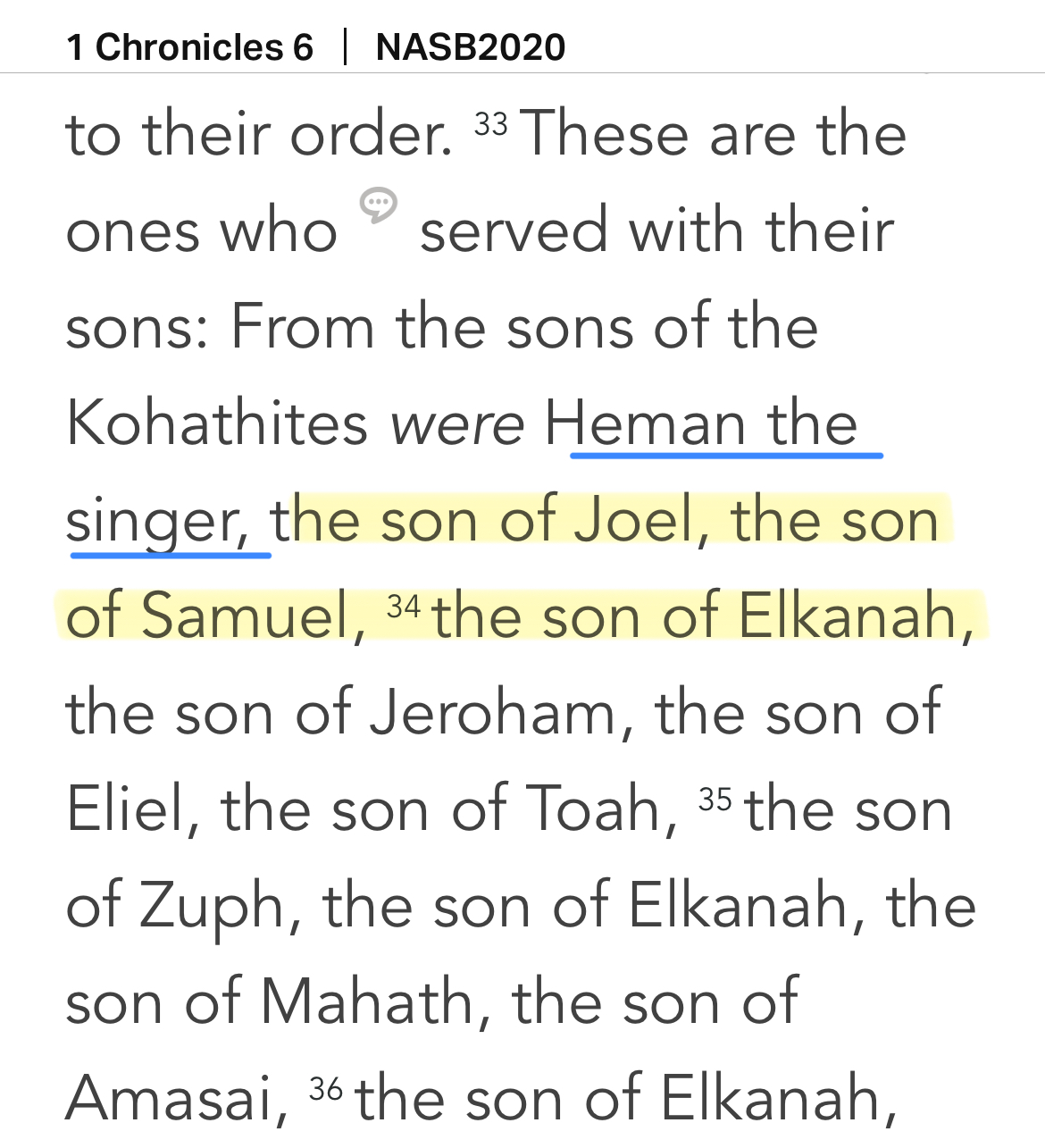
The psalmist Heman is the grandson of Samuel. “These are the ones who served with their sons: From the sons of the Kohathites were Heman the singer, the son of Joel, the son of Samuel, the son of Elkanah, the son of Jeroham, the son of Eliel, the son of Toah” (1 Chronicles 6:33-34; 1 Samuel 1:1, 20). 

Samuel came from the line of Levites (specifically the Kohathites), which is the same family to which Moses, Aaron, and Miriam belonged. While the tabernacle of the Lord was mobile in the wilderness, the Kohathites were responsible for carrying the furnishings of the tabernacle (Numbers 4:4-20).

When the permanent temple was constructed in Jerusalem, the responsibility of the Kohathites changed. They now oversaw the worship in the temple, and Heman is listed as the chief worship leader, with others to his right and left. “Heman’s brother Asaph stood at his right hand, Asaph the son of Berechiah, the son of Shimea. … On the left hand were their kinsmen the sons of Merari: Ethan the son of Kishi, the son of Abdi, the son of Malluch” (1 Chronicles 6:39, 44). 

And then we see Heman’s family line continuing in the roles of worship leaders after him: ”All these were the sons of Heman the king’s seer to exalt him according to the words of God, for God gave fourteen sons and three daughters to Heman. All of these were under the direction of their father to sing in the house of the Lord, with cymbals, harps, and lyres, for the service of the house of God. Asaph, Jeduthun, and Heman were under the direction of the king. Their number who were trained in singing to the Lord, with their relatives, all who were skillful, was 288“ (1 Chronicles 25:5-7). 

The Book of Psalms contains just one psalm that Heman composed (Psalm 88). 

(You can read all of the biblical references I listed in this biography here.)

Links & Quotes

I can forgive the inexcusable in others because God has forgiven the inexcusable in me. Check out this whole message here. I have lots of new content every week, which you can check out on my YouTube channel.

In the fourth year of King Hezekiah, which was the seventh year of Hoshea son of Elah, king of Israel, Shalmaneser king of Assyria came up against Samaria and besieged it (2 Kings 18:9). The Bible Archeology Report puts together wonderful biographies of biblical characters based on archeological discoveries that corroborate the account in Scripture. Here is the biography of Assyrian King Shalmaneser V. 

Meteorologist Dr. Roy Spencer writes, “Atmospheric CO2 levels will start to fall even with modest reductions in anthropogenic CO2 emissions. Why is that? The reason is due to something called the CO2 ‘sink rate.’ It has been observed that the more CO2 there is in the atmosphere, the more quickly nature removes the excess.” Imagine that! It’s almost as if the Creator of the Universe knew exactly what He was doing.

J. Warner Wallace makes the case that the origin of the universe points to a Creator—but he does so without using Scripture.

“You will not be able to extemporize good thinking unless you have been in the habit of thinking and feeding your mind with abundant and nourishing food.” —Charles Spurgeon

Links & Quotes

God’s blessings are not primarily for me, but they are through me for His glory. This is a short clip from an exclusive video I shared with my Patreon supporters. Become a supporter todayI have lots of new content every week, which you can check out on my YouTube channel.

“What to do with a mistake: recognize it, admit it, learn from it, forget it.” —Dean Smith

Until the mid-1800s, the historicity of King Sargon II (mentioned by Isaiah) was in doubt. Not only has archeology again affirmed the historical statements made in Scripture, but “the way Isaiah spelled Sargon’s name is an indicator that the prophet lived at the time of Sargon II, and that the book was not penned hundreds of years later.” Check out this archeological biography of Sargon II.

And then there is this archeological report about the destruction of Sodom and Gomorrah. Fascinating!

How sweet and gracious even in common speech,
Is that fine sense which men call Courtesy!
Wholesome as air and genial as the light,
Welcome in every clime as breath of flowers—
It transmutes aliens into trusting friends,
And gives its owner passport round the globe. —James T. Fields

“A person always doing his or her best becomes a natural leader, just by example.” —Joe DiMaggio

Not using the spiritual gift God has given you is selfish. He gave you these gifts on purpose so that His kingdom could be made more visible and desirable.

A Leader’s Example

Listen to the podcast of this post by clicking on the player below, and you can also subscribe on AppleSpotify, or Audible. 

When you read through the history of the kings of Israel and Judah, there are two consistently recurring themes for these leaders—

  • He turned to God and the people put away their idols <or>
  • He turned from God and the people turned to their idols 

It’s true: As goes the leader, so go the people. 

In my life, I’ve experienced that the good things that I do over-the-top are only moderately emulated by those around me. But the unhealthy things that I even slightly indulge in are adopted quickly by everyone else. 

Godly leaders must be so aware of how their example impacts everyone around them, and they must fight to maintain biblical standards. When we miss the mark, we must be quick to admit our shortcoming, repent, and get back on track. 

In Hosea 4:9, God warns that the people will follow the ungodly example of their leaders, which is why God’s punishment is often more severe for those leaders. 

On the positive side, in Leviticus 9, Moses and Aaron demonstrate the leadership example of spending time in God’s presence and fully obeying everything God had revealed to them there. Then verse 23 it says that after they came out of His presence, God’s glory appeared to all the people. The positive example of the leaders led to huge blessings for all the people! 

A mark of a godly leader is one who increasingly aware of the power of his example. 

Leaders, let’s be first to go first in…

  • …being in God’s presence 
  • …obeying God’s commands 
  • …repenting when we fall short 
  • …asking forgiveness of those who have seen our poor example
  • …asking God to bless His people because of our good example

This is part 77 in my series on godly leadership. You can check out all of my posts in this series by clicking here.

►► Would you please prayerfully consider supporting this ministry? My Patreon supporters get behind-the-scenes access to exclusive materials. ◀︎◀︎

What The Bible Doesn’t Say

Listen to the podcast of this post by clicking on the player below, and you can also subscribe on AppleSpotify, or Audible. 

We would do well to pay attention to what the Bible doesn’t say—especially when we have to interact with ungodly leaders. 

Check out this episode of The Podcast.

Some resources from this episode:

Here are a bunch of ways to get in touch with me and follow along with other projects on which I am involved

►► Would you please prayerfully consider supporting this ministry? My Patreon supporters get behind-the-scenes access to exclusive materials. Like this exceptional Bible study tool to help with Creation apologetics. ◀︎◀︎

Your Irreplaceable Genealogy

Listen to the podcast of this post by clicking on the player below, and you can also subscribe on AppleSpotify, or Audible. 

Have you ever felt like a nameless face in the crowd? Let me tell you what you should do with those thoughts.

Check out this episode of The Podcast.

Some resources from this episode:

Here are a bunch of ways to get in touch with me and follow along with other projects on which I am involved

►► Would you please prayerfully consider supporting this ministry? My Patreon supporters get behind-the-scenes access to exclusive materials. Like a first look at the cover of my brand new book. ◀︎◀︎

Year-End Review (2023 Edition)

Listen to the podcast of this post by clicking on the player below, and you can also subscribe on AppleSpotify, or Audible.

The apostle Peter said he wrote two letters to the church “as reminders to stimulate you to wholesome thinking” (2 Peter 3:1). And Paul reminded his young friend Timothy to “keep reminding [your congregation] of these things” (2 Timothy 2:14). 

In the spirit of those great apostles, I have made it a practice to take time at the end of each year to look back on all that we have learned in the previous year, and then to look forward to where God may be leading Calvary Assembly of God in this upcoming year.

Clicking on each series title will take you to a list of all of the sermons in that series. 

Intimate Conversation—The dictionary defines the word “intimate” with these phrases: associated in close personal relations, characterized by warm friendship, and closely personal. These words perfectly describe the relationship God wants to have with His children through prayer. Pete Briscoe said, “Prayer is an intimate conversation with the One who passionately loves you and lives in you.” The One who loves you so passionately desires to walk with you and share intimate knowledge with you. Prayer is not something formal, cold, or mechanical, but it is vibrant, warm, engaging, and life-changing.

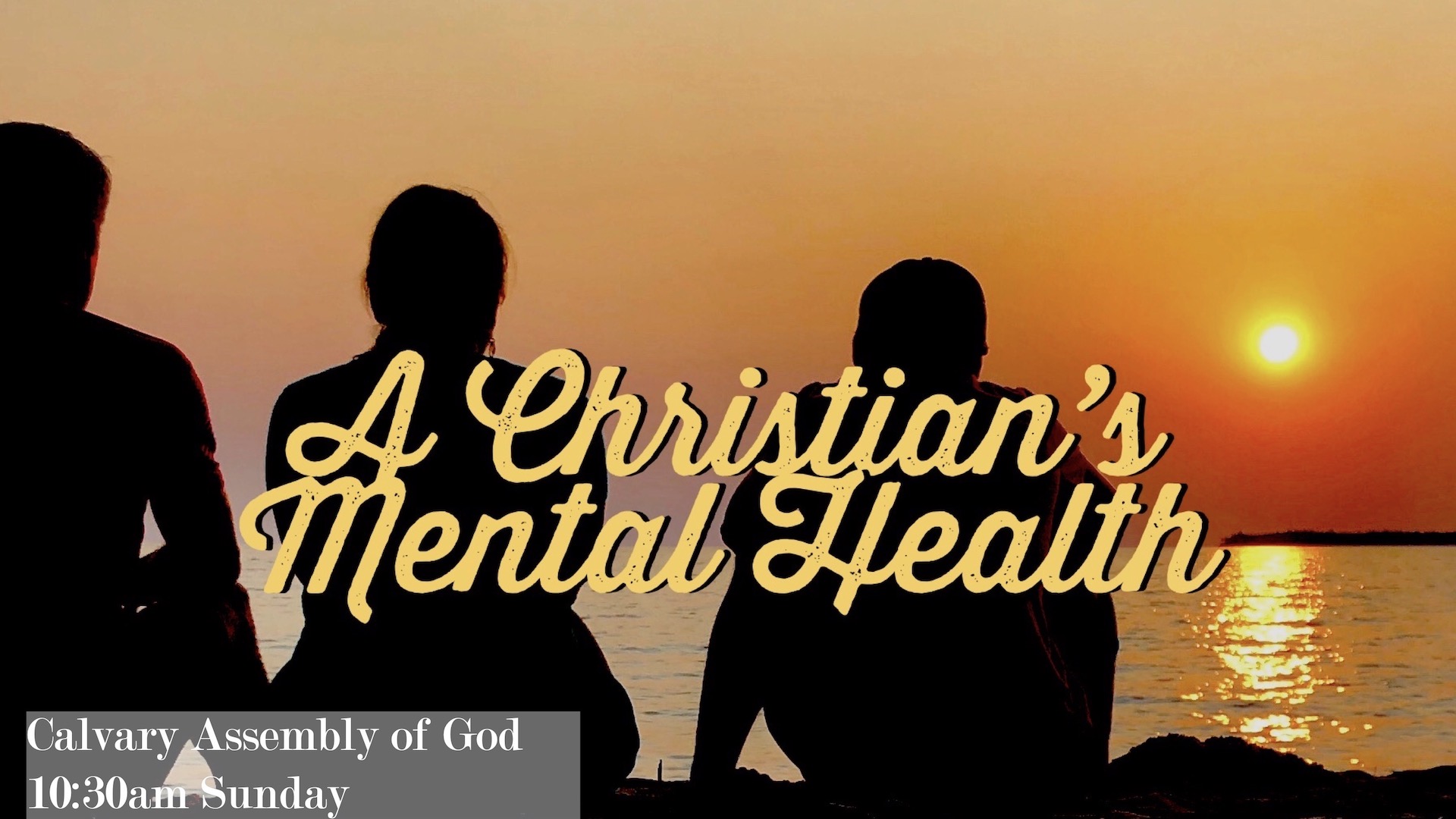
A Christian’s Mental Health—I don’t think there is any arguing that Jesus was the healthiest individual who ever walked planet Earth. Some may want to push back with, “Of course He was because He didn’t have any problems to deal with!” But the writer of Hebrews tells us that Jesus experienced everything you and I will ever experience (Hebrews 2:17), so His deity didn’t exclude Him from the stressors that His humanity would have to face. And yet, He handled all of these things successfully. Luke the physician observed the growth of Jesus and tells us that it all began with Jesus having a robust mental health. From that foundation, everything else—physical, spiritual, relational—all could develop properly. We must learn from this example and pay careful attention to our own mental health.

Bold Claims—“That’s a pretty bold claim. Are you prepared to back that up?” I’ll bet you have heard something like that said to you, and maybe you have even said that yourself to someone else who made a big, audacious statement. After Jesus is arrested by the religious leaders—an arrest that will ultimately lead to Jesus being crucified on the Cross—there are some incredibly bold claims spoken by key people in this part of the Story. For the most part, these are claims that we don’t read earlier in any of the Gospels, but as this story is heading toward its most crucial moment, we have these audacious statements pronounced. But here’s the most important part: These bold claims weren’t just made, but they were backed up with proof as well.

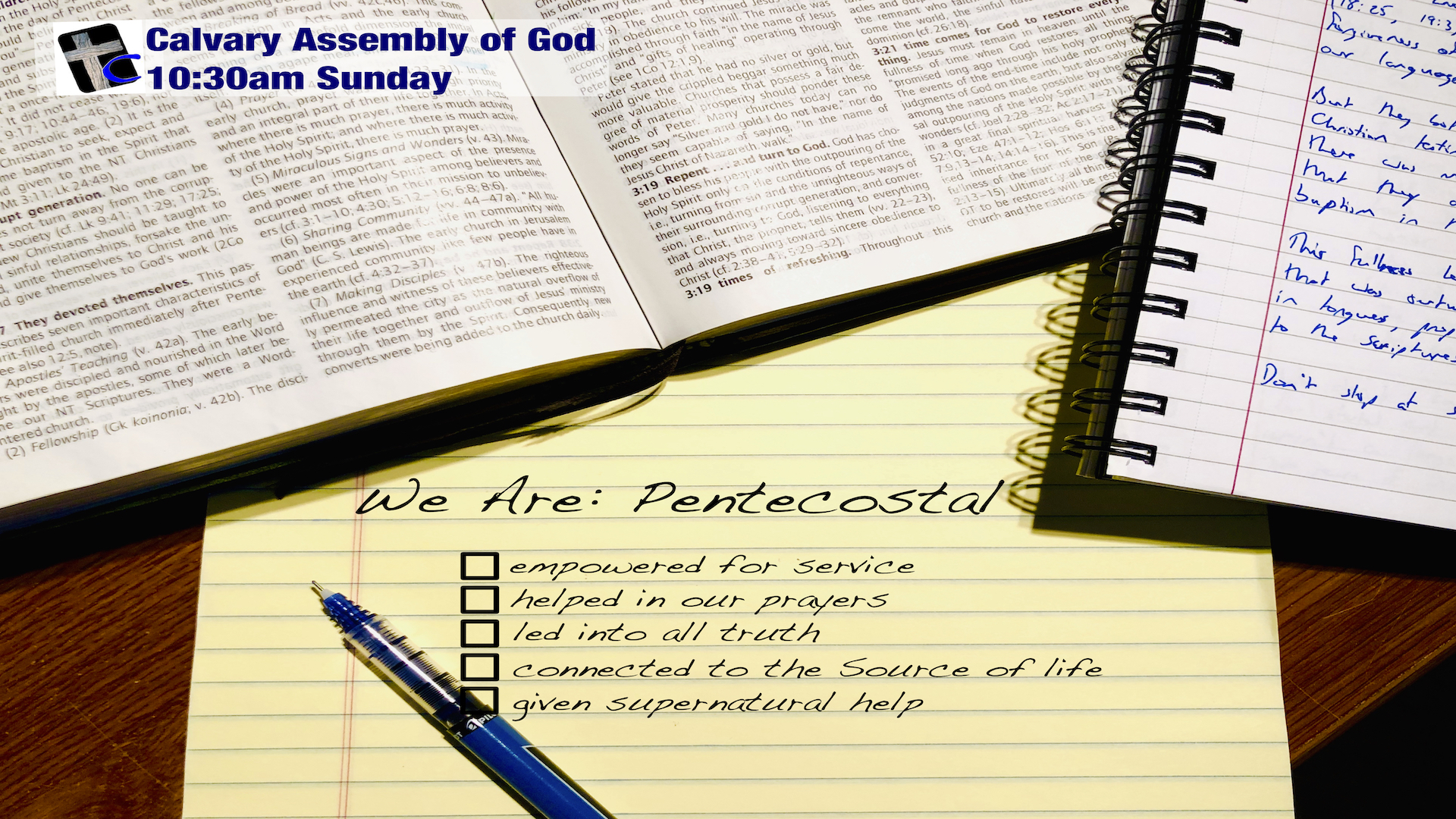
We Are: Pentecostal—Pentecost for over 1500 years was a celebration in Jerusalem that brought in Jews from all over the world. But on the Day of Pentecost that came just ten days after Jesus ascended back into heaven, the meaning of Pentecost was forever changed! Followers of Jesus—now empowered by an infilling of the Holy Spirit—began to take the good news of Jesus all over the world. These Spirit-filled Christians preached the Gospel and won converts to Christ even among hostile crowds, performed miracles and wonders, stood up to pagan priests and persecuting governmental leaders, and established a whole new way of living as Christ-followers. We, too, can be Pentecostal followers of Jesus Christ today. 

Ascending—Every year, Jews from around the world made four pilgrimages up to Jerusalem for various feasts and sacrifices. These journeys reminded them of God’s goodness as they went to the Temple to worship, and they helped refocus on God’s ways as they returned to their regular routines. Jerusalem is over 2500 feet above sea level, so the pilgrimage there was a physical workout as well as a spiritual workout. These workouts were beneficial for God’s people, preparing them to minister in their cities in the following months. The Book of Psalms contains 15 songs that these pilgrims would sing to and with each other as they traveled up to Jerusalem. These Psalms of Ascent are still instructive for Christians today.

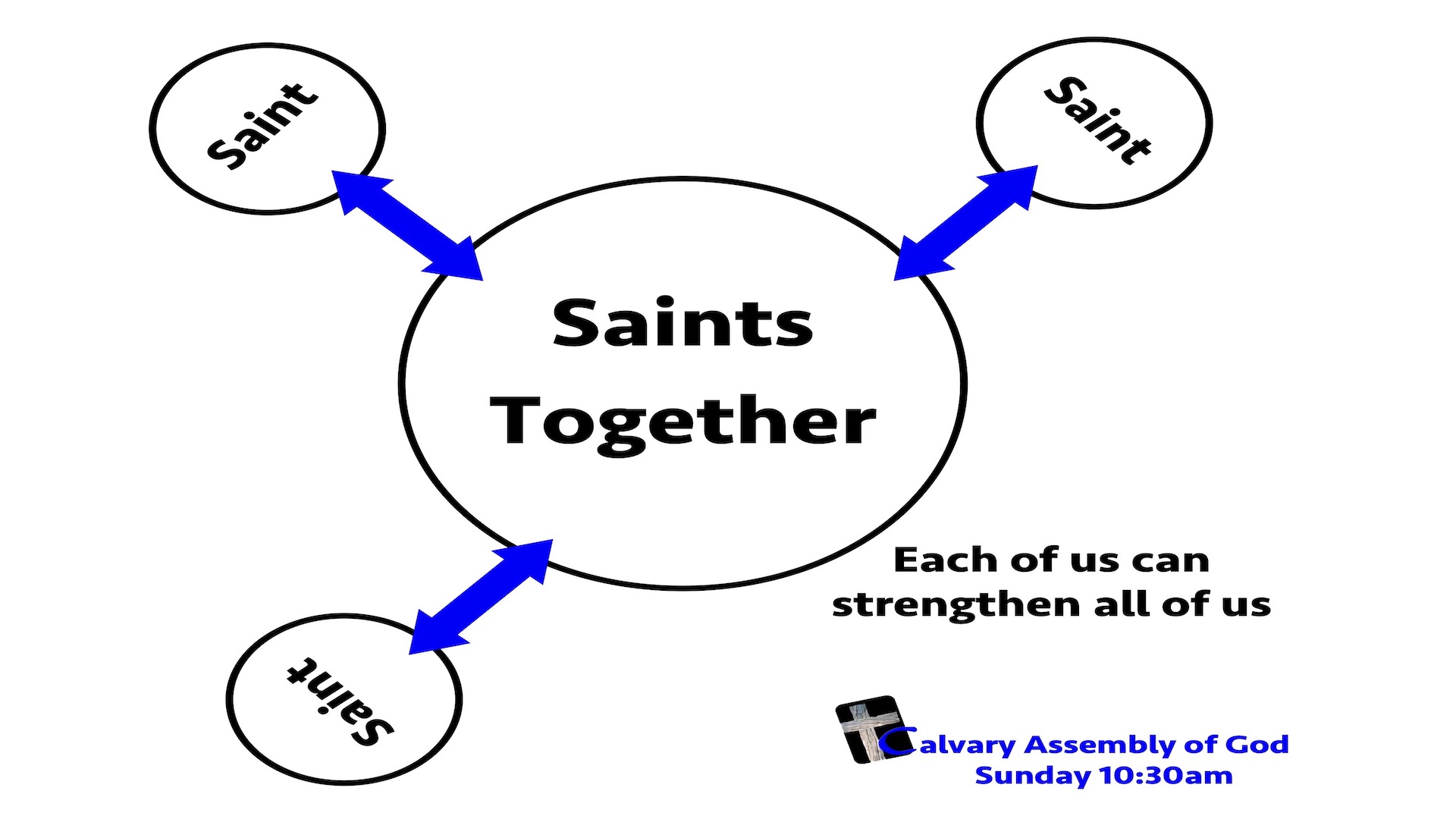
Saints Together—Throughout the New Testament the word “saints” is always in the plural form. This is a clear indication that none of us can develop into the full-fledged Christians we were meant to be on our own. We all need each other. More specifically, we all need the most mature version of each other. A key component of an individual saint’s development is the time spent alone being forged by the discipline of the Holy Spirit. Maturing saints then come together with each other to continue to strengthen and sharpen everyone in the church. Strong individual saints make a strong church, and a strong church makes strong individual saints! Let’s learn about six important spiritual disciplines that each individual saint must put into practice so that they can use their newly developed strengths to help other saints in their own development. 

The Great Attitude Of Gratitude—There’s something about gratitude that distinguishes people. Think about it: would you rather hang around with grumblers or grateful people? The gratitude of Paul and Silas certainly made them stand out from the crowd when they were in Philippi. Wrongly accused, beaten, and thrown in prison, but instead of bellyaching, they were praising God. Later on, when Paul wrote his letter to the Christians in Philippi, the theme of gratefulness permeates his letter. The distinguishing mark is actually in the title: The GReat ATTITUDE spells out GRATITUDE!

Long Live The King Of Kings—Throughout human history, whenever a king died, the people would say something like, “The king is dead. Long live the king!” They would say this because the next king ascended to the throne immediately after his predecessor died. Except when a nation had been defeated, the cry, “The king is dead” was unanswered by, “Long live the king!” Israel must have felt like this. After being defeated by Nebuchadnezzar and spending 70 years in exile, it appeared to many that the line of kings was broken. Even after retuning to their homeland, Israel continued to live under the thumb of other powerful nations. And yet, some still clung to the glimmer of the promise God had made about an eternal King sitting on Jerusalem’s throne. The First Advent of Jesus revealed to us in the Gospels reassures us that the promise of an eternal King is true. Jesus came to earth to reveal His majesty to us. The First Advent is so important because it bolsters our faith for the imminent Second Advent when Jesus will return as the King of kings! Christmas is a great time to be reminded that even now we can confidently declare, “Long live the eternal King of kings!”

2024 promises to be an exciting year! If you don’t have a home church in the northern Kent County area, I would love to have you join us! 

►► Would you please prayerfully consider supporting this ministry? My Patreon supporters get behind-the-scenes access to exclusive materials. ◀︎◀︎

The Rebirth Of Israel

My friend Douglas Carmel shared this amazing article in one of his recent ministry newsletters. I have reprinted it here with his permission—

Has this ever happened before in the history of the world? That a people should go into exile, be dispersed, and yet survive for 2000 years without a national homeland. And then to come back again—speaking their same language and returning to their same capital city. This alone should make an atheist question their atheism. Why? This is a miraculous, singular event. No country had ever done such a thing before in the history of mankind, except Israel. And yet, this is exactly what was foretold in the Hebrew Scriptures. 

The prophet Ezekiel also stated God’s promise: “For I will take you from the nations, gather you from all the lands and bring you into your own land” (Ezekiel 36:24). 

Also, in Ezekiel 37, there is an unforgettable vision of a valley of dry bones. The bones come to life in stages: first sinews on the bones, then flesh, then skin, and finally, the breath of life (Ezekiel 37:6–10). 

God then explains this vision to Ezekiel: “Son of man, these bones are the whole house of Israel” (Ezekiel 37:11). In other words, this is a prophecy about the Jewish people’s restoration to their Promised Land from all around the world. It is well in keeping with what we see actually occurring during our lifetime. Namely, the regathering of Israel will occur in stages, which it has done and is still doing. 

So how did we get to the State of Israel today? 

Let’s go back to the first and second centuries, just past the time of Jesus/Yeshua. Deuteronomy 28 contains prophecies regarding this second dispersion. It should be noted that this second dispersion was “from the one end of the earth even unto the other” (v. 64). This was to be a global dispersion, unlike the first one, which was just to Assyria and Babylon. 

Just after the time of Yeshua/Jesus, Israel rebelled against Roman rule. In 70 AD and again in 135 AD, Jewish rebels sought to fight against Rome. In response, the Roman army destroyed Jerusalem and its Temple under Titus in 70 AD, and the Jewish people were either killed or expelled from their land by Roman force. Under the rule of the Roman Emperor Hadrian, the Jews were dispersed all over the world by 135 AD. These facts are well-known in secular history sources as well. 

At this time, it was the Romans who changed the name of the land of Israel to Palestine. That was done to rub salt in the wounds of the Jews by changing the name of their beloved homeland to that of their ancient foes, namely, the Philistines (think Goliath’s people).  

It is important to note that while the Jewish people as a whole were dispersed by the second century, there always remained a small remnant of Jewish people scattered throughout the land, living in small communities. (Note: There is much more history involved than we can list here in this short article.)

After the Romans, came the Muslims. Except for a short time during the Crusades, the land was continuously ruled by Muslim Empires. That brings us to modern times. The British won the land of “Palestine” from the Ottoman Empire during World War I. About this time, Jewish people began to return in large numbers in the late 1800s. Eventually, the British army pulled out of “Palestine” in 1948 after the UN had given Israel the right to exist (as if they needed that approval). On May 14th, 1948, the State of Israel was reborn, and the name “Palestine” was dropped. 

Israel was attacked the very next day by all their neighbors, and guess what? Against all odds, Israel won! 

After several more wars that Israel had to fight for their survival, they still exist, and thus you see the headlines today. As you can deduce, this is an extremely short breakdown of Jewish history in the land. There were many more details involved, which we skipped over. 

Now, mind you, we are not saying that Israel today is just fine without their Messiah (they are not), nor are we saying that the secular government of Israel is perfect (they are not). But we are saying that, in the big picture of things, Israel being back in her land after 2000 years is something to take note of. 

It is indeed a miracle, and those who call for her eviction again “from the land to the sea” are unknowingly fighting against God’s miracle. 

Check out more from Rock of Israel Ministries here. And also check out an amazing message Douglas shared with our church here

Links & Quotes

On the latest episode of The Craig And Greg Show, Greg and I talked about Christmas traditions. I have lots of new content every week, which you can check out on my YouTube channel.

“Always be sure of your ground and be sure that you are honoring God. If there is anything about the situation that will make you special, it will bring you sorrow. Your whole ministry has to be along the lines of His grace and blessing.” —Smith Wigglesworth 

“Leaders have the responsibility to keep evil out. Government is incapable of making men and women moral and, in fact, it is not given that assignment, for it does not have that power. God grants government the right to make laws to hold back the power of evil, for only the church through the gospel can help men and women be good. Conversely, leadership and government can do much harm if they, through injudicious application or partial enforcement of law, let evil in. Government cannot make people good, but it can certainly make them bad. We need leadership and government to build barriers against what is wrong, but neither leaders nor external human powers can usher us to what is right. Only Jesus, full of grace and truth, can do that.” —Dick Brogden, in Proverbs: Amplified and Applied

The celebration of Christmas is obviously not seen in the Bible, but it has always seemed to be closely connected to the church’s calendar. Scott Hubbard has an eye-opening history of Christmas in his post The Curious History of Christmas.

Scientists have learned from butterflies’ amazing vision how to better detect cancer cells. The way our Creator has designed these winged marvels is truly astounding!  

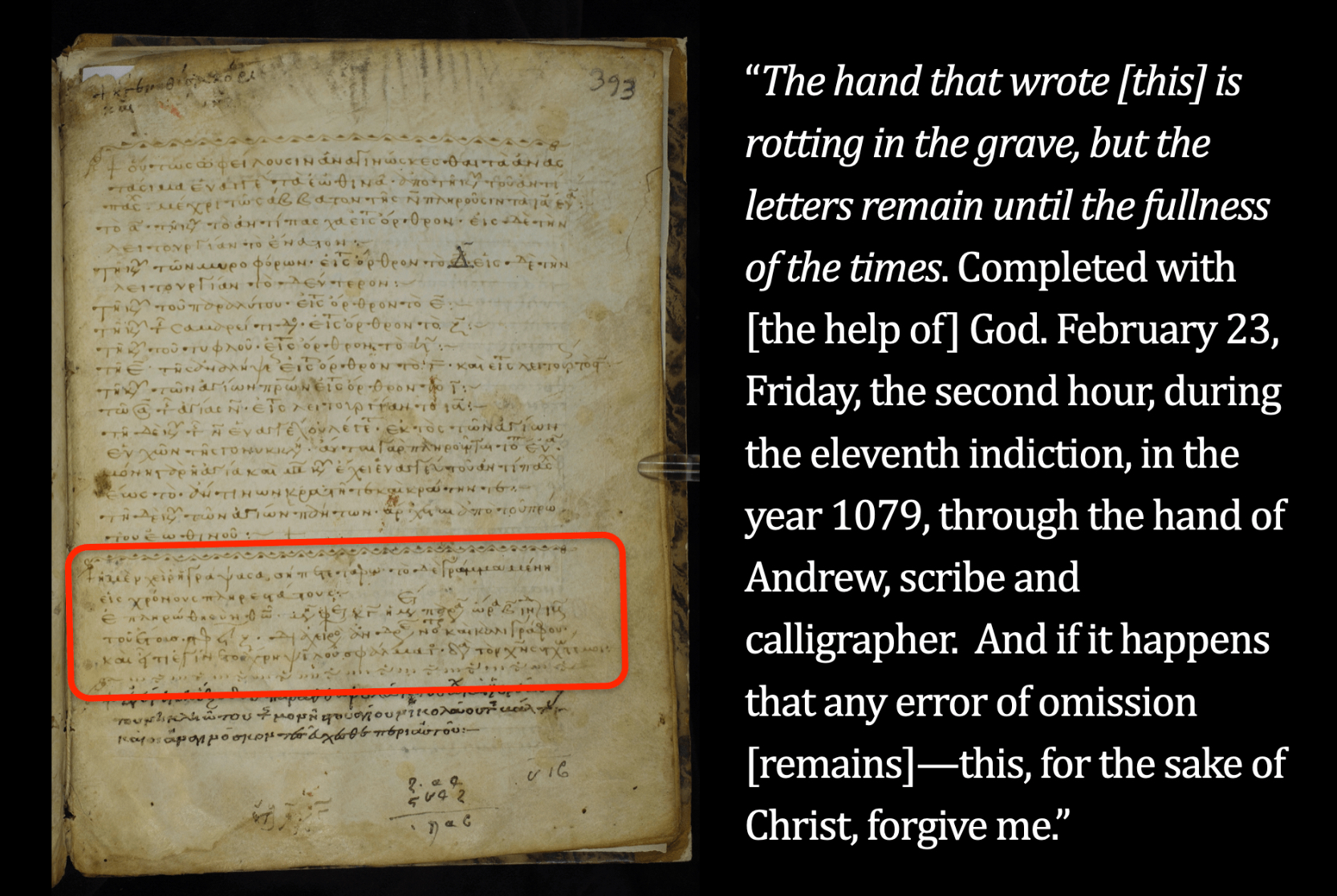
The ways the biblical text has been preserved and transmitted down to us today is nothing short of miraculous! Daniel Wallace is at the forefront of continuing to preserve the Word of God for future generations. Here is an example of the dedication of the biblical scribes: “The hand that wrote [this] is rotting in the grave, but the letters remain until the fullness of the times. Completed with [the help of] God. February 23, Friday, the second hour, during the eleventh indiction, in the year 1079, through the hand of Andrew, scribe and calligrapher. And if it happens that any error of omission [remains|—this, for the sake of Christ, forgive me.”

Just as archeological finds continue to confirm biblical accounts, fossil discoveries continue to confirm the biblical claim of Creation. Paleontologists have now created the term “problematica” to try to address fossil finds that don’t fit their evolutionary models.

T.M. Moore is sharing a thought-worthy series of posts on the biblical view of our economic activities, including a look at how governments and businesses should operate under God’s laws. Moore says, “Since God has written the works of the Law on the heart of all His image-bearers (Romans 2:14, 15), we should expect that awareness (if only subconsciously) to find expression. Put another way, whether they know it or not, people long for an economy guided by Biblical principles and guidelines.”