This is a weekly series with things I’m reading and pondering from Oswald Chambers. You can read the original seed thought here, or type “Thursdays With Oswald” in the search box to read more entries.
What Is Mammon?
You cannot serve God and Mammon [Matthew 6:24]. A man of the world says we can; with a little subtlety and wisdom and compromise (it is called diplomacy or tact), we can serve both. The devil’s temptation to our Lord to fall down and worship him, i.e., to compromise, is repeated over and over again in Christian experience. We have to realize that there is a division as high as heaven and as deep as hell between the Christian and the world. ‘Whosoever therefore will be a friend of the world is the enemy of God’ [James 4:4]. …
Never compromise with the spirit of Mammon. When you are right with God, you become contemptible in the eyes of the world. Put into practice any of the teaching of the Sermon on the Mount and you will be treated with amusement at first; then if you persist, the world will get annoyed and will detest you. … What is Mammon? The system of civilized life which organizes itself without considering God. …
When we become mature in godliness God trusts His own honor to us by placing us where the world, the flesh, and the devil may try us, knowing that ‘greater is He that is in you than he that is in the world’ [1 John 4:4].
From Studies In The Sermon On The Mount
Mammon wants to get what it wants to get, without considering God and without regard to the long-term consequences. Mammon wants satisfaction right now!
Mammon is the system of the world. People are constantly driven by what they can get for themselves right now, with little—if any—thought to what God thinks or to what the inevitable outcome is going to be.
A Christian is different.
A Christian is focused on something which cannot be seen right now. But just because the rewards cannot be seen doesn’t make them any less real. In fact, Jesus teaches that the rewards He gives are Reality itself.
When a Christian insists on doing things God’s way, the devil will sneer and people will laugh. But God’s Spirit in you is greater than all of that, and He will help you to stand firm in Him, not compromising with the lure of Mammon.
So He Himself often withdrew into the wilderness and prayed (Luke 5:16).
“So”—in light of what just happened. What happened? Jesus was preaching everywhere, He healed a leper, and great multitudes came to hear Him speak and to be healed. So Jesus had to withdraw frequently to pray and be replenished.
All of us have only a finite amount of energy. When we are sensing that energy level is low, we also need a retreat. Otherwise, our low energy levels can sabotage us and diminish what God wants to do through us.
Then check out the results after Christ’s time of replenishing:
God’s power was “present to heal” (v. 17)
People were saved (v. 20)
Jesus had holy perception (v. 22)
Miracles confirmed the word that Jesus preached (v. 24)
God was glorified (v. 26)
People followed Jesus (vv. 27, 28)
Jesus had enough grace and patience to handle criticism (v. 30)
Jesus had enough wisdom and patience to handle tricky theological questions (vv. 33-39)
J.C. Ryle noted, “The most successful workmen in the Lord’s vineyard are those who are, like their Master, often and much upon their knees.”
Healthy leaders are keenly aware of their own energy levels.
So… A mark of a godly leader is one who frequently retreats.
This is part 32 in my series on godly leadership. You can check out all of my posts in this series by clicking here.
Jesus called satan the father of lies, that means every word he speaks is false. He uses his falsehoods to constantly slander God’s children, “For the accuser of our brothers and sisters has been thrown down to earth—the one who accuses them before our God day and night” (Revelation 12:10).
But we’re not helpless victims against the devil’s slander. The Holy Spirit reminds us of what the Word of God says, and what the God of the Word has done (John 14:26). That Word becomes our sword and shield against the slanderer, “They triumphed over him by the blood of the Lamb and by the word of their testimony” (Revelation 12:10-11).
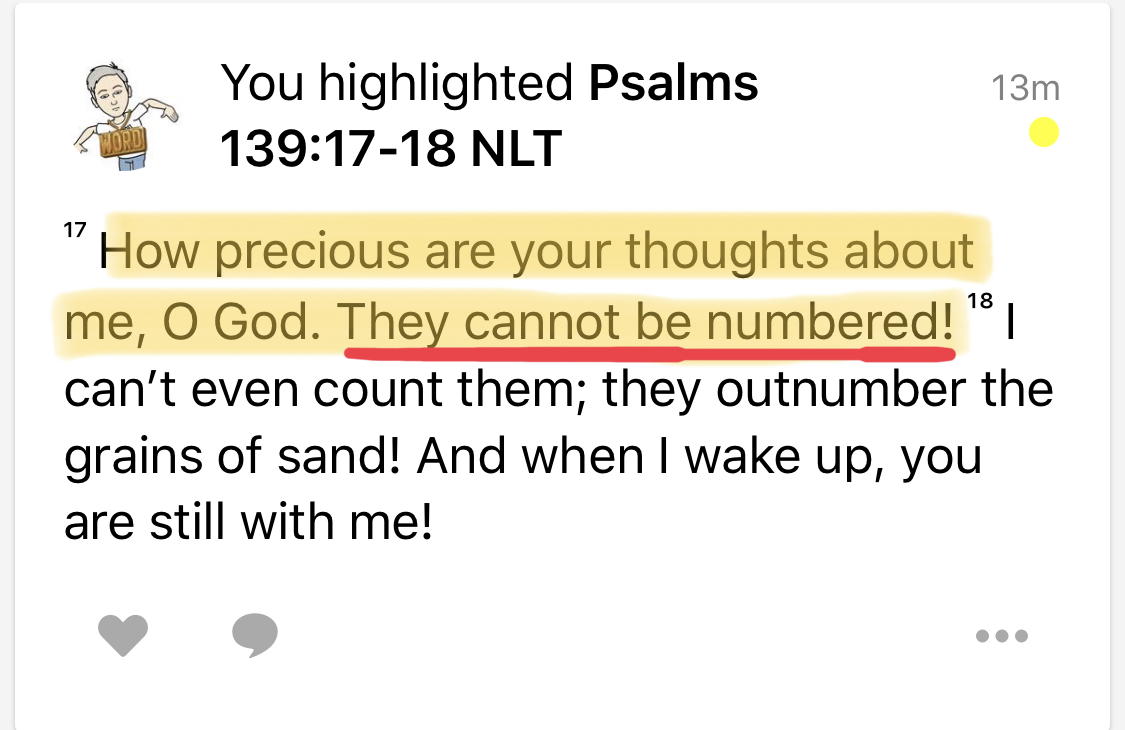
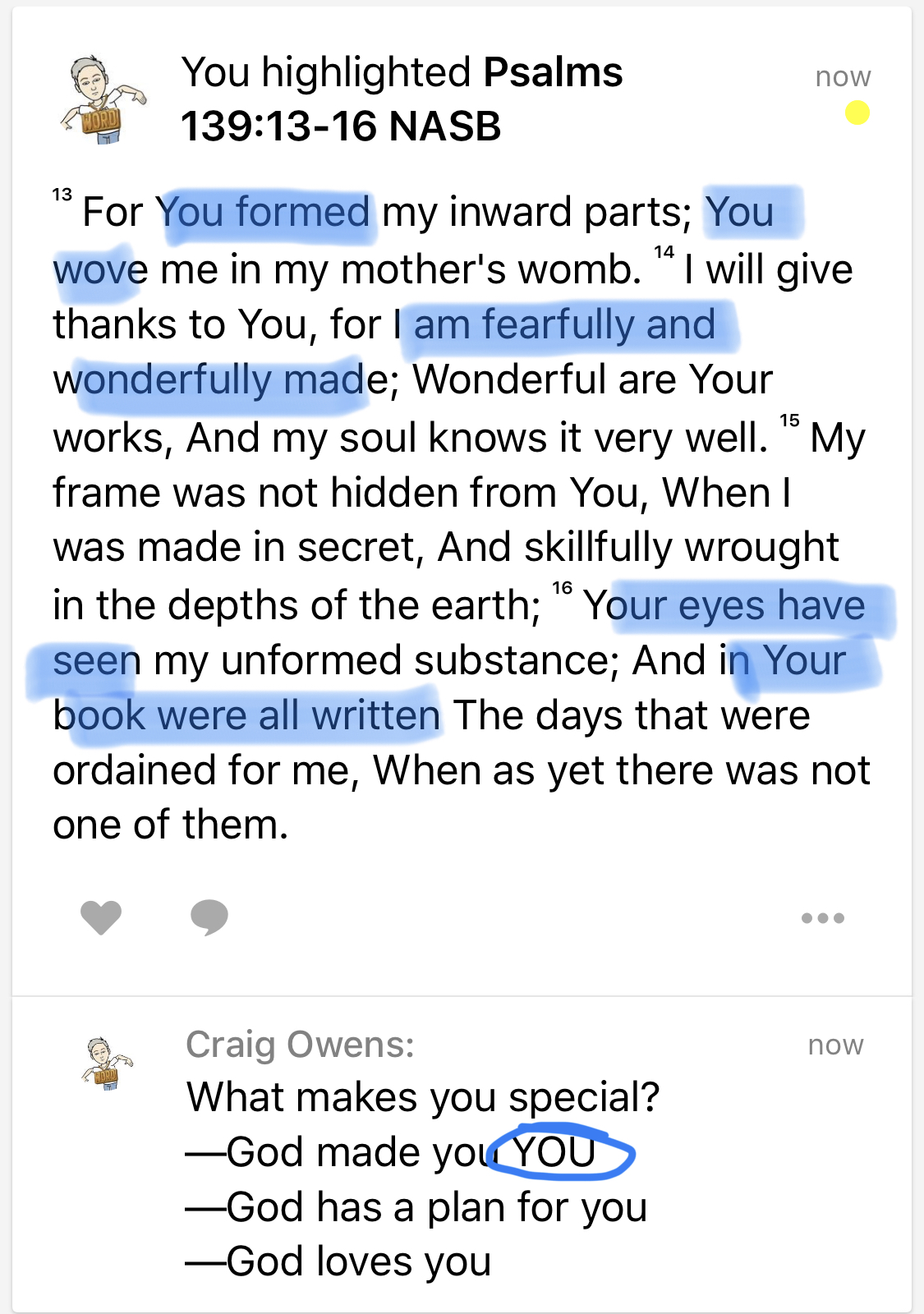
This passage from Psalm 139 is a great weapon to use against the devil whenever he slanderously calls into question your worth in God’s sight. Silence his lies and strike him down with the Truth that your value to God is immeasurable!
This past Christmas I was quite surprised to receive a package in the mail. It was something I ordered as a Christmas gift for my wife.
Sort of.
It was actually half of what I thought I ordered. I went back online and discovered some “fine print” that I hadn’t really noticed earlier.
You’ve probably experienced that too—asterisks … fine print … footnotes … hidden fees … “limits and exclusions may apply” are all so frustrating!
Unfortunately, we get so used to these things that we begin to—consciously or subconsciously—plug them into places where they don’t actually belong. So even when Jesus Himself says something that sounds wonderful like, “I tell you the truth, if you have faith as small as a mustard seed, you can say to this mountain, ‘Move from here to there’ and it will move. Nothing will be impossible for you” (Matthew 17:20), we want to insert an asterisk.
Or when He says, “And I will do whatever you ask in My name so that the Son may bring glory to the Father. You may ask Me for anything in My name, and I will do it” (John 14:13-14), we think we’re supposed to ask, “What’s the catch?”
Christians are inserting asterisks where they don’t belong and, as a result, are praying timid prayers.
Why do we pray this way? Perhaps we are…
…fearful of being too bold. But in telling us how to pray, Jesus says God rewards our bold “shameless persistence” in prayer.
I tell you, although he will not get up and supply him anything because he is his friend, yet because of his shameless persistence and insistence he will get up and give him as much as he needs. So I say to you, ask and keep on asking and it shall be given you; seek and keep on seeking and you shall find; knock and keep on knocking and the door shall be opened to you. (Luke 11:8-9 AMP)
…unsure that God hears us, cares for us, or even wants to answer us. But the Bible is quite clear that all of these things are true: He hears us, cares for us, and does want to give us what He has promised (1 John 5:14-15; Romans 8:32; Romans 4:20-21).
…ignorant of what/how to pray. T.M. Moore reminds us, “God has given us three great helps to assist us in our prayers. His Spirit groans for us; His Word guides us; and His Son governs and intercedes for us.”
…not looking for God’s answer. David said that after praying, he expectantly watched for God’s answer (Psalm 5:3). Indeed, the Aramaic word for prayer means “to set a trap.”
“He is the God of limitless resources—the only limit comes from us. Our requests, our thoughts, and our prayers are too small, and our expectations are too low. God is trying to raise our vision to a higher level, call us to have greater expectations, and thereby bring us to greater appropriation. Shall we continue living in a way that mocks His will and denies His Word?” —A.B. Simpson
Why are you hesitating to ask God for even a tiny amount when such vast resources are available? What would happen if you started to pray more boldly? What if you began to make mountain-moving requests? I dare you to try!
Stop looking for the asterisks and start taking God at His word!
Join me next week as we continue our series on Boldly Praying, looking at some bold pray-ers in the Bible.
This is a weekly series with things I’m reading and pondering from Oswald Chambers. You can read the original seed thought here, or type “Thursdays With Oswald” in the search box to read more entries.
Philanthropy, Prayer, And Penance
In chapter Matthew 5, our Lord demands that our disposition be right with Him in our ordinary natural life lived to men; in chapter 6, He deals with the domain of our life lived to God before men. The main idea in the region of religion is: Your eyes on God, not on men. …
Briefly summed up these verses [6:1-4] mean: Have no other motive in giving than to please God. In modern philanthropy we are ‘egged on’ with other motives—It will do them good; they need the help; they deserve it. Jesus Christ never brings out that aspect in His teaching; He allows no other motive in the giving than to please God. … It is a very penetrating thing to ask ourselves this question—“What was my motive in doing that kind act?” …
“But when you give it to the needy, do not let your left hand know what your right hand is doing.” That means do good until it is an unconscious habit of the life and you do not know you are doing it….
Have no other motive in prayer than to know Him [6:5-15]. … Call a halt one moment and ask yourself—“Why do I pray? What is my motive? Is it because I have a personal secret relationship to God known to no one but myself?” …
It is impossible to live the life of a disciple without definite times of secret prayer. You will find that the place to enter in is in your business, as you walk along the streets, in the ordinary ways of life, when no one dreams you are praying, and the reward comes openly, a revival here, a blessing there. …
In verse 8 Jesus goes to the root of all prayer—“Your Father knows what you need before you ask Him.” Common sense says, “Then why ask Him?” Prayer is not getting things from God, that is a most initial stage; prayer is getting into perfect communion with God; I tell him what I know He knows in order that I may get to know it as He does. …
Penance [6:16-18] means putting ourselves into a straitjacket for the sake of disciplining our spiritual character. Physical sloth will upset spiritual devotion quicker than anything else. If the devil cannot get at us by enticing to sin, he will get at us by sleeping-sickness spiritually…. Penance means doing a hardship to the body for the sake of developing the spiritual life. … Jeremy Taylor said that men hang out the sign of the devil; to prove there is an angel within; that is, they wear sad countenances and look tremendously severe in order to prove they are holy.
From Studies In The Sermon On The Mount
Good questions from Oswald Chambers:
Philanthropy—What was my motive in doing that kind act?
Prayer—Why do I pray? What is my motive? Is it because I have a personal secret relationship to God known to no one but myself?
Penance—Am I “hanging out a sign” just to let other people know that I’m discipling myself?
As a general rule, God would like us to pray much more boldly than we typically do.
Jesus told us that we could pray mountain-moving prayers! But C.S. Lewis rightly observed, “If we consider the unblushing promises of reward and the staggering nature of the rewards promised in the Gospels, it would seem that our Lord finds our desires, not too strong, but too weak.”
This Sunday we begin a new series of messages called Boldly Praying, in which we are going to consider how we can replace our weak prayers with bold prayers. We’ll be looking at the requests of four bold pray-ers that we meet in the pages of Scripture, and each one of them will teach us a new aspect of bold praying.
This is a request I can continue to make. Jesus is in heaven interceding for me (Hebrews 7:25), and He has given me His Holy Spirit to help me pray (Romans 8:26).
Jesus is the Perfect Pray-er, so He is the one to Whom I should continually say, “Lord, teach me to pray.”
The key thought Jesus presents is persistence (see Luke 11:8-10). Why? Because the One to Whom I persistently appeal has told me to! God is my Heavenly Father—He wants to give the best to His children. He even gives us “how much more”!
I learn to pray by praying.
I have to begin to do it and then let the Holy Spirit instruct me. In the meantime, even my childlike prayers are clarified and amplified by the Spirit, they are used by Jesus to intercede on my behalf, and they are carried into the throne room of Almighty God as an incense before Him. He loves to hear from me, or else He would not have told me to keep on asking, keep on seeking, and keep on knocking.
To paraphrase a father who was in desperate need of Christ’s help, “Lord, I am praying; help me to keep on praying!” (see Mark 9:24)
I love reading, and I love sharing my love of good books with others! Here is a list of the books I read and reviewed in 2018. Click on a title to be taken to that review.
I have the high privilege of being able to shepherd Calvary Assembly of God. It’s a privilege and responsibility I take as a charge from God, and the Scripture makes it clear that those who have been given such a stewardship must use it in a God-glorifying way.
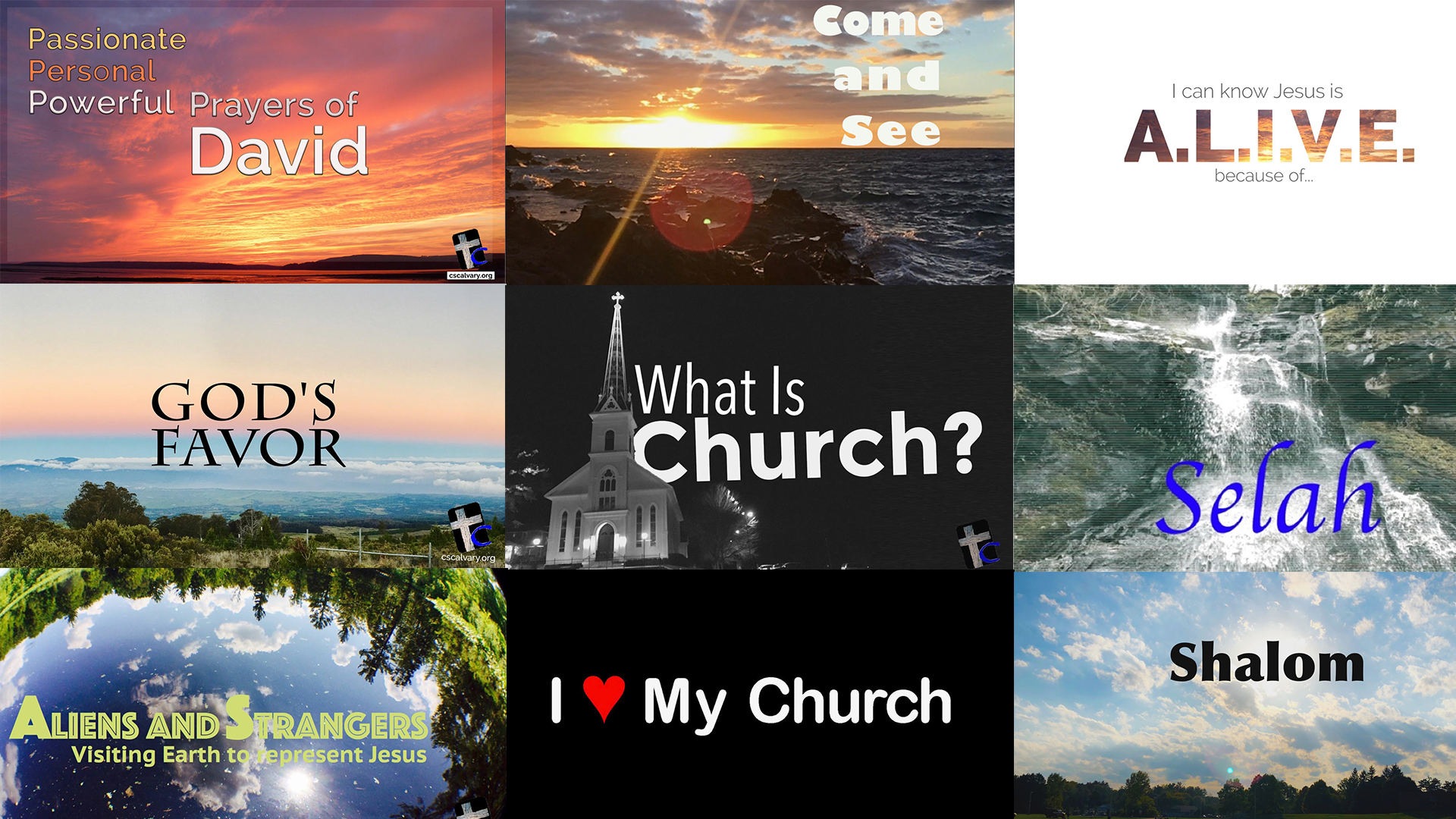
Just one way I can use such stewardship is in the weekly sermons I prepare for our church family. I faithfully study and pray to get God’s mind on the topics that we need to grow in Him. Below is a brief overview of each of the series of messages I shared in 2018, along with links to the weekly recaps I post after delivering each message.
The Prayers Of David—The life of David is an open book for us. One of the unique things about David’s life is that we get to read both the historical narrative of his life, and his diary-like thoughts recorded in his psalms, songs, and prayers in the Book of Psalms. David’s prayers are gut-level honest and full of raw emotion. His prayers are also very helpful for anyone who desires to be as close to God as David was, to be one God describes as “a man after my own heart, who will do everything I want him to do.”
Come And See—Survey after survey, and personal interview after personal interview, all report the same indisputable truth—the #1 reason unchurched people don’t come to church is no one has invited them! Wow! Christians have the life-changing truth of what a personal relationship with Jesus Christ can do, and they are for the most part keeping it to themselves. I want to present a very simple way to invite people to hear about our Risen Savior, and it’s just three simple words: Come and see.
A.L.I.V.E.—It is the foundational claim of Christianity: Christ died on a Cross and was raised back to life. It is also the claim many skeptics of Christianity find so difficult to process. This series explores evidence for for the resurrection of Jesus in each of the five letters of “ALIVE.” These messages are specifically designed for those skeptical of the claims of Christianity. The evidence won’t be a bunch of “churchy” platitudes, but court-room-level evidence that will attempt to make the case for what Christians believe about the death and resurrection of Jesus.
God’s Favor—What if I were to tell you that God is for you? What if I were to tell you that God wants to bless you? What if I were to tell you that God’s favor is constantly pursuing you? Well, here’s me telling you that it’s all true! Why would God do this? Because if you feel distant from Him, how can you glorify Him? If you feel disconnected from His love, how will you draw others to Him? If you feel like your relationship with Him is hanging by a thread, how can you happily abide in His presence? Knowing God’s favor is the key to living the abundant life Jesus purchased for you on the Cross!
What Is Church?—All across the world on Sunday morning, people met for church? But what exactly is church? Is it a place we go to? Is it something that only happens on Sundays? For Jesus, neither the day of the week nor the location determined the way He lived. Peter summed it up this way, “God anointed Jesus of Nazareth with the Holy Spirit and with power. Then Jesus went around doing good and healing all who were oppressed by the devil, for God was with Him” (Acts 10:38).
Selah—The word Selah appears nearly 70 times in the Bible, almost exclusively in the Psalms. Although it is primarily a musical term, it applies beautifully to our new summer series. Throughout the Psalms, Selah appears at the end of a verse, at the end of the psalm, or sometimes even mid-sentence. But each one of them is perfectly placed by the Spirit-inspired authors to get us to take a breath and deeply contemplate what we just read or sang.
Aliens And Strangers—Christians are not citizens of Planet Earth. Our citizenship is in a place called Heaven, and yet we are traveling on Earth during our present lifetime. So the question is: How is a citizen of Heaven supposed to act while visiting Earth? The Apostle Peter was one of the most active disciples of Jesus. During Christ’s first visit to Earth, Peter is recorded as speaking more than all of the other disciples combined. And not surprisingly, Jesus speaks more words directly to Peter than He does to all of the other 11 disciples combined. Peter got a lot of training! With that background, Peter gives us invaluable instructions in his first letter to the church. He calls Christians things like: strangers in the world, chosen people, peculiar people, and aliens and strangers in the world. He tells us travelers not only how to behave while traveling on Earth, but why we should travel in a God-honoring way.
I ♥ My Church—If you lived in the early first century AD—and if the donkey carts had bumper stickers—I’ll bet that you would have seen “IMy Church” bumper stickers on everything the early Christians owned. Both the Bible and historians of that day talked about the positive societal changes that Christians were making in their communities, and how every place they lived and worshipped got better. Why not today? Why not in your community?
Shalom—God makes a promise in Isaiah about His perfect peace being made available to His people. Ahhh, who wouldn’t want God’s perfect peace?! Sadly, many people actually block God’s peace from coming into their hearts. You see, God’s peace is always there, but there are things we humans frequently do that keeps us from experiencing His perfect peace. The Hebrew word for peace is shalom, which is a word packed with rich meaning! There are things God-loving people can do to keep shalom at the center of their lives, and I want to share these things with you.
The Carols Of Christmas—How many “old familiar carols” have you heard Christmas after Christmas until the words have almost lost their meaning? If we’re not careful, any song repeated too often can lose the richness of its original intent. There are some amazing messages in many of our old familiar Christmas carols because many of those messages are saturated with the old familiar story of Redemption that the Bible tells over and over again.



 This is a weekly series with things I’m reading and pondering from Oswald Chambers. You can read the original seed thought here, or type “Thursdays With Oswald” in the search box to read more entries.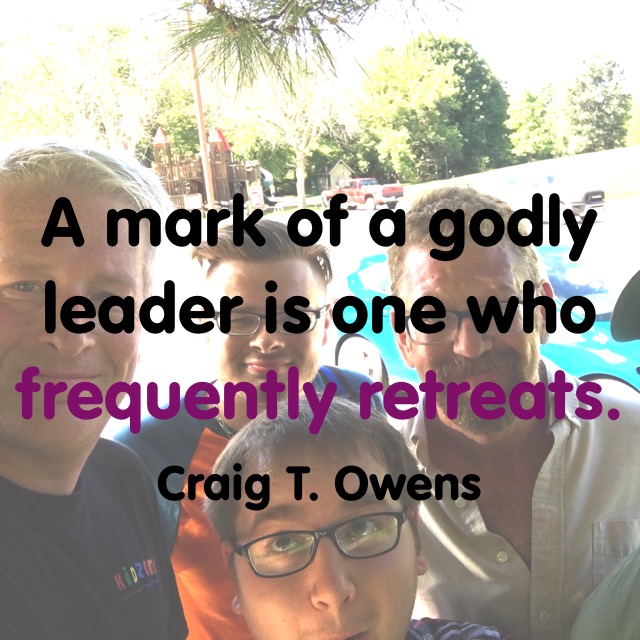







 Craig T. Owens