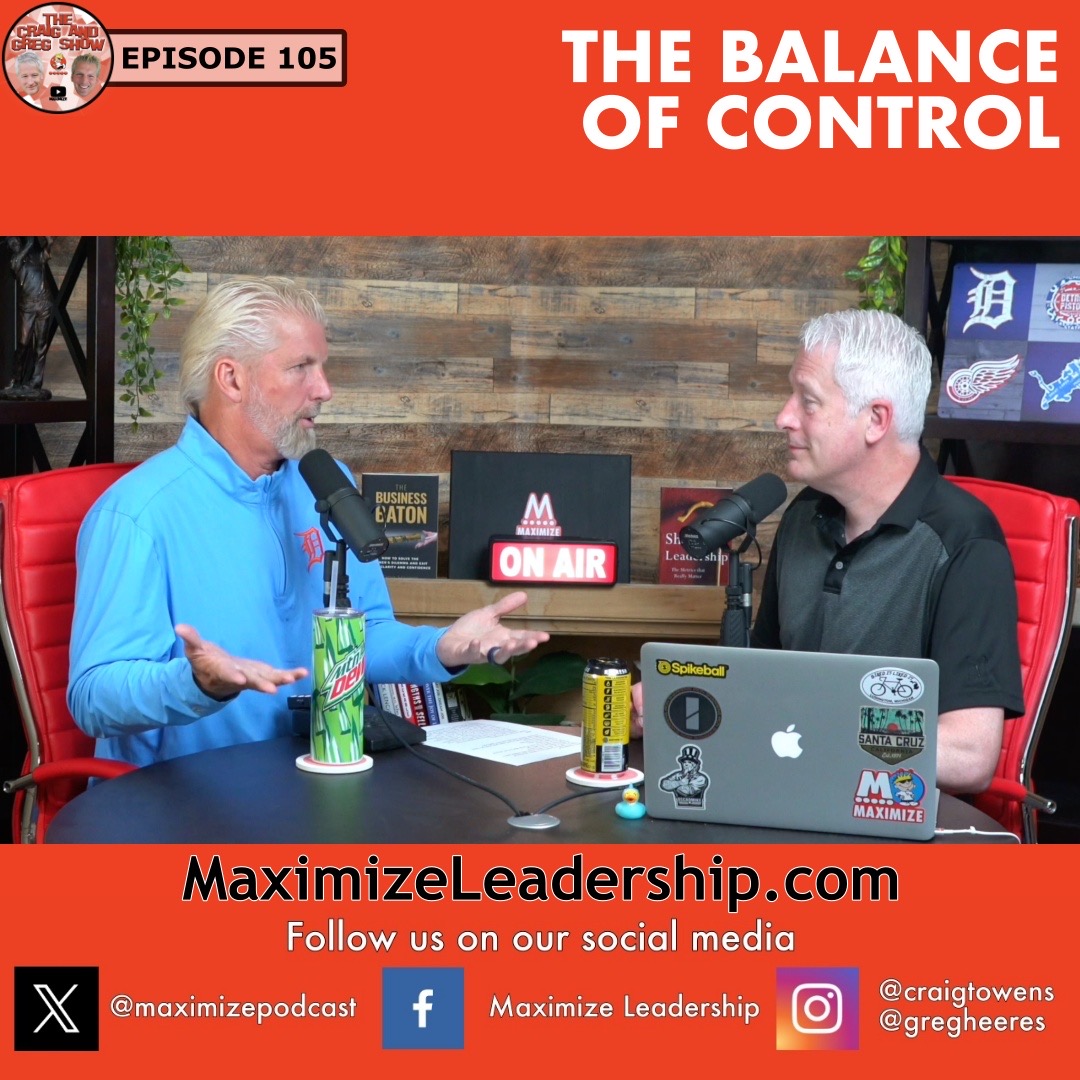
The Craig And Greg Show: The Balance Of Control

Listen to the podcast of this post by clicking on the player below, and you can also subscribe on AppleSpotify, or Audible.

Imagine your organization as a cruise ship you’re the captain of. It is your responsibility to man the helm, keeping the vessel away from danger and navigating to the correct destination. Along the way you decide that the guests’ towels need to be folded a particular way, so you step away from your post for hours to meticulously fold them to your exact specifications. You do a great job but in your absence the ship is listless, veering off course into dangerous waters. 

Of course it’s very likely you won’t find yourself in this exact situation, but the same logic can be applied to our terrestrial pursuits as well. In today’s episode, Greg and I discuss why it’s important for leaders to remain in control, but also vital that we don’t become controlling.

  • [1:00] How could a leader self-assess to make sure they are properly balanced in the way they control their organization? 
  • [3:38] Being organized is not a problem, but controlling the organization becomes the problem.
  • [4:50] I point out the differences between a productive river and a destructive flood.
  • [6:00] Controlling leaders stifle creativity and innovation.
  • [8:25] Tim Irwin’s book Derailed talks about how micro-managing has led to the collapse of many successful organizations.
  • [12:41] Over-controlling leaders are risk-adverse and untrusting of others on their team.
  • [14:13] The value of a coach is getting answers that others on your team aren’t giving you.
  • [17:12] Greg shares a quote about self-discipline as it relates to the proper balance of healthy control.
  • [18:20] Your teammates want your confidence, not your control.
  • [19:44] Leaders, it’s time for you to look in the mirror.

Check out this episode and subscribe on YouTube so you can watch all of the upcoming episodes. You can also listen to our podcast on Spotify and Apple.

Both Shepherds And Sheep Must Do Better

Listen to the podcast of this post by clicking on the player below, and you can also subscribe on AppleSpotify, or Audible. 

It’s the age-old question of which came first. I think I’ve got some insight for you.  

Check out this episode of The Podcast. 

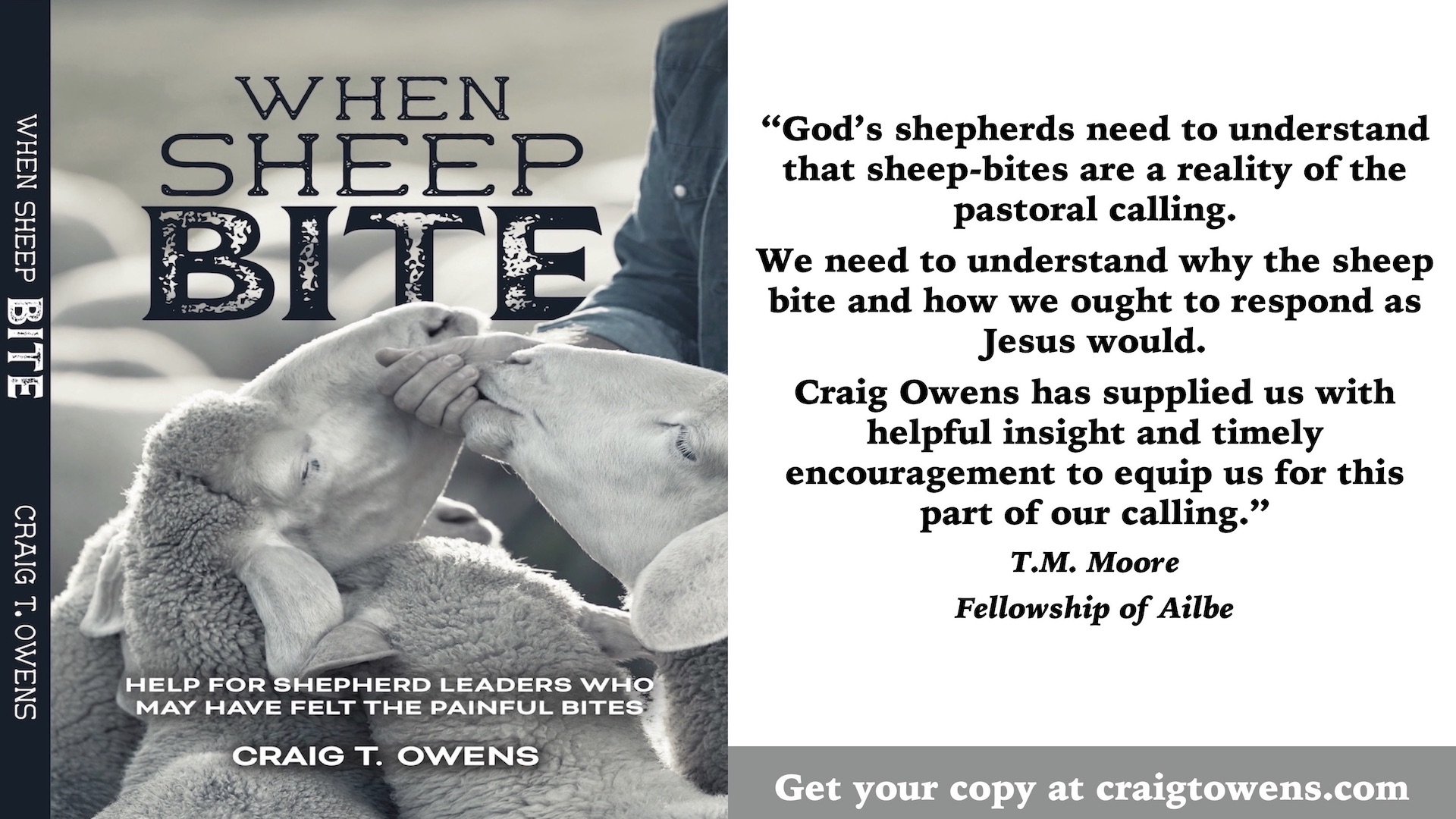
You can get more information on both of my books here: 

And check another clip I shared from the Fellowship of Ailbe podcast here.

►► Would you please prayerfully consider supporting this ministry? My Patreon supporters get behind-the-scenes access to exclusive materials. ◀︎◀︎

How Am I (Really) Doing?

Listen to the podcast of this post by clicking on the player below, and you can also subscribe on AppleSpotify, or Audible. 

I’d like to ask you a simple but important question, “How are you doing?” Let me also give you a better way of asking and answering this question.  

Check out this episode of The Podcast. 

The biblical passages I reference in this video—Luke 18:9-14; James 4:6; 1 Peter 5:5; Galatians 6:4-5; Galatians 5:22-23. 

I wrote more about the attitude of the pharisee and the tax collector in my post Prideful Prayer. 

And I blogged about friends who love us enough to tell us the truth in my posts That’s What Friends Are For and Sharper Thinking. 

►► Would you please prayerfully consider supporting this ministry? My Patreon supporters get behind-the-scenes access to exclusive materials. ◀︎◀︎

Links & Quotes

Christians should run their entire race with joy—we should soar across the finish line! Check out this full sermon on Psalm 132.

I have lots of new content every week, which you can check out on my YouTube channel. 

“Joy is never in our power and pleasure often is.” —C.S. Lewis

John Piper points out that thinking and knowing are essential for Christian maturity, but there is also a danger in knowledge. How do we find the correct balance?

I talked about a Christian’s self-examination this week, and then I came across this from T.M. Moore: “Christians do not fear to examine themselves. Especially when it seems something may be lacking in our walk with and work for the Lord, we need to heed the words of the apostle Paul and do some serious soul-searching and altering of our life course (2 Corinthians 13:5). Examining ourselves involves carefully considering how we use our time (Ephesians 5:15-17) as well as what’s going on in our soul and our life. We must not fear to examine ourselves nor resent when others may encourage us to do so.”

Darryl Cooper’s revisionist history of Winston Churchill and World War II is flawed on so many levels. John Stonestreet does a great job debunking most of Cooper’s points, but we should also read history for ourselves and be able to answer those who would twist it for their own purposes.

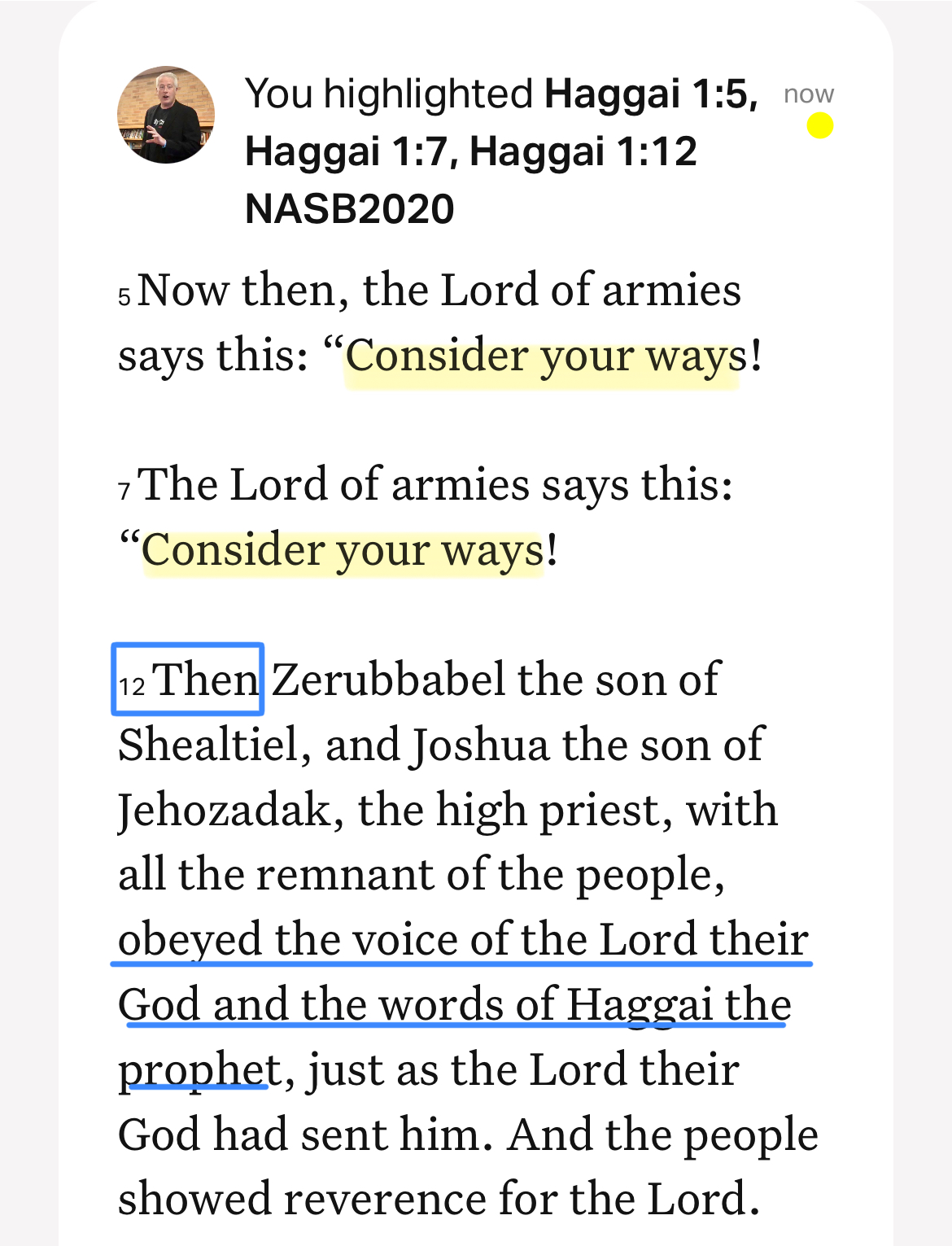
God’s messengers call people to consider the way they are currently living in comparison to the way God has called them to behave. Wise people will heed this call and repent from any ways that deviate from God’s way. I talked in more depth about Haggai and his message of considering our ways in my series on the minor prophets.

“Come to Jesus by quitting every other hope, by thinking of Him, believing God’s testimony about Him, and trusting everything to Him. If you thus come to Him, the rest which He will give you will be deep, safe, holy, and everlasting.” —Charles Spurgeon 

One more from T.M. Moore: “We will only hunger and thirst for more of the Lord and His promises as we consider how far short of that might and greatness we fall. … I suspect that most Christians today are fairly satisfied with the state of their faith. They have a ‘good enough’ experience of Jesus and they’re not really thirsting for much more. But the work of shepherds is to help people realize that splashing around in the mud puddle of faith is not to be compared with sailing on the ocean of God’s grace and power.”

Links & Quotes

When we are self-evaluating, we need to carefully guard our self-talk as well. Check out the full conversation Greg and I had on The Craig and Greg Show about a leader’s honest self-assessment. I have lots of new content every week, which you can check out on my YouTube channel.

Axis reported this in their weekly Cultural Translator newsletter. “Gallup polling data has found a huge spike in the percentage of Americans who say they get less sleep than they need. Survey results also indicate an increase in Americans’ daily stress. Why it’s news you can use: This data indicates that when you interact with anyone—in a store, on the road, at work, or in church—there’s a decent chance that particular human is feeling both exhausted and stressed out. The odds of this stress/exhaustion matrix are even higher if you are conversing with a young woman aged 18 to 29. In 2001, 42% of young women in that bracket said they get enough sleep, but that number has dropped to 27%. Younger women are also the most likely to say they experience daily stress. Stress and sleep have a symbiotic relationship, and parents should understand how both factors play a role in teens’ mental health.” I have written quite a few posts about getting enough sleep, and about taking some time for self-care.

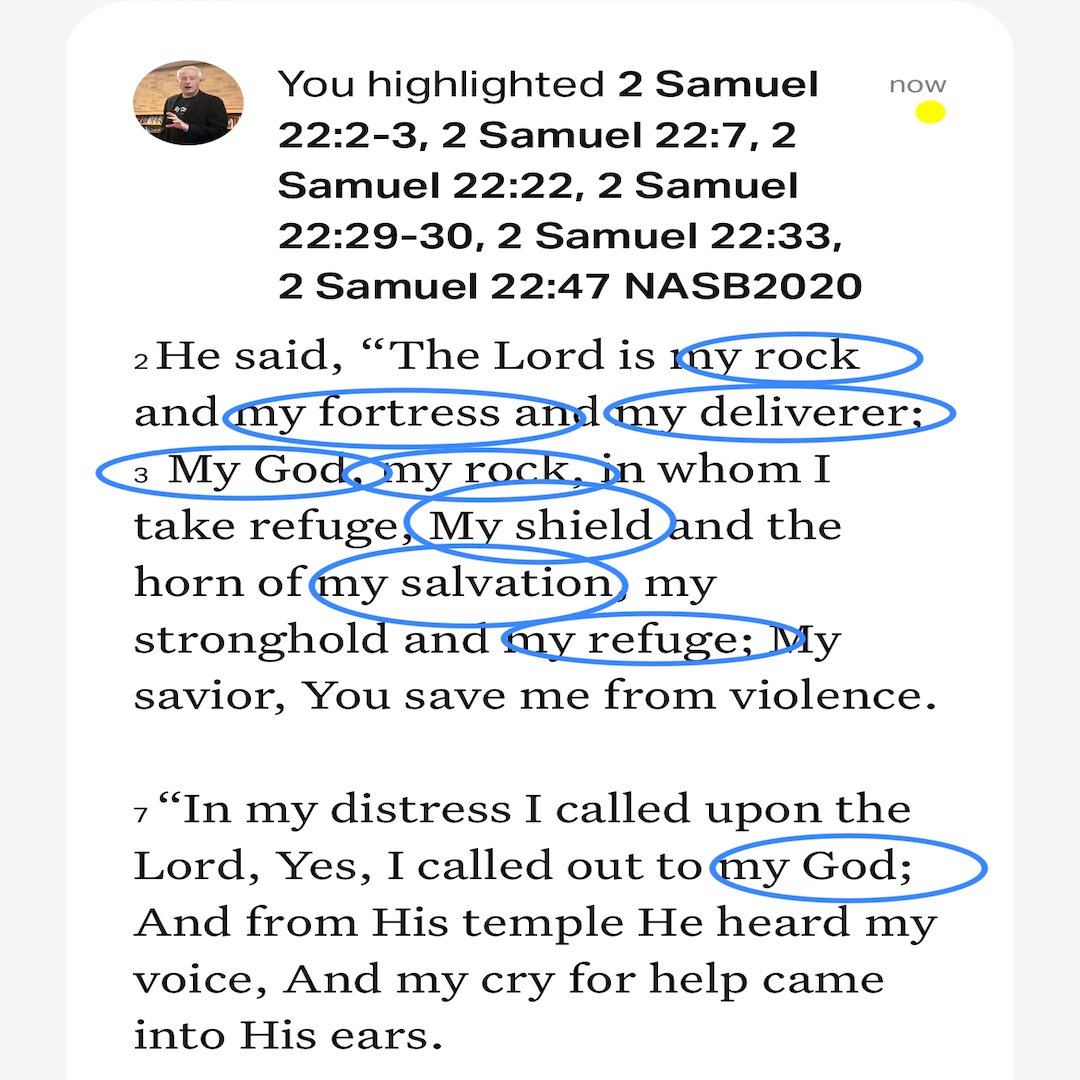
Notice how many times David shows the closeness of God by using the personal pronoun “my”—my Rock, my Fortress, my Shield, my God, and on and on❣️

“The world and its culture will not improve unless we play an active role in trying to improve it. Beginning with ourselves, we must make sure the culture we choose honors God and spreads His grace to the people around us. From there we must become informed about the state of culture, especially that which is most potent in conveying ideas and establishing practices—law, education, entertainment, social media, and pop culture in all its forms. That’s not to say we have to participate in all these; but at the least, we need to understand the times and how they shape and are shaped by various forms of culture so that we can know what we ought to do in pursuing a culture of love (1 Chronicles 12:32).” —T.M. Moore

“A man gives little if he gives much with a frown; he gives much if he gives little with a smile.” —Talmud, Ketubot

This is a very helpful interactive map of Paul’s missionary journeys. While you are on the viz.bible website, be sure to check out all of the other amazing infographics they have. I use these quite often to help me grasp the message of Scripture visually.

Thursdays With Oswald—Jeremiah 7

Oswald ChambersThis is a weekly series with things I’m reading and pondering from Oswald Chambers. You can read the original seed thought here, or type “Thursdays With Oswald” in the search box to read more entries.

Jeremiah 7

[These are notes from Oswald Chambers’ lecture on Jeremiah 7.]

     To seek a place instead of a Person is the first peril in the spiritual life, and to sentimentalize over places where God has met you is the beginning of spiritual twist. Beware of relying on a principle saving you from moral wrong, for it never can. A personal relationship to a personal Savior is the only power that can shield the soul from moral peril. The golden rule is, my personal Savior in every place, not that in certain places I meet my Savior. …  

     Self-deception always arises by ignoring the personal relationship to God….

     Self-examination is the only exercise for a soul who would remain true to the light of God. … The hardest thing in a saint’s life is to maintain a simple belief in Jesus until he realizes the one relationship is—my Lord and I; then His joy will be fulfilled in us.

From Notes On Jeremiah 

We have to be very careful about making a special landmark out of a place, an experience, or even a passage of Scripture where God met us in a profound way. Those special encounters are intended for one specific purpose: to draw us more deeply into a relationship with the Person of Jesus Christ. 

We are on the road to self-deception if we keep seeking experiences. The road to spiritual health is paved with Spirit-inspired self-examination where we ask, “How did that experience lead me closer to Jesus?” When all the other stuff is stripped away, that’s where we will feel Christ’s joy fulfilled in us.

A Christian Should Be Neither Boasting Nor Belittling

“Boasting is an evidence that we are pleased with self; belittling, that we are disappointed in it. Either way we reveal that we have a high opinion of ourselves.

The victorious Christian neither exalts nor downgrades himself. His interests have shifted from self to Christ. What he is or is not no longer concerns him. He believes that he has been crucified with Christ and he is not willing either to praise or deprecate such a man.” —A.W. Tozer, in Man—The Dwelling Place Of God (emphasis mine)

11 Quotes From “The Heart Of A Leader”

As the title hints, Ken Blanchard makes the case that the heart of great leadership is a leader’s great heart. You can check out my full book review of The Heart Of A Leader by clicking here.

“Remember, the best leaders are those who understand that their power flows through them, not from them.”

“Many well-intentioned leaders wait to praise their people until they do things exactly right, complete the project, or accomplish the goal. The problem here is that they could wait forever. You see, ‘exactly right’ behavior is made up of a whole series of approximately right behaviors. It makes more sense to praise progress.”

“An effective leader will make it a priority to help his or her people produce good results in two ways: making sure people know what their goals are and doing everything possible to support, encourage, and coach them to accomplish those goals.”

“If you don’t take time out to think, strategize, and prioritize, you will work a whole lot harder, without enjoying the benefits of a job smartly done.”

“Nice guys may appear to finish last, but usually they are running in a different race.” —Ken Blanchard and Norman Vincent Peale

“Being too hard on yourself is counterproductive. Don’t expect instant perfection. Though self-criticism is healthy, it should not be destructive. It’s unfair to be hard on yourself the first time you attempt something new. It is also unfair to expect others to meet such an unrealistic expectation. Keep in mind that it’s unnecessary to do everything exactly right the first time.”

“Here’s a great rule for doing business today: Think more about your people, and they will think more of themselves.”

“When you ask people about the best leader they ever had, one quality is always mentioned: they are good listeners. These leaders have learned to ‘sort by others.’ When someone says, ‘It’s a beautiful day,’ they respond by keeping the focus on the speaker. For example, they’ll respond, ‘It sounds like you’re pretty happy today.’ Poor listeners ‘sort by self.’ If you express a concern you have, they will express a concern they have.”

“Leading people is the opposite of trying to control them; it’s about gaining their trust through your integrity, developing their potential through your partnership, and motivating them through your affirmation.”

“Consistency does not mean behaving the same way all the time. It actually means behaving the same way under similar circumstances. … When you respond to your people in the same way under similar circumstances, you give them a valuable gift: the gift of predictability.”

“Remember that the primary biblical image of servant leadership is that of the shepherd. The flock is not there for the sake of the shepherd; the shepherd is there for the sake of the flock.”

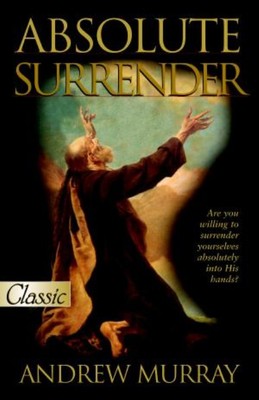
11 Quotes From “Absolute Surrender”

absolute-surrenderThis book is a challenging book for any Christian to read. Check out my review by clicking here, and then check out a few quotes that especially caught my heart.

“I have a pen in my pocket, and that pen is absolutely surrendered to the one work of writing, and that pen must be absolutely surrendered to my hand if I am to write properly with it. If another holds it partly, I cannot write properly. … Can God work His work, every day and every hour, unless you are entirely given up to Him? God cannot.”

“How much Christian work is being done in the spirit of the flesh and in the power of self! How much work, day by day, in which human energy—our will and our thoughts about the work—is continually manifested, and in which there is but little of waiting upon God, and upon the power of the Holy Ghost!”

“One of the great causes why God cannot bless His Church is the want of love. … It is only when God’s people stand as one body, one before God in the fellowship of love, one toward another in deep affection, one before the world in a love that the world can see—it is only then that they will have power to secure the blessing which they ask of God.”

“A great many of us try hard at times to love. We try to force ourselves to love, and I do not say that is wrong; it is better than nothing. But the end of it is always very sad. ‘I fail continually,’ such a one must confess. And what is the reason? The reason is simply this: Because they have never learned to believe and accept the truth that the Holy Spirit can pour God’s love into their heart.”

“You can deceive yourself with beautiful thoughts about loving God. You must prove your love to God by your love to your brother; that is the one standard by which God will judge your love to Him. If the love of God is in your heart you will love your brother.”

“God has a plan for His Church upon earth. But alas! we too often make our plan, and we think that we know what ought to be done. We ask God first to bless our feeble efforts, instead of absolutely refusing to go unless God go before us. God has planned for the work and the extension of His kingdom.”

“God can only reveal His will to a heart that is humble and tender and empty. God can only reveal His will in perplexities and special difficulties to a heart that has learned to obey and honor Him loyally in little things and in daily life.” 

“May God forgive me that I have allowed self and the flesh and the will actually to have the place that God wanted the Holy Ghost to have.”

“The cause of the weakness of your Christian life is that you want to work it out partly, and to let God help you. And that cannot be. You must come to be utterly helpless, to let God work, and God will work gloriously. … All God’s servants in the Old Testament counted upon the omnipotence of God doing impossibilities. And this God lives today, and this God is the God of every child of His. And yet we are some of us wanting God to give us a little help while we do our best, instead of coming to understand what God wants, and to say: ‘I can do nothing. God must and will do all.’”

“Ah, the great question for us to ask of God in self-examination is that we may be shown whether our religious life is lived more in the power of the flesh than in the power of the Holy Spirit.”

“Ah, yes; you failed because you do not accept the strength of God. God alone can work out His will in you. You cannot work out God’s will, but His Holy Spirit can; and until the Church, until believers grasp this, and cease trying to by human effort to do God’s will, and wait upon the Holy Spirit to come with all His omnipotent and enabling power, the Church will never be what God wants her to be, and what God is willing to make of her.”

I will be sharing more quotes from this book soon. To be notified immediately when these quotes are posted, fill in your email address in the field to the right and click “Sign me up!” Also be sure to follow me on Tumblr and Twitter for great quotes I share every day.

6 Quotes On Speaking Truth From “The Seven Laws Of Love”

The Seven Laws Of LoveIn The Seven Laws Of Love, Dave Willis gives us some highly practical, biblically-based counsel for investing in all of our relationships. Normally when I share quotes from books, I share all of them at once, but I felt like it would be good to share these quotes a bit more slowly, to give you time to read them and apply them.

The seven laws Dave identifies are:

  1. Love requires commitment (read the quotes here)
  2. Love selflessly sacrifices (read the quotes here)
  3. Love speaks truth
  4. Love conquers fear
  5. Love offers grace
  6. Love brings healing
  7. Love lives forever

From law #3, here are some quotes on truth speaking—

“The truth isn’t always comfortable, but it’s always necessary.”

“Honesty always paves the way to intimacy.”

“Selective honesty is the same as dishonesty.”

“The truth might be expensive at times, but it’s always worth it.”

“We all tend to craft a self-focused view of the world where we emerge as either a hero or a victim in every scene. We’re never the villains in the story. The truth is, though, that we’ve all been the bad guy more often then we’d like to admit. A life of love requires that we look in the mirror and give an honest and humble self-assessment.”

“What kind of legacy do you want for your own life? What stories do you want people telling about you a generation after your death? The decisions you are making right now are shaping future generations. Your legacy will be measured by your relationships, and your relationships will only be as strong as the trust your loved ones have in you.”

Check out my review of The Seven Laws Of Love by clicking here.

Watch for more quotes from the other laws of love explained in this book throughout the next few days.