“First, I would bid you stand and see the place where the Lord lay with emotions of deep sorrow. O come, my beloved brother, thy Jesus once lay there. He was a murdered man, my soul, and thou the murderer.
‘Ah, you, my sins, my cruel sins, His chief tormentors were, Each of my crimes became a nail, And unbelief the spear.’
‘Alas! and did my Saviour bleed? And did my Sov’reign die?’
“I slew Him—this right hand struck the dagger to His heart. My deeds slew Christ. Alas! I slew my best beloved: I killed Him who loved me with an everlasting love. Ye eyes, why do ye refuse to weep when ye see Jesus’ body mangled and torn? Oh! give vent to your sorrow, Christians, for ye have good reason to do so…. My soul was drowning. From heaven’s high portals He saw me sinking in the depths of hell. He plunged in.
‘He SANK beneath His heavy woes, To raise me to a crown; There’s ne’er a gift His hand bestows. But cost His heart a groan.’
“Ah! we may indeed regret our sin, since it slew Jesus.
“Now, Christian, change thy note a moment. ‘Come, see the place where the Lord lay,’ with joy and gladness. He does not lie there now. Weep, when ye see the tomb of Christ, but rejoice because it is empty. Thy sin slew Him, but His divinity raised Him up. Thy guilt hath murdered Him, but His righteousness hath restored Him. Oh! He hath burst the bonds of death; He hath ungirt the cerements of the tomb, and hath come out more than conqueror, crushing death beneath His feet. Rejoice, O Christian, for He is not there—He is risen.” —Charles Spurgeon
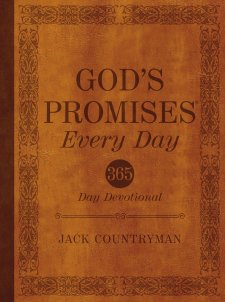
God’s Promises by Jack Countryman is a wonderful resource to help you use the Bible to enhance your prayer life and build your faith. Check out my full review of this fantastic book by clicking here.
“Each day we can look forward to God’s Spirit going before, clearing the way, leading the path, and giving us the guidance we need. … But God doesn’t stop at mere survival. He doesn’t just satisfy and strengthen. Though there will be difficulties and times of drought in our lives, God guides us to His living waters. He enables us to flourish ‘like a watered garden,’ where His blessings always bloom.” [Isaiah 58:11]
“When life darkens our door with its troubles and trials, satan wants nothing more than for us to feel forsaken and alone—but we are not! God stands by our side; He guides, counsels, and comforts. Rest assured, no matter what you face in the coming year, nothing can separate you from the love of your Father (Romans 8:38-39). Therefore walk boldly into each new day, knowing that you follow the footsteps of the One who never leaves you.” [Deuteronomy 31:8]
“Troubles are never pleasant at the time, but they quickly turn into tools when entrusted to God. Our Lord will take our times of troubles and trials—even the hard feelings we experience in them—then use them to teach us to fully rely on Him and His provision.” [Psalm 138:7]
“Our God is a loving God, but He isn’t Santa Claus or a genie in a bottle. Our God loves to give good gifts, but in His economy the best gifts are not tangible or material. Yes, our God feels compassion when we hurt, but He still allows hardships into our lives that will refine our character and strengthen our faith. Against the backdrop of these truths, we can better understand the often-misread statement that God will give us the desires of our hearts. The real promise of this verse is that, as we pray, read His Word, and grow closer to the Lord, He will change our hearts so that what we desire for ourselves is what He desires for us.” [Psalm 37:4]
“Mercy. We don’t deserve it. We haven’t done—can’t possibly do—anything to earn it. And yet we are promised that this unbelievably lavish gift is ours when we choose to follow Jesus. Why? Why would such a perfect and powerful God gives such a gift to ones so undeserving? He tells us in Titus 3:4: because of ‘the kindness and love of God our Savior toward man.’ And He not only gave us mercy, He also ‘poured out on us abundantly’ His own Spirit, to live and work within us, making us more and more like the Savior who died to save us.” [Titus 3:4-6]
“Our God is not some fickle, capricious, changeable sort of God. He does not search out ways to be angry or displeased with His people. In fact, He so wants to be pleased with us that He gave us the example of His Son to follow.” [Ephesians 5:2]
“When our burdens and sorrows seem too heavy for us to bear, God offers to carry them for us, inviting us to cast them upon Him (Psalm 55:22). And when the sorrow is so great that we feel we cannot put one foot in front of the other, God gives us this promise: ‘I will carry you; I will sustain you’ (Isaiah 46:4).”
“Perhaps nothing is as devastating as being betrayed by someone you love and trust. Know that Jesus—betrayed by Judas, denied by Peter—fully understands. He will enable you to recover. The key, as hard as it is, is to pray for that person and ask God to bless him or her. When you pray to God—and you may have to do this again and again—you release the anger and disappointment that come with being betrayed. It is difficult to despise someone you lift up in prayer. And though retaliating is a natural response, it’s not a godly one. Praying is always the best option. Allow the Lord to receive your hurt and to replace it with His peace.” [Psalm 3:4, 6]
“When we place our faith in Christ, the stormy seas of our lives—churned up by our own sins—are stilled. And while the storms may still rage around us in this sin-plagued world, they do not rage within us. That does not mean our troubles and tribulations are over, but it does mean we can rest in knowing God will see us through them.” [Romans 5:1]
Sarah Young does a masterful job of weaving Scriptures together and presenting them to us as though Jesus Himself were speaking to us in first person. You can check out my full book review of Jesus Always by clicking here.
“The problem arises when you gaze too long into the future, trying to visualize and take control of those not-yet events. A future-focus can easily deteriorate into a problem-focus. Weeds of worry and fear spring up quickly in this sort of ‘soil.’ When you realize this has happened, turn away from your worries and back to the One Who is lovingly present with you. Rejoice that I will still be with you when you arrive at each coming stage of your journey.”
“When My followers are joyful, unbelievers are more likely to be drawn to Me. Joy shines in stark contrast to your ever-darkening world, and some people will ask you about it. Always be prepared to give an answer to everyone who asks you the reason for your hope.”
“Treasure Me above all else. … To treasure something is to hold or keep it, esteeming it as precious. I am training you to hold securely onto Me, your Savior-God and constant Companion. … When you prize Me above all else, other things lose their grip on you.”
“Thank Me for all the challenges in your life. They are gifts from Me—opportunities to grow stronger and more dependent on Me. Most people think that the stronger they get, the less dependent they will be. But in My kingdom, strength and dependence go hand in hand.”
“For Christians, aloneness is an illusion—a dangerous one that can lead to depression or self-pity. The devil and his underlings work hard to cloud your awareness of My presence. It’s crucial for you to recognize and resist their attacks. Fight back with My powerful Word, which is living and active. Read it; ponder it; memorize it; speak it.”
“My followers often fail to see the many blessings I shower on them. They’re so busy looking for other things that they miss what is before them—or is on the way. They forget I am sovereign God and the timing of events is My prerogative.”
“Do not be frightened by world events or news reports. These reports are biased—presented as if I do not exist. News clips show tiny bits of world events from which the most important factor has been carefully removed: My presence in the world.”
“It’s important for you to grow not only more trusting but more thankful. A grateful attitude is essential for living near Me. Ingratitude is offensive to Me, and drags you down both spiritually and emotionally.”
“Stillness is a rare commodity in this world. Many people judge themselves and their day by how much they have accomplished. Resting in My presence is usually not one of those accomplishments. Yet how much blessing can be found in this holy rest!”
You can check out other questions I’ve shared from Jesus Always by clicking here and here.
When C.S. Lewis first introduces us to the land of Narnia in The Lion, The Witch and The Wardrobe, we discover that the White Witch has Narnia seemingly under her iron fist, and has made it so that it’s always winter but never Christmas.
“Come on!” cried Mr. Beaver, who was almost dancing with delight. “Come and see! This is a nasty knock for the Witch! It looks as if her power is already crumbling. … Didn’t I tell you, that she’d made it always winter and never Christmas? Didn’t I tell you? Well, just come and see!”
And then they were all at the top and did see.
It was a sledge, and it was reindeer with bells on their harness. But they were far bigger than the Witch’s reindeer, and they were not white but brown. And on the sledge set a person whom everyone knew the moment they set eyes on him. He was a huge man in a bright red robe (bright as holly-berries) with a hood that had fur inside it and a great white beard that fell like a foamy waterfall over his chest. … Some of the pictures of Father Christmas in our world make him look only funny and jolly. But now that the children actually stood looking at him they didn’t find it quite like that. He was so big, and so glad, and so real, that they all became quite still. They felt very glad, but also solemn.
“I’ve come at last,” said he. “She has kept me out for a long time, but I have got in at last. Aslan is on the move. The Witch’s magic is weakening.”
I think the Israelites waiting for their Messiah must have felt a little like the Narnians: always winter, but never Christmas; trapped under the iron-fisted rule of Babylon, and Persia, and Rome.
But as they approached what we now call the year 1 AD, winter is about to end and the Advent of CHRISTmas is about to occur at long last!
You might think that the birth of Jesus brought us the King of Kings. But actually, there were three other “king of kings” that preceded Jesus, who all helped to fulfill God’s ultimate plan.
Nebuchadnezzar was the king of Babylon. God called him “My servant” and also gave him the title “king of kings” (Jeremiah 27:6; Ezekiel 26:7). It was he who defeated Judah and took captives with him to Babylon. Among those captives was a young man named Daniel.
God gave Daniel the ability to interpret Nebuchadnezzar’s dream which foretold of three other kingdoms which would follow Babylon, with the fourth kingdom being called a kingdom of iron. History shows us that Babylon was defeated by the Medes, who were in turn defeated by the Persians, who were themselves defeated by the Greco-Romans.
Artaxerxes was king of the Persians, and he called himself “king of kings” (Ezra 7:12). He helps to facilitate the Jews’ return back to Jerusalem, and even helped fund their efforts to rebuild the temple of Solomon and reestablish worship there.
In 44 BC, Julius Caesar was assassinated, and Octavius was named in Caesar’s will as his adopted son and heir. Eventually, Octavius quelled a 20-year-long civil war and established himself as the unquestioned ruler of the Roman Empire. He changed his name to Caesar Augustus, which means the exalted one. But all throughout the Mediterranean world archeologists have discovered numerous other titles for Caesar Augustus—Divine, Son of God, God Incarnate, God from God, Lord, Redeemer, Liberator, Savior of the World, and King of Kings.
Historian Luke records these words, “In those days Caesar Augustus issued a decree” (Luke 2:1). This decree called everyone to return to his hometown to be registered in Rome’s census. This decree meant that Joseph was obligated to return to Bethlehem. He took his pregnant wife with him to arrive just in time for Jesus to be born.
Jesus—THE eternal and ultimate King of Kings—was born in Bethlehem just as had been prophesied 700 years earlier in the winter of Israel’s captivity:
But you, Bethlehem Ephratah, you are little to be among the clans of Judah; yet out of you shall One come forth for Me Who is to be Ruler in Israel, Whose goings forth have been from of old, from ancient days (eternity). (Micah 5:2)
The coming of THE King of Kings is proof that God sees you too. God brought the king of kings named Nebuchadnezzar, and Artaxerxes, and Caesar Augustus to power just to move two “average Joes” 70 miles from Nazareth to Bethlehem so that THE King of Kings could be born there to fulfill the prophesy.
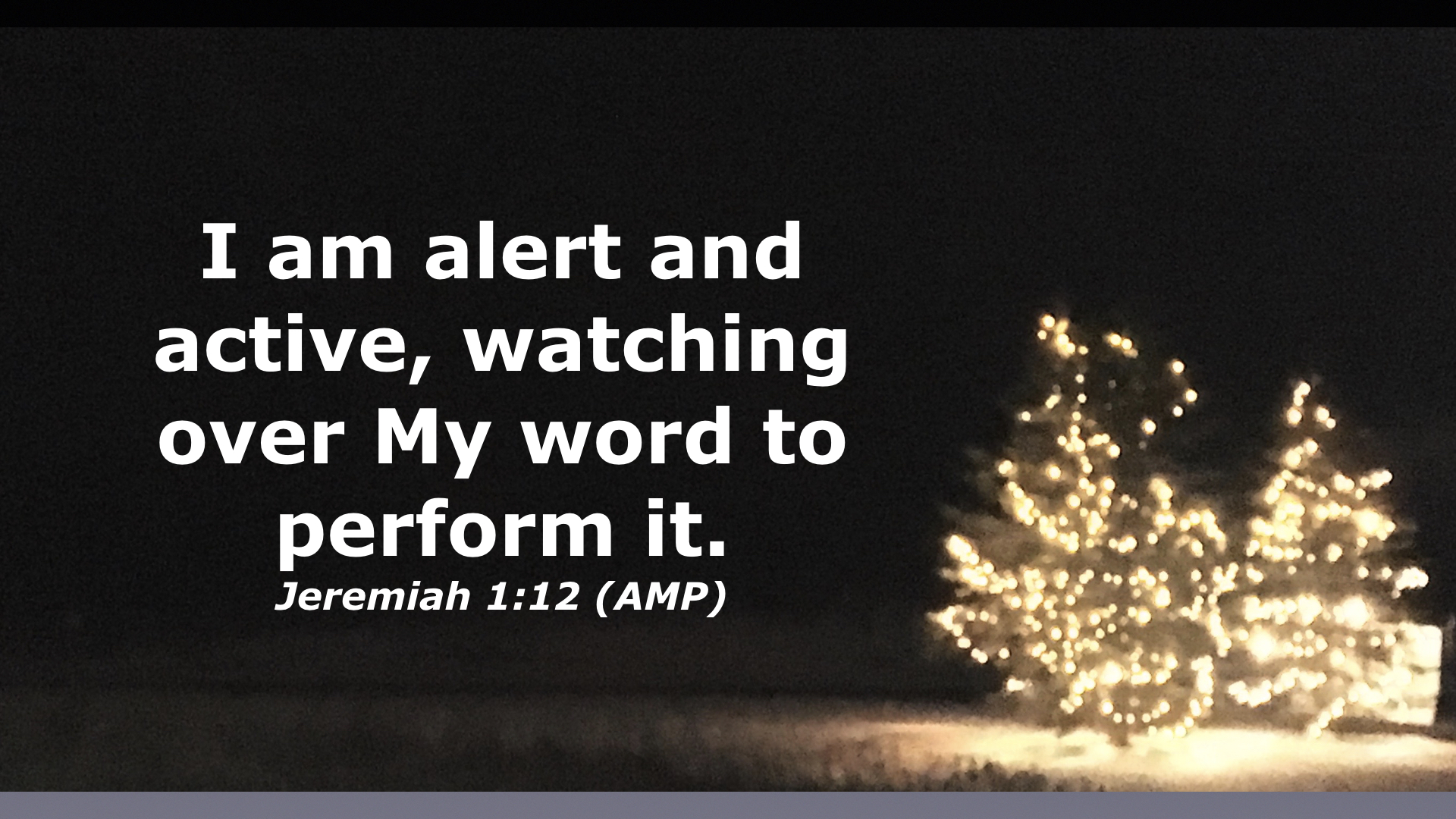
God has a plan for your life. His plan for you was in place before you were even conceived in your mother’s womb. And—even this very moment—He is watching over world events to make sure that every detail of His plan is fulfilled (see Ephesians 2:10; Psalm 139:16; Jeremiah 1:12)!
If you ever feel like you are in a “winter” season of your life—always winter and never Christmas—just remember that God sees you, He has a plan for you, and He will bring an end to your winter just in time to bring you CHRISTmas!
We live in an amazing time—the First Advent of Jesus has already happened in Bethlehem, and yet we are eagerly anticipating Christ’s Second Advent at any moment!
The fourth stanza of Charles Wesley’s classic Christmas carol Hark! The Herald Angels Sing is a wonderful between-the-Advents look at what happened at the First Advent, and what we have to look forward to in the Second Advent. The key thing to note in this stanza is the verbs: come, fix, rise, bruise, efface, stamp, and reinstate.
COME, Desire of nations—What is the “desire of nations”? It’s the restoration of God’s glory on earth, so it’s not really a what but a Who. The prophet Haggai informs us that our Desire is realized in the Advent of Jesus (2:1-9).
FIX in us Thy humble home—At His First Advent, Jesus came and humbly made His home among us, even dying to pay the penalty for our sins (Hebrews 2:14, 17; Philippians 2:7-8).
RISE, the woman’s conquering seed—Although Jesus was obedient to death—even death on a Cross, He didn’t stay dead but was resurrected (Philippians 2:8-9; Revelation 1:18)!
BRUISE in us the serpent’s head—With His death and resurrection, Jesus took away the sting of death from satan, fulfilling one of God’s first prophesies (Genesis 3:15; 1 Corinthians 15:19-26, 54-57).
Adam’s likeness now EFFACE—That means to wipe out, do away with, expunge. That’s exactly what God does with our forgiven sins (Psalm 103:1-4, 10-12)!
STAMP Thine image in its place—Although our sin has been effaced, God doesn’t leave us as blank slates, but instead He allows the image of His Son Jesus to be stamped onto our lives (2 Corinthians 1:21-22; 2 Corinthians 3:18).
REINSTATE us in Thy love—The relationship we longed for is now reborn in us (1 Corinthians 15:49)!
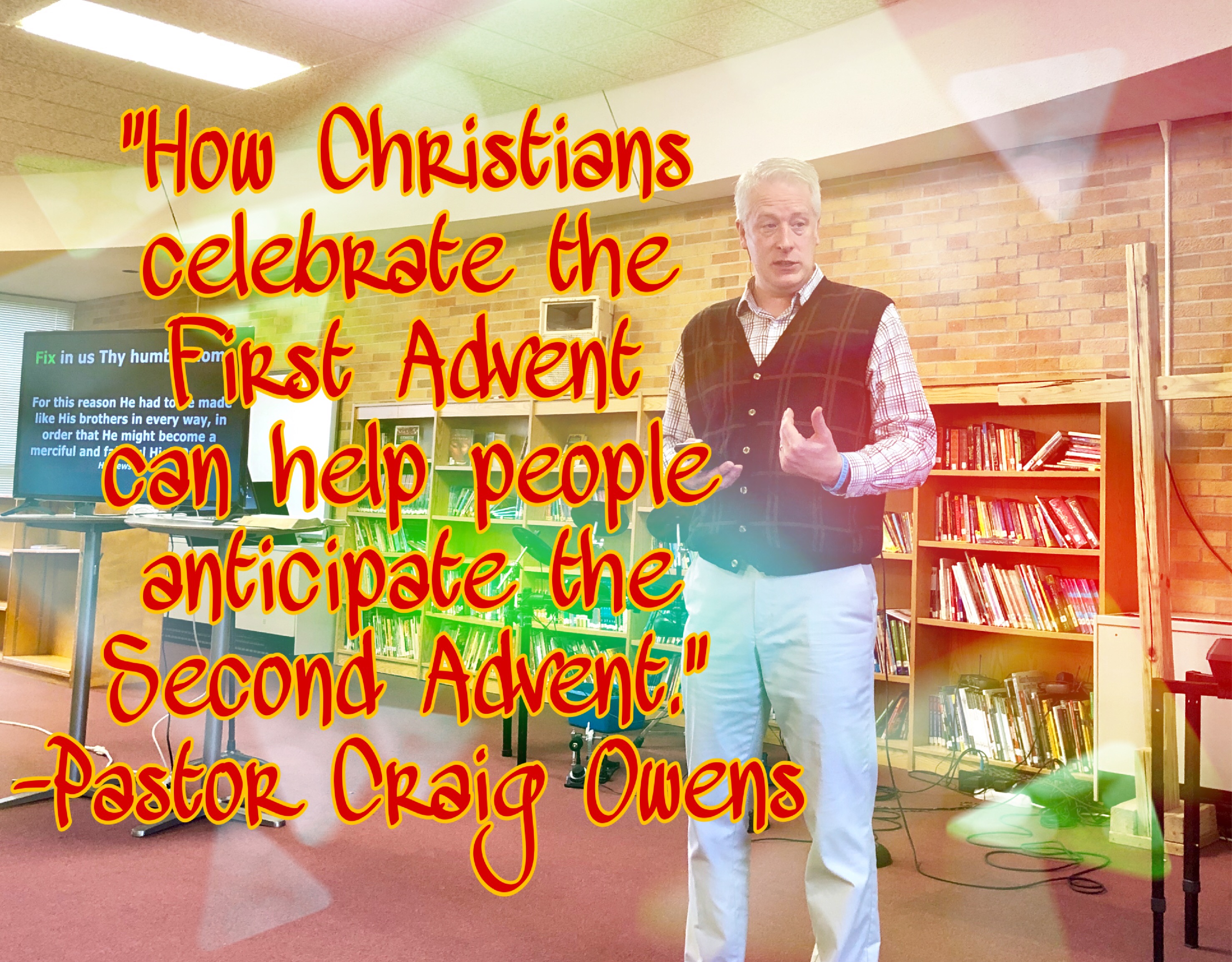
The Desire of Nations HAS come, and yet He WILL come again! We’re living between the Advents now, so a good question for Christians to ask is: “How are we to live?” I think there are three key things—
In celebration that Jesus came at His First Advent to be our Savior
In anticipation of the Second Advent
In obedience to God’s Word (Revelation 22:7)
To take a look at the other stanzas of this Christmas carol, please click here.
The angels are highly visible around the birth of Jesus Christ in Bethlehem, but here’s the amazing thing—we are invited to join the angelic choir singing praise to Jesus!
Nowhere else do we see such a concentration of angels as during Christ’s time on earth, and especially at His birth. In the Old Testament prior to Christ’s birth, and in the New Testament following Christ’s ascension, we don’t see as many angels clustered together on Earth—
Gabriel brings a birth announcement to Zechariah
Gabriel brings a birth announcement to Mary
an angel talks to Joseph in a dream (three times!)
an angel gives instructions to the wise men in a dream
angels minister to Jesus in the wilderness after His battle with the devil
angels are poised for action in case Jesus calls on them prior to His crucifixion
angels are present at Christ’s tomb after His resurrection
and a massive angel choir sings at Christ’s birth (Luke 2:8-14)
Charles Wesley wrote a Christmas carol called Hark! The Herald Angels Sing. In the first stanza, we’re invited to “join the triumph in the skies.” But how can someone sing a song grand enough, majestic enough, or worthy enough to honor Almighty God?! That would be like me being asked to compose a song or play something on the piano to honor Mozart—how could I play anythingworthy of his musical talent?
In a similar way, when the Israelites thought about coming into God’s presence, they were gripped with knee-knocking, gut-churning fear (Exodus 19:16-19; 20:18-19)!
But notice that the angels didn’t sing, “God is born in Bethlehem.” They sang, “Christ is born in Bethlehem.” Christ:the Messiah; the One who sets things right. No wonder this is such good news of great joy that brings peace and God’s favor (Luke 2:10, 14).
The simple fact is that we couldn’t approach God and join in their angelic song. Instead, Jesus approached us as our Messiah, our Deliverer.How could this happen? Wesley’s carol reminds us that Jesus came so that God and sinners are reconciled!
The First Advent is God approaching us. If we allow Jesus to reconcile us to our Holy Heavenly Father, then we have no fear of Christ’s Second Advent. His Second Advent will be attended to by angels just like His First Advent (Matthew 25:31-32; Mark 8:38; Jude 1:14-15). Those who haven’t had their sins forgiven will hear a song that is soul-crushing to them, while those who have accepted the reconciling work of Jesus will join with the angelic host in a victorious song bringing glory to God forever and ever (Revelation 14:9-11; 15:1-4).
We don’t have to wait until we get to Heaven to join the triumph of the skies. We can join the angelic choir right now in singing our praise to God today. And every day!
To take a look at the other stanzas of this Christmas carol, please click here.
J.C. Ryle has given us a wonderful commentary on the Gospels in his Expository Thoughts On The Gospels. Check out my full book review here, and then enjoy a few quotes from Ryle’s insights on the Gospel of Matthew.
“The rulers of this world have often call themselves Great, Conqueror, Bold, Magnificent, and the like. The Son of God is content to call Himself Savior. These souls which desire salvation may draw near to the Father with boldness, and have access with confidence through Christ. It is His office and His delight to show mercy. ‘For God didn’t send His Son into the world to judge the world, but that the world should be saved through Him’ (John 3:17).”
“Trust Him at all times with all your sorrows. He will not despise you. Pour out all your heart before Him in prayer, and keep nothing back. He can sympathize with His people.”
“Let us beware of resting satisfied with head-knowledge. It is an excellent thing, when rightly used. But a man may have much of it, and yet perish everlastingly. What is the state of our hearts? This is the great question. A little grace is better than many gifts. Gifts alone save no one. Grace leads on to glory.”
“Here is one among many reasons why we ought to be diligent readers of our Bibles. The Word is the sword of the Spirit. We shall never fight a good fight, if we do not use it as our principal weapon. The Word is the lamp for our feet. We shall never keep the King’s highway to heaven, if we do not journey by its light. … Knowledge of the Bible never comes by intuition, it can only be obtained by diligent, regular, daily, attentive, wakeful reading.”
“Aim at letting men see that we find Christianity makes us happy. Never let us forget that there is no religion in looking melancholy and gloomy. Are we dissatisfied with Christ’s wages and Christ’s service? Surely not! Then let us not look as if we were.”
“Let the prayer ‘Lord, increase our faith,’ always form part of our daily petitions. We never perhaps know the weakness of our faith until we are placed in the furnace of trial and anxiety. Blessed and happy is that person who finds by experience that his faith can stand the fire, and that he can say with Job, ‘though He slays me yet will I trust in Him’ (Job 13:15).”
“The more clearly we see Christ’s power, the more likely we are to realize Gospel peace. Our position may be trying. Our hearts may be weak. The world may be difficult to journey through. Our faith may seem too small to carry us home. But let us take courage when we think on Jesus, and not be cast down. Greater is He that is for us than all those who are against us. Our Savior can raise the dead. Our Savior is Almighty.”
“Great grace and common sense are perhaps one of the rarest combinations. … Our Lord Jesus Christ Himself is our most perfect example. None were ever so faithful as He. But none were ever so truly wise. Let us make Him our pattern, and walk in His steps.”
“Let us not be ashamed to say that we expect a literal fulfillment of unfulfilled prophecy. Let us frankly allow that there are many things we do not understand, but still hold our ground tenaciously, believe much, wait long, and not doubt that all will one day be made clear.”
“Are we ever mocked and persecuted and thought foolish because of our religion? Let us bear it patiently and pray for those who persecute us. They know not what they are doing. They will certainly alter their minds one day. We may yet hear them confessing that we were wise and they were foolish. The whole world shall one day acknowledge that the saints of God made a wise choice.”
“We can never attach too much importance to the atoning death of Christ. It is the leading factor in the Word of God, on which the eyes of our soul are to be ever fixed. Without the shedding of His blood, there is no remission of sin. It is the cardinal truth on which the whole system of Christianity hinges. Without it the Gospel is an arch without a key stone, a fair building without a foundation, a solar system without a sun.”
Quotes from Ryle’s comments on the Gospels of Mark, Luke, and John coming soon.
11 Quotes On The Gospel Of Matthew
November 14, 2018 — Craig T. Owens“The rulers of this world have often call themselves Great, Conqueror, Bold, Magnificent, and the like. The Son of God is content to call Himself Savior. These souls which desire salvation may draw near to the Father with boldness, and have access with confidence through Christ. It is His office and His delight to show mercy. ‘For God didn’t send His Son into the world to judge the world, but that the world should be saved through Him’ (John 3:17).”
“Trust Him at all times with all your sorrows. He will not despise you. Pour out all your heart before Him in prayer, and keep nothing back. He can sympathize with His people.”
“Let us beware of resting satisfied with head-knowledge. It is an excellent thing, when rightly used. But a man may have much of it, and yet perish everlastingly. What is the state of our hearts? This is the great question. A little grace is better than many gifts. Gifts alone save no one. Grace leads on to glory.”
“Here is one among many reasons why we ought to be diligent readers of our Bibles. The Word is the sword of the Spirit. We shall never fight a good fight, if we do not use it as our principal weapon. The Word is the lamp for our feet. We shall never keep the King’s highway to heaven, if we do not journey by its light. … Knowledge of the Bible never comes by intuition, it can only be obtained by diligent, regular, daily, attentive, wakeful reading.”
“Aim at letting men see that we find Christianity makes us happy. Never let us forget that there is no religion in looking melancholy and gloomy. Are we dissatisfied with Christ’s wages and Christ’s service? Surely not! Then let us not look as if we were.”
“Let the prayer ‘Lord, increase our faith,’ always form part of our daily petitions. We never perhaps know the weakness of our faith until we are placed in the furnace of trial and anxiety. Blessed and happy is that person who finds by experience that his faith can stand the fire, and that he can say with Job, ‘though He slays me yet will I trust in Him’ (Job 13:15).”
“The more clearly we see Christ’s power, the more likely we are to realize Gospel peace. Our position may be trying. Our hearts may be weak. The world may be difficult to journey through. Our faith may seem too small to carry us home. But let us take courage when we think on Jesus, and not be cast down. Greater is He that is for us than all those who are against us. Our Savior can raise the dead. Our Savior is Almighty.”
“Great grace and common sense are perhaps one of the rarest combinations. … Our Lord Jesus Christ Himself is our most perfect example. None were ever so faithful as He. But none were ever so truly wise. Let us make Him our pattern, and walk in His steps.”
“Let us not be ashamed to say that we expect a literal fulfillment of unfulfilled prophecy. Let us frankly allow that there are many things we do not understand, but still hold our ground tenaciously, believe much, wait long, and not doubt that all will one day be made clear.”
“Are we ever mocked and persecuted and thought foolish because of our religion? Let us bear it patiently and pray for those who persecute us. They know not what they are doing. They will certainly alter their minds one day. We may yet hear them confessing that we were wise and they were foolish. The whole world shall one day acknowledge that the saints of God made a wise choice.”
“We can never attach too much importance to the atoning death of Christ. It is the leading factor in the Word of God, on which the eyes of our soul are to be ever fixed. Without the shedding of His blood, there is no remission of sin. It is the cardinal truth on which the whole system of Christianity hinges. Without it the Gospel is an arch without a key stone, a fair building without a foundation, a solar system without a sun.”
Quotes from Ryle’s comments on the Gospels of Mark, Luke, and John coming soon.
Share this: