Thursdays With Spurgeon—The Depths Of God’s Love For Us

This is a weekly series with things I’m reading and pondering from Charles Spurgeon. You can read the original seed thought here, or type “Thursdays With Spurgeon” in the search box to read more entries.

The Depths Of God’s Love For Us

I have made You known to them, and will continue to make You known in order that the love You have for Me may be in them and that I Myself may be in them. (John 17:26) 

     Is He not Himself very God of very God? … He declared the righteous Father in His life, for in His life He incarnated truth and grace. Jesus Christ on earth was without sin in thought, in word, and in deed. Point me to a sin He ever committed, inculcated, or excused. Righteousness was about Him as the atmosphere that He breathed. Well did the psalmist say of Him, “You love righteousness and hate wickedness” (Psalm 45:7). And yet what love there was in Him and pity for the wandering sheep! He mingled with sinners and yet was separate from sinners. He touched their diseases and healed them and yet was not defiled by their impurities. He took their infirmities upon Himself and yet in Him, personally, there was no trace of sin. Our Lord was so righteous that you perceived at once that He was not of this world—and yet He was so lovingly human that He was altogether a Man among men. … 

     He was man’s Brother and his physician, his Friend and his Savior! When you want to know the Father’s righteousness and love, read the history of Jesus Christ—no, know the Lord Jesus Himself and you know the Father! … 

     Beloved, when Jesus Christ died, there was a greater display of the righteousness and the fatherhood of God than could have been possible by any other means! Then the mystery was made plain and the depth opened up to its very bottom! O Lord our God, what an abyss of adorable goodness have You thus laid bare before us! … 

     And now, today, it is the business of our Lord to continue to reveal the righteous fatherhood of God, and He does so by the work of His Holy Spirit [John 14:26]. … That Spirit of God working on behalf of Christ is still declaring this among the nations! As the years roll on, He is opening the eyes of the blind and bringing His own chosen, one by one, to behold the glory of God in the face of Jesus Christ! And then they can say, “O righteous Father, I know You and rejoice in You.”

To each one of us who is saved, Jesus is declaring this righteous Father more and more.… I trust that every day we see a little more of the righteous fatherhood of God and will continue to do so, world without end!

From The Righteous Father Known And Loved

May we never, ever come to the end of learning about these depths of love that Jesus revealed in His life, death, and resurrection, and which the Holy Spirit is continuing to impart to us. 

May we add our Amen to the apostle Paul’s prayer: I keep asking that the God of our Lord Jesus Christ, the glorious Father, may give you the Spirit of wisdom and revelation, so that you may know Him better. … I pray that out of His glorious riches He may strengthen you with power through His Spirit in your inner being, so that Christ may dwell in your hearts through faith. And I pray that you, being rooted and established in love, may have power, together with all the Lord’s holy people, to grasp how wide and long and high and deep is the love of Christ, and to know this love that surpasses knowledge—that you may be filled to the measure of all the fullness of God. (Ephesians 1:17; 3:16-19)

10 Quotes From “The Sermons Of Charles Spurgeon”

I share lengthy passages from Charles Spurgeon’s sermons in my weekly Thursdays With Spurgeon feature, along with my short commentaries. But here are some individual quotes from the prince of preachers who were just too good to not share! 

“Would you lose your sorrows? Would you drown your cares? Then go to plunge yourself in the Godhead’s deepest sea—be lost in His immensity. And you will come forth as from a couch of rest, refreshed and invigorated.” 

“Blessed be His dear name, He is unchanged in His love. When He first wrote the covenant, how full His heart was with affection to His people. He knew that His Son must die to ratify the articles of that agreement. He knew right well that He must rend His Best Beloved from His heart and send Him down to earth to bleed and die. He did not hesitate to sign that mighty covenant. Nor did He shun its fulfillment. He loves as much now as He did then. And when suns will cease to shine and moons to show their feeble light, He still will love on forever and forever.” 

“We sweat, we toil, and we fail. How often do we come back weeping because we have toiled, as we think, without success! Yet, Christian man, you have not been without success, for ‘He is still in one mind.’ All this was necessary to the fulfillment of His one purpose. You are not lost; your labor has not rotted under the clod. All, though you see it not, has been working together toward the desired end.” 

“Creation is an arrow from the bow of God, and that arrow goes on, straight on, without deviation to the center of the target that God ordained that it should strike.” 

“Though in the dark hours you and I may slip and often fall, yet His loving-kindness changes not. Your strong arm, O God, will bear us on. Your loving heart will never fail. You will not turn your love away from us or make it cease to pour upon us Your fierce anger, but having begun You will complete the triumphs of Your grace.” 

“God calls upon us, until the world is utterly destroyed with fire, to go on saving men with all our might and main. Every year that passes is meant to be a year of salvation. We rightly call each year the year of our Lord. Let us make it so by more earnest efforts for the bringing of sinners to the Cross of Christ.” 

“The very fact that you are made to groan and cry by reason of God’s long-suffering to guilty men gives you sympathy with Christ and union with Christ, who endured such contradiction of sinners against Himself! … But when, through the long-suffering of God with the ungodly, you are made to suffer, account it to be a mark of your salvation. ‘Rejoice and be exceedingly glad, for great is your reward in heaven, for so they persecuted the prophets who were before you’ (Matthew 5:12).” 

“Blessed be God, the effect of Christ’s medicine does not depend upon the degree to which we can realize how it acts, but if we receive it by faith, if it penetrates into the heart, if it takes possession of the affections, it will work in us that wondrous change by which we will be delivered from the love of sin and saved both from its condemnation and its power! Thank God for a simple gospel!” 

“Although our Lord Jesus Christ is more perfect than any other example—indeed, the only perfect example—yet it is easier to imitate Christ than it is to imitate some of the best of His people.” 

“Because the pill is gilded, you suck down the poison. Because the thing is popular, you patronize it, though it is lustful, it is abominable, it is deceitful!” 

More quotes coming soon, so stay tuned! 

Why Should Christians Sing?

Some things are fascinating by what isn’t said. For instance, in the Christmas carol It Came Upon A Midnight Clear there is something conspicuously missing. 

One thing that isn’t missing is singing. Every one of the stanzas ends with a phrase about the angels singing. But can you spot what IS missing? I didn’t see it at first until I read this quote from respected music professor Dr. C. Michael Hawn: “This may be the only commonly sung Christmas carol in our hymnals that does not mention the birth of Christ! 

This carol just sort of assumes that we know why the angels are singing. But do we know? 

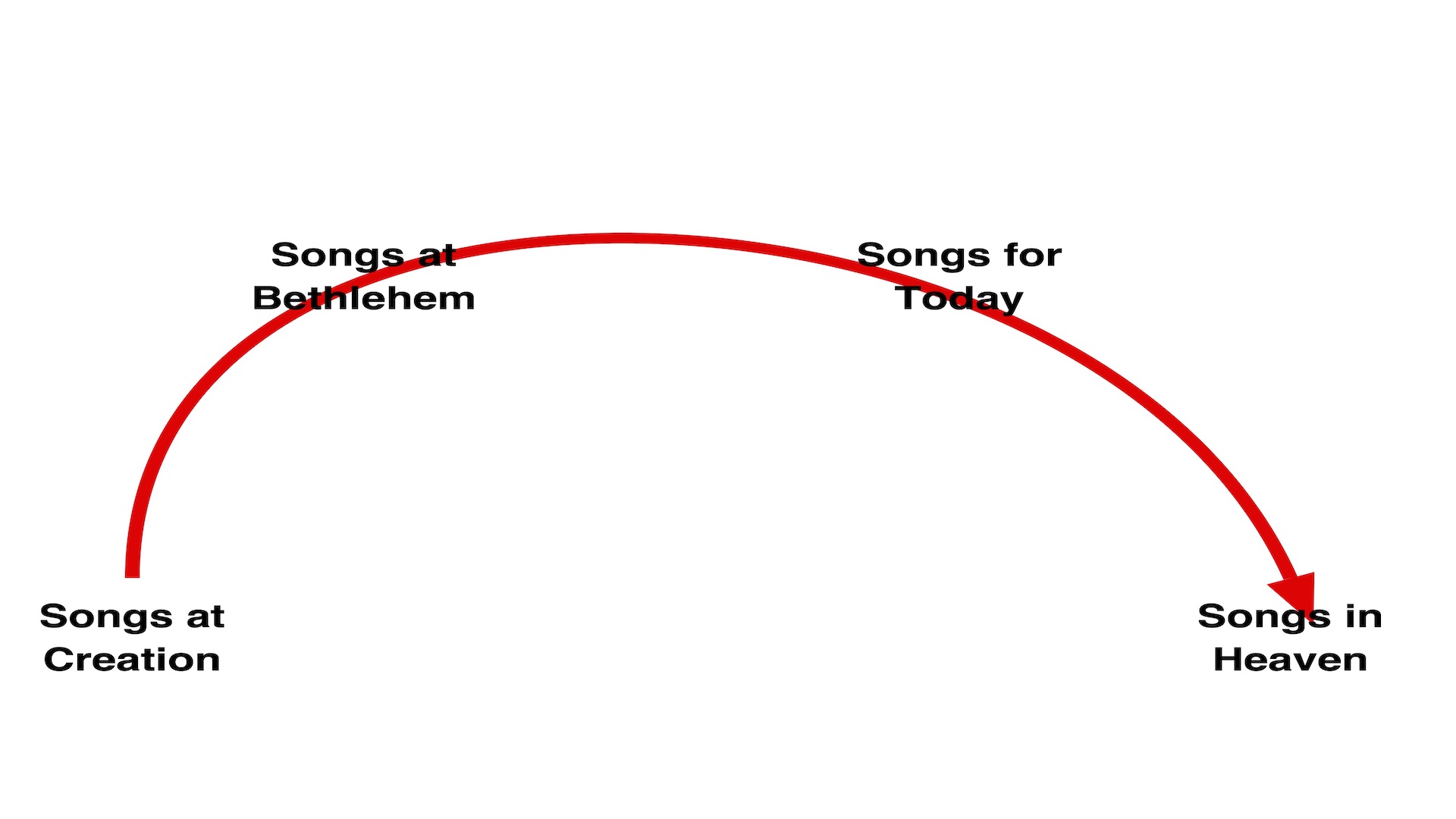
The Bible tells us that the angels were singing at Creation and that they are still singing in Heaven for all of eternity (Job 38:4-7; Revelation 5:9-13; 7:9-12; 15:2-4). Then we have this glimpse of the angels singing when Jesus was incarnated as a human baby in Bethlehem (Luke 2:14). Where did they get their song and their inspiration to sing it?

Their song comes from the Choir Leader who is the King of kings. Jesus is singing in Heaven, before the throne of His Father, about the salvation that He brought to mankind through His incarnation, sinless life, death on Calvary, and resurrection from the grave (see Hebrews 2:9-12). 

The song that Jesus sings tells the story of how He came to earth just like us—made a little lower than the angels—so that He might taste sin and death and conquer them for us. Now as our victorious Savior, He is not ashamed to call those who put their faith in Him His brothers and sisters.

Now perhaps you see why angels are also singing all the time! 

Even today there is a lot of singing around the Christmas season, but there is something missing in most of the songs: a focus on what Christmas really means. The world’s songs are about trees, and gifts, and Santa, and falling in love, but it’s a song that is out of tune with the angelic song. 

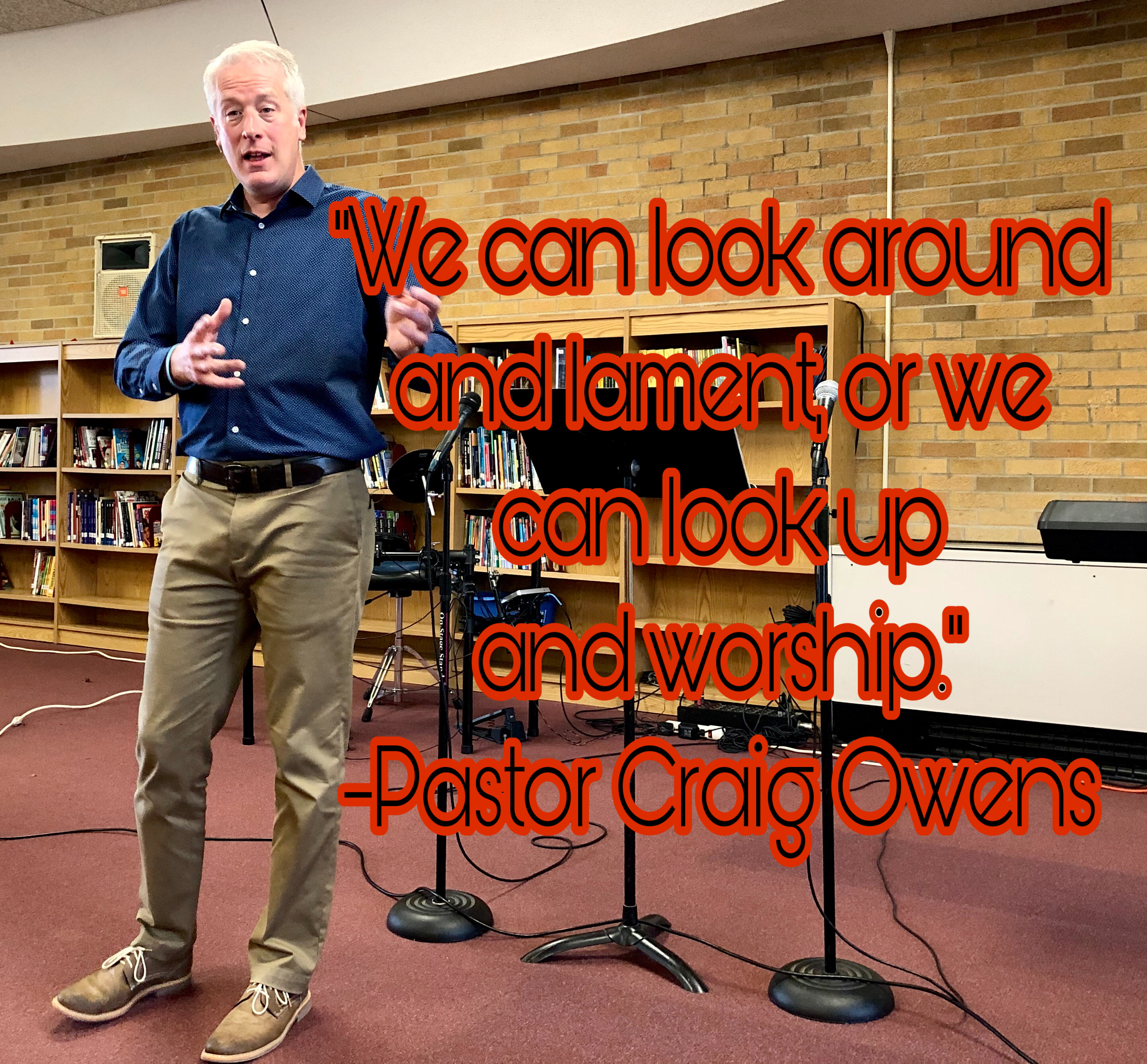
As Christians, we have a choice we can look around at this out-of-tune singing and lament what’s happening in our world, we can join in these meaningless songs, or we can look up at our Savior and sing the song He is singing. 

Christian, will you join with the angelic choir to let the world hear the unmistakable love song that Jesus is still singing today? 

If you’ve missed any of the message in this series, you can check them out by clicking here.

Poetry Saturday—On A Day When Men Were Counted

On a day when men were counted, God became the Son of Man,
That His name in every census should be entered was His plan.
God, the Lord of all creation, humbly takes a creature’s place;
He whose form no man has witnessed has today a human face.

On a night, while silent shepherds watched their flocks upon the plain,
Came a message with its summons brought by song of angel train:
Lo, in Bethlehem’s little village has arrived the shepherd King,
And each shepherd to his Master must his sheep as offering bring.

When there shone the star of David in the spangled eastern sky,
Kings arrived to pay their homage to the Christ, the Lord Most High.
Yet not all, for lo, there soundeth through the streets a fearful cry;
For a king who will not worship has decreed that Christ must die.

Yet it’s Christmas, and we greet Him, coming even now to save;
For the Lord of our salvation was not captive to the grave.
Out of Egypt came the Savior, man’s Immanuel to be—
Christmas shines with Easter glory, glory of eternity. —Daniel Thambyrajah Niles

Thursdays With Spurgeon—Righteous Father

This is a weekly series with things I’m reading and pondering from Charles Spurgeon. You can read the original seed thought here, or type “Thursdays With Spurgeon” in the search box to read more entries.

Righteous Father

O righteous Father! The world has not known You, but I have known You; and these have known that You sent Me. And I have declared to them Your name, and will declare it, that the love with which You loved Me may be in them, and I in them. (John 17:25-26)

     In the sublime transactions of Calvary, God manifests all the love of a tender Father’s heart and all the justice of an impartial Ruler’s sword! … 

     When we see in a man unconditional submission to the justice of God and yet a trustful hopefulness in His boundless love, we may be sure that he is a renewed man. He cries, “You are righteous, O my God, and if You destroy me, I can say nothing. But, Father, You will not destroy me, for I perceive that You are love. Though I see You grasp your sword of fire, yet do I trust You, for I still believe You to be gracious and loving.” … 

     They would not have come to know the righteous Father unless there had been a change in their character worked by the Spirit of God, and that once done they know Him as of necessity. … To know the only true God, and Jesus Christ whom He has sent, is the climax, the essence, the sum total of wisdom! … 

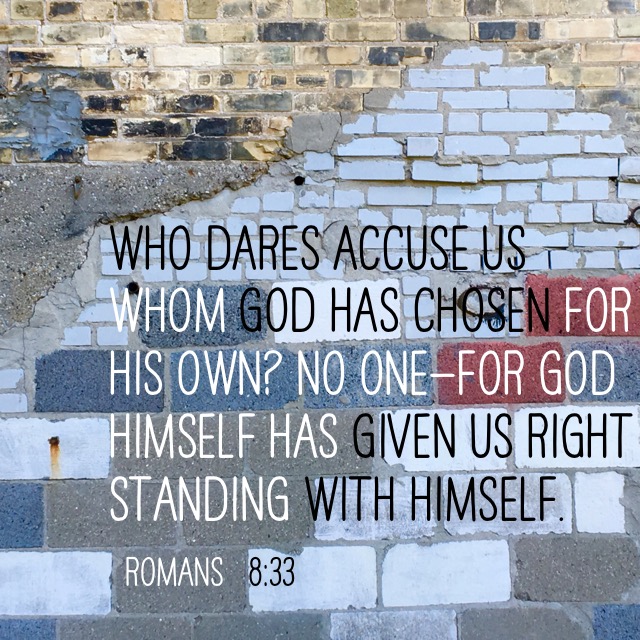
     In Christ Jesus, God is just and yet our Justifier! We are so safe that we begin to challenge opposition and cry, “Who shall bring a charge against God’s elect?” (Romans 8:33). We take up a triumphant note and sing with exceeding joy, “If God is for us, who can be against us?” (Romans 8:31). If God is righteous and yet my Father, then I am saved and saved in such a way that the attributes of God are glorified by my salvation, and therefore I am most securely and certainly saved!

From The Righteous Father Known And Loved

Jesus prayed that we might know the Father as He knew Him—both just and the Justifier. 

When we know God this way, we also know ourselves and our position in Him more clearly. We are both guilty and worthy of God’s full wrath AND justified and an object of God’s favor. We can never earn this on our own, but we stand in this precious and secure place only because we stand in the righteousness of Jesus. 

Jesus wants us to know His Father this way. Do you? 


Thursdays With Spurgeon—Instructor And Indweller

This is a weekly series with things I’m reading and pondering from Charles Spurgeon. You can read the original seed thought here, or type “Thursdays With Spurgeon” in the search box to read more entries.

Instructor And Indweller

O righteous Father! The world has not known You, but I have known You; and these have known that You sent Me. And I have declared to them Your name, and will declare it, that the love with which You loved Me may be in them, and I in them. (John 17:25-26) 

     John’s Gospel is always easy for the child to read, but it is always hard for the man to understand. And these two verses, which are almost entirely made up of words of one syllable, contain mysteries that baffle the most enlightened understanding. …  

     The twenty-sixth verse speaks of the wonderful discoveries of a love of infinite excellence: “That the love with which You loved Me may be in them, and I in them.” And you notice that in order to bring that love home to us, there is a divine Indweller who goes with it, and without whom it could not be! As a teacher is required to bring us the choice knowledge, so an indweller is necessary to infuse into us the infinite love: “And I in them.” Jesus must teach us or we will not know the Father. He must dwell in us or we will not rejoice in His love.

     Thus our first subject is divine knowledge and the divine Instructor. Our second subject is indwelling love and the indwelling Lord. The two are one! The blessed Person of our Lord Jesus is so connected with both and so unites both that the subject is one! To know God in Christ Jesus is to love Him, and to be loved of Him is the cause of our being made to know Him! When Jesus declares the Father’s name, we both know and love. And when we see the Father in the Son, we are filled with both instruction and affection. …  

     “Righteous Father”—I know of no other place in Scripture where God is called by that name. … He is righteous, having the attributes of a judge and ruler. He is just, impartial, by no means sparing the guilty. He is Father, near of kin, loving, tender, forgiving. In His character and in His dealings with His people, He blends the two as they were never combined before! How can the Judge and the Father be found in one? When guilty men are concerned, how can both characters be carried out to the fullest? How is it possible? There is but one answer, and that is found in the sacrifice of Jesus that has joined the two in one! In the atonement of our Lord Jesus, “mercy and truth have met together; righteousness and peace have kissed” (Psalm 85:10). 

From The Righteous Father Known And Loved

Jesus showed us the full extent of His love at Calvary. When He was ready to ascend to heaven, He promised to send the Holy Spirit to remind us of all that we had learned about this love and salvation of Jesus, and so much more! 

This should suggest to each of us a searching question: Do I know the Lord? 

If not, you can know Him today!


Thursdays With Spurgeon—God Will Not Acquit The Wicked

This is a weekly series with things I’m reading and pondering from Charles Spurgeon. You can read the original seed thought here, or type “Thursdays With Spurgeon” in the search box to read more entries.

God Will Not Acquit The Wicked

     The Lord is slow to anger and great in power, and will not at all acquit the wicked [Nahum 1:3]. The Lord is slow to anger because He is great in power. ‘How say you so?’ says one. I answer: He who is great in power has power over himself. And he who can keep his own temper down and subdue himself is greater than he who rules the city, or can conquer nations. … When God’s power does restrain Himself, then it is power indeed—the power to curb power. The power that binds omnipotence is omnipotence surpassed. God is great in power, and therefore does He keep in His anger. … We bless God that the greatness of His power is just our protection! He is slow to anger because He is great in power. …  

     I have blotted out like a thick cloud your transgressions, and like a cloud your sins [Isaiah 44:22]. Not of one of all those sins that have been pardoned was pardoned without punishment. Do you ask me why and how such a thing as that can be the truth? I point you to yonder dreadful sight on Calvary. The punishment that fell not on the forgiven sinner fell there. … Sin is still punished, though the sinner is delivered. … 

     And now we trace this terrible attribute to its source. Why is this? We reply, God will not acquit the wicked, because He is good. What? Does goodness demand that sinners will be punished? It does. The judge must condemn the murderer because he loves his nation. …  

     Mercy, with her weeping eyes (for she has wept for sinners), when she finds they will not repent, looks more terribly stern in her loveliness than justice in all his majesty. She drops the white flag from her hand and says, “No. I called and they refused. I stretched out my hand and no man regarded. Let them die, let them die” and that terrible word from the lip of mercy’s self is harsher thunder then the very damnation of justice. Oh yes, the goodness of God demands that men should perish if they will sin. …  

     Can you by humble faith look to Jesus and say, “My substitute, my refuge, and my shield; You are my rock, my trust, in You I do confide”? Then, beloved, to you I have nothing to say except never be afraid when you see God’s power. For now that you are forgiven and accepted, now that by faith you have fled to Christ for refuge, the power of God need no more terrify you than the shield and sword of the warrior need terrify his wife or his child.

From Mercy, Omnipotence, And Justice

Have you looked in faith to the work Jesus did on Calvary so that your sins could be forgiven? If so, wonderful! You have nothing to fear from God’s justice. 

If not, I plead with you—look again. God’s mercy has been extended to you at least long enough for you to read this, but His justice must fall. Don’t procrastinate another moment: Allow the acquittal of your sins that Jesus purchased with His blood to be yours this very moment!


Thursdays With Spurgeon—God Is Slow To Anger

This is a weekly series with things I’m reading and pondering from Charles Spurgeon. You can read the original seed thought here, or type “Thursdays With Spurgeon” in the search box to read more entries.

God Is Slow To Anger

     God is “slow to anger” [Nahum 1:3]. When mercy comes into the world, she drives winged steeds. The axles of her chariot wheels are glowing hot with speed. But when wrath comes, she walks with tardy footsteps. She is not in haste to slay; she is not swift to condemn. God’s rod of mercy is ever in His hands outstretched. God’s sword of justice is in its scabbard, not rusted in it. It can be easily withdrawn, but is held there by that hand that presses it back into its sheath, crying, “Sleep, O sword, sleep. For I will have mercy upon sinners and will forgive their transgressions.” … 

     God will not at once slay the man whose character is the vilest until He has first hewn him by the prophets. He will not hew him by judgments. He will warn the sinner before He condemns him. He will send His prophets, “rising up early” and late (Jeremiah 7:13, 25; 26:5; 29:19; 32:33; 33:15), giving him ‘precept upon precept, line upon line, here a little, there a little’ (Isaiah 28:13). … 

     God does not in grace, as in nature, send lightning first and thunder afterward, but He sends the thunder of His law first and the lightning of His execution follows it. … But best of all, when God threatens, how slow He is to sentence the criminal! When He has told them that He will punish unless they repent, how long a space He gives them in which to turn to Himself! …

     Although God is slow to anger, He is sure in it.

From Mercy, Omnipotence, And Justice

But do not forget this one thing, dear friends: With the Lord a day is like a thousand years, and a thousand years are like a day. The Lord is not slow in keeping His promise, as some understand slowness. Instead He is patient with you, not wanting anyone to perish, but everyone to come to repentance. But the day of the Lord will come like a thief. The heavens will disappear with a roar; the elements will be destroyed by fire, and the earth and everything done in it will be laid bare. Since everything will be destroyed in this way, what kind of people ought you to be? You ought to live holy and godly lives…. So then, dear friends, since you are looking forward to this, make every effort to be found spotless, blameless and at peace with Him. Bear in mind that our Lord’s patience means salvation… (2 Peter 3:8-11, 14-15).

What Is The Church Supposed To Look Like?

If someone asked you what a church is supposed to look like, do you describe steeples and crosses, stained glass windows and big wooden pulpits?

Guess what? The first Church in Jerusalem had none of those things!

Luke the historian describes the church this way: “They studied and prayed together, they ate with each other, they fed the hungry, and they took care of the poor. God performed miracles through them, everyone thought well of them, and people were getting saved every single day” (see Acts 2:42-47). Other historians of the day noted that Christians started the first orphanages, the first feeding programs, the first homes/schools for the blind, and the first medical dispensaries. They described how the Christians changed the cultural understanding of marriage and family, and how they gave dignity to women, children, the elderly, and the sick. 

They did this by putting their faith into action, just as Jesus described (see Matthew 25:31-40). James reminds us that this required a deeply personal faith and a roll-up-your-sleeves attitude. In fact, James went so far as to say that faith in Jesus wasn’t enough. 

Faith without works is dead. Works without faith is useless. We must believe it and live it. We need both faith and works.

Everyone can do this… 

  • if a young kid is hungry, get involved with feeding them
  • if an elderly lady in your neighborhood needs a friend, stop by for coffee
  • if a neighbor is sick and can’t cover their usual tasks, mow their lawn 
  • if a high school student can’t go to homecoming because she can’t afford the dress, take her shopping and buy the dress for her
  • if someone has an extended hospital stay, collect their mail and water their plants
  • if no one is visiting them in the hospital, go sit with them for a while

Jesus said, “When you do this for others, you are really doing it for Me.” 

Luke didn’t say, “Every day the Christians were preaching.” He says, “Every day the Christians were serving. And then every day God was adding to their number people who were being saved.” 

Your faith in action speaks a sermon louder and more convincingly than any sermon ever could. 

How will you show your neighbors the love of Jesus this week?

Thursdays With Spurgeon—Our Secure Future Hope

This is a weekly series with things I’m reading and pondering from Charles Spurgeon. You can read the original seed thought here, or type “Thursdays With Spurgeon” in the search box to read more entries.

Our Secure Future Hope

     First, Christ is all. Next Christ is in all His people, but the consummation, the top-stone of all, is that God may be all in all [1 Corinthians 15:22-28]. … 

     The fact is, our Lord Jesus Christ has performed and is still performing a work that will end in putting everything into its proper order. …

     Christ is come into the world that all of the evil that is in the world should be subdued. And He will drive it out of the world. There will remain no power that will dare revolt against the Majesty of Heaven! Over the whole surface of this globe, beneath the new heavens and on the new earth, there will yet be the kingdom established all of which Jesus Christ will be the Supreme Head and over which He will reign forever, King of kings and Lord of lords! The Lord hasten it in His own time! … 

     I don’t know whether you catch my thought yet, but it is just this: all evil subdued, all the saints having Christ dwelling in them, Christ the head of all these saints, and then God, still as God, all the more surely and securely supreme over all things, or the head of Christ is God and God is all in all. … 

     I want to you, beloved friends, so to live as to be persuaded that it will be so one day, that God will be all in all—that there will come a time when we will stand before the throne of God, God in us all, and everything in us of God, when all His elect, all His redeemed, all to whom Christ is all, and all in whom Christ is, will only know God as their All-in-All!

From All And All In All

What a glorious future hope is secured for God’s saints! 

If we know what is coming, why would we fear today? If our hope is secure, that means our today is secure as well. That’s why David could confidently say: I keep my eyes always on the Lord. With Him at my right hand, I will not be shaken (Psalm 16:8).